Month: March 2014

Scarface Comes Across

I have a question in the category of “How the hell did they do that?” I’ve got a couple of appearances coming up in Indianapolis, this Sunday at Indy Reads Books on Massachusetts Avenue at 3:30 P.M., and Monday morning on Indy Style at 9 A.M. on WISH-TV. (Come out and see me!) In preparing for these appearances I’ve been studying the Myron Davis photos of Carole Lombard selling war bonds at the Indiana State House the day before she died. Davis took several shots of Lombard, one after another as she handed out receipts for bond sales. He was using his Speed Graphic camera, the most famous press camera of its day, with Kodak film, and the detail of these shots is incredible.

It was while studying the digital files that had been processed at 800 dpi from the original Kodak negatives that I realized, in some of the shots, you can see one of the scars on Carole Lombard’s face. It’s common knowledge that Carole’s face was sliced up by windshield glass in a freak car crash just after she turned 17. She had nearly bled to death that night, cut to the cheekbone on one side, upper lip nearly severed, and deep cuts close to the left eye. She had been put back together by a cosmetic surgeon, but the wounds were so egregious that for a long time afterward, she was despondent and wanted to die.

Fireball: Carole Lombard and the Mystery of Flight 3 by Robert Matzen

Detail of one of the Myron Davis photos shows the boomerang-shaped scar beside Carole Lombard’s left eye.

Here I was looking at the candid bond shots taken by Myron Davis, and I started to be aware of the scar by her left eye. It runs up beside the eye in the shape of a little boomerang, broad and milky as scars can be, and a good inch long. There are others that are visible now and again in photos, the big one on her cheekbone and another dimply scar beside her mouth. What astonishes me is that I can see the eye socket scar in these Davis photos, but you don’t notice them in motion pictures of the day. Granted she worked with hand-picked directors of photography who knew how to photograph their way around the scars but still, given all the physical comedy she did, all the closeups, where are the scars?

So that’s my “How the hell did they do that?” question of today. This was 60 years before the invention of computer software that would obliterate such imperfections in motion pictures performers, frame by frame. Somehow in the 1930s they did it with lighting that smoothed out the skin, and angles that hid the damage. And there was a lot of damage, as is evident by the shots taken in Indianapolis.

Fireball: Carole Lombard and the Mystery of Flight 3 by Robert Matzen

The same scar is visible in this screen capture from 1939, as is the scar on her cheek.

One of the first things people who met Carole Lombard face to face must have remarked to themselves was, “Whoa! Look at the scars!” Bogey had that scar on his lip, a souvenir of World War I. You’ll see a divot here and divot there on other stars too, and there are the painfully obvious examples of Montgomery Clift and Van Johnson, their boyish good looks butchered in car crashes worse than Lombard’s. But for a glamorous leading lady of the 1930s to be sporting facial scars and not caring, not letting them get in the way of a thriving career, allowing cameras to get in so very close—that’s something. Carole’s pal Alice Marble said, when asked about the scars, that they only accentuated her beauty, and I can see that. They were character lines, visible in life and once in a while on film. It’s interesting that scars are not what people saw when they looked at Carole Lombard. They saw something genuine that transcended flawless skin. Granted the girl had help from camera and lighting geniuses. She also had guts, and a personality that made sense of an occasional railroad track on her face. I just wonder if she would be given a chance today, when the press and style gurus are so quick to judge and label a woman as hideous for the slightest deviation from some standard of beauty that they themselves could never attain. I think Carole Lombard would have a quick two words for such people, and I think you know what those two words would be.

Presenting Clark Gable

I knew going into the writing of Fireball that understanding and presenting the real Clark Gable was going to be tough. Some people said this guy was electric in a one-to-one conversation; others said he was boring. How do you get inside the head of a bigger-than-life personality with a public persona crafted and maintained by the publicity department of MGM, the most powerful Golden Era Hollywood movie studio?

I read what there was. Gable biographer Lyn Tornabene helped on two fronts: her 1976 book Long Live the King provided key information about “Billy” Gable’s childhood and upbringing. Tornabene’s gesture of donating all her research materials to the Academy Library placed a great deal of previously unseen and unheard material at my fingertips, and I sifted through it like a geologist, discovering gem after gem. I talked to those few still around who knew Gable.

Fireball: Carole Lombard in Hollywood by Robert Matzen

Clark Gable before.

What emerged were two Clark Gables: there was the self-centered, spoiled-movie-star Gable that existed up until January 16, 1942, and the Gable that survived the crash of Flight 3 and the loss of Carole Lombard, Carole’s mother “Petey,” and Clark’s own best friend, press man Otto Winkler. Imagine for a moment the trauma of that event, especially since he felt partly responsible for actions that led his wife to feel compelled to rush home.

I was interviewed recently by Dick Dinman for his radio show that’s heard via podcast on TCM.com, among other places. Dick asked about my presentation of Gable and related a story about David Niven, whose wife died in a horrible accident. Dinman said that Gable went out of his way to console Niven, and Dick said that this episode was in no way consistent with my depiction of a self-centered movie star. BUT, I responded, it was perfectly consistent with the empathetic Clark Gable, the survivor of Flight 3 and that horrible weekend in Las Vegas.Did I capture the real Clark Gable? Proof came just this week from someone who would know, Hollywood novelist, screenwriter, and actor Steve Hayes, a friend of Gable and intimate of both Ava Gardner and Lana Turner. Steve read Fireball and here are his comments, in part:

“Gable’s character was well laid out and his many facets as a personality have been captured. Since I only knew him after her death, I’ve had to rely on others (Robert Taylor, Ava Gardner, etc.) to understand how he was before Carole died. I knew this wasn’t Rhett Butler I was talking to, a man whose charm and sex appeal and charisma were absolutely irresistible. But until Franchot Tone and Walter Pidgeon and others I’ve just mentioned told me how he was in real life before Carole’s death, I really had no way of judging how huge this change was.“I found Alan Ladd, whom I knew after working for 11 weeks on Botany Bay, and then occasionally bumping into him at Paramount and being invited to swim at his Holmby Hills home, equally sad inward, as if carrying a personal tragedy. I don’t know what his sadness was—I know he loved June Allyson and couldn’t break loose of Sue Carol—but it certainly wasn’t of the magnitude of Gable’s loss. But there was a definite similarity between them regarding a strange inner sadness.

Fireball: Carole Lombard in Hollywood by Robert Matzen

Clark Gable after.

“Your portrayal of him is dead on. Anyone who met Gable always remembered how immaculate he was—clothes and toiletry, nails, shaven, etc.—and for a boy from the oil fields of Ohio, he’d certainly come a long, long way. He could still laugh, mostly it seemed at himself—I recall having lunch [at MGM] with Pidgeon, Tone and some other actor, and in came Gable, and he looked lost—in his own studio!  But he brightened up when he saw us (not me, them) and readily joined our table. Everyone in the commissary turned and stared—and I have to admit it was one of the high moments of my life to be part of that group at that moment. Hell, The King had joined us!

“I don’t think that he really cared much about his life after Carole died. He was pretty much an alcoholic and chain smoker—as so many other stars were—and it’s symptomatic of the era. He once said about Flynn, “Well, he’s killing himself with cigarettes and booze—like most of us are.” Yet he was so wonderfully tolerant of Marilyn Monroe in The Misfits, constantly excusing her bad behavior in front of the others. So inwardly, he was a gentle giant, and a genuinely nice guy. Which is how I will always remember him.”

Fireball: Carole Lombard in Hollywood by Robert Matzen

The always-immaculate Gable, seen at the Encino ranch in 1947. It was the place he felt closest to the one he called “Ma” and “Mrs. G.”

To Tweet or Not to Tweet

I hate the sound of bagpipes. To me the sound of bagpipes is more torturous than the squeal of a feedbacky microphone, or the wail of a screaming baby, or the pounding and grinding of a dumpster being emptied in the middle of the night. It’s the top reason I’m not a fan of St. Patrick’s Day. I’m also not a fan of people going out and getting drunk obnoxiously when they could just as easily, no, more easily, stay home and drink in silence. So where have I been the past few days, you ask? I was waiting out St. Patrick’s Day in the Cone of Silence and now it’s the day after, and safe to come out.

Fireball: Carole Lombard and the Mystery of Flight 3 by Robert Matzen

My idea of hell.

I need to know. Do you people tweet? Do the cool kids these days tweet? It seems as if people must sit around watching TV with the remote in one hand and a phone in the other so they can report their thoughts in real time, and maybe if you’re a great pundit who has thoughts in real time that would be desirable, but if you’re just a guy or a girl and go reporting on how the ref made a non-call in a basketball game, is this a good thing?

My housemate has been railing for years that there’s too much communication in the world today, and the emergence of “Twitter wars” seems to bear this out. Someone disrespects someone else on Twitter, and suddenly a snarkfest is unleashed, often with no winner but just a lot of nasty messages hanging in the ozone. To me, Facebook is a fine thing and allows me to keep people at the far end of arm’s reach while still learning of their comings and goings. Facebook is perfect for the reclusive introvert, which I’m one of. I care about my friends, which doesn’t necessarily mean I want to talk to them all the time. Now I don’t have to: there’s Facebook.

But Twitter. Quite some time ago, Basil Rathbone authority Neve Rendell encouraged me to start tweeting. I thought, what the heck, why not, and I signed up on Twitter and got my handle (@robertmatzen) and guess what. I have only tweeted I believe one thing in my entire Twitter career, and that was a funny little something to a co-worker. I just couldn’t bring myself to tweet because who cares what I have to say? Why is my viewpoint important? Does the world need to know that I hate bagpipes? RT if U h8 bagpipes 2.* NO! I can’t murder the king’s English that way. I can’t go against the grain and reveal my loathing of an “instrument” played at heroes’ funerals!

I have seen an effective use for Twitter, and that’s to build a brand. If I were a comic attempting to build my brand, RT if U h8 bagpipes 2 would actually make sense. As a matter of fact, comedian Stephen Wright used to talk in tweets long before Twitter was born. But even if I were building a brand, I can’t see myself shamelessly self-promoting because reclusive introverts aren’t made that way. Ironically, I am building a brand and can’t make my thumbs use Twitter! You can see my conundrum.

Besides, with a subject matter like vintage Hollywood, my tweets would just be a litany of sadness.

Shirley Temple dead. Bummer.

Sid Caesar gone. Nooo!

Harold Ramis passed. Can’t B.

Robert Matzen, angel of death.

So please tell me, do you tweet? Are you on Twitter? Should I do this or not do this? I’d love a pro or a con from you, the most influential people in my life (other than she who lives with me). And most importantly, would you have RTed that U h8 bagpipes 2?

*RT = ReTweet

Raked by the Spotlight

Wow, the last 36 hours have been interesting. My publicist asked me in a phone meeting if I wanted to write a piece tying Fireball to Malaysia Airlines Flight MH370. My first inclination was, of course I don’t. In no way do I want to exploit so obvious a tragedy, but some hours passed and she queried me again, prompting me with an article about unsolved air mysteries.

I banged out 500 words in 17 minutes and sent it off; in no time at all she told me Fox News had asked for an exclusive on my op-ed. And so was born my first national byline. Within minutes I was asked for radio interviews by Fox national radio and Voice of Russia, and then Relevant Radio in Minnesota. A national op-ed and three significant radio interviews resulted from the gut feeling of my publicist that my expertise connected with research into the 1942 crash of TWA Flight 3 in Nevada could be informative and maybe even important to this global story.

Sean Hannity saw the op-ed and asked me to appear with him on Fox TV today, but then the story shifted from air disaster to air what-the-hell? prior to my 6:30 P.M. interview slot at the studio in downtown Pittsburgh, and I was “pushed” to an indeterminate point in the future.

In the radio interviews of the past 24 hours, I have been asked interesting, thoughtful questions about air transportation in general because the current mystery is do deep, so engrossing, that humans struggle to grasp it. Sure there’s historical context related to TWA Flight 3: commercial air transportation still isn’t an exact science, and in a void of information, wild speculation fills that void, and pilots are highly trained and worthy of the benefit of the doubt, and most important, until we know otherwise, we keep hoping for a miracle.

Then I’m asked about Fireball, and I’m reminded how incredible this 1942 air mystery is, how enduring, and all of a sudden seasoned radio professionals are stunned, mesmerized, asking for more and more about something that’s 72 years old.

All I want to do is keep spreading the Fireball message: so many angles, so many people to honor—from those on the plane to first responders to investigators; so much relevance to the audience of 2014 for a story that originated before the middle of the last century.

No, we haven’t yet figured out air travel. Yes, fragile humans continue to strap themselves into tubes and wings and launch themselves into the upper atmosphere and rely on other humans to see them safely down again. I continue to watch with the rest of the world as this latest aviation mystery unfolds, and marvel at the ongoing mysteries of flight.

The Name Game

Hockey players nickname everybody. Locally, the National Hockey League Pittsburgh Penguins have a “Kuny,” a “Scuds,” a “Duper,” a “Tanger,” and a “Borts.” They do this at rinks all around the world. I’ve found no evidence that Carole Lombard ever played professional hockey, but hockey players would admire her penchant for nicknaming everyone, including her own mother. In fact, alternate names run so rampant in Fireball: Carole Lombard and the Mystery of Flight 3 that a reader I met in L.A. in January, Ruth Peeples, asked for the creation of a scorecard to keep all the nicknamed people in Carole’s life straight.

Since it’s impractical to drive around inserting a cheat sheet in every copy of the book in stores and warehouses, let’s take a moment and run them down here.

Carole’s mother was Elizabeth Peters, and you’d think that “Mom” would suffice, or “Mother,” but to Carole she was “Petey” or “Tots,” and mostly I used Petey in the book with an occasional Tots thrown in when looking at Elizabeth Peters from the perspective of her famous daughter. In unpublished interviews kept at the Academy Library, Alice Marble refers to Mrs. Peters entirely as “Petey,” including when Marble recounts conversations in which Carole referenced her mother…always as Petey.

Fireball: Carole Lombard and the Mystery of Flight 3 by Robert Matzen

Carole and Bucket

Carole knew her brother Fred as “Fritz” and her brother Stuart as “Tootey.” There wasn’t much Carole could do with close friend Dixie Pantages because Dixie already fit the bill, but her other best galpal, Madalynne Fields, became “Fieldsie” to Carole and then to everyone else in Hollywood. Jean Garceau, secretary to Clark and Carole Gable, was just “Jeanie,” but Loretta Francelle, the hairdresser who worked on all Carole’s pictures, was, picturesquely, “Bucket.” The people in Lombard’s universe knew they had arrived if they picked up a nickname, and I have to wonder if it was Carole who dubbed close friend Cesar Romero “Butch” because this one certainly has a Lombardesque ring to it.

Fireball: Carole Lombard and the Mystery of Flight 3 by Robert Matzen

Carole and Butch

When Carole took up tennis, her teacher, Elinor Tennant, became “Teach” first on the courts of Hollywood and then all over the world. Carole’s protégé Alice Marble, the TB-hospital refugee whom Carole sponsored to worldwide tennis stardom, including U.S. and Wimbledon championships, became “Allie.” Then Margaret Tallichet, whom Lombard sponsored for a career in pictures, became “Tallie.”

Fireball: Carole Lombard and the Mystery of Flight 3 by Robert Matzen

Carole and Teach

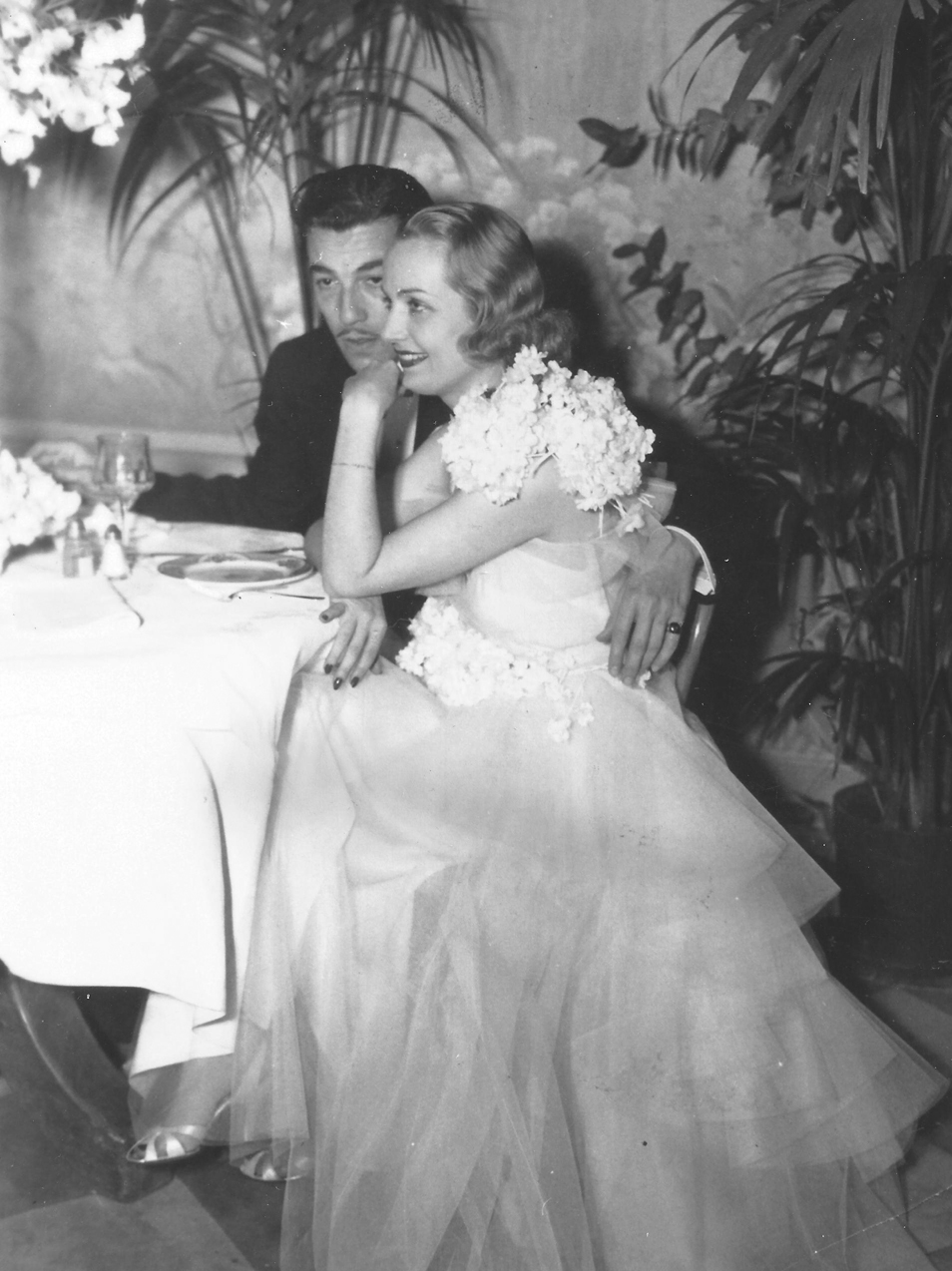
Carole’s men had nicknames too. You’d think “Bill” would suffice for first husband William Powell, but just to note their age difference of 17 years, Carole called him “Pops” or “Popsie,” and every once in a while, “Junior.” Her tempestuous year with crooner Russ Columbo saw each referring to the other as “Pookie,” and when Clark Gable came along and became husband number two, Carole didn’t go with the obvious “Clark” or even “King,” as in King of Hollywood. She called him “Pa” or “Pappy” or sometimes what Spencer Tracy called him, “Moose.” In turn, Gable referred to Carole as “Ma” or “Mrs. G.”

Fireball: Carole Lombard and the Mystery of Flight 3 by Robert Matzen

Carole and Pops

So this is for you, Ruth, a glossary of Carole Lombard’s nicknames for friends, family, and lovers. This is in no way comprehensive and I invite additions.

Fireball: Carole Lombard and the Mystery of Flight 3 by Robert Matzen

…not to be confused with Carole and Pappy

Allie – Alice Marble, tennis star
Bucket – Loretta Francelle, Carole’s hairdresser
Fieldsie – Madalynne Fields, Carole’s friend, housemate, confidante, and secretary
Fritz – Frederick Peters II, Carole’s eldest brother
Jeanie – Jean Garceau, secretary to the Gables
Junior – William Powell (alternate to “Pops” and “Popsie”)
Moose – Clark Gable (alternate to “Pa”)
Pa or Pappy – Clark Gable
Petey – Elizabeth Peters, Carole’s mother
Pookie – Russ Columbo
Pops or Popsie – William Powell
Tallie – Margaret Tallichet, Paramount PR girl who became a leading lady
Teach – Elinor Tennant, Carole’s tennis instructor
Tootey – Stuart Peters, Carole’s elder brother
Tots or Totsie – Elizabeth Peters, Carole’s mother (alternate to “Petey”)

Riding the Wave

This past Tuesday I did a local Fireball lecture/book signing on Pittsburgh’s North Side and then introduced a showing of the 1936 screwball comedy My Man Godfrey with William Powell and Carole Lombard. It’s been a while since I visited 1011 Fifth Ave. and Tuesday marked the first time I’ve ever seen Godfrey in a public setting.

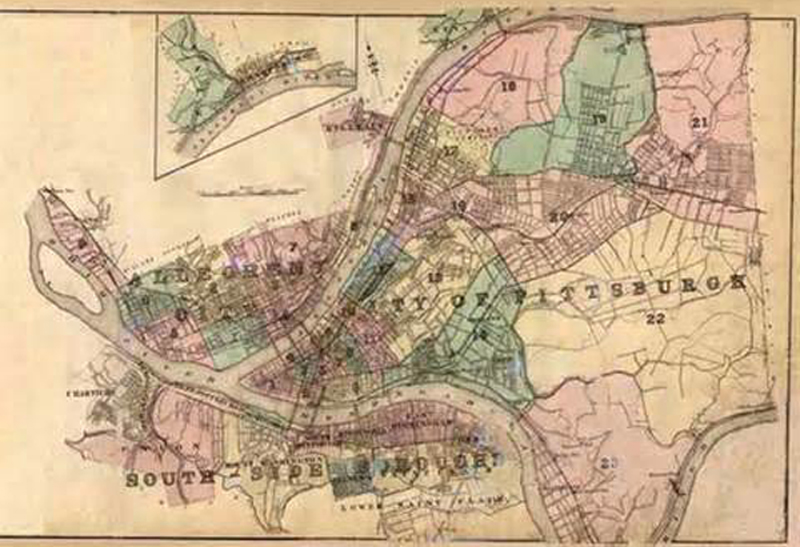
Pittsburgh is the home of William Powell, or to be precise, William Powell hails from Allegheny City, which was once Pittsburgh’s sister city before being gobbled up via hostile takeover in 1908. But that’s another story. And my ancestors hail from Allegheny City after coming off the boat from Germany in 1844, but that’s yet a third story. For now let’s stick to the fact that Powell met the world as a bouncing baby boy in Allegheny City, Pennsylvania, and spent his childhood there and some of his best pictures are being shown publicly in a series running two months in a church on the very streets he once walked. I was invited to introduce My Man Godfrey because of Fireball, a book about Carole Lombard that covers her brief and turbulent marriage to Mr. Powell and their close friendship that endured to her death. In fact, the couple had been divorced for more than two years when Universal offered Powell My Man Godfrey, and he said he would take the part only if his ex-wife was offered the co-starring role.

Map of Allegheny City, home of actor William Powell and site of a showing of Carole Lombard's My Man Godfrey.

Allegheny City was once Pittsburgh’s elegant sister. The showing took place roughly at the T in City.

The pro-Powell crowd was into My Man Godfrey, which is a loud, sometimes frenetically paced picture. In a nutshell, the zany Bullock family of Fifth Avenue, New York City, has way more dollars than sense and lives extravagantly, frivolously, and foolishly among Big Apple’s elite. On a whim daughter Irene rescues a “forgotten man” named Godfrey off the city dump and gives him a job as their butler not knowing he is a Bostonian from old money who had fled a bad relationship by deciding to live among honest bums by the East River. Or maybe it’s the Hudson.

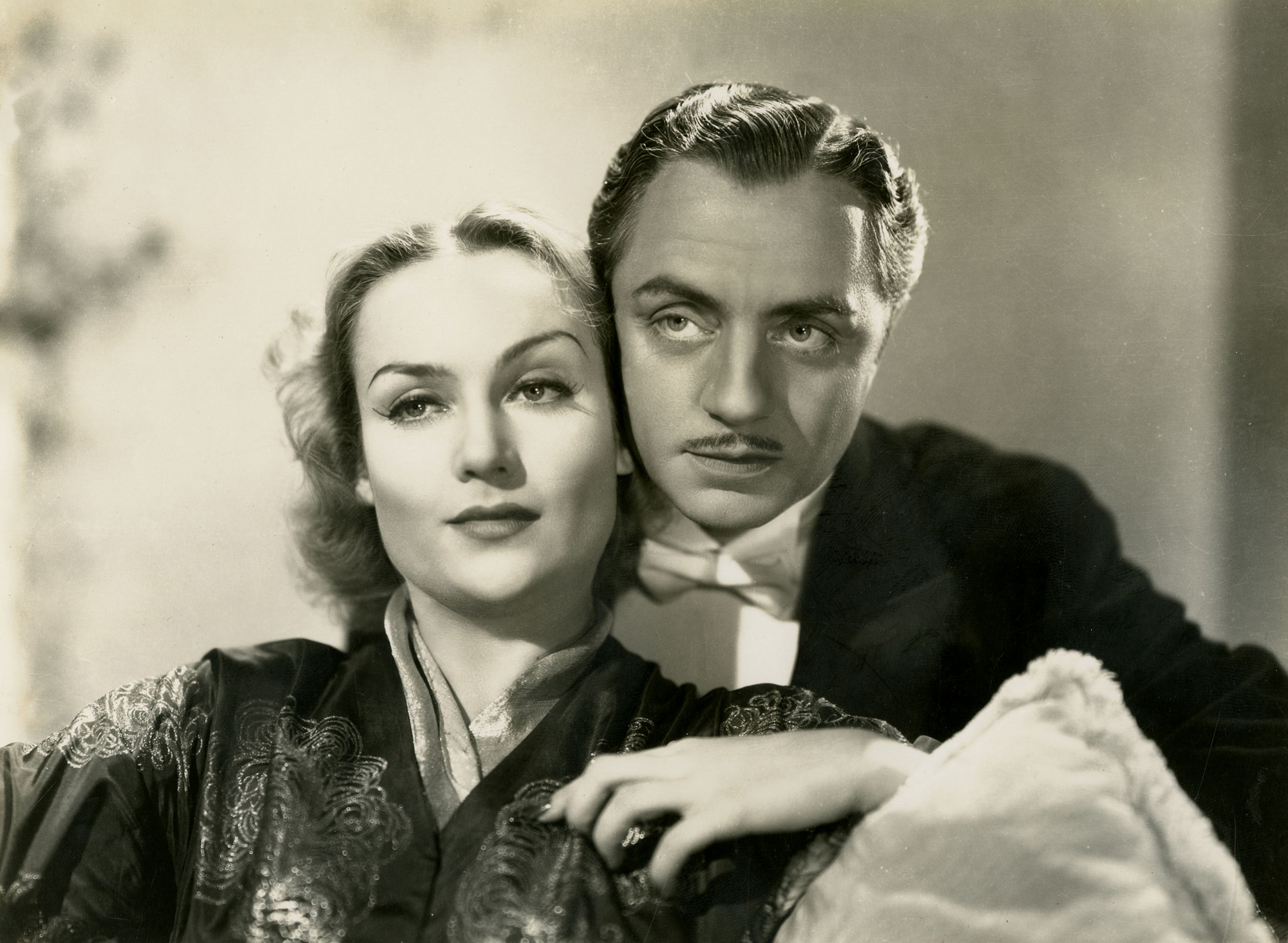
Carole Lombard and William Powell in My Man Godfrey.

Carole Lombard and William Powell pose for a My Man Godfrey publicity photo. Both acknowledged that they made excellent friends and terrible spouses.

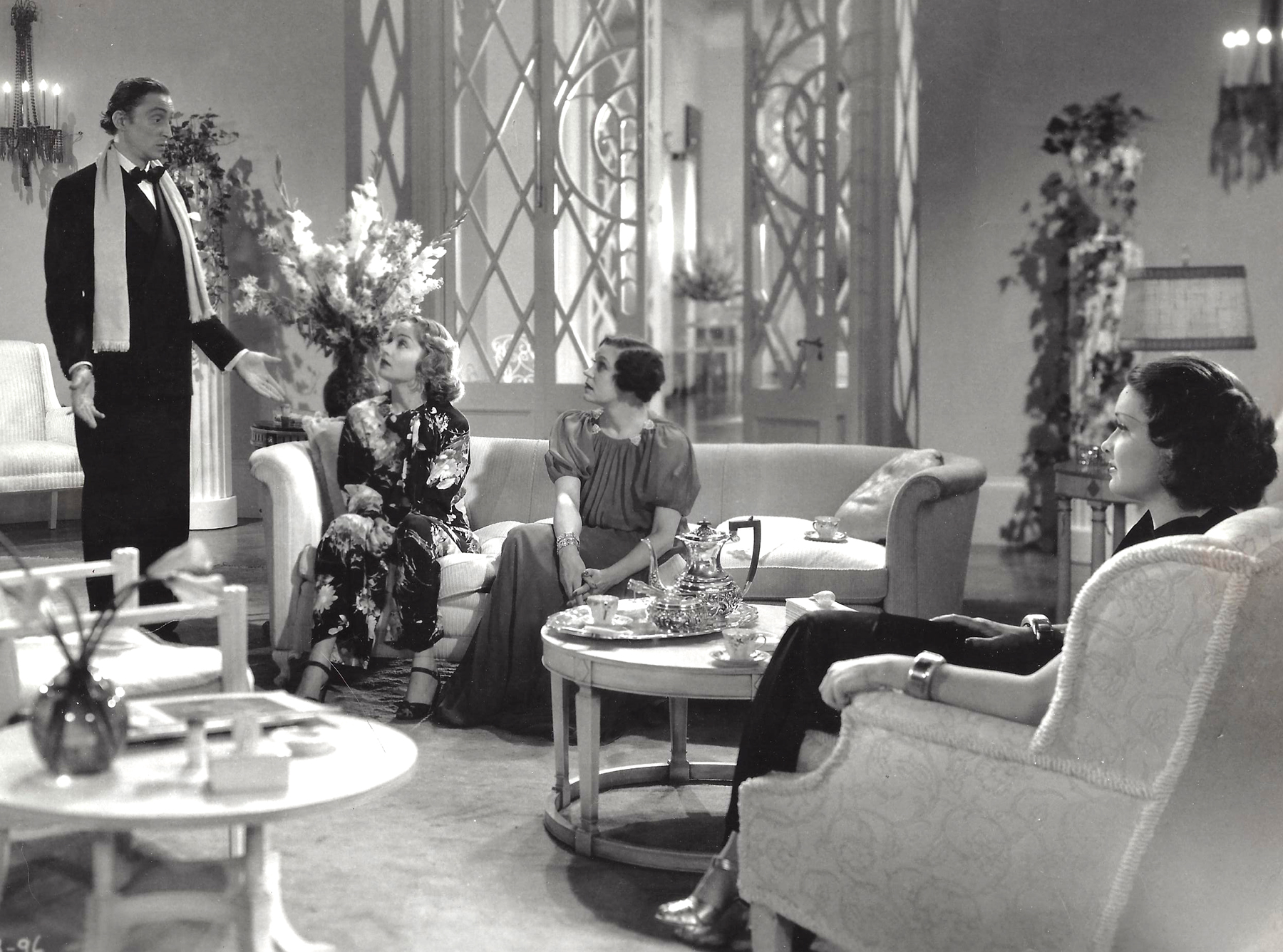
Familiar character actors populate the sets. Gravel-voiced Eugene Pallette plays the head of the household, a reasonable man who processes things in practical fashion but is no match for his shrill wife Angelica, scheming older daughter Cornelia (Gail Patrick), and capricious younger daughter Irene. Alice Brady plays the wife as if she’s off her Prozac. Brady was a fine actress and stage veteran, but the other night it occurred to me that a little of Angelica goes a long way.

Carole Lombard and other cast members of My Man Godfrey, a motion picture described in Fireball: Carole Lombard and the Mystery of Flight 3 by Robert Matzen

Mischa Auer as Carlo takes the spotlight in this scene also showing Lombard as Irene, Alice Brady as Angelica, and Gail Patrick as Cornelia.

I was curious about the reaction of my companions, including my friend Eric, who had never seen a Lombard picture, to Carole and her performance. He was quite taken, commenting on the subtlety of her playing and command of the screen even when confined to the background. Lombard would call Irene “the most difficult part I ever played. Because Irene was a complicated and, believe it or not, essentially a tragic person.”

My Man Godfrey is really Powell’s vehicle and he gets most of the attention, with Carole hemmed in by Irene’s pining for Godfrey through half the run time. She’s really part of an ensemble cast that assures Powell his picture will work. These players keep the plot moving along as they toss off classic one liners that stand the test of time. Strength of cast is measured by the sweep of Oscar nominations in all four acting categories—Powell, Lombard, Brady, and Mischa Auer as “Mother’s protégé,” the freeloading concert pianist Carlo. Director Gregory LaCava was also Academy Award-nominated for My Man Godfrey, as were screenwriters Eric Hatch and Morrie Ryskind.

Scene from My Man Godfrey, which is featured in Fireball: Carole Lombard and the Mystery of Flight 3 by Robert Matzen

Godfrey is oblivious to the fact that both Irene and Molly the household maid (portrayed by Jean Dixon) are in love with him.

I can only imagine how many William Powell and Carole Lombard fans were born of stumbling into this picture halfway through on the late show or TCM. The household at 1011 Fifth Avenue (which was the name of the novella by Eric Hatch on which the screenplay was based) is a charming and friendly place and if you watch any 30 seconds of this film you’ll be re-upping for 30 more until you’re hooked.

Carole Lombard, subject of Fireball: Carole Lombard and the Mystery of Flight 3 by Robert Matzen

Publicity photo of the screwball queen, Carole Lombard.

I’m amazed by the light in people’s eyes when they learn that Fireball is all about Lombard. This actress, gone 72 years now, continues to haunt popular culture to a degree I never expected. If you Google Fireball and Carole Lombard you come up with pages and pages of hits, largely because people are out there responding to the book and chattering afresh about the queen of screwball. I pinch myself frequently that no writer had done a fresh take on her in almost 40 years, and I get the feeling we’ve only scratched the surface of what might be a significant Lombard resurgence ahead.

Pushing the Buttons

Any of you who know me know I’m a rough customer capable of tearing a phone book in two. Or if not a phone book, then junk mail, which I’ve been known to rip to shreds. But tough as I am, I am a sucker for certain motion pictures that make me cry every time. There are no-brainers that cause similar effects among many people, like the end of It’s a Wonderful Life, which always gets me. Emotional overwhelm strikes long before Todd Karns as Harry Bailey dashes in to proclaim Jimmy Stewart’s George “the richest man in town.”

Fireball author Robert Matzen's "movies that make me cry."

“To my big brother George, the richest man in town.”

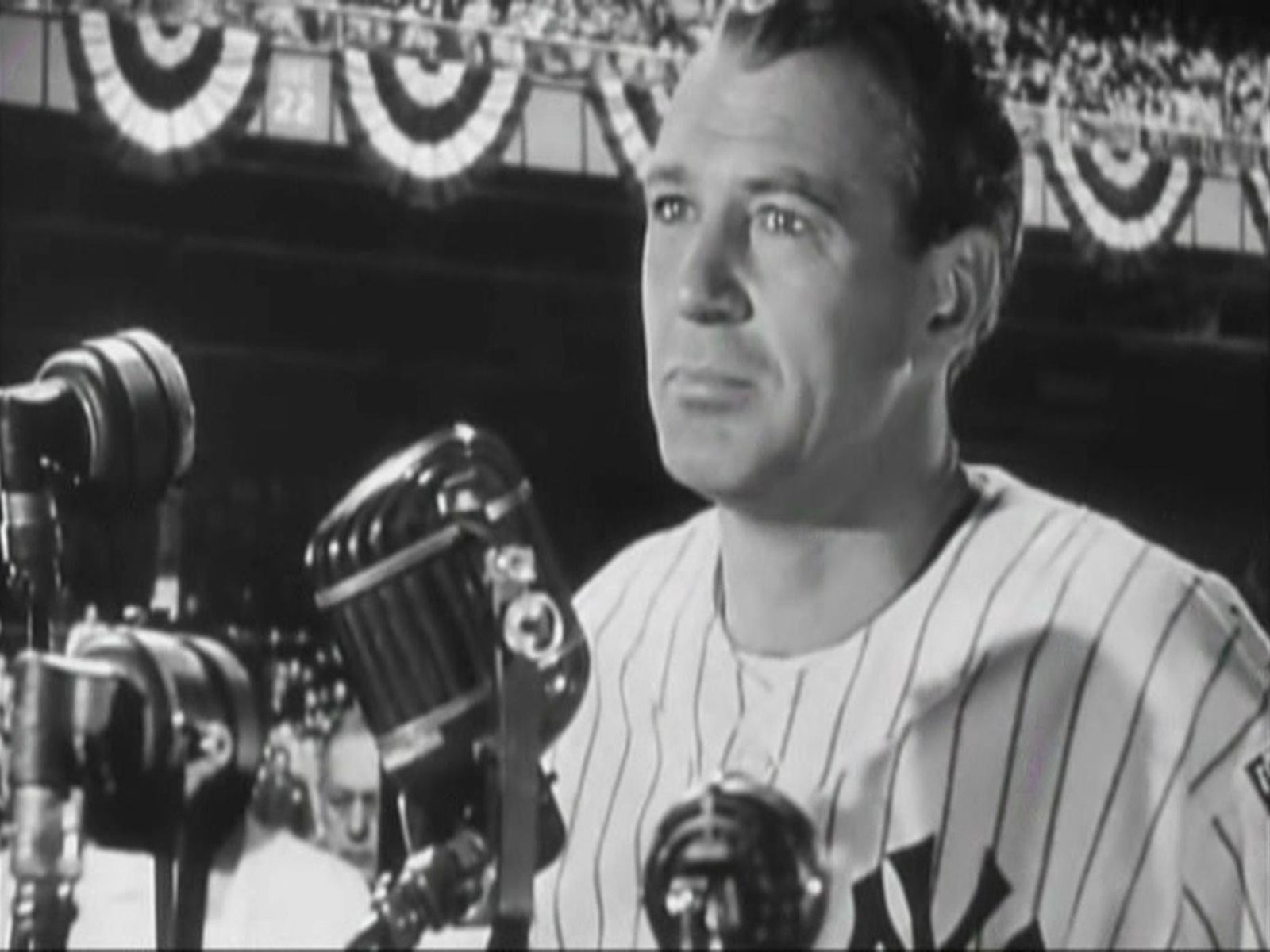
Pride of the Yankees has knocked me flat all my life when Gary Cooper/Lou Gehrig makes his farewell speech and talks about getting a bad break.

Fireball author Robert Matzen's "movies that make me cry"

“People all say that I’ve had a bad break. But today … today, I consider myself the luckiest man on the face of the Earth.”

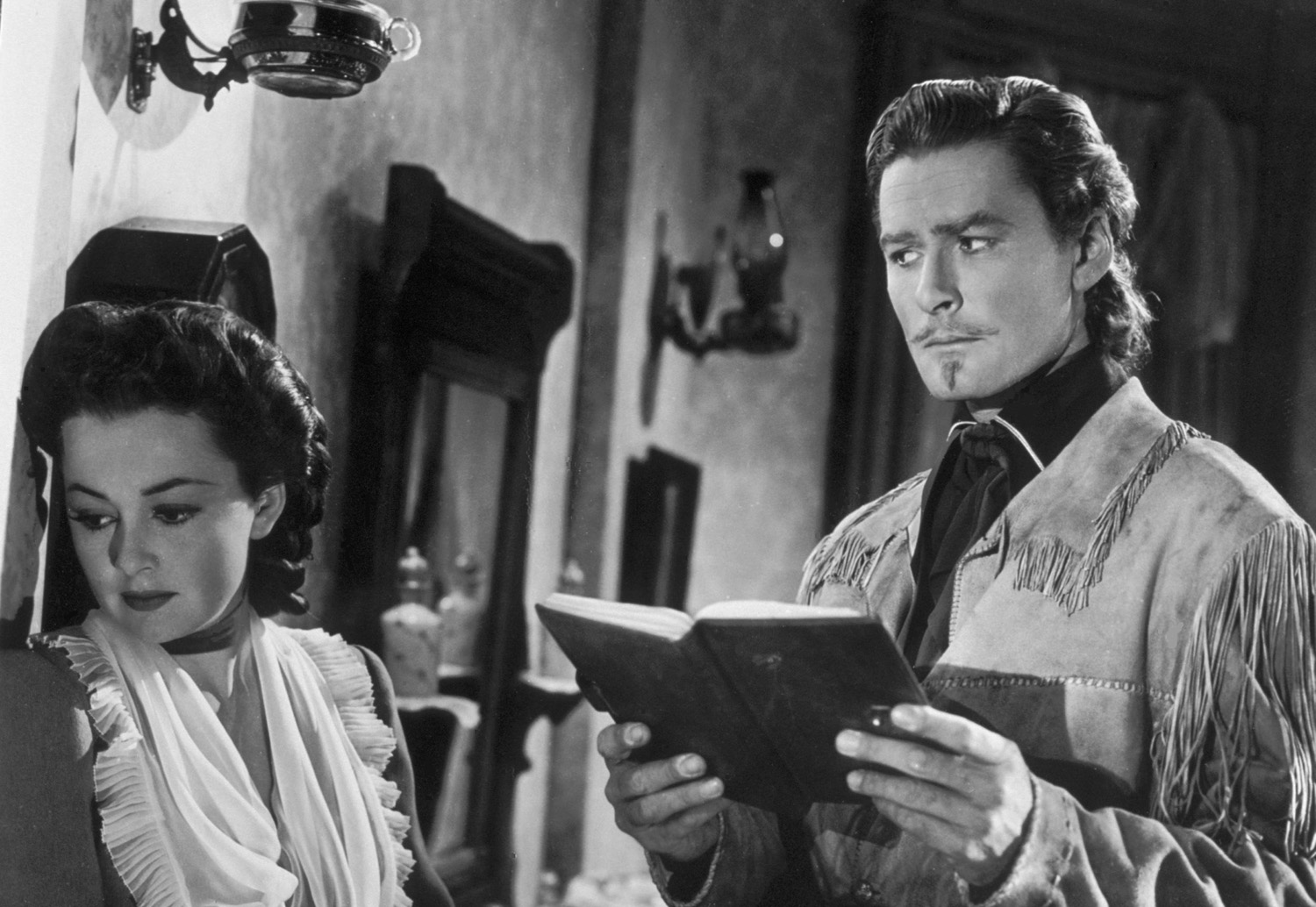
In They Died with Their Boots On, when Flynn’s Col. Custer tells de Havilland/Libbie, “Walking through life with you, ma’am, has been a very gracious thing,” prior to riding to certain death, I’m weeping like a schoolgirl.

Fireball author Robert Matzen's "movies that make me cry."

In a moment he’ll say, “Walking through life with you, ma’am, has been a very gracious thing.”

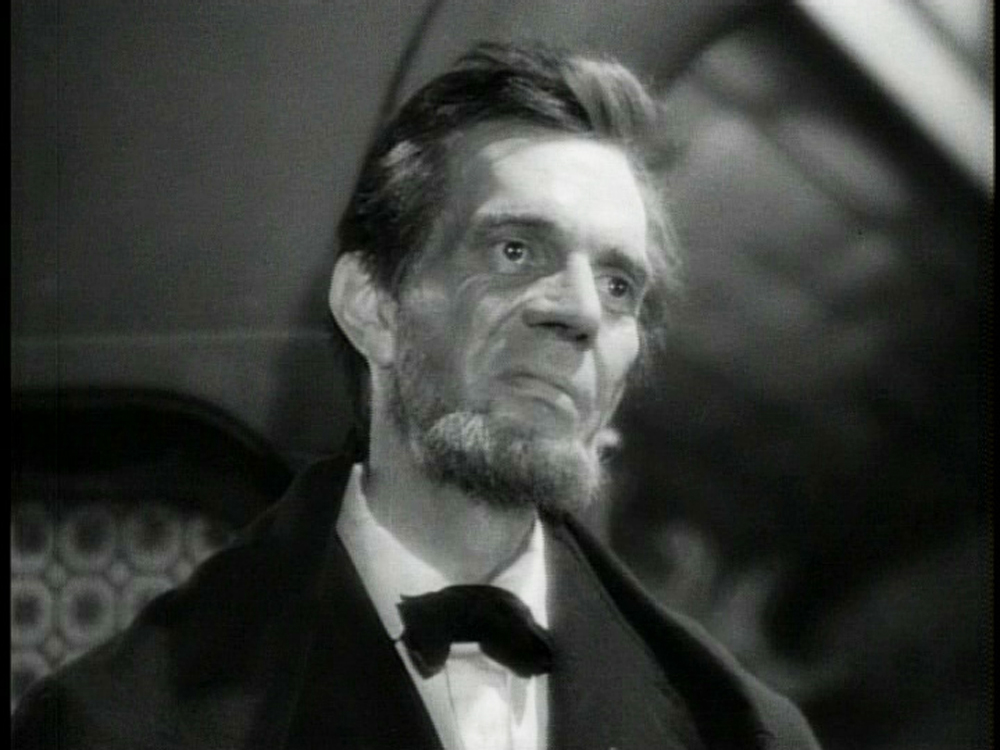
In the past couple of weeks I’ve gotten pretty bad. Abe Lincoln in Illinois snuck up on me one afternoon at the end when Raymond Massey as Abe has just been elected president and makes a very somber farewell speech off the back of a train to his friends in Illinois. We know what he’s in for in Washington, the war and all, and he’s just so sad to leave because he too senses the blackness ahead. The forlorn figure of Abraham Lincoln standing on the back of a passenger car as it recedes in the distance devastated me.

Fireball author Robert Matzen's "movies that make me cry."

A melancholy Abraham Lincoln says farewell, and I lose it…yet again.

As if that wasn’t bad enough, Yankee Doodle Dandy laid waste to me unexpectedly a couple of days ago on like my 20th viewing when George M. Cohan started the Little Johnny Jones sequence, and it wasn’t sadness that swept over me this time but the music, Cagney’s dancing, the choreography behind him, and the sheer brilliance of all those elements hitting me at once.

Fireball author Robert Matzen's "movies that make me cry."

He’s a yankee doodle dandy…yankee doodle do or die. *sob*

Maybe we reach a certain age where more things move us because there’s a greater appreciation for life, I don’t know. It’s been a sad little stretch for me of late, and maybe that’s causing more emotional chords to be plucked as I watch movies.

I’ve gotten in trouble in the past for denigrating Casablanca. Don’t get me wrong, it’s a brilliant picture, but there’s something flat about the ending for me, something disingenuous in the parting of Rick and Ilsa, and I smile when Rick and Louie walk off into the foggy night. I smile but I’m not moved.

Fireball author Robert Matzen's "movies that make me cry."

Maureen O’Hara as Mary O’Donnell and Ty Power as Marty Maher at West Point. Even when I see it coming, John Ford gets me.

I’ll give you one that maybe you haven’t seen: The Long Gray Line, the Tyrone Power picture directed by John Ford about West Point. At the end when all the people in Martin Maher’s life come back to salute him that one last time, oh God, I’m welling up just thinking about it. Ford’s The Searchers gets me a little at the end, too, when Ethan brings Debbie back home. It’s not a torrent, but it always sneaks through and gets me, the loneliness of Ethan holding his arm and walking away from the house as the door swings closed behind him.

Fireball author Robert Matzen's "movies that make me cry."

Debbie is home, but Ethan remains a man alone.

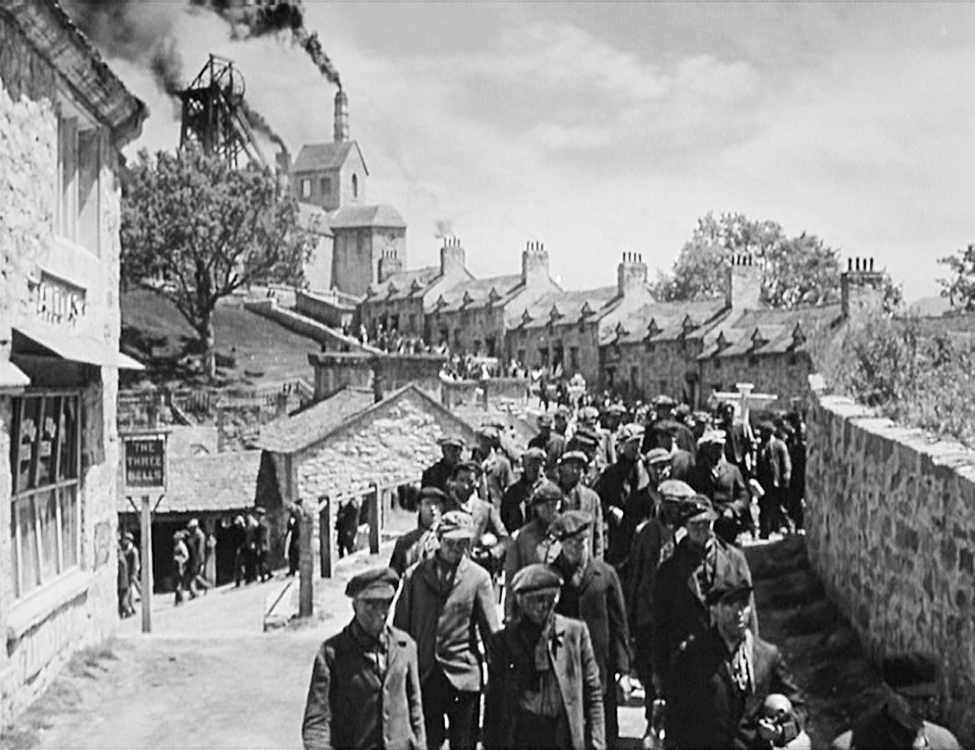
Yet a third Ford picture, How Green Was My Valley, pushes all my sentimentality buttons in recounting the stoic and suffering Morgan family of Welsh coal miners.

Fireball author Robert Matzen's "movies that make me cry."

John Ford’s saga of Welch coal miners gets me every time.

So there, my big confession for a Monday. I’m a sentimental slob. Now it’s your turn. I would be very curious to learn what movies make you all misty and sentimental. Fess up, guys and gals, what are the movies, which scenes in particular, and why do they move you?