Month: October 2014

Wishing They’d Go Bump

I want nothing so much as to run into a ghost face to face. Wouldn’t that be fantastic? I just don’t get it when grown men say they saw a ghost and ran away. What’s a ghost going to do to you? Rattle a chain? Go, “BOO”? I don’t have a bucket list, but if I did, I’d put two things on it for sure: I want to see a ghost, and I want to see a bear. I don’t mean like a bear in the zoo, I mean a bear in the wilds. A bear rooting through my trash. A bear on the porch. Or a ghost anyplace at all. I’d turn interviewer at once. I’d want to know all about that ghost. Name, year of birth, occupation, address, year of death, manner of death—the works. With all those questions I’d likely bore that ghost to d… Well, not to death certainly. But far from running away, I’d be interested.

Fireball: Carole Lombard and the Mystery of Flight 3 by Robert Matzen

Here I am sitting on Errol Flynn’s diving board. On my return trip, all alone, I felt the ghost.

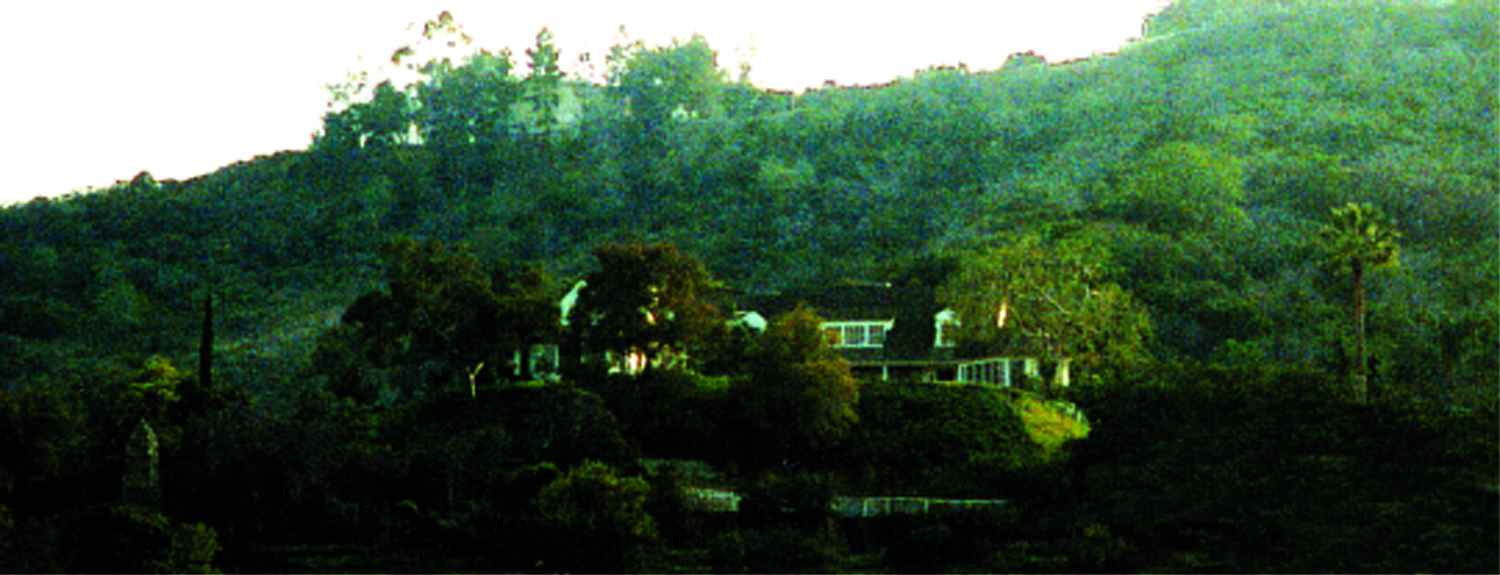
I felt Errol Flynn’s ghost, as described in Errol Flynn Slept Here. I stood at his deserted home, Mulholland Farm, and I was all alone, and I felt him watching me to the point the hairs stood up on my arm. I told no one about my brush with the ghost at the time—I thought I was imagining things—and it wasn’t until 15 years later that I started to hear other, much more startling personal encounters with the ghost of Mulholland Farm. Tracy Nelson, for one, saw Flynn’s ghost up close, as did her brother Gunnar.

I felt Jean Harlow while visiting Forest Lawn Glendale a long time ago. I felt her reaching out to me, quite distinctly, and what I sensed was, Write about me. I sensed great loneliness; great sadness. A soul alone. Circumstances prevented me from doing it at the time, but I felt a heavy sense of obligation. I carried it around for years. Finally David Stenn wrote Bombshell and Darrell Rooney and Mark Vieira wrote Harlow in Hollywood and whatever needs the Baby had, these books must have satisfied because they are both fantastic—and very different—approaches to telling her complete story.
Fireball: Carole Lombard and the Mystery of Flight 3 by Robert Matzen

From a distance it even looked haunted–Errol Flynn’s Mulholland Farm.

Another time I was on a ghost hunt in an old house near Pittsburgh and something touched the back of my neck as I walked down a narrow hallway. I saw nothing, but I felt a hand on my neck. Not a cobweb. Not a draft. A hand.

The most frequent question people ask me related to Fireball is, “When you were at the crash site, did you feel anything?” By that they mean, did you feel, did you see, did you experience ghosts? I wondered if I would at this spot where 22 people died in one second. I felt the sadness of the place; I held a human bone in my hand. More than anything, I felt obligation to those souls.

When you explore as much history as I do, you walk well-worn paths and you feel things. I’ve had my fair share of “stranger than science” incidents, but I haven’t seen nearly as much as I want to. One of my best friends lives in a very haunted house that’s full of residual energy. He can lie in bed in the early morning and hear commotion downstairs that’s clearly his family going through their routine from 50 years earlier. Imagine hearing noises of busy family life coming from your kitchen and knowing it’s your mother in there cooking; it’s 10-year-old you and your brothers and sisters sitting down to eat and then scraping back chairs and rushing off to school. That house also has at least one ghost, as proved by dozens of odd little incidents.

Fireball: Carole Lombard and the Mystery of Flight 3 by Robert Matzen

Imagine, if you can, Flight 3 flying into the middle of this scene and crashing against the cliff. Ghosts here? I felt close to the crash victims; I knew I had to tell their story.

A few weeks ago I walked through several homes from the pre-Civil War and Victorian eras and felt the presence of the former inhabitants. I heard others describe ghostly encounters, but I had no encounters of my own. I’m also helping to restore a Victorian home these days and will spend tomorrow there alone. It’s a hundred years old but do you think I’ve heard one thing out of the ordinary? I’m afraid not. Maybe I need to walk in tomorrow and challenge the ghosts to show themselves. I haven’t tried that yet and who knows, maybe it will kick something up.

Do you want to make me jealous? Tell me about an encounter you had with a ghost, or an odd experience that you think may have been ghostly. Something you can’t explain. It’s the perfect time of year for a ghost story, and I want to hear some.

Pre-Code Carole

Fireball: Carole Lombard and the Mystery of Flight 3 by Robert Matzen

“Many men filled her life,” teased the poster in the lobby. Images of Lombard in negligee and Lombard showing leg added to the promise of a good show within.

I caught a couple of Lombard pre-Code pictures this past week, the hot-sounding Virtue (1932) and boring-sounding Brief Moment (1933), and only one lived up to my preconceptions. As you know, pre-Code refers to early talkies made prior to institution of the Motion Picture Code (read: censorship) when Hollywood was more like Dodge City and onscreen vice reigned. Virtue and Brief Moment ran 69 minutes each, with the former going fast and the latter an excruciating life sentence.

Fireball: Carole Lombard and the Mystery of Flight 3 by Robert Matzen

“Dump that bum!” I shouted at the screen; Carole didn’t listen.

Brief Moment only lifted itself above tedium when I was shouting at the screen for Carole to get over that bum Gene Raymond, but did Carole listen? No. She continued to refuse to come to her senses and ended up staying with him at fade out. She enacted a torch singer named Abby Fane and he was Rodney, the spoiled son of a vastly wealthy family, and their sudden marriage produced page-one headlines in major metropolitan newspapers. You know how the montages went—1930s screenplays advanced via the device of big headlines in newspapers that saved 10 minutes of exposition.

Brief Moment, another picture that Lombard made on loan out to Columbia, was one of those girl-meets-bum, girl-loses-bum, girl-gets-bum kind of pictures. Personally I was hoping that an apple would fall on Abby’s head and she’d take up with shady nightclub owner Toots, played by Steve Walsh. Toots is clearly nuts for Abby, see? But she doesn’t love him “that way,” so he goes all heart of gold and patches things up between Abby and Rod in the last reel.

How did Lombard survive pictures like this? Her agent, Myron Selznick, must have been one hell of a salesman is all I can say. Only a big star could have pulled this thing off—a woman with a set screen personality like maybe Ruth Chatterton, who was the prototypical long-suffering actress of the early 1930s, or maybe Kay Francis, who was still trending upward in 1933. I’m not saying Lombard wasn’t good; she knew her way around a script and the cameras by this time, but just when you start to believe her performance, she reverts to that deep voice and stilted playing that caused Howard Hawks to nearly fire her from Twentieth Century.

She’s actually much better in the other picture I watched, Virtue, made with Pat O’Brien on loan out to Columbia in 1932. I guess I had seen Virtue 30 years ago, but I have no conscious memory of the experience. All I knew going in was that Lombard played a prostitute and this was a pre-Code picture so I had high hopes of skin and smut—on the order of Joan Crawford’s Rain, made the same year—but after investing those 69 precious minutes as Virtue unspooled, I had experienced neither skin nor smut and found my innocence intact. The setup of the picture has Carole as Mae, a prostitute who is deported out of New York City, but gets off the boat before it sails and stays in town, where she meets hard-boiled, down-on-dames cab driver Jimmy (O’Brien). Oddly, the opening of the picture, with Mae sentenced to get out of town for prostitution, is audio only, with the screen black, so the audience never actually gets to see the actress as a hooker.

Fireball: Carole Lombard and the Mystery of Flight 3 by Robert Matzen

Judging by this image in Film Fun, Virtue was a must-see picture.

Mae and Jimmy get hitched in a New York minute, and he’s dim to the fact that she used to turn tricks. Personally, I’d wonder on my wedding night where my young bride got such talent and enthusiasm, but that’s just me. For the remainder of the picture Mae tries to fly right while we count the minutes until Jimmy gets wise to his wife’s big secret. Then he does find out and circumstances lead him to suspect she’s out turning tricks again, but since Jimmy’s already established as a cynic at heart, it’s not like he’s crushed or anything and at fade out (spoiler alert) they kiss and make up, and I could only hope he spent the next 50 years making the most of his wife’s earned-on-the-street abilities.

Fireball: Carole Lombard and the Mystery of Flight 3 by Robert Matzen

More Columbia Pictures enticement to go see Carole Lombard in Virtue.

I couldn’t make up my mind if I could imagine 23-year-old Carole Lombard as a pay-for-play babe and really, it’s ridiculous unless she was hopped up on opium or booze. But she’s as lucid as always and so we know going in this is a tidy little Hollywood fantasy. Aside from one bouncy braless scene on a city street, there wasn’t any skin, which was the biggest disappointment for me considering Virtue stills that made 1930s voyeur mags like Film Fun. Judging by these images Virtue was a smutfest with lesbian undertones, not a gee-whiz romance espousing, well, virtue. If this were a picture made after institution of Hollywood’s Production Code less than two years later, there could have been no happy ending and Mae would have lost her man as penance for life on the streets.

I came away from these two pictures believing that prior to her big break in 1934, Carole Lombard was only as good as her director and whatever script she was handed. She could act OK, but she couldn’t transcend. Am I wrong here? In what pictures did Lombard rise above the material as a leading lady? It seems clear that it was through her social connections—married to William Powell at this point in her career and benefiting from her access to Powell’s superagent—that she positioned herself for the good fortune that would come with casting in Twentieth Century. Then the tutelage of Howard Hawks changed everything.

Umbrella Man

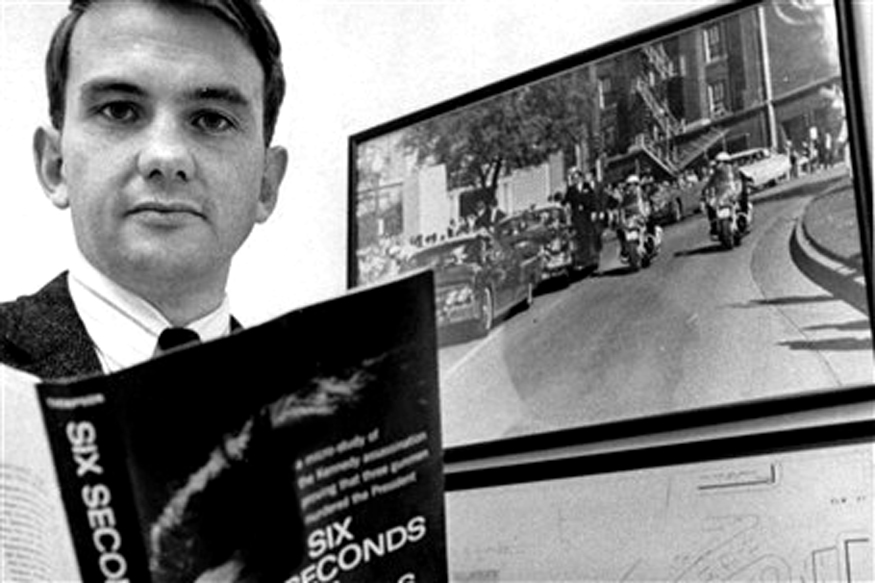
Josiah Thompson was a hero of my youth. Nicknamed “Tink,” Thompson is an Oxford-educated private investigator, former Navy man, and author who wrote the ground-breaking first “micro-study of the Kennedy assassination,” Six Seconds in Dallas. Super-cool guy. He’s the kind of guy that, when you’re thinking of writing a book about the crash of TWA Flight 3, causes you say to yourself, “What would Tink Thompson do?” WWTTD? Well, of course, he’d climb the mountain, so I went and climbed the mountain.

Fireball: Carole Lombard and the Mystery of Flight 3 by Robert Matzen

Josiah Thompson and his second book, Six Seconds in Dallas, which caused quite a ruckus in 1967.

Six Seconds in Dallas appeared in 1967, nearly 50 years ago, and now Tink is advanced in age, but he popped up in a fascinating YouTube video that had been forwarded to me, and I delighted in the concept he described—a concept developed by Pulitzer Prize-winning novelist John Updike in response to reading Thompson’s book.

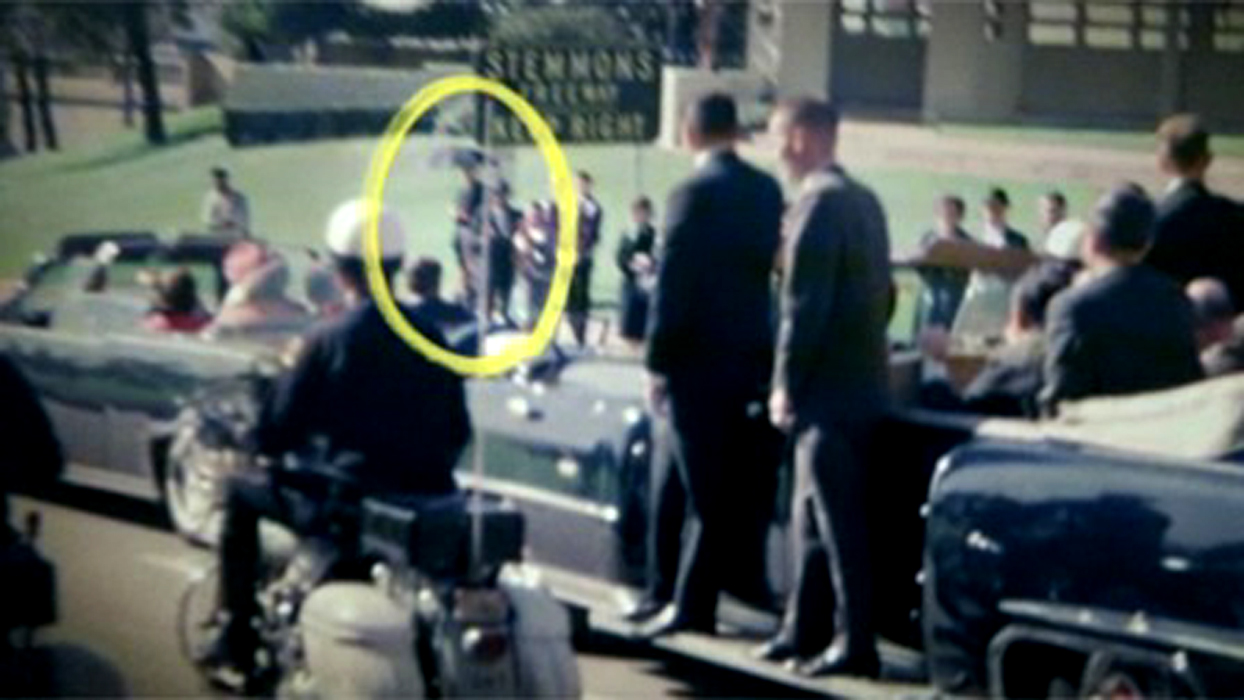
In case you don’t know, when JFK was murdered in Dallas, he was riding in an open limo along a city street. At the very point where bullets rained down on him, a man stood by the curb holding an opened umbrella on a sunny Texas day. Conspiracy theorists ascribed deep meaning to that man and his umbrella: obviously he stood at the spot where triangulated gunfire from the Book Depository, the grassy knoll, and God only knows where else would have deadliest effect. Obviously, Umbrella Man was there to direct the assassination of a president.

Six Seconds in Dallas merely identified that a guy was standing there holding an umbrella and wondered why, but a decade after it was written, Umbrella Man came forward and testified before Congress about why he was there and what the opened umbrella represented: He wasn’t killing Kennedy, he was protesting the 25-year-old actions of JFK’s dad prior to the outbreak of World War II! The umbrella represented Neville Chamberlain’s appeasement of Hitler, and Joseph Kennedy’s agreement with Chamberlain’s actions.

Thompson pokes fun at himself in the YouTube video, directed by Errol Morris, and discusses a concept that Updike introduced in a New Yorker think piece about conspiracy theories and the Kennedy assassination. Basically, Thompson says that you may think you know why someone did something in the context of an important historical event, but you don’t really know.

Fireball: Carole Lombard and the Mystery of Flight 3 by Robert Matzen

There he is in all his weird glory, Umbrella Man, encircled in yellow along with the head of a U.S. president.

Thompson’s first book, written prior to Six Seconds, had been on the works of Kierkegaard, so Tink’s philosophical musings on the Updike theory are well grounded: “In historical research,” says Thompson of the Updike position, “there may be a dimension similar to the quantum dimension in physical reality. If you put any event under a microscope, you will find a whole dimension of completely weird, incredible things going on. It’s as if there’s the macro level of historical research, where things sort of obey natural laws and the usual things happen and unusual things don’t happen, and then there’s this other level where everything is really weird.”

Said Updike in The New Yorker in 1967, “The truth about those seconds in Dallas is especially elusive; the search for it seems to demonstrate how perilously empiricism verges on magic.” With hundreds of eyewitnesses in the area, with reporters nearby and photos being snapped and movie film being exposed, with law enforcement all over the place, there should have been one set of facts and an open-and-shut case developed about a very public murder. But then it got weird and to this day, nobody can agree who did the shooting, from where, why, who else might have been involved, or even how many shots were fired!

Seeing the YouTube video and reading Updike’s original think piece hit me like a pumpkin to the head because I had spent years trying to sort out the circumstances leading up the crash of Flight 3—circumstances that should have been sortable and explainable but read like Fiction 101. The crash of Flight 3 and the reasons why Carole Lombard died on the plane with 21 others fit perfectly with Updike’s subatomic realm because the more we apply the rules of man’s physical world, the less the story makes sense. Last weekend in Fort Wayne, for example, I spent roughly 45 minutes talking about what a wonderful person Carole Lombard was, how down to earth, empathetic, generous, and considerate. Then I was asked, “If she knew her mother was terrified to fly and the PR man had dreamt his own death on an airplane, why did Lombard force them to get on the plane?” It’s an excellent question—I complimented the woman who asked it. Then I gave her a palms-up shrug and said, “I have no idea.” In Fireball I call it the fatal flaw, Carole’s charge ahead at full speed manner of living life, and it’s the only answer I can provide. There were times when she let nothing stand in her way, including reason. Yet her actions on January 16, 1942, which shattered the emotions of her traveling companions and then shattered their bodies, don’t sound like Carole Lombard at all. They just don’t.

If it wasn’t weird enough that Carole turned a deaf ear to Petey and Wink; if it wasn’t weird enough that TWA’s most experienced pilot, the one who had trained bomber crews on how to fight a war, suddenly behaved like a rookie flyer and steered his plane right into a mountain on a clear night; if it wasn’t weird enough that Hungarian violinist Joseph Szigeti had been scheduled to fly on a DC-3 that crashed in 1940 and a DC-3 that crashed in 1942 and survived both—if all these things weren’t weird enough, I have learned of two more truly astonishing Flight 3-related incidents since Fireball went to press a year ago. Both easily qualify for the Updike Dimension, and then some.

As I mentioned to a reporter in Fort Wayne, I have now finally accessed the FBI files on the plane crash and, I kid you not, UFOs were seen in the Flight 3 airway on nights leading up to January 16. No, seriously, UFOs. Many people logically dismiss UFOs as Cold War paranoia, but we’re talking sightings of odd lights in the sky before the era of Roswell and the “flying saucer” by eyewitnesses that include a Civil Aeronautics Authority man. A fed. A trained observer equivalent to today’s FAA investigators who saw spherical lights in the sky that were not aircraft. (For the record, I don’t believe that UFOs had anything to do with the crash of TWA Flight 3. I am remarking on how bizarre it is to find UFOs in the official FBI investigation.) Then there’s the other incident that I’m still working on that’s no less odd. Neither solves the mystery of Flight 3. On the contrary, both make answers all the more elusive and demonstrate how sometimes evidence and logic go right out the window, and, suddenly, you’re in that other dimension where people are dead and nobody can figure out how they got that way.

Tucked Away

On the way to Fort Wayne for the Carole Lombard weekend, we stopped in Indianapolis for 90 minutes at a place I bet you never heard of and one that, if I ever compile a list of my top-10 most memorable experiences, would easily make the cut.

Fireball: Carole Lombard and the Mystery of Flight 3 by Robert Matzen

Nellie Simmons Meier, a scientist at heart and international sensation in the first half of the twentieth century.

Once there was a “scientific palmist” named Nellie Simmons Meier, who lived with her husband, fashion designer George Phillip Meier, in a bungalow tucked away on North Pennsylvania Street in Indianapolis. Because it sat back off the street and was modest in appearance, it acquired the name “Tuckaway,” and it was here that Nellie held court for many of the most powerful people of the twentieth century. I’m not kidding about the significance of her clients. We’re talking Eleanor Roosevelt, Albert Einstein, and an ardent pursuer, Adolph Hitler. Walt Disney was among her close friends and frequent visitors, to the extent that Nellie’s readings and Nellie’s home became instrumental to the creation of Disneyland.

Tuckaway looks like any old bungalow on any old street in the United States when you view it from a distance. Even people with an appointment drive right past it—I can tell you that from experience. When Ms. Garmin announced, “Arriving at destination, on right,” I groped to see anything on the right, let alone a destination shaped like a bungalow.

I can’t explain the physics of it, but Tuckaway is bigger on the inside than it is on the outside, a yawning beast of Victorian design. We walked in to a vaulted-ceilinged parlor ablaze from a fire in the enormous fireplace. The walls were done in gold canvas because Nellie Meier had visited Coco Chanel’s gilded apartment in Paris and wanted her own home to be “dipped in gold,” like Coco’s. Cigarette smoke filled the yawning space, as (it sounded like) Marlene Dietrich purred torch songs from the walls themselves. Our host was Kenneth Keene, an impossible-to-describe raconteur who bought Tuckaway from the heir of Nellie Meier in 1972.

Fireball: Carole Lombard and the Mystery of Flight 3 by Robert Matzen

You’re saying, WHAT? There’s a home back there?

It’s forgotten today, but Nellie Simmons Meier was such a highly regarded professional at the scientific interpretation of palms that the brightest minds in the world sought her out. Rachmaninoff played piano in that parlor we walked into, and 80 years later it felt as if he were still there, trapped in time, along with all those other luminaries. Gershwin was a fan, as were Duncan Hines, Margaret Sanger, and Amelia Earhart. So prestigious was the library of palm prints and readings of Nellie Simmons Meier that President Franklin Roosevelt insisted that a portion of her collection be housed in the Library of Congress, where it remains today. When the president of the United States insists, what’s a girl to do?

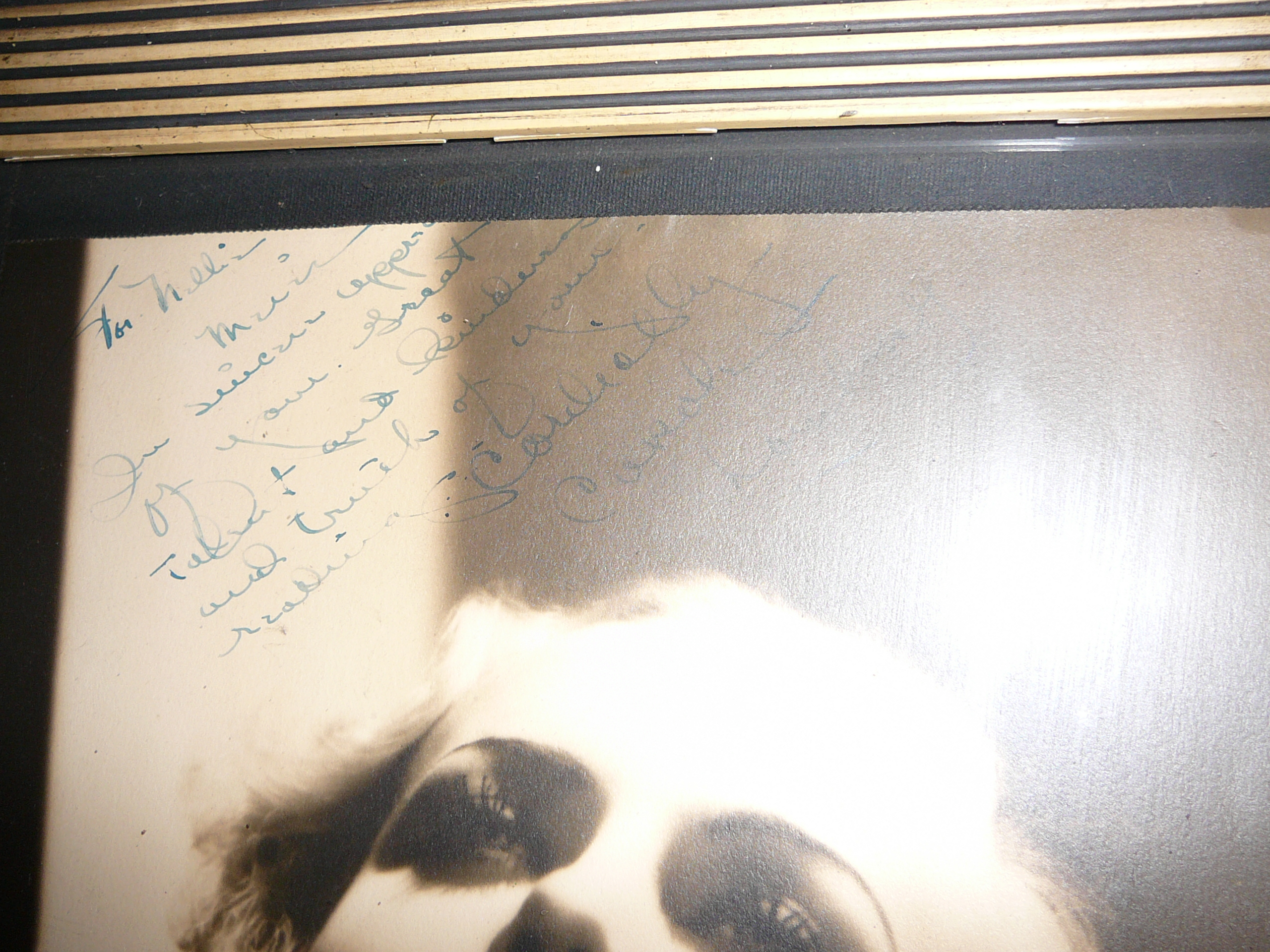
The walls of the hallway and library downstairs hold dozens of framed portraits of the greats of the century past, every one inscribed to Nellie. Carole Lombard is there in a prime spot at the bottom of the stairs, the green-ink inscription on her photo attesting to the accuracy of Nellie’s reading.

Fireball: Carole Lombard and the Mystery of Flight 3 by Robert Matzen

The parlor of Tuckaway, as mysterious and compelling as an episode of The Twilight Zone. And what role in Carole Lombard’s life did the front door (seen at right) play?

I had come to Tuckaway to interview Mr. Keene about the connection between Lombard and Meier, based on a tip I had gotten while on the Indianapolis stop of the Fireball book tour. Local lore had it that Carole had stopped at Tuckaway the day of the bond rally and Nellie had warned her “not to take the plane.” I have more research to do beyond what I learned during the October 3 visit to Tuckaway, and by the time the trade paperback revised edition of Fireball goes to press after the first of the year, I believe I’ll have a definitive answer to the question: Beyond everything already described in Fireball, was there yet another chilling episode, tucked away in time since 1942, that compounds the mystery of the chaotic, improbable, and tragic last 24 hours of Carole Lombard’s life?

Fireball: Carole Lombard and the Mystery of Flight 3 by Robert Matzen

The inscription of Carole Lombard’s photo on the wall, signed as always in green ink, reads, “For Nellie Meier, In sincere appreciation of your Great Talent and kindness and truth of your reading. Cordially, Carole Lombard.”

Woodstock on the Maumee

I don’t suppose there will ever be another weekend like this one spent in Fort Wayne, Indiana, at what became a Carole Lombard love-in, retracing her heritage as biological product of three great families, the Cheneys, Knights, and Peters, with wealth between them in the tens of millions of dollars. Considering the value of money in 1900, the vast fortune underpinning Elizabeth Knight Peters, the mother of Carole Lombard, was astonishing.

The weekend included a stop at the ancestral home of the Knights on Spy Run Avenue in Fort Wayne. A Knight had married a Cheney (as in the Cheneys of Wall Street) and settled on Spy Run, above the St. Joseph River, in the house where in 1902 Elizabeth Knight married Frederick Peters. Today the Knight building is home to Shepherd’s House, a shelter for homeless veterans of the U.S. military. Barb and Lonnie run the place as a taut but loving Christian ship and host more than 40 veterans at a time. Despite busy schedules they spent more than an hour showing us through many interesting spots within the massive structure.

Fireball: Carole Lombard and the Mystery of Flight 3 by Robert Matzen

The Knight mansion on Spy Run Avenue, now Shepherd’s House, home to more than 40 veterans.

We visited the Wayne Street mansion of John C. Peters, hardware mogul of Fort Wayne and “Gramps” to Jane Peters/Carole Lombard. Peters had his hand in all manner of construction enterprises and owned part interest in the Horton Manufacturing Co., which produced early automatic washing machines. Whereas the Knights and Cheneys were embedded nationally in big money, the wealth of J.C. Peters was homegrown in Fort Wayne. His mansion is a pure Victorian masterpiece.

Fireball: Carole Lombard and the Mystery of Flight 3 by Robert Matzen

The Victorian masterpiece John C. Peters mansion on West Wayne Street. An elderly woman once approached the owner with a memory of seeing baby Jane Alice Peters in this house.

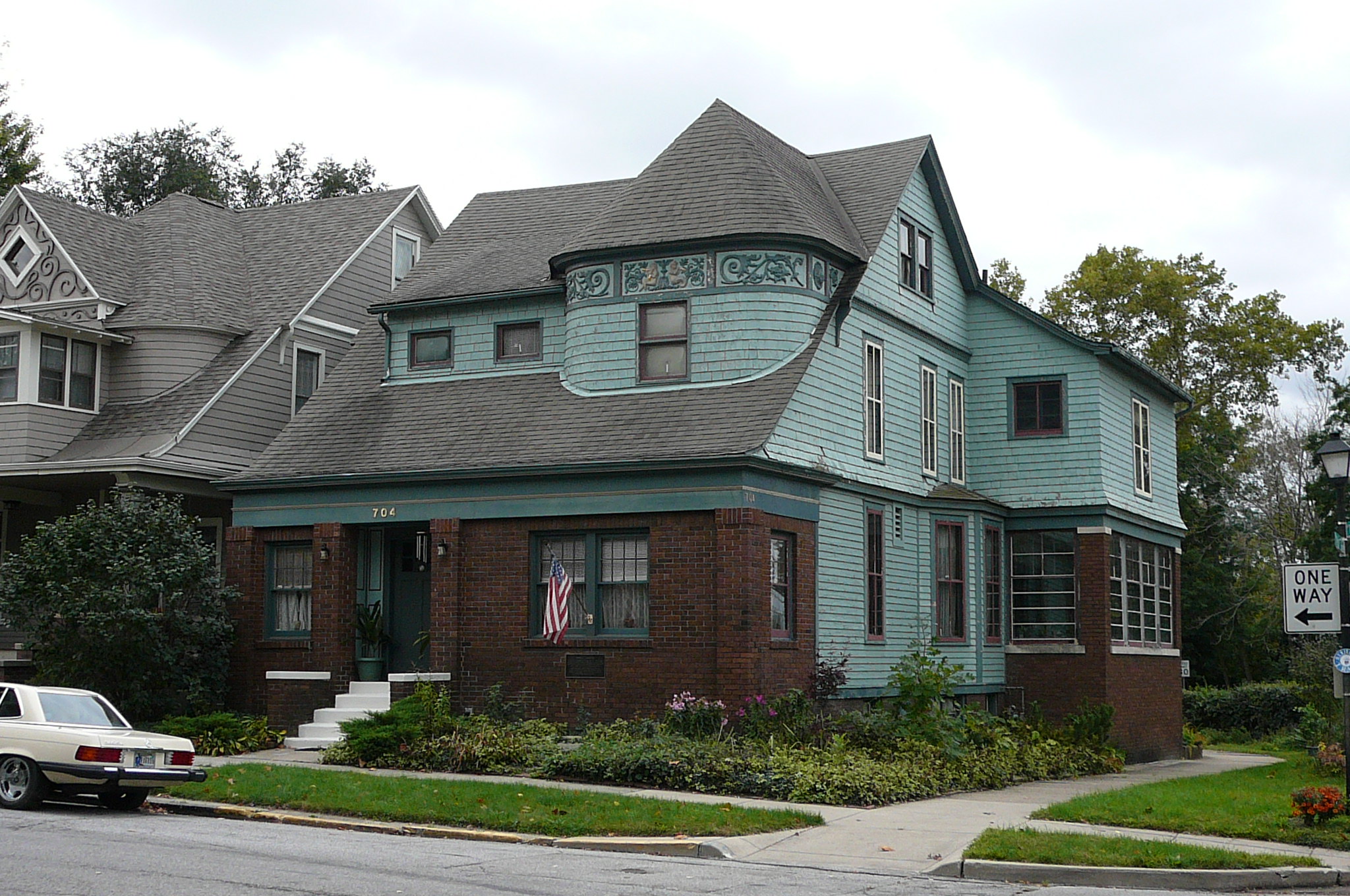
Next, came a stop at the home of Elizabeth and Frederick Peters at 704 Rockhill Street, the place where Jane Alice Peters was born on October 6, 1908, 114 years ago today. You know you’ve found the right house because there’s a brass plaque on the front that was placed there as a publicity tie-in to the release of the David O. Selznick comedy, Nothing Sacred, in 1938. It was, at the time, pure cornpone to be putting up historic markers on the home of an actress not yet 30 years of age, but the type of flak that made Selznick PR man Russell “Birdie” Birdwell a living legend and perfect publicity partner for Carole Lombard. Whereas the Birdman dreamed up stunts like a plaque on Carole’s home, it would have been Lombard approving the message and assuring history would record that she actually drew her first breath within the walls of 704 Rockhill. It’s a deceptive house, modest in street views but another grand Victorian inside, as revealed on a tour led by the current owners, Rick and Cora Brandt. The place has a dark and mysterious past since some sort of physical and/or emotional violence within forced Elizabeth to leave her husband of 12 years in 1914 and flee to southern California with children Frederick, Stuart, and Jane.

Fireball: Carole Lombard and the Mystery of Flight 3 by Robert Matzen

The home of Frederick and Elizabeth Peters on Rockhill Street. Jane’s earliest memories were playing with her brothers in and around the house.

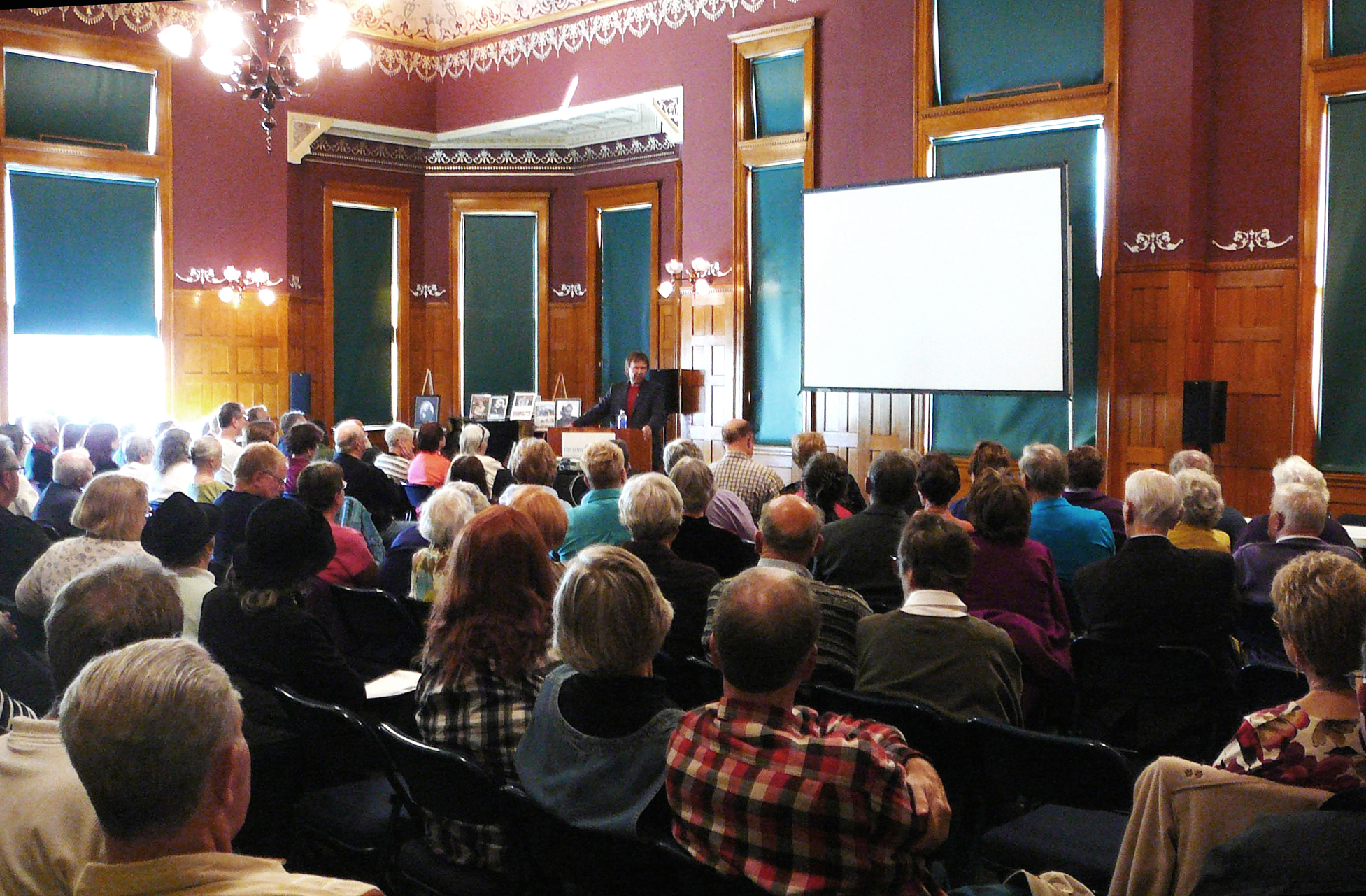
First thing yesterday morning I reported to WANE TV-15 for a short but punchy on-camera interview with Gina Carano. Four hours later came the main event: an exhibit of a couple dozen Carole Lombard-owned items at the Fort Wayne History Center, and an accompanying lecture by yours truly about the book Fireball. My initial doubts about attendance vanished as the crowd poured in. We ended up with a near house record of 133, including Rick and Cora Brandt of the Lombard house, Barb and Lonnie Cox of the Knight (Shepherd’s) House, and Bill and Janet Heffley, owners of the Peters house—making it a clean sweep of Lombard-related homes.

Fireball: Carole Lombard and the Mystery of Flight 3 by Robert Matzen

Operating on three hours of sleep but ready for action on WANE-TV with Gina Carano.

Other VIPs included three third cousins of Jane Peters/Carole Lombard, all named Peters, along with Fireball researcher and Carole Lombard expert Marina Gray and Carole Lombard Archive Foundation director Carole Sampeck. My lecture was followed by a lively Q&A, a book signing, and then a well-attended tour of the Lombard house on Rockhill Street.

Fireball: Carole Lombard and the Mystery of Flight 3 by Robert Matzen

Lecturing in the spectacular Fort Wayne History Center.

I heard many stories of the supernatural over the course of the weekend. Not Halloween bump-in-the-night ghost stories but interesting real experiences by sober inhabitants of these and other classic Indiana homes. I guess that’s fitting for October.

Fireball: Carole Lombard and the Mystery of Flight 3 by Robert Matzen

Lots of books signed.

Fireball: Carole Lombard and the Mystery of Flight 3 by Robert Matzen

…including one for Fort Wayne patron of the arts Anita Cast.

I want to thank the Fort Wayne History Center for booking me into that fantastic venue, particularly Todd Maxwell Pelfrey, executive director, and Nancy McCammon-Hansen, marketing director, and also Steve, Randy, Bob, and Carmen for their help onsite. Thanks also go to Anita Cast for her help in lining up the lecture, Kevin Kilbane of the Fort Wayne News-Sentinel for his print pieces heralding the event, and Gina Carano and Natalie Wagner of WANE for one of the smoothest TV appearances of the whole Fireball tour.

Special thanks go to partners in crime Marina and Carole for a wild ride this weekend. From the two of them—and I’m sure all of you—I want to say directly to the cosmos, Happy Birthday, Carole Lombard. Fort Wayne loves and remembers you.

Fireball: Carole Lombard and the Mystery of Flight 3 by Robert Matzen

Displays included a clutch purse, monogrammed handkerchief, and jewelry owned by Carole Lombard.

Fireball: Carole Lombard and the Mystery of Flight 3 by Robert Matzen

Another case featured snapshots of Gable hunting trips, a Gable duck call, a handwritten note from Lombard to MGM VP Eddie Mannix, and a bond receipt from Indianapolis.

Fireball: Carole Lombard and the Mystery of Flight 3 by Robert Matzen

Also at the History Center, a display of material from the Flight 3 crash site, including partially burned mail and melted aluminum–reminders of the ferocity of impact and daunting task facing investigators in 1942.