I’ve been away from this column for a while as I’m stuck in 1944, deep into a new book that takes a fun and funny look at D-Day.
Wait, what?
Stay tuned for more on that project. In the meantime, it’s been so long since I wrote a column that I wanted to provide something new, and what better way to do that than to talk about holiday movies?
How is it that three of the all-time holiday classic films to come out of Hollywood premiered within six months of each other? Three! Each had at its center a wise old man with mystical qualities, and each of the three pictures had ties to a devastating, traumatic world war very close in the rear-view mirror. The thing I wondered was, what environmental conditions resulted in these three particular pictures being made so close together?
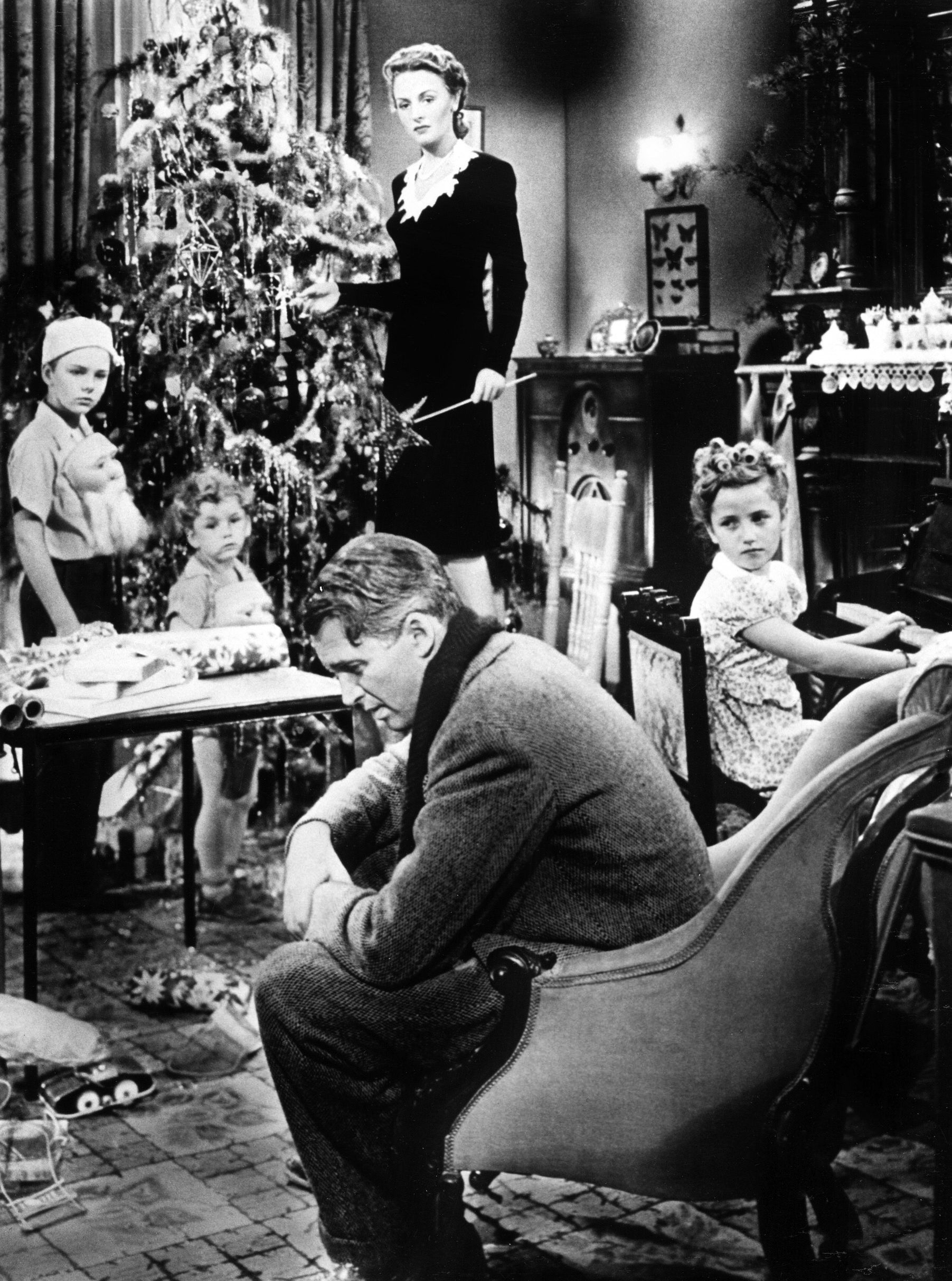
The first of the three to premiere was It’s a Wonderful Life, which entered the world after the holidays, in January 1947. I laid out my views on this dark, disturbing picture in a 2018 column. It’s a great film, don’t get me wrong, as proven by constant television airplay since the 1950s, but man, it’s a tough 130 minutes, seeing as how it features death, grief, alcoholism, depression, moral corruption, and finally, attempted suicide. And no, the picture didn’t bomb on first release; it merely cost three times the usual production budget given Frank Capra’s fastidiousness and the need to recreate Bedford Falls, New York, in the San Fernando Valley (and shoot at 100 degrees in June). With that amount of overhead, Capra’s comeback vehicle wasn’t going to turn a profit on first run.
Two old men drive the plot of IaWL, a bad guy and a good guy: scheming, villainous capitalist Henry Potter and ingenuous Clarence Odbody, George Bailey’s guardian angel intent on teaching suicidal George his lesson (that his is a wonderful life) so Clarence can earn his wings.
As noted in my earlier piece, Jim Stewart did not want to make this picture. Suicide? He’d seen men blow their brains out in the Army Air Forces rather than fly one more mission—events that were covered up for obvious reasons. He just wanted to come home and make a comedy, but this was the only part offered, and he needed to earn a living.
In the story, George couldn’t serve in the war because of a childhood accident that left him deaf in one ear. But his brother Harry had gone on to earn the Congressional Medal of Honor as a fighter pilot for shooting down a kamikaze before it could hit an Allied troop ship. Otherwise, it seems Capra caught the vibe that audiences were war-weary and he steered clear of much war talk in his script.
The next picture of today’s trio took the opposite approach with a major plot line about millions of service personnel returning home from the war only to find a massive housing shortage. This was It Happened on 5th Avenue, which premiered in April 1947, three months after IaWL. It was a story originally bought by Capra, who opted for Stewart and the other property, so veteran director Roy Del Ruth mirrored Capra’s style—little guys, war veterans all, take on a corporate behemoth and (spoiler alert) win.
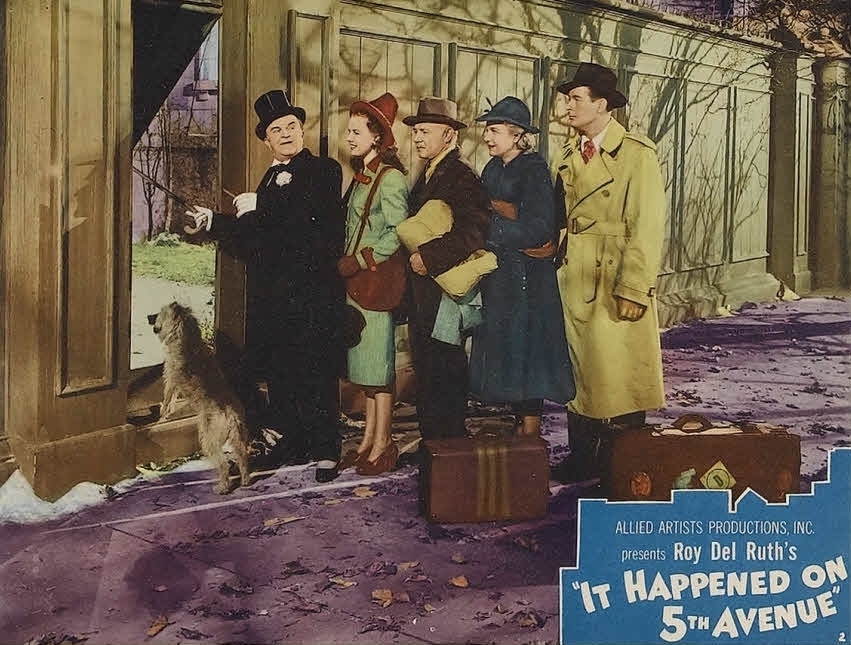
Another old guy drives the plot—a vagrant named Aloysius T. McKeever who devises a way to live in the New York mansion of Michael O’Connor (the second-richest man in the world) when it’s boarded up from November to March. In fact, Charlie Ruggles as O’Connor is another older gentleman key to the story—when O’Connor goes off to winter in Virginia, McKeever and his dog sneak into the mansion and live there alone. Well, this year he is pressed to help several returning warriors and their families who can’t find housing. Suddenly the mansion is bulging with people, including the rich man’s daughter who, in a very convoluted plot, pretends to be homeless. Soon O’Connor himself and his estranged wife are pretending to be homeless and squatting in the mansion and…
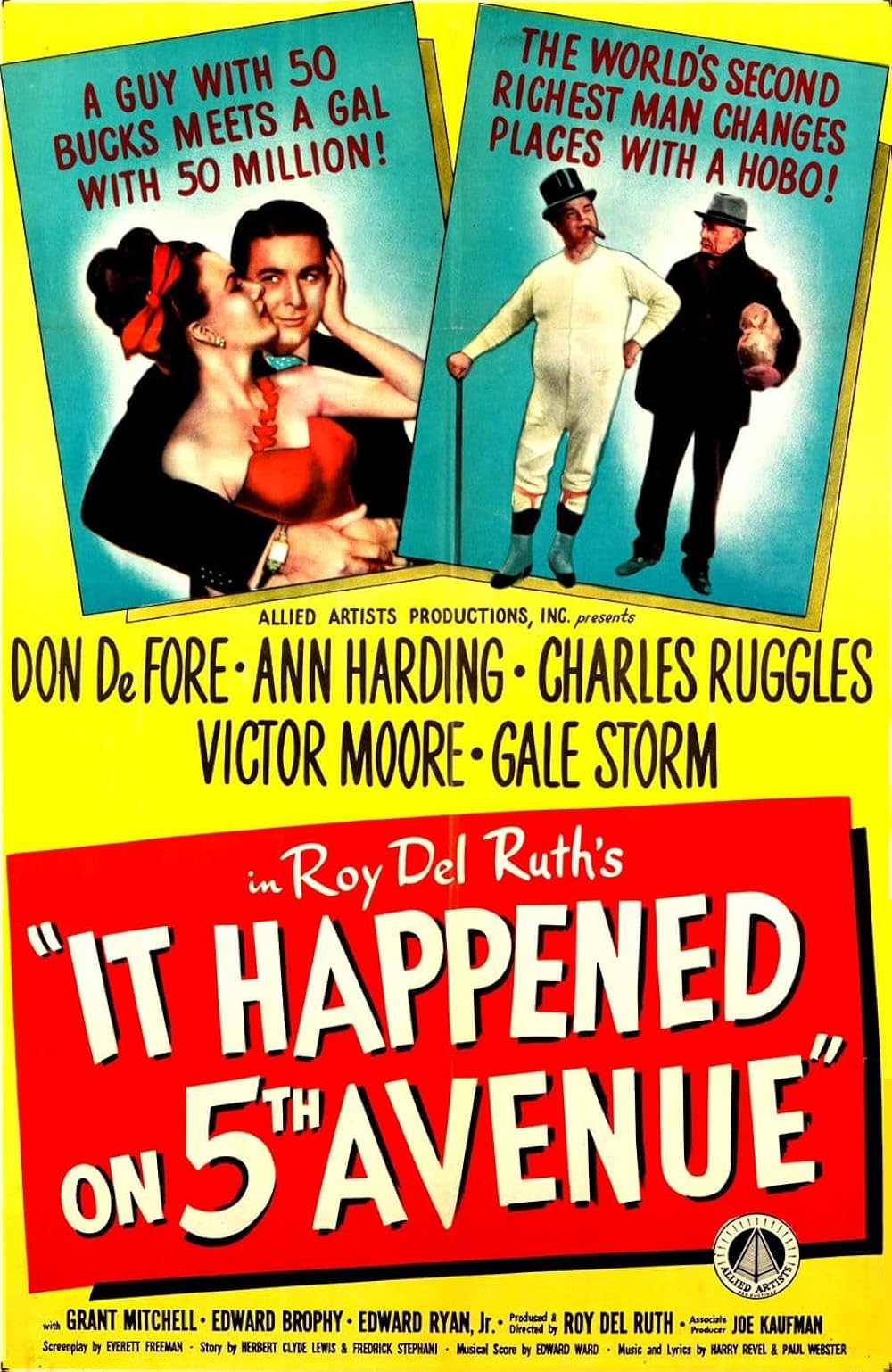
Trust me, it’s a stretch finding credibility in this story. That said, it’s charming as hell and played for all it’s worth by an earnest cast of second-tier Hollywood people including Don DeFore, Gail Storm, and screen veteran Ann Harding. Victor Moore as the New York vagrant uses every ounce of experience stretching back to Vaudeville and the silents to make the part, and the story, work. For my money, Charlie Ruggles does even better as put-upon Mike O’Connor, who has lost touch with his family and reclaims his goodness through lessons learned from Aloysius McKeever, who (in place of true mysticism) does kind things throughout the run time. The best way I can describe how it feels to watch It Happened on 5th Avenue is that the goings on are sprinkled with magic dust. You need to keep watching to learn how these poor people are going to get out of their convoluted mess. Everyone behaves beautifully, with honor, until (spoiler alert) it all works out in the end. There’s no bad guy; no one has bad will. Especially in today’s world, it feels great to hang out with good people for two hours.
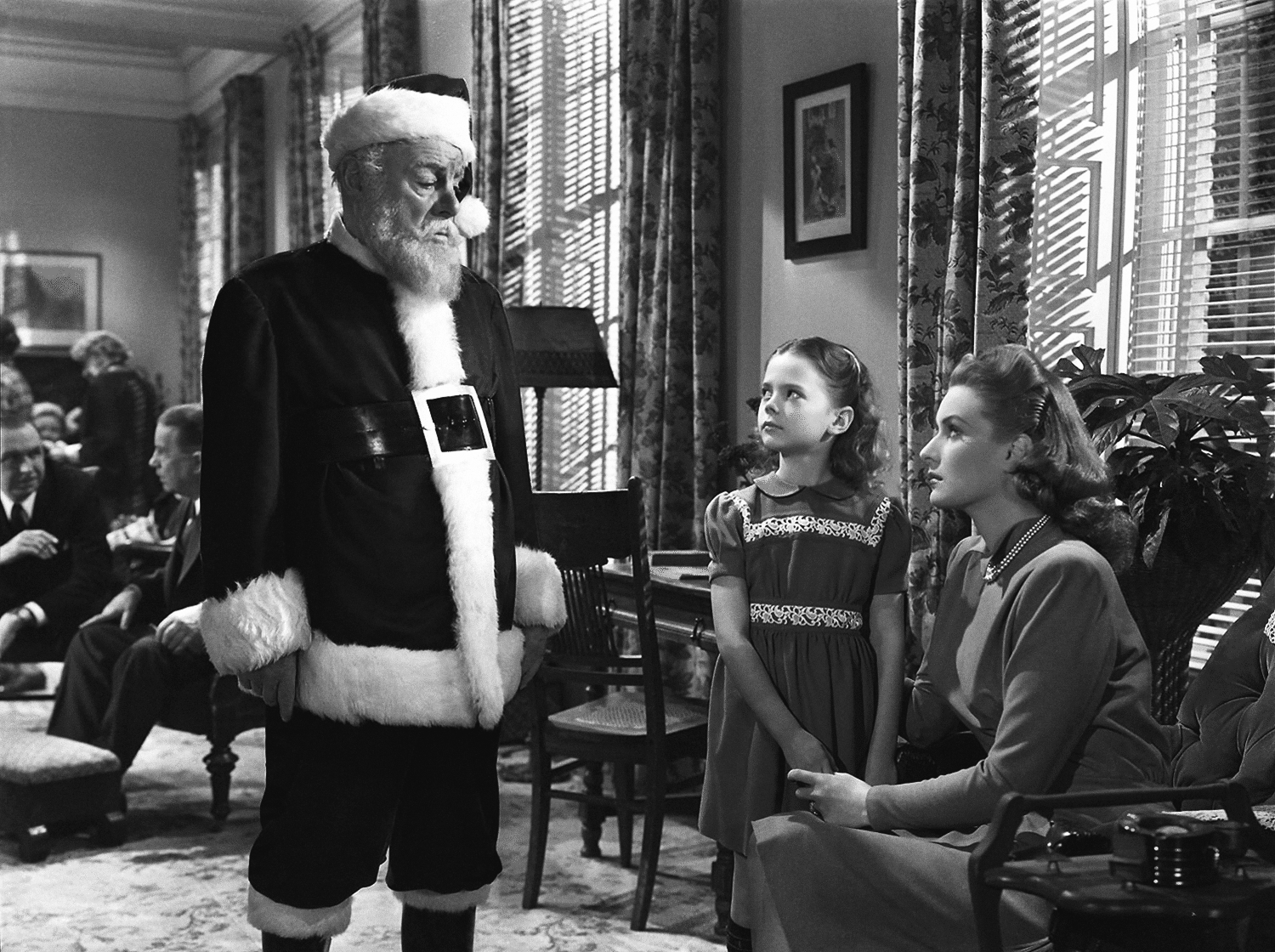
Finally in June 1947 came Miracle on 34th Street, which I detailed in a piece lovingly called Santa Claus and the Cold Hand of Death. I find this picture, directed by George Seaton, to be so tightly written and slickly crafted that it’s my favorite of the three. The old man in this case is Kris Kringle, “the one and only Santa Claus,” who is hired by Macy’s to play Santa Claus. He believes he’s Santa; the screenwriters craft him as Santa. At no point is the spell broken as to his identity, except perhaps when Santa turns to violence and bops the unstable, insecure Macy’s psychologist on the head with his cane. That has always bothered me—really, Santa, that’s the only way you can teach the guy a lesson? But then, how else was Santa going to be incarcerated and put on trial so he could be (spoiler alert) vindicated on Christmas Eve? Nits aside, Edmund Gwenn plays the hell out of Santa, brimming with authenticity to the extent that 8-year-old actress Natalie Wood thought he was the real thing throughout production.
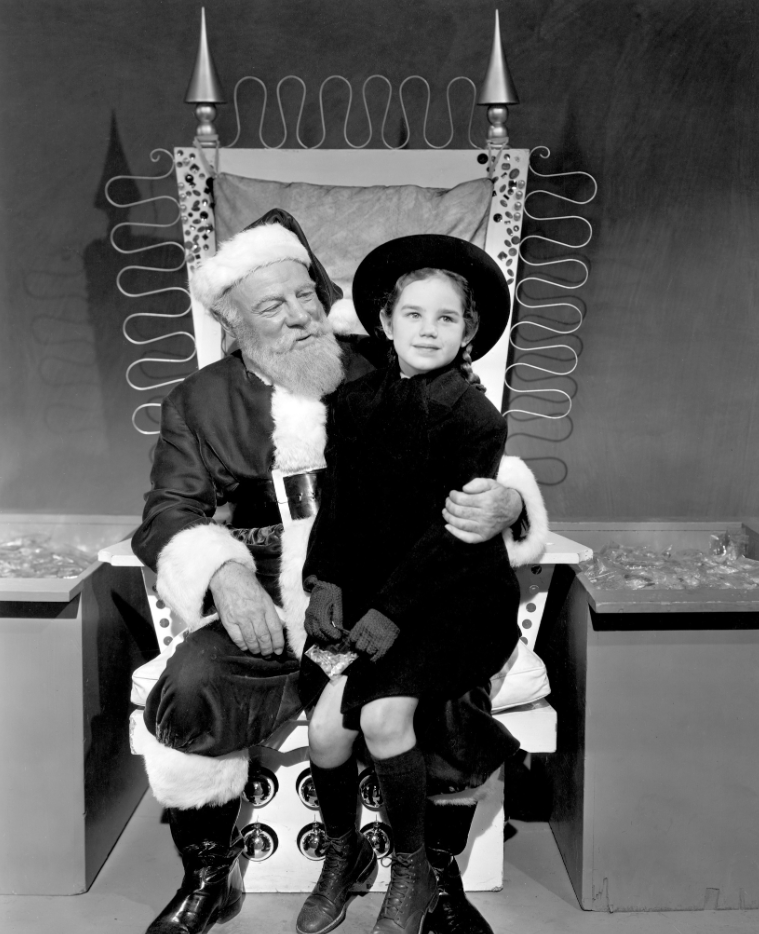
The war’s cold hand of death in Miracle on 34th Street comes only in the form of an orphan girl from Rotterdam who with her adoptive mother visits Santa at Macy’s. The 1940 bombing of Rotterdam to force Dutch surrender was known all over the world as an example of Nazi evil, so all the parent had to say was, “She’s from Rotterdam” and the implication was clear. Otherwise, this is a story that takes place in a rebounding United States, the war further in the past so that no further reference is necessary. Cash registers are now free to jingle merrily.
So why were It’s a Wonderful Life, It Happened on 5th Avenue, and Miracle on 34th Street made when they were made? When you think about it, cinema had taken a dark turn after the war. Film Noir was all the rage—many of these pictures featured war-scarred veterans. Musicals were dead except for a few at Fox with Betty Grable or Vivian Blaine. But the war-weary world clearly wanted escapism of a gentle kind, because aside from It Happened on 5th Avenue and Miracle on 34th Street, two other top-10 hits of 1947 were The Ghost and Mrs. Muir and a little farther down the road the holiday-themed fantasy, The Bishop’s Wife, about an angel visiting a minister in crisis. Yes, the aftermath of war had caused people to seek a collective restoration of hope, through George Bailey, through the veterans-turned-entrepreneurs solving a housing crisis while holed up on 5th Avenue, and through not only Santa Claus but also Fred, Doris, and little Susan. Each year, many of us seek comfort by reaching back to 1947 to experience all over again the simple beauty of happy endings in post-war America.
 Robert Matzen