Dutch Girl Robert Matzen

Paris When It Sizzled … and Fizzled

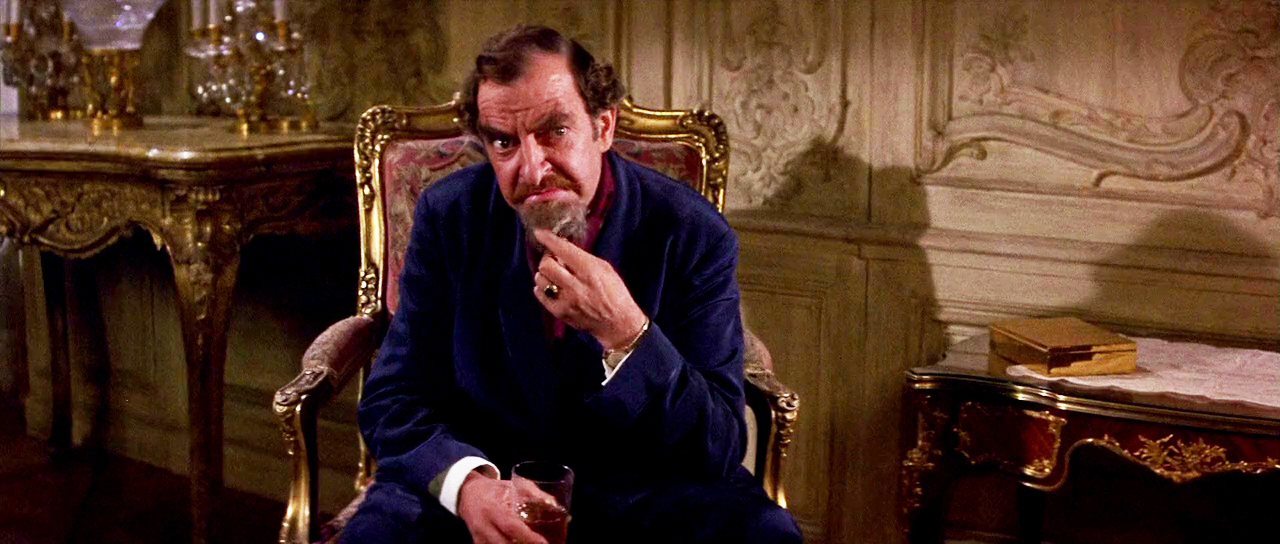
The awesome Hugh Griffith as Audrey’s art forger father.

When you hear the name Audrey Hepburn, what films come to mind? Quick! Don’t sit and think about it—rattle them off. Breakfast at Tiffany’s, right? Sabrina? Roman Holiday? Then what? Charade, the pretty good homage to Hitchcock? My Fair Lady, although that’s so much less an Audrey picture and more a Broadway musical. She made so few pictures, so shockingly few, and there was seemingly no rhyme or reason to what she agreed to star in. How does this girl go from Sabrina to War and Peace? Then to Love in the Afternoon as the romantic interest for a man twice her age who looks three times her age. Then to a weirdo picture like Green Mansions and an unexpectedly deep The Nun’s Story, followed by the depressing western The Unforgiven. And then, after the offbeat Breakfast at Tiffany’s, she makes the masochistic (for all involved) Children’s Hour. I’m whiplashed! Sorry, Audrey, but, I just don’t understand what your agent was thinking. If I had to guess, I’d smell a rat named Mel Ferrer (Audrey’s hubby), who never met a decision he couldn’t screw up.

Granted, Audrey came along at absolutely the wrong time to become a Hollywood star, in the early 1950s when television delivered unrelenting body blows to the motion picture industry. Hollywood had been humming right along through the war until infected by the small screen, the boob tube, the vast wasteland. Suddenly everything looked like Monogram or Republic or PRC in terms of production values as Hollywood was churning out 39 episodes of TV junk a season. All of which left the stars scrambling to find big-screen releases worth making. Suddenly it was a crazy game of musical chairs where the stars went from the luxury of 300 chairs in 1946 to 30 chairs by 1956, which left many falling on their asses.

That’s your backdrop, which makes Audrey’s 1966 feature, How to Steal a Million, such a treasure. Granted, for me, it’s a personal crossroads since I wrote two books about Audrey, and I get excited to see Fernand Gravet, who appeared in my book Fireball about Carole Lombard, and Marcel Dalio, who appeared in my book Season of the Gods about the making of Casablanca, and Hugh Griffith, who would later appear in Start the Revolution Without Me, a crazy sendup of my favorite author, Alexander Dumas. And the whole thing takes place in Paris, one of my favorite cities. For me, How to Steal a Million is like Ralph Edwards popping in to shout, “Robert Matzen, This Is Your life!”
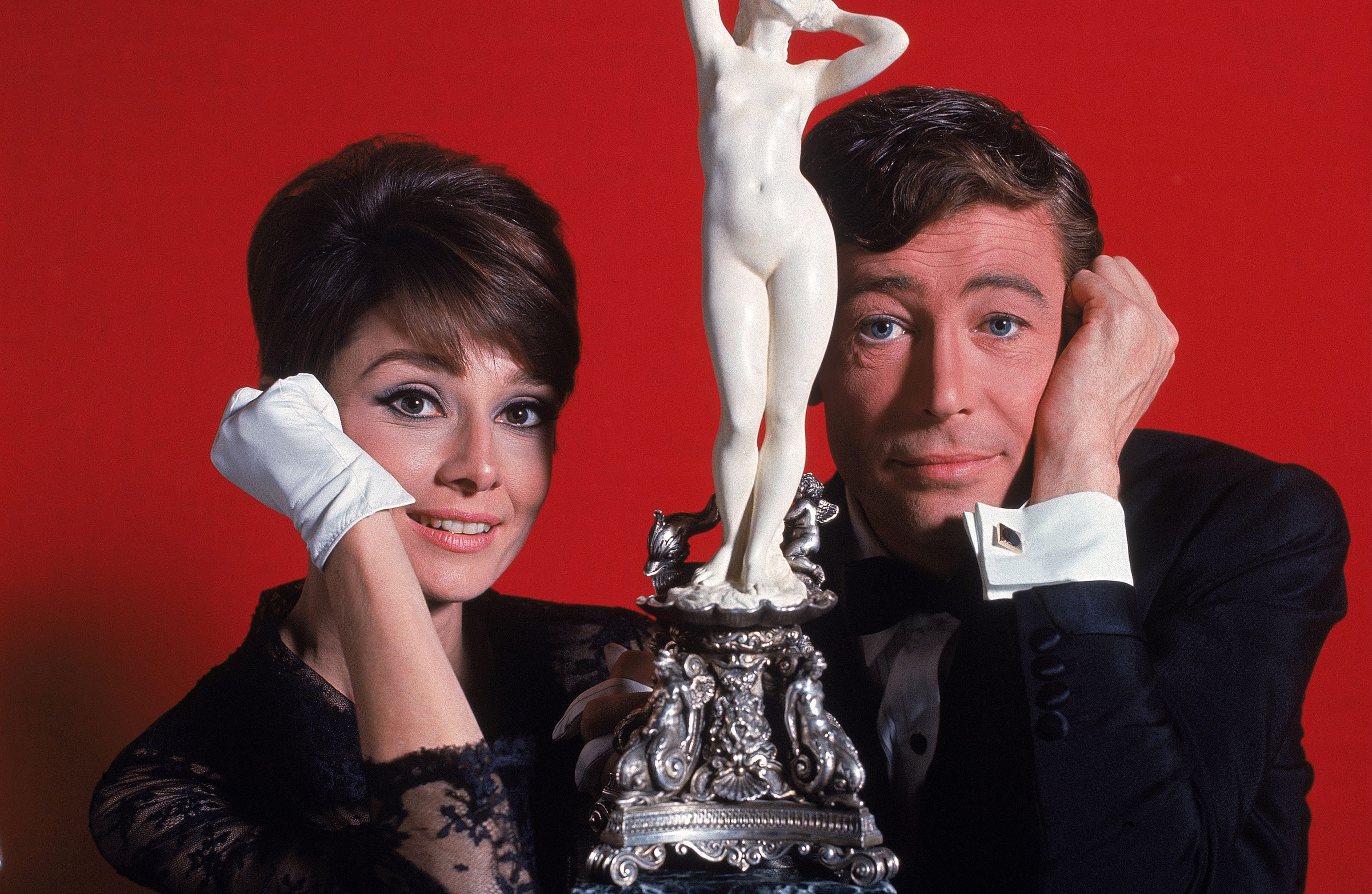
The stars of the show, Audrey, Venus, and Peter.

Why is it exactly that How to Steal a Million isn’t mentioned in anyone’s first breath when asked about a favorite Audrey Hepburn picture? I don’t understand it. On the Dutch Girl book tour, I was asked a dozen or more times to name my favorite Audrey movie and of course there’s Roman Holiday, but How to Steal a Million is right up there beside it. Both were directed by William Wyler, Audrey’s favorite taskmaster. Truth be told, she was a moth to flame when it came to domineering men, both personally and professionally. None fit that bill in her personal life better than Ferrer, a brittle and insecure man that she shed herself of much later than she should have.

Professionally, she knew she needed a firm hand at the tiller because she didn’t believe in herself as an actress. She said so time and again. “I’m not an actress; I’m a dancer.” She talked down her acting skills so loudly and so often that it sounded like false modesty, but, believe me, in her case it wasn’t. She hadn’t sought an acting career; she hadn’t come from the stage. She began to accept walk-on movie parts in England in 1951 and 1952 because she needed to eat and she had a mother to support. It was never out of burning ambition. There was an inevitability about her screen success because she fit a type that Hollywood had been lacking and possessed unique qualities that have kept her at the forefront for 75 years and counting, more than 30 years past her death.
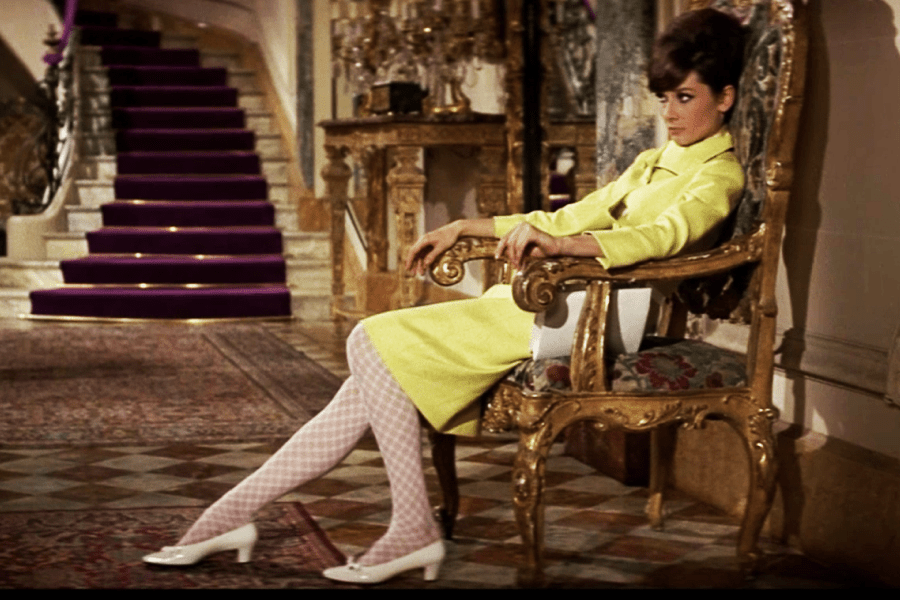
Audrey at the height of her game, age 36, in Givenchy.

In Roman Holiday, you can’t see it in the final print, but she spent her time in Rome a duck out of water. William Wyler wrenched that performance out of—and created—Audrey Hepburn. She was clay; he molded the clay. “He discovered me and nurtured me,” said Audrey of Wyler. “He was very protective of me.” Thirteen years and 13 pictures later they reunited for How to Steal a Million, the story of Nicole, who hails from a line of art forgers. She must find a way to steal her grandfather’s knockoff of Cellini’s Venus from the Kléber-Lafayette Museum before it can be examined and proved a fake. Peter O’Toole plays Simon, her unlikely but highly competent confederate and love interest.

Watching these two in this story is like sitting down and eating an entire Whitman Sampler without worrying about getting fat. It’s a treat, it’s delicious, and you just let yourself go. The story is charming; the characters are charming; the actors are charming. Every exterior is spectacular because it’s Paris—Notre Dame, the Latin Quarter, the Seine, the Louvre, the Musée Carnavalet.

And that dialogue, just, Wow. Nicole mentions that she’s going on a date with a rich American art collector. Her father—an art forger like his father—says offhandedly that he had sold this American a Toulouse Lautrec painting. Alarmed, she says, “Your Lautrec or Lautrec’s Lautrec?” He replies, “Mine, naturally.” When she groans, he grows offended: “Are you implying that my Lautrec is in any way inferior?” Bug-eyed Hugh Griffith is such a grand actor and perfect as her father the forger.
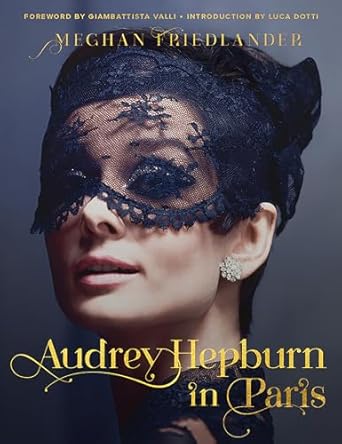
During the heist, Nicole is to dress as a scrubwoman, and when she asks why, Simon, her confederate, says dryly, “Well, for one thing, it gives Givenchy the night off.” Hubert de Givenchy, of course, being Audrey Hepburn’s designer of choice. In this picture, he created 24 outfits for her, none so spectacular as the black number with a black lace eye mask that’s featured on the cover of Meghan Friedlander’s excellent book, Audrey Hepburn in Paris (with an introduction by my pal Luca Dotti).

There are a few clinker moments in How to Steal a Million, some bits of business that fall flat, just a little here and there, like when you think you’re biting into a buttercream and it turns out to be lemon instead. These bits hint to me that Wyler wasn’t sure he was getting gold when time proves he was. Don’t cheapen the proceedings, Willy. Just create your masterpiece.
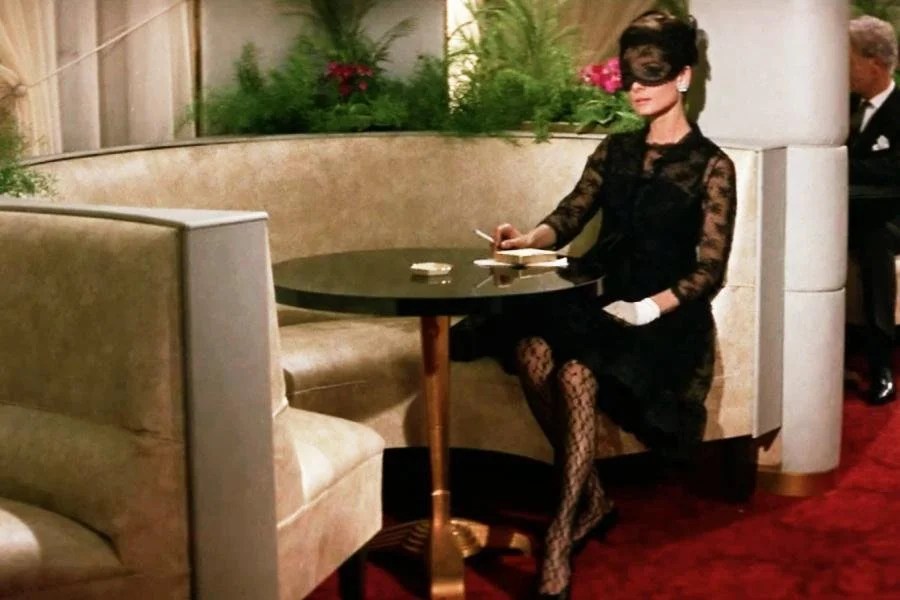
The black number, with the lace eye mask, when Nicole tries to be mysterious at the Ritz and solicit Simon for a “heist.”

Word to the wise: Don’t get How to Steal a Million confused with a clinker of a picture Audrey had made three years earlier called Paris When It Sizzles. Yikes what a disaster that one was. When your leading man (William Holden) has been carrying a torch for you for 10 years and you’re married with an omnipresent husband, that’s bad. When the leading man shows up drunk to the set most days, requiring an eventual intervention, that’s worse. And Holden was just one of the problems plaguing production to the extent that Paramount Pictures hid the final cut in the vault for two years with the knowledge that when they were forced to kick it out of the nest and into the world, Paris was going to fizzle. And it did.

Superhero Audrey

My book Warrior: Audrey Hepburn proved to be one of many casualties of the Pandemic. Warrior dropped in 2021 and because of the lockdown, because the stores were closed or not holding events, I couldn’t go out and tour in support of the book and so Warrior hit the water without making a splash. What a shame that is, because Warrior tells the story of the Audrey that her son Luca Dotti wanted the world to know about, the woman who took all the lessons learned during her World War 2 years spent under German occupation and applied them to helping those in need in war zones. Like a superhero, she would don helmet and flak vest and go on a UN mission into the middle of somebody’s civil war to advocate for children caught in the crossfire, and the next week show up in Givenchy at a New York or Hollywood gala with the rich and famous to raise funds for UNICEF.

I was reminded of Warrior and its subject when I saw a photo on Facebook of Audrey with her pal Gregory Peck at a November 1988 gala at the Waldorf-Astoria in New York City. This was after Audrey had gone to war-torn Ethiopia, where on landing she looked out the window of the plane to see Soviet MiGs parked on the runway and manned artillery batteries beside them. Welcome to life as a UNICEF goodwill ambassador! The first night on the ground there was spent in a bombed hotel with armed guards and no electricity, which caused the star not to bat an eye because she had spent weeks with no lights or running water in the Netherlands as the war ground to a conclusion in spring 1945.

The meeting with Peck also took place after Audrey’s most recent mission to Venezuela and Ecuador, which proved a walk in the park compared to what lay ahead in places like South Sudan where she faced machine gun fire, Vietnam where she charmed the general who had defeated the U.S. military, and Somalia where she impressed skittish Marines with her cool composure on the front lines.

Look at that face! This is the unknown Audrey, shy, a bit goofy, and always deferential with her daunting friend Greg. They had met 36 years earlier on location to make Roman Holiday and by that time 36-year-old Gregory Peck was a four-time Best Actor nominee while 23-year-old Audrey was taking her first stab at a full bells-and-whistles Hollywood production. She knew precious little about acting, had not honed her craft on the stage, and had hurried through a handful of screen appearances in UK pictures, usually as a walk-on. She spent the production of Roman Holiday terrified, which makes the performance coaxed out of her by Peck and director William Wyler all the more remarkable. How the heck do you win an Oscar as Best Actress your first time out under those conditions? If you asked Audrey, she would shrug her shoulders and give that same enigmatic smile—she just didn’t know.

Hepburn and Peck during the terrifying location shoot of Roman Holiday 36 years earlier.

Audrey Hepburn believed in luck. She had been very lucky during the war, like the time a German soldier shoved her under a tank as a British Spitfire stitched the pavement beside her with machine gun fire. Or the time she escaped Dutch Green Police who were rounding up girls to send to Berlin as forced labor. Or the many times she ran food and messages to Allied airmen on the run. She and her housemates were certainly lucky not to die in the artillery barrages that followed the battle for Arnhem or the misfiring V-1 rockets that fell on her village instead of their target of Antwerp. She was lucky not to die in the notorious Hunger Winter that killed 20,000 Dutch, although she came damn close.

I find it hilarious that Audrey spent her lifetime intimidated by Gregory Peck, who had sat out the war with “back trouble.” Hmmm. He sure didn’t have trouble hoisting himself into a B-17 while making Twelve O’Clock High, now did he? But that’s the beauty of Audrey: the inner beauty. She was brave and kind to a fault. No, really, to a fault. If you had a cold and Audrey was around, she would nag you back to health, and in the process nearly drown you in chicken soup. Every fan that didn’t get an autograph clouded her mind with guilt. Unlike just about every star around her, Audrey never “went Hollywood.” It wasn’t in her DNA.

All that came to mind when I saw this 1988 photo of Audrey and Greg at the Waldorf-Astoria and relived marathon conversations with Luca about his down-to-earth mother who also just happened to be a superhero.

Audrey on a U.S. Marine helicopter inbound to Mogadishu Airport, September 1992.

Questioning Why

Lawman moves to syndication sporting great numbers.

I work at a communications firm with a lot of younger people who are always talking about the latest movie or series they’re consuming. They get so excited talking about it, and one will mention a title and three others will chime in with enthusiasm. They don’t seem to notice that I’ve gone mute and averted my gaze because I have no idea what the hell they’re talking about and have nothing to contribute to the conversation. I remember the time the owner of the company came into my office maybe 15 years ago and asked me what my favorite television show was at that time, and I said, Cheyenne. She’s older than I am and started singing the theme song from Cheyenne, a western that ran from 1955 to 1962. Even then my boss thought it was funny that my favorite show was 47 years old. Yes, I continue to be trapped here in—wait, what year is it?—while my psyche lives in the dim and distant past. When I read a book, it’s about the Civil War or WWII; when I watch TV, it’s nothing that was made after 1975. You get the idea.

What’s your point, Robert? OK, my point isn’t anything about Lawman, per se. My point is about the nature of addiction, and are addicts born or made? Do you decide one day that you can’t live without your liquor or pills or chocolate? Or are you born with these unquenchable desires? I watch Peggie Castle on Lawman when she was 33 and 34 looking for clues about the addiction that would go on to kill her a decade later: hardening of the arteries and cirrhosis of the liver. She strikes me as such a tragic figure, this tall and willowy blonde who, you would think just by looking at her, had the world by the balls. For all I know after some quick research, Peggie Castle’s biggest problem at the time of Lawman was trouble keeping weight on to the point that her diet featured mainly pasta. Were those bags under her eyes a hint at late nights on the bottle? Or trouble sleeping caused by worry that would go on to cause the drinking?

One of my favorite shows is Lawman, a Warner Bros. western in production from 1958 to 1962. Lawman featured John Russell as Marshal Dan Troop of Laramie, Wyoming, who could draw pretty fast but lived more by an unwavering moral compass. Season one went well for Lawman in a booming period for television westerns, so for season two they decided to write in a love interest for Dan Troop (a couple of prospects had washed out in season one because of lack of pizzazz and chemistry with Russell). Warner Bros. hired 32-year-old Peggie Castle for the role, she the star of some noir B and costume pictures made throughout the 1950s. Sure, she had some roles in A pictures, but more often she made an impression as the “other woman” who was murdered in the second reel. The nasty film noir 99 River Street comes to mind.

Peggie Castle (left) in pre-Lawman days, vixen and murder victim in 99 River Street.

Four marriages by age 30 (the first in 1945 at 18 to a serviceman) make one suspect a capricious person, or an unhappy one looking for a stability she couldn’t muster on her own. The fact that she made her last motion picture right before Lawman and left television at the show’s cancellation in 1962 speaks to a general lack of ambition, or a need to get away from a Hollywood that seems to have been pretty good to her over the course of 12 years of steady work.

Russell as Lawman Troop; Castle as saloon owner Lily Merrill. Studio flak hinted at onscreen wedding bells in season four.

After Lawman, Peggie Castle would make just one more appearance in series television, a walk-on in a 1966 episode of The Virginian that was shocking for a couple of reasons. Her part as a dance-hall girl amounted to one scene that had nothing to do with the plot; it was something obviously written as a favor or a motivator, probably with ex-husband William McGarry pulling the strings. McGarry served as a long-time assistant director with a career that went back to To Be or Not to Be with Carole Lombard in 1942, and his many credits include Breakfast at Tiffany’s with Audrey Hepburn. (Oh, by the way, I wrote books about both actresses. Fireball. Dutch Girl. Warrior.)

I gasped the first time I saw Peggie Castle in this scene in The Virginian that was shot around the holidays 1965. Three and a half years had passed since Lawman wrapped production in May 1962, and Castle now looked like absolute hell, sporting what appears to be a black eye. They could cover that left cheek with makeup, but the swelling was another story.

Last glimpse of Peggie Castle–a one-scene curio on The Virginian.

If somebody were to write a book about Peggie Castle, I promise to buy it to learn what story arc set this woman on a path of self-destruction that ended when ex-husband McGarry found her sitting on the couch in her Hollywood apartment, dead at age 45. In an era when players earned no residuals for their movie and TV work, how did she pay rent for that apartment? How did she buy enough booze to wreck her body so fast? Most importantly, why did she lose the desire to live and work and need to be anesthetized 24/7? Did Hollywood kill her as it has taken so many others, and if she had never left Appalachia, Virginia, would everything have been different?

Lots of questions and no answers as I sit trapped in time watching Lawman.

Finding Audrey

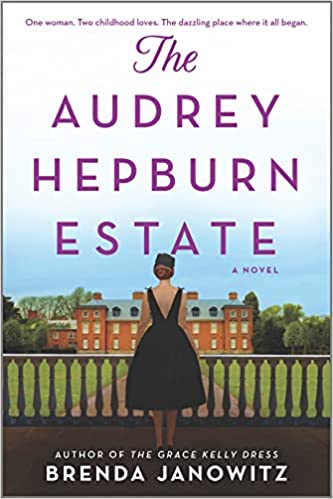
A while back I received an email from Brenda Janowitz, author of The Grace Kelly Dress, The Liz Taylor Ring, and six other books. Brenda explained that she had found inspiration for her new novel in part from my book Dutch Girl, which was nice to hear, although at the time I couldn’t imagine what she meant. Brenda sent along an advance reading copy of this new book, called The Audrey Hepburn Estate, and I wanted to pass along my thoughts about a reading experience that, for me, touched all the bases.

The story will be familiar to fans of Hepburn’s filmography: the parents of Emma Jansen worked for a family that owned a Long Island estate called Rolling Hill and Emma grew up living over its garage. Years later she returns to the grand house as it’s about to be torn down, setting off an adventure with childhood friends, including the grandson of the estate owners and the son of their driver. Dark memories are confronted and secrets revealed along the way and at various points, the plot evokes parallels to the life of Audrey Hepburn or characters she played.

As you can imagine, I’m all about historic preservation and loved the subplot about passionate attempts to save the crumbling Rolling Hill mansion. Just reading about the place and those dedicated to keeping it standing made me want to join the effort because who needs yet more luxury condos or another apartment building? Must we always bulldoze the past in the name of commerce? Oh, it’s in disrepair so we might as well flatten the old building. I’ve gotten involved in many efforts to preserve historic places, whether it’s a home or part of an old fort or a viewshed as once experienced by George Washington; sometimes you win, sometimes you lose. To me this aspect of the plot really resonated.

But there were still more goodies in store—mysteries related to Rolling Hill connecting back to the Netherlands in World War II, and secret passages in the old mansion, and was the place in fact haunted? So, what do you get when you round all the bases; that’s right, you hit a home run, and that was the treat Brenda Janowitz gave me. She handed me a page-turner of a book inspired in many ways by Audrey Hepburn, cleverly so, with a satisfying result. Time and again I smiled at a subtle Audrey allusion and then realized at book’s end that Brenda had included a “Finding Audrey Hepburn in The Audrey Hepburn Estate” epilogue taking the reader chapter by chapter through Hepburn references, parallels, and Easter eggs. I thought to myself, what a great device—the reader ends up not only with an entertaining novel but also an Audrey Hepburn primer, and I have no doubt Audrey herself would have been enchanted by this story because she loved to read and loved a great mystery.

The Audrey Hepburn Estate by Brenda Janowitz will be released in the United States on April 18, 2023. Good luck with it, Brenda, and thank you for an evocative reading experience that will inspire a new generation to learn more about one of the most inspiring people of the twentieth century.

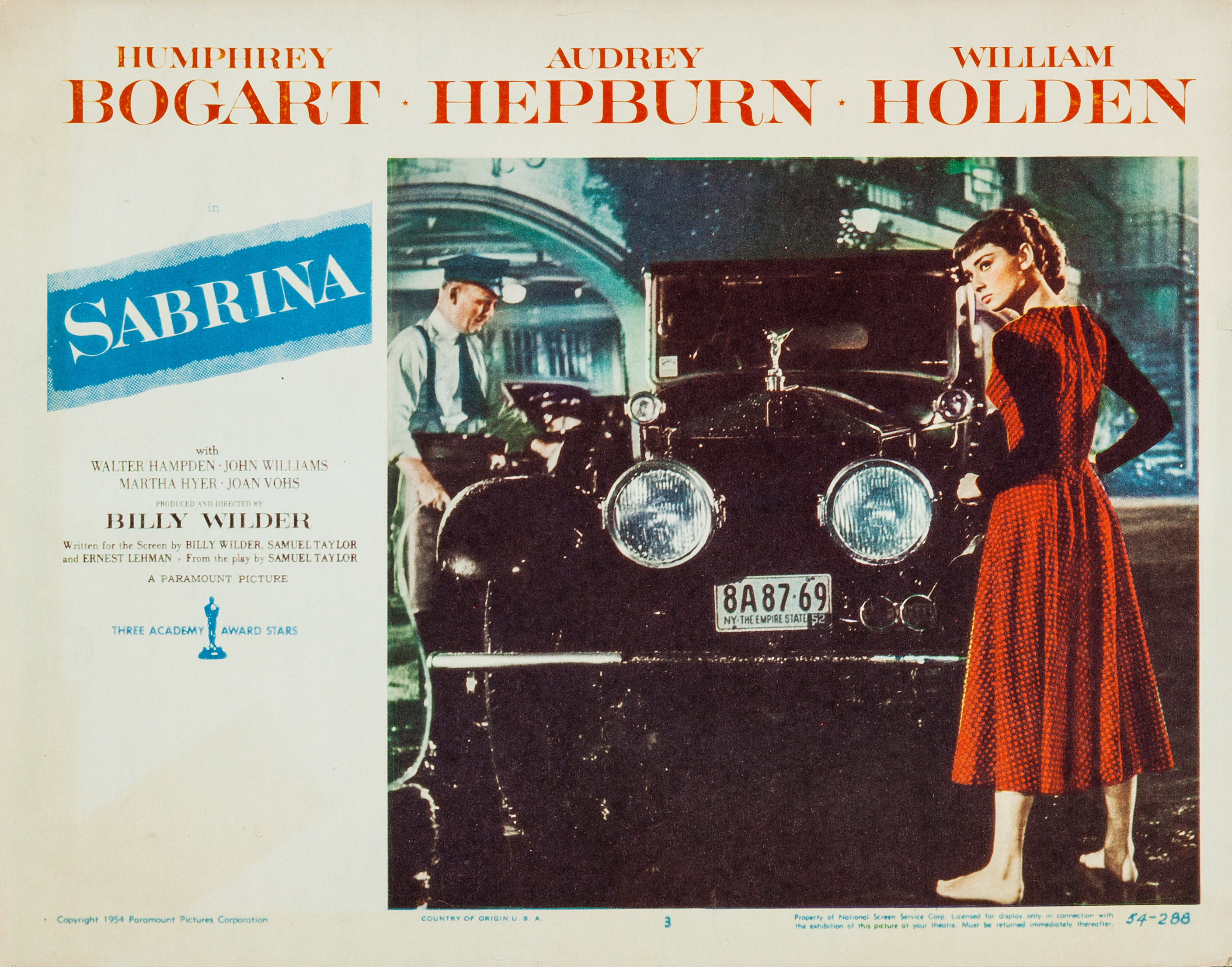
Like Audrey’s character in Sabrina, Emma once lived above the garage of a grand estate.

Reunion

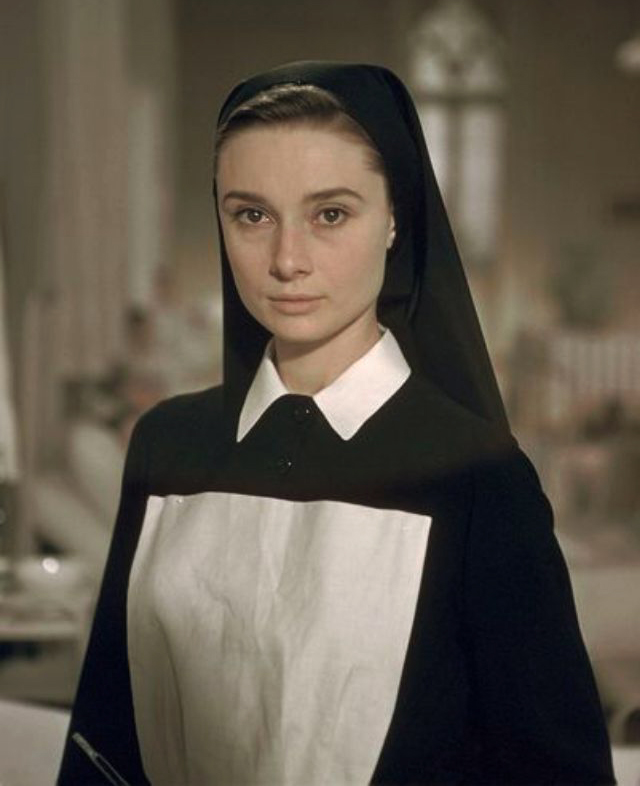
Audrey Hepburn in The Nun's Story.

I was reminded how much I miss Audrey Hepburn the other day when The Nun’s Story played in the U.S. on TCM. As you probably know if you’re a Hepburn fan, she never considered herself an actress and always classified herself a dancer. If she’d had her druthers, she’d have been a Balanchine girl, or at the very least a choreographer, but fate had other plans and thrust her into the limelight as an actress who occasionally enjoyed opportunities to dance in her films.

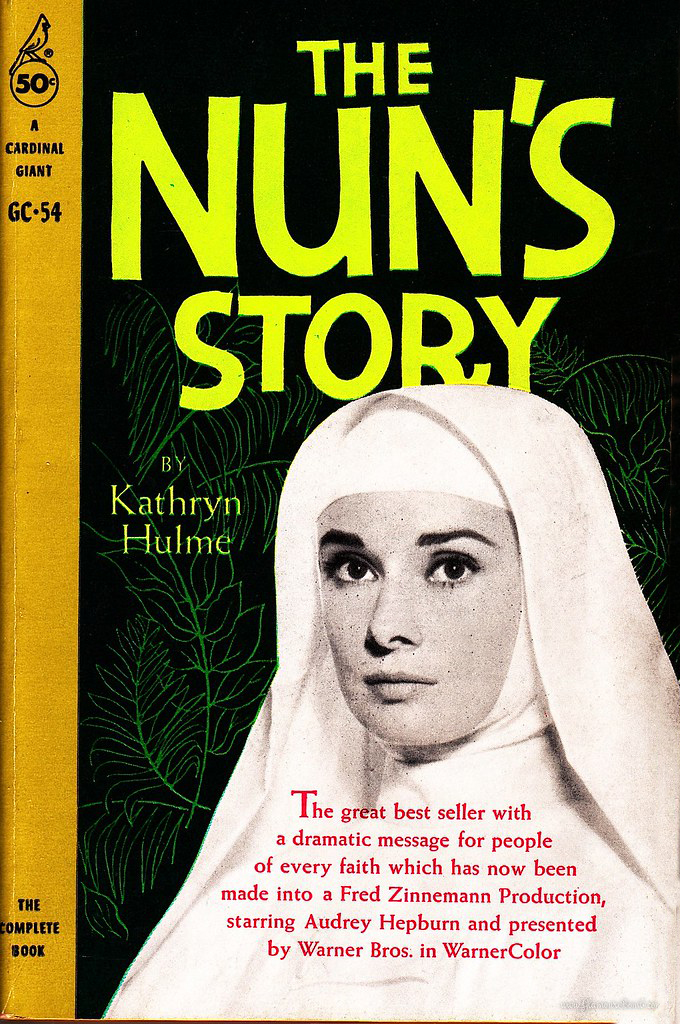
The book was a big deal at around the time of the film’s release.

I lived with Audrey Hepburn for five years writing first Dutch Girl and then Warrior, and that’s why I say I miss her. Any author will tell you that strong relationships are formed during the creation of a biography and you’re living with your subject, hearing her voice, walking in her footsteps, making sense of her decisions—and sometimes yelling at her, “You fool! Don’t do that!”

Audrey was one tough woman, hardened by all the trials of life smack-dab in the middle of a world war. She lived by instinct, and I can argue instinct was her superpower because she used her instincts to make a living as an actress and mold her own personality into whatever character she portrayed, even without formal stage training as an actress.

And there it all was in The Nun’s Story, where the non-Catholic Audrey portrayed long-suffering Sister Luke, a woman of passion and talent trying to live a life of humble obedience serving others in Europe and Africa. It’s a beautiful performance, always understated, with never a false step that I could see, and it earned her an Academy Award nomination and a Best Actress award from the British Academy of Film and Television Arts.

If you’ve read Dutch Girl: Audrey Hepburn and World War II, you know what Audrey endured in the war. The parallels in the plot of The Nun’s Story always startle me—in the last reel of the picture, World War II breaks out in Europe and Sister Luke is stationed in the Netherlands when the Germans march in. We hear that the Nazis have swept through Holland and forced a capitulation, and then that Sister Luke’s father has died in the fighting. When another nun starts to work for the Dutch Resistance, Sister Luke tries to look the other way but still sanctions the actions of her colleague. Finally, Sister Luke leaves the order so she can do her own fighting on the outside, and the last shot we see is this young woman walking out into the streets of the Netherlands toward an uncertain future.

Peter Finch plays a doctor in the Belgian Congo for whom Sister Luke develops feelings, especially after he helps her past a near-fatal bout of tuberculosis.

Imagine what she was thinking as she made this picture. Imagine her motivations for these scenes, as when German soldiers swarm onto the set. She had seen that uniform every day for years. Her uncle and cousin and many friends had been executed by men in that uniform. German soldiers had caused so much pain and hardship that the sight of those costumed extras, and the plot of invasion and death, could only have produced visceral reactions.

In preparation for making the picture, Audrey met with the author of the book The Nun’s Story, Kathryn Hulme, and through Hulme formed a friendship with Marie-Louise Habets, whose story was fictionalized by Hulme. Like Hepburn, Habets was born in Belgium and lived through the war in Europe. After leaving the convent, Habets did indeed join the Dutch Resistance, as did Audrey Hepburn. Until publication of Dutch Girl, the world didn’t fully grasp Audrey’s role in the war—after all, she was only 15 so what could she have done? Well, she did a lot, as it turned out, displaying toughness and discipline that would serve her through a variety of situations over a lifetime, including her work in The Nun’s Story. This was my third viewing of The Nun’s Story and I appreciate it now more than ever for reminding me of my very dear friend Audrey. We had some times together, you and I. They are with me always and I’ll cherish them, and you, forever.

Audrey was self-conscious about the bags under her eyes, but they served her well here as a nun under relentless pressure as both her health and faith begin to fail.

Blindsided

Watching Roman Holiday this past Friday evening, I was blindsided. I hadn’t seen this picture since the release of Dutch Girl, and for me the experience was much like rounding a corner on a city street and running into a long-lost friend. Here was young Audrey just seven years removed from the wartime Audrey I had sat with for three years, in whose footsteps I had walked in the Netherlands. That was the first and strangest experience the other evening—seeing this Audrey put me in a time warp and in my mind flashed scenes of the war from Dutch Girl and then memories from the ceremony in Velp in September 2019 when Audrey’s son Luca Dotti and I attended the unveiling of a historical marker and statue of Audrey at the site of her wartime home. I came out of the viewing of Roman Holiday thinking to myself, I’ve had an interesting life intersecting with interesting lives.

Audiences had every right to expect a happy ending from this poster art for the romantic comedy, Roman Holiday.

Other things really hit me during what must have been my fourth or fifth viewing of this classic picture.

I thought about Audrey during a long, demanding location shoot in Rome, her first interaction with a city that seems on celluloid to be friendly and welcoming. She wanders the streets alone, a princess nobody recognizes, and people are nice to her and she is nice to people. A couple of ironies hit me—of all the places in the world, she would end up living here in Rome with her second husband. And maybe because of the profound experience of making this first Hollywood film here, she naturally assumed she was already a member of the club, citizens of Rome. But real life, real Rome, would be cruel to Audrey. The marriage became an unhappy one, and as documented in my book Warrior: Audrey Hepburn, Romans never warmed to a movie star turned wife and mother.

Audrey’s inner circle as well as Luca revealed that she was treated badly by the locals. Her friend, writer Anna Cataldi of Milan, told me, “People in Rome, they were not nice to Audrey. They were absolutely not nice. She needed desperately to have friends and warmth. People were awful to her.” Luca said, “I believe that, for certain Roman social circles, the fact that she was too much a housewife, too ‘square,’ took its toll more than her celebrity.” He described the city as a sea of clannish neighborhoods with no appetite for outsiders.

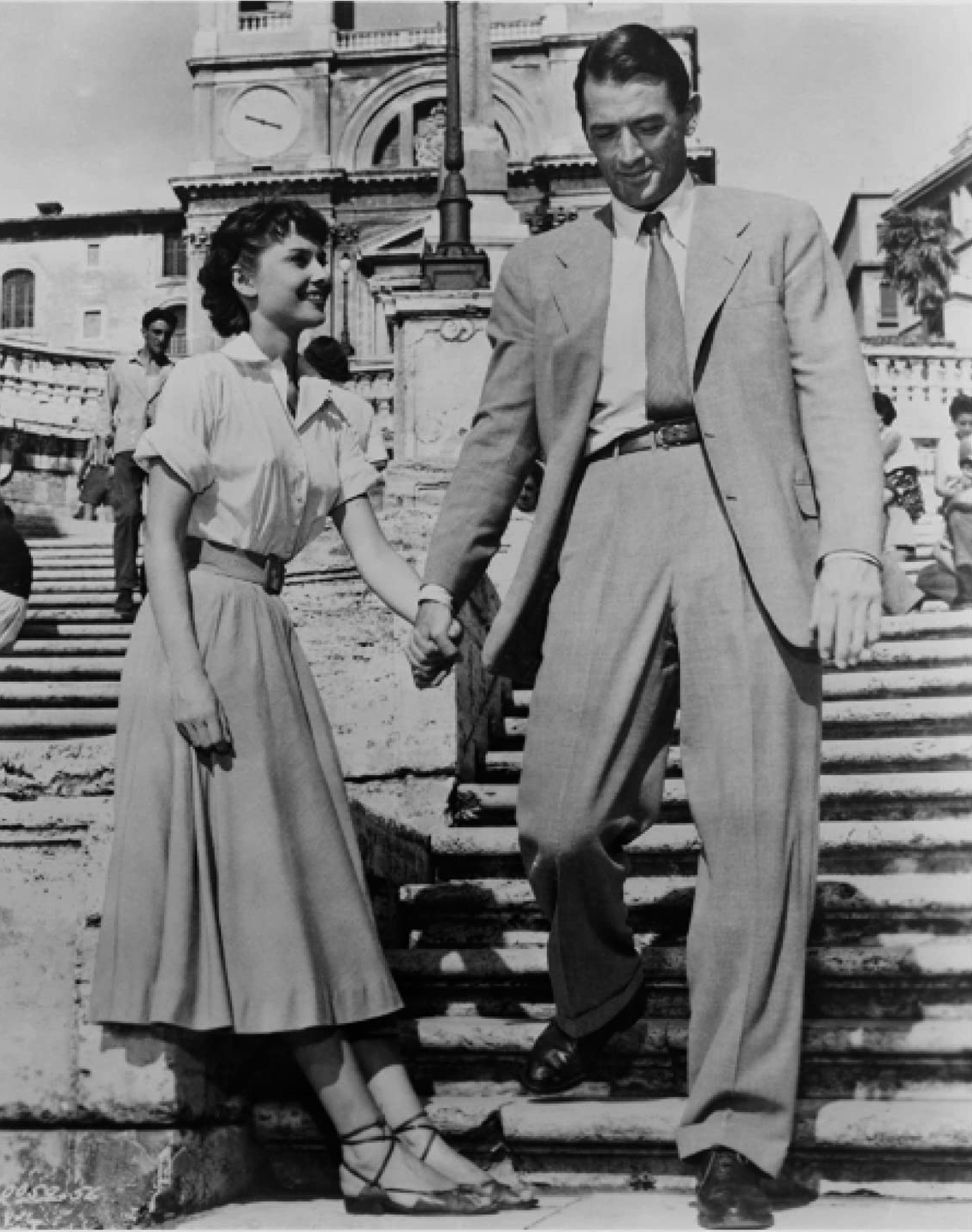
I’ve never asked Luca, who lives in Rome, if he talked with his mother about various spots in the city where Roman Holiday was shot. If it were my mom, I might just be a little haunted by the Spanish Steps where Anya sat eating gelato, or the other familiar locations where ingenuous Audrey Hepburn made her first important picture. Luca sometimes checks in on this blog so maybe he’ll provide the answer.

Audrey and leading man Gregory Peck on the Spanish Steps.

A couple of other aspects of Roman Holiday struck me this time. One was the “guy code” on full display. When a princess on the lam falls into their lap, press men Joe and Irving are out to get a hot story, complete with pictures. But when Joe falls in love with said princess, his principles intervene and he can’t cash in, which would betray her. Fair enough. But the guy code comes into play when Joe leaves it up to Irving whether he sells the Pulitzer-level photos he had taken of Ann’s Roman adventures. And for Irving there’s no decision. He does the honorable thing and foregoes the money and fame that would surely result and instead, gives the photos to the princess. Irving isn’t in love with her, his friend is, but that’s good enough for Irving. Boom—guy code. I honestly don’t know how many Irvings remain in the world today, this narcissistic gladiatorial arena of TikTok and Instagram where the number of clicks and the number of followers have become the raison d’être of…everyone? Surely not, but it seems that way sometimes.

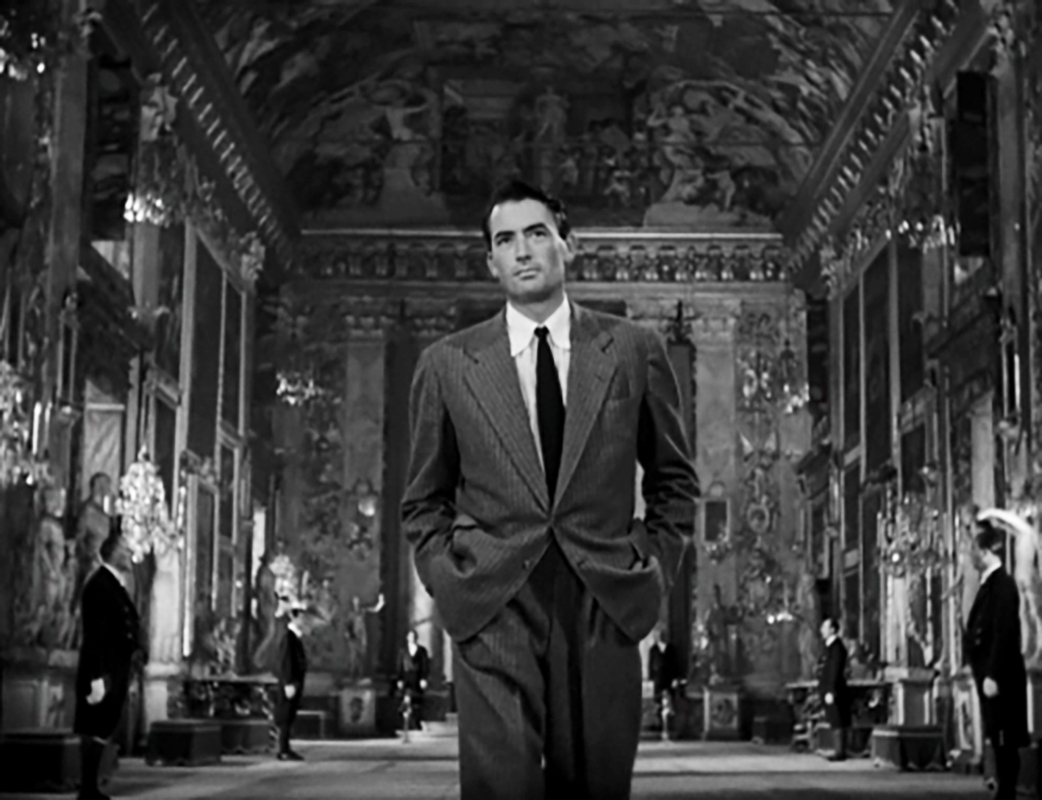
The story itself impressed me on this viewing for the fact that boy meets girl, boy loses girl, and girl eschews a happy life with boy because of a commitment to duty and country. It’s such a bittersweet twist and not what one would expect walking into the theater in 1953 to watch a romantic comedy. The ending is downright somber as Gregory Peck walks away with hands in pockets, alone and heartbroken. They have both done the noble thing, which may have been expected in 1953 but not so much today (see previous paragraph). This conclusion packs a punch because of its real-life aspect; so often, great love stories don’t result in the predictable happy ending, with 50 years of marital bliss. It doesn’t make such romances less real, valid, or momentous.

Standing next to Joe (Gregory Peck), Irving (Eddie Albert) is about to abide by the Guy Code and hand an envelope of “commemorative photos” to Princess Ann.

One final irony that hit me this time: Ann’s coming of age, represented by her voluntary return to royal duty after a 24-hour escape and holiday, sees her take control of her personal space from “the Countess,” her stone-faced lady in waiting. At this time in her life, Audrey was beginning a lifetime project of taking control of her personal space from “the baroness,” Audrey’s mother, Ella, Baroness van Heemstra. So very many ironies in this aspect of the story. Ella’s younger sister Marianne, Baroness van Heemstra (Audrey’s aunt), served as lady in waiting to Princess Juliana of the Netherlands before and during the war. Indeed, Audrey had grown up amidst a noble Dutch family set apart from the common people, which gave a young actress character insights to offset a decided lack of acting experience. In that regard, 23-year-old Audrey Hepburn served as a technical advisor on the production of her own first major motion picture.

When in the final sequence Princess Ann demands that the Countess retire from the royal chamber, it made me smile—in her lifetime Audrey would never experience such a symbolic moment with her own oppressor. Yes, the tables would turn late in Ella’s life when she became ill and dependent on her daughter’s good graces, but Audrey would remain oppressed and bitter until her own passing. Never did she dare to say, “You may retire, Baroness.”

I have no problem admitting I cried my eyes out at the ending this time, probably more than at any past viewing, because of all the intersections, emotions, realizations, and memories. I didn’t see any of it coming; I just sat down to watch a romantic comedy on a typical Friday evening.

The bittersweet ending Roman Holiday: Joe Bradley walks away alone.

The Pluses and Minuses of Time Travel

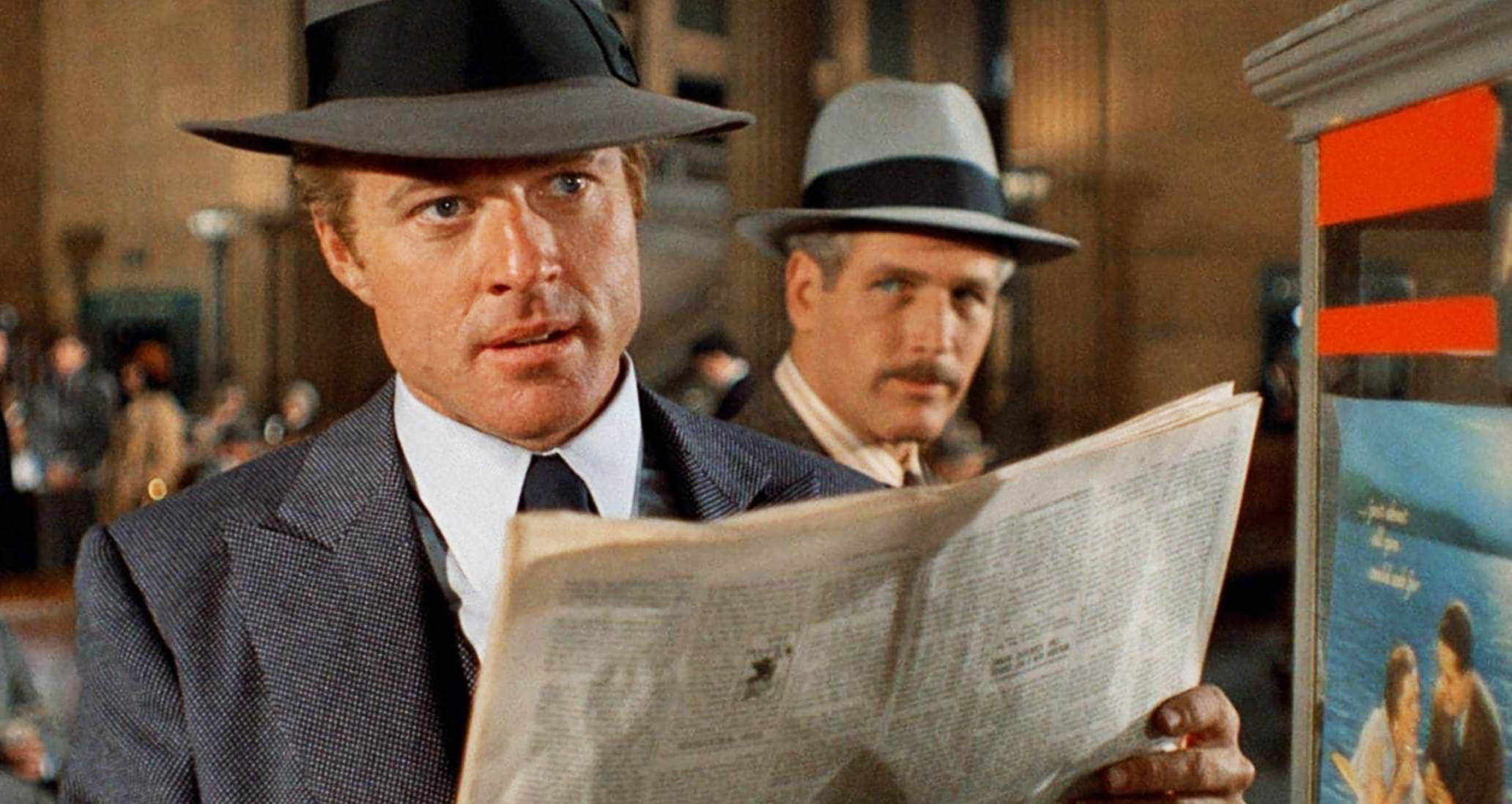
First seen through a windshield in 1973. (Hooker, looking at the bad guy: “He’s not so tough.” Gondorf (alarmed): “Neither are we.”)

Did you ever notice that some movies are like a time machine? And I mean very much like Rod Taylor’s contraption. You step into the movie, and it transports you instantly to another place and time—where you were when you saw it and how old you were, and you reconnect with your sensibilities back then and can feel who was sitting next to you at the theater. You can see the room if you were watching it on TV and remember your self back then. Who you were and what the world was like.

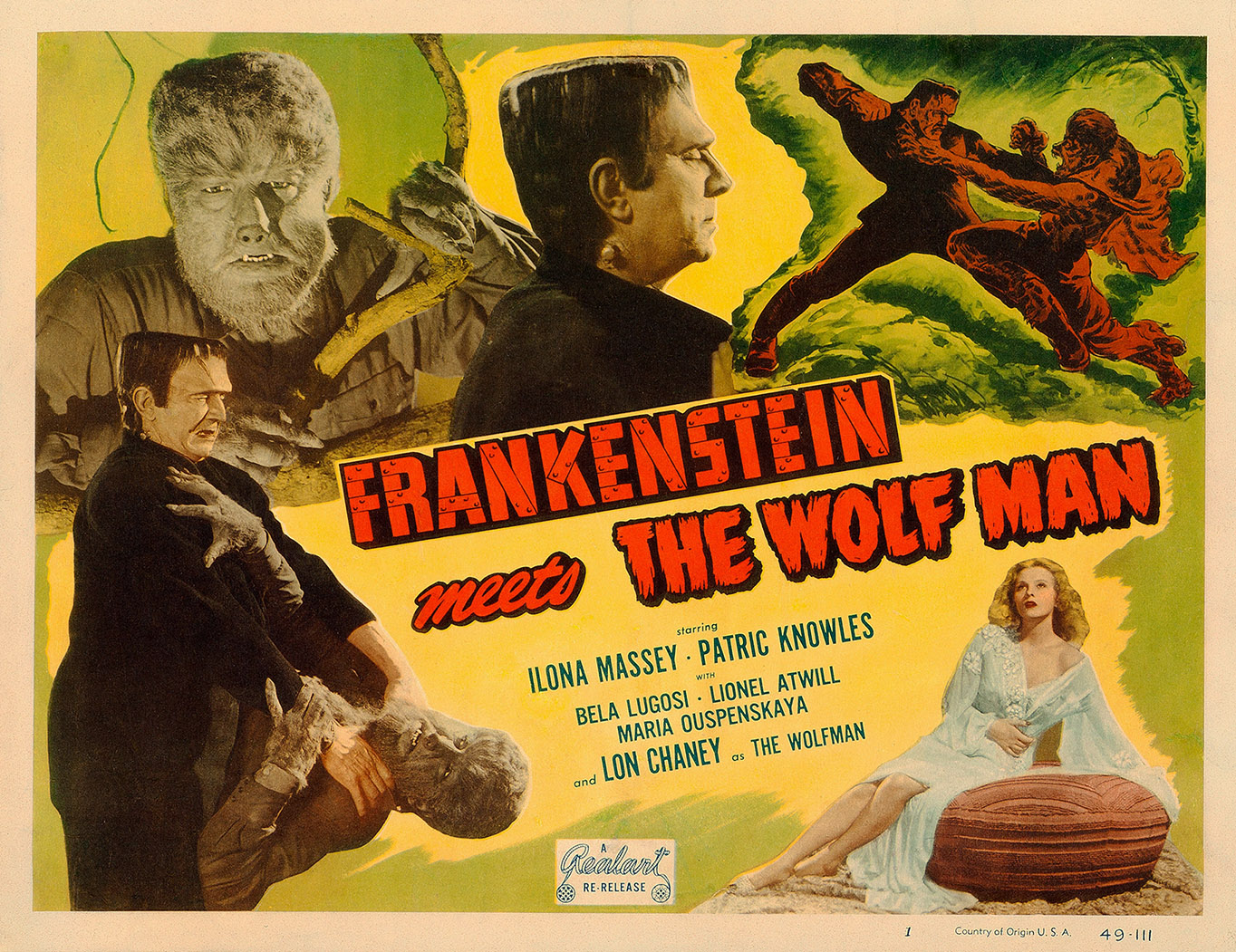
As the years pass this happens to me more and more. For example, Frankenstein Meets the Wolf Man, a Universal horror B-picture released in 1943, isn’t very good. In fact, it’s downright bad, with plot inconsistencies to give you a headache and some questionable casting. But it’s my favorite because every time I see the Universal logo and hear the fanfare, I’m 10 again and staying up late to watch Chiller Theatre on WIIC in Pittsburgh Saturday night at 11:30, after the news. What a struggle it was to stay awake back then after marauding through town all day and playing hours of baseball in any pick-up game I could find.

I never did get to see House of Frankenstein as a kid because I’d always manage to fall asleep. What I remember about House of Frankenstein is imagining how spooky it was as my friends (made of sterner stuff) stayed awake all the way through and described the horrific goings-on. But I must have made it through Frankenstein Meets the Wolf Man at least once for the memories it evokes of the living room in the house where I grew up, a place long ago demolished. The living room and being alone in the dark watching the TV and wondering if the Wolf Man was going to bound down the stairs and tear me apart.

I managed to survive my youth without the Wolf Man tearing me apart in the dark.

Watching The Sting takes me back to Cuppies Drive-In and watching the screen over my dad’s right shoulder and my mom’s left and through a windshield, with the tinny sound of a speaker attached to the driver’s-side window. The Sting shoots me into their world, and I feel my parents as they absorb the time and place—the 1930s during the Depression when they were young. I have to credit the accuracy of the time period recreated during production of The Sting in 1972 because my parents never had the spell broken by something inappropriate to the 1930s. They loved The Sting. In fact, they loved the movies, which is where I caught the bug. That fact makes the time machine experience of particular movies bittersweet because for fleeting minutes they’re alive again and in their prime and then, poof, gone. And here you are, alone, murmuring, “Damn.” For a little while it’s as if you could reach out and touch them as we all sat at the drive-in watching The Sting. The time machine is that powerful a piece of mental machinery.

I still can’t watch JFK because I saw it with my friend Tom during a dark time in my life, as a relationship was falling apart. Those were black, black days and seeing any reference to JFK picks me up and tosses me back into the pit of despair; better to walk a wide circle around that one. I remember my good friend John telling me a similar story about breaking up with his girlfriend at the time Gray Lady Down was released. He told me this a couple of decades ago, but I bet he still can’t stand to watch Gray Lady Down, and I get it.

This and the accompanying music is all it takes to send me back in time.

Why is it that those long-ago movie experiences made such an impression? I can remember more recent pictures seen in theater settings that don’t result in the same time transport. I guess it all ended with Star Wars—every time I see that distinctive title screen and hear the first note of John Williams’ fanfare, it’s 1977 all over again and a new world of adventure opens. I’ve got goosebumps just writing about it. I was right there at the vanguard and saw Star Wars in first run six times in the spring and summer of 1977, and every time I’ve seen it since, that’s where I am, at the Showcase East in Monroeville queueing up. Just a kid. I remember reading about Star Wars and this evil character named Darth Vader and thinking, “No, he’s too scary. What if I can’t handle it?” I could imagine myself running screaming from the theater. But I hung tough and made it all the way through Star Wars and can reconnect with my youthful self by sitting down and popping in a Blu-Ray. It’s pretty cool to be able to do that.

I can’t be alone, right? So what are your time-machine movies and where do they take you?

The Decision

In 1987, the mink company Blackglama landed Audrey Hepburn (photographed by Richard Avedon) for its ongoing campaign showing legendary stars wearing fur. The photo sums up her life in retirement.

At age 58, Audrey Hepburn had no reason to leave an idyllic life of retirement in a Swiss village overlooking Lake Geneva to go campaigning for UNICEF. She lived in a beautiful home, family all around, a world-class fruit and vegetable garden she loved tending, and her best friend just up the hill. Audrey lived with Robert Wolders, the love of her life, third time being the charm after two tough marriages.

But there were nightmares, memories of World War II that ate at her many nights. Living in the Netherlands as a pre-teen and then a teenager, she had existed through every day of Nazi terror. She had watched the Germans march in and five years later endured the last days when the Allies drove them out again house by house, grenade by grenade. In between she experienced all the indignities of life under occupation, all the deprivation, all the outrages. Yes, the war had left quite an impression.

A convergence of issues prevented Audrey from living out her days in the seclusion of Tolochenaz, Switzerland. First, she was a van Heemstra, Dutch nobility that had for centuries felt the noble obligation of helping those less fortunate. “It’s just what one did,” as she expressed it. Second, she was an empath imprinted with memories of that war and out there in remote corners of the world were people suffering as she once had suffered. Their wars weren’t global; they were armed regional conflicts between political groups, religious groups, tribes, or clans within a country. She detested the term “civil war” but technically, that’s what they were and caught in the middle sat entire populations.

Audrey began her UNICEF career by accident. She was invited to emcee a benefit concert in Asia and then a second concert in a different country. Her participation was minimal—just a few minutes at the podium—and in each case UNICEF officials witnessed a mob of reporters desperate to cover the latest from this elusive celebrity. The top blew off the fundraising thermometer when Audrey Hepburn participated, which meant UNICEF must get Audrey to participate more often.

It’s an overlooked fact that Audrey attempted to dodge this commitment because she knew what it would mean for her partner, her family, and her own well-being. Nobody on her side of the fence wanted to see the brand known as Audrey Hepburn become a UNICEF representative because all sensed what it would mean. She knew, too. She knew her own nature and how totally she had always pledged herself once she made any promise. For a couple of months she backed away, listened to a drumbeat of entreaties from inside the family, and then finally, when she couldn’t back-peddle any further, she announced a decision. In so doing, she gave UNICEF a lot more than it bargained for.

I believe I’ve made a case that what she did with the next five years of her life altered the course of history, but you can decide for yourself. Warrior: Audrey Hepburn will be released by GoodKnight Books in hardcover, audiobook, and all ebook formats on September 28.

“Good Luck, Dear Rose”

I have a Dutch family. None of my ancestors are Dutch, but I inherited a whole family in the Netherlands by researching and writing Dutch Girl, an effort that began in 2015 with our first visit to Arnhem. It was there I discovered Audrey Hepburn’s connection to that spot on the map, which intrigued me all the more when I tried to research her wartime years in Arnhem and found little available information, with much of that conflicting. What I did learn pretty quickly was that Audrey lived in Arnhem from December 1939 to sometime in the middle of the war, and then moved to the next village to the east, Velp.

That first lunch in June 2017 with Ben van Griethuysen, Annemarth Visser ‘t Hooft, Rosemarie Kamphuisen, and me. After Ben’s mother was killed in an Allied fighter attack late in 1944, it was hospital volunteer Audrey Hepburn who comforted him.

In the spring of 2017, I contacted Velp’s leading historian, Gety Hengeveld, to request her help with information; at once she marshaled forces there and served as a point of contact for my upcoming research visit. Gety put together a luncheon so I could interview several wartime survivors at once, and there, in June 2017, I met my Dutch family, which included several names you’ll recognize if you have read Dutch Girl. I sat next to Rosemarie Kamphuisen that day, and we didn’t exactly hit it off because I believe trust didn’t come easily to her, and who was this American author and what were his intentions? Through lunch she held in her lap a published history of her family, including the war years, and she would refer to it to refresh her memory and conjure up dates related to the German occupation.

In the end she allowed me to photograph the relevant pages of her family history when lunch had concluded. Why? I guess she had judged me to be OK and beyond that, “You are our liberators!” she said to me with what I can only describe as awe and wonder in her voice. Just by being an American, I had qualified in her mind as one of the liberators, and I was honored and a little embarrassed to be lumped into the same group as the Allied troops that had attempted to liberate Velp in 1944 and succeeded a year later.

Mary and I saw Rosemarie on our next research trip in April 2018 during Velp’s solemn Liberation Day ceremony that takes place the Sunday closest to 16 April, the date everyone in the village, including Audrey Hepburn and her family, were freed from German occupation. Rosemarie greeted us like family and we sat and talked after the ceremony for a long time. We agreed to meet for dinner at a local restaurant a few days later and when Mary and I arrived at the restaurant, there was Rosemarie waiting for us, standing beside a bicycle that seemed much too big for her—she must have been at that time somewhere around 88 years old, and she had biked to our meeting! I will never quite get over that, but bicycles are the Dutch way of life and key to their sense of independence and health.

That day we learned all about Rosemarie and her family. She’d had a hard life including a bad marriage that forced her to start over from scratch while supporting five children. She had also become a force in the local community, a volunteer for senior citizens’ groups and historical preservationist.

Just for some perspective, Rosemarie was a bit younger than Audrey but also Audrey’s contemporary in Velp. She remembered the van Heemstras and was very fond of Dr. Henrik Visser ’t Hooft, the Velpsche doctor for whom Audrey volunteered and local Resistance leader.

Of this fascinating man she said, “I have known hard times in my life, and he supported me without many words, but by respecting me and giving a boost to my self-confidence. In one way or another he gave me the feeling that he loved me in the most decent way possible. At his farewell reception [in the 1970s] he hugged me with the words: “Good luck, dear Rose.” It was just what I needed.”

Rosemarie participated in the committee that placed a historical marker and statue at the site of Villa Beukenhof in Velp and staged their unveiling in September 2019. The committee invited Audrey’s son Luca Dotti and me to speak at the ceremony, which was simply spectacular, attended by about a thousand people, brass band, parade, and a lavish book signing of the Dutch version of Dutch Girl. Those events marked the last times we saw Rosemarie. Our planned 2020 return visit was canceled by Covid and we couldn’t provide in-person moral support when she suffered a debilitating heart attack about a year ago. The best we could do was speak to her on the phone and keep touch via email.

Rosemarie Kamphuisen passed away yesterday in hospice, but not without one last battle. She kept warning us that her heart was giving out, but we kept believing that nothing could really stop her. She came from good stock that had helped defeat the Nazis, and she’d beaten the odds and successfully raised her children and gone on to help me write Dutch Girl. I’m so happy to report she also provided important reminiscences that appear in my latest book, Warrior: Audrey Hepburn, due September 28.

One of the hazards of writing books about World War II is that an author meets and works with wonderful, important people in the autumn of their lives and they become family and then they move on. It happens over and over and it hurts. But above the sense of loss is such gratitude that we met to establish new and loving relationships in the course of capturing stories important to history. These people live on in my books, and in my heart, forever.

With many in my Dutch family in September 2019. From left, Patrick Jansen, whose father wrote the most important diary of the war from the perspective of Velp, Mary Matzen, Gety Hengeveld, Annemarth Visser ‘t Hooft, me, Johan Vermeulen, whose home was destroyed by the Germans in the battle of Arnhem, Rosemarie Kamphuisen, Josje Mantel, and Dick Mantel, whose job as a teenager was to make the lives of the occupying Nazis as miserable as possible. Dick lived across the street from the van Heemstras on Rozendaalselaan and Baron van Heemstra and Audrey would sneak over to listen to Radio Oranje on the Mantel’s secret radio set.

In the Time of the Germ

A number of new subscribers have come aboard, which I very much appreciate. Thank you all! This fact reminds me how derelict I’ve been in posting new content of late. So, here’s where I’ve been and what I’ve been up to instead of writing columns for this blog.

The Rathbones in 1938. Great actor and fine gentleman, but I had to pass.

FLASH BACK to autumn 2019, before Covid—if you can remember life before Covid. Dutch Girl had been a success in the U.S. and abroad, and I started to think about what I’d write next since it’s always a struggle finding something book-worthy. After Mission and before Dutch Girl I almost took on the task of attempting a biography of actor Basil Rathbone, but his relationship with narcissist wife Ouida was too f’ed up and although Rathbone wove his way into the fabric of Hollywood history, I refused to be locked in a room with an overt narcissist and her co-dependent husband through the course of 90,000 words. Because her toxicity poisoned too much of his career, I felt I had to throw that one back into the cosmic stream, which was OK because then Audrey came along.

After Dutch Girl I was poking around again and received a hot tip out of the blue about unexplored content in a university archive related to Dorothy Parker. You know, Algonquin Roundtable short story writer and renowned wit Dorothy Parker who ended up in Hollywood with her husband writing and fixing screenplays in the Golden Age. Well, she and I had a booze-soaked little fling and I read a lot of her stuff and it was an interesting life with lots of Hollywood ties and I thought, yeah, maybe Dorothy Parker. But then at 3 a.m. one morning—I wake up at 3 a.m. sometimes and start to process things and can’t stop—my eyes snapped open at the realization that if I thought Basil and Ouida Rathbone were unappealing as a subject, they’re child’s play compared to a mean drunk who drove not one but both husbands to kill themselves. I decided right then to not become a filler item for the newspaper, as in, “DID YOU KNOW that Dorothy Parker drove not only two husbands but also her biographer to commit suicide?” Dottie and I broke up the next morning.

Dorothy Parker and second husband Alan Campbell in Hollywood in 1936. After due consideration, I refused to become a statistic.

I was back at square one when a friend heard me talking about my problem of not knowing what to do next and joked, “Why don’t you do a book on Audrey Hepburn?” I laughed along because I had addressed the only area of Audrey’s life that hadn’t already been squeezed dry like an orange at the Sunkist factory. Some days later I said on the phone in a ha-ha way to Luca, Audrey’s son, “Hey, wanna hear a good one? Somebody said I do another book about Audrey—isn’t that crazy?” And there was a pause, and Luca said, in effect, I was thinking the same thing!

It’s now more than a year later and here I sit with a completed manuscript in my lap titled, Warrior: Audrey Hepburn and the Fight for Children. It’s the other shoe to drop, the mate to Dutch Girl that completes the story and answers the question, “What did Audrey Hepburn do with the horrific wartime memories she kept locked inside?” If you think you know the answer to that question, I’ll bet you really don’t. I discovered in talking to her closest surviving friends and the many UNICEF field workers who accompanied her on Third World missions that the history of what she did and how she did it was about to be lost. And what this is as she charged into war zones and took on world leaders. I had no idea until Luca pointed me in the right direction just what a treasure chest waited to be opened. As it happened, with the world in lockdown for most of the time I spent researching and writing, no matter whom I called or where in the world they were located, guess what? They wanted to talk!

Granted only a few people have seen the resulting manuscript and maybe it sucks. Some of my favorite creative projects have inspired reactions like, “What were you thinking?” But the experience for me has been pure magic. I mean, really, I just spent another year locked in a room with Audrey Hepburn. That, my friends, is not a bad way to endure a pandemic. It certainly beats being sentenced to prison with Dorothy Parker or Basil and Ouida Rathbone.

Depending on a number of factors led by Covid and my publisher’s reaction, you may be seeing Warrior in about a year. Between now and then, I hope to turn my attention to this blog on a regular basis.

Audrey greets Pakistani peacekeepers, warrior to warrior, at Mogadishu Airport, Somalia in September 1992. She sensed this mission would kill her, but undertook it anyway.