
Note: Season of the Gods is available in trade paperback and ebook formats at Amazon, Barnes & Noble, the independent Bookshop.org, and other book retailers. The audiobook version was read by the superb Holly Adams.
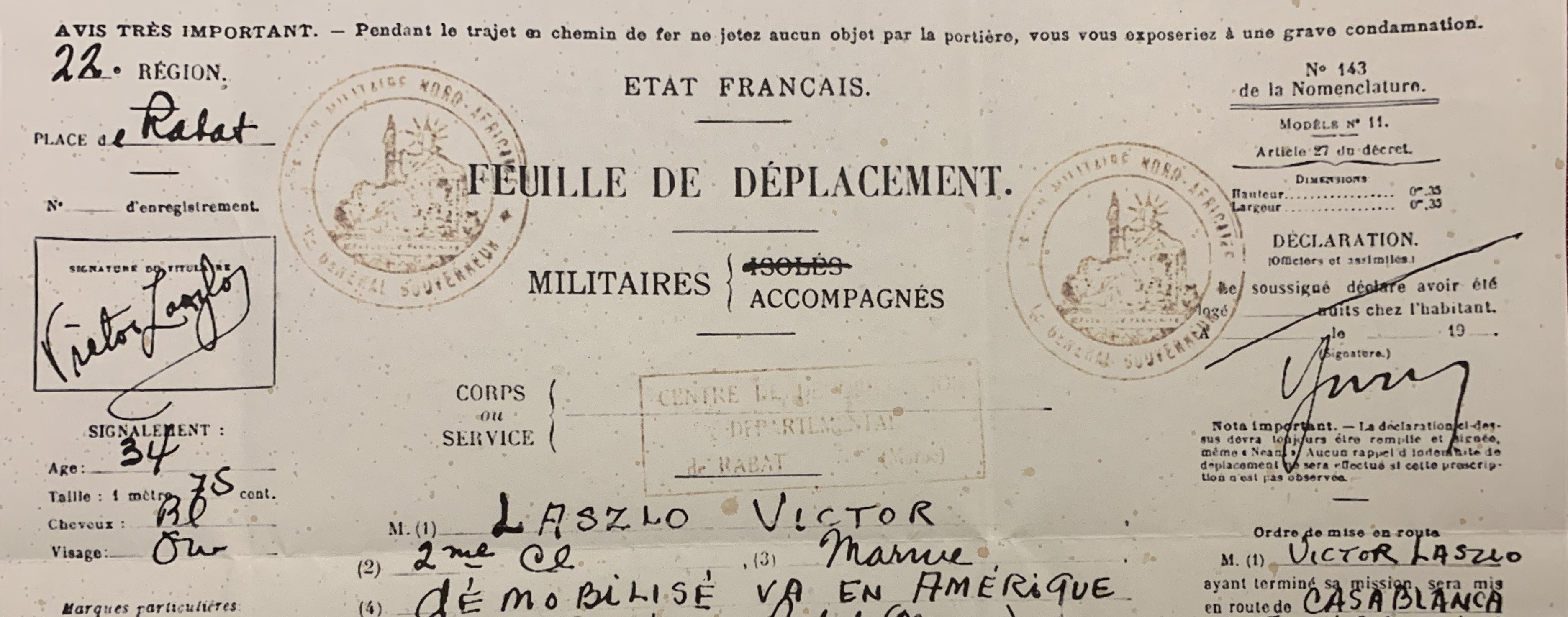
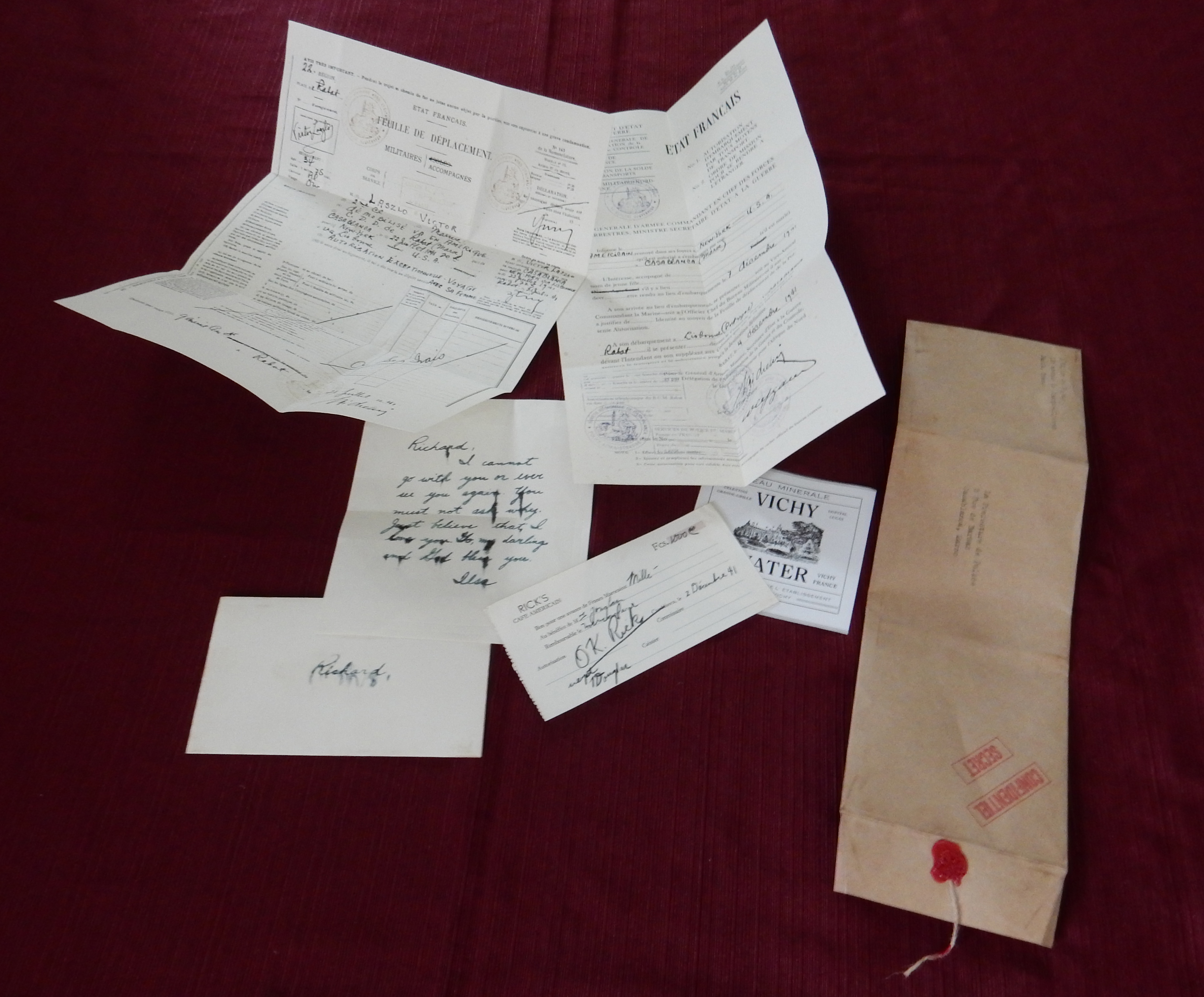
I wrote Season of the Gods with the intention of forcing people to look at the Warner Bros. classic Casablanca in a new way. I wanted to challenge you, the reader, to think about the screenplay and the plot and the dialogue and the environment in which Casablanca was created because it’s simply a miraculous motion picture, and how in the world did it come about? First of all, I needed to understand the how and the why of it myself, and then my plan was to take the results of my research and lay it out in story form. The fact that Season of the Gods is categorized as “historical fiction” is strange to me since the characters are real people, and everything they do in the book is based on research.
Did you ever notice the undercurrent of tension in Casablanca? I just watched it again a couple of evenings ago and some new things occurred to me, which is always happening with viewings of the picture since there’s so much filling the frame every moment. I was watching the scene where the German officers are singing in Rick’s and an outraged Victor Laszlo storms over to the band and orders that “La Marseillaise” be played. What are we, an hour in when this happens? “Play it!” snaps Laszlo, mirroring Rick’s earlier order to Sam to play “As Time Goes By.” “You played it for her, you can play it for me,” Rick had said. “Play it!”
With Victor standing in front of the band, the musicians look to Rick for guidance, and Rick gives the nod to follow Laszlo’s instructions and they start playing. I’m not telling you anything new when I point out the power of what follows because it’s the biggest emotional payoff in the picture. But why does it work so well? Why does it make me cry every time I see it?
Well, in screenplay terms, let’s FLASH BACK TO WARNER BROS. SOUNDSTAGES, JUNE 1942. There’s a bit in Season of the Gods where Bogart and Lorre are relaxing in Bogart’s dressing room and Bogie snaps on the radio to hear the latest about the battle of Midway as if he’s checking the box score on a baseball game. At the time of Midway, the Japanese navy was at the peak of its power, its carriers a mysterious and untraceable menace on the high seas that six months earlier had taken out most of the U.S. Pacific Fleet. Meanwhile, Europe was squeezed ever tighter in the grip of the German Reich. There’s another bit in Season of the Gods where Hal Wallis learns that 5,000 of the best and brightest Jews in Paris had been rounded up and shipped off to concentration camps. These weren’t peasants from Romania; they were the upper class of Paris, and the Germans had pounded open their doors and ripped these Parisians from their beds. All of a sudden Wallis realizes, holy shit, that could happen here!

This was the world at the time Wallis and crew produced Casablanca in May and June 1942. In past columns I’ve described how Wallis and Mike Curtiz populated the backgrounds of the picture with refugees who had recently fled the German menace—all of them Jews or married to Jews and most of them big stars in their native countries who suddenly felt grateful to get a day or a week on an American picture. For these people, the story told in Casablanca was all too real and none of them needed direction in the script to understand their motivation. A year or two or three earlier, they had lived desperate moments on the point of a knife, not knowing if they would make it to freedom. Now they were reenacting those moments for the camera, for posterity, in Hollywood. It’s amazing how many Americans were not in Casablanca.
Bogart, Dooley Wilson, and Joy Page were native-born Americans. Rains and Greenstreet were Brits and for them, box scores involved the latest German air raid. Bergman was a Swede and Lorre and Sakall Hungarian; both had left Europe because of the Nazis. Conrad Veidt was German and had fled Berlin with his Jewish wife. Madeleine LeBeau (Yvonne) and her Jewish husband Marcel Dalio (Emil the croupier) were newly arrived after escaping France via Portugal and Mexico. Austrians Ilka Grüning and Ludwig Stössel portrayed the couple trying to learn English so they would fit in in America. “What watch?” he asks her, meaning What time is it? “Ten watch,” she answers. Both were accomplished performers in Europe (she had worked for Reinhardt and acted with Garbo!) who had fled Hitler and—in their mid-60s—starting over in Hollywood. All of these people, all of them, had already seen family and friends rounded up and sent to camps. In fact, Austrian Helmut Dantine (Jan in the film), had been involved in anti-Nazi youth group and the Germans sent him to a concentration camp; only the quick thinking of a family member got him released and packed off to the United States.

FLASH FORWARD to 2024. Here we are today, 82 years after the production of Casablanca, right around the anniversary of the shooting of the airport sequence. It’s such a different world now with our cell phones, social media, self-involvement, and short attention spans. History is a lost art and many in the audience can’t begin to understand the purity of Victor Laszlo’s actions or how important Bogart’s small head nod was to the musicians. But in summer 1942 nobody knew if what was then called the “free world” would remain free, or if the Axis Powers would triumph. This is not an exaggeration. This is fact. The limits of German and Japanese power had not been ascertained in the summer of 1942. The United States was an untested power just gearing up and a year away from putting infantry boots on the ground of Europe.

To me, Victor Laszlo actually gets the two best moments in the picture, first when he leads “La Marseillaise,” and later when he shakes Rick’s hand and says, “Welcome back to the fight. This time I know our side will win.” Victor might have known, but I assure you the 1942 audience didn’t. They could only hope, and it seemed a faint hope at that.
And this is why the “La Marseillaise” scene has such power even today. The underdogs, the oppressed refugees, rose to their feet and dared to drown out the all-powerful Germans. Most poignant of all, Madeleine LeBeau sings her heart out with tears streaming down her face because she knows that in another reality, she might just be locked away or dead and not making pictures in America.


 Robert Matzen