Season of the Gods Dooley Wilson

Givin’ It All Away*

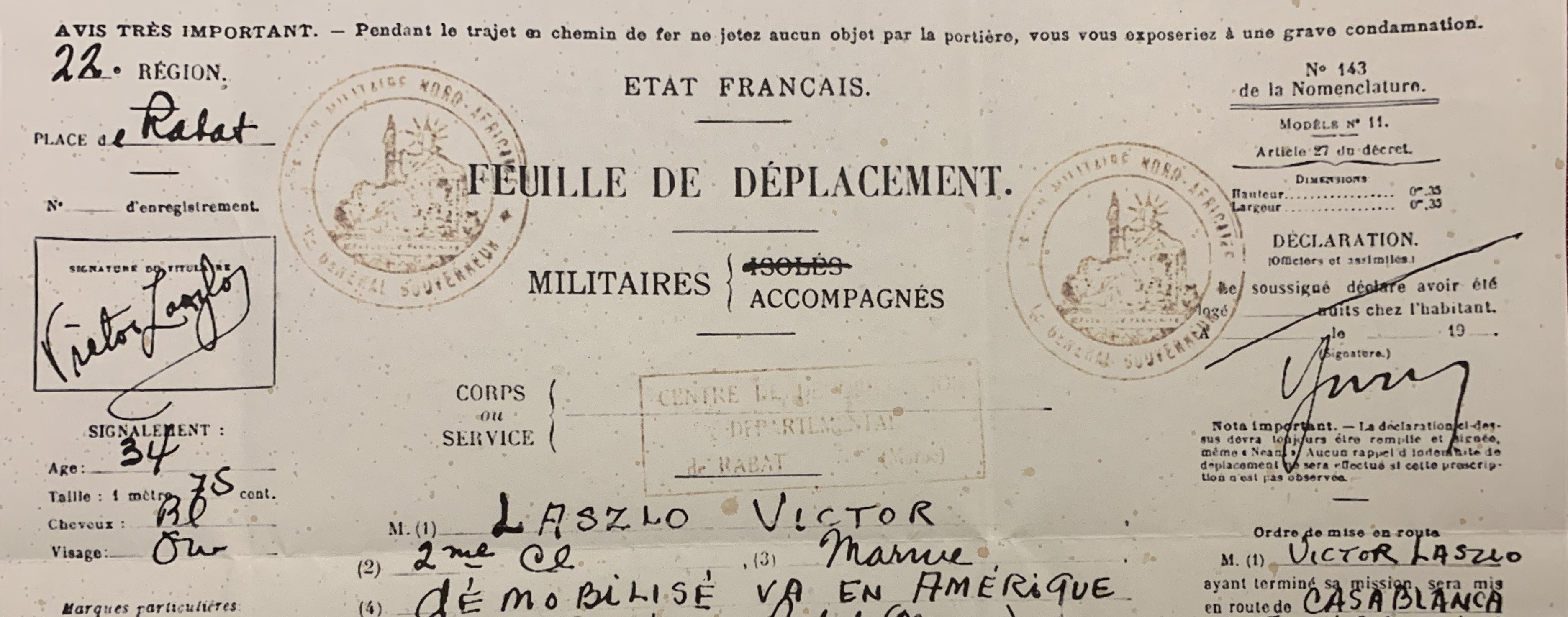
So you say you haven’t yet read Season of the Gods—the novel about how Casablanca came to be? Would it pique your interest if you learned that a major Hollywood production company is now attached to this story and enthusiastic about its possibilities as a feature motion picture? Would it poke you in the ribs if you learned of a sweepstakes underway on Red Carpet Crash that includes five finalist prize packs and one grand prize winner of a set of replica letters of transit and other key documents from Casablanca? I kid you not—the grand prize is the letters of transit (see photo above for a glimpse), and also Ilsa’s rain-smeared letter to Rick and other Casablanca papers.
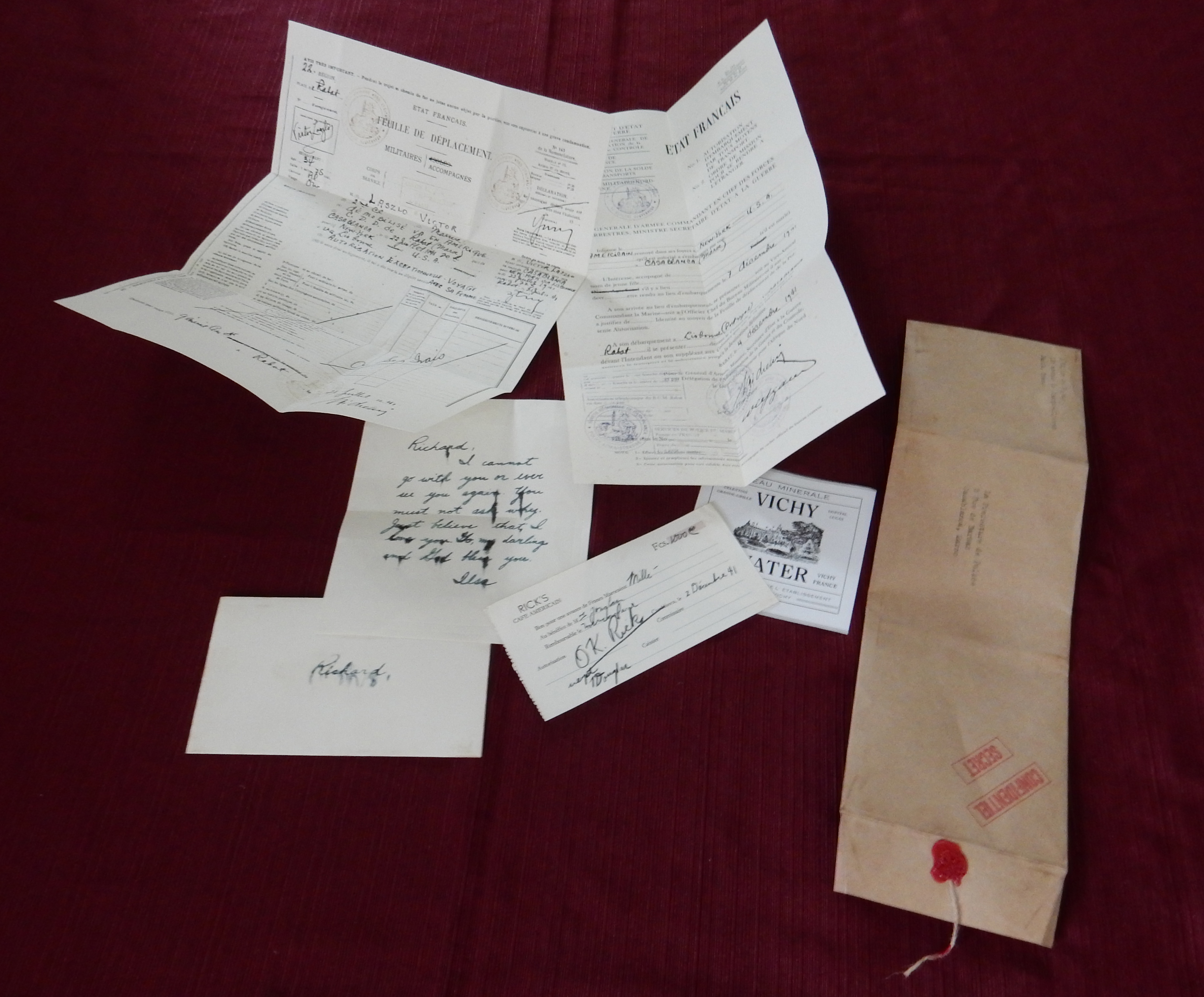
A photo of the #Casablancalettersoftransit and other documents critical to the film.
The grand prize set of Casablanca documents.

Here’s the finalist prize pack:

  • Signed copy of Season of the Gods
  • Casablanca Blu-ray loaded with special features
  • Casablanca t-shirt
  • Rick’s Café Americain matchbook
  • Season of the Gods bookmark

And the grand prize winner gets all that PLUS the set of replica Casablanca documents, including the letters of transit.

To enter, visit Red Carpet Crash today—the sweepstakes ends Friday, February 2.

Just as a quick reminder, Season of the Gods is 100 percent fact-based and tells the story of Irene Lee, Warner Bros. story editor (the only female executive in the company) who finds an orphan stage play and engineers its purchase by the studio’s executive producer, Hal Wallis. Irene’s a plucky one, five-foot-nothing and holding her own in misogynistic Hollywood. She serves as a de facto producer of Casablanca even though Hal Wallis won’t give Irene, a mere female, that title. She works with the crazy brother screenwriting team of Phil and Julie Epstein to craft the story and then with other writers brought in—Howard Koch and Casey Robinson. And she finds love along the way, or rather doubts she has found love when she considers her “junkyard of a love life.” I have such great fondness for the characters in the book, not only empathic Phil Epstein and his edgy brother Julie, but also Dooley Wilson, Hollywood novice in a white man’s world and dreaming of buying his wife a house; Claude Rains the easy-going roué; Conrad Veidt the elegant German expat eager to play Nazis and expose their evil; dark and cynical morphine addict Peter Lorre; gentle giant Sydney Greenstreet; Aaron Diamond, the New York carpet buyer who’s crazy about Irene; and Joy Page, Jack Warner’s stepdaughter who sees a role in Casablanca as a potential escape route from her difficult life at the Warner mansion, dubbed “1801” for its street address on Angelo Drive in Beverly Hills. And the backdrop. Oh, that backdrop. The dark months after Pearl Harbor when U.S. coastlines braced for invasion and defeat after defeat of Allied forces blasted across the headlines.

Plucky, little-documented Irene Lee, the real hero of Casablanca.

I guess you can tell … I like this book. And I’m not alone. Season of the Gods has gotten some great ink, from Publishers Weekly BookLife (an Editor’s Pick), from Kirkus Reviews (which called it “EPIC”), and most recently from Annette Bochenek’s website, Hometowns to Hollywood. The Historical Novel Society interviewed me about the book, as did Grace Collins for her True Stories of Tinseltown podcast. I always felt that I wasn’t going to take the world of fiction by storm and that this would be a marathon; not a sprint. Fiction is a place bulging with seasoned talent and passionate readers who know what they want and what they like, and who am I but a nonfiction author daring to cross over with an idea that came from who knows where?

The fact that Hollywood likes the book is a potential game changer. No kidding, they signed me up as soon as they received and devoured the copies sent over. That said, this company-that-must-not-be-named now controls the film rights and it’s up them to announce the deal or not, and to make a movie or not. We shall see what we shall see, but all I can say to these great people is: Thank you for believing in this story.

To order Season of the Gods, visit Amazon, Barnes & Noble, or if you favor the independent booksellers (and want a discount), Bookshop.org.

As always, thank you for checking in. See you at the movies—the golden age movies, that is. And please let all your friends know about the sweepstakes!

__________

*Givin’ It All Away was the greatest song by a solid 1970s band called Bachman Turner Overdrive. When I typed this for the title, I thought OMG, remember that song? I’ve got to go listen to that song, which I hadn’t heard in ages. And, wow, what a blast from the past. “You took my heart/And you went away/We said goodbye/And we’re givin’ it all away.” Still a great song—all the fury of love gone wrong. (Just so you don’t think I’m a Johnny One Note who only writes about wartime Hollywood. Rock on, my friends.)
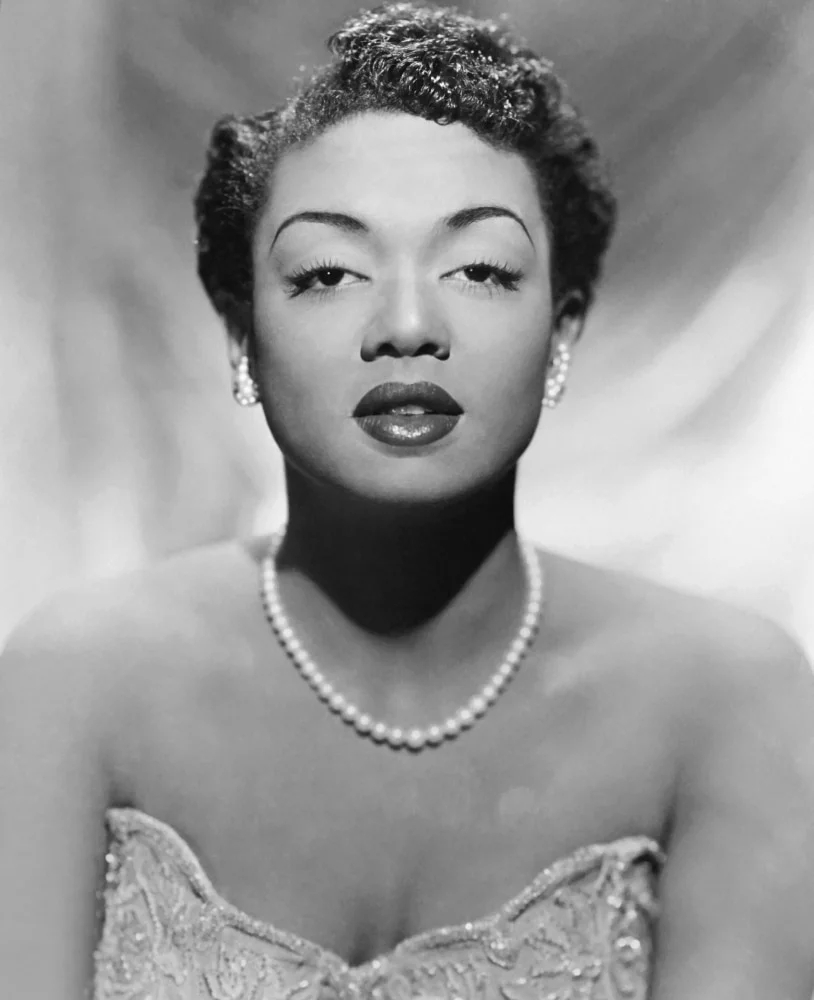

Playing It Safe

The first choice of Hal Wallis: Hazel Scott.

I was watching Turner Classic Movies (U.S.) yesterday and heard Dave Karger’s introduction of Show Boat, MGM’s 1951 adaptation of a Broadway musical based on a 1926 bestselling novel by Edna Ferber. The plot of Show Boat concerns a traveling troupe of entertainers on the Mississippi River, one of whom is singer Julie LaVerne, part Caucasian and part Black. Karger explained that Lena Horne was originally penciled in as Julie because she had performed a number from Show Boat in the 1946 MGM musical, Till the Clouds Roll By. But MGM executives worried about putting a Black actress in such a pivotal role in a theatrical release and opted instead to cast Ava Gardner, all white, in the role. And at that moment I exclaimed to Dave Karger on the TV, “Why, those chicken shits!”

It’s difficult today to comprehend a United States in 1951 where Black people couldn’t be seen as equals in Hollywood productions. U.S. culture of the time still had white restrooms and “Colored” restrooms, white swimming pools and Colored swimming pools. It was the time of the Green Book and would stay that way for another generation!

But, to me, Louis B. Mayer and his MGM brethren were chickenshits because Hal Wallis, executive producer at Warner Bros., had already stormed this beach, had already claimed this ground, had already planted the flag of equal rights by daring to show a Black character as equal to white when Wallis had said “Screw it” and cast Dooley Wilson as Rick Blaine’s best friend in Casablanca a whopping nine years before Show Boat entered production.

Wallis then deferred to up-and-coming Lena Horne.

As detailed in Season of the Gods, Wallis and his team had bought the stage play “Everybody Comes to Rick’s,” which featured “Sam the Rabbit” as a key character, a flamboyant Black entertainer at Rick’s nightclub in Casablanca, French Morocco. Originally, Wallis’s inclination was to play up the flamboyant part by switching the Sam character to a Black female and his two choices for Sam were Hazel Scott, gorgeous multi-talented 20-year-old sensation then taking New York by storm, or the aforementioned Lena Horne, then beginning her career in Sunset Strip venues.

I’ll rely on you to read the debates in Season of the Gods and move on to the next plan, which was to cast Clarence Muse, dependable Colored stereotype, as Rick’s more-or-less second banana, this when early script drafts of Casablanca by Phil and Julie Epstein relied more on humor and less on romance. But Muse didn’t fit the evolving storyline, and Muse had been seen and seen and seen in this one type of role. Overseen. Wallis wanted more out of what was rapidly becoming a Very Important Picture as the world unraveled and Northern Africa hit the headlines. In the opinion of Hal Wallis, if young Black men were willing to go and die fighting the Axis powers in the name of freedom, then Black people could be seen as equals in Warner Bros. pictures.

Sam #3, the safe choice: character man Clarence Muse.

Cue more debates in Season of the Gods, as Wallis was warned he could “lose the South,” a critical market for box office returns, if he dared cast a Black man as equal to whites. Southern audience members could get up and walk out, demand their money back, and tell all their friends to stay away. This was the same American South that protested the working title of a George M. Cohan biopic then in production at Warner Bros., Yankee Doodle Dandy, because it dared to include the word “yankee” in the title! This, my friends, was the screwed up world of 1942: Americans were fighting racist authoritarianism overseas while ignoring their own racism at home.

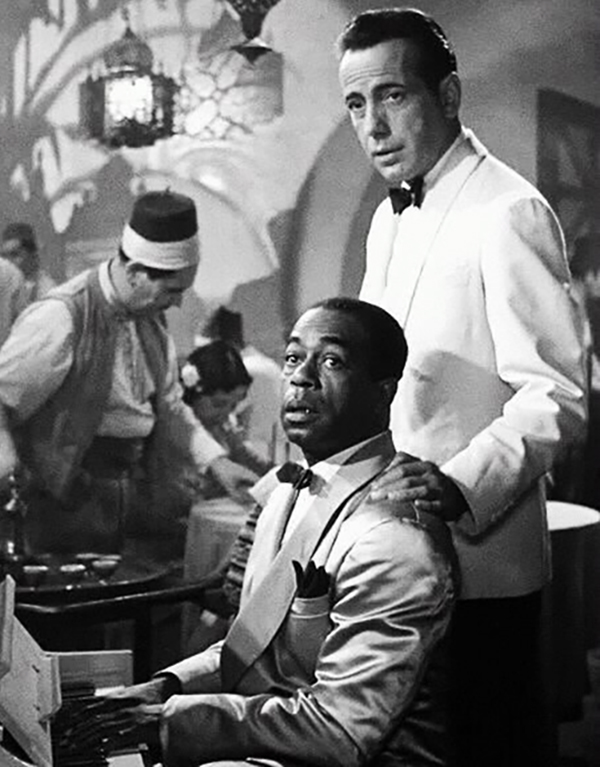
Wallis saw it, and Wallis made a stand. He eschewed the stereotyped Clarence Muse and cast a well-worn, globetrotting entertainer named Dooley Wilson as Sam. I attempted to try to see the world of that time through Dooley’s eyes in the narrative of Season of the Gods and that in itself proved a surprising experience. Dooley just wanted to get by, so he looked away from the racism, figuratively and also literally, as he avoided eye contact with the people he met at Paramount and Warner Bros. But oh, the surprise in store for Dooley when he began production of Casablanca. You want me to WHAT? Underplay? He couldn’t believe it as his first couple of roles in Hollywood had been as a porter and a butler, doing the usual wide-eyed comic takes.

Casablanca holds up so well today because of the truth it presents. The people crammed into the lifeboat called Rick’s Café Americain—whether terrified Jews fleeing Hitler, a world-weary Black piano player, or a Czech freedom fighter and his wife—are just people trying to survive, trying to find peace. Wallis had gambled and won; his picture became everything envisioned and much, much more. I don’t know how many people walked out in the South, but that number was offset many times over by box office in New York and Chicago and Los Angeles. Casablanca scored big on release in 1943, then again in 1949 and 1956 reissues, then endured on television.

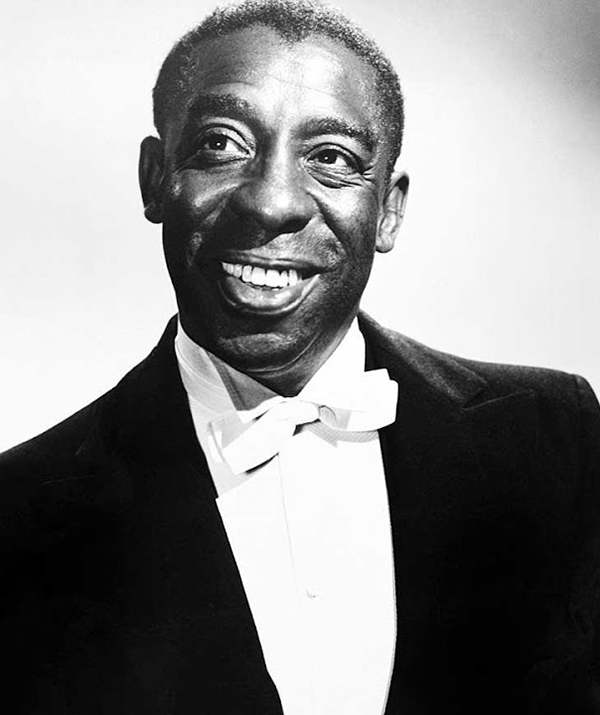
The real Sam: new-to-Hollywood Dooley Wilson.

Yes, Show Boat “played it safe” in 1951 by casting Ava Gardner in a leading role instead of Lena Horne. And yes, groundbreaking Warner Bros. (minus Hal Wallis, who had moved on) would also play it safe in 1957 when time came to cast for Band of Angels, an antebellum story set in Louisiana. In the role of half-Black heroine Amantha Starr, Warner Bros. cast Yvonne De Carlo instead of, say, Dorothy Dandridge in the part because the world wasn’t ready for Clark Gable to be kissing Dorothy Dandridge. What if they walked out in the South?! (I will acknowledge progress made by 1957 in casting Sidney Poitier in a key role.)

So, sure, the world has changed, and yet the world hasn’t changed. There’s still hate because of the color of your skin or your ethnic heritage or the god you worship. And there’s still a burning need for courage like that displayed by Hal Wallis, who dared to do the right thing back in 1942.

Season of the Gods: A Novel is now available from Amazon.com, Barnesandnoble.com, Bookshop.org, and other booksellers.