Month: September 2014

Dynasties

I like to tell the story of the time I was subpoenaed to testify as an eyewitness to a car crash. Afterward, my co-worker Amy asked, “When you were sworn in and put your hand on the Bible, did it burst into flames?” Anyone who knows me would not be surprised at this question. However, in my time I have indeed opened a Bible or two, and during the confirmation process many years ago I read about all that “begetting” that started in Genesis, and I was never more bored in my life. All these people begat all these other people and so on and so forth. I don’t even much care about my own genealogy as it extends back into the distant Bavarian past…unless of course I’m somehow connected to rich Matzens and vast European fortunes. Then, by all means, sign me up for genealogy classes.

So, I had mixed feelings when a couple of weeks ago my friend and Fireball researcher Marina Gray sent me a thorough, 12-page document containing years of her expert research on Carole Lombard’s genealogy, the story of the Knight and Peters families, which combined their gene pools into the begetting of three children: Frederick Peters II, Stuart Peters, and Jane Peters. Marina sent me the fruits of her genealogical work, which turned out to be a fascinating history, as prep for my upcoming lecture on Fireball in the hometown of Jane Peters/Carole Lombard, Fort Wayne, Indiana, on Sunday October 5. Click here for an article about the event published September 28 in the Fort Wayne News-Sentinel.

As you may know, Fort Wayne is the second-largest city in Indiana and was named after Revolutionary War General Anthony Wayne, known as “Mad Anthony,” after he chose this spot on the map for one of several forts to defend white European settlers from the Miami Indians—who had every right to be “mad” themselves after a bunch of white people started to claim Native American lands.

Fort Wayne sits in the northeastern corner of Indiana and it was here that a whole lot of wealth congregated. On Carole’s mother’s side, the Cheneys were already on the level of “magnates” when they joined with the Knights, who were Wall Street wizards. On Carole’s father’s side, John C. Peters, or “gramps” to Carole, pretty much owned Fort Wayne. Among his businesses was the Horton Manufacturing Company, which introduced the first automatic washing machine to the world and offered replacement to back-breaking manual labor in the cleaning of clothes. It was quite the revolutionary device and that alone would have made any family a fortune, but to the Knights and Peters, the income from washing machines was pocket money. Chump change. All this is why I say in Fireball that money grew on trees around Carole Lombard all her life. This girl was lucky enough to be rolling in dough long before she became the highest-paid actress in Hollywood in the late 1930s.

Part of the fun of visiting Fort Wayne will be the ability to get a glimpse of the three-story home of John C. Peters at 832 West Wayne Street. It’s so big that it was converted to an apartment building. The elegant brick home of the Knights, in which 26-year-old Elizabeth wedded 27-year-old Frederick before begetting the three children (including Jane/Carole), still stands at 519 Tennessee Street and is now known as “Shepherd’s House,” a shelter for homeless veterans. The house built for Frederick and Elizabeth Peters in 1902 still stands at 704 Rockhill Street. It was within these walls that Fred exhibited such dark, violent behavior that Elizabeth, known later as “Tots” and “Petey” to daughter Carole, had to gather up the children and flee to California.
Fireball: Carole Lombard and the Mystery of Flight 3 by Robert Matzen

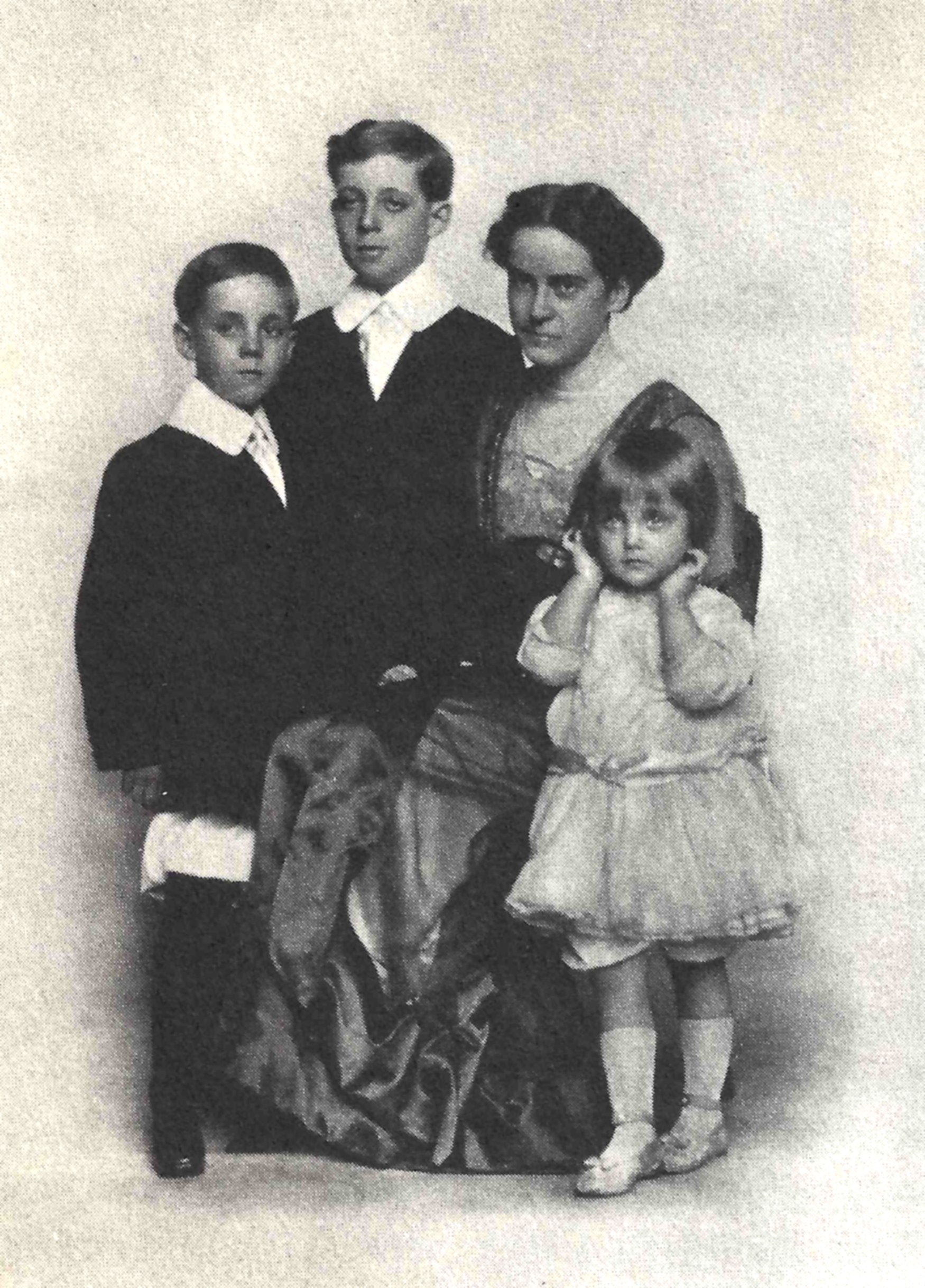
Elizabeth Knight Peters sits for a portrait with her three children in Fort Wayne, Indiana in 1911. From left: Stuart, Frederick II, Tots, and Jane, who would grow up to be Carole Lombard, and already looked the part.

Sunday, October 5, is going to be a big day for any Carole Lombard fan. It really starts on Saturday evening at 8 (Eastern) when Turner Classic Movies shows Carole Lombard’s Twentieth Century on The Essentials with Robert Osborne and Drew Barrymore. The following morning, Sunday the 5th, I’m appearing as a guest on WANE-TV to talk about Fireball and the day’s events. Then at 2 P.M. I’m speaking at the Fort Wayne History Center. Before and after, you will get to see a once-in-a-lifetime collection of personally owned Carole Lombard items on display at the History Center, including jewelry, purses, hats, a cigarette lighter and cigarette case, compact, documents–including the hunting licenses of Lombard and Gable, a letter handwritten from Carole to MGM VP Eddie Mannix, and the 11×14 Hurrell portrait that Carole inscribed to Clark, “Pa dear, I love you, Ma.” There will also be movie memorabilia and rare photos on display, including candids from the Myron Davis set taken in Indianapolis the day before the crash of Flight 3. At the conclusion of the History Center event, at approximately 5 P.M., attendees will get to tour the Rockhill Street house to see the room in which Jane Peters was born and slept, and the streets she roamed with her two big brothers, “Fritz” and “Tootey.” [Note: the Lombard house is not a working bed and breakfast at this time.]

As I understand it, the History Center event is free to the public (but I can’t swear to that); I know for a fact that the tour of the Rockhill Street house that will be hosted by Rick and Cora Brandt is free.

Special guests on October 5 will be Carole Sampeck, director of the Dallas-based Carole Lombard Archive Foundation and consultant in the development of Fireball, and the aforementioned Marina Gray, one of two Jedi Ninja researchers who helped to make Fireball a book that has drawn praise for the comprehensive nature of its information. [DC-based Ann Trevor is the other Jedi Ninja.]

I’ve had some terrific experiences speaking about Fireball around the United States, and met many people I now call friends, but I can’t imagine there’ll be anything to top this celebration of Carole Lombard in her own home town and on the day before her October 6 birthday. I hope to see as many of you there as possible.

And, for the record, no, the Bible did not burst into flames that day.
Stay Tuned

My posting tomorrow will contain final details regarding the Carole Lombard events in Fort Wayne, IN next Sunday October 5, 2014, including a lecture about Fireball: Carole Lombard and the Mystery of Flight 3, a video presentation, a book signing, and a display of Lombard photos and personal items–all at the Fort Wayne History Center–plus a tour of the Peters home (the house in which Jane Peters/Carole Lombard was born).

Babies and Bathwater

As you may know, I don’t approach biography like most writers. I like to tell the story of a life like a story, not as a series of chronological events. Maybe I’ll start a new wave of biography, who knows, but with co-author Mike Mazzone I told Errol Flynn’s story from the perspective of his home, Mulholland Farm. Then I surveyed the lives of Flynn and co-star Olivia de Havilland from the vantage point of their intersection at ages 25 and 18, respectively. I projected the story of Carole Lombard through the prism of the plane crash that killed her. Next, I hope to reveal James Stewart through the global stage of World War II.

So, yesterday I received an email concerning Mr. Flynn from a woman who recently, as she says, “became fascinated” with him and did a lot of reading. She doesn’t say specifically that she read either Errol Flynn Slept Here or Errol & Olivia, but she addressed the message to me because I was the most easily accessible of his biographers.

In the course of reading about Flynn she became turned off. Her distaste for the man is evident in her communication to me and centers around the fact that Flynn recruited men into slave labor among his 67 other odd jobs in the years after he left home and before he found England and acting. (Note: Errol had so many jobs because he was lousy at everything, including slave trading.) This episode in Flynn’s life rendered the man entirely unsympathetic, and this woman figured she would “start a fight” on my blog by stating her negative opinion of Errol Flynn.

Fireball: Carole Lombard and the Mystery of Flight 3 by Robert Matzen

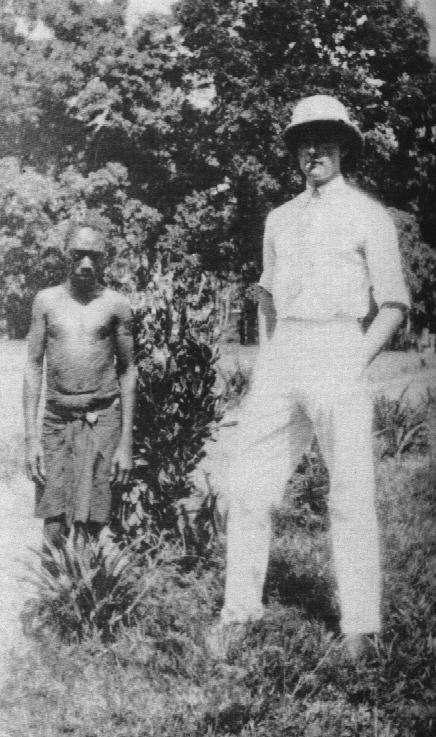
Errol Flynn, age 21, in one of many failed jobs, this one running a copra plantation in the absolute fringes of the British Empire. Hollywood stardom was still four years away.

Here is Errol Flynn Psychology 101: His brainy father knocked up his histrionic mother and forced matrimony ensued. Mom was an aspiring gadfly who never, repeat never, forgave Errol for making an appearance in this world. She loathed her son from his first breath, and soon he was loathing himself, and forever seeking the two things she would never give him: love and approval. He began to act long before he found a stage or camera. He began to project a successful, attractive self to cover up the poisoned soul inside him. He always had anger close at hand and once in a while it would whip out of him snakelike and take down a bystander. David Niven’s classic line about Flynn, “You could count on Errol; he always let you down,” was funny in delivery but rooted in the pain of one friend experiencing another.

If ever there were a person damaged beyond repair by a parent, it was Errol Flynn. It was the wildest, one-in-a-million fluke that this human survived his early years in a remote corner of the world to become a world-famous actor in Hollywood. He not only engaged in the slave trade, he was involved in the shooting death of a native; he lied and stole his way to England in the globe-trotting course that he eventually led him to become the king of adventure films.

In my return email, I postulated to my correspondent that her opinion of Flynn would not cause a ruckus on this blog because my readership is sophisticated and would readily admit Flynn’s shortcomings. I, for one, have never been a hero worshipper of Flynn or anyone else, and I’ve stated publicly that if given the opportunity by some time warp or other, I wouldn’t want to hang around Flynn for long because of that cruel streak.

BUT.

There are two buts, actually.

  1. If one is going to use the slave labor argument to condemn Errol Flynn, then condemn the entire British Empire of several centuries along with him because Flynn was a British subject at a time when entire races were subjugated in the normal course of events. If you were a white Brit within the span of empire in 1925 you were one of the cool kids and God help anyone in your way. These days, there’s this tendency to look at historical events and people with 2014 sensibilities, which I find unrealistic and unfair, whether you’re talking about Thomas Jefferson or Errol Flynn.
  2. Flynn did some beautiful things in his life. He became a writer, a good writer. He aspired to be a writer instead of an actor, being of the opinion that one was far more noble than the other. He wasn’t thought to be a good actor but left behind performances that stand the test of time 60 and 75 years later. He could channel good guys and make people root for him, which means to me that he had good stuff inside him, residing in there with all the bad. The particular mix of good and bad in Flynn makes him, in my mind, one of the most compelling people of the twentieth century, even before you consider the fact that he entertained millions over the course of his career. I am not going to touch millions of people in a positive way through the course of my life. I doubt that this Errol Flynn critic will either. Whatever poison was in his soul, he gets credit for spreading a lot of good.

The writer concludes her email with, “I really just cannot understand why every biographer judges Flynn so generously.” I laughed at this one because my correspondent must have missed a volume called Errol Flynn: The Untold Story, the 1980 poison pill written by the late, unlamented biographical hack, Charles Higham. In this volume Higham listed Flynn’s shortcomings chapter and verse, some of it pure fabrication that was later proven so, but all of it a study in loathing of a biographer for his subject.

As for me, I would respond to the assertion that I’m too easy on Flynn this way: Why would I take the time to write a book about a person I disliked? I leave that to the Charles Highams of the world. I like to think that I bring to the table a natural curiosity to understand what made my subject tick. Who was he or she? Why was a particular course undertaken? What were the factors? What were the outcomes? I strive to present real people making real decisions and often, real mistakes. And, brother, Errol made his share like we all do, and then some.

Now you know what I think. I’m curious to get your thoughts on this subject.

Immortality Lost/Immortality Found

I had a shock a few moments ago. I was browsing through my Facebook news feed and came upon a story entitled, “Actress Betty White, 92, Dyes Peacefully in Her Los Angeles Home.” The thoughts that went through my mind, Baby Boomer-like, were of having lived with Betty White all my life in one incarnation or other, all the way back to Password and Alan Ludden, and I thought to myself how sad for her cast mates from the current show, Hot in Cleveland.

Then I thought, Oh my God, we’re all mortal. If Betty can go, then, holy shit, I can go too! My bid for immortality, my aging portrait in the attic—poof! Gone in a puff of smoke. Nothing was sacred at that moment because Betty is our bid for immortality, the one that may yet get out alive, working past 90, funny as the Catskills, extra sharp like cheese, and if she can keep going, I can too. We had an unspoken pact, Betty and me, and I’m sure Betty and a few million other Boomers: if you’re all in, I’m all in. We go through life together, and we’ve got each other’s backs. And now she’s gone? Peacefully in her Los Angeles home?

Then I started to read the obit and realized I’d been had. That wasn’t a typo in the headline (and who among us hasn’t cringed at the magnitude and frequency of typos in news headlines and leads these says). She dyes her hair peacefully at home. I was looking at the most clever PR gag in recent memory timed to push new episodes of Hot in Cleveland.

Fireball: Carole Lombard and the Mystery of Flight 3 by Robert Matzen

Betty White: Quotes George Washington that the news of her death has been greatly exaggerated.

The obit is written like a press release, dead pan, and discusses the fact that “she rarely likes to discuss the fact, at least in public, that she is actually a brunette.” It goes on in this vein, and the piece works specifically because we’ve seen so many of these stories of late: James Garner, Richard Kiel, and this morning Denny Miller. We expect bad news—we just didn’t expect it of Betty because of, you know, the pact.

Leave it to Betty to sanction a stunt like this one, because the woman knows funny, even when it strays off the radar grid into the offbeat and to some, off-putting.

But you know what the result will be. Too many people scan these things with one eye, or with one lobe tied behind the backs, and there is going to be one hell of a rumor that Betty White is dead. It’s going to boomerang around the world and come sailing back and land at the feet of Betty White’s still-vertical body that she’s no longer with us. She’ll have that twinkle in her eye and smile that dimpled smile at the thought that she pulled a fast one, or that some hack somewhere wrote a piece about her that circumnavigated the earth.

Personally, the instant I knew this was a PR stunt, I felt like the governor had just sent over a reprieve on my walk to the gallows. Betty White lives! Which means I live! On and on, with the vigor of youth, and funny as cheddar. Just like Betty.

Climbing Every Mountain

I met an author the other year who had written a successful book about a famous battle in U.S. history. In the course of talking about the book, he mentioned that he had never visited the ground, and I was surprised. No, I was shocked, and it changed the way I approach my own writing because, as I thought then and continue to think, how can a writer recount a true story without intimate knowledge of the setting?

Fireball: Carole Lombard and the Mystery of Flight 3 by Robert Matzen

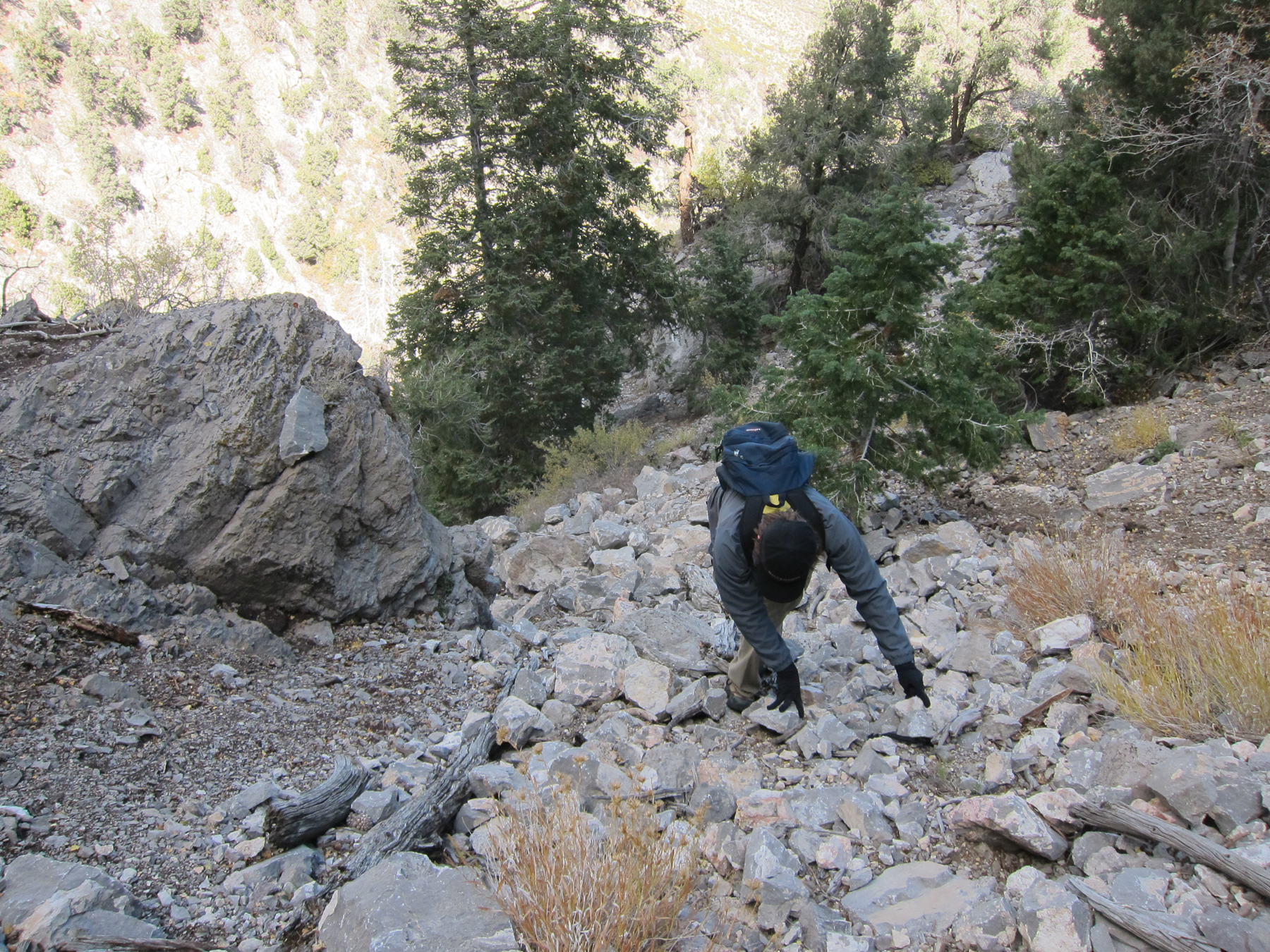
Potosi was unlike any mountain I had encountered in the past. Only through the climb could I get to know it as a character in Fireball.

I climbed Mt. Potosi in part because of this guy and our chat. I knew Potosi was going to be more than terrain on which my cast struggled; Potosi was in itself a character in Fireball and in opposition—Man against Nature—with my heroes. In the past I’ve climbed in mountains, but they were lush eastern mountains, and I’d had no experience with desert mountains with cactus and Joshua trees. So, if I had never climbed Potosi, my inclination would have been to write eastern mountains and not desert mountains. And because I climbed to the site of the crash of Flight 3 over the first-responder route, I could speak of that particular experience up the dry wash and scrambling between the cliffs, then over rises and into hollows and then up into the final ravine. I could speak of every lethal danger because I saw and experienced them.

Fireball: Carole Lombard and the Mystery of Flight 3 by Robert Matzen

You’d think judging by this 1930s photo of the Café Trocadero on the Sunset Strip that these were flat lands. But the Troc was built into a hillside, with a sheer drop behind it–something you would only know from being there.

How can you write a book about Hollywood and its stars without visiting the place and learning that “Hollywood” doesn’t mean a city with defined boundaries? Hollywood is a chunk of Los Angeles, and Beverly Hills, and Century City, and extends toward Culver City and the ocean. Hollywood is ultra-green, overwatered lawns in a desert. It’s volcanic mountains jutting up out of nowhere and houses built into the mountains accessed by goat paths that no one ought to drive over. Hollywood pulses to the beat of its major arteries, Hollywood Boulevard, Sunset Boulevard, Santa Monica Boulevard, which take you, block by block, from silent-era art deco to billion-dollar office buildings in gleaming gold, and from crumbling adobe apartments full of struggling actors to sprawling mansions of those lucky enough and talented enough to score big in show business. How could you write about the Sunset Strip of the 1930s without walking along that little piece of real estate with Ciro’s on one side of the street and Mocambo and Trocadero on the other? How could you even imagine how quaint it is? How confined and built on ledges? How packed in the stars were when they hit the town? Everybody had to know everybody just because of the terrain of the land they call Hollywood.

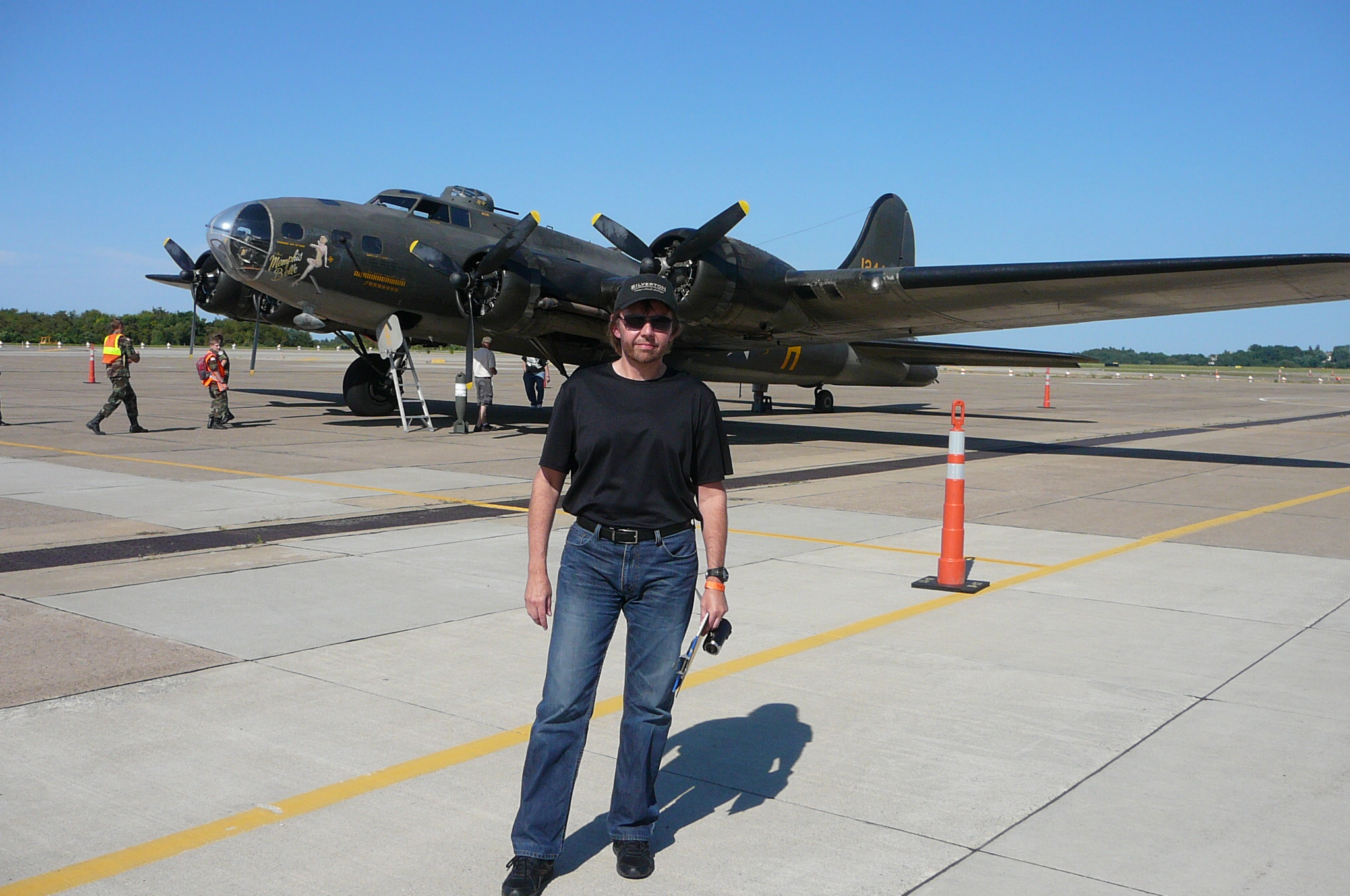
Now I’m heading into my next book about the Eighth Air Force in World War II, and my first inclination was to fly in the big bombers that conquered Germany in 1944 and 1945, so I booked myself into the cockpit of one of 10 remaining airworthy B-17s and went up. Up a grand total of 1,500 feet, but up nonetheless, and experienced something of what the boys of the Greatest Generation did in the airship known as the Flying Fortress. Now, I have a sense of the roar of four big Pratt & Whitney engines, of the confines of the cockpit, of the catwalk over the bomb bay, of the treacherous footing skittering around the lower turret, of the size of the bombs, and of feel of the waist machine guns. I know what it feels like to crawl into the nose of the plane in flight and where the bomb sight was and where the bombardier and navigator sat and what they could see out the observatory-style nose. Up those 1,500 feet I could begin to experience the terror of being a target for guns on the ground, knowing that a strike on the wing or the tail section meant sure death or bailing out at 10 or 20 times my 1,500 feet. I realized for the first time just how unpressurized the cabin was, and it hit me how vulnerable were the airmen, on oxygen at 30,000 feet with the temperature 30 below and anti-aircraft guns booming from the ground, and German fighters buzzing around rattling the ship with machine gun fire. Do you have any idea how big and heavy a .50 caliber machine gun shell is? I do, now, after holding one in my hand. It looks more like a small bomb than a bullet, and the machine gunners fired them in belts nine yards long. Hence the term, “the whole nine yards.” What’s the physics of firing shells that size out of both sides of a plane flying at 300 miles per hour, and out the tail and above and below? I couldn’t tell you, but after being aboard a B-17, now at least I know enough to ask.

There’s always another mountain to climb. I’ve got to find a B-24 and fly in it. I’ve got to go to where the bombers departed in England. I might have to go see where the bombs fell in Germany—who knows? It’s all part of telling authentic stories where the characters aren’t just people. Sometimes, they’re mountains, or airplanes.

Fireball: Carole Lombard and the Mystery of Flight 3 by Robert Matzen

Flying in a B-17 is research just like digging through federal records. This B-17 was built in 1945 and used in filming of the 1990 feature, Memphis Belle.