Month: August 2015

Unconsummated

Mission: James Stewart and World War II by Robert Matzen

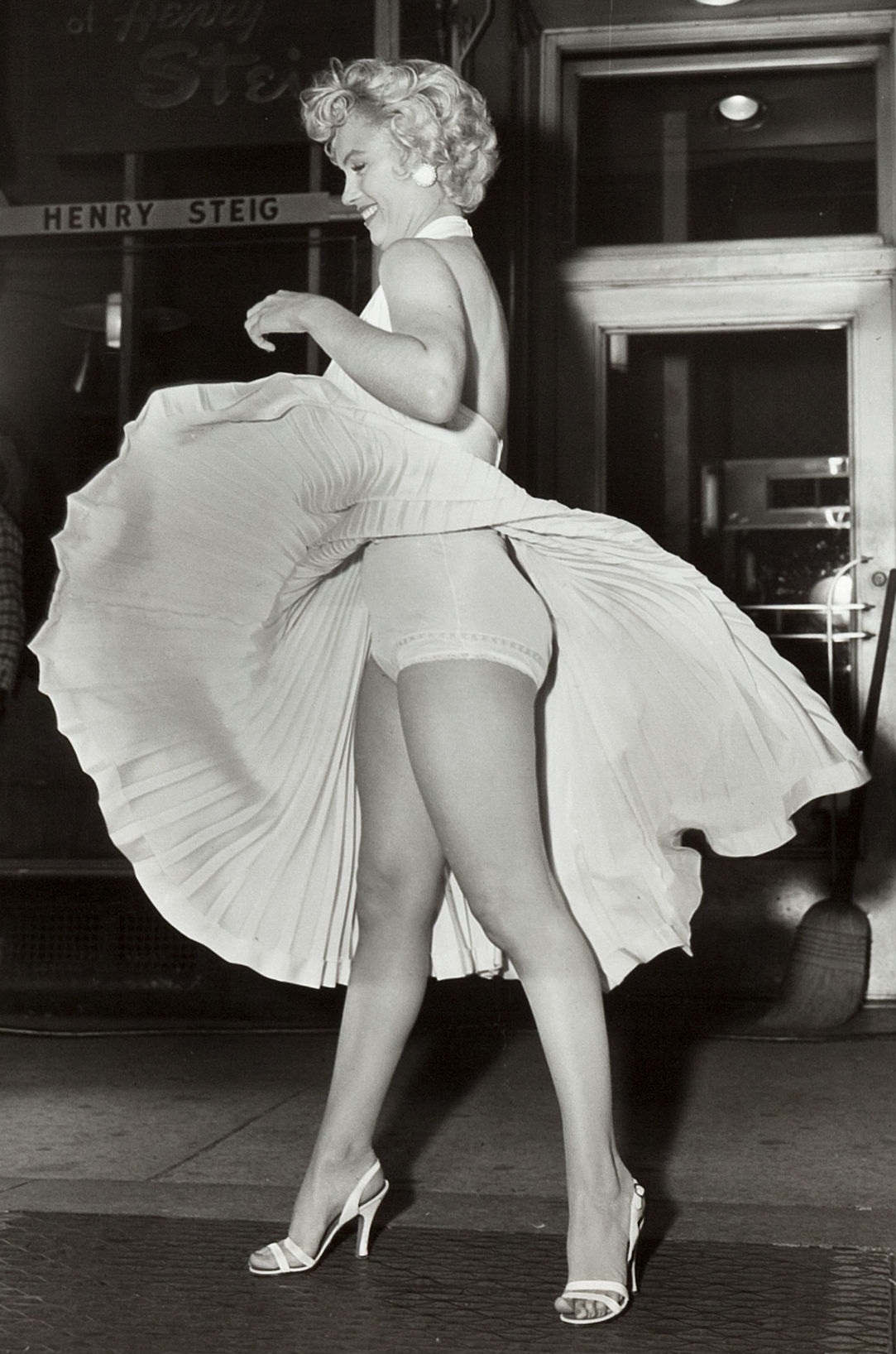
The subway-breeze scene was originally shot in New York City with 5,000 spectators but no way this view was going to pass censors. A tame version was reshot on Fox soundstages. Marilyn headed west without husband Joe DiMaggio, who stormed out of their marriage after this public display of exhibitionism on the streets of New York.

For a while there in the previous decade, the Fox Movie Channel showed The Seven Year Itch often, introduced by then-Fox studio chief Tom Rothman, and for a while there it became a staple in the Matzen household. Rothman’s Fox Legacy series ended some years back and then he left Fox, but The Seven Year Itch remains a favorite picture of mine for the storyline and for Marilyn Monroe’s up-skirt iconography in movie posters and ads.

The Seven Year Itch had been the first Broadway hit of playwright/screenwriter George Axelrod, a native of New York City, and was entirely autobiographical, based on an experience he had had with a young actress in a New York apartment, just as envisioned on stage and screen. The Seven Year itch involved a husband, Richard Sherman, left to his own devices when his wife and son leave town on an extended summer vacation. Sherman is nearing 40 and his health is starting to go, and this sudden summer freedom puts ideas in his head about having an affair. More than ideas, he fantasizes about his secretary at the publishing house where he works and then about the 22-year-old girl who sublets the apartment upstairs. As time goes on, fantasy begins to overlap reality as “the Girl” upstairs grows ever friendlier and his longed-for affair becomes a possibility.

Mission: James Stewart and World War II by Robert Matzen

One look at this still of Ewell playing it straight with Vanessa Brown as the Girl convinces me that Wilder got the screen version wrong.

It would have been interesting to see the original Broadway version, which predated the film by three years, to look at how Tom Ewell interpreted a storyline that wasn’t bound by Hollywood’s censors or by motion picture director Billy Wilder’s desire to play the material broad. And how Vanessa Brown handled the role of the Girl, played by MM onscreen. To cut to the chase, Richard and the Girl consummate their relationship with the wife away, and then he deals with the emotional consequences. It doesn’t sound like comedy but it was, and earned Ewell a Tony Award for what he said was a play that “captured something real.” He’s good in the Fox motion picture reprising his role, but I always found him just a tad too uncomfortably dorky to actually land a Marilyn Monroe even for one night—thanks, maintained Ewell, to Wilder’s direction to play the story as burlesque. “Billy and I didn’t see eye to eye,” Ewell said later. In the picture version, the Girl is ingenuous and non-judgmental and finds herself attracted to Richard Sherman for what she perceives to be a blend of sophistication and sweetness. But it never rings true in any real world that Ewell and Monroe would pair up.

I won’t say that Hollywood censorship “gutted” the feature-version screenplay, because for me the picture is light and entertaining, but as drawn by Axelrod, the original Broadway version is a thought-provoking study of basic human biology and human impulses, the need for closeness, and the emotional price of going beyond fantasy to infidelity in the flesh. The story is a story specifically because Richard and the Girl consummate. He answers burning questions about his own attractiveness at age 40. He satisfies his physical need for a new partner after years of a marriage grown routine. As so often happens in life, the outcome of the affair isn’t what’s expected, and it can’t be forgotten or rationalized away. As a result, the original version of The Seven Year Itch was a stage-bound 2.5 hours that made you think. The movie presents a nerdy middle-aged guy who is so bumbling, so self-conscious, and so guilt-ridden from the start that there’s no way he could consummate. Marilyn’s interpretation of the Girl is completely accessible to Richard; she even pries up the nails sealing off a stairway between their apartments. Figuratively and literally, no barrier exists to completion of his passes except his own ineptitude. I always find this aspect of the picture frustrating in repeat viewings, that the Richard character was so emasculated by Wilder and by censorship via the Production Code that sex between these two could never be broached seriously.
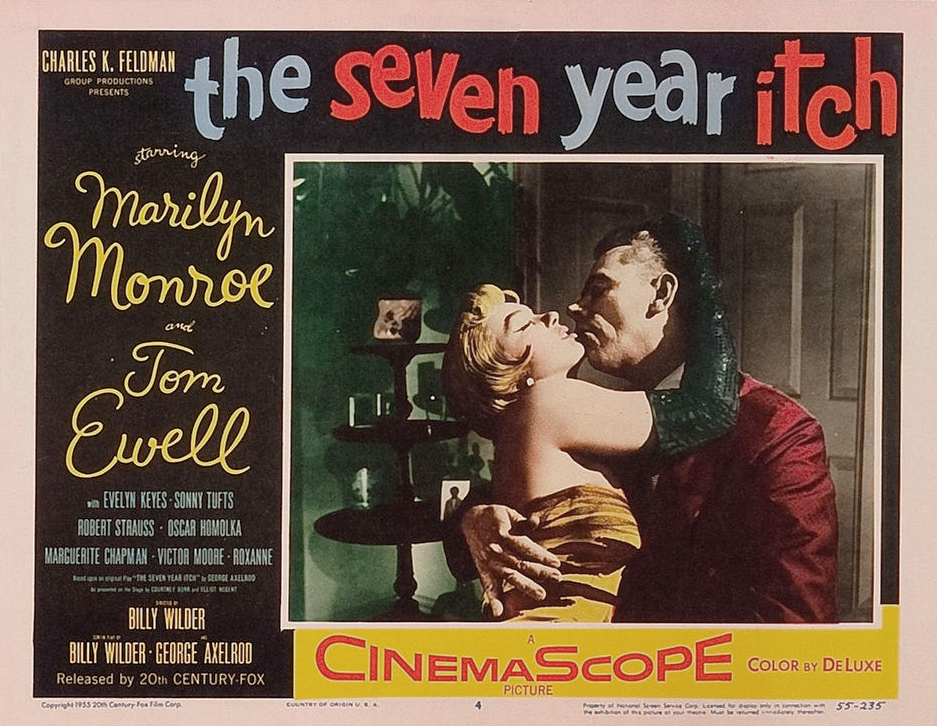
Itch set

A 1955 lobby card shows one of Richard’s fantasy sequences, playing Rachmaninoff at the piano for the Girl.

In retrospect, what good was that damn code by 1955 anyway? America had grown up in a devastating global war with 400,000 of its young men dead and now lived day by day with fear of nuclear annihilation, yet we weren’t supposed to be aware that adultery existed and we still couldn’t view the inside of a woman’s thigh onscreen? I just don’t get the concept of censorship in a society supposedly “free,” as if shoving adultery out of sight will keep it similarly out of mind. No wonder Europeans mock us.

Mission: James Stewart and World War II by Robert Matzen

Tom Ewell with force of nature Marilyn Monroe.

Some find Marilyn out of touch with the material in this picture, but to me her MM-vibe works OK with the innocence of a character who’s capable of feeling sympathy for the Creature from the Black Lagoon. Part of Marilyn’s charm is that she never seems to be completely bought in to what she’s doing, for whatever reason. She was a natural force like the weather and twice as unpredictable. She remains viable in broad comedy because of this tendency to be all over the board anyway. But I could argue in the simple publicity still from the Broadway version shown above that Vanessa Brown was probably sexier in this part than Monroe specifically because Brown looks like a real girl who a real guy not playing it broad could spend nights with.

What never worked for me in the film is the ending with Richard leaving the Girl and the apartment building to go chase after his wife after not consummating. So much fuss and bother over nothing, it seemed to me. But there’s so much to like about the film version, from the Mad Men milieu (off by only a few years) to Evelyn Keys as the wife and Sonny Tufts as her would-be suitor to Richard Sherman’s rambling and neurotic mutterings to camera as he externalizes his internal thoughts, a device that made Itch work.

I feel sad for America’s deep puritanical roots, in place in 1955 and in place now. Oh sure there’s no Production Code to hold us back. Instead we’re saddled with this thing called Political Correctness, which is just as deadly as any censor. Back in ’55 the director of the film version, Billy Wilder, didn’t like censorship any more than I do and made his picture a test case for pushing the limits of what could be shown in an American movie theater. In hindsight, he didn’t get very far and what we’re left with is a pleasant curio of the 1950s. America run by WWII holdover Eisenhower; America on the cusp of Elvis, Chuck Berry, and Little Richard. An America that wanted to have sex with Marilyn Monroe, but wasn’t allowed to.

Time Bombs

Here’s a thing I’ve known all my life but never really thought about: Hollywood lost five of its greatest, most famous leading men one a year for five successive years. Boom, boom, boom, boom, boom. Five legends gone. All died of “natural causes” but the eldest of the five was just 60. And the thing is, nobody seems to have flinched when Bogie, Ty, Errol, Clark, and Coop passed. It’s just the way things were in the 1950s and 60s, the era of big booze, chain smoking, and meat-and-potatoes diets.

Fireball: Carole Lombard and the Mystery of Flight 3 by Robert Matzen

I’m going to guess it was difficult not to smoke around Humphrey Bogart, who here helps fourth wife Lauren Bacall light up.

Humphrey Bogart was the first to go in 1957 after years battling throat cancer. He had always been an unorthodox fellow with a cantankerous lifestyle that included long pouting sessions aboard his yacht Santana, a brawling third marriage to Mayo Methot, and a cradle-robbing fourth to Lauren Bacall. Bogie drank up a storm and smoked like, well we all know what he smoked like because we see it in many of his pictures, most famously Casablanca. Seeing the way Bogart aged on screen might have made it possible to take his passing in stride in January 1957 when he succumbed at age 57—the only one of our five matinee idols to have been born prior to 1900.

Fireball: Carole Lombard and the Mystery of Flight 3 by Robert Matzen

Tyrone Power becomes ill shooting this scene in Solomon and Sheba and dies within hours.

Tyrone Power died next at just 44 years of age. Ty’s personal life included passionate and highly publicized relationships with a pair of stunning-looking actresses, Annabella and Linda Christian. It’s also said that Ty’s sexuality was ambiguous, and many gay and bisexual actors in Hollywood lived a tortured existence to keep any such knowledge secret for fear of box office poisoning. I never researched Power so I don’t know about his personal demons, but I always liked his onscreen self in pictures like The Mark of Zorro, The Black Swan, Captain from Castille, and The Long Gray Line. Each of these and many others in his career called for strenuous physical work, and it was on a movie set fighting George Sanders in a duel with swords that Ty, who had served as a Marine pilot in the Pacific in WWII, collapsed and died in November 1958.

Then came the demise of Errol Flynn. Everybody who knew Errol expressed surprise when he dropped dead of a heart attack at age 50—surprise that he had managed to last so long! Imagine that your lifestyle included drinking a bottle of vodka, smoking three packs of unfiltered cigarettes, and injecting yourself with cocaine and other opiates every single day. That, my friends, is a tortured soul seeking release. It’s a wonder Flynn had any time at all for the two arts at which he excelled—the art of motion pictures and the art of seduction. I could write a book about Flynn’s unhappy existence. Oh wait, I did write one. No, I wrote two. So there went another leading man in October 1959.

Fireball: Carole Lombard and the Mystery of Flight 3 by Robert Matzen

Errol Flynn parties with 18-year-old Brigitte Bardot in Cannes in 1953.

Unlucky (or would he say lucky?) number four was Clark Gable, one-time King of Hollywood who had managed to keep his reputation as a heartthrob long past the dissipation of his looks from years of smoking, drinking, and grief over the loss of his love, Carole Lombard. Gable had eased from square-shouldered leading man in pictures like The Tall Men in 1955 to paunchy, self-deprecating comedian in Teacher’s Pet in 1958 and But Not for Me in 1959. He had always been so very careful to protect his brand that I find it endearing the way he poked fun at himself in these later pictures. Then came The Misfits in 1960 and location work in the Nevada desert that was tough not just due to heat but mostly because this pro’s pro was forced to endure the shenanigans of royally messed-up Marilyn Monroe. Sitting around patiently waiting for your co-star to show up and then waiting some more so she could get her lines right can be stressful, and it’s no coincidence that Gable went down at his ranch from a heart attack days after completing production. He lasted a number of days in the hospital and then had another attack that ended him in November 1960.

Fireball: Carole Lombard and the Mystery of Flight 3 by Robert Matzen

Four aging Hollywood stars party. From left: Clark Gable, Van Heflin, Gary Cooper, and James Stewart (subject of my next book and sans toupee). Clark would be gone in less than a year, and Coop soon after.

Last was tall and quiet Gary Cooper, by all accounts one of the nicest, most down-to-earth people in all Hollywood. Coop hadn’t looked young since the early 1930s but somehow he managed to play young in pictures like Pride of the Yankees when he was already past 40. He followed his contemporaries into westerns and hit pay dirt with High Noon, his last iconic role, but continued to work actively in pictures he knew were average and tried to hang on via cosmetic surgery toward the end. He had been so active as a sportsman that he’d suffered multiple hernias and thought that explained the pain he was experiencing, but it turned out to be prostate cancer and it had spread through his body. Cancer claimed him in May 1961 at the age of 60, the only one of the five to make it to the big six-oh.

These Hollywood greats would have stared blankly as you preached the evils of beef, bacon, transfats, and gluten. Theirs was a time when you went about your business, enjoying the high life and consuming what you wanted right up until the day you dropped. Three went fast and two lingered, but I can’t imagine another reality where these guys endured into their seventies or eighties. They were all men of their age, and that age was passing. In their cases, passing fast.

If Only

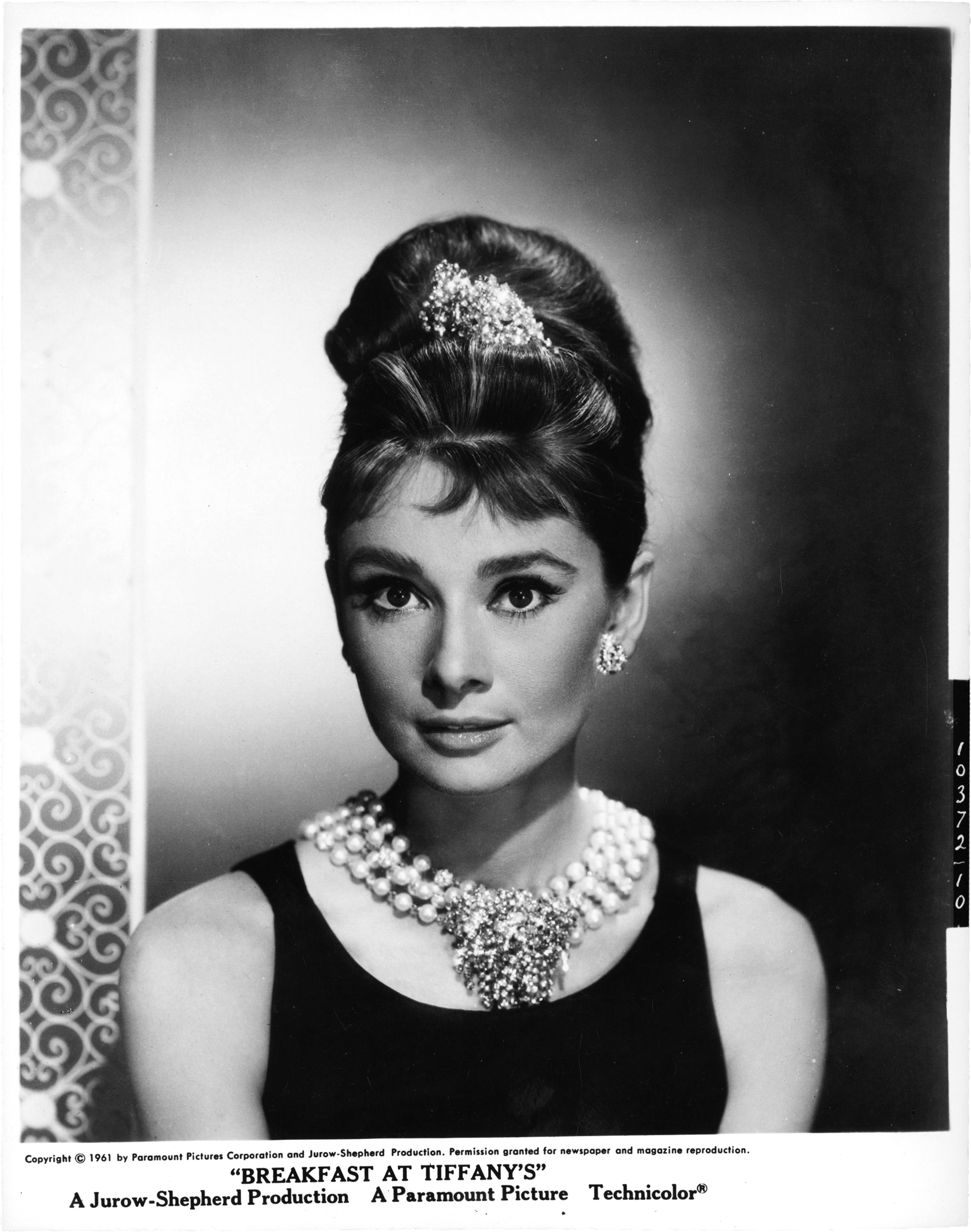
Fireball: Carole Lombard and the Mystery of Flight 3 by Robert MatzenThere should be a law that Hollywood stars who are going to die young should only make first-rate pictures. Take Audrey Hepburn, for example. There was only so much Audrey to go around. She reached her zenith in looks and glamour around the time of Breakfast at Tiffany’s, then did Charade and My Fair Lady, and before and after there were some stinkers. I’ll grant you Roman Holiday’s a fine, original picture, Funny Face has its moments, and The Nun’s Story is, well, awesome, but War and Peace, Green Mansions, Paris When It Sizzles, How to Steal a Million—I wish to heck since Audrey had a limited shelf life and moved on to humanitarian work that she had made better career choices.

Marilyn Monroe’s another one. I want more of the Marilyn of Niagara, How to Marry a Millionaire, and The Seven Year Itch—I’m not as big a fan of Some Like It Hot as others are—but boy she completed her trajectory fast. I don’t care much about seeing MM play a psycho in Don’t Bother to Knock. River of No Return? Eh. Bus Stop—not to my taste. The Misfits depresses me. I think she looks great in The Prince and the Showgirl and it has some moments, but it’s also a test of the kidneys. And the perfect torture for your worst enemy: tie him or her to a chair and force consumption of Let’s Make Love in its lethal entirety. She’s the perfect example of how limits of even tremendous Hollywood stars can be tested by forcing them into pictures that were just plain bad ideas.

I’m not your biggest fan of Jean Harlow (although I have nothing against her), but the other week Saratoga was on and I tried to sit and enjoy it. I decided that even if Harlow had lived to film every scene in the script, Saratoga would still have been a dog, just like Personal Property had been a dog. It makes me wonder if Harlow wouldn’t have followed Joan Crawford into the MGM doghouse with another bad picture or two the likes of Saratoga.

Fireball: Carole Lombard and the Mystery of Flight 3 by Robert Matzen

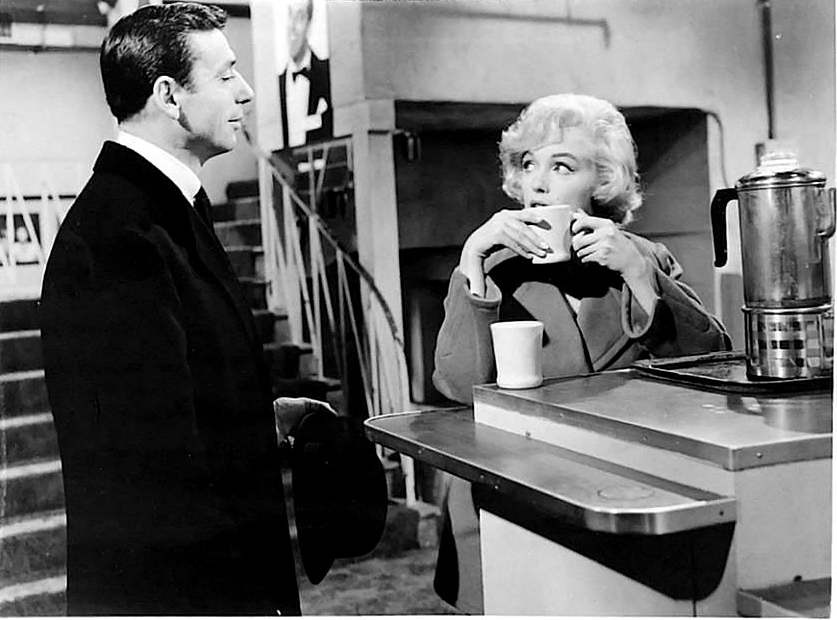
So let me see if I have this straight, Mr. Montand. I’m Marilyn Monroe, and you’re getting more screen time than me in this picture?

Carole Lombard made some pictures that are hard to watch, particularly earlier in her career, but Fools for Scandal, Vigil in the Night, and They Knew What They Wanted? Ouch.

Do you ever do that? Do you ever sit consuming a bad picture by a big Hollywood star and wish for better? Errol Flynn was the perfect screen swashbuckler but made very few good ones. I watch him forced to go through the paces saddled with that hellacious Against All Flags script and before long I’m ranting at the screen. Earlier today I caught a few moments of his Civil War western Santa Fe Trail and it was a few moments too many. Some time back I went through all the production notes on this one and even as he toiled on it day by day, Flynn knew it stank. He was a cranky man making Santa Fe Trail and for good reason.

It’s the flip side of Golden Age Hollywood: stars needed vehicles, needed to have their faces out there with three, four new pictures a year, many or most of them forgettable and some downright painful because there just weren’t enough good scripts and good directors to go around.

Clark Gable may have been the King of Hollywood back in the day, but take away It Happened One Night and Gone With the Wind, and what do you have? Some decent pictures and many more iffy ones.

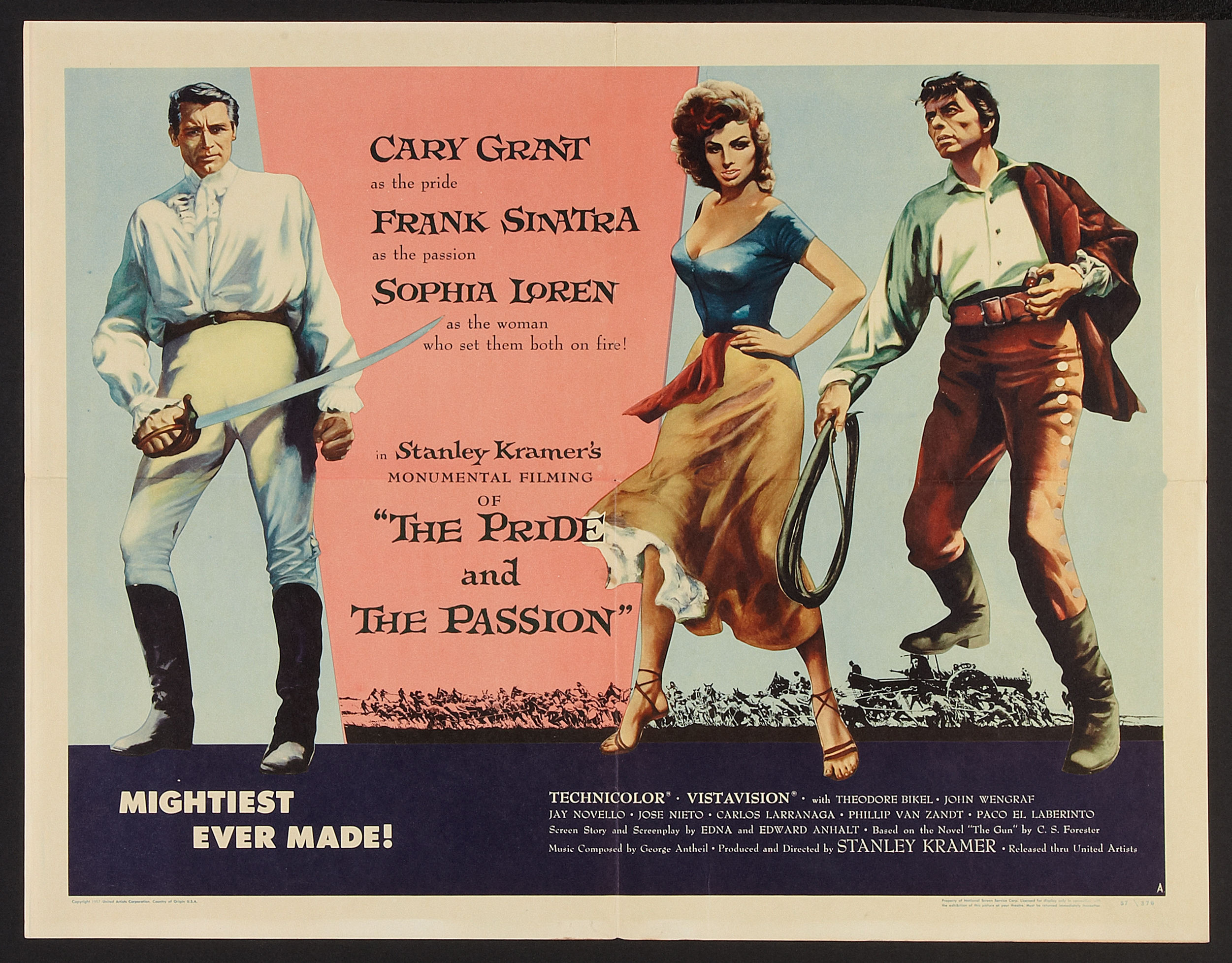
We think of Cary Grant as a hit maker but man did he foul off lots of pitches in the 1950s. For every To Catch a Thief and North by Northwest there was a Crisis, Room for One More, Kiss Them for Me, and The Pride and the Passion. I mean, he’s Cary Grant for crying out loud! Give him better material!

Fireball: Carole Lombard and the Mystery of Flight 3 by Robert Matzen

The movie posters for The Pride and the Passion should have been warning enough.

My beloved Marx Brothers may be the best example of all. After five stout Paramount comedies in as many years, the boys moved to MGM and died a lingering death. Somehow their funny bones never got packed and stayed back in the soundstages on Melrose. What a tragedy! Such great talent wasted as they ran out of motivation in the face of flop after flop and suddenly were too old and didn’t care anymore.

Am I the only one who wishes that all those unique talents living in their unique times had been better taken care of?