Month: April 2016

Dream Lovers

Mission: Jimmy Stewart and the Fight for Europe by Robert Matzen

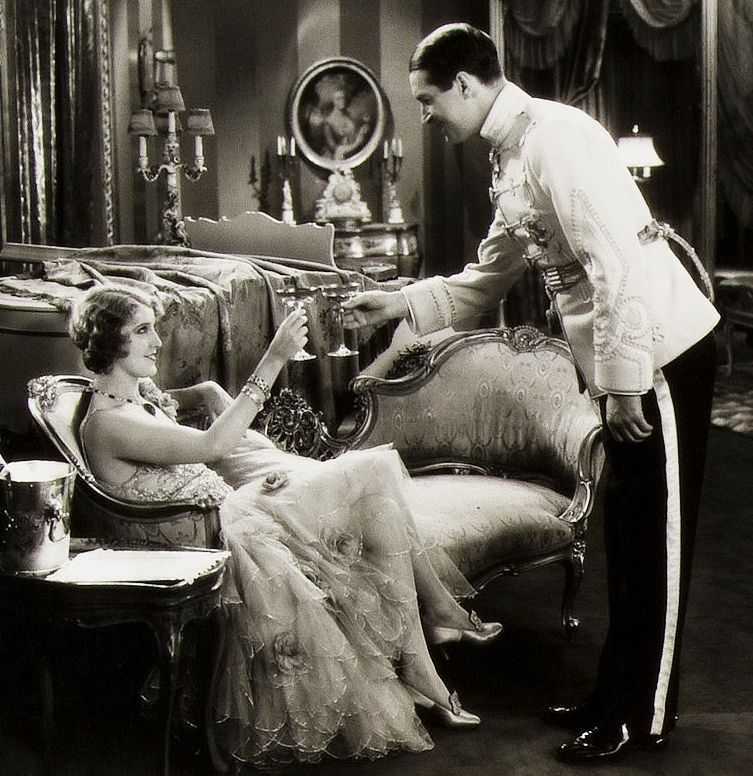
A toast to the lovers, Jeanette MacDonald and Maurice Chevalier.

Raise your hand if you know what “pre-Code” means. Did you get a little hormonal surge reading that term? If so then you really know pre-Code and all it implies and promises.

In the late 1920s, when sound came into motion pictures, the Hollywood studios began feeling their oats and things got very naughty very fast. All of a sudden, hookers, drug addicts, gangsters, murderers, cheating husbands and wives, and—egads—gay people started showing up in movies, and things got so supercharged that the morally righteous enforced a Motion Picture Code beginning in 1934 and heavily censored movies thereafter. Heavily, heavily censored them. But for an all-too-brief five years, movies were heaven—or hell, depending on your point of view.

Personally, I think it was the be-all and end-all time of the Golden Age, and I can only imagine the result if the Code hadn’t come in to tame your vintage libertines like Harlow, Lombard, Rogers, and then Lana and Rita—not to mention Gable, Cagney, and Flynn. Alas, we’ll never know.

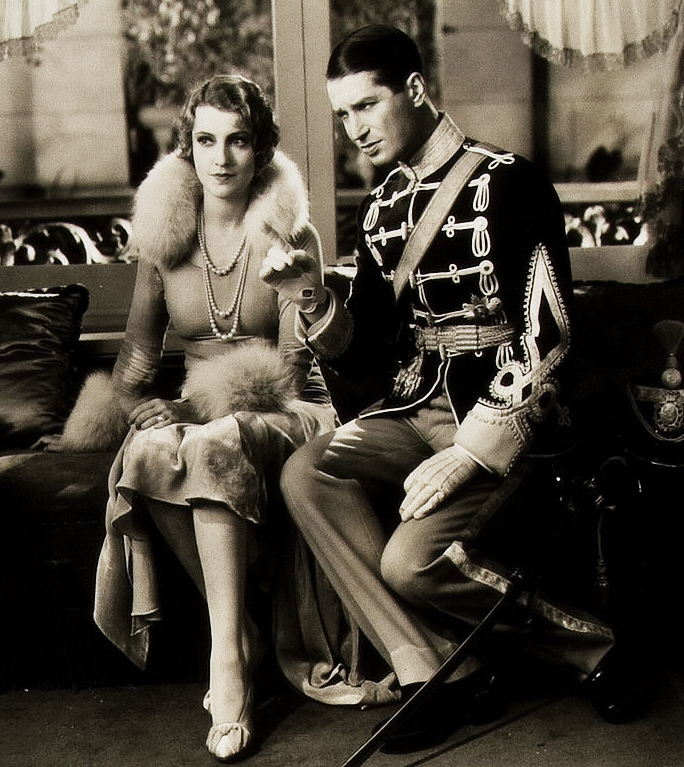
The other day I watched a 1929 musical called The Love Parade that had a strange effect on my red blood. It’s a dreamlike operetta about a rakish French nobleman, Count Renard, assigned to the court of Queen Louise of Sylvania, a verging-on-spinsterhood proper young lady who, upon introduction to Count Renard and the reading of a report about his scandalous reputation back home in France, tries to surrender her virginity as quickly as possible.

They’re married before the end of the first reel and then things get predictably complicated when the proud and still naughty Frenchman grows restless as, basically, the do-less “first husband” of the land. A happy ending can only be achieved after the count has asserted his authority and the queen has given herself freely into submission to her man. The basic theme here: bad boys are the way to go!
Mission: Jimmy Stewart and the Fight for Europe by Robert Matzen

First impressions, lasting impressions for Queen Louise.

Even though this thing was made 87 years ago in fading black and white; even though they hadn’t really figured out sound recording yet and one sentence is over-modulated and the next is muffled, I think this picture is incendiary.
Mission: Jimmy Stewart and the Fight for Europe by Robert Matzen

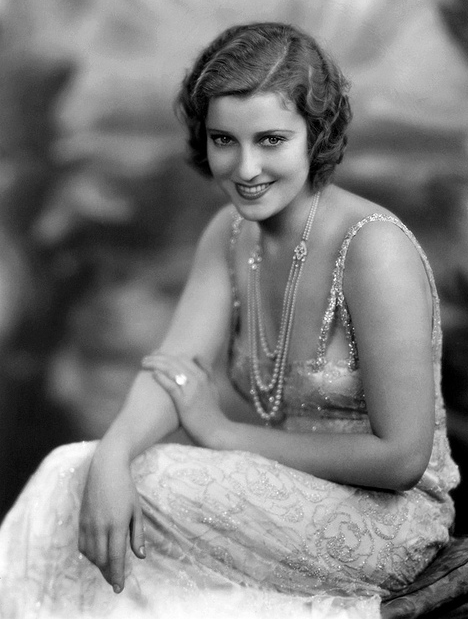
1930’s publicity photo

Jeanette MacDonald was 26 when she made her motion picture debut here after finding fame on Broadway. I can’t say I know much about early Jeanette pictures, and I hope my learned readership can enlighten me. Was she always this sexy before the Code came in? I heard myself say aloud, “She’s HOT!” while watching The Love Parade, and Mary said in her most doubtful voice, “Really?” Yes, really. Later on Jeanette would be teamed with Nelson Eddy, and together they’d take their operatic voices on an odyssey through many successful MGM musicals, all of them fine for family viewing, so this earlier incarnation of vine-ripening Ms. MacDonald was, to me, a pleasant surprise.

Maurice Chevalier was 15 years Jeanette’s senior and making his second American picture with The Love Parade. These two Paramount Players enjoyed chemistry together that would propel them into more pictures as a love team. From a distance, The Smiling Lieutenant, Love Me Tonight, One Night with You, and The Merry Widow seem to have been cut from the same bolt of cloth as The Love Parade—is that right? I’m pleading ignorance here because I’ve avoided early musicals studiously over the years and only knew Chevalier as the farcical grandfather guy from pictures of the 1960s. And the one the Marx Bros. tried to imitate in Monkey Business.

I also had no idea Chevalier was wounded in World War I and a POW for two years. Having some grasp of how the Germans felt about the French, I can’t imagine life in a prison camp from 1914 to 1916 was much in the way of fun, and maybe this gave Chevalier the joie de vivre that marked his screen persona—after you’ve seen hell, everything that followed had to be gravy, especially romping through a land of make-believe with Jeanette MacDonald.

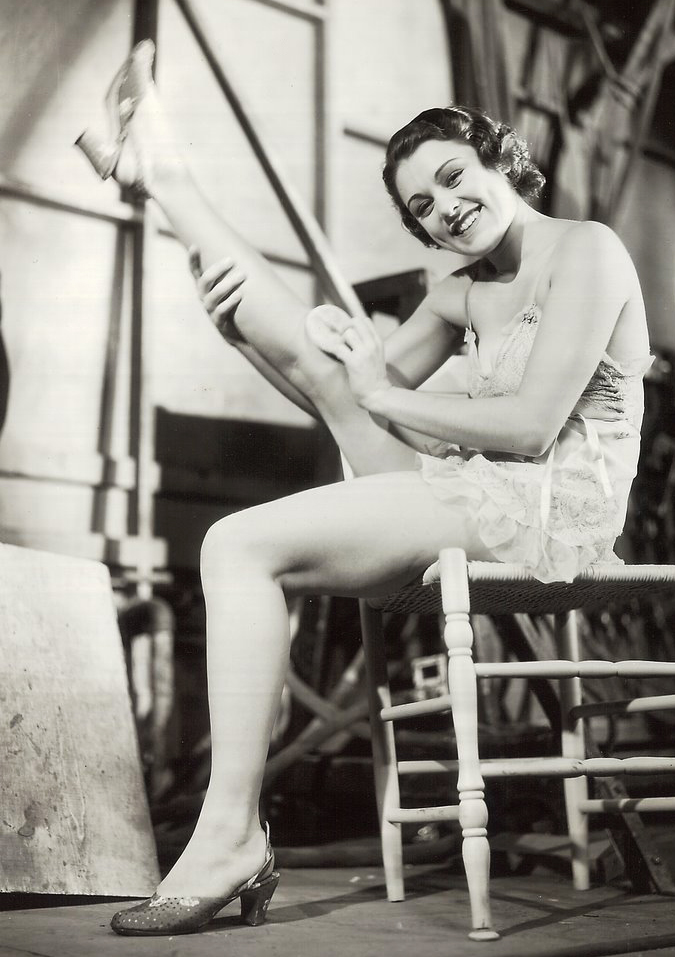
Broadway entertainer Lillian Roth, then 19, took on the role of a maid in The Love Parade and spent her time as comic relief observing the torrid goings-on between the queen and count. I’ve got a glamor shot of Lillian on my wall that serves as testimony to my affection for the pre-I’ll Cry Tomorrow Roth, this being her memoir of addiction and recovery. Here she is at 47 interviewed by Mike Wallace about her life, saying at one point, “I’ve never felt … quite … adequate.” She describes a lifetime of not believing she was good enough, pretty enough, or talented enough (thanks to an abusive, perfectionistic stage mother)—all of which led Lillian Roth to the bottle for solace.
Mission: Jimmy Stewart and the Fight for Europe by Robert Matzen

Lillian Roth shows some leg on a Paramount soundstage. At 19 she was more emotionally fragile than director Lubitsch realized.

The great Ernst Lubitsch directed The Love Parade, his first talking picture in a fantastic career that included crossing paths with two of my own biographical subjects, Carole Lombard (chronicled in Fireball) in To Be or Not to Be and James Stewart (covered in Mission) in The Shop Around the Corner. Lubitsch really did have quite the touch, a way of finding flesh-and-blood humanity, romance, and yes, deep sexuality in each and every picture. As detailed in Fireball, Gable referred to Lubitsch as “the horny Hun” and warned Mrs. Gable to stay away—you can imagine what sharp-tongued Lombard said to her husband in response. In I’ll Cry Tomorrow, Lillian Roth describes how the canny Lubitsch plucked her from the stage for Hollywood stardom in his first talkie with Chevalier, which led Lillian to assume she’d be the Frenchman’s love interest. But all along Lubitsch intended Roth and diminutive physical comedian Lupino Lane to play absurd counterpoint to MacDonald and Chevalier, and Lubitsch held fast to his vision even against Lillian’s tears and protests. The pain of this ego blow and its effect on her subsequent career comes through in the I’ll Cry Tomorrow narrative and served as one more factor in her descent into addiction.

The Love Parade was nominated for six Academy Awards, including an unlikely nod to the smug and self-satisfied Chevalier. Whatever, just watch and listen as Jeanette sings the haunting Dream Lover in that operatic voice and try to get it out of your head afterward. For good measure, here’s the instrumental waltz version. It’s a dreamy song for a picture about dreamy lovers.

Pardon me while I go panning for more pre-Code Hollywood gold. I’ve seen all the usual pre-Codes, but never thought to look under rocks labeled musical-comedy, where I shouted Eureka! upon discovery of The Love Parade.
Mission: Jimmy Stewart and the Fight for Europe by Robert Matzen

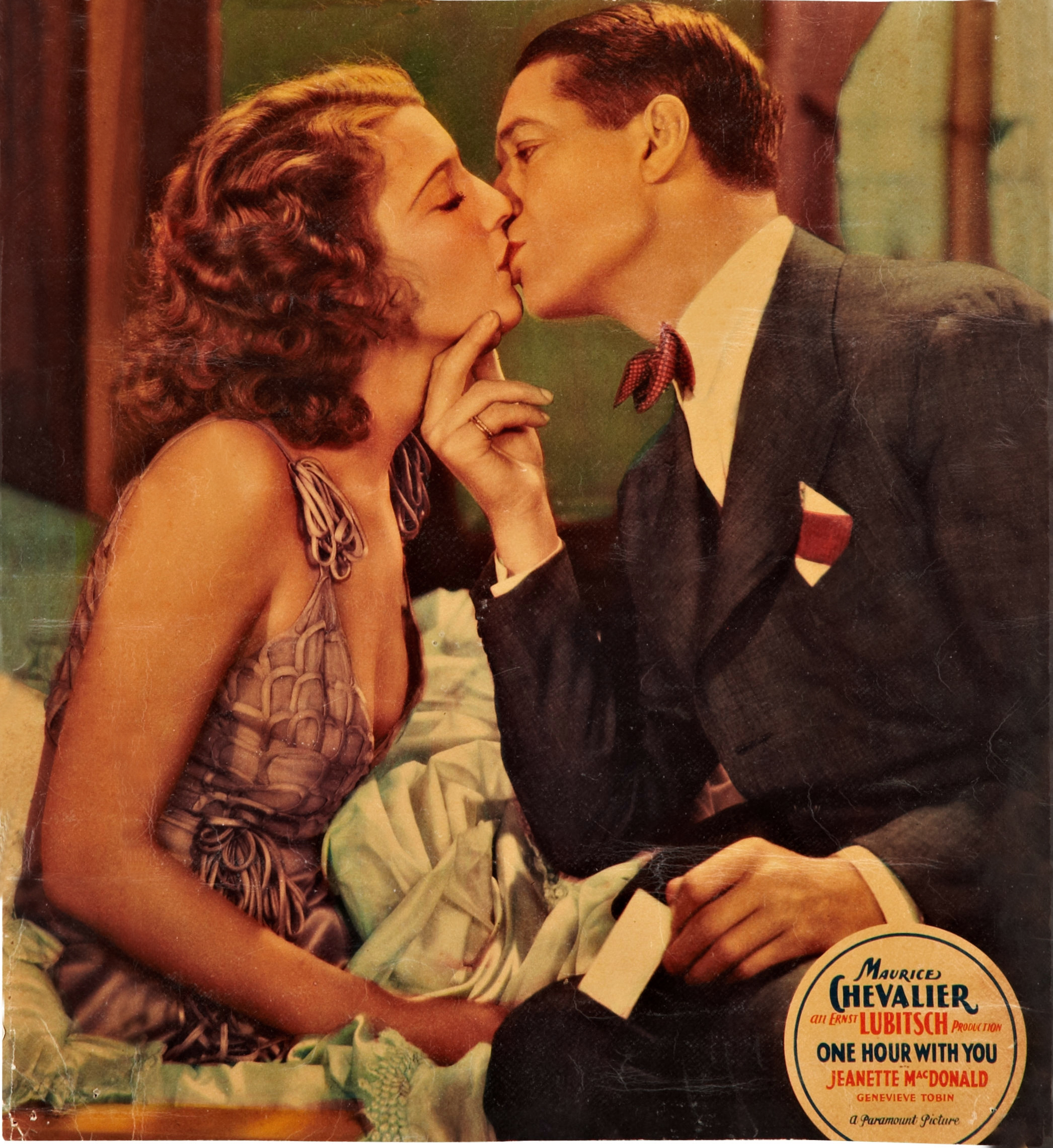
MacDonald and Chevalier, reunited in another Lubitsch production in 1932, and still smoldering.

When Swords Flew

Errol & Olivia by Robert Matzen

In a key lobby card from the set, Robin Hood stares down Sir Guy of Gisbourne in the middle of a duel for the ages.

I was prompted to think about the duel scene in The Adventures of Robin Hood by an email Tom Hodgins sent just this morning. In it he says:

“…years ago I mentioned on your Errol and Olivia blog that there is a moment in the Robin Hood duel where a sword fumble by Rathbone can still be seen in the film. Ralph Dawson edited it so beautifully that the eye can’t really catch anything, but, by pausing and freeze framing the image you can clearly see it. The only reason I made this discovery is because one day I thought I saw a slight blur on the film at that point, so I stopped my DVD to check it out. Voila—a boner by Basil that’s been on the film since its release without anyone having noticed it. (At least, I’ve never heard of anyone else having written about it). I’m sending you a couple of snapshots of the fumble taken on my computer off the DVD, just in case you never saw it for yourself. Basil, I’m sure, would not be pleased.”

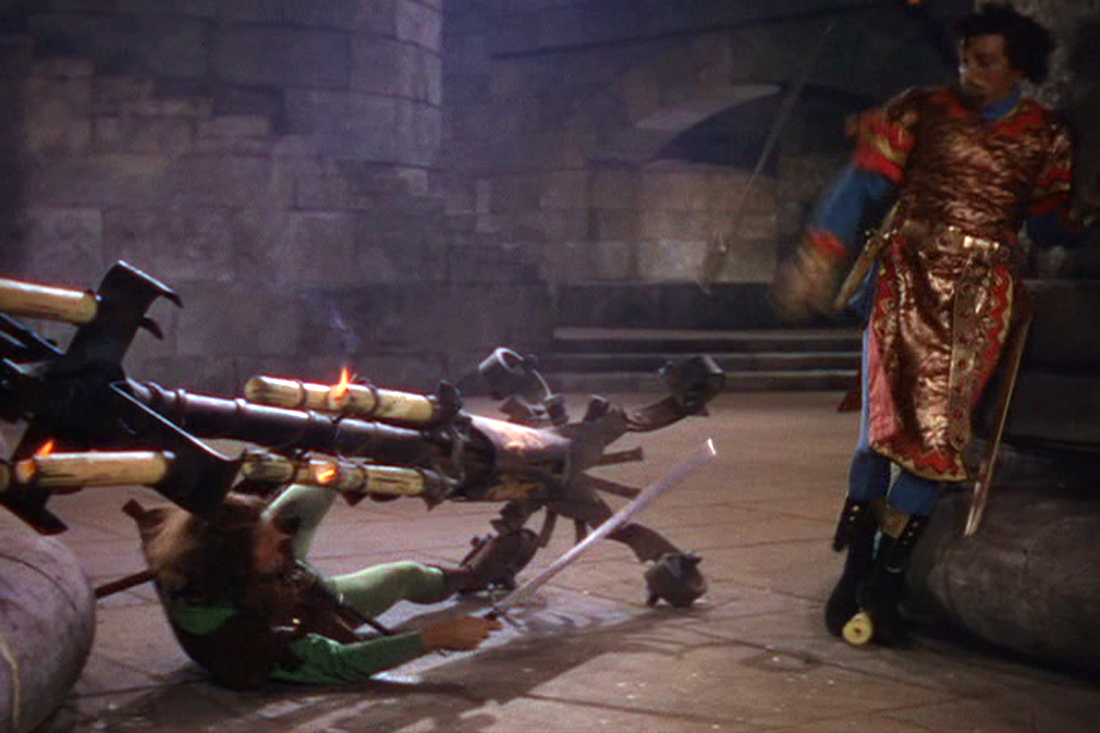
I remember Tom mentioning this but never did think to follow up until the new prompting this morning. With Flynn lying under the candelabra, Rathbone says, “Do you know any prayers, my friend?” and Flynn responds, “I’ll say one for you!” and his next swing with the sword, as he’s lying flat on his back, is so ferocious that it catches Rathbone unaware and knocks the blade from his hand. It’s not supposed to, but that thing goes flying—which I didn’t notice in nine theatrical viewings of the picture and dozens more on the small screen. It’s only a few frames, literally like a quarter of a second, but it’s there with the sword tumbling high in the air end over end.

Errol & Olivia by Robert Matzen

In Tom’s freeze frame, Rathbone’s sword has been knocked from his hand by an over-eager Flynn and is tumbling in the air–something NOT choreographed as part of the action. As can be seen, candles did not fare well in this encounter.

In general it proves how difficult the swordfights were to choreograph and how long it took and how exhausting for the actors, director, DP, and crew. Rudy Behlmer used some of the Rathbone color home movies to lead us through an examination of the filming of this duel scene in the bonus feature, Welcome to Sherwood, included as bonus material in the Robin Hood deluxe DVD package released years back.

We have all seen some fantastic cinematic duels, and for me this one is near the top of the list, with its terrific flow as the duelists fight their way out of frame to hack and slash in shadow and then re-emerge into view, still going at it furiously. They’re not fighting with foils but with heavy swords, their occasional, resonant clanking serving as reminders that these weapons are lethal.

Errol & Olivia by Robert Matzen

As per another lobby card from the original set, the duel begins in the Great Hall.

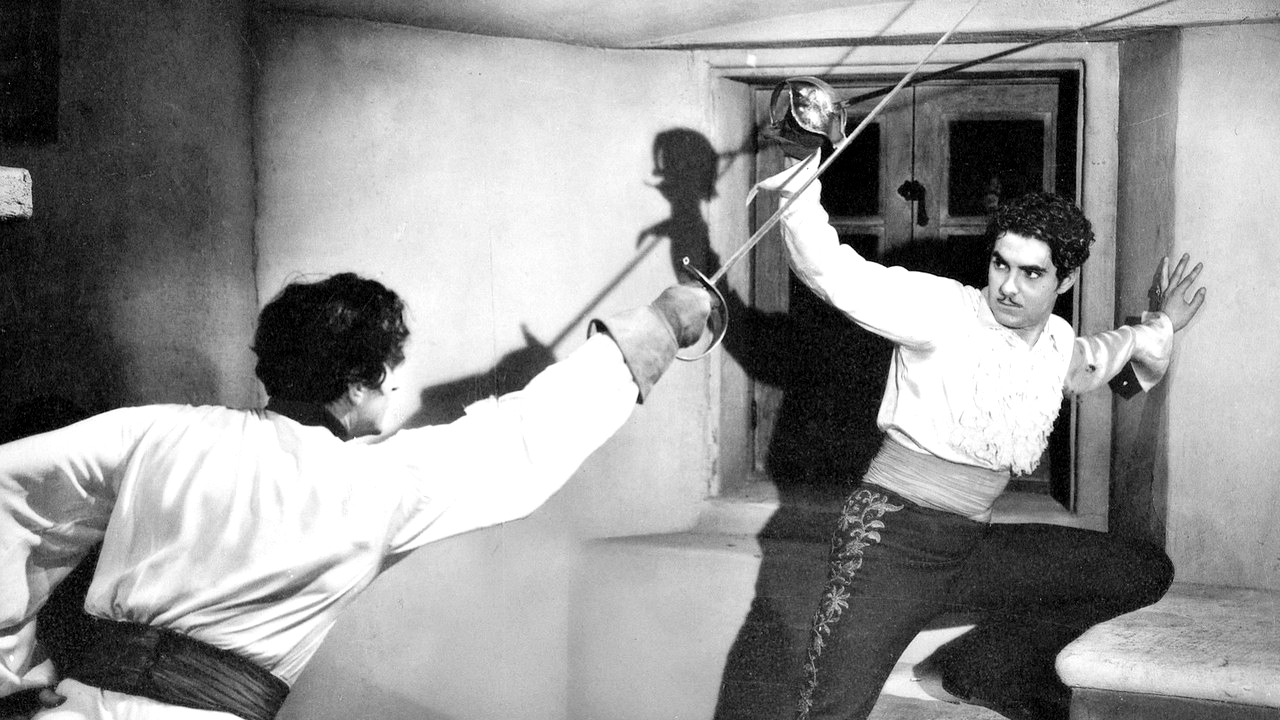
In The Mark of Zorro there’s a fantastic moment when Esteban (Rathbone again) demonstrates his prowess with a blade to Zorro (Ty Power) by deftly slicing off a candle with a flick of his wrist. Then Zorro does the same and seems to miss because the candle is still sitting in place, but then he reaches out and lifts the sliced top off the remaining bottom and smiles innocently. Well, there’s no such gentlemanly foreplay in Robin Hood—when those big candles get hacked by the swinging swords, wax flies in all directions. In general, candles take a lot of abuse in the Robin Hood duel; not only are they hacked up by both combatants, but candelabras are tipped over and a candle is hurled as a missile by Robin at one point.

Wasn’t Basil Rathbone something? When the duel scene was shot, he was 45 years of age (17 years older than Flynn) and a heavy smoker, yet easily up to the rigors of shooting that scene. Two years later at 47 he nearly topped it in The Mark of Zorro. There’s a moment at the end of the Robin Hood duel that makes me frightened in retrospect for the safety of Mr. Rathbone and others in the cast, and that occurs after Sir Guy has been defeated and Robin hurries to the dungeon where he knocks the hand of the jailor holding the keys to Marian’s cell so hard that he bends his blade. He doesn’t bend it a little; he bends it a lot, demonstrating—what are we—78 years later how explosive Flynn was as a physical presence in his action pictures, and how wary stars and bit players alike would have been at the moment the director called, “Action!” and the film started to move in the magazine. That was when the money was spent, and when Errol would have been ready to make it look good, come what may for the other guy—as when he used muscle on the shot that Tom Hodgins pointed out, and Rathbone’s sword went flying. I know I’ve mentioned how Christopher Lee used to boast that Flynn nearly took off a finger shooting a duel scene during production of an episode of The Errol Flynn Theater, “and I have the scar to prove it,” Lee sniffed in an on-camera interview.

Errol & Olivia by Robert Matzen

Basil Rathbone fights Tyrone Power in The Mark of Zorro. This duel was just as furious and just as lethal an encounter, but confined to a much smaller space. In both, Rathbone displayed fine fencing form.

I’m tempted to say that Flynn just didn’t have self-discipline in any regard except maybe for tennis. Archival film footage shows he was an awfully good tennis player and, as any weekend hacker knows, tennis is all about discipline. And when you watch the Robin Hood duel scene and the extra footage as described by Rudy Behlmer, you see that the swordfights were meticulously shot over a course of days and through all those movements with exposed sword tips, Flynn must have had discipline there too or Rathbone and so many others would be dead or blinded for life. But they lived to act on, so Errol must have been doing something right. You can cite for me all the instances where Fred and Al Cavens were doubling for Errol and Basil but there’s still a heck of a lot of Flynn-Rathbone footage visible in the Robin Hood duel, so these two must be given the credit they deserve for making it look lethal from beginning to end.

Errol & Olivia by Robert Matzen

Thanks to the vision of Mike Curtiz, the combatants duel in shadow for a time, only to reemerge in frame still fighting with fury.

The near-impossibility of shooting this duel scene is demonstrated when, in the middle of the duel, Robin moves aside and Sir Guy flies past him and off the winding stone stairway. Sir Guy’s sword flies far off as dictated by physics and lands a good 25 or 30 feet away, but in the next shot, it’s magically laying on the floor under Robin’s feet so he can kick it back to Sir Guy in an admirable display of sportsmanship. So, let’s think about that moment on Stage 1 (or wherever it was) in January 1938 after Curtiz called “Cut” and they assessed what had just been captured on film. There must have been 40 people who saw the sword go to a spot where it would be impossible to retrieve unless Robin spent 15 seconds walking down the stairs, picking up the sword, and returning it to Sir Guy after he had collected himself up off the floor and dusted himself off. Talk about sapping dramatic tension! So what was that moment like, and what led to the decision to cheat through it the way they did? Was the stunt man doubling Rathbone the key player? Did he say, “If I have to do that fall again, it’s going to cost you another $500,” which prompted Mike to decide that yes the sword flew off but print it anyway and we’ll cheat. Was it a safety thing where the stunt man said, if I’m falling this way, then I’m making sure the sword goes that way so I don’t impale myself. Actually, that’s more likely and could explain why there isn’t a memo to or from Hal Wallis about this situation—it was a safety thing and you either X the fall out of the script in red pencil, or you cheat. All of which speaks to the incredible challenge of staging a fight like this.

Errol & Olivia by Robert Matzen

The iconic promotion still. A few seconds after telling Robin Hood, “You’ve come to Nottingham once too often, my friend,” he will lunge and go head-first off the steps. His sword will fly far off camera.

I will never forget standing in front of the edit booths under Jack Warner’s window on the Warner lot, thinking about all that used to go on in those rooms, all the sweat and missed meals and midnight oil burning brightly as deadlines neared. Can you imagine the pressure of cutting film by hand on 1937 equipment when the final still needed to be processed and prints run in whatever, 36 or even 24 hours? I’ve never counted the individual shots in the Robin Hood duel scene but each one had to be spliced into a continuous flow in the work print—down to the right frame. There was no iMovie or Avid or Premiere Pro back then; there were just a lot of men and women working themselves into an early grave slicing film stock on crude machines under the scrutiny of bosses like Hal Wallis and Mike Curtiz. All I can say when I think about those poor people is, yikes. Oh, and, they’re not paying you enough.

So that’s what came to mind this morning when I saw Tom’s two frames from the DVD of The Adventures of Robin Hood. I’m probably not the only one who missed this remnant of a flub and I smile thinking about Ralph Dawson in his little room in the dark in Burbank thinking about how to make the frames work with what came next. In the foreground is Flynn squirming out from under the candelabra, which is critical to show, and in the background the sword is flying when it’s not supposed to be. But Dawson made the right decision, because the classic remains a classic, and it took the eagle eyes of Tom Hodgins and the luxury of frame-by-frame DVD stop motion to spot the goof.

Requiem for a Saint

I have a little more time on my hands now that Mission is off to galleys. Time enough to think, and it’s only occurring to me now after all these years how badly I wanted to be the Saint. The Saint, as in Simon Templar (initials ST, Saint, get it?), square-shouldered, impeccably dressed playboy adventurer who drove around England righting wrongs. He had no past to speak of, no hometown or parents or ex-wife. His ex-girlfriends only showed up when the plot dictated, and they were usually ne’er-do-wells who had stolen money or diamonds and fled some country or other leaving Simon behind, and now they were in trouble and needed his help.

Mission: Jimmy Stewart and the Fight for Europe by Robert Matzen

The Saint’s calling card struck fear in the hearts of the bad guys.

Since I write for more of a movie audience than a pop culture audience, I mention the Saint and you think George Sanders and that’s fine. George Sanders made a terrific everything, including an entertaining feature-picture Saint, but George was hampered by the constraints of RKO production in the 1940s, and so his Saint was what he was, a formula programmer guy operating under the Production Code.

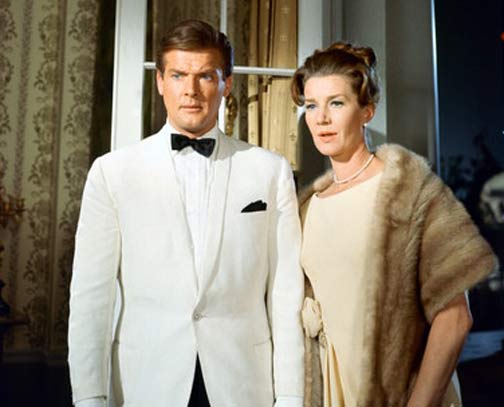
I always wanted to be the Swinging ’60s Roger Moore Saint from the British-produced ITC series. I’ll grant you that Roger Moore made a mediocre James Bond. He was little more than a placeholder as Bond, and many would say he was no George Lazenby let alone a Sean Connery. I guess I could sit here and count the reasons why he didn’t work as Bond, and they’re the same reasons he did work as the Saint.

Despite the bon mots tossed off by Connery’s Bond (“She’s just dead” … “I guess he got the point” … “Shocking”), there was gravity behind every movement, gesture, punch, and gunshot. Connery was a thinking-man’s Bond with the fate of the free world in his hands. Moore was the playful Bond, a big kid in a global candy store, reflecting Roger Moore’s off-screen mischievous self, a force that could never be contained. I remember Bond producer Cubby Broccoli at one point decades ago commenting on “those damned eyebrows” of Roger Moore, eyebrows that would shoot up out of nowhere and puncture otherwise dramatic moments in the Bond pictures. The basic question is, how can someone who’s “licensed to kill” have all that mirth inside him? Roger Moore as James Bond just came off as M’s bad hiring decision.

But as Simon Templar, Roger Moore was unbound. In an early Saint book, author Leslie Charteris described ST this way: “The Saint always looked so respectable that he could at any time have walked into an ecclesiastical conference without even being asked for his ticket. His shirtfront was of a pure and beautiful white that should have argued a beautiful soul. His tuxedo, even under the poor illumination of a street lamp, was cut with such a dazzling perfection, and worn moreover with such a staggering elegance, that no tailor with a pride in his profession could have gazed unmoved upon such stupendous apotheosis of his art.”

Mission: Jimmy Stewart and the Fight for Europe by Robert Matzen

When Simon gives the halo a glance, it’s time for the opening credits.

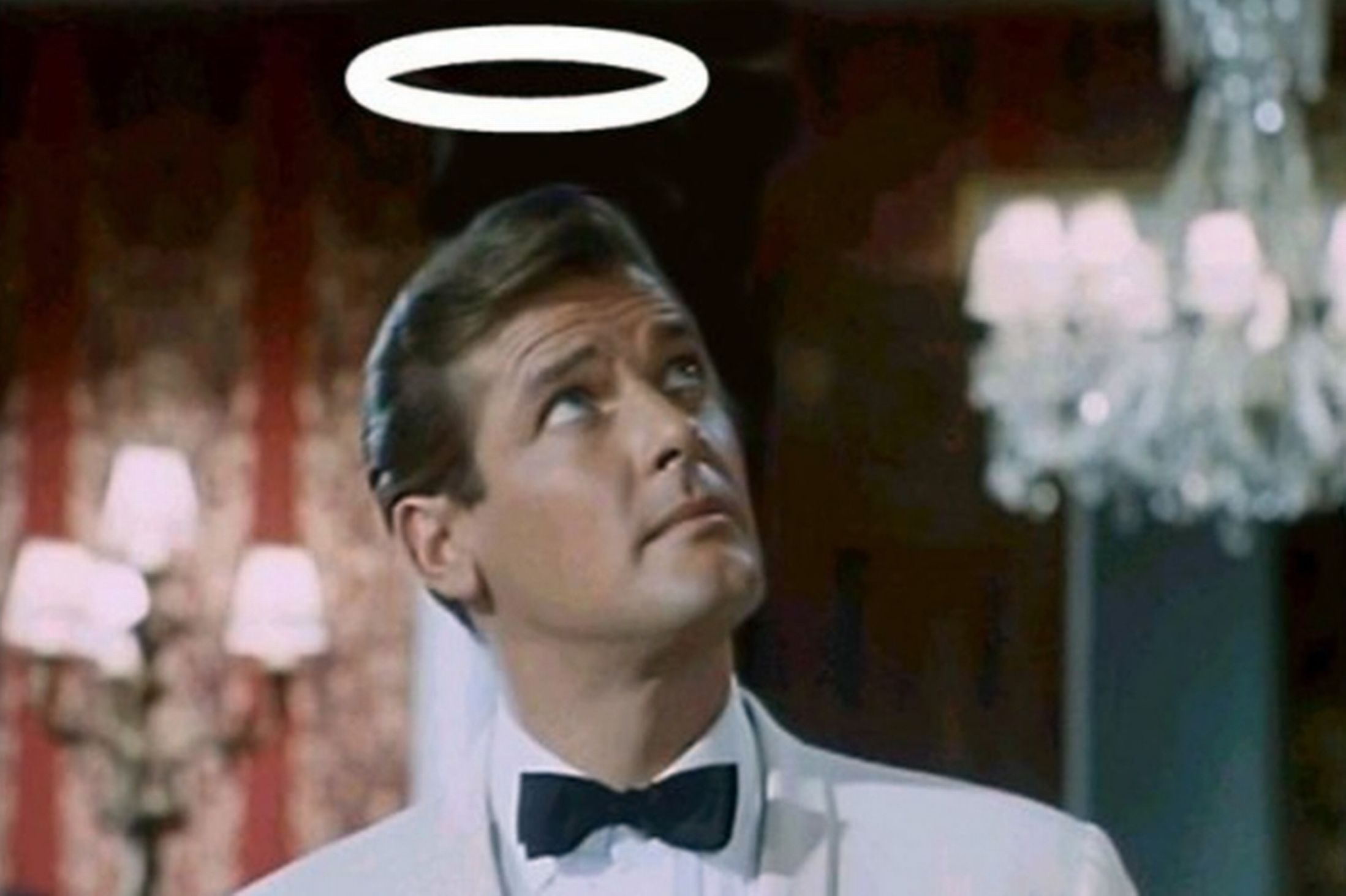
Thirty-plus years after Charteris wrote that description, Roger Moore brought the Saint to life on TV in just such sartorial fashion, a smirking, self-satisfied force of nature, light hearted but deadly when he needed to be. He would drive up in his little white sports car to serve as a dashing instrument of justice that in mere moments from the beginning of each episode would come between evildoers and those they had oppressed. He brought his looks, wits, brains, style, and athleticism to bear on any situation and without the need for licenses, possessing an ambiguous morality that made him capable of straying outside the law as needed. The prologue would always culminate with someone growling something to the effect that “the infamous Simon Templar” had just arrived, and he would look up at the halo that suddenly appeared over his head, which would cue the theme music. In fact, and particularly in the early years (the show ran 1962–69), Moore wouldn’t just bump into the fourth wall but he’d rip it down, addressing camera about where he was and what was going on around him with such easy charm that you just bought it. If you want to see me truly happy, just put on an episode of The Saint and leave the room. I’ll be babysat for the next 55 minutes.

Mission: Jimmy Stewart and the Fight for Europe by Robert Matzen

Years before Moore’s Bond had secretarial byplay with Lois Maxwell’s Moneypenny, they worked together on The Saint. (As a 10-year-old boy I was gonzo for Moneypenny. I’d sit in the theater screaming in my own brain, “OH MY GOD, HOW CAN YOU RESIST HER??”)

Moore was 35 years old when he began his run as the Saint; Roger was ex-military and an ex-clothes model who had been signed to a contract by MGM toward the end of the studio era. He never made any claim to being Olivier; he didn’t have a lot of range, but as Simon Templar he didn’t need it. He was charming and unafraid to take chances in front of the camera. He was also the perfect age to play the Saint from the beginning of the run to the end, finishing at age 42. By the time he shot his first Bond in 1973 he was already 46, and seven pictures later when he ended his run as 007, he was 58 and looked older than that and not very interested in what was going on. And by then, thanks to the aforementioned Broccoli, the human James Bond facing human crises had long ago been replaced by special effects James Bond with gadgets and explosions and existence in a world where gravity didn’t apply. All the while Moore kept aging and the Bond girls kept being 20 or 25 and it got kind of weird—that Gary Cooper-Audrey Hepburn kind of weird. Or Humphrey Bogart-Audrey Hepburn weird. At some point, for Roger Moore, it all stopped working.

Mission: Jimmy Stewart and the Fight for Europe by Robert Matzen

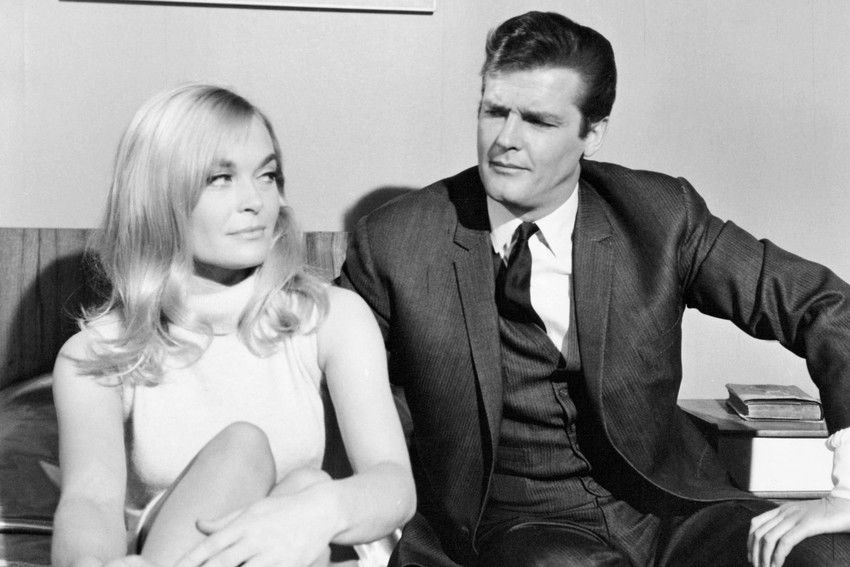
Another Bond girl to come the Saint’s way–Goldfinger victim Shirley Eaton.

After another successful book or two, you know where you’ll find me, in a tux driving around London in my white sports car righting wrongs, or on the Riviera playing baccarat with a brunette on each arm and a halo over my head, talking to the camera, knocking out bad guys, stealing from the evil rich, keeping what I need, and giving what’s left to the oppressed poor, just the way Leslie Charteris wrote it all those years ago.

Or, at the very least, they’ll drape a shawl around my shoulders and plunk me in front of the TV to watch Roger do it, taking comfort in the knowledge that I won’t be likely to wander away from the facility and into the woods to be found face-down in some ditch. At least not for the next 55 minutes.

Mission: Jimmy Stewart and the Fight for Europe by Robert Matzen

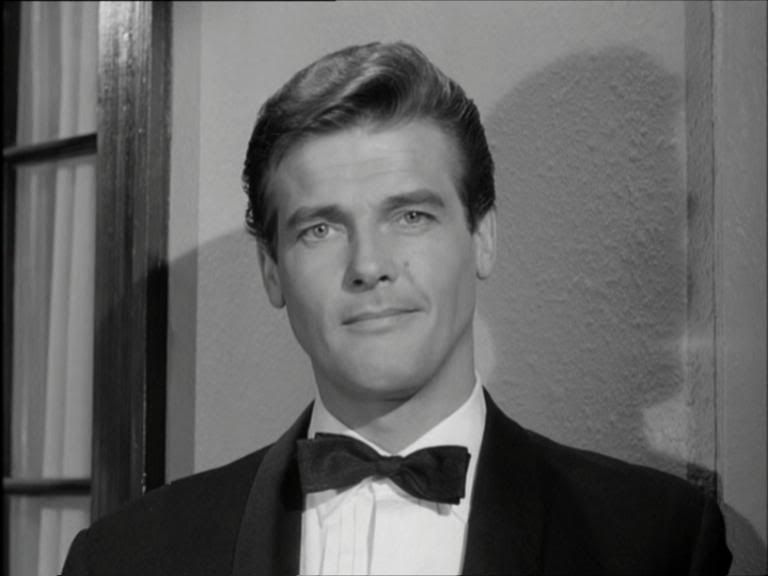
The one, the only Roger Moore as a smirking Saint, dressed to the nines (I could never keep the bow tie on a tux straight) and out to destroy that irritating fourth wall.

Brute Men

Mission: Jimmy Stewart and the Fight for Europe by Robert Matzen

The gate to the corral is open, and I’m free! Free, I tell you! I’ve let everyone and everything go to concentrate on the book (to my understanding friends I say, thank you) and now finally it’s gone and I can begin to live my life again.

Last night I was ready for bed and watching House of Horrors on Me-TV’s Svengoolie. I’ve spent my life catching glimpses of Rondo Hatton but never really thinking about Rondo Hatton until last night, thanks to Sven’s thoughtful summation of Rondo’s life and times. You know, I have to applaud Rich Koz, the brilliant one behind the brutish makeup of Svengoolie, because it’s clear Rich is one of us, with a deep passion for classic Hollywood that is bound to go way over the heads of some in his audience, as when he details the life of a Virginia Christine or a Robert Lowery.

OK, so let me back up yet another step. In the 1930s Universal studios made classic monster pictures like Frankenstein, Dracula, The Mummy, and The Wolf Man. These characters became cash cows and were recycled through the years of World War II until they became pretty terrible B-picture derivatives made on limited budgets, with few original ideas coming along. But House of Horrors, released in 1946 at the tail end of the Universal Horror cycle, was pretty good with its story of an impoverished sculptor, played by Martin Kosleck, who is about to drown himself in the river when instead he pulls a brutish man out of the water and nurses him back to health. Rondo Hatton is that rescued brute, who in his gratitude begins to murder art critics who had disparaged the sculptor’s work.

Mission: Jimmy Stewart and the Fight for Europe by Robert Matzen

Rondo Hatton in high school.

I connected with Rondo last night like I never had before. In very few words he conveys gentle intelligence that goes against the grain of those looks. Hatton was born in 1894 to educated parents and grew up in Tampa, Florida. He was quite the dashing figure as a teen and joined the U.S. Army, serving in Mexico against Pancho Villa in 1916 and then in the Great War. It was here his health began to suffer due to a pituitary condition called acromegaly that causes an overproduction of hormones, with the result being deformity in soft tissue. Sven postulated that German mustard gas had triggered the condition, which may be borne out by the fact that Hatton was discharged from the Army for illness before his tour of duty was completed. In other words, whatever happened, happened pretty fast.

Hatton became a newspaper reporter for the Tampa Tribune, where his ever-more-unusual looks were noticed by director Henry King during production of Hell Harbor on location in Tampa. King gave Hatton a small part in the picture. By the later 1930s Hatton’s Acromegaly had progressed to grotesque deformity that made him a natural for more motion picture work, so off to Hollywood he went, landing bit parts as a bodyguard or henchman or pirate—wherever a rogue’s gallery was being presented. The more old movies you see, the more you go, “There’s Rondo Hatton.” You see him so often he just blends right in with the fabric of classic Hollywood.

Mission: Jimmy Stewart and the Fight for Europe by Robert Matzen

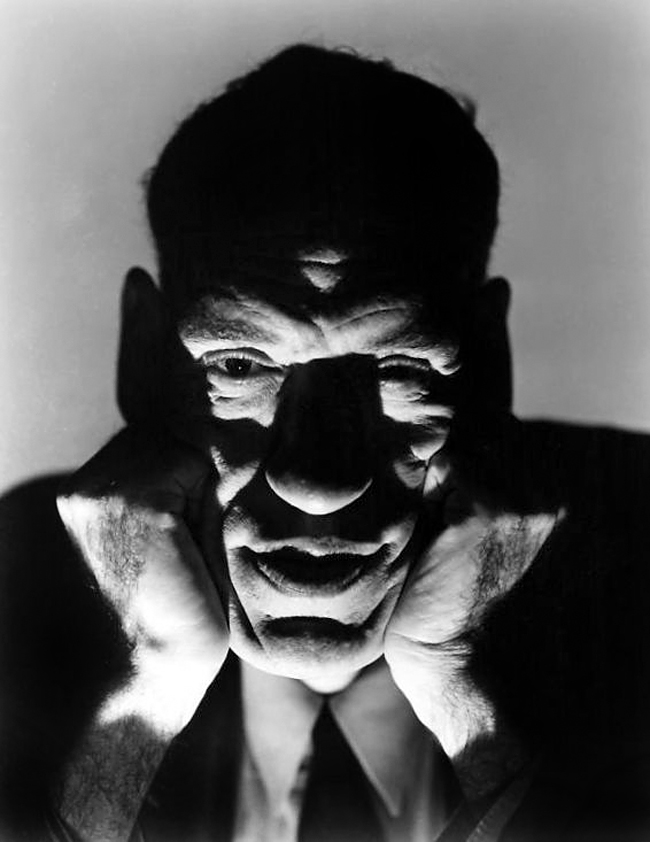
Well, who doesn’t appear scary with the flashlight-up-the-face look? I like this pic for the Mona Lisa smile and a hint of, “It’s a living.” His acting style in both “House of Horrors” and “The Brute Man” make me want to sit down and have a drink with this Hollywood veteran. If only.

Finally, in 1944 he landed at the most natural place in the world, Universal Pictures, which saw him as a “monster without makeup” and cast him as the featured killer in its Sherlock Holmes picture, The Pearl of Death, starring Basil Rathbone. After that Rondo was on his way, with nice billing in pictures

Svengoolie aka Rich Koz

Svengoolie, aka Rich Koz, an appropriate name since he works so hard, furthering the cause of classic Hollywood.

including Jungle Captive, The Spider Woman Strikes Back, and then House of Horrors, where I rediscovered him last night. Here was Rondo at age 51 and in the last few months of his life. He would die of a heart attack resulting from his condition on February 2, 1946, six weeks prior to the film’s release. Another similar picture and his last, The Brute Man, would be released that October.

I just wanted to pause a moment to appreciate Rondo Hatton for making the most of his life and earning a spot in the Hollywood pantheon. He was given some nasty lemons at an early age, and made some terrific lemonade; we should all do so well. Appreciation also goes to Rich Koz for his ongoing gift to the world: hours of enjoyment while bearing the torch for classic chillers on Svengoolie.