Month: October 2016

Calling All Ghosts

If you spend a lifetime around history, you can’t help but experience something paranormal along the way, even if you’re a pragmatist like me. I am not one to see ghosts. I will get an inkling of something once in a while, like the time I was on a ghost hunt with a friend and his group. As I walked down a hallway in an old house supposedly haunted, I felt someone touch the back of my neck with cold fingers…even though there was no one there. I can feel cold spots and get a sense of things being off, but I just don’t have whatever it is that allows a person to actually see ghosts. I’ve spent lots of time in haunted places begging for something to happen and it never did. When I went to England last year to explore the abandoned American air bases from World War II for my book, Mission: Jimmy Stewart and the Fight for Europe, I was told it was inevitable I’d see ghosts because so many men died in crashes at those spots—I saw nothing. At Tibenham, where Stewart was based with 4,000 other guys of the 445th Bomb Group, I was on very spooky ground and I felt the frantic energy of this now quiet and desolate spot, but saw no ghosts. Thirty years ago the old control tower was still standing and supposedly very haunted, but it had been long-ago torn down by the time I got there. Years and years before my visit to England, on the only occasion when I did see a ghost, I wasn’t thinking anything about ghosts at the critical moment, and it took years to figure out what had happened.

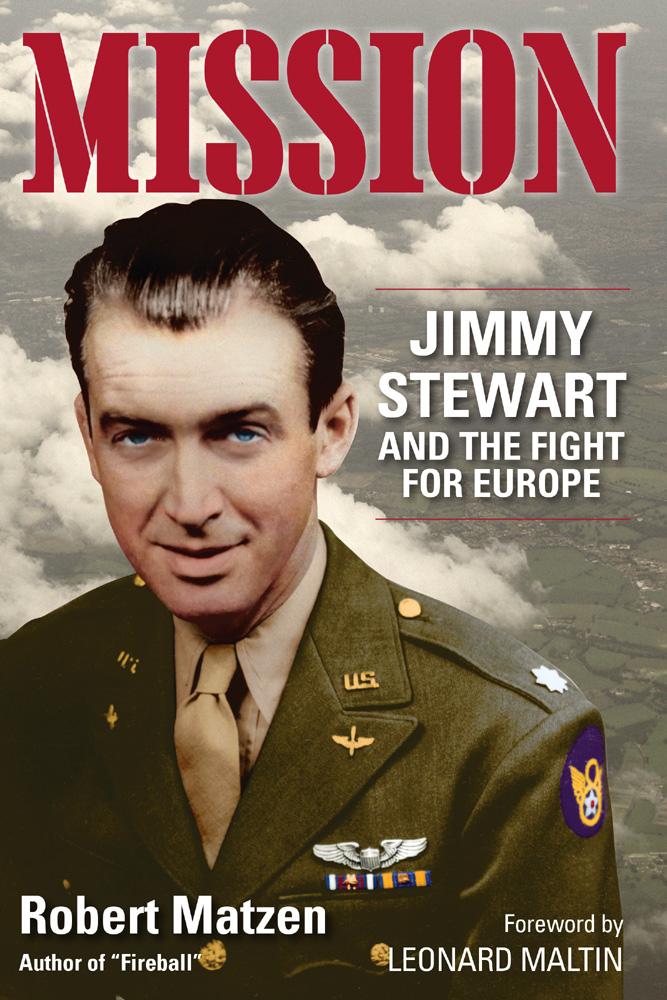
Mission: Jimmy Stewart and the Fight for Europe by Robert Matzen

Thirty-one years after last setting foot there, Jimmy Stewart returned to Tibenham in 1976 and here leans against the operations building with the control tower behind him. It even looks haunted. By the time I got here, these buildings were long gone, although if you know where to look, spooky old Army structures dot the Tibenham landscape and remain to be explored.

If you’ve read Errol Flynn Slept Here you know the story of the day I saw a ghost while visiting Flynn’s Mulholland Farm. I was so sure I was imagining things that I didn’t talk about the experience, and it was only 15 years later that I learned of Tracy Nelson’s close encounters with Flynn’s ghost in the house. Even then, that’s only two people seeing things, and when Mike Mazzone and I embarked on the writing of EFSH, we thought it would make an interesting one-column sidebar to talk about the legend of the Flynn ghost, as in ha ha ha isn’t this funny?

Then we started to interview inhabitants of the house, including the entire Hamblen family who lived there from 1959 to 1979. These are devout Christians, nationally known, who had a gospel radio show and were close friends of Billy Graham. Suzy Hamblen, matriarch of the Hamblen family and famous wife of Stuart Hamblen, was 100 when Mike and I spoke with her. Her story still gives me goosebumps: The night Flynn died in Vancouver, BC, she and Stuart were in the house he built, a quiet evening, and all of a sudden the pipes in the house started to moan and vibrate. It was as if the very bones of the place were rattling. At least a half-dozen members of this cold-sober family told us about seeing the ghost close up.

The last inhabitants of Mulholland Farm were Rick Nelson and his children, Tracy, Gunnar, and Matthew (the latter two were leaders of the 1980s rock group Nelson). I interviewed both guys and Gunnar told me of crazy experiences in his bedroom that shook him up and still bother him, like the ghost sitting on his bed at some points and slamming doors at others. Interestingly, Matthew didn’t experience these things—and they’re twins! The boys and their band practiced in Flynn’s bedroom, so you can imagine how racket like that would shake up an already restless spirit.

Mission: Jimmy Stewart and the Fight for Europe by Robert Matzen

Mulholland Farm from the vantage point where I saw the ghost. If you look at the set of three second-story windows on the right side of the photo, the ghost appeared in the window on the left. I would learn later that this was Errol Flynn’s bedroom.

Here is my story for the record one more time. I was alone at Mulholland Farm high in the Hollywood Hills in 1987, standing outside by the pool one hot afternoon trying to drink in this setting. Before me stood a rambling ranch house, once elegant and now neglected more than a year after the sudden death of Rick Nelson in a plane crash. As I stood there looking, a face appeared in a second-story window and peered out at me. A face and a not-quite-solid form–that of a man. The hairs on my neck stood up, and we stared at each other for a while, and then the face and form were gone. On that occasion the house was locked up tight so it’s not like a resident was checking me out. Not a living resident anyway. Since my rational mind told me I couldn’t have seen what I saw, I kept it to myself all those years until others came forward to say they too saw the face and form…at the top of the stairs, in a bathroom mirror, just everywhere in the house over the years. Was it the ghost of Errol Flynn? Well, I can only answer that by saying that in life, his was one of the more troubled souls on earth, so in death why would it be any different?

The place was torn down the next year, and I have always wondered what happens to a restless spirit when the home he’s so comfortable with, the space he himself designed, is removed. Is its energy left behind so that he keeps seeing the same floor and walls and ceilings? Or does he move into the new house built on the footprint of the old? Next time you run into Justin Timberlake, ask him and let me know, because it’s Timberlake who built his fortified compound at 7700 Mulholland Drive on the spot where once sat the home of the dearly departed Errol Flynn.

Learn more about Mission: Jimmy Stewart and the Fight for Europe and Errol Flynn Slept Here at the GoodKnight Books website. And I would love to hear about your close encounters with ghosts; I’m sure you will make me envious.

Mission: Jimmy Stewart and the Fight for Europe by Robert Matzen

A 1944 magazine article detailed Flynn’s mountaintop home. In the shot above he sits under the windows where I saw the ghost.

Icons

If this were 1966 instead of 2016, you could go down any street and ask passersby if they knew who Clark Gable was, and be met by incredulity or outright anger. “Of course I know who Gable is! (…you idiot!)” Back then we were still attached to Hollywood’s golden age because the movies played on local and network TV and the glamorous movie stars showed up in series and variety and game shows. They existed in the fabric of our culture. If this were 1966, in just two more years would come yet another major revival of Gone With the Wind, this time updated in 70mm, and moviegoers would get another shot of Gable, Vivien Leigh, and crew to keep them fresh in our minds.

But that was a long, long time ago now. The old stars have passed on and their motion pictures no longer play on the late show. Instead those feature films have been relegated to that great Indian reservation for old cinema, Turner Classic Movies, where they can roam in free black-and-white isolation and not offend the youngsters. Here’s a great explanation of why classic film is not likely to endure in popular culture much longer.

Most of you come here to read my babble because you love classic Hollywood. And because you do know so much about it and have seen hundreds or thousands of vintage Hollywood movies and read dozens of books, you might not be aware how dramatically popular culture has changed around you. It’s no longer a slam dunk that some stranger will know even the name Clark Gable since his most famous picture hasn’t played network television in, what, a generation? Forget getting a glint of recognition about Ronald Colman or Norma Shearer. Joan Crawford is known only as the eyebrow lady who hated wire hangers—if she’s known at all. Astaire and Rogers; what’s that, a law firm? You get my point.

But there are a few old stars who still ring the bell all these decades later. One is John Wayne, subject of a definitive biography by Scott Eyman a couple of years ago that became a runaway hit and New York Times bestseller. The Duke is an American icon whether or not you’ve ever sat through one of his pictures. Marilyn Monroe and Audrey Hepburn are unquestionably still bigtime. And then there’s Jimmy Stewart.

Mission: Jimmy Stewart and the Fight for Europe by Robert Matzen

Duke and Jim together in one of their best pictures, The Man Who Shot Liberty Valance.

One thing that led to Stewart’s longevity is that after World War II, he reinvented himself and started looking for edgier roles. For a solid decade he made pictures you wouldn’t expect to find him in, usually with strong box office results. In other words, he didn’t play it safe and go out to pasture (move to television). He looked down his nose at television, skillfully played the system, and kept showing up on theater marquees well into the 1960s.

That’s not to say business acumen makes JS relevant in 2016. He died in 1997, about a generation ago. He stopped making public appearances long before that, and so for practical purposes he slipped from the “newsfeed” at the end of the 1980s. His last starring role in a feature film was way back in 1971. And oh by the way that picture bombed. Sure he left behind some wonderful films—Vivacious Lady, Mr. Smith Goes to Washington, The Philadelphia Story, Winchester ’73, Harvey, and Vertigo come to mind off the top of my head. He made his share of clunkers too, but my point is, if you’re under 40 and not a fan of old Hollywood, you belong to a vast majority that doesn’t know these pictures. Nor do you likely have any urge to see them. It’s very much a generational thing.

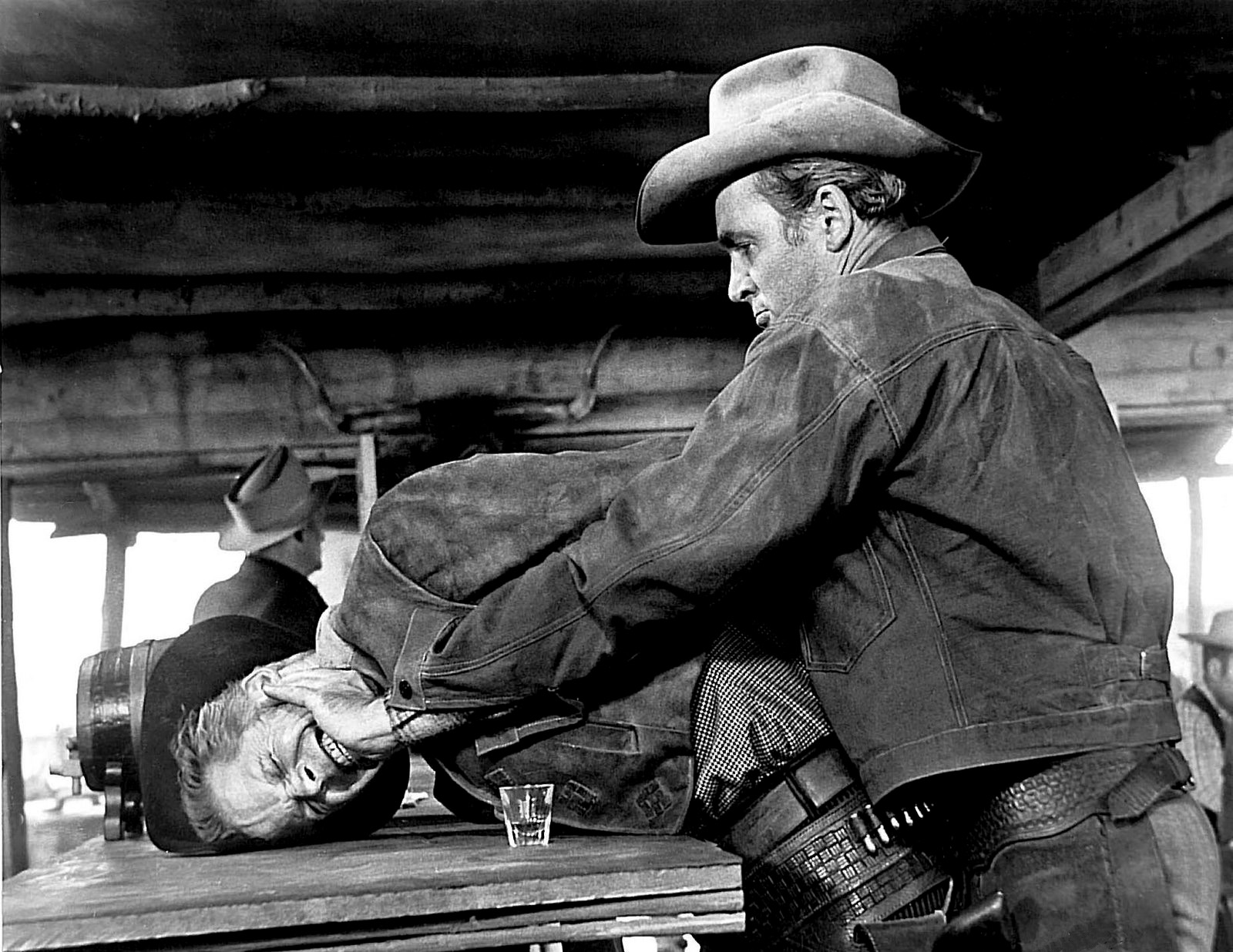
Mission: Jimmy Stewart and the Fight for Europe by Robert Matzen

Jim in one of those pictures you wouldn’t expect, grinding Dan Duryea’s face into the bar in Winchester ’73.

But Stewart has something no other leading man has, and he’s not about to lose it. Stewart starred in It’s a Wonderful Life.

I could ask the person on the street, “Who’s Jimmy Stewart?”—even ask it of a 20-something—and I’ll get a smile and an enthusiastic, “I love Jimmy Stewart!” and that’s because of It’s a Wonderful Life, a picture I’m beginning to believe has become the most beloved in American popular culture. Parents pass it along to children who grow up and pass it along to children, and it keeps resonating because the concepts are universal. Do the right thing. Have honor. Don’t give up. Value your friends. Value your life.

I’ve lost track of how many times I’ve read customer reviews of Fireball that said, “I didn’t know anything about Carole Lombard before I read this book,” and for good reason. Carole Lombard died almost 75 years ago! Why should the modern reader know about Carole Lombard?

Stewart is a different animal. Everybody thinks they know Jimmy Stewart because they know George Bailey. Know him very well, in fact, and figure Jim is George, but guess what? Jim isn’t George. Jim isn’t even Jimmy. Jim is a complex, almost impenetrable character, and for me the hook was Jim came home from war and made It’s a Wonderful Life. From the moment the dynamics of this formula hit me, horrors of war, beloved actor, beloved film, I started writing and didn’t look back for fear somebody else was out there banging out the same story in Peoria or Sioux Falls.

Luckily, nobody was, and in a short six days you can tell me if you really knew Jim and if you still love him, because in six days Mission: Jimmy Stewart and the Fight for Europe (GoodKnight Books) has its official release. In fact, why not plan to join me at the National Museum of the United States Air Force at Wright-Patterson Air Force Base in Dayton, Ohio for the launch event next Thursday, October 27 at 6:30 p.m.?

A Question of Character(s)

Mission: Jimmy Stewart and the Fight for Europe by Robert MatzenI have a new book coming out in two weeks, Mission: Jimmy Stewart and the Fight for Europe, published by GoodKnight Books. I wrote it because Stewart in World War II represents one of the last great untold stories of Hollywood. Jim never talked about what he did in the war, and so there was a vacuum of information about it. I also wrote Mission because I love a challenge, and his commitment to remain mum meant there were no quotes from him about his experiences in combat, so I was starting with nothing, but had to end up with everything or the concept wouldn’t be valid.

In a nutshell, what I knew going in was that James Stewart flew heavy bombers over Germany as a member of the U.S. Army Eighth Air Force. I discovered in my research over the next 18 months that this was no tin soldier. Stewart was smack-dab in the middle of WWII, the most horrific nightmare in human history, and writing about something of that magnitude posed not one but a series of cascading challenges. How much can I assume the reader knows going in? How much do I have to set the stage? I can’t provide the whole history of the Great War and Hindenburg and Hitler and the rise of the Nazi Party but they’re all relevant to why the United States (and Jim Stewart) went to war, just as is the global Great Depression, the oppression of the Jews, and Germany’s aggressions against Poland and other countries. The reader also needs to have a basic understanding of the United States military before and during the war. In other words, Mission is supposed to be about Jimmy Stewart but it called for a whole lot of context.

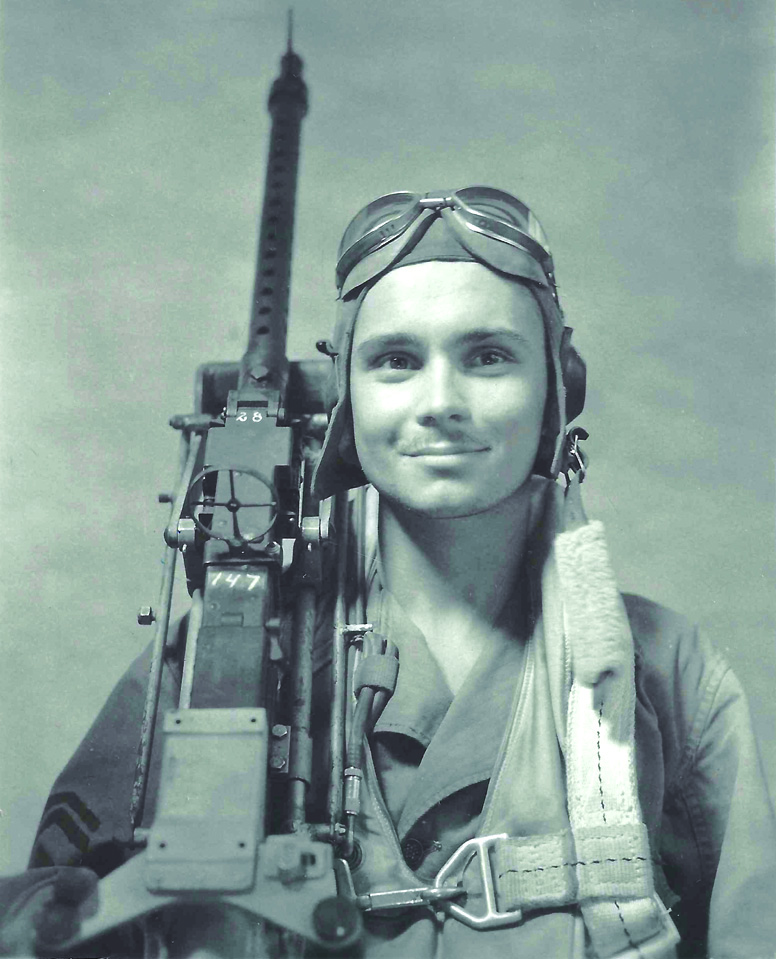
Mission: Jimmy Stewart and the Fight for Europe by Robert Matzen

Nineteen-year-old T. Sgt. Clem Leone graduates gunnery school and will soon meet up with Capt. J.M. Stewart.

I grant you that my biographical model is unorthodox: I always try to craft interesting stories rather than just tell you, the reader, “Jim did this, then Jim did that,” I decided to present readers with the German side through three supporting characters, Dolfo Galland, the ace German fighter pilot; Selma Lesser, the German Jew hiding in Berlin; and Gertrud Siepmann, the daughter of a German naval engineer. To let you see the American side I didn’t just feature Jim; I also told the story of Clem Leone, a young B-24 radioman from Baltimore. They’re all real people who lived during the war (I interviewed two of the three extensively), and through their eyes I was able to access a great deal of critical background in relatively few words.

So what happened was, I wrote the manuscript for Mission and gave it to some smarter people than me to review—two were experts on the Eighth Air Force and three were experts on classic Hollywood. All were expecting a straight bio of our boy Jimmy and what they got was a cast of characters led by Jim and supported by these others.

I had braced myself for a strong reaction to my unorthodox model and Whoa, Nellie, did I get it! To me, these other sets of eyes and experiences deepened our understanding of Stewart, his world, and what he faced. Two of the Hollywood experts had major objections, and passionate ones at that. They advised that these other characters had to GO because they got in the way and would put readers off who were expecting a book on Jimmy Stewart, although one of the two offered a solution: If I felt I must keep these characters, the best place for them was in an appendix at the back of the book where they’d be safely out of the way.

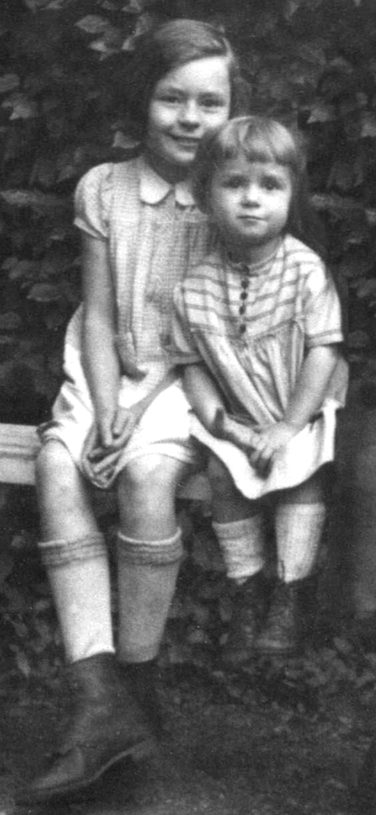
Mission: Jimmy Stewart and the Fight for Europe by Robert Matzen

Gertrud Siepmann and her sister Anne in Eppstein, Germany during the war. Today Gertrud goes by the name Trudy McVicker and lives near Chicago.

Well, what a pickle, because I have tremendous respect for all my reviewers, and they cared enough to level with me that I had a big problem on my hands. The trouble was, I had constructed my story in a particular way and to lose the other characters meant ripping the frame out and starting over.

My editor supported my concept because Fireball, my telling of the Carole Lombard story, had been a big success and was just as unorthodox a biography. It was my call, and what a tough one to make.

My solution was to drop Selma the German Jew, and cut back the narrative of the other supporting characters to lean, hard-hitting snapshots of these lives lived in parallel to, and then intersecting with, Jim’s. I didn’t want to lose Selma; I had discovered her diary-style letter to family, 22 pages of single-spaced German text written just after the end of the war, and I had had the letter translated with care. What a story it tells—all the brutality of the Nazi regime and the death and suffering of the war wrapped up in one woman who lost everything, with the coup de grace a bombing mission by Jim and the boys over Berlin that destroys even her place of hiding. I will detail her story in a future column because Selma Lesser’s is a voice that must live on.

I’m glad I kept my other characters; when Publishers Weekly reviewed Mission a couple of weeks ago they singled out Clem and Gertrud, and I felt such relief that these people were seen as assets to the narrative about Stewart.

I’ll have a lot more to say about Mission in coming weeks, so stay tuned. In the meantime, please visit the GoodKnight Books website to learn more. (Imagine what a great Christmas gift Mission‘ll make.)