Month: January 2019

Instincts

Dutch Girl: Audrey Hepburn and World War II by Robert MatzenThe other evening I felt hungry for a movie. I didn’t know what—whether it should be something new or an old favorite—but I was beckoned to find something and settled on the recent biopic Colette starring Keira Knightley. The works of French writer Colette had always run on a parallel track to my life and so I knew only two things about her: She had written Gigi, and she had “discovered” Audrey Hepburn via chance encounter at a Monte Carlo hotel—which kept popping into my mind as I watched Colette.

Dutch Girl: Audrey Hepburn and World War II by Robert Matzen

A publicity photo of the “discovery” with France’s greatest woman writer.

Viewing the motion picture was a revelation. The depiction of Colette the writer, her imagination igniting like the burner on a stove when confronted with a blank sheet of paper, touched me because I understand the siren’s call of such barren landscape begging to be populated with words.

The depiction of Colette the woman, proven to be accurate from biographical information I’ve been reading since, showed a malleable girl who through fortune and talent transformed into a fierce sexual animal, a feminist with lovers of both genders and three husbands over her lifetime, and a devotee of nature. She was also just what’s you’d expect of a woman with one name—Colette was an egotist.

At the turn of the 20th century, the young Colette’s husband ran a writing factory and when times were tough forced his wife to write a novel, Claudine at School, that he then claimed as his own. Sequels soon made Claudine the most famous literary character in France, but Colette the ghostwriter wanted credit for her own work. This conflict led Colette to challenge her nation to accept women as more than decoration. For the remainder of her life through all forms of writing, from novels to reviews and advice columns, she would struggle to understand her place, any woman’s place, in the world. Colette would not be at peace until the moment of her passing at which time polite French society, which had refused to accept her in life, provided a state funeral in death, along with acknowledgment as France’s greatest woman writer.

Dutch Girl: Audrey Hepburn and World War II by Robert Matzen

Colette the gender-bender in her 30s.

Had I known all this—had I stopped to investigate Colette amidst the frenzy of putting Dutch Girl to bed—I would have paused for some analysis of the chance encounter on the beach of Monte Carlo.

At 77, wheelchair-bound from arthritis and years of weight gain brought on by inertia, the dowager authoress spotted the dancer-turned-actress during location production of the minor British film comedy, We Go to Monte Carlo, released in the U.S. as Monte Carlo Baby.

To back up a step, Colette wrote Gigi during the Nazi occupation of Paris as a risqué novella about the grooming of a young girl to be a courtesan—a woman who pleases men sexually. Colette agreed to a tamed-down version for Broadway and that led to a frenzy of speculation about who would play the young Gigi on stage. With no actress cast, Colette became a “compulsive Gigi spotter” across France and often shouted, There! She’s the one! She’s my Gigi! So it wasn’t as if Audrey was the first and only Gigi. Colette was seeing Gigis at all hours, awake and asleep.

To back up another step, Claudine at School is an autobiographical look at Gabrielle Colette’s girlhood in the French countryside. The novel begins with our heroine a tomboy of 15 who just a few pages in is captivated by and seductive with one of her female teachers. Instantly, Claudine coaxes her unsuspecting father to engage the teacher for private tutoring. As Claudine ingratiates herself to the teacher, she’s told, “You’re a little mad, Claudine. I’m beginning to believe it. I’ve been told so often.” Claudine replies, “Yes, I’m quite aware that other people say so, but who cares?”

Colette lived her life this way and never held back in anything she did. Now, all these decades later, here came Audrey with her square shoulders and powerful, seductive dancer’s walk, which actress Keira Knightley recreated in Colette’s confident stride in the biopic. Who knows if Audrey’s boyish figure and short-cropped hair reminded Colette of Mathilde de Morny, the Marquise de Belbeuf, a cross-dressing lesbian with whom Colette had carried on a scandalous affair over several years in her youth.

To be clear, there was nothing untoward between Audrey and Colette. Quite the contrary, Colette was well past hijinx by this time, and Audrey and all those in her orbit confirmed the Dutch girl’s emotional innocence despite having recently endured a war with its thousand dark moments. It just strikes me as funny how I, and a legion of other Audrey documentarians, missed the implications of the colorful Colette and her wild life as background for the Colette-meets-Audrey scenario.

The other thing I find amusing about the Monte Carlo discovery of Audrey Hepburn by Colette is the mythology propagated by Alexander Walker and others that Audrey “didn’t know anything about acting” and had “never said a word on a stage before.” True enough, she hadn’t played Desdemona at The Old Vic, but Audrey’s experience did include live ballet performances in Arnhem’s always packed theater during the war, followed by two-plus years on stage as a dancer and performer before live audiences in well-attended West End revues. These included an occasional line or two of dialogue. She had also played small parts in big films and big parts in small films and through osmosis had learned more than perhaps even she realized. But as discussed in Dutch Girl, the plucking of nobody Hepburn off the beach in Monte Carlo served as terrific raw material for Richard Maney, “Broadway’s most celebrated press agent,” then working on behalf of Gigi. Brother, did he capitalize.

Dutch Girl: Audrey Hepburn and World War II by Robert Matzen

A lobby card for the U.S. release of Monte Carlo Baby, which was rushed to theaters after Audrey had become a Broadway star and moved on to Paramount. In it, she portrays a movie star, even though she tells Colette as she’s making the picture that she “can’t act.” Oscar and Tony awards would soon prove otherwise.

Last word on the Monaco location shoot goes to character actor Marcel Galio, another player in We Go to Monte Carlo. It was to Galio that Audrey turned for advice when suddenly offered a starring role on Broadway that she felt ill-equipped to accept. In fact, when Madame Colette first floated the idea, Audrey told her, “I wouldn’t be able to because I can’t act!” But Colette, ever bold and unconventional, wouldn’t take no for an answer. She challenged Audrey to confront life fearlessly, to seize this opportunity, to go for it. To do anything else was nonsense.

Marcel Galio offered sanguine advice to the panicked novice. “Follow your instincts,” he told her. “If it feels right, it will be right.” It was the best counsel she ever received, these 11 words becoming her North Star. She would mention to interviewers over the next 40 years how she always trusted her instincts and it got her through many a difficult decision, not to mention guiding her through a successful film career on her way to an icon’s immortality.

Los Angeles Angels

monk-color

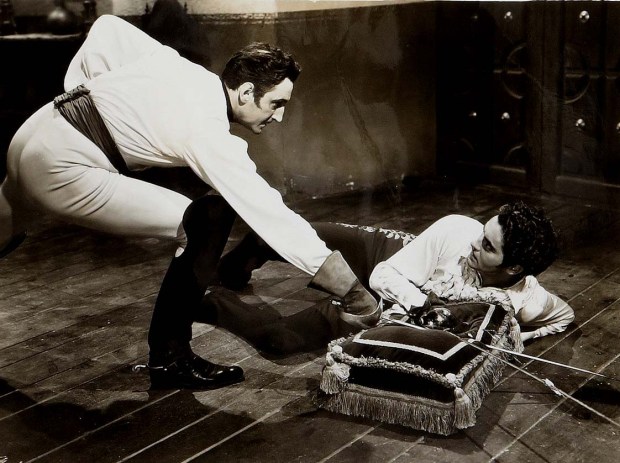
The Zanuck version of The Mark of Zorro is a picture that makes me smile—and breaks my heart. I experienced both emotions last Saturday afternoon when TCM U.S. ran The Mark of Zorro, and I marveled at what a firecracker it is, with what is for me the most muscular and realistic duel in movie history. There was young Don Diego Vega in early 1800s Los Angeles taking on the guise of Zorro, protector of the oppressed peons. And here I fell in love all over again with Linda Darnell, which one mustn’t do because at the time she was all of 17, if that. In my defense she was already playing adults, so I’m not the only male to be smitten in the past 80 years. Linda Darnell clearly had it. And such chemistry with her leading man, Tyrone Power—yikes.

monk

Of all Hollywood duels of the golden era, this one felt deadliest thanks to the skills of Power and his opponent, Basil Rathbone. When J. Edward Bromberg observed of Zorro, “You handle a sword like a devil from hell,” we can only agree.

What makes me crestfallen is the fact that both these beautiful people sharing the screen so perfectly and so sweetly—he then 26 to her 17 and both seeming in 1940 to have it all—died far too young after bittersweet lives that failed to live up to their silver perfection on the screen.

I looked around YouTube to find one of their love scenes in The Mark of Zorro but failed. I did find this one as young Lolita considers Don Diego a foppish boor—until they dance together and he takes her to the heights, before yanking her back to earth.

Everyone always said Darnell was and remained a sweetheart who never “went Hollywood.” And in all my years immersed in Hollywood history, I never heard a cross word about Ty Power either. If anything these two were ill-equipped to face the headwinds of that brutal town and what it does to people—one small example: respective business managers swindled each trusting soul out of a fortune.

bad-girl-linda

Linda all grown up.

Both Ty’s parents were Shakespearean actors, and he shot to the top in the Hollywood of 1937-40. He joined the Marines in 1942 after making his pirate epic The Black Swan and had himself a distinguished tour of duty as a pilot flying into, among other places, Iwo Jima—and came back a changed man like they all seemed to. Once returned to 20th-Century Fox he never regained his status as a tape-measure home run hitter. It was no coincidence that Darnell’s career lost steam after her frequent leading man Ty left town, but then by 1944 she had grown into steamy femme fatale roles in film noir pictures like Summer Storm, Hangover Square, and Fallen Angel. I could see this harder-edged Darnell incarnation taking any mere mortal male down a bad road, say me for instance, and so Linda as noir girl was natural. But by 1950 and the age of television, when studios began to cut way back on the number of features produced, there went Darnell.

Ty fared better in the 1950s as he coasted a long way on pre-war momentum. He remained a Fox leading man long after other contract men had been cut loose, but age softened his once-chiseled features and in some of those later pictures like King of the Khyber Rifles I want him to take it easy and not risk some cardiac episode. By the time he hit 40, years of heavy smoking and the lifestyle of a movie star had taken their toll. He died with his boots on making Solomon and Sheba in 1958, felled by a heart attack in the midst of an onscreen duel with another leading man aging badly, George Sanders. The photos of poor Ty semi-conscious on the floor of the movie set are out there if you care to look. For me it’s just too sad. For more on the “serenely competent” Tyrone Power, visit John McElwee’s Greenbriar Picture Shows.

solomon

Ty’s last stand in Solomon and Sheba, in the duel scene with George Sanders that would kill him.

Seven years after Power left the world, Darnell followed at age 41 after being caught in a Chicago house fire that caused ultimately fatal burns. (In a small irony, one of Power’s first big hits was In Old Chicago about the big fire there.) By the time of her passing in 1965, Linda had been stripped of her fortune and was taking any acting jobs that came along—from television to dinner theater. For more on the spectacular Darnell, see Sister Celluloid’s compassionate blog post. All I can hope is that in some parallel universe, the beautiful young people of The Mark of Zorro, Don Diego and Lolita, did indeed go on to enjoy many decades in their vineyards, well beyond the raising of “fat children” and with plenty of swordplay—the friendly kind, of course.

Badlands

Fireball: Carole Lombard and the Mystery of Flight 3 by Robert Matzen

Across the Mojave, Potosi’s snow-covered peaks are visible in the distance at left-center due south of Red Rock Canyon’s mouth.

Two years ago right about now, in conjunction with the anniversary of the crash of Flight 3, I was asked to speak in Las Vegas about Fireball, and to appear on the local NPR affiliate. While in the city, Mary and I visited our favorite haunts, which aren’t in Vegas proper at all. They’re the village of Blue Diamond and the Blue Diamond Mine off to the west, which, if you’ve read Fireball, you know are the settings for much of the story.

Fireball: Carole Lombard and the Mystery of Flight 3 by Robert Matzen

Tweed Wilson, right, as a young man. Much later he would be the tough old cowboy who led a rescue party up Potosi Mountain.

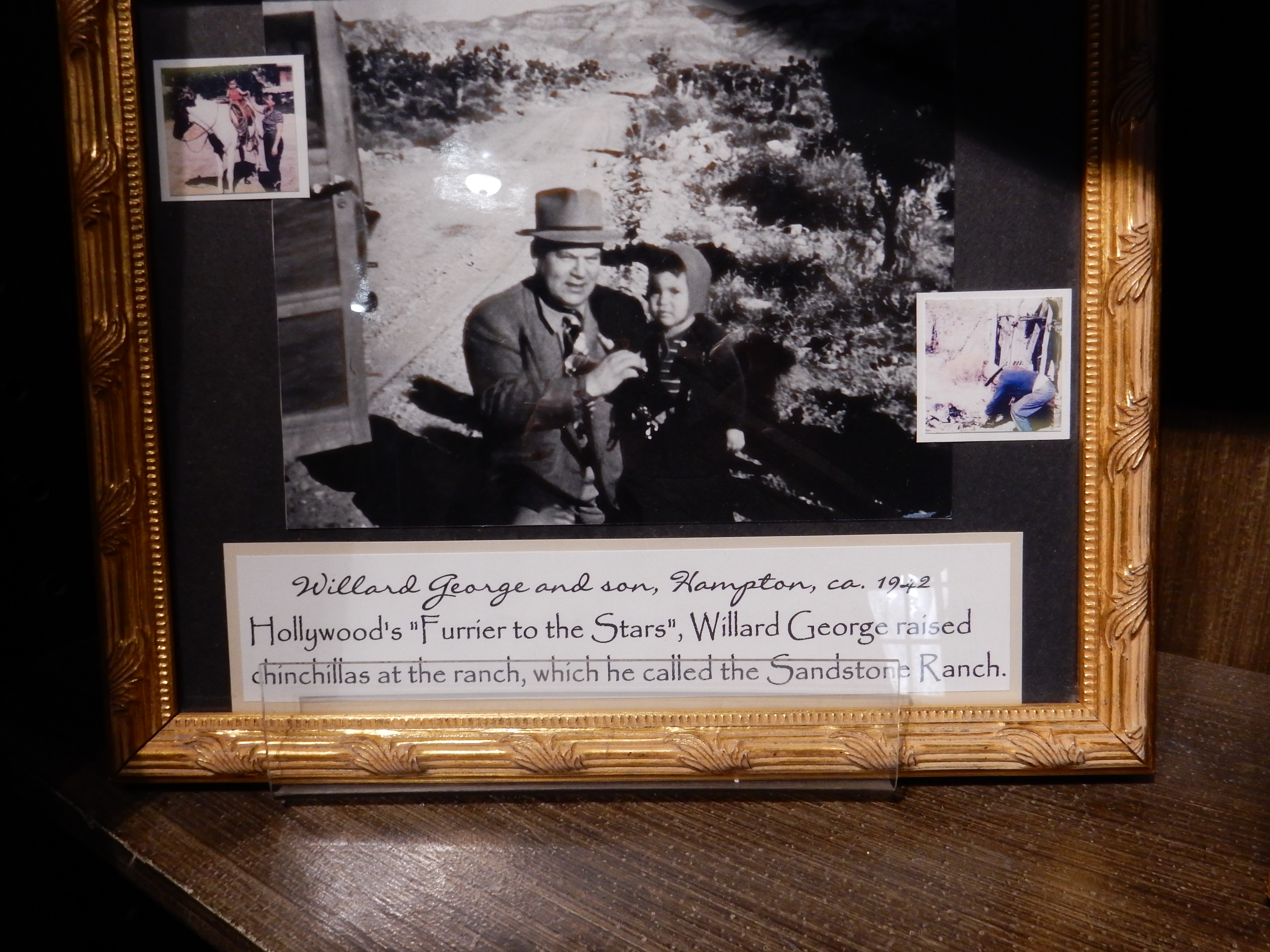
That day we went on to visit the Spring Mountain Ranch, also known as the Wilson Ranch, in Red Rock Canyon. There on January 16, 1942, Calvin Harper, head loader at the mine, came driving in a hurry on the blackest of nights looking for horses for a rescue mission up Potosi Mountain where “a plane fell.” Willard George answered the door that night and talked first to Harper and then to Maj. Herbert Anderson of McCarran Field in Las Vegas, who was trying to find a reported fire on the mountain due south of Wilson’s ranch. I already described some of our day in Red Rock Canyon, but not the ranch itself.

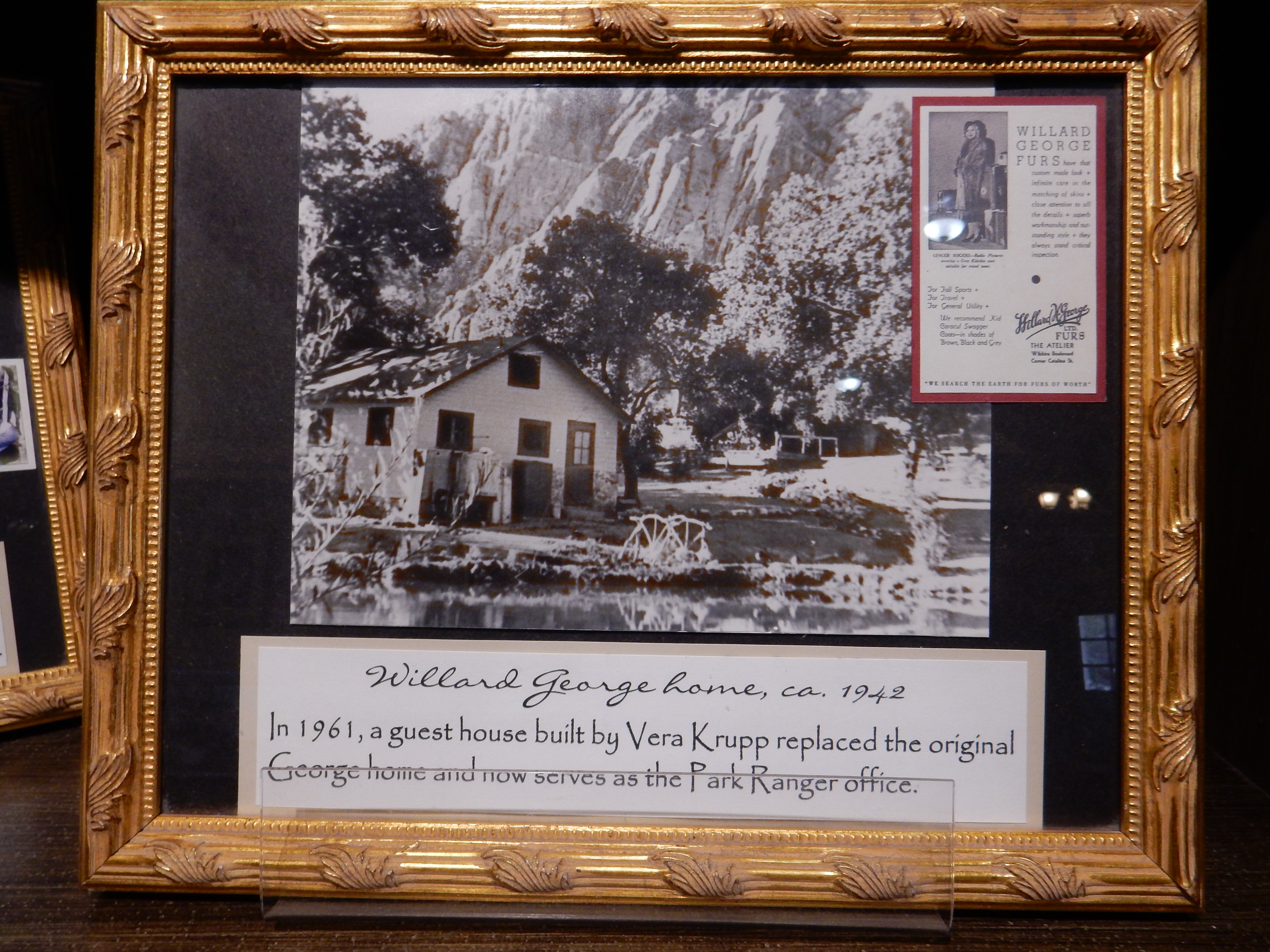
Visiting what had once been this key spot of ground in Fireball, now a Nevada state park, had a dreamlike quality about it for a number of reasons. The park office, which was a ranch home built at the site six years after the crash, didn’t mention Carole Lombard or Flight 3, but the exhibits bowled me over. First, I saw a 1900 photo of Tweed Wilson and his brother—41 years after it was taken, Tweed led rescuers up Potosi on horseback. And over there sat a framed photo of Willard H. George, a key eyewitness who saw the doomed airliner fly over and later gave testimony that confounded investigating bodies. And there, a photo of the Willard George house as it looked in 1942, just as Harper and Anderson found it that awful night looking for horses and riders for a rescue on the mountain, which seemed to be nearby but was really more than 10 impossible miles away.

I have to say, I experienced a case of the willies at Willard George’s place on this creepy January day with cold, damp fog and periodic rainbows. I had climbed Potosi four years and change earlier and now the place seemed to be welcoming me back, welcoming me home.

Fireball: Carole Lombard and the Mystery of Flight 3 by Robert Matzen

Fireball: Carole Lombard and the Mystery of Flight 3 by Robert Matzen

Willard George was working on his car when Flight 3 hit Potosi.

Fireball: Carole Lombard and the Mystery of Flight 3 by Robert Matzen

The Willard George place at the time of the crash. I learned a flash flood washed it away in the late 1950s.

Each book I write becomes a part of me, not only the people but the places, since I always consider the locations I write about to be characters. In fact, I think I choose my topics in part because of the places involved. Red Rock Canyon and Potosi Mountain were the biggest and baddest I ever encountered, in literature or in person, characters that could kick any Nazi’s ass any day. Tonight, contemplating the anniversary of the crash tomorrow, I’m thinking of a little ranch and some brave men and their horses who took on those badlands of Nevada—the same badlands that had swatted a DC-3 out of the sky, and there went Wayne C. Williams, Morgan Gillette, Alice Getz, Hal Browne, Jr., Kenneth Donahue, Fred Cook, Charles Nelson, Stuart Swenson, James Barham, Robert Crouch, Al Belejchak, Martin Tellkamp, Nicholas Varsamine, David Tilghman, Milton Affrime, Frederick Dittman, Robert and Edward Nygren, Lois Hamilton, Otto Winkler, Elizabeth Peters, and Carole Lombard.

Postscript: Just up the road from the old Wilson Ranch, on lands adjacent to Wilson’s spread, sits the Bonnie Springs Ranch. Once a stagecoach stop and for decades a local attraction with a western town and petting zoo geared for families, is scheduled for the wrecking ball. Please consider signing this petition to save the Bonnie Springs Ranch.

One-way Mission

Dutch Girl: Audrey Hepburn and World War II by Robert Matzen

Jamie Dornan as Jan Kubis and Cilian Murphy as Josef Gabcik, two heroes of Czech history.

Dutch Girl: Audrey Hepburn and World War II covers Audrey Hepburn’s life under Nazi rule in the Netherlands from May 1940 through April 1945. We’ve all grown up with movies and TV shows depicting the Nazis and what they were like, but such a lifetime bombardment can only desensitize the viewer. Yes, the Nazis were terrible and yes, they committed unspeakable acts upon millions. We know that; can’t we move on? Well, no, let’s not. Let’s never truly move on because we had better learn from this history so we never have to repeat it. Hate whipped up against innocents must never again point a democracy toward extremism that puts the free world in peril.

Friday night I watched a feature that you probably missed, detailing the attempt to assassinate a German high commander you probably never heard of. The picture is Anthropoid, which sounds like science fiction but details Operation Anthropoid, the Allied mission to take out Reinhard Heydrich, the number three Nazi as of 1941 and Hitler’s SS executioner known as “the butcher of Prague.” Heydrich was key to implementation of the Final Solution—when Hitler admires you for your ruthlessness, that’s saying something.

Late in 1941 a group of Czech special ops soldiers parachuted into their country on a top-secret mission to kill Heydrich. Anthropoid isn’t the first picture to cover this mission, but I’m not sure I need to see the others—I’m still recovering from this one. As I watched, I kept thinking, this was Audrey Hepburn’s world, living in a Nazi police state where civilians must not so much as make eye contact with the occupier, where no one was trusted and everyone might be a betrayer, where locals heard random gunshots echoing off the buildings as their neighbors were murdered. The only difference is that Anthropoid depicts life in Prague, Czechoslovakia, rather than in the Dutch city of Arnhem and its neighboring village, Velp. Both countries were occupied by the Third Reich.

I spend quite a lot of time in Dutch Girl discussing the Nazi regime because everything they did mattered to everyone in the countries they had invaded. It so happened that the village in which Audrey lived with her family for the worst part of the war, Velp, was the same village used in the latter part of the war as headquarters for the top Nazi rulers in Holland. In fact, the Reichskommissar of all the Netherlands was Audrey’s neighbor. As in, can I borrow a cup of sugar? He lived that close by.

This intimacy with evil and with death permeates every frame of Anthropoid, which displays a few sentences painting a picture of the butcher of Prague and devotes all its run time to putting us in close quarters with the heroes sent on what they have to know is a one-way mission. When they reveal to local Prague resistance leaders why they are there and who they plan to kill, the reaction is equal parts anger and fear. Even aiming a bomb or bullets in Heydrich’s direction will mean the deaths of thousands of innocent Czechs whether the attempt succeeds or not. This action will start a war of annihilation no matter the result.

With stakes so high, no one can be trusted and moment to moment we wonder where and when the plan will break down, when the Germans will come bursting in with guns blazing or worse, when they will take prisoners. German torture was very real and we see it in Anthropoid. Audrey told a chilling little story of walking along the street in her village and hearing screams coming from a building that had been turned into an SS jail. Her mother explained that men inside were being tortured. Do me a favor and take a moment to let that sink in. Your gentle humanitarian heard the screams of neighbor Velpenaren being tortured (and believe me, she endured much worse than that during the war).

Dutch Girl: Audrey Hepburn and World War II by Robert Matzen

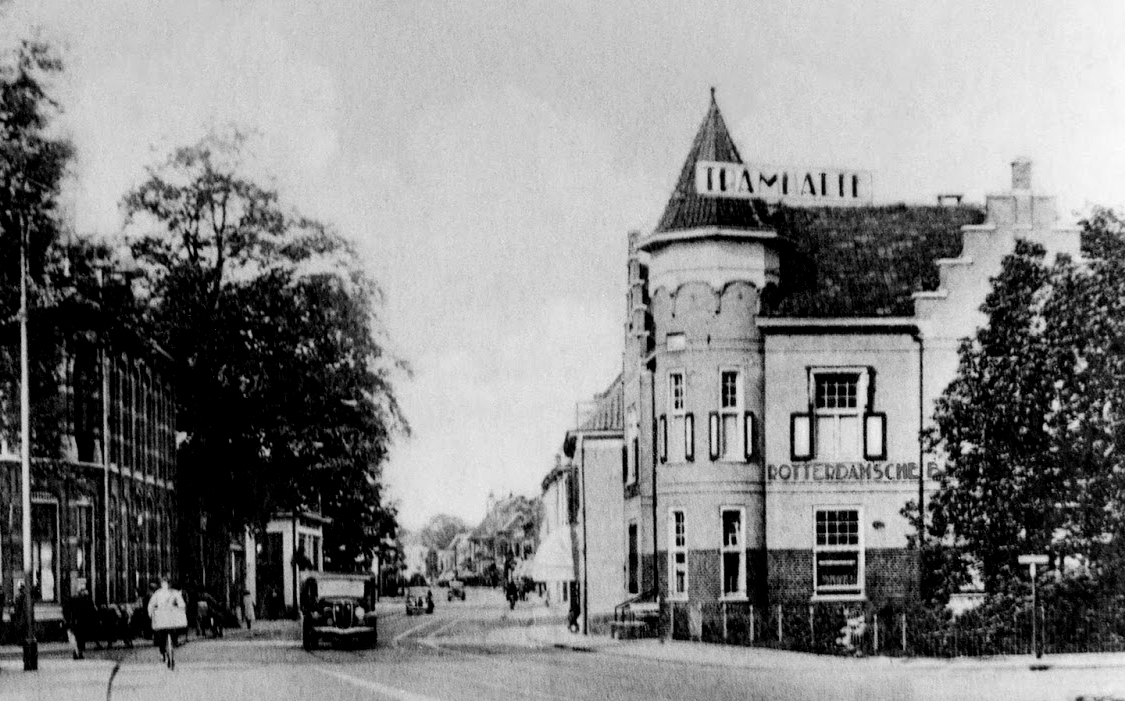
An elegant gingerbread turret marked the Rotterdamsche Bank in Velp. In 1944 it became an SS prison and Audrey heard screams from within as she walked past.

Anthropoid pulls no punches; even this extraordinary trailer packs a wallop that’s true to the picture. The war is presented as the war really was, and this mission is recreated down to the names of the patriots who participated and the floor tile in the apartment where the plot was hatched. The attempt to kill Heydrich plays out in human terms, with no computer-generated assist and no one defying the laws of physics. The fate of the assassins is depicted with gut-wrenching clarity, and we see what real heroes looked like and what they sacrificed in this war. I salute you, Sean Ellis, writer, director, and cinematographer, for the searing vision you presented in this, a motion picture I will never forget. Shooting it in Prague using Czech actors and crew as much as possible injected extra adrenalin into the proceedings.

One last thing: As the story of Anthropoid unfolded, I thought of Audrey describing how in the darkest times gallows humor got her family through. She remembered bombs falling, tanks droning past, and the rat-tat-tat of machine-gun fire—as she, her mother, aunt, and grandfather cracked jokes and giggled in the cellar of their besieged home. That spirit triumphed over Adolf Hitler and all his hate, and it remained within Audrey as she made the transition from actress to beacon for peace.

Dutch Girl: Audrey Hepburn and World War II by Robert Matzen

As the assassination attempt unfolds, and immediately goes wrong, Reinhard Heydrich (Detlef Bothe) stands to shoot a patriot blocking the road ahead. At left, Jan Kubis attempts to toss a bomb at the car. Actor Jamie Dornan had portrayed Christian Grey in three films based on the erotic “50 Shades” novels. Let’s not hold that against him because in Anthropoid, he’s quite good.