
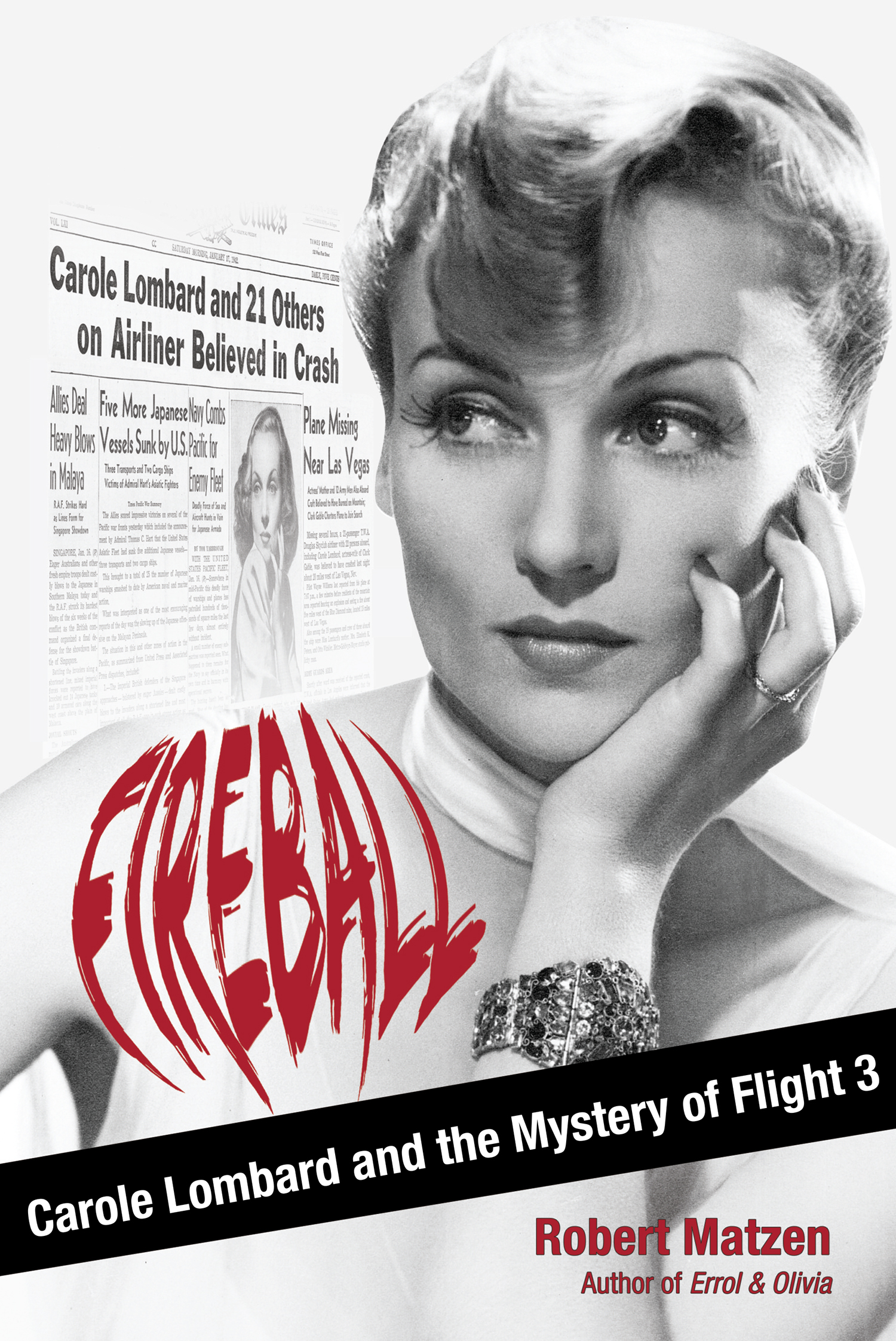
I once wrote a book called Fireball about an actress named Carole Lombard. Just to give you an idea of the theme, America’s preeminent Hollywood historian Leonard Maltin, as much as he loves Carole Lombard, never could crack Fireball open because it’s about, in part, her grisly death in a plane crash. Don’t get me wrong—Fireball is indeed part forensics study as recovery teams tried to clean up a crash scene where 23 people died and also understand how that crash happened. But more than anything, Fireball is a love story.
The experience of Fireball came back to me kaleidoscopically the other day as I watched the 1932 Paramount pre-Code picture No Man of Her Own, which starred a hot newcomer to the screen, Clark Gable, then age 31, and Paramount’s slowly rising star, Carole Lombard, then not quite 24. Given the fact this picture is now 91 years old, I understand if you don’t know who either of these people were but suffice to say Gable had burst on the scene in 1930, first portraying a convict in a stage play and then a love ’em and leave ’em tough guy in a number of movies made at MGM. Carole Lombard, meanwhile, had managed to land a contract at Paramount Pictures and was at this time struggling to find her footing. I think it’s fair to say early on she possessed mediocre talent balanced with buckets of natural charm.
MGM loaned Gable to Paramount so he could appear with Lombard and give her a career boost in one of those ridiculously plotted melodramas of the period; he plays a card sharp who goes on the lam from New York City and in the rural town of Glendale meets librarian Lombard. Lickety-split she falls in love with him and they wed on a bet, after which for 70 plodding moments we think how can this stupid thing ever work itself out, because by the nature of this kind of star vehicle, they have to live happily ever after.

Don’t worry—I don’t write movie reviews. The points I want to make are spooky points because there are spooky aspects about No Man of Her Own given that the love story in Fireball concerns these very same people, Clark Gable and Carole Lombard. When they made this picture 91 years ago, they didn’t know each other, and both were on their best behavior. Gable was married by convenience to a much older society matron, and Lombard was one year into a miserable marriage with a much older actor. Sparks between Clark and Carole didn’t fly in real life any more than they flew onscreen. Once in a while, you can see a glimmer of chemistry between them as the film lumbers along, but mostly they seem to be workers punching a timeclock.
In the picture she is the mature, stable, down-to-earth woman who, when she learns that her husband is a scoundrel who fleeces people in card games, doesn’t leave him. She chooses to stay and become his moral compass, which is exactly what Carole Lombard became for Clark Gable when they married seven years later and she discovered he was a scoundrel who had sex with every willing woman in Hollywood—and women threw themselves at Clark Gable every day because he was then considered “King of the Movies” and the most desirable man in the continent if not the world.
As described in Fireball, Lombard knew what she had gotten when marrying Gable: he was in demand and something of a scoundrel, but just like her character in the movie, she saw good points as well and determined to steer him on a navigable course. But real life wasn’t as clean and simple as a 1932 romantic melodrama, Carole learned when her husband began seeing a sexy starlet named Lana Turner who was just past her teens but already worldly. Suddenly, the bargain Carole had made took a Faustian turn that led directly to her death in flames on the mountain, as you will read in Fireball.
It struck me while watching No Man of Her Own how much the art of 1932 mirrored real life in 1941 as the dutiful wife stuck by her man through thick and thin until a particular other woman came along. It’s no stretch of the imagination to believe that a conversation like the one at a pivotal point in the movie played out at various points in real life.
Her: Don’t you know this had to happen sooner or later?
Him: What had to happen?
Her: Me finding out you’re a cheat.
Him: Don’t say that to me!
Her: I’ve been fighting the thought for weeks.
Him: My affairs are my own. Don’t butt into them!
Her: I thought we were married, and your affairs were mine.
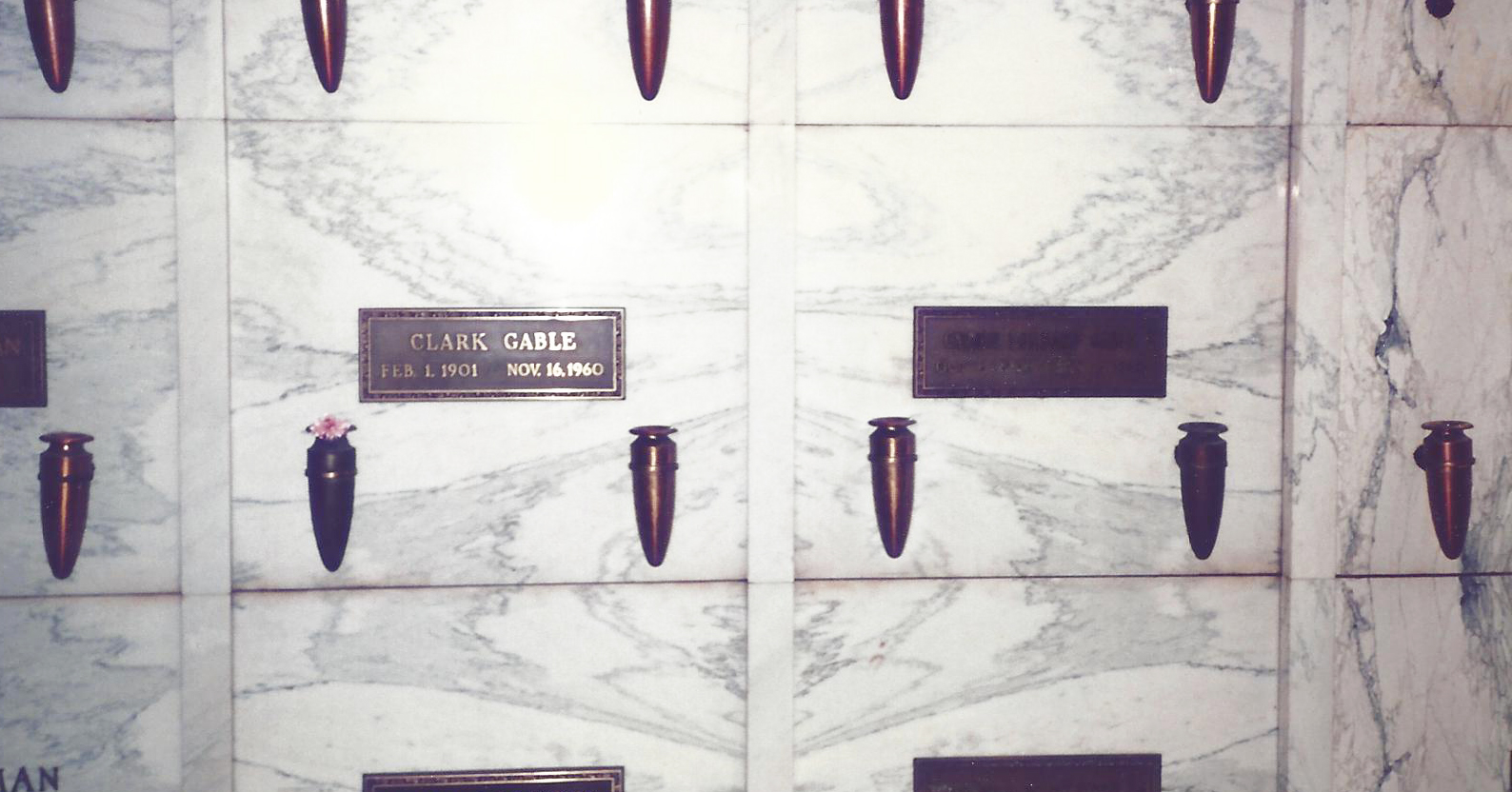
This exchange written for actors in 1932 captures the dark side of the Gable-Lombard relationship. Other dialogue is downright chilling, as when they talk about settling down in Glendale, which in the movie is a fictional town somewhere in the east, maybe but probably not Glendale in the Queens borough of New York. In real life, a town by the name of Glendale is exactly where these two actors reside today, side by side in Glendale, California, in the Great Mausoleum at Forest Lawn Cemetery.
Fun fact: Carole Lombard comes back to life for an appearance in my new book, Season of the Gods, which will be released on October 3, 2023.
 Robert Matzen
Congratulations on the new book. Looking forward to reading it! I enjoy your writing, tremendously.
Jeff, thank you!
I am from Indiana and had family in Ft. Wayne, Indiana where Carole was from. I wonder if any of her relatives still survive to this day. I have developed a dislike for Clark Gable and other than being married to her his character was indeed that of a scoundrel and a cheapskate it appears. The movie-going public only saw a handsome, charismatic leading man.
Oh yes, Jennifer, there are what appear to be scores of cousins of CL in Fort Wayne. I met many when I presented there in 2014. It was a spectacular event.
I just want you to know that I read “Fireball” and thought it was an excellent book. I also saw on YouTube recently that someone from the FAA finally found her jewelry. Her wedding ring was here as well as other pieces found near the crash site. I felt the pieces should belong to someone in the family or possibly Clark Gable’s son. Who is in charge of Carole’s estate now? Do all the cousins get royalties from her movies? We knew some of the Peters also in Indianapolis when I was a child. I was born in Indianapolis and am very proud to be a Hoosier.
I loved Fireball!! It is one of my favorite books. I have read it twice and will probably read it again. Really enjoy Robert Matzen’s books. I now own all of them!!
Fireball was an excellent book. So haunting and frustrating that she insisted on flying. I never realized how many stops planes had to make then, it must have been an exhausting way to travel. Anyway, I’m a huge fan of that era and can’t wait for your next book!
Karen, that transcontinental trip surprised me as well–coast to coast in 17 hours! Yikes. All those takeoffs and landings in all weather, which shows you how remarkable the DC-3 was. Well, unless a mountain got in the way. Thank you for your kind words–I hope you like Season of the Gods.
The Gable-Lombard story is a very complex one, and especially tragic because if Carole had not been in such a rush to return home to a philandering Gable, the longer train ride would have sufficed, and their marriage could have continued on, and we would have had more years of delightful Lombard films. First Clark lost good buddy Harlow in 1937 – that was bad enough! – but then his wife Carole in ‘42….he carried on, somehow, after such devastating losses, but he was probably never fully the same again. Neither was Hollywood…neither were we the public.
All very true, Peter. He never recovered, and didn’t know what he’d lost till it was gone. To me, it was then, his reaction to her loss, that Fireball became a love story. It’s easy to be king and have a consort, but real life knocked him off the throne. The king was revealed to be all too human.
I fully concur, Robert. It’s been a while since I last read Fireball, but really enjoyed it…thank you. It’s maddening how Flight 3 ended up crashing into Mt. Potosi – largely because of a careless pilot. I’m wondering if you’ve caught the two-part “spiritual” biography of Lombard that is on YouTube, detailing her adherence to the Baháʼí faith – very interesting. Best regards….
Fascinating parallels here. Has been some time since I watched No Man of Her Own, which I always liked for its novelty of Gable at Paramount. Surprised someone hasn’t taken it upon him/herself to polish Lombard’s nameplate at the crypt. I would assume Gable’s has been maintained, being sixty-three years now since he died.
John, the idea of Gable at Paramount is indeed interesting and I find his performance more rough-and-tumble than MGM would have accepted. As for the nameplate, that area of the Great Mausoleum is not open to the public, and I can’t think of any direct relatives left to go in there with a bottle of metal polish. I was last there probably six years ago and it’s such a sad place, with Carole flanked on one side by Clark and on the other by her mother, who was also killed in the plane crash.
Fireball was indeed moving. You brought so much life into the characters. I loved the time you spent on the other passengers as well. I’ve been to the Pioneer Saloon by Mt. Petosi. Thank you for your wonderful blog. I look forward to your new book this fall.
Thank you, Evelyn! The Pioneer Saloon is a cool place that fits right in with the story of the would-be rescuers, who were rough-and-ready characters. I don’t blame the Pioneer for really selling the legend of Gable waiting there for news.
Robert, I very much look forward to your new book.
Still a big fan,
Ed Stoltz
I appreciate it, Ed. I won’t let you down.
Pre-production code did get racy as these photos attest. And the silent era was equally risque at times. It’s fun to look back and remind ourselves that sex as a selling point in the movies didn’t begin in the sixties.
And yet, Sharon, as a guy, when Gable was space-invading Lombard in the library, I grew uncomfortable at the creep factor. At one time I guess a woman would have been “flattered” by such attention, but I wouldn’t have blamed her for kneeing him in the groin.
I haven’t actually seen the whole movie. Just going by these stills. I’m glad you do get creeped out by scenes that approach sexual assault! Another area where movies have always been problematic.