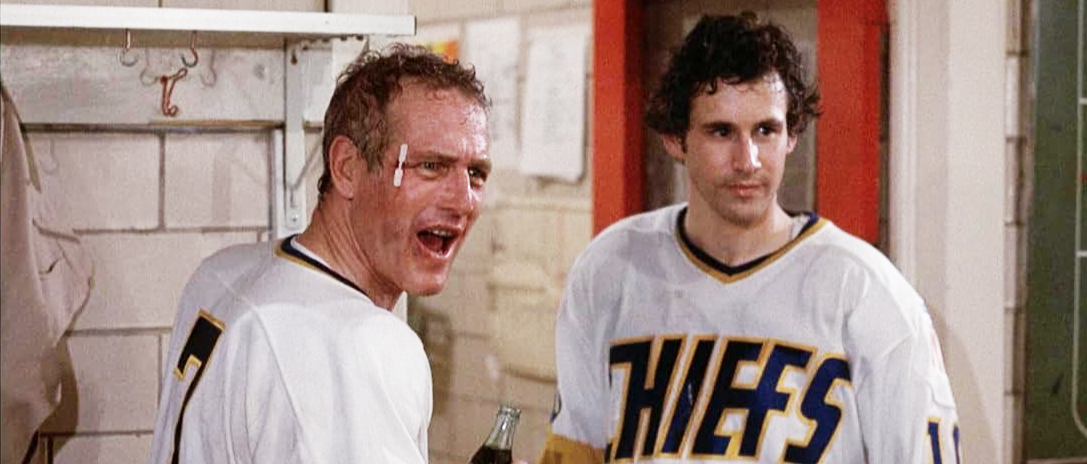
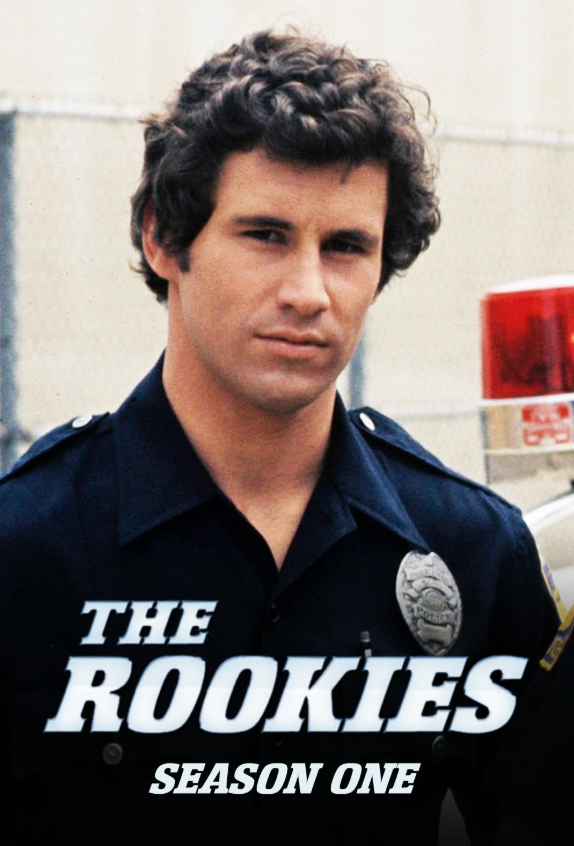
There’s this actor named Michael Ontkean, a Canadian college hockey player who had drawn interest from the New York Rangers. He was on an ABC show from my youth called The Rookies about three newly minted uniformed cops in a fictional southern California city who are part of the “make love, not war” breed of young people in 1972. We’re talking just after the turbulent 1960s—the Black Panthers, riots, George Wallace, RFK assassination, MLK, hell no we won’t go, Watts on fire. They’re kids entering a new decade and wanting something better for society—that’s the premise of The Rookies.
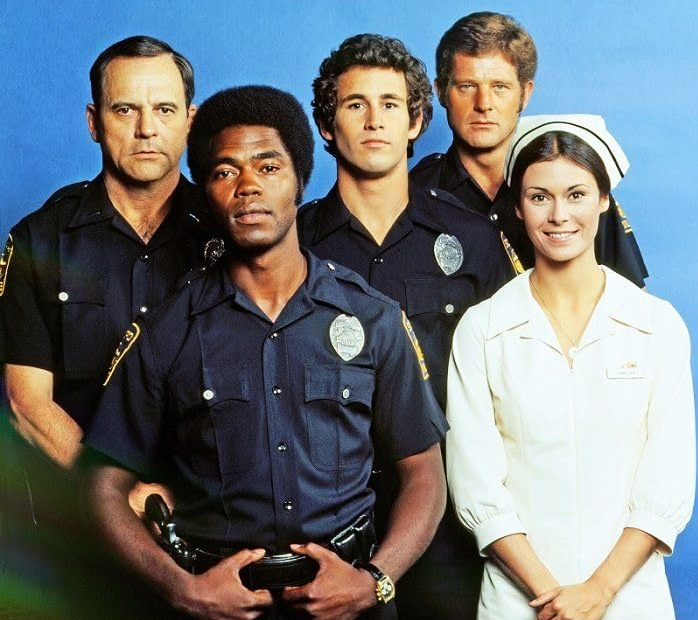
I remember watching The Rookies through a child’s eye and I’m revisiting it these days on MeTV, reminiscing. The show ran for four seasons and starred Georg Sanford Brown as the Black kid from the streets who becomes a cop; Sam Melville as the married Vietnam vet who becomes a cop, and Michael Ontkean as the preppy kid who becomes a cop. Three different backgrounds but united by a common ideology—that cops didn’t have to be “pigs.” They didn’t have to draw their guns and start shooting. They could make a difference because they understood. It was the anti-Dragnet approach.
I didn’t remember that after two seasons, Michael Ontkean left the show to be replaced by a look-alike portraying a different character but from the same preppy background. I wondered why. Why did Ontkean, who was very good in The Rookies, not return for season three? These days, after 51 years, it’s possible to find the answer. Turns out that after 52 episodes, Ontkean had decided that his character, Officer Willie Gillis, had explored all the edges there were to explore. Willie Gillis had fallen in love. He’d been shot and temporarily paralyzed; he’d shot and killed somebody else and dealt with the impact on his psyche; he’d rounded up bad guys who were truly bad, or misunderstood, or ruined by society.
The mystery of Ontkean’s departure from The Rookies was solved quickly by this researcher in a November 1974 article in The Desert Sun (Palm Springs). According to Hollywood reporter Dick Kleiner writing a feature called “Ex-Rookie Ontkean Looking for Growth,” Ontkean said he was offered $225,000 to continue into season three, but “elected to turn it down and leave The Rookies,” wrote Kleiner. “Basically, his [Ontkean’s] thesis is that The Rookies was no longer growing, that it no longer ‘reflected the real world,’ that to stay on would only be repeating himself.”
Many actors would take the money and run, but Ontkean chose that his character Willie Gillis not be shot again, not shoot and kill somebody else again, not fall in love again. So what did he do? Michael Ontkean wrote poetry! He took two years off from acting to write poetry.
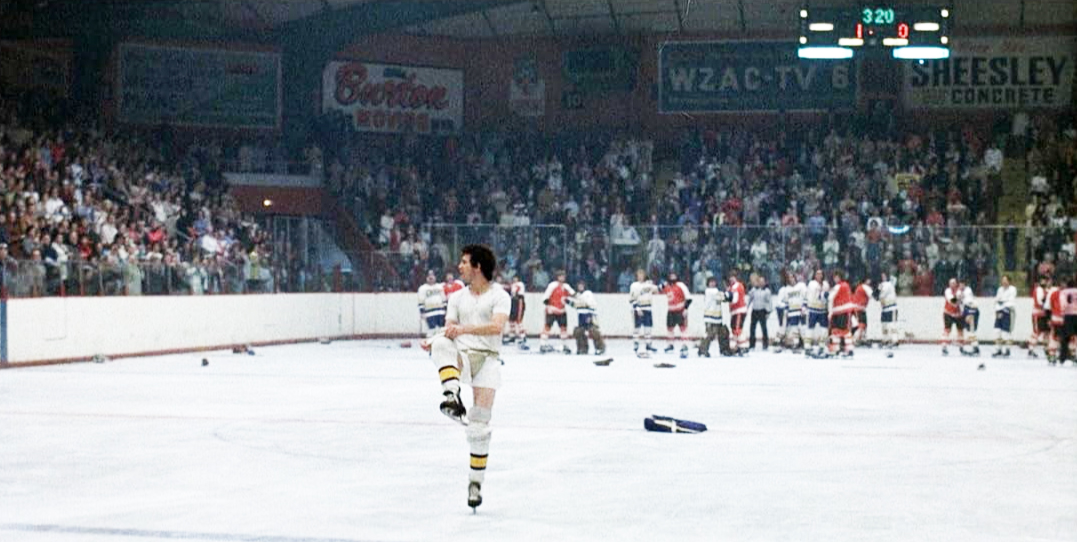
Then, when he heard about the need for actors who could skate for an upcoming movie starring Paul Newman, ex-college hockey standout Ontkean went for the job. Newman liked the kid a lot, even though Ontkean had, as he said in a later interview, “committed the cardinal sin of walking off a hit TV Series in the era when there were only 3 networks and no cable anywhere.” (Which made Newman like him more). The association led Ontkean into the most enduring role of his career in the feature film Slap Shot as Ned Braden, the flashy, pacifist left winger on a minor-league hockey team called the Charleston Chiefs. Braden refuses to fight amidst a hilarious melee that concludes the picture. Knowing where Ontkean had already been in his career, that he walked away from a quarter mil on principle, it’s fitting that his character does a striptease on the ice as a counterpoint to the violence all around him.
I should mention that Ontkean’s professional acting debut had been as high school quarterback Lester Braddock on an episode of The Partridge Family. Lester presents wide-eyed innocence in asking Laurie Partridge for a date, only to be revealed later as a wolf who Laurie deals with firmly. (“He won’t be making any passes with that hand, on or off the football field,” she proclaims after the date.) Offbeat roles were clearly this actor’s specialty.
Fast-forward to 1982 and the feature Making Love. In that one, Ontkean plays a husband who has a same-sex affair with a gay novelist played by Harry Hamlin. It was a revolutionary picture for its time and a risky one—Hamlin says Making Love stigmatized him as an actor; Ontkean sailed right along, marching to the beat of his own artistic interests.
Then came a 30-episode recurring role as Sheriff Harry S. Truman in Twin Peaks, David Lynch’s surrealist TV series of the early 1990s. After that, Ontkean picked and chose what pleased him as an actor before retiring in 2011. As of this writing, he’s 80 years old and lives in Hawaii.
As usual, I wanted to answer a question in my own head (Why did Michael Ontkean leave The Rookies in 1974?) and answering that question revealed a story that seemed interesting enough to tell—a successful actor who walked away from a fortune on principle and then picked and chose his way through a self-satisfying career. Could anybody ask for more out of any profession or any life?




 Robert Matzen