Fireball-Related

Hedge Hopping

Fireball: Carole Lombard and the Mystery of Flight 3 by Robert Matzen

This postcard, circa 1940, shows TWA airships at the gate of the Allegheny County Airport. On its last voyage, TWA Flight 3 taxied into position here; 18 hours later it crashed in Nevada.

Understanding the nature of commercial aviation as it existed in January 1942 proved to be, for me, one of the eye openers of the Fireball narrative. In Q&A following my lectures, people often assume that the plane on which Carole Lombard died along with her mother Elizabeth Peters and MGM press rep Otto Winkler was a charter, and they’re surprised to learn it was a regular commercial flight, and a transcontinental flight at that.

We think of transcontinental air travel today as five tedious hours spent motionless in a first-class or coach seat, headphones on, dozing the time away, or working on laptops or reading. New York to L.A. in upwards of six hours, depending on headwinds. L.A. to New York in about five. In 1942 the term “transcontinental” was a lot different. Instead of a nonstop or perhaps a stop for a connector, it took 10 or 12 stops to reach one coast from the other. Up and down, up and down endlessly, landing one or two times per state as the plane progressed cross-country with stops to refuel and/or pick up and drop off passengers and all-important airmail.
Fireball: Carole Lombard and the Mystery of Flight 3 by Robert Matzen

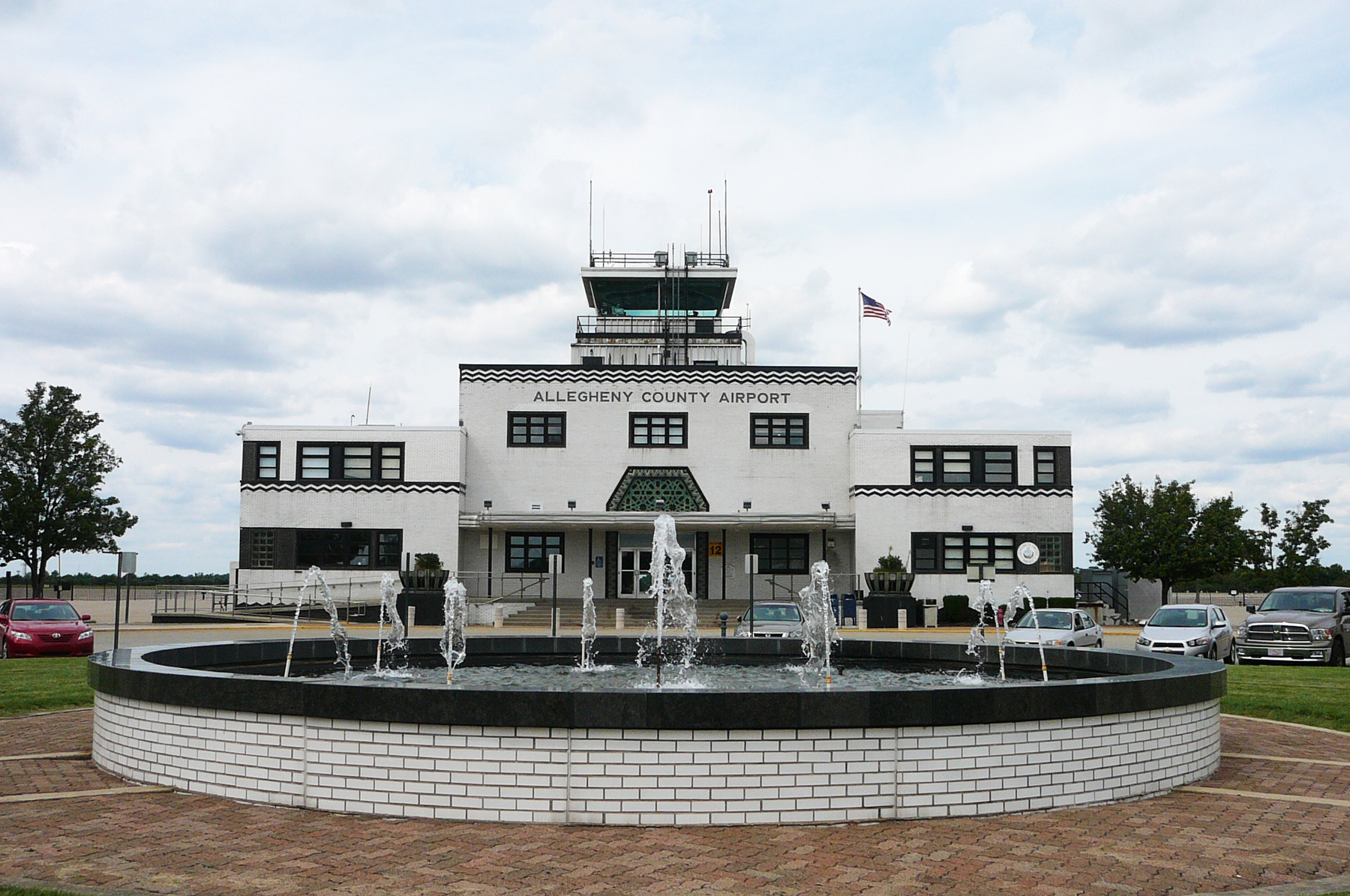
The Allegheny County Airport, unchanged in outward appearance from its 1936 expansion.

The DC-3 itself was a fabulous plane and so dependable that a few still fly today, almost 80 years since they first rolled off the assembly line. Passenger versions seated up to 22 comfortably, with the word “comfortable” being entirely subjective. In an unpressurized cabin, which the DC-3 featured, you were at the mercy of a) the ambient air temperature—except for a cabin heater controlled from the cockpit and b) the roar of two very loud engines just three feet on either side of the fuselage. The glamour and luxury of transcontinental travel in Carole Lombard’s day, in fact, hurt. It hurt your flesh; it hurt your back; it hurt your ears. Cruising altitude would be 9,000 feet above terrain if they could get away with it or 12,000 in mountains. Think of the ear popping in that unpressurized cabin. Think of the climate as you would routinely be subjected to temperatures 30 or 40 degrees colder at altitude than on the ground.

After a couple of hours in the air, you were begging for relief, and you knew it was coming; it was always coming with all the takeoffs and landings. And that’s our story for today, boys and girls, the state-of-the-art airport terminal of 1942. I am lucky enough to live about 20 minutes from just such a building, the one that used to service Pittsburgh until being replaced by a much larger facility in 1952. Because the new Greater Pittsburgh Airport was placed 15 miles west of the city, there was no need to tear down the old terminal located closer to the heart of Pittsburgh. Instead, it became a secondary hub of aviation activity and continues to serve Southwestern Pennsylvania today.
Fireball: Carole Lombard and the Mystery of Flight 3 by Robert Matzen

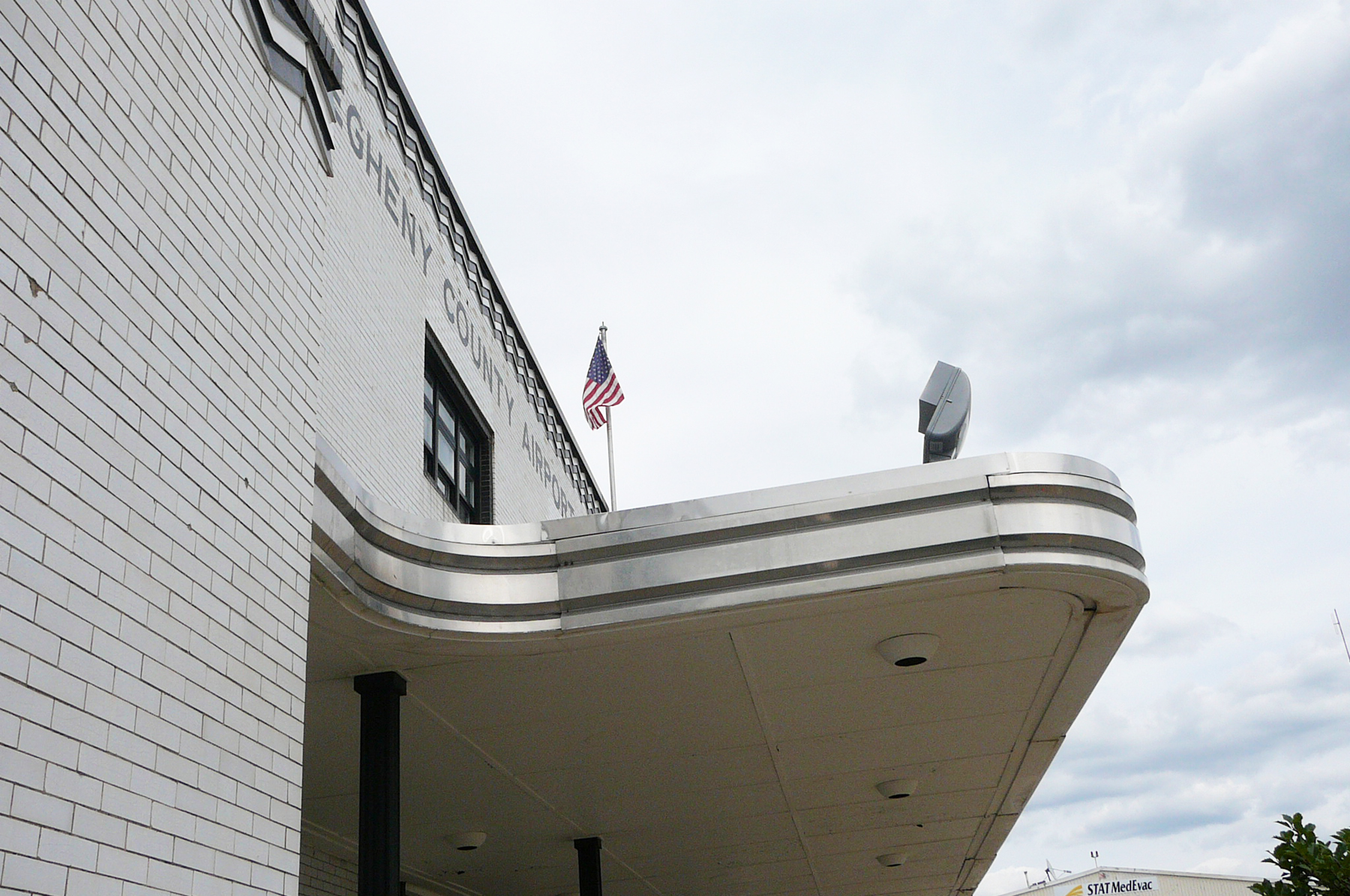
Vintage 1930s touches like stainless steel trim remain in place.

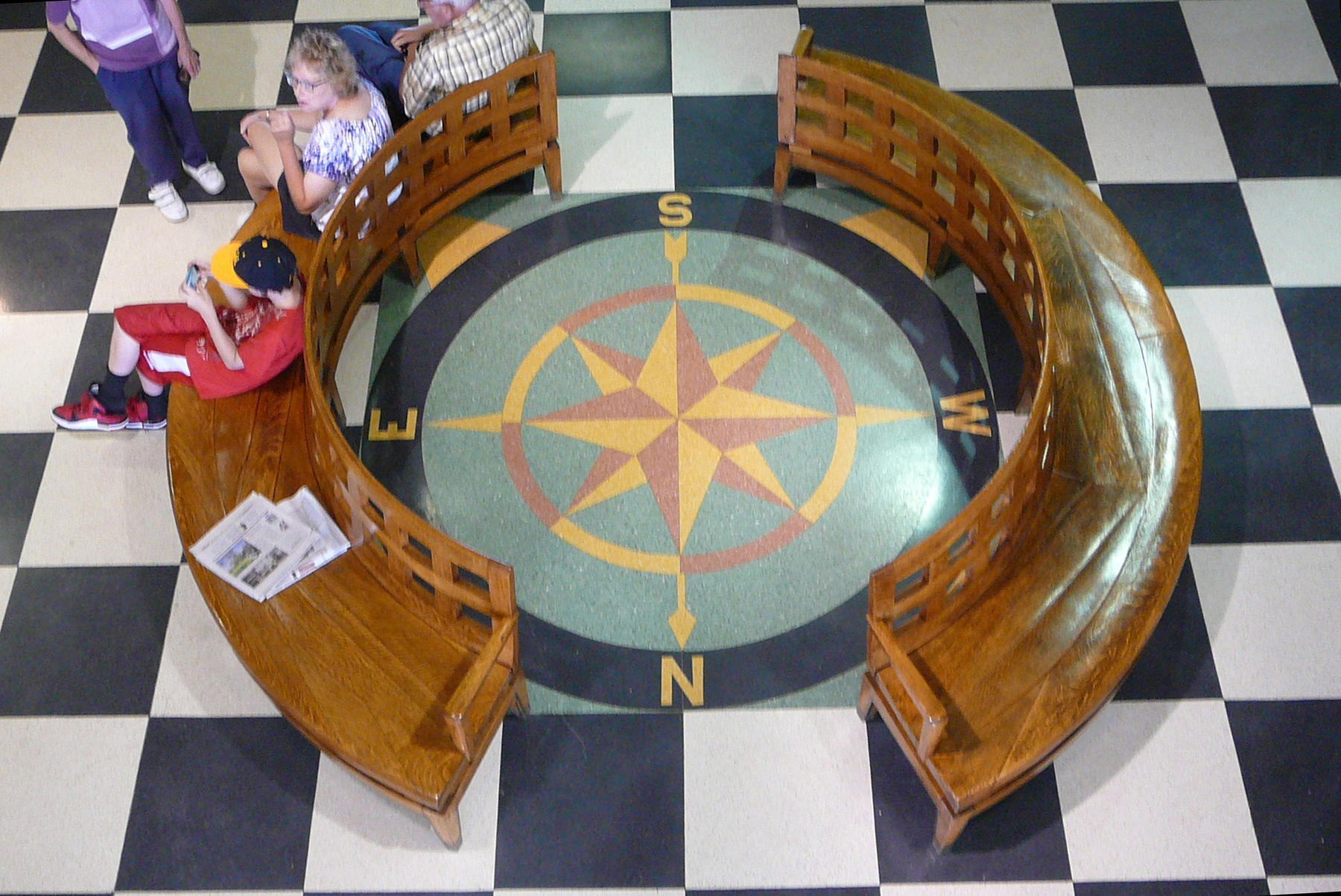
I’m no architect, but to me, the Allegheny County Airport terminal is an Art Deco masterpiece, built in 1931 with wings added in 1936. Many original design features remain intact, from intricate tile work to stainless steel accents and art deco lettering for the Waiting Room and Office. The original wooden benches are still in place along with the original compass set into the floor. Can’t you see men in suits and women in furs sitting there waiting to board the next flight out? I wish I could find vintage interior views to glimpse the restaurant, ticket desk, and souvenir stand as they existed in 1942, but I haven’t been able to locate any.

Readers of Fireball may remember that this airport was a stop for Flight 3 on its last voyage. The plane had taken off from LaGuardia and stopped at Newark before landing here and taxiing to the gate. From Pittsburgh the TWA airship headed west to Columbus, Ohio, and after that Indianapolis, where Lombard’s party boarded. At each stop stood a facility just like this one, offering temporary sanctuary from the rigors of air travel.

Upon completion in 1931, Pittsburgh’s airport was the most modern in the world and boasted by far the most paved runway area. Presidents and movie stars roamed this floor and the place buzzed with activity in World War II. Literally. All dignitaries and celebrity traveling from the American heartland to and from New York City stopped and stretched their legs here. It’s a building that’s drawn my eye from earliest memory—every time my parents would drive by, and then every time I would as well. I certainly hope the building is haunted. Then again, how could it not be given all the history it holds?

Fireball: Carole Lombard and the Mystery of Flight 3 by Robert Matzen

Original lettering for the Waiting Room and Office evoke a bygone era.

Fireball: Carole Lombard and the Mystery of Flight 3 by Robert Matzen

A single room served passengers for several major airlines. In an alcove to the right was the small restaurant. Original 1930s wooden benches remain in place, including one that looks out on the tarmac.
Fireball: Carole Lombard and the Mystery of Flight 3 by Robert Matzen

Passengers always knew which was way up–as well as north, south, east, and west, at the Pittsburgh air terminal.

Fireball: Carole Lombard and the Mystery of Flight 3 by Robert Matzen

Even the planters flanking the building’s entrance tie into the aviation theme. The green tile work matches inlaid tile accents on the building exterior.
When the Magic Happens

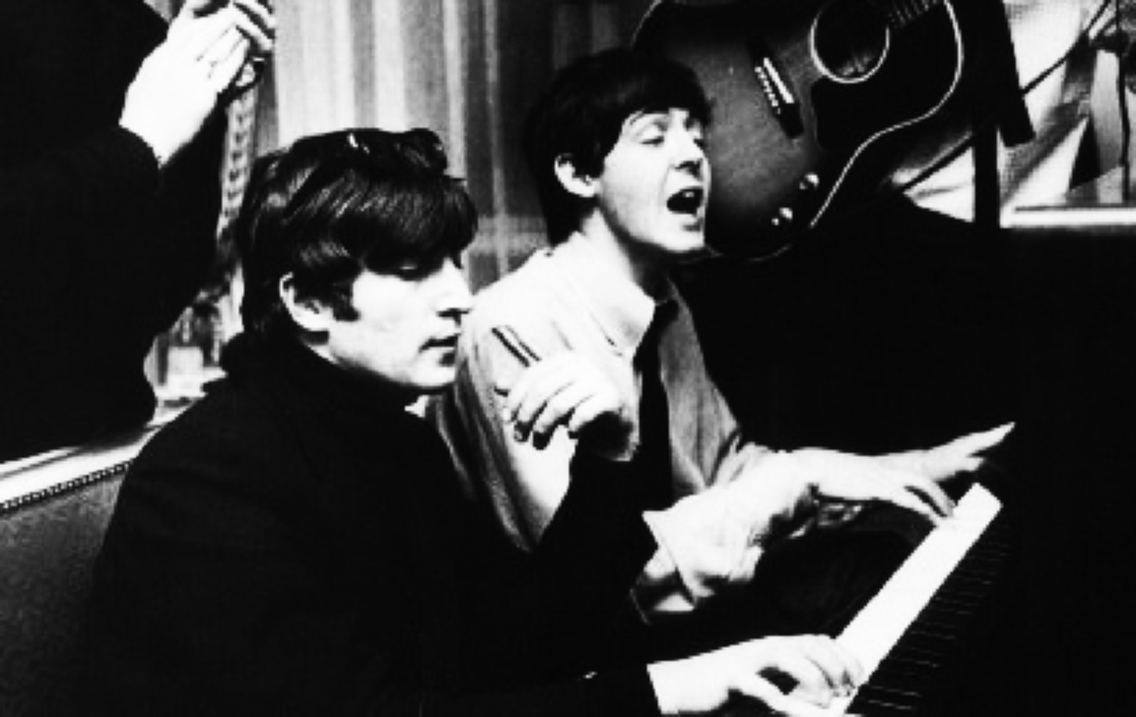
As I’ll do now and again, I turned to the Beatles this morning and was listening to You’re Gonna Lose That Girl, a song from their 1965 film, Help! I sat there and said to myself, here’s a song that’s about 50 years old and yet perfect; perfect music and lyrics from the perfect song-writing duo. It got me to thinking about chemistry, how someone can have a special something with another someone over other people and their combined molecules form a powerful chemical compound. John and Paul wrote music while in their early 20s that I’m convinced will be considered classic in a century, and covered by contemporary performers and heard in commercials, but the magic was between them exclusively and when they broke up, each became “just another musician.” I can hear Ruth Peeples protesting and YES Ruth, they were great musicians as individuals, and Paul McCartney certainly thrives today. But can you argue that the chemistry between them generated the best music of the career of either? They knew they were that good together, but they broke up; the creative chemistry was genius, but the friendship chemistry managed, under the immense pressure of being “Beatles,” not to endure.

Fireball: Carole Lombard and the Mystery of Flight 3 by Robert Matzen

Lennon and McCartney, making music, and history.

I’ve been fortunate enough to experience chemistry of my own, personally and professionally (you know who you are out there), but I imagine there are some who never find a John or Paul, the kind of person who becomes a spouse or fishing buddy or bedmate or collaborator on songs or movies or books or cures for cancer. Chemistry comes in all shapes, sizes, and varieties. As I was listening to You’re Gonna Lose That Girl, one of the things that struck me was Carole Lombard died too young, age 33, to find professional chemistry that would have enhanced her fame and legend for future generations.

Fireball: Carole Lombard and the Mystery of Flight 3 by Robert Matzen

It was said that Ginger Rogers could do everything Fred Astaire could do–only backwards, and in high heels. Ginger wasn’t yet 23 when she met Fred; he was 34.

Think about the great movie teams. While Errol Flynn and Olivia de Havilland started early (26 and 19, respectively), other stars went years before finding the right chemistry, or never found it. Myrna Loy made dozens of pictures—you’d be surprised how many—before she found William Powell and embarked on The Thin Man and its sequels. Jeanette MacDonald was 33 when she first sang with Nelson Eddy. Astaire was 34 when he met Rogers. Abbott was 36 when he teamed up with Costello. Tracy was 42 when he started with Hepburn.

Of course, Lombard had Gable and their personal chemistry was world-beating. As I supposed here a couple weeks ago, had she lived, I doubt that their marriage would have lasted, but I also suspect that Lombard and Gable eventually would have made pictures together to follow up their lone 1932 collaboration, No Man of Her Own. Their names together on the marquee would have spelled box office, especially if she had found success on television, which Gable steadfastly refused to try through the course of the 1950s. I bet Gable thought about what might have been, had she lived—the sophisticated pictures they could have made together, maturing on screen like Tracy and Hepburn.

You could make a case that Lombard found her onscreen chemistry with William Powell in their three pictures together, but the body of evidence just isn’t there, and Powell was already busy with Loy. Lombard did well with Fred McMurray for two years, but that teaming ended when she left Paramount. Lombard and George Raft did OK for two pictures, but their rapport was better in the sack than on the screen. She had terrific chemistry with Jack Benny in To Be or Not to Be, and they liked each other behind the cameras too. I could see a professional partnership of Benny and Lombard, figuring that in their day and age, the male’s name always came first even if the female had the longer screen career. It has a nice ring to it, Benny and Lombard.

Let’s talk chemistry. How has it manifested in your life? What examples of chemistry do you most enjoy in motion pictures or the other arts?

In Carole’s case, we’ll never know what might have been, but listening to You’re Gonna Lose That Girl (Yes, yes, you’re gonna lose that girl) got me to thinking about chemistry as I’ve experienced it and as others have—or haven’t. Sitting there and listening inspired quite a stream of consciousness, or I guess you could say that the work of John and Paul was my catalyst this morning, which isn’t surprising given the chemistry at work between them.

Fireball: Carole Lombard and the Mystery of Flight 3 by Robert Matzen

Benny and Lombard camp it up in a publicity shot for To Be or Not to Be.

Carole Does Paris

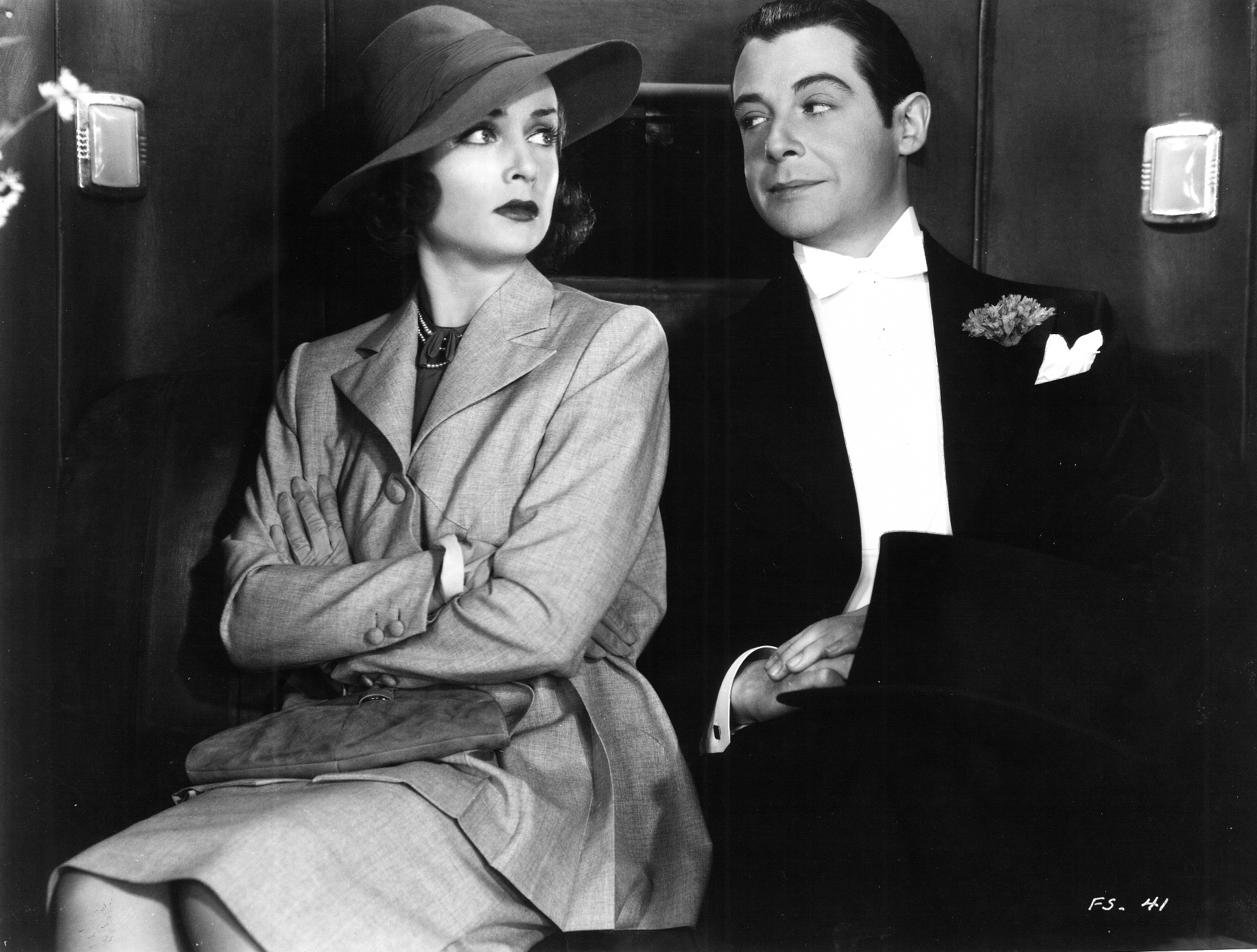
Simone and I were on our own for a week while her mother was out of state, and so one evening I pulled out an old VHS copy of Fools for Scandal that I forgot 20 years ago I even owned. Fools for Scandal is the result of Jack Warner luring Carole Lombard to Warner Bros. because of a desire to get his studio up to speed on screwball comedy. Just for a little context, Fools went into release around the same time as The Adventures of Robin Hood.

I said to Simone, “Let’s watch a Lombard movie,” but Simone wasn’t interested. Then I told her that this picture was set in Paris, and that perked up her ears and she agreed to give Fools for Scandal a shot.

Thirty minutes later, Simone had been rendered unconscious and so had I. Although stuporous, I roused myself for the last couple reels and then went back the following morning to confirm for myself that I had indeed been neutron-bombed by this picture.

Fireball: Carole Lombard and the Mystery of Flight 3 by Robert Matzen

Simone at the 30-minute mark of Fools for Scandal.

Simone will tell you, and I agree, that there’s just no accounting for funny. I don’t want to scarze you off from giving Fools for Scandal a try (actually, yes I do), but let me present it this way: In one sequence, the dialogue shared between Carole and her co-star is in rhyme. I mean, for no good reason, they start talking in rhymes. Then he starts singing, shakily, in rhymes and you expect her to sing too but she knows she can’t carry a tune so she talks it while he sings it. I can only imagine that 1938 audiences knew right around now that they were the fools of this particular scandal.

The plot of Fools for Scandal is about as funny as a salvaged cinder block: A French chef becomes enamored of a woman he sees on the street and stalks her. He sends her fleeing to the safety of a taxi, then hops in the taxi and badgers her to see the sites of Paris until finally, exhausted, she relents. She manages to escape him and make her way to London but he follows, all stalker-like, and worms his way onto her domestic staff. Then he refuses to leave. Ask those poor California people in the news whose nanny refuses to be evicted just how funny this scenario is and they’ll tell you—this scenario isn’t funny; it’s horrifying.

Fireball: Carole Lombard and the Mystery of Flight 3 by Robert Matzen

The first scene, when Carole picks up her stalker on the Warner backlot. Shooting of “Paris” exteriors would take weeks–a bad sign for any picture.

Carole here portrays Kay Winters, an American movie star off to Paris in disguise for some R&R. Instead, she picks up a stalker and spends roughly 90 minutes of her life and ours shrieking for liberation and running for her life. At one point she even says to her stalker-who-refuses-to-leave, “My life was so nice and peaceful until you came along.” At the very end of the last reel, the Stockholm Syndrome dooms poor Kay Winters.

How did Miss Lombard find herself in this wretched predicament? FLASH BACK to just a year earlier when her contract at Paramount Pictures expired and super agent Myron Selznick convinced her that the grass was greener at other studios. She made the Technicolor comedy Nothing Sacred for Myron’s brother, David, and that picture scored good reviews and solid box-office returns. But there must have been a dearth of good screwball scripts out there at the second half of 1937 because the offer she decided to accept came from Warner Bros. of Burbank, a studio known for gangsters and swashbucklers and not comedy. The script was adapted from a stage play called Food for Scandal, the double meaning being that the boy in this boy-meets-girl tale is a chef who shacks up with the girl in London, causing a scandal. When the boy breaks into shaky song, what he’s singing is “Food for Scandal.”

Fireball: Carole Lombard and the Mystery of Flight 3 by Robert Matzen

Rene (Fernand Gravet), invades Kay Winters’ cab and refuses to leave. The decision that dooms her: she didn’t call the gendarmes and demand a PFA.

I guess Carole thought this thing had a chance because the Warners brought in Mervyn LeRoy to direct, and the talented Warner stock company would back her up, and the studio invited her to bring along her hand-picked cameraman, clothing designer, and hair stylist. As a result she looks like a million bucks in Fools for Scandal only to be defeated by a 10-cent script and total lack of directorial support.

If this isn’t a Hollywood axiom, it should be: It’s always dicey adapting stage plays for the screen.

If this isn’t a Hollywood axiom, it should be: It’s always dicey importing foreign movie stars to appear in American pictures.

So here is Carole set to star in a stage-play-turned movie with a French leading man of some experience, Fernand Gravet (pronounced Graw-VAY), who is new to Hollywood. If you’re thinking Charles Boyer when you hear Fernand Graw-VAY, forget it. The former had that voice and a certain debonair manner to offset average looks. The latter also sported average looks and a nearly impenetrable accent hung like bad wallpaper on a tenor voice and about as much charm as you’d expect from your average, garden-variety psycho. And speaking of psychos, Ralph Bellamy portrays Kay Winters’ boyfriend and manages to be unlikeable even in a situation where you want to root for him because his life and relationship have been invaded by a maniac. Instead, Bellamy plays cuckold in strange eye makeup that renders him a beady-eyed muppet.

Fireball: Carole Lombard and the Mystery of Flight 3 by Robert Matzen

Kay turns to her boyfriend, Phillip (Ralph Bellamy), for help with the stalker, but finds Phillip ineffective, not to mention irritating. You would think an American movie star could do better.

In researching Fireball, I went through the Warner Bros. production files on Fools for Scandal and relived anguish that began with the title Food for Scandal. How can we even fathom now that censors found it too suggestive—a man living in a woman’s house without a wedding ring in sight? Fools for Scandal better suited the negative implications of such a situation, so they changed it, even though Fernand breaks into “Food for Scandal” about 30 minutes in.

The other thing that the production files reveal is pain. Pain from all involved. Pain from Hal Wallis the executive producer, pain from the unit manager, pain from the stars. Your run-of-the-mill A picture wrapped in seven or eight weeks, but this production dragged on for three months, with endless retakes on the Warner backlot, day after day, week after week. Stalingrad went better for the Germans than Fools went for Carole.

Lombard was always at her best when she underplayed the comedy, and we can see in this picture that she knew she was in trouble because she starts playing it frantic about two minutes in and doesn’t stop until The End. Carole desperately needed the firm hand of a director here and Mervyn LeRoy wasn’t it. LeRoy made some decent pictures in his career but never excelled at comedy. You could point to another converted stage play that worked under his direction, Mister Roberts, but I’d argue that he had three men in that cast—James Cagney, William Powell, and Jack Lemmon—with impeccable comic timing and a vehicle that had been proven effective.

Seventeen years earlier, he had Lombard and a cinder block, and what happens when you attach one to the other? It’s inevitable, and that’s exactly what happened here. I don’t think Simone will ever trust me again.

Fireball: Carole Lombard and the Mystery of Flight 3 by Robert Matzen

The Warner marketing department had trouble figuring out how to sell this particular pile of rubble, given that its plot is more psychological thriller than comedy.

Rhett Butler, Take 2

Fireball: Carole Lombard and the Mystery of Flight 3 by Robert Matzen

A sign of trouble: too much to read on the movie posters in the lobby of the theater.

What an irony that Clark Gable’s last picture at MGM would be called Betrayed, because that’s exactly how Gable felt when the company that had ridden his back for two decades suddenly dumped him in 1954, the last of Hollywood’s Golden Era stars to be let go. Right about now he could have used Carole Lombard’s advice on “how to be a free agent.” As it was, Gable made several mediocre pictures in a row because now he was taking on scripts that had not been tailor-made to fit the King and his brand. He was just earning a paycheck. Then late in 1956 he considered an offer that must have made him smile the famous Gable smile, and for several reasons.

Band of Angels was a hot property at the time, a bestselling Civil War novel by Robert Penn Warren about a highborn Southern belle, Amantha Starr, who learns upon the death of her father that she is really a half-caste, born of his black mistress. As a result she’s chattel, loses everything, and is sold into slavery.

Warner Bros. owned the rights, and it was Jack Warner himself who reached out to Gable to play Hamish Bond, Southern plantation owner with a dark past. I imagine Pa heard Ma’s voice in his head squealing for him to take the part, how he’d be great in it, Rhett Butler all over again, his greatest triumph, the role everyone knew him for. Clark Gable back in the Civil War. It was a can’t-miss proposition, especially since Gone With the Wind had been reissued in 1947 and 1954 and still packed ’em in. Always packed ’em in.

Fireball: Carole Lombard and the Mystery of Flight 3 by Robert Matzen

Clark and Kay at the Encino ranch. She landed the King; he drank to numb the pain of it all.

Gable was expert at playing 50 shades of himself and never, once he became a star, enacted an out-and-out villain. Gable didn’t go taking risks like John Wayne just had with The Searchers because, as noted in Fireball, Clark was an insecure actor and sought to play it safe. Friends and directors alike noted his limited range and said there was a “Gable way” to do things. So Rhett Butler was going to resemble Gable and Hamish Bond was going to resemble Gable and any way you looked at it, with Gable’s Rhett aboard, Band of Angels couldn’t miss.

Fireball: Carole Lombard and the Mystery of Flight 3 by Robert Matzen

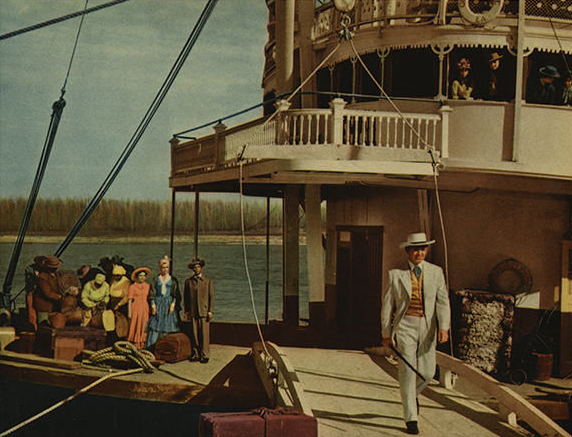
On location in Louisiana with the sternwheeler, Gordon C. Greene. This was more of the authentic Old South than even Selznick gave audiences.

Warner Bros. at the time was still a thriving studio and for the next 20 years would continue to stare down the unblinking eye of television and turn out hit pictures. Bold-as-brass Jack Warner loved the idea of luring the King to Burbank for a Civil War epic and offered him 10 percent of the net skimmed right off the top. As added incentive, all the Band of Angels exteriors would be shot on location in Louisiana, at The Cottage plantation in St. Francisville, north of Baton Rouge, and on—or in front of—the last of the old-time paddleboats, the Gordon C. Greene. The location work offered Clark and his bride of two-plus years, the former Kay Spreckels, a chance to travel together and be treated like, well, a king and his queen.

But sometimes sure things don’t work out. Sometimes planes smack into mountains for no good reason. Band of Angels was not, in the end, another Gone With the Wind. In fact, in execution and through no fault of Gable’s, it burst into flames like one of Hamish Bond’s sugar cane fields. Yes, Clark and Kay went on location, and, yes, they were treated like royalty, made the rounds, were feted, toasted, given keys to cities, and crushed by fans. Yes, Clark played Rhett Butler all over again and putting him back in sets and wardrobe depicting the antebellum South took 10 years off his appearance and son of a gun if he didn’t become Rhett Butler again. What was missing was David O. Selznick fretting and caressing and adding layer after layer of nuance, and throwing hundreds of thousands of extra dollars at the screen. Without the Selznick excesses, Band of Angels seems today almost threadbare, despite its authentic locations.

It’s hard to say when the picture’s director, “Uncle” Raoul Walsh, lost his fastball and became just another guy behind a camera. But he had lost it by The Tall Men, the 1955 picture he made with Gable, and Walsh was far more detrimental to Band of Angels. Or perhaps nothing could save a picture where the three leads are named Hamish, Amantha, and Rau-Ru. How dem dawkies love Massuh Hamish; they even sing to him in great choruses as the sternwheeler floats him on in to the dock, making this cinematic depiction of slavery problematic at best and typical of vintage Hollywood. All his slaves love Hamish Bond but one: the African child that Hamish saved from a massacre, the aforementioned Rau-Ru, who grows into firebrand Sidney Poitier in an early role. Poitier is way too sophisticated for something like Band of Angels and sticks out like a hammer-pounded thumb with all his New York, new-wave internal conflict, despising Hamish Bond and everything he stands for. Poitier, who turned 30 during production, classes up the proceedings too much. This is a picture that didn’t need class. It was bodice-ripping soap opera and needed movie stars fit to fill a frame alongside Clark Gable.

Fireball: Carole Lombard and the Mystery of Flight 3 by Robert Matzen

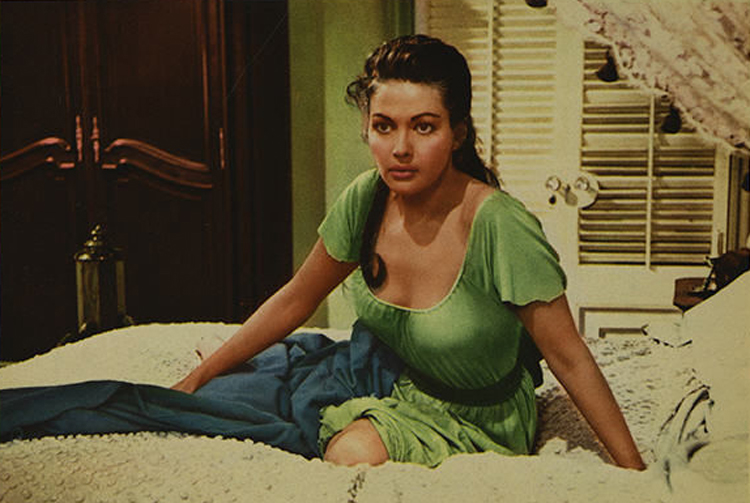
Yvonne De Carlo as Amantha Starr. Spoiler (for all of us): she survived the suicide attempt.

And speaking of what Gable didn’t have, there’s Yvonne De Carlo, a woman of so little warmth and sex appeal that when she fetches a rope and hangs herself in reel two rather than succumb to the advances of a slave trader, I cheered—and I don’t think I was supposed to.

Amantha was saved at the last minute and kept planting herself in front of the camera through the rest of the picture, giving Gable about as much to play off of as a dressmaker’s dummy. This role screamed Ava Gardner in all her sultry darkness, but posterity played a cruel joke and gave us the equivalent of Ava Gardner’s stand-in. I don’t mean to be unkind, and timing and circumstances come into play when casting pictures, but in this case DeCarlo just couldn’t infuse sympathy into this character, and sympathy was crucial.

Gable biographer Lyn Tornabene labeled Band of Angels “the nadir of Gable’s career” but I don’t see it that way. Even considering the liability of the leading lady, Band of Angels turned a slight $92,000 profit according to John McElwee of the Greenbriar Picture Shows BlogSpot. This was stout box office considering the $2.8 million cost of its production. People did flock to see Gable in another tale of the Old South, and word of mouth must have been OK or better for returns so good.

I feel for Gable as the years piled up and he coasted on reputation. He was a man of simple pleasures and little joy, lugging around guilt and grief over lost love Lombard as if bearing a lead-filled backpack. He does some nice acting in the scene where Hamish reveals to Amantha, who is now in love with him, that once he had been a villain who kidnapped Africans into enslavement. He delivers a monologue, staring off and reliving a particular dark event, and it’s effective. The moment, however, lacks a payoff because DeCarlo hasn’t established emotional parameters for us to care how she feels about the revelation. The script doesn’t help her and feels at times like a Classics Illustrated version of Band of Angels; Raoul Walsh’s lack of close-ups also saps power from this critical plot point, so much so that his decision seems to be the director’s way around Gable’s aging. The man turned 56 the second week of shooting and all the drinking, cigarettes, guilt, and grief had rendered Rhett Butler’s face into something different than audiences saw in 1939, and in more recent GWTW reissues. With the lighting and angles just right, with the sets and wardrobe and use of medium shots, the illusion works, but in a scene like the one where Hamish comes clean, dramatic tension suffers because of a lack of close-ups.

Gable made some solid pictures after this one. He was by no means out of gas and seemed to delight in poking fun at himself ever more as time went on. No, Band of Angels isn’t the picture he figured it would be, but it’s still a kick seeing self-serving, cynical Rhett Butler loose amidst the magnolias one more time.

Fireball: Carole Lombard and the Mystery of Flight 3 by Robert Matzen

Wait a minute. He’s Rhett, but she’s not Scarlett. This carefully photographed still represents the Clark Gable that Warner Bros. wanted theater patrons to see.

Note: My next column covers the 1938 Carole Lombard picture, Fools for Scandal, which TCM U.S. is airing on Thursday morning July 10 at 4:15 A.M. Eastern time.

Meanwhile, in an Alternate Reality…

For Immediate Release

MOVIE AND TV COMEDY STAR CAROLE LOMBARD TO PEN MEMOIR

Actress vows to ‘come clean’ in Putnam hardcover

HOLLYWOOD, May 1, 1961/AP —G.P. Putnam’s Sons announced today that the publisher will release the autobiography of motion picture and television actress Carole Lombard. The would-be author had stated previously that her book would be entitled, “Just One of the Guys.” Last week, Miss Lombard, who will turn 50 in October, made a public appearance after months of seclusion following the November, 1960 death of her ex-husband, Clark Gable. It is speculated that her memoir will discuss life with the one-time “king of the movies,” as well as their 1946 divorce, continued close friendship, and recent reuniting as co-stars of the romantic comedies, “Teacher’s Pet” and “But Not for Me.”

Miss Lombard’s career began in silent pictures for the Fox and Sennett studios and then continued in the sound era at Paramount. But it was the 1934 Columbia Picture “Twentieth Century” that shot her to the top. She solidified her status as “queen of screwball” two years later with an Academy Award-nominated performance in “My Man Godfrey.”

Miss Lombard and Mr. Gable began their association in 1936 and once comprised the most famous couple in Hollywood. They were married during production of the highest grossing motion picture of all time, “Gone With the Wind.” They enjoyed status as the most prolific and profitable stars of the World War II years, and, despite rumors of marital turmoil, their separation at war’s end caught Hollywood by surprise.

Miss Lombard said she has been working on the manuscript for more than two years. In describing its title, she said, “It was the men who ruled the Hollywood roost, and I had to make room for myself in the ‘boys’ club.’ Then I had to do it again when I decided to produce some pictures, and especially when I wanted to direct features and then serve as executive producer of my TV series.”

That series, “Carole of the Belle,” features Miss Lombard as Carole Simpson, a divorced newspaper reporter raising her daughter on a Seattle houseboat called the “Puget Belle.” Now in its 11th season on the National Broadcasting Network, “Carole of the Belle” was second in popularity in the last decade only to the CBS smash hit “I Love Lucy,” which starred Miss Lombard’s friend of more than 20 years, Lucille Ball.

In addition to her groundbreaking work in motion pictures and television, among the topics to be remembered by Miss Lombard are a car crash that nearly ended her career in 1925; her marriage to suave leading man William Powell; the strange death of Russ Columbo, a 1930s singer with whom she was romantically linked; a long-time friendship with tennis star Alice Marble; a brush with death when an airliner on which she had been traveling crashed in Nevada after she had disembarked; and her battles with HUAC and unwillingness to “name names.”

Famous for her salty vocabulary and known as one of the most down-to-earth of Hollywood’s elite, Miss Lombard said she would “pull no punches” in her book, although she was coy when asked if she would discuss her post-Gable romances with actor/director Orson Welles, and then her most controversial relationship of all, with actor Paul Newman, a man 15 years her junior.

Putnam anticipates an autumn 1962 release for “Just One of the Guys.”

###


How this came about…

A colleague of mine, Wendy, is reading Fireball and said to me yesterday, “The whole thing is such a tragedy because if anyone should have lived a long life and produced a great memoir, it’s Carole Lombard.” Wendy paused and said, “She’d have made a great old lady.”

Which got me to thinking. Suppose she hadn’t died on that mountaintop. Suppose she had lived a normal lifetime and worked the length of a normal career. What would have happened? Of course it’s pure fantasy, but when you have spent as much time in someone’s head as I have in hers, you get to a point where you can draw conclusions. Here they’re laid out. Somehow or other, the marriage would have ended, but Lombard didn’t hold grudges and after a time she and Gable would have been friendly. Without the tragedy of her death hanging over his head, three things would have changed: 1) Gable’s ambition wouldn’t have been snuffed out and his brand would have thrived; 2) the public would have been spared seeing Clark Gable as a mortal and he wouldn’t have aged prematurely, and 3) at age 41 and then 42 and 43, he wouldn’t have gone to war; he would have made very popular pictures from 1943 through 45, during the biggest boom in Hollywood history.

In the meantime, Lombard would have made He Kissed the Bride (retitled They All Kissed the Bride) and My Girl Godfrey, and from there, she would have been off to the races as an independent, enjoying good roles with her contemporaries until 1950. I could see her producing and directing by, say, 1948, and not comedies either. I think Lombard would have gone for gritty film noir as a form of artistic expression. She had wanted to succeed at drama but never broke through, so it’s clear she wanted the challenge of meaty work. She would have been out front with Ida Lupino as a woman director and by this time she would have amassed fortune enough to finance A-pictures as an independent.

Imagine Carole Lombard called to testify before the House Un-American Activities Committee. Always a liberal Democrat, Carole would not be the one to rat out a colleague and it was likely she’d lean into the microphone on Capitol Hill and state clearly for newsreel cameras, “Senator, with all due respect, you can kiss my ass.”

In 1954, when MGM severed with Gable, Lombard would have been there as his biggest supporter and sooner or later she would have made pictures with him to give her ex a boost—returning a favor done for her by William Powell in 1936. I picked Teacher’s Pet because I could see Lombard in the Doris Day role, and But Not for Me where she would have been perfect in the cynical ex-wife part played by Lili Palmer.

Carole would not have spoken about Clark during his lifetime, but because she was indeed a “ham” and because she loved to tell stories (never letting the truth get in her way), I could see Miss Lombard following the trail blazed by Errol Flynn and publishing a scorcher of a memoir.

Romantically, she may well have slipped into a romance with Robert Stack, a premiere Hollywood stud and nice guy who was in love with her. The problem was that Bob didn’t need rescuing, and Carole was a rescuer/nurturer who went for powerful men. Always powerful men. Who fit the bill at this time? Obviously, Orson Welles, who would have been available after his divorce from Rita Hayworth. I asked Carole Sampeck to play along and it was she who labeled Welles a likely candidate, and also young Paul Newman, the next big thing in the late 1950s at a time when Carole would have just been turning 50 but, knowing her, still mindful to play the field.

And finally, I believe Lombard would have turned to television, the rival medium. In a White 1950s America dominated by traditional family values, the formula was for aging female movie stars to play wives and mothers, but not Lombard. Carole would have scratched and clawed to play a woman with guts, a divorcee and career-minded mother. A woman making her own way and suffering romantic misadventures week in and week out, making jokes at her own expense and guiding an onscreen child in lieu of the one she could never produce in life.

Notice that the press release gets Lombard’s age wrong by three years. She had already shaved a year off by 33 and sleight of hand would have killed another couple by the early 1960s. Nobody enjoyed pulling a fast one more than Carole Lombard.

So this is my version of the alternate reality wherein Lombard lived out her lifetime–what’s yours?

Who Did She Have to Screw?

Fireball: Carole Lombard and the Mystery of Flight 3 by Robert Matzen

The ultra-rare one sheet movie poster for Supernatural; rarity caused by its rapid run through American theaters and a resulting lack of need for a lot of advertising material.

As die-hard fans know, Carole Lombard made one horror picture in her too-short but very active career. It was the 1933 Paramount release, Supernatural, produced and directed by the Halperin brothers, Victor and Edward, who were at the time flush with cash from their 1932 independent production, White Zombie, starring Bela Lugosi.

White Zombie is the mighty little swimming sperm that erupted into generations of succeeding pictures where the zombies grew ever more creepy, lustful, menacing, intelligent, speedy, and carnivorous, right up to today’s The Walking Dead, which I choose not to watch because death is around us enough without using it as entertainment. I digress. These Halperins from Chicago were the adolescent minds that started the Zombie Invasion by creating some glassy-eyed shufflers who now seem docile and even cute by today’s comparison, and now the brothers set their sights on ghosts and possession with Supernatural.

Fireball: Carole Lombard and the Mystery of Flight 3 by Robert Matzen

Didn’t FDR promise a chicken in every pot and a 20-foot bird cage in every conservatory? Carole Lombard and Randolph Scott live the good life in Supernatural, until…

Readers of Fireball know that Carole Lombard lived and breathed filmmaking. She knew when a pan was better than a tilt, when a close up was better than a wide shot, when less light was better than more light. So imagine her vexation, after working for several top directors, when she tried to understand the vision of 37-year-old Victor Halperin, fresh off his stint working with Bela Lugosi and the undead. Most telling of all the unusual aspects of this picture as viewed today is the relentless series of brightly lit, full-on close-ups of Carole Lombard’s face. The girl who only felt comfortable when she controlled the lighting because of her scars is super-exposed in Supernatural, and truth be told, she looks great. The cheek scar is highly visible in several shots because it’s an indentation in her cheek and casts a shadow, but the blown-out lighting obliterated the other, flatter scars on her face, the one by her left eye and those near her mouth. Carole at 24 going on 25 is shown in Supernatural to be as uniquely beautiful as they came onscreen in that time period. She brims with vigor, her physical powers entering their peak. Why she worried so much about the way she was lit, I don’t know.

Supernatural is the one Carole was making when she entreated the heavens, “Who do I have to screw to get off this picture??” It’s easy to see why. Supernatural fades in to a dark and stormy night and warnings by Confucius and the Bible about the undead. The first quarter of the economical 64-minute run time concerns the pending execution of serial killer Ruth Rogen, a hot little number who manages to strangle her strapping male lovers. The inference is that she gets them drunk and then, does them in. Mad-doctor-sort-of-psychologist Dr. Houston is certain—certain, mind you—that when Ruth is put to death, her spirit will inhabit a nearby living breathing woman and so after execution is carried out, Dr. Houston claims the body, and………

He what? He claims the body? I guess these were simpler times, the 1930s, because you’d think it’d be a tough case that some guy can just claim the body of a headline-grabbing, newly executed serial killer. But next thing you know, he’s got her in his laboratory and he’s experimenting on her.

Fireball: Carole Lombard and the Mystery of Flight 3 by Robert Matzen

Is it just me, or are you fellas also suddenly feeling like murdering people? Roma is possessed by the soul of Ruth Rogen as Dr. Houston (H.B. Warner) and Grant (Randy Scott) look on.

If you were so inclined, you could spend a week questioning the plot of Supernatural, but it would be a pointless exercise. Just enjoy Carole Lombard as young, wildly rich Roma Courtney, who’s possessed by the murderous soul of Ruth Rogen and bent on putting an end to Ruth’s evil lover, Paul Bavian. I’d tell you who the actors were but you never heard of them.

What I want to know is, how did everyone in this time period, from Roma Courtney to Nick and Nora Charles, get their MONEY? Wasn’t there this thing going on called the Great Depression? DAMN these people were well off. Roma’s digs are so vast that the dolly operators have a tough time keeping up with her. Roma has a yacht, too, which I mistook for a U.S. Navy destroyer.

Fireball: Carole Lombard and the Mystery of Flight 3 by Robert Matzen

Paul Bavian stages a bogus séance related to the picture’s other story line: Roma’s twin brother has just died, and she wants to make contact with him. (I was annoyed that all pronounced it “SEE-ants.” Was that really the word as used in the 1930s?)

Randolph Scott is in Supernatural, but I’m not exactly sure why. He’s too good for this sort of thing and yet manages to make no impression as Roma’s boyfriend, a part that could have been played by any guy plucked off any street corner in Hollywood. It’s the kind of role that only becomes necessary in the last reel, and (Spoiler) only for the moment it takes to rescue Carole Lombard’s possessed character from committing a murder.

Ironically, Carole’s off-screen posse included two psychics, and these weren’t money-grubbing Long Island Mediums either. These two refused to take her money and instead hung around Carole and her mom Petey just because. They routinely raised hackles by knowing things they couldn’t know. As a result, Carole should have found some interesting concepts in Supernatural, but the chaos of its production negated any such inclinations on her part.

Fireball: Carole Lombard and the Mystery of Flight 3 by Robert Matzen

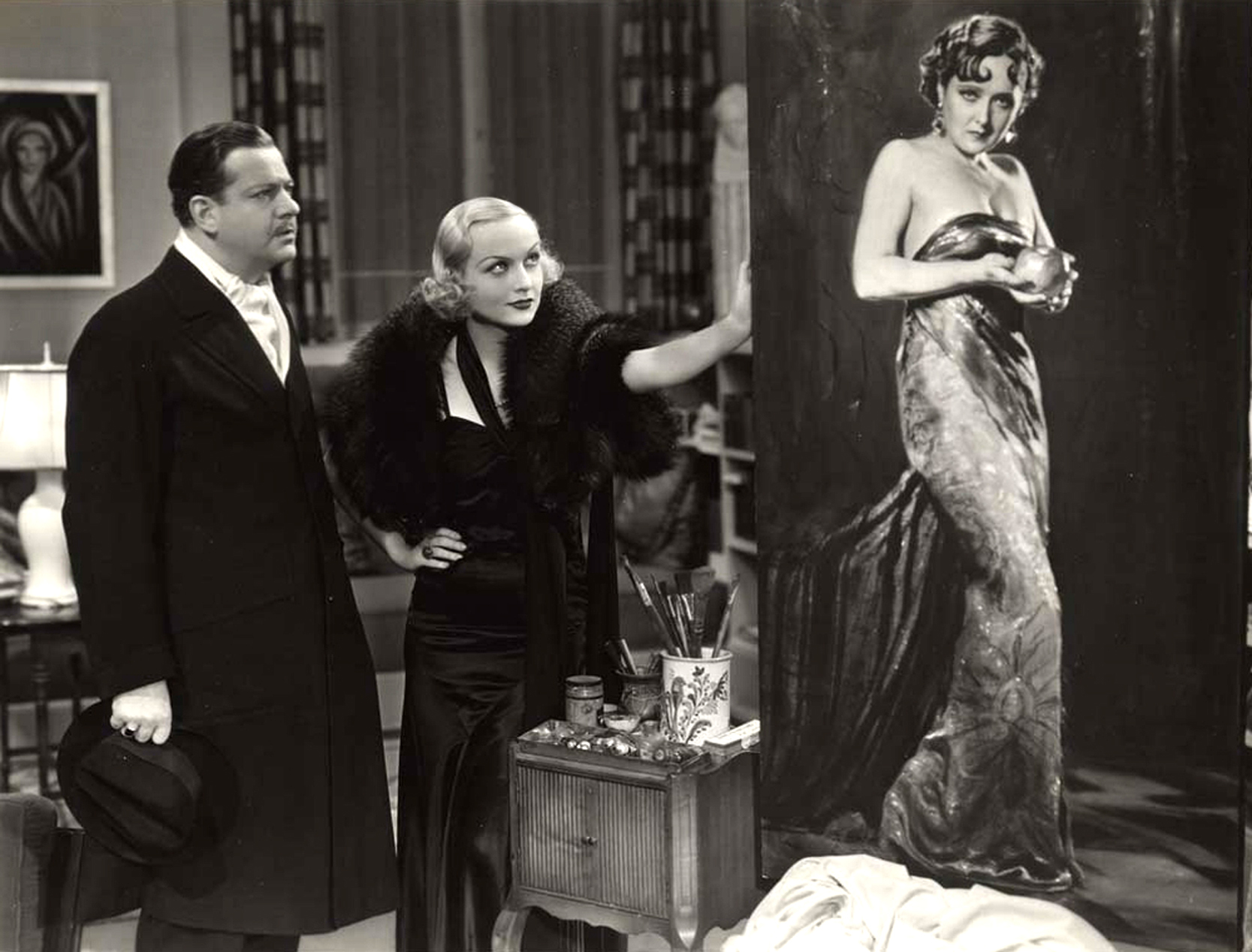
Paul Bavian (Alan Dinehart) is only a little suspicious when Roma takes him to his late lover Ruth Rogen’s apartment. The full-length portrait of Ruth (Vivienne Osborne) offering up a tempting apple is emblematic of the fact that bad girls are a lot more fun. Until they strangle you, that is.

Don’t get me wrong. Supernatural is a rollercoaster ride of a picture, and if it were made today, it would be all CG and over the top and loud and entrail-strewn and in your face and no fun at all. But because of the times and the stars involved, this thing is a hoot, with enough genuine creepiness to keep an audience onboard for an hour of mayhem thought up by genuine adolescent brains.

This is one of those “pre-Code” pictures they’re always talking about—you know, before the Hollywood Production Code went into effect and pinch-faced censors took over. This doesn’t mean Lombard’s bouncing around naked in Supernatural (unfortunately), but it’s clear that actual sex breaks out in this universe, and that booze is fun, and murder rewarding. Ruth Rogen doesn’t get her comeuppance for being a killer, which the Production Code would soon require. Sure, she’s executed, but then her soul floats free to continue the mayhem, and it’s implied at fade out that she’ll possess again after being driven from Roma’s body. For all I know, Ruth Rogen is still out there somewhere, strangling away.

Fireball: Carole Lombard and the Mystery of Flight 3 by Robert Matzen

Will Grant arrive in time to save Roma from a murder wrap for strangling evil Paul Bavian?

I hope Turner Classic Movies runs Supernatural soon. If it doesn’t, seek out a bootleg copy and emulate Paul Bavian by pouring a triple shot of hard liquor. It worked for me. Then sit back and enjoy the picture that drove Carole Lombard crazy, the one she didn’t talk about, the one horror picture she ever made; the one that collectors today revere for its rarity. Whatever else you can say about Supernatural, it is hands-down the wildest, most unusual picture to which Lombard’s name is attached. And, oops, I think she just turned over in her grave.

On the Street Where I (Didn’t) Live

I was a kid out of college the day in 1987 that my then-wife Debra and I visited Robert Stack at his home in Bel Air, California. Mr. Stack’s longtime next-door neighbor was Ronald Reagan, so I knew as we wound along the lush and winding roads, with the landscape abloom, that I was about to be in good company. My second book, under contract to Greenwood Press, would be an academic volume about Carole Lombard with a 30-page biography included. I queried all the old stars still alive at the time seeking in-person interviews. I didn’t know protocol and had no track record as a biographer, so Ralph Bellamy sent quotes in a letter and so did Cesar Romero. Jimmy Stewart, operating out of his Beverly Hills office, was downright gruff. I was in contact with many others, but the correspondence is buried somewhere. Then there was Robert Stack. I wrote him a letter with the basics—book about Carole Lombard, may I speak with you, etc.—and he shot back a note in the minimum number of days for mail to go from Pennsylvania to California to Pennsylvania. It included his phone number and he said, basically, love to talk about Carole, give me a call and stop by any time.

Robert Stack had met Carole Lombard in 1933 when he was 14. She befriended him in Tahoe as she took up Nevada residence in anticipation of divorce from William Powell. Carole had the ability to make a guy feel special; she was beautiful, accessible, and genuine, and made electric eye contact. Grown men fell in love with her almost daily, so what chance did an adolescent boy have of avoiding a head-over-heels tumble?

Lombard knew the effect she had on men, so she must have known Bobby Stack’s feelings, and she must have pulled her punches with this poor mop-topped kid.

Ironically, Stack’s first picture after migrating to Hollywood six years later would be called First Love, and he would portray new sensation Deanna Durbin’s onscreen boyfriend. A couple of years and five pictures later, Carole Lombard asked for Stack to portray a younger man smitten with her in To Be or Not to Be, a move that was typecasting for Stack—but didn’t make Carole’s husband, insecure Mr. Clark Gable, any too happy.

Fireball: Carole Lombard and the Mystery of Flight 3 by Robert Matzen

Robert and Rosemarie Stack right around the time I met both of them at their home in Bel Air.

Forty-five years later we pulled into Robert Stack’s driveway and were ushered past the pool and into his den by the housekeeper. We waited only a moment on an overstuffed leather couch before Bob breezed into the room, hair longer and blonder than I would have guessed, dressed in lounging pajamas, that big friendly movie star smile lighting up from ear to ear and his handshake firm. If he was surprised to be looking at a couple of wet-behind-the-ears kids, he didn’t let on.

He talked first about the film version of The Untouchables and this was bitter Robert Stack, grumbling that he hadn’t been involved in the production, then nearing completion, and he seemed to want to be on the record voicing his displeasure to anyone with an audio recorder.

Then he seemed to recall why I was there, and brightened, and a light clicked on in his eyes. Carole Lombard. Ah yes. He launched into stories of those early Tahoe days, laying eyes on and getting to know 24-year-old Carole, teaching her to shoot skeet, this boy teaching this woman, and Stack confessed that his mother, to whom he was very close, didn’t much care for Lombard’s loud personality and penchant for swearing. “Mother didn’t think I should be hanging around her,” said Stack with a smile that showed the perspective of decades.

He sat on an adjacent couch, cross-legged as he talked. But then at powerful memories of Lombard he would stand and pace, often ending up leaning against a giant fieldstone fireplace with a dark wood mantel. This was a man’s room, trophies, guns, and now I know that Stack had had Gable’s den in mind when he created his own. He talked a lot about Gable, about admiring the King and worrying for him after Carole’s death, when “He would race up and down Laurel Canyon on his motorcycle, not caring if he lived or died.”

We talked about the making of To Be or Not to Be and the lengths to which Carole went to keep a very nervous “Bobby” loose on the set. He told a story that showed up in his memoirs, how Carole would gently take him by the elbow and ease him back into his key light when he drifted out of it. She was, he said with awe, the only fellow performer ever to do that for him, but he learned from her to do it for other newcomers over the years.

Fireball: Carole Lombard and the Mystery of Flight 3 by Robert Matzen

Carole Lombard keeps an ill-at-ease Robert Stack loose on the set of To Be or Not to Be.

I asked him where he was when he learned of the plane crash and his response was telling. He didn’t hem and haw, and look far off and reach for the memory. “I was walking out of the Hollywood Palladium,” he boomed at once in that Unsolved Mysteries voice, reflexively. “I was with my date; we had been dancing. I heard a newspaper crier on the street corner. It was the Los Angeles Times, and he was calling out, “Carole Lombard in Plane Crash!”

I get goosebumps now thinking about that moment in Bob Stack’s den, seeing this friendly, sincere man tearing up. “I saw it in a newspaper headline,” he said, regarding me through the mist. “I couldn’t believe it.”

Unfortunately for me, one can only live life straight ahead, with no do-overs. There was so much more I could have and should have asked him. About her, about Gable, about his career—The High and the Mighty, Written on the Wind, his TV series

—about Flynn for crying out loud, since he haunted Flynn’s Mulholland tennis court for years. I need to give myself a break, though. I was just a kid starting out.

Finally I ran out of questions and he led us back outside by the pool, where I met his wife Rosemarie, who was just as gracious as her husband, and their friendly white poodle Hollywood, regarded by both as a beloved child and the heart of the household.

This was my first celebrity interview, and therefore the most memorable. I wish I had taken pictures that day but I didn’t. I just lived it, a kid out of college on the street where the president lived.

Joan Jett Wisdom

Fireball: Carole Lombard and the Mystery of Flight 3 by Robert Matzen

The crazy kids back when life made sense.

Who was the first one to sing, “You don’t know what you got till it’s gone?” I remember the Joan Jett version, You don’t know what you got till it’s gaw-aw-aw-aw-onnnn. Joan wasn’t just whistling Dixie, my friends. You lose things, and it hurts. You lose living things, and in an instant the world stops spinning and everything goes flying in all directions, and usually only then do you realize what you had and don’t have anymore; how blessed you were when the parts of your life all fit together so nicely day by day, routine by routine. Then suddenly, there’s a big hole in your existence. Things go all out of whack and you’re stumbling about all fuzzy-headed because your days are numb and your nights are sleepless.

Do you ever wonder how Clark Gable survived January 16, 1942? He was ripped from the ranch to fly up to Vegas in dead of night, then driven this way and that, sequestered at the El Rancho, forced his way to the mountain, tried to climb it, got stopped partway up by news that his wife was dead, was taken back to the El Rancho, sweated out victim retrieval, was given a piece of her jewelry that had been pried from her body, and had to pick out caskets. If ever a man appeared to be shell-shocked, it was the Gable seen in those photos at the El Rancho, hiding behind sunglasses as he walked across the parking lot and climbed inside a car.

Today we know “shell shock” or “combat fatigue” as Post-Traumatic Stress Disorder or PTSD. I suspect I am tasting a bit of that over a recent trauma, where memories stab into your brain with no warning, memories that are too horrible to process, and startle and hurt as much the fifteenth time as they did the first. Or they wound even more because you’re still trying to come to grips. Soldiers and law-enforcement professionals suffer such trauma and it can endure years, decades, lifetimes. Those first responders to the crash of Flight 3 tasted it, like the one rescuer who told of stuffing body parts in mail bags said, “I still see it in my dreams sometimes.” He said it 50 years later.

Fireball: Carole Lombard and the Mystery of Flight 3 by Robert Matzen

Gable at the El Rancho.

Gable showed all the signs of PTSD, not just that weekend but for the rest of his life. I wonder which moments produced the flashbacks. You have to know he never went back to the El Rancho. I haven’t investigated to learn if he ever stepped on another Western Air DC-3 like the one chartered to rush him to Vegas. I bet he lived that moment on the mountain, “I’m sorry, Mr. Gable,” over and over. And that moment when he was asked if he wanted to spend time with Lombard’s body, which was in the next room. And that first bad memory, when MGM VP Eddie Mannix and PR man Ralph Wheelright barged in the front door of the Encino ranch to interrupt prep for a dinner party, two bundles of nerves to announce that the plane was down. It was the instant his royal, carefully crafted, highly insulated, pampered and preened, forever-adolescent movie-star life stopped making sense. Clark Gable liked being an actor because he could portray successful, secure, confident people quite unlike himself, but on that Friday evening his bill of 10 years was due, and the world got to see the other Clark Gable, the real-life one.

And then, oh, the grief. Inhuman, what he endured, what any husband or wife endures when the spouse exits suddenly. And this spouse, with her shtick, her sayings, her constant carrying on, talking a mile a minute, high-high energy every instant she wasn’t asleep. She would buy outlandish hats just because he disliked outlandish hats. She dared kid the king, and how he loved her for the audacity. The hunting trips wherever, the premieres where they dressed to the nines, the ranch with its orchards and horses and tractor and constant carrying on. Santa Anita, aaaaaaaand they’re Off! The shouting matches and jealous brawls and how they hated each other and loved each other. Driving at 80 with the top down and laughing their heads off. All that………….removed. In its place, silence. In its place, stillness.

It was no longer his life. He could make no sense of life.

The most telling and recurring theme: His friends didn’t want to be around him anymore. He was that different. His hands shook; his hands always shook after that weekend. He had been laid bare for the world and what good was a hero so vulnerable under the shining armor? He never got to enjoy a giant, classic movie hit again. Some of his pictures made a lot of money, but he became the King of Hollywood in name only.

You don’t know what you got till it’s gaw-aw-aw-aw-onnnn. Whoever or whatever you hold dear, go give it a big hug. Look at it and appreciate and imagine what your life would be like without it. I’m feeling a personal loss right now because I dared take for granted and maybe you can profit from my misfortune. Give him or her or it a kiss. Look him or her or it square in the eye and say, “I love you” like maybe it’s the last time, because you never know when it will be.

Unbalanced

Fireball: Carole Lombard in Hollywood

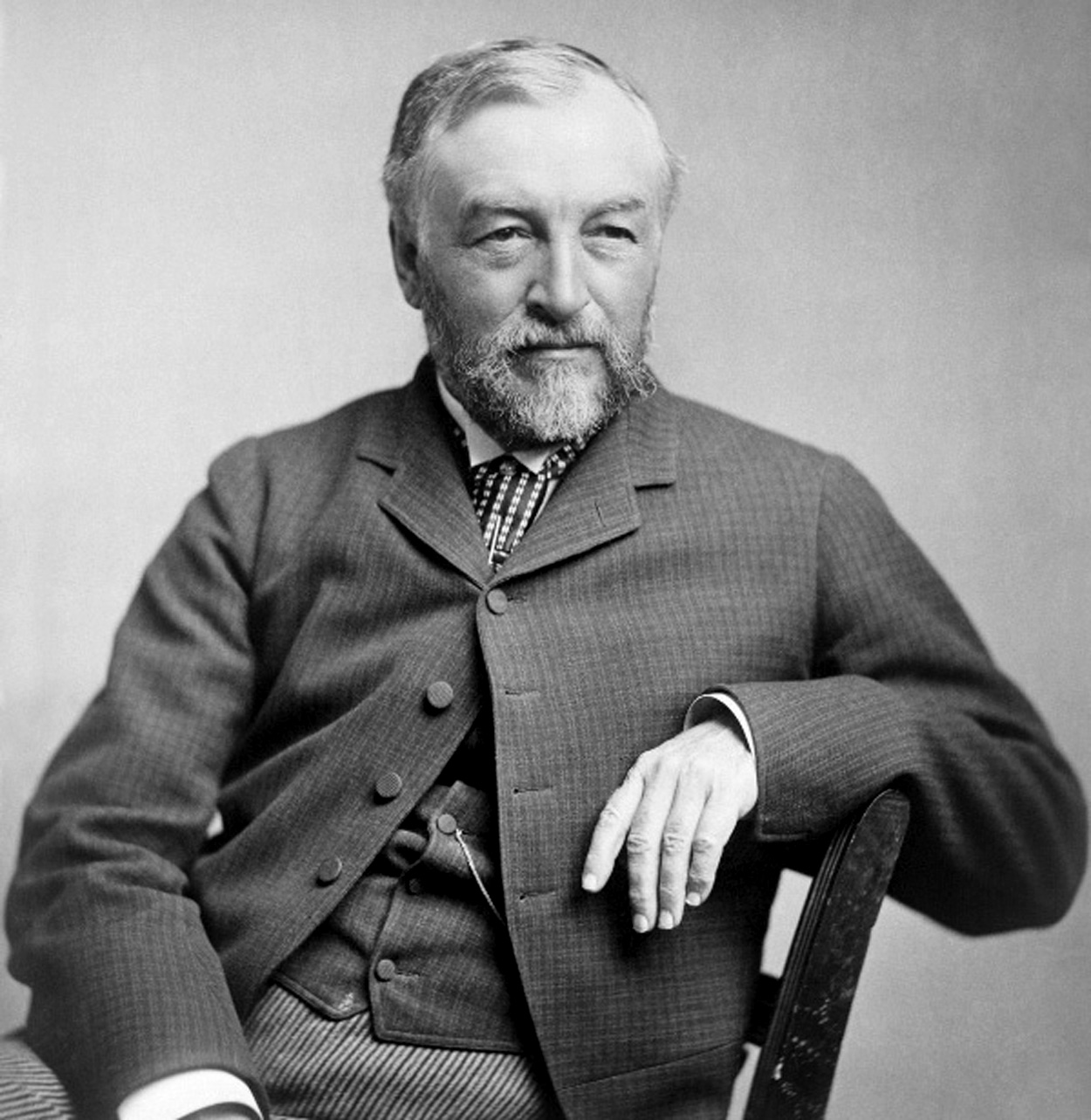
Samuel Langley, a smart guy

In the late 1800s, a scientist named Samuel Langley pretty much invented airplanes. Lots of things astonish me, and many of them involve aeronautics. I’ve never gotten past the concept that a hundred tons of metal can get off the ground and stay off the ground. That’s number one, and it goes from there, and here’s the guy who from nothing imagined that humans could fly around in the sky and then wrote about it in a book called Experiments in Aerodynamics that was published in 1891.

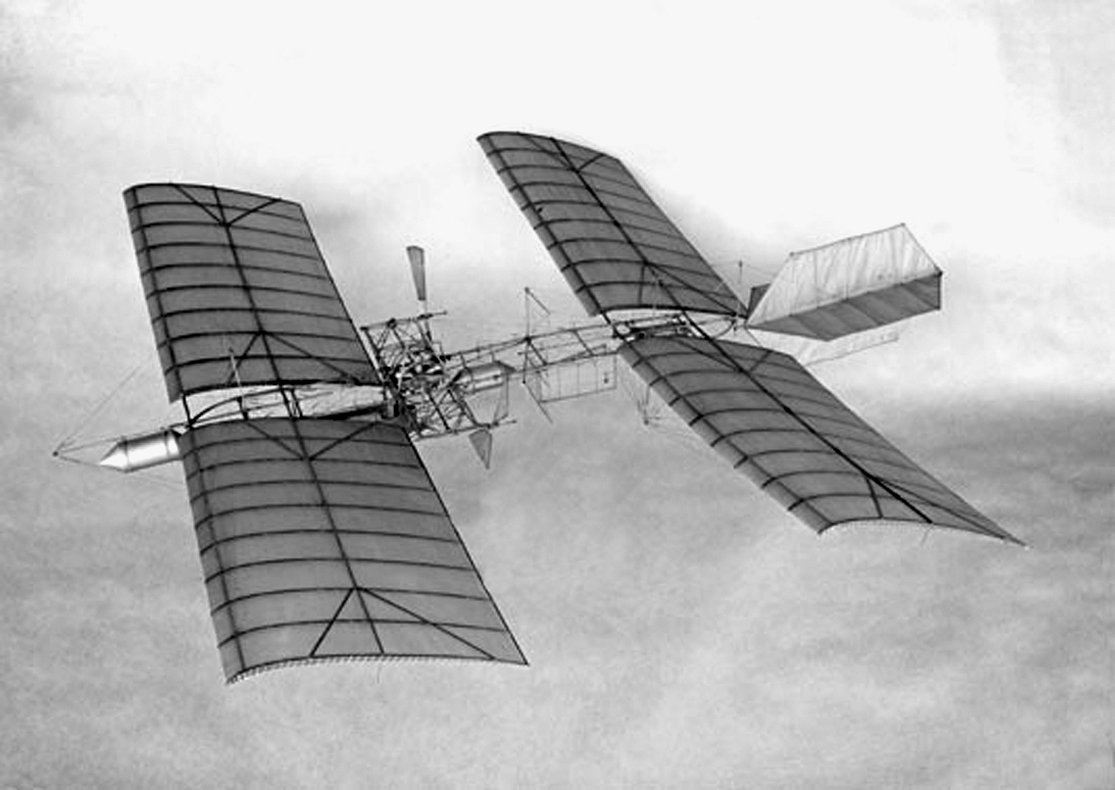
Do you hear me, people? Langley dreamed up the “airfoil” and invented the idea of “lift” and the concept that became wind tunnels. Then he successfully flew UAVs powered by mini-steam engine almost a mile on two occasions late in 1896. UAV, you know, like the Predator drone? An Unmanned Air Vehicle in EIGHTEEN HUNDRED AND NINETY-SIX. Langley was flying these things around seven years before the Wright Brothers! In fact, nine days prior to the Kitty Hawk breakthrough in 1903, Langley was floating on the Potomac River on a houseboat-turned-aircraft-carrier and was trying to catapult a manned, powered airplane into successful flight. It was a failure of an experiment that came oh-so-close to trumping Orville and Wilber on the verge of their great triumph. Langley was called a fool and a failure afterward.

Fireball: Carole Lombard and the Mystery of Flight 3 by Robert Matzen

Langley’s successful UAV, which he dubbed an “Aerodrome.”

I can hear you saying, What’s your point, Matzen? Well, OK, my point is simply this. People don’t much care for history lessons but people love stories and Langley’s is a hell of a story, the race to figure out how to enable humans to fly. Here you have these incredible people in 1890 and 1900 working desperately with sticks, fabric, and leather to make a contraption that could go up and stay up, and less than 40 years later movie stars in fur coats are stepping into polished-aluminum airplanes and flying across the country.

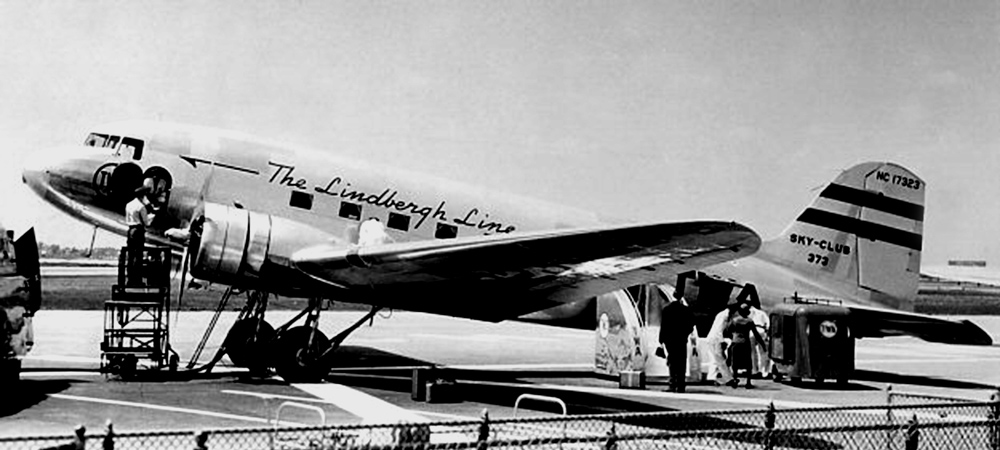
I’ve been saying it a lot in lectures and interviews lately, but it bears repeating: TWA Flight 3 crashed in January 1942, killing Carole Lombard and 21 others, at a time when commercial flight was still in the process of being figured out. It was still the era when biplanes were serving as the training platform for U.S. military pilots. DC-1s and DC-2s still served commercial passengers along with the beefier DC-3—these were the very first modern airliners replacing the serviceable but clunky Ford Tri-Motor.

One of the most telling quotes in Fireball was spoken during the House investigation into the crash of Flight 3 by TWA DC-3 Captain Alexis Klotz. In describing the airway out of Las Vegas, which includes the Spring Mountain range and Mt. Potosi, Klotz said, “It is very true that you can wander off just a little bit and hit something…. We drive down a narrow highway. There is traffic within 12 inches on one side and a gully on the other. It is considered safe. You watch what you are doing.”

They didn’t call this the Greatest Generation for nothing. These men had no virtual displays or talking consoles. They had no radar. They had guidelines, procedures, rudimentary gauges, two wings, and a prayer, and flying perhaps the finest airplane ever constructed, Douglas Corporation’s DC-3, they got where they were going and safely conveyed passengers, 15 and 20 at a time, from place to place.

Except on January 16, 1942.

Fireball: Carole Lombard and the Mystery of Flight 3 by Robert Matzen

Enabled by Samuel Langley: the Douglas Corp. masterpiece DC-3.

If you do the math, between December 1903 when the Wrights flew on that ridge in the Outer Banks and January 1942 when Flight 3 smacked into Mt. Potosi, that’s a tad more than 38 years. Now think about what was going on 38 years ago today, in 1976. All of a sudden 38 years is nothing. It’s the blink of an eye, but in that span of time, airplanes went from fabric to aluminum, from sputtering engines with spindly propellers to two or four growling beasts, and from open cockpits to luxurious, closed cabins with meal service on transcontinental flights. All in 38 years.

I was a great disappointment to my father the mathematician and physics professor. He would try in vain to tutor me in high school trig, and there was no way I was ever going to get it. I still don’t get it. But in the end, Dad, I did turn out to be smart enough to recognize a smart guy when I see one, and Samuel Langley was one smart guy whose ideas changed the world—just 38 short years prior to the crash of Flight 3.


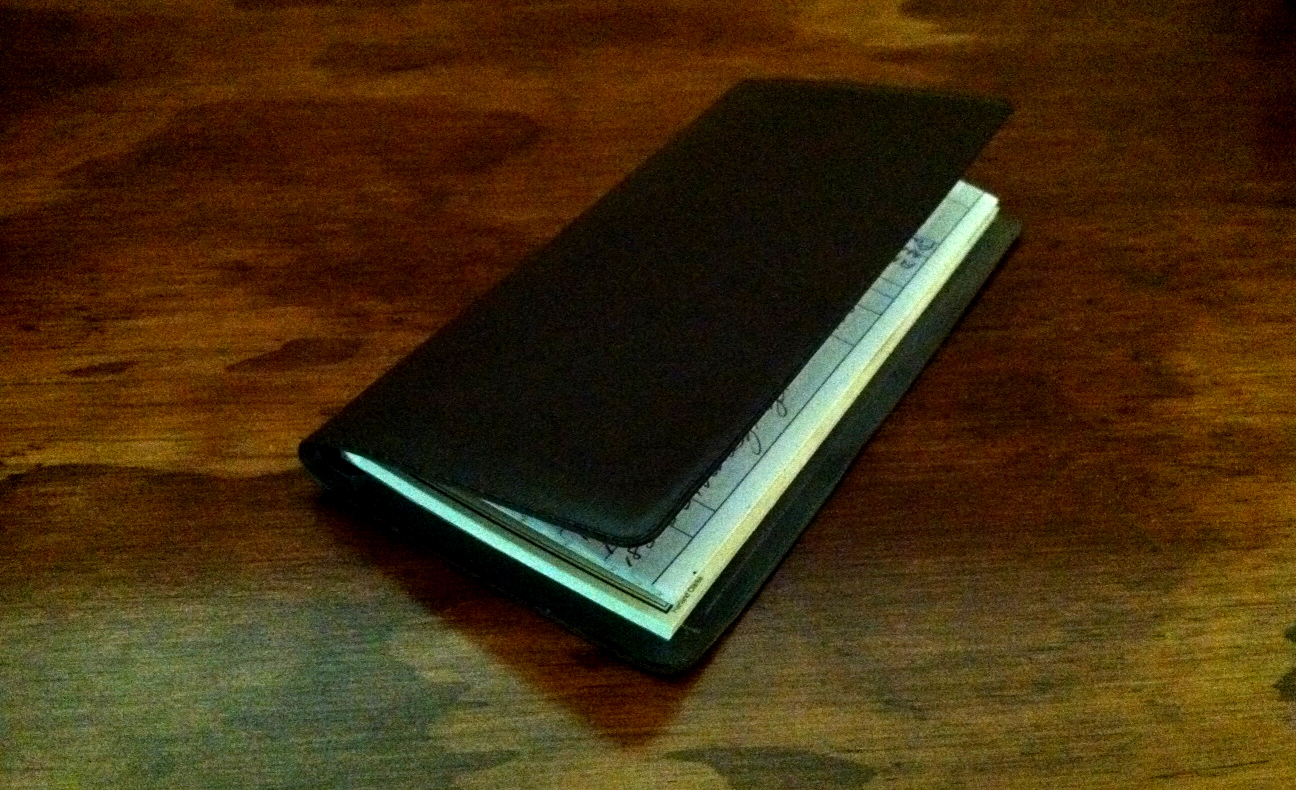
Note: If you want to see a great documentary about Samuel Langley, check out Undaunted: The Forgotten Giants of the Allegheny Observatory because, oh, by the way, Langley was an astronomer who invented aviation in his spare time. And I can’t even balance my checkbook.

Fireball: Carole Lombard and the Mystery of Flight 3 by Robert Matzen

My checkbook, unbalanced.


Fireball in Las Vegas

Fireball: Carole Lombard and the Mystery of Flight 3 by Robert Matzen

Las Vegas features a giant that dwarfs even the mightiest casino. That giant is Mt. Potosi, which looms high in the southwestern sky and can be seen from nearly every vantage point in town. You can’t see it if you’re standing behind the Luxor, or Caesar’s, or the other casinos, but if you’re out and about, Potosi can’t be missed. Potosi is where life ended for Carole Lombard and where life began for Fireball. Each year when I’d visit Las Vegas on business, there would be Potosi, never an inviting sight, but always a compelling sight. I knew the wreckage of Flight 3 was up there, and I knew that one day I would go see it. This is not new information to anyone who has read the book, but I bring up the subject of Potosi again because I just returned from my most important visit yet to Las Vegas after four TV interviews and two on radio, and a Saturday lecture at the impressive Sahara West Library on Sahara Avenue.

Fireball: Carole Lombard and the Mystery of Flight 3 by Robert Matzen

On Las Vegas NBC affiliate Channel 3 with Tom Hawley talking about the 1942 plane crash near their town. [Clicking on the image takes you to the TV segment.]

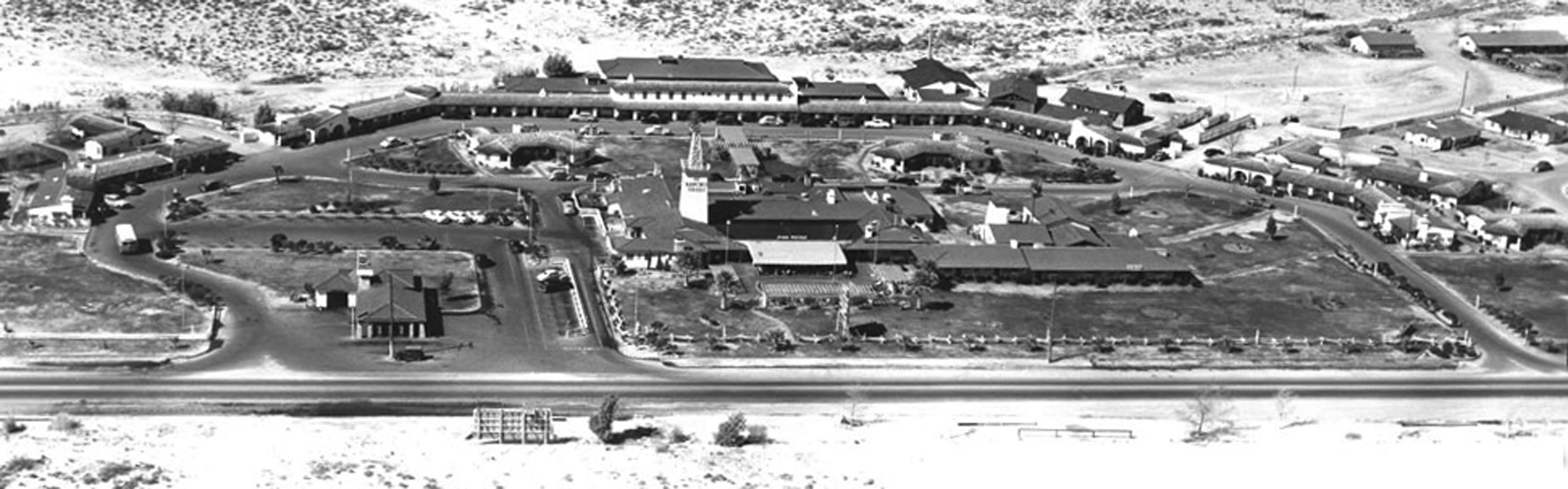
Sahara is a street that’s important to the narrative of Fireball, because at the intersection of Sahara and Las Vegas Boulevard, Clark Gable spent the longest weekend of his life, waiting in a bungalow under heavy guard at the El Rancho Vegas Hotel for word on the fate of his wife. Back then the El Rancho stood alone in desert as the southernmost point in town and the first of the modern casinos. Now the site of the El Rancho is one of the last remaining empty lots in that stretch of the Vegas Strip. Nothing’s been there since the main building, the Opera House theater and casino, burned to the ground in 1960 during a Betty Grable appearance (Betty reportedly lost $10,000 in costumes that night). The owner tried to keep going on just the cluster of bungalows around the casino-in-cinders, but it didn’t work.

One of those bungalows had been Gable’s, and I have stood at the spot and pondered what he went through that weekend as he stared at Potosi, what his MGM handlers went through, and Gable’s friends, who rushed to his side by the carload when they heard that Carole’s plane was down. My appearance on that street, in that city, with Potosi visible just to the southwest, was what I can only describe as meant to be.

Fireball: Carole Lombard and the Mystery of Flight 3 by Robert Matzen

The first modern Las Vegas casino complex, the El Rancho Vegas, along Highway 91 just south of town. Here Clark Gable endured the longest weekend of his life.

On Saturday the story poured out of me to the assembled crowd of locals; I showed two videos and then came the Q&A. It was fantastic to get the perspective of people who have lived with the story all their lives. One woman remembered as a little girl looking at Potosi and seeing the polished aluminum of the wreck gleaming in the sun. TWA had tried to dynamite the mountainside to cover over the site, but their plan failed and locals for years afterward remembered the eerie, reflective glow of the right wing against the cliff wall.

Fireball: Carole Lombard and the Mystery of Flight 3 by Robert Matzen

Attendees of the Sahara West event watch one of the GoodKnight Books videos.

Attending on Saturday was well-known Southern California poet Lee Mallory, whose father and stepfather were pilots. Lee’s Uncle Harry grew up in Goodsprings and learned about the crash and aftermath from people who lived it. In fact, those eyewitnesses passed on relics from the crash to Harry, who had them built into a shadow box with brass name plates, and this incredible history display is now in Lee’s possession. Lee hadn’t yet read the book but was able to pepper me with questions that hit on many key facts and myths related to the event. Another attendee firing impressive questions was named Dennis. He had visited local spots connected to Flight 3, like the site of the El Rancho and the Pioneer Saloon in Goodsprings, where Gable supposedly drank his way through the weekend. No doubt the Pioneer was a player in the tragedy, if not Gable’s home base, because it was here that reporters congregated during days of rescue and recovery. It was a practical matter: in an area so remote, the Pioneer featured the closest telephone and the best way for reporters to get their stories out.

Fireball: Carole Lombard and the Mystery of Flight 3 by Robert Matzen

Signing books after the lecture and Q&A.

The Sahara West Library is a state-of-the-art facility. I haven’t seen better audio and video capabilities anywhere, and I want to thank Marci Chiarandini for fantastic support throughout the planning and execution of the event.

We also snuck down to L.A. for a couple of days. I paid my usual respects to Carole, Clark, and Petey at Forest Lawn, and we stopped in at Maria’s Italian Kitchen in Encino, which is currently featuring a Fireball tie-in. Patrons bringing a copy of the book into the store receive a discounted meal. The crazy thing is that Maria’s is located near the corner of Ventura Boulevard and Petit Avenue, and Petit Avenue was the address of the Gable ranch. George Healy of Maria’s, who read Fireball and has become one of its leading proponents, wasn’t aware that one of the key locations in the book was less than a quarter mile away! It’s just the latest in a thousand weird little coincidences and ironies around Fireball, which is a very special book to me and, as I’m finding, to a growing number of people around the country.