General Hollywood History

Mathematics

Fireball: Carole Lombard and the Mystery of Flight 3 by Robert Matzen

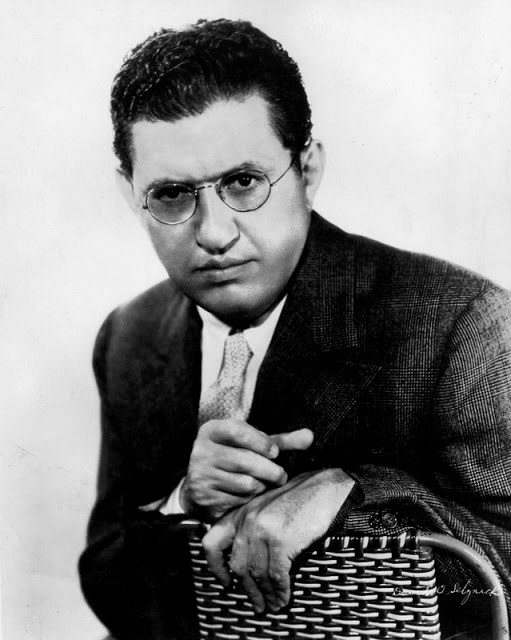
DOS…Oscar-winning visionary, mad genius, and ODing druggie.

I’ve had a couple of weeks now to digest the fact that America is not celebrating 75 years of the motion picture version of Gone With the Wind. I’ve tried to think of any cast members still with us beyond the indefatigable Olivia de Havilland, little Beau Wilkes, played by now-82-year-old Mickey Kuhn, and littler “Melanie’s Baby,” played by Patrick Curtis. Come to think of it, maybe OdeH is rubbing off on her celluloid kin since the Wilkeses are the only ones left among us. I asked you to help me put Gone With the Wind in perspective and the response was enlightening, and got me to thinking.

Let me run this past you: aside from spine-tingling stories of the sneak preview, David Selznick’s epic run on uppers that should have killed him but didn’t, the coast-to-coast search for Scarlett that ended by firelight in Culver City, and the notorious replacement of George Cukor with man’s man Vic Fleming (note to Vic and his pal Clark Gable: this is still a women’s picture despite the testosterone injection), the motion picture version of Gone With the Wind isn’t as great as the sum of its parts. In some respects it’s sort of…average.

Oh, man, I’m pretty sure my mom just rolled over in her grave. Sorry, Mom.

Gone With the Wind is the big, inspired vision of a filmmaker, but so is David Lean’s Lawrence of Arabia, James Cameron’s Titanic, and Peter Jackson’s trilogy of the Rings, and I attest that GWTW doesn’t measure higher than any of these later examples. It’s too fixated on the performance of a decent-at-best English stage actress affecting a Southern belle. Selznick and his three directors (counting Sam Wood) threw the picture her way because the country was then ripped through with Scarlett Fever, and there was no cure in sight.

Fireball: Carole Lombard and the Mystery of Flight 3 by Robert Matzen

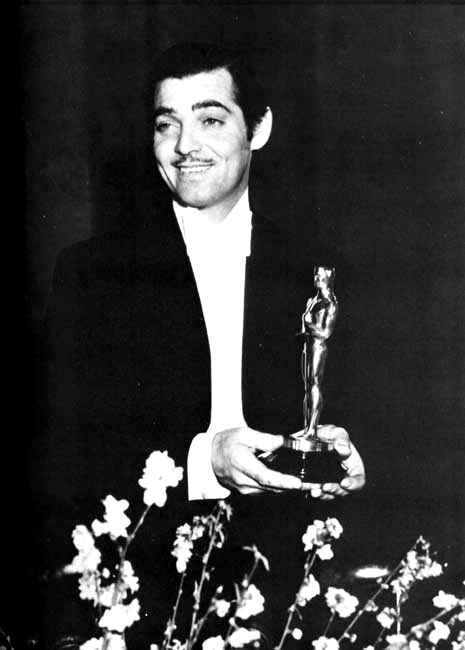
Gable loved winning his statuette for It Happened One Night, then gave it away to a little boy after the death of Carole Lombard.

The epidemic is over, my friends. Miss Leigh is long gone, and her performance, despite the golden doorstop, plays today as antiquated as a sternwheeler. I always found Leslie Howard an embarrassing Ashley, embarrassing because his miscasting damns the picture’s credibility for future generations. For God’s sake where was Randy Scott when we needed him?

Over the years I’ve been surprised to see the shots taken at two-time Academy Award winner Olivia de H. for lack of acting range. For kicks you should peruse the reviews of her Broadway version of Romeo and Juliet in the early 1950s. Yikes! My point being that Livvie was an accomplished actress in her day, but considering that her day was 1939 and by 1951 she was passé, her performance as Melanie isn’t new-school enough to help keep the good ship GWTW afloat.

Then there is The Saving Grace of Gone With the Wind. Well, wait. All those craft Oscars went to people who were saving graces of Gone With the Wind: cinematographers Ernie Haller and Ray Rennahan, art director Lyle Wheeler, and the film’s heroic editors, Hal Kern and James Newcom. Sidney Howard probably helped to save the picture with all that screenplay he wrote, which was then rewritten by a couple dozen other writers and finally Selznick himself. Walter Plunkett’s costumes, Max Steiner’s music—fantastic craftspeople at work, no doubt.

But it’s Clark Gable’s picture to save and looking back from a modern perspective, he’s the best thing about it. In all his glorious insecurity and grousing and grumbling, his Rhett Butler was perfect in 1939 and it’s a bulls-eye 75 years later. I know a lot about Gable now, but I feel there’s more still to learn. I’m tempted to say that Gable rose to the occasion when he spent eight months playing Rhett, but I need to keep reminding myself that the part was fitted to him with great care, staying within the “Gable range,” which was sort of from A to B or maybe, on a good day, C. Parnell was still fresh on everybody’s minds and neither Selznick nor Mayer could survive Gone With the Wind becoming another Parnell.

I’ve never committed myself to MM’s novel, but I very much want to read it now. I know that the book version of Rhett is a good deal darker than the movie-star Rhett drawn up by that football team of screenwriters. What we get from Gable as depicted is a square-shouldered, worldly wise, wry-humored, and slightly tarnished knight in armor. Honorable enough to reclaim wedding rings and rakish enough to look comfortable in Belle Watling’s parlor. Between the Hays Office censors on one side and his MGM bodyguards on the other, Gable was safe as safe can be making Gone With the Wind. But who could have predicted that the greatest role of a not-so-great actor would hold water so well all these decades later?

I’m tempted to call this column, “Disillusioned,” because that’s what I realize I am about Gone With the Wind. All the fuss and bother of my boyhood, all the reverence paid to the picture as it floated for oh so long and oh so watertight on the memories of a couple of generations. Gone With the Wind is now a Technicolor time capsule of 1939 Hollywood, more interesting for what went on behind the cameras as what is captured in front of them. I wish it were otherwise. I wish it were a perfect 10 of a picture that could serve as THE shining example of Old Hollywood. Counting everything, the entire experience of Gone With the Wind, the people and the pre-World War II times, it probably still is. But just as a big stack of cans of celluloid, math has overtaken the movie of the Novel of the Old South, and it’s getting, for me at least, old.


Fireball: Carole Lombard and the Mystery of Flight 3 by Robert Matzen

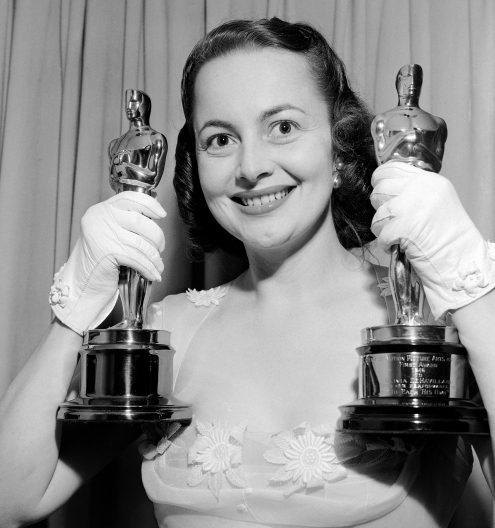
OdeH: two Oscars in four years, but she would never get an award-quality role again.


So Red the River, in Black & White

Fireball: Carole Lombard and the Mystery of Flight 3 by Robert Matzen

Buy it, consume it, spread the word about it.

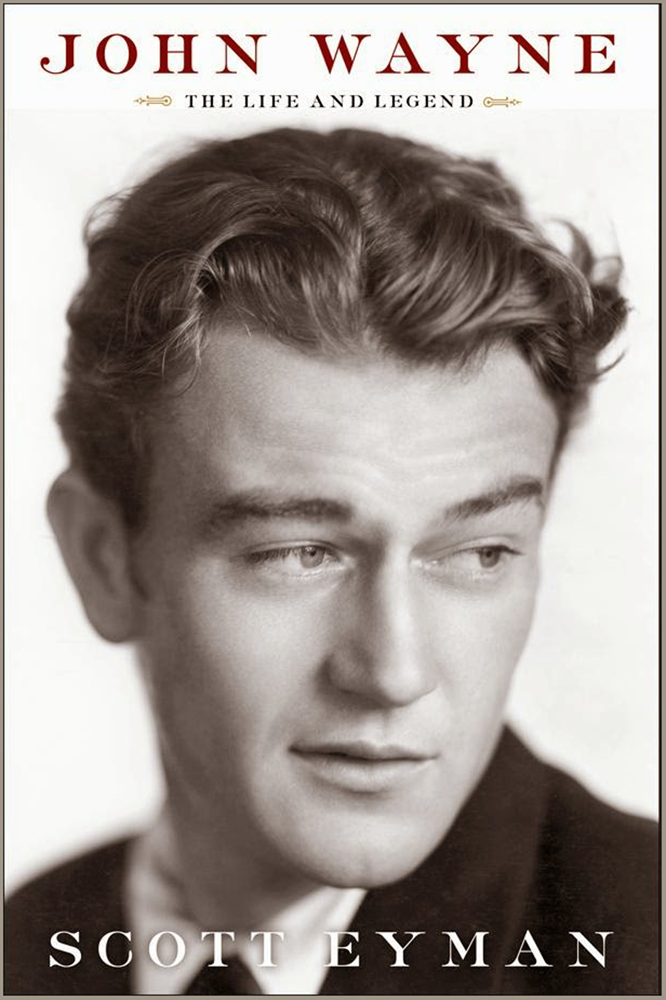
I want to continue the discussion of Gone With the Wind that we started this past week, but have to interrupt to report that I couldn’t be happier for my friend and colleague Scott Eyman for the success of his new book, John Wayne: The Life and Legend, released April 1 by Simon & Schuster. It hit the New York Times bestseller list at mid-month and is, as of this writing, #1 on the Amazon bestseller list for Movies/History & Criticism and #8 in Biographies. A writer can work a lifetime and never achieve success like this. Of course Scott has emerged as the preeminent Hollywood biographer and he’s done very well with his past books, particularly Lion of Hollywood, his Louis B. Mayer bio that was of such help in researching Fireball themes.

All this week Scott has been sitting with Robert Osborne in prime time on Turner Classic Movies introducing the best of John Wayne’s pictures and last night it was one of my favorites, Red River. Back when I was a silly, uneducated youngster, I was enthralled with Lonesome Dove, in part because of the vivid depiction of that cattle drive up to Montana. I had thought what a wonderful thing they dreamed up for television, not knowing that the epic cattle drive had long before been envisioned and executed by director Howard Hawks in black and white for Red River, and that Lonesome Dove was a pale, small-scale update.

I’ve taken John Wayne way too much for granted my whole life and felt free to skip some of his pictures, including The High and the Mighty, which I discussed here a couple months ago, and also Red River, which I only discovered in recent years. I didn’t know until last night, when Scott told us that Red River was actually produced in 1946 and sat around for a couple years, that it represents Montgomery Clift’s first screen work. I find Clift mesmerizing in this picture, young, lean, tough, handsome, and so damn capable with his new type of underplaying that would soon change Hollywood. I’ve never read a Clift bio, so I didn’t know how he learned to ride a horse like he does in Red River, as if born in the saddle. He has this thing where he hops up into the stirrup like some sort of trick rider. I know he became obsessed with bringing realism to his roles, as confirmed by Howard Hawks later.

Fireball: Carole Lombard and the Mystery of Flight 3 by Robert Matzen

John Wayne and Montgomery Clift

Speaking of Clift to Peter Bogdonovich, Hawks said, “He came down two weeks early and went out after breakfast with a cowboy, taking a lunch with them, and they rode all day long – up hills and down steep places, and through water and so on. And by the start of the picture he really rode well. You could tell that. And I taught him a little jump step to get into the saddle – he’d make a little hop into the stirrup. He worked – he really worked hard.” So that answers my question about the riding, and that hop. Clift was one rare specimen, and looked every bit the equal of John Wayne in the saddle after only two weeks of training.

I can’t say I’m a huge fan of the peculiar way Howard Hawks handles dialogue, but since at least three Hawks pictures are on my favorites list, I don’t consider Hawksian quirks a deal breaker. You know, he has actors step on the lines of other actors, which can emulate realism when done right, but often his players aren’t quite up to it and come off instead as self-conscious. Hawks also has his women constantly saying their man’s name in the clinches. “You know what I’m talking about, Matthew, don’t you, Matthew?” All right already with the Matthews!

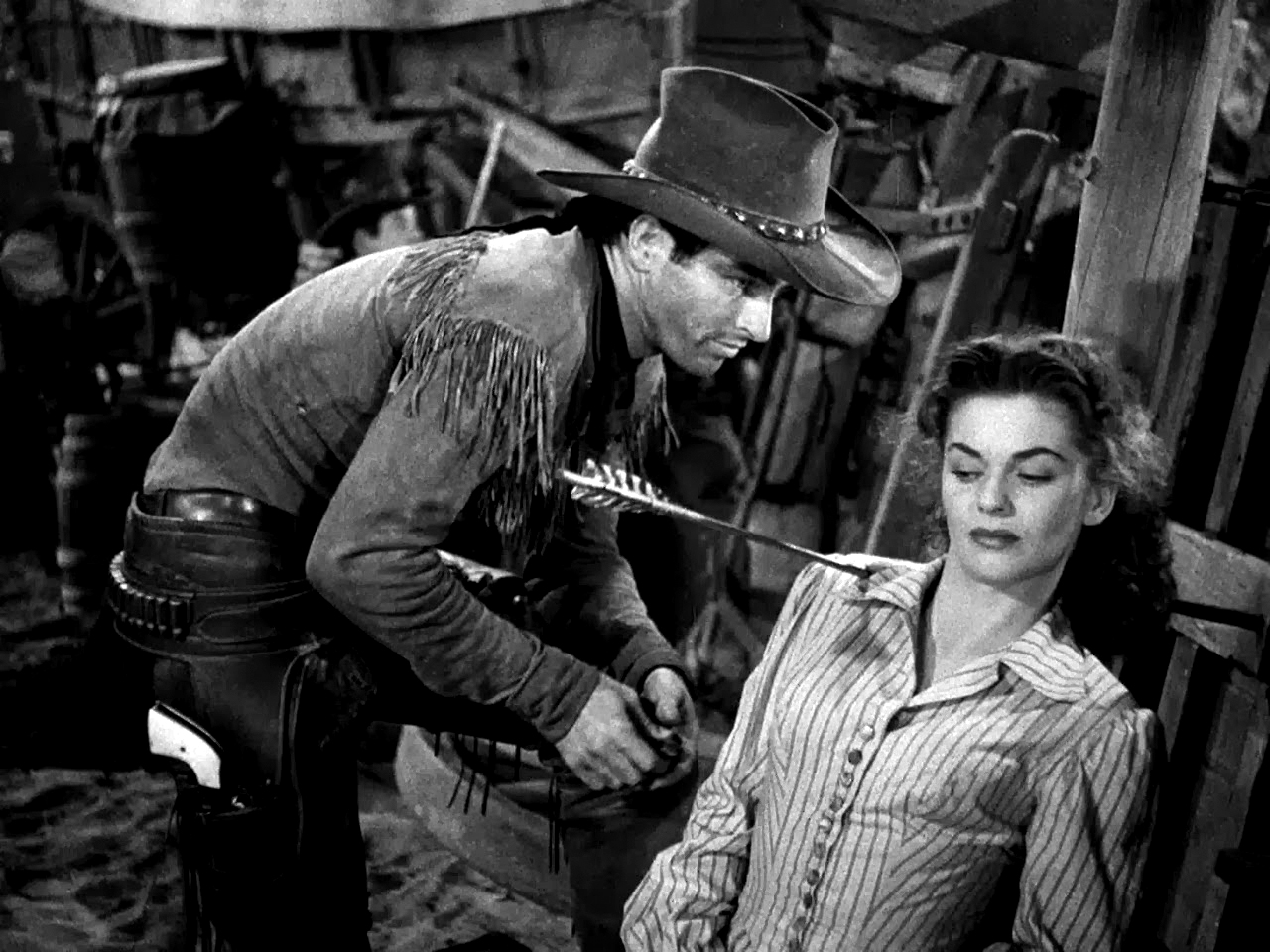
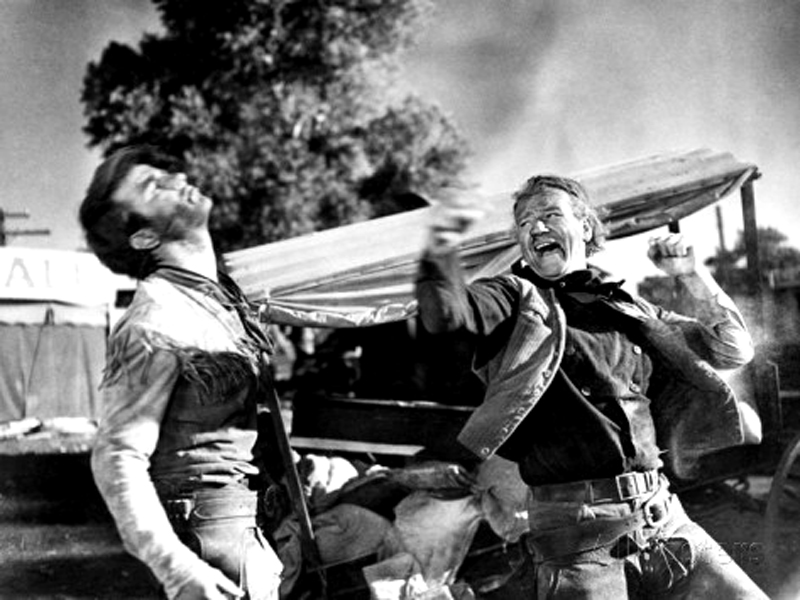
Last night, Eyman referred to Red River as something like “nine-tenths a classic,” and I agree with him. Here we have this spellbinding epic with noirish qualities, and suddenly, toward the end of the last reel, a Damon Runyon picture breaks out. Here we see the worst of Howard Hawks and his obsession with sassy dames, throwing figurative cold water on a perfectly set up, deadly confrontation between two beautifully written and played characters in Wayne’s Dunson and Clift’s Garth. Such a shame the way it ends. Two hours of buildup, the pace ratcheting up until there’s so much going on in every frame that you can’t take it all in. Then…that? As Scott put it, “Hawks blinked.” Eyman described how Mr. Dunson was supposed to die at fade out, but Hawks couldn’t bring himself to see it end that way. Instead, Joanne Dru’s Tess Millay, a character just recently introduced into the narrative, breaks up the big fight, and Wayne and Clift laugh and make up while sprawled there in the dust. It’s an all-wrong ending. It was all wrong in 1948 and it’s all wrong today.

Fireball: Carole Lombard and the Mystery of Flight 3 by Robert Matzen

Adding to the realism, Hawks chooses to show an arrow striking Joanne Dru in the shoulder, nailing her to the side of a wagon. She barely flinches, and Montgomery Clift reacts with bemusement rather than concern.

But Hawks was so damn good that I am forced to forgive him his trespasses. Tell me you don’t have a Hawks picture somewhere on your favorites list. Twentieth Century, maybe? Bringing Up Baby? His Girl Friday? Ball of Fire? Sergeant York? He did two of Bogart’s best pictures in To Have and Have Not and The Big Sleep, and also two other favorites of mine, The Thing (from Another World) and Rio Bravo.

Fireball: Carole Lombard and the Mystery of Flight 3 by Robert Matzen

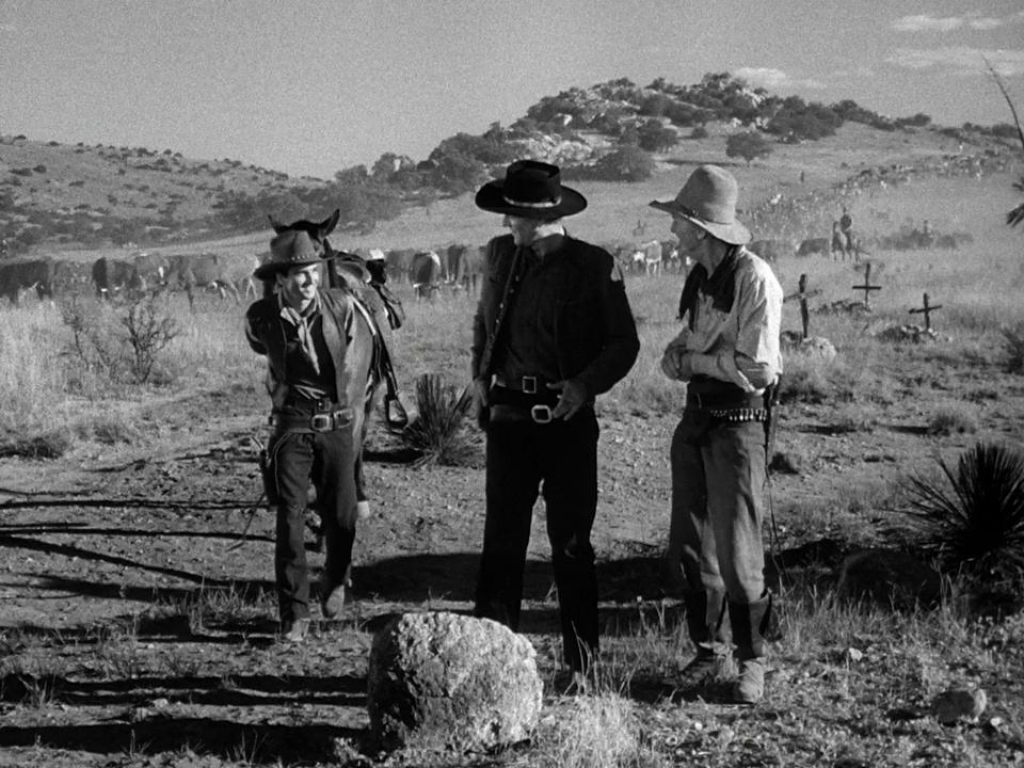
Cinematographer Russell Harlan and director Howard Hawks capture the sweep and grime of a cattle drive long before budget-friendly CG effects are around to help.

Another “so damn good” ingredient in Red River is the cinematography of Russell Harlan. When you see the way he frames up a cattle drive, with no CG effects and thousands of cattle and cowboys visible going back a quarter mile as Wayne and Clift play a scene in foreground, you think this must be the most gifted cameraman in Hollywood. But Harlan was a journeyman who cut his teeth on Hopalong Cassidy westerns and would move on after Red River to photograph Gun Crazy and Tarzan and the Slave Girl, proof once again that Hollywood was after all a factory chock-full of highly skilled cinematographers. No time to sit around dreaming of art. We must shoot! They’ll need this picture next month in Hoboken!

So thank you, Scott, for a very enjoyable Thursday night, and congratulations on the release of John Wayne: The Life and Legend. My goal this weekend is to go to my closest independent bookstore and buy a copy. In the meantime, may the awards and acclaim roll in.

Fireball: Carole Lombard and the Mystery of Flight 3 by Robert Matzen

The furious, hate-filled climax that is soon to be spoiled by Joanne Dru.


Help Wanted

Fireball: Carole Lombard and the Mystery of Flight 3

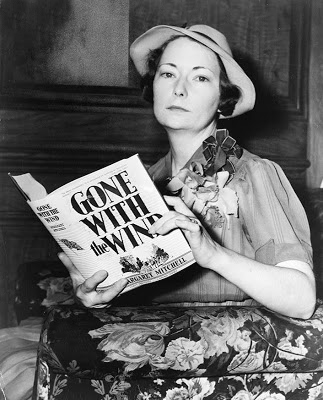
Margaret Mitchell, the quiet little woman who caused a big ruckus.

I am at a loss and would appreciate your help. Here it is, the 75th anniversary of the release of Gone With the Wind, the blockbuster 1939 classic motion picture of the classic Margaret Mitchell novel of the Old South. And I can’t find a Gone With the Wind celebration anywhere. Not a convention, not a conclave, not a picnic. Because Fireball is so much about Clark Gable, and includes an account of Gable’s tribulations making the picture and a description of the attendance of Clark and Carole Gable at the Atlanta premiere, I thought it would be natural for me to schedule a presentation about Fireball at a Gone With the Wind event this year. So where are the diamond jubilees? I guess it was the late 1980s when I attended one, maybe two, GWTW barbecues at Clark Gable’s birthplace in Cadiz, Ohio. These were pretty big shindigs with women in hoop skirts and an opportunity to meet and chat with original cast members Fred Crane (Stuart Tarleton) and Cammie King (Bonnie Blue Butler).

Come to think of it, that was 25 years ago, wasn’t it? GWTW was in sprightly middle age then. Now, correct me if I’m wrong, but all the cast members are gone except for Olivia de Havilland. Is 75 years just too many for a celebration? Is it time for museums and musty, dusty antiquity? Is Gone With the Wind fast becoming as archaic as, say, Birth of a Nation?

I don’t know how well attended the digital restoration of Gone With the Wind was at last weekend’s Turner Classic Film Festival in Hollywood—we were in transit from the West Coast as it was unspooling. How did it go? Did any of this blog’s readers attend? Were there women in hoop skirts among the patrons that day?

Fireball: Carole Lombard and the Mystery of Flight 3

Fred Crane shares face time with Vivien Leigh. The Cadiz barbecue held 50 years later, during which I met Fred, looked exactly like this. Well…….sort of. Don’t they hold these kinds of things anymore?

I must be missing something, right? There have to be GWTW conventions that I’ve managed to overlook. We can’t be so rapidly losing touch with this epic motion picture. Or can we? It was such a cultural phenomenon, truly, unparalleled in American history. The book went off like a crate of dynamite upon release in June of 1936 and was reprinted upwards of 30 times by the end of the year. It earned a Pulitzer Prize and National Book Award for Margaret Mitchell, and again reigned as the top-selling novel in America in 1937. This novel was Big, and then came the movie, which was Just As Big. Speculation raged over which Hollywood star would play which role. Could David O. Selznick pull this miracle picture off? Or would it bomb? Would he even finish the thing? Then it premiered, and played, and played, and hit the road, and played on well into the war years. Then came the 1947 reissue, and then 1954, and the Civil War Centennial reissue of 1961, and a 70mm hatchet job in 1968, and another reissue in 1974. Gone With the Wind hit TV like Sherman in Georgia and played on pace with The Wizard of Oz and The Ten Commandments. It was a TV event, as it had been a theatrical event.

Fireball: Carole Lombard and the Mystery of Flight 3 by Robert Matzen

The Gables receive a royal welcome upon their arrival in Atlanta for the GWTW premiere in December 1939. More than 150,000 people would flock to Peachtree Street to glimpse them.

But that was then. How are you feeling about Selznick’s Gone With the Wind these days? Do you still sit down and watch it? Do you try to introduce it to your children and grandchildren? Is there any hope for even attempting such a thing in our short-attention-span age? Is the 4×3 aspect ratio too out of date? Is the acting too corny? Is the lack of action too extreme? Or has it just plain been overexposed?

Personally I still get a kick out of Gone With the Wind, although not as much as I did 20 or 30 years ago. Now the back half moves pretty darn slowly and I get impatient with Scarlett for chasing around the feckless Ashley. Olivia de Havilland’s Melanie has grown on me quite a bit, though. Oh, how my mother despised Melanie, but I have to side with Rhett’s assessment that she was the only truly admirable woman in the story. Of course, I’m partial to Ona Munson’s Belle Watling too and think it would be swell to have a friend exactly like her.

So, help me out, will you? Where are the hot Gone With the Wind celebrations that I’m missing? What’s happened to the Epic Motion Picture of Our Time? Is it . . . gone with the wind? I’d welcome your perspective

that Gone With the Wind still holds onto some sort of relevance in 2014. I’m hoping it does. I’m hoping that maybe I’m just being a pessimist.

Also on a related but unrelated note: There have been many books written about the production of this motion picture. What is your favorite?

Fireball: Carole Lombard and the Mystery of Flight 3

Selznick’s money shot.

To Tweet or Not to Tweet

I hate the sound of bagpipes. To me the sound of bagpipes is more torturous than the squeal of a feedbacky microphone, or the wail of a screaming baby, or the pounding and grinding of a dumpster being emptied in the middle of the night. It’s the top reason I’m not a fan of St. Patrick’s Day. I’m also not a fan of people going out and getting drunk obnoxiously when they could just as easily, no, more easily, stay home and drink in silence. So where have I been the past few days, you ask? I was waiting out St. Patrick’s Day in the Cone of Silence and now it’s the day after, and safe to come out.

Fireball: Carole Lombard and the Mystery of Flight 3 by Robert Matzen

My idea of hell.

I need to know. Do you people tweet? Do the cool kids these days tweet? It seems as if people must sit around watching TV with the remote in one hand and a phone in the other so they can report their thoughts in real time, and maybe if you’re a great pundit who has thoughts in real time that would be desirable, but if you’re just a guy or a girl and go reporting on how the ref made a non-call in a basketball game, is this a good thing?

My housemate has been railing for years that there’s too much communication in the world today, and the emergence of “Twitter wars” seems to bear this out. Someone disrespects someone else on Twitter, and suddenly a snarkfest is unleashed, often with no winner but just a lot of nasty messages hanging in the ozone. To me, Facebook is a fine thing and allows me to keep people at the far end of arm’s reach while still learning of their comings and goings. Facebook is perfect for the reclusive introvert, which I’m one of. I care about my friends, which doesn’t necessarily mean I want to talk to them all the time. Now I don’t have to: there’s Facebook.

But Twitter. Quite some time ago, Basil Rathbone authority Neve Rendell encouraged me to start tweeting. I thought, what the heck, why not, and I signed up on Twitter and got my handle (@robertmatzen) and guess what. I have only tweeted I believe one thing in my entire Twitter career, and that was a funny little something to a co-worker. I just couldn’t bring myself to tweet because who cares what I have to say? Why is my viewpoint important? Does the world need to know that I hate bagpipes? RT if U h8 bagpipes 2.* NO! I can’t murder the king’s English that way. I can’t go against the grain and reveal my loathing of an “instrument” played at heroes’ funerals!

I have seen an effective use for Twitter, and that’s to build a brand. If I were a comic attempting to build my brand, RT if U h8 bagpipes 2 would actually make sense. As a matter of fact, comedian Stephen Wright used to talk in tweets long before Twitter was born. But even if I were building a brand, I can’t see myself shamelessly self-promoting because reclusive introverts aren’t made that way. Ironically, I am building a brand and can’t make my thumbs use Twitter! You can see my conundrum.

Besides, with a subject matter like vintage Hollywood, my tweets would just be a litany of sadness.

Shirley Temple dead. Bummer.

Sid Caesar gone. Nooo!

Harold Ramis passed. Can’t B.

Robert Matzen, angel of death.

So please tell me, do you tweet? Are you on Twitter? Should I do this or not do this? I’d love a pro or a con from you, the most influential people in my life (other than she who lives with me). And most importantly, would you have RTed that U h8 bagpipes 2?

*RT = ReTweet

Pushing the Buttons

Any of you who know me know I’m a rough customer capable of tearing a phone book in two. Or if not a phone book, then junk mail, which I’ve been known to rip to shreds. But tough as I am, I am a sucker for certain motion pictures that make me cry every time. There are no-brainers that cause similar effects among many people, like the end of It’s a Wonderful Life, which always gets me. Emotional overwhelm strikes long before Todd Karns as Harry Bailey dashes in to proclaim Jimmy Stewart’s George “the richest man in town.”

Fireball author Robert Matzen's "movies that make me cry."

“To my big brother George, the richest man in town.”

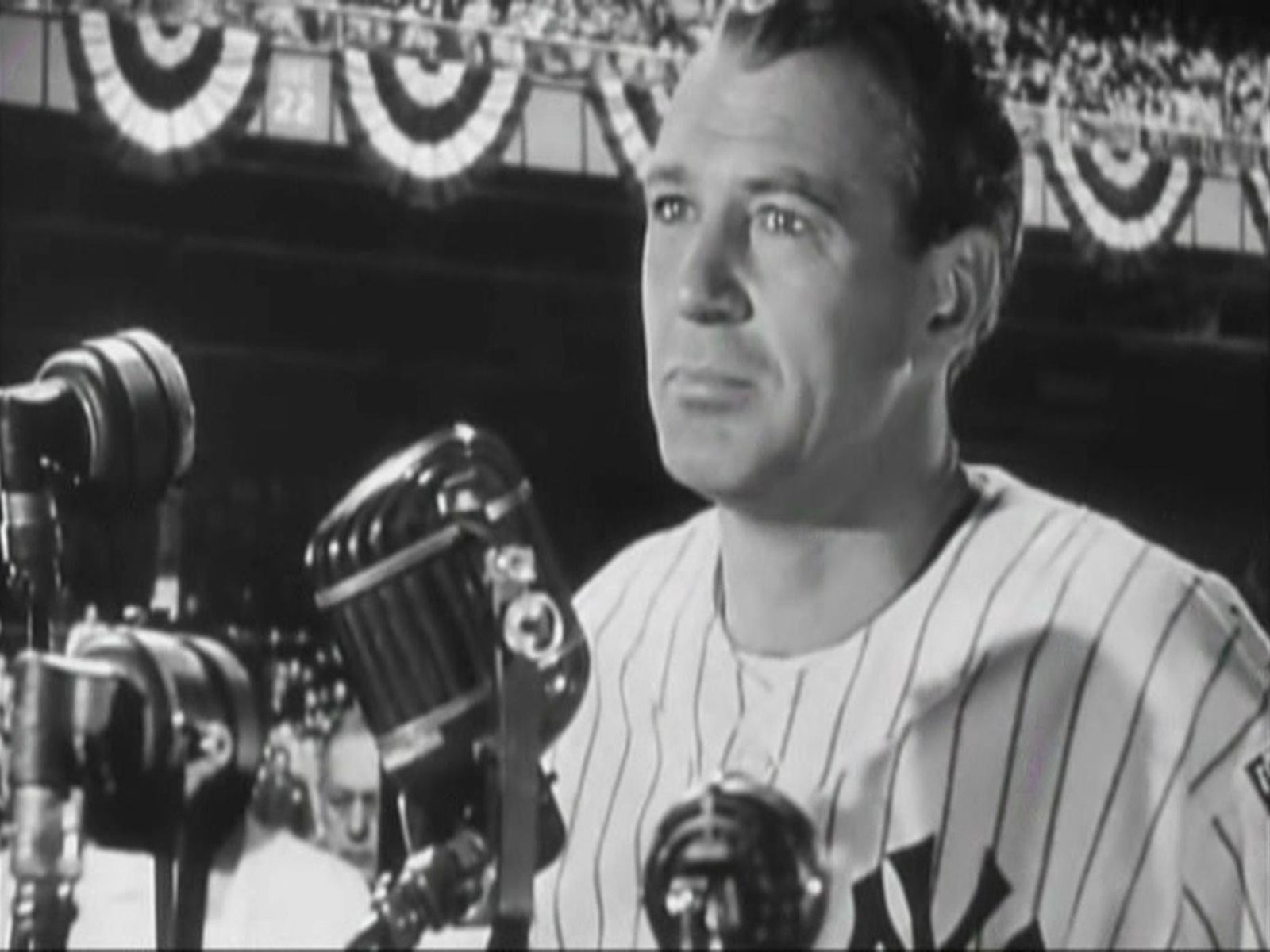
Pride of the Yankees has knocked me flat all my life when Gary Cooper/Lou Gehrig makes his farewell speech and talks about getting a bad break.

Fireball author Robert Matzen's "movies that make me cry"

“People all say that I’ve had a bad break. But today … today, I consider myself the luckiest man on the face of the Earth.”

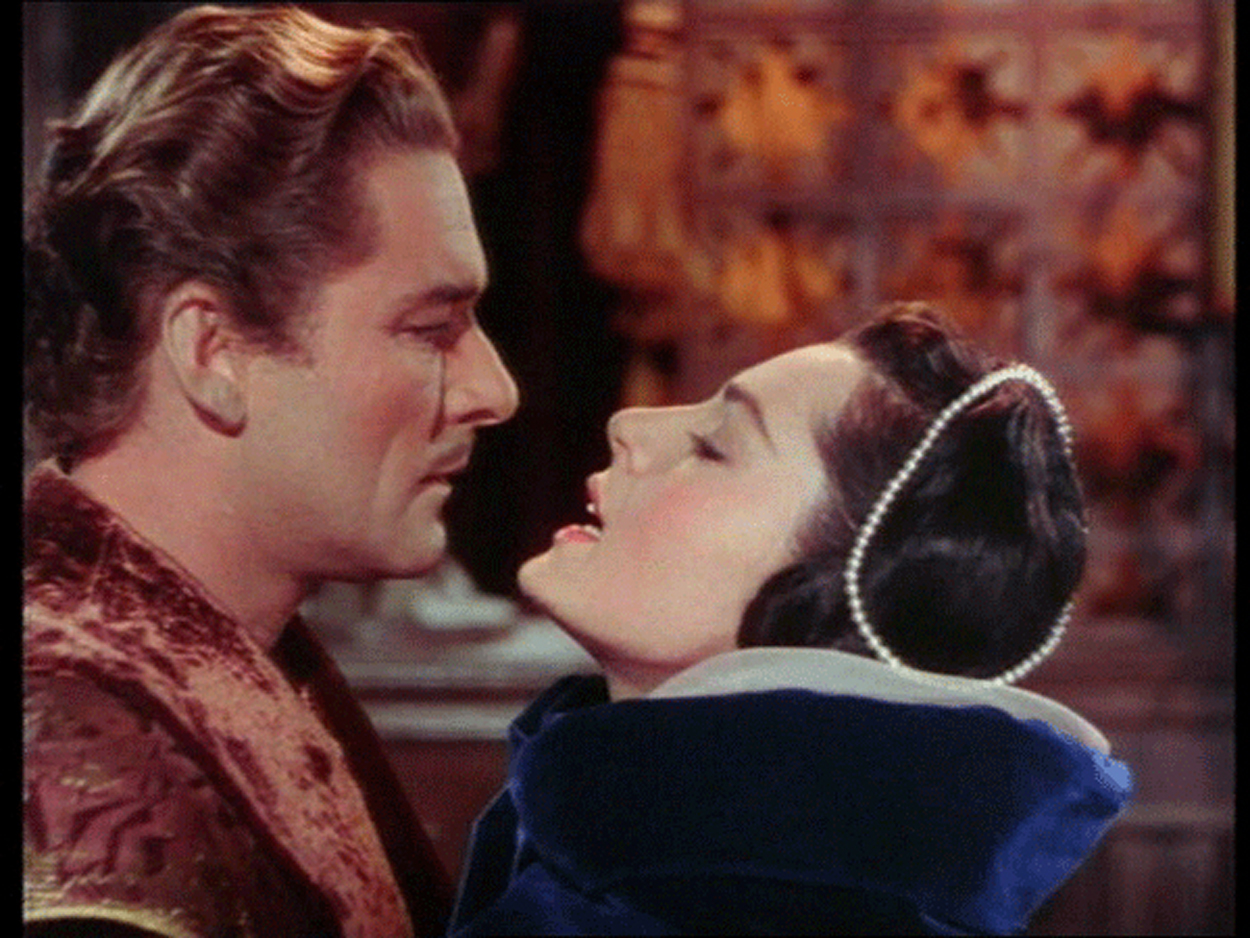
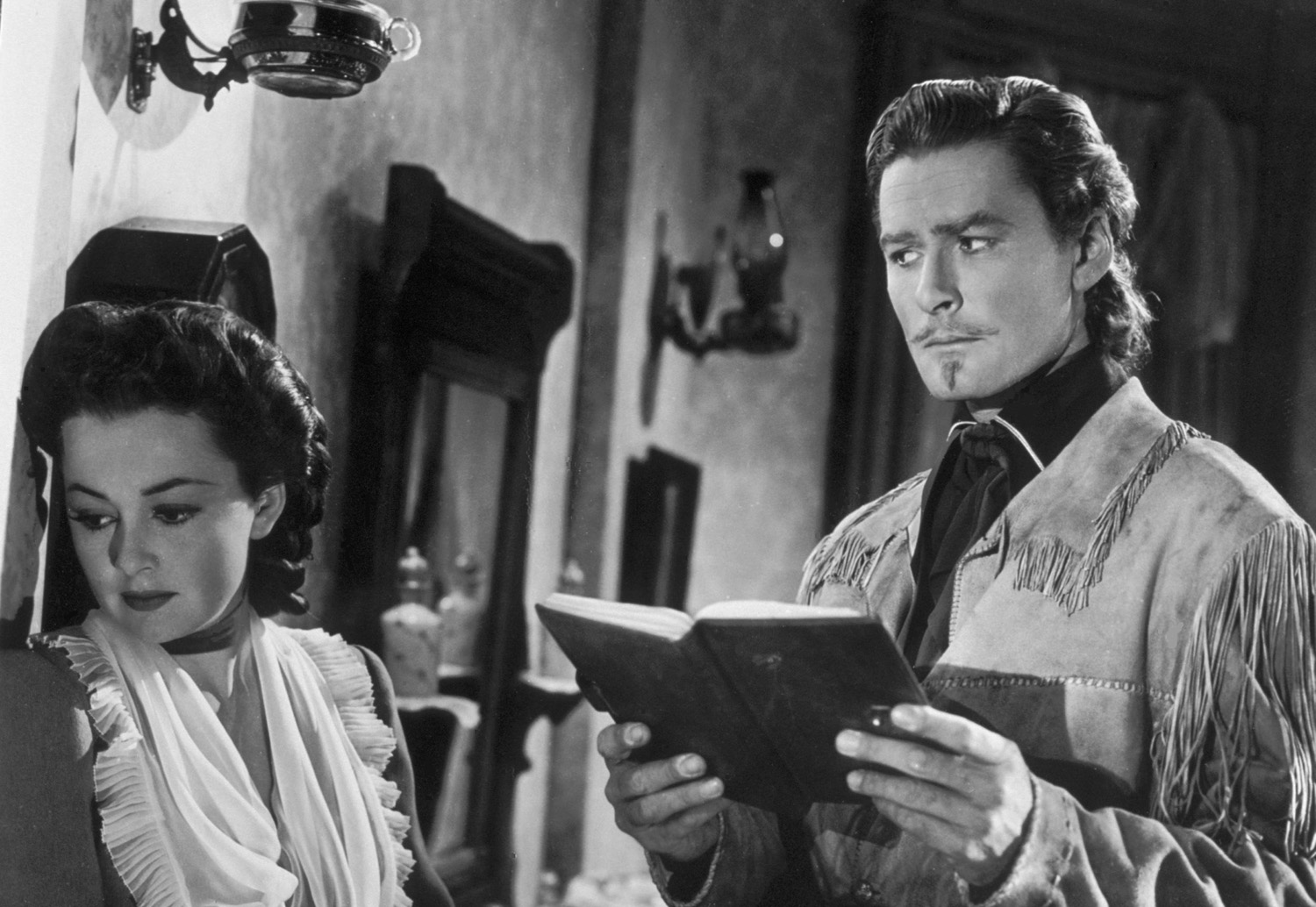
In They Died with Their Boots On, when Flynn’s Col. Custer tells de Havilland/Libbie, “Walking through life with you, ma’am, has been a very gracious thing,” prior to riding to certain death, I’m weeping like a schoolgirl.

Fireball author Robert Matzen's "movies that make me cry."

In a moment he’ll say, “Walking through life with you, ma’am, has been a very gracious thing.”

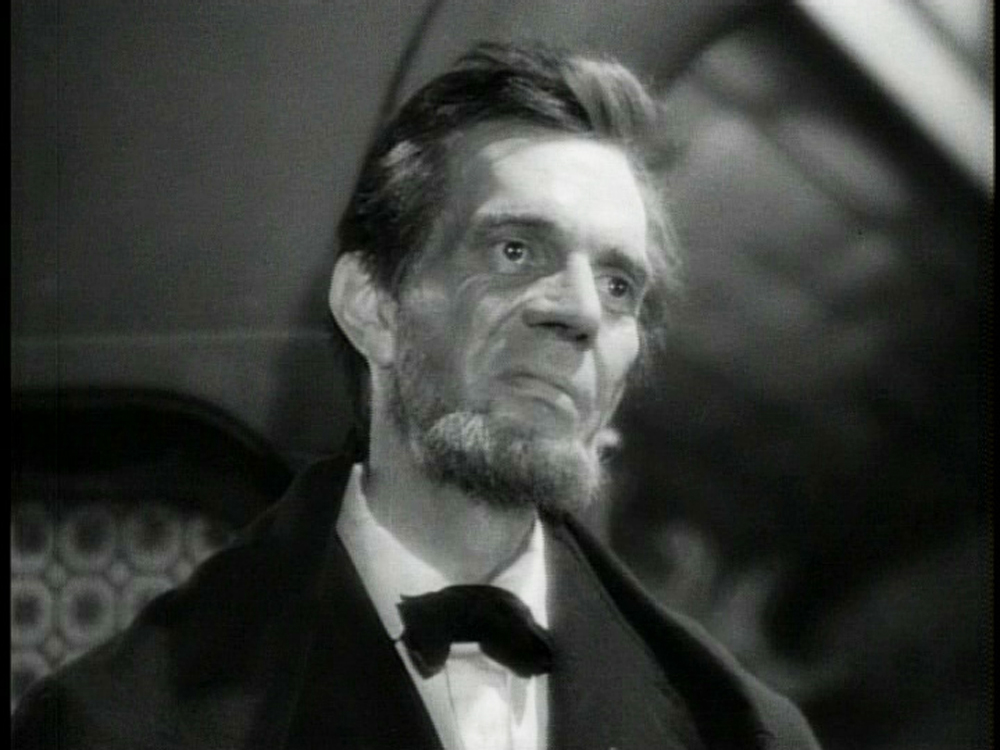
In the past couple of weeks I’ve gotten pretty bad. Abe Lincoln in Illinois snuck up on me one afternoon at the end when Raymond Massey as Abe has just been elected president and makes a very somber farewell speech off the back of a train to his friends in Illinois. We know what he’s in for in Washington, the war and all, and he’s just so sad to leave because he too senses the blackness ahead. The forlorn figure of Abraham Lincoln standing on the back of a passenger car as it recedes in the distance devastated me.

Fireball author Robert Matzen's "movies that make me cry."

A melancholy Abraham Lincoln says farewell, and I lose it…yet again.

As if that wasn’t bad enough, Yankee Doodle Dandy laid waste to me unexpectedly a couple of days ago on like my 20th viewing when George M. Cohan started the Little Johnny Jones sequence, and it wasn’t sadness that swept over me this time but the music, Cagney’s dancing, the choreography behind him, and the sheer brilliance of all those elements hitting me at once.

Fireball author Robert Matzen's "movies that make me cry."

He’s a yankee doodle dandy…yankee doodle do or die. *sob*

Maybe we reach a certain age where more things move us because there’s a greater appreciation for life, I don’t know. It’s been a sad little stretch for me of late, and maybe that’s causing more emotional chords to be plucked as I watch movies.

I’ve gotten in trouble in the past for denigrating Casablanca. Don’t get me wrong, it’s a brilliant picture, but there’s something flat about the ending for me, something disingenuous in the parting of Rick and Ilsa, and I smile when Rick and Louie walk off into the foggy night. I smile but I’m not moved.

Fireball author Robert Matzen's "movies that make me cry."

Maureen O’Hara as Mary O’Donnell and Ty Power as Marty Maher at West Point. Even when I see it coming, John Ford gets me.

I’ll give you one that maybe you haven’t seen: The Long Gray Line, the Tyrone Power picture directed by John Ford about West Point. At the end when all the people in Martin Maher’s life come back to salute him that one last time, oh God, I’m welling up just thinking about it. Ford’s The Searchers gets me a little at the end, too, when Ethan brings Debbie back home. It’s not a torrent, but it always sneaks through and gets me, the loneliness of Ethan holding his arm and walking away from the house as the door swings closed behind him.

Fireball author Robert Matzen's "movies that make me cry."

Debbie is home, but Ethan remains a man alone.

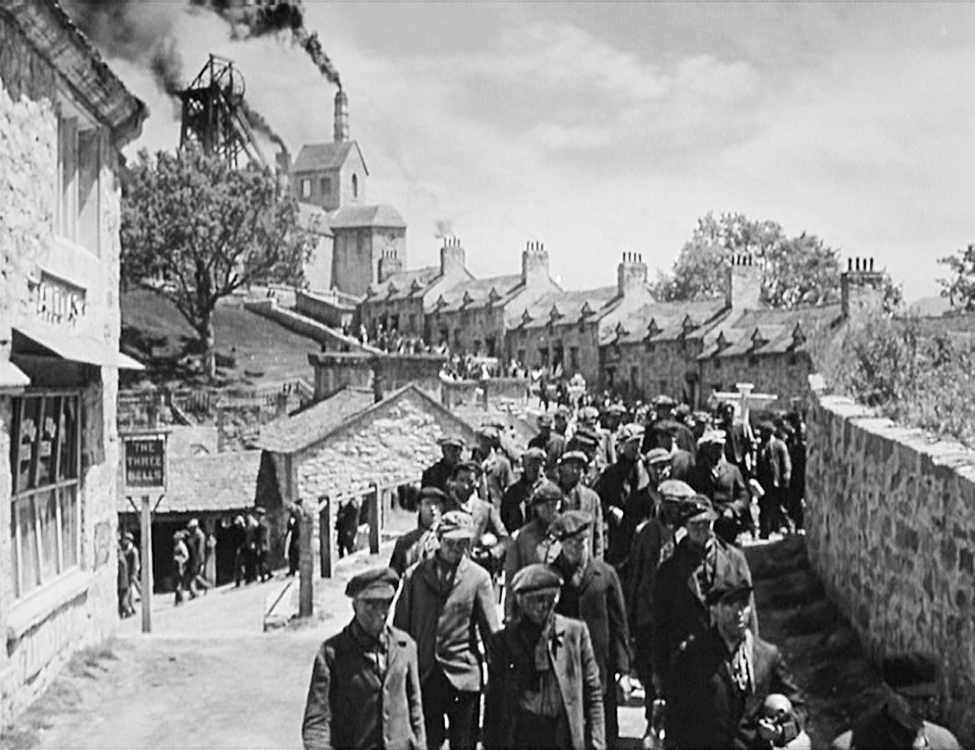
Yet a third Ford picture, How Green Was My Valley, pushes all my sentimentality buttons in recounting the stoic and suffering Morgan family of Welsh coal miners.

Fireball author Robert Matzen's "movies that make me cry."

John Ford’s saga of Welch coal miners gets me every time.

So there, my big confession for a Monday. I’m a sentimental slob. Now it’s your turn. I would be very curious to learn what movies make you all misty and sentimental. Fess up, guys and gals, what are the movies, which scenes in particular, and why do they move you?

May I have 10,000 marbles, please?

I guess I should be talking about long-dead movie stars, but I’m thinking about a certain friend of mine who doesn’t even look down his nose at Animal House. He will not condescend to admit that Animal House even exists. He doesn’t see it as a masterpiece or even watch a frame of the film.

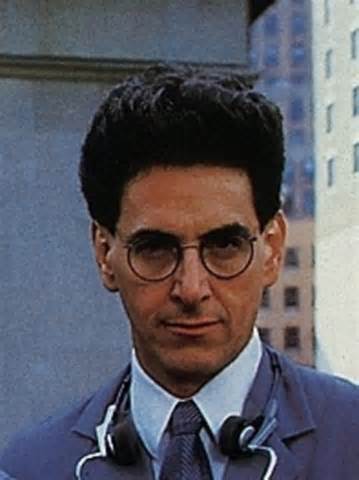
This time around in my fledgling blog, I’m bringing up poor Harold Ramis, and I must leave the matter in your hands. You are all obviously lovers of classic film. You’ve seen Lombard, Flynn, de Havilland, and I’m sure Bogart, Davis, Olivier, and even (God help us) Muni. You’ve taken in The Red Shoes, Roshomon, The Maltese Falcon, and Citizen Kane, and marveled at the work of great directors, cinematographers, and writers.

Today I’m asking you, where does Animal House fit? Is Animal House a classic?  Is Animal House great?

ramis

I guess it’s obvious where I stand on Animal House. I wanted to hate it going in but it charmed the pants off me and I’ve never looked back. It’s a picture that took American cinema in a new direction, for good or ill. And I’m very curious what you think.  Animal House, yes or no?

(In particular I’m wondering about Inga over there in Germany. Does Animal House even translate??)

Titan of the Twentieth Century

I had prepared another column to kick off my new blog, but learned that Shirley Temple had passed on last evening. The news hit me hard because every second I’ve been on the planet, I’ve been sharing it with Shirley Temple. Shirley Temple was a given, and now she’s not.

For anyone around my age (whatever that may be), Shirley Temple is half moppet and half cliché. My generation knows what an icon she was during the Depression. The generation behind mine is vaguely aware that once there was a child star named Shirley Temple. The generation after that hasn’t a clue what power the letters S-H-I-R-L-E-Y T-E-M-P-L-E wielded on a theater marquee from 1934 through 1938. This knee-high kid, around three-feet tall at her most popular, made tens of millions for 20th Century Fox and became the first personality, real or imagined, to have her likeness and adorable little self spun off into all manner of product, from the highly profitable Shirley Temple Doll to paper dolls to coloring books, magazines, writing tablets, record albums, and more. Whatever Shirley Temple was selling, people lined up to buy.

Then came this unwelcome thing called adolescence. As Shirley neared it, she started to grow and the cute factor reduced from a million to about, well, zero. I guess audiences experienced letdown that she dared be biological, and then betrayal that Fox continued to wardrobe this suddenly gangly 11 year old in little-girl dresses and force her to affect the time-tested pout and delivery. Boy, it must have been awkward for the masses, for Fox, and for Shirley and her mother, to spend years beating back the fame monster—and then to be dismissed by Fox and on the outside, hearing nothing but crickets.

Unexpectedly, puberty was kind to Shirley. Very kind. She re-emerged working for Selznick in 1944, and then made pictures here and there through the 1940s and became a hottie, which produced a new paradox: Wouldn’t any guy be a dirty old man for thinking the recent-moppet sexy?

With nothing left to prove in pictures and caught as she was in that purgatory of grown-up child star, she walked away from Hollywood at 21 and aspired to matrimony and motherhood. What a life she went on to live! In 1972 she experienced breast cancer and moved right past it, saying, “I have much more to accomplish before I am through.” She justified that pronouncement by becoming U.S. Ambassador to Ghana and then U.S. Chief of Protocol. She wrote her autobiography, Child Star, in 1988 and earned a SAG Life Achievement Award in 2006.

My own brush with Shirley Temple came in 1989 when I requested an autograph by mail. She was at that time akin to the Soup Nazi of autographs. If you followed certain protocol and sent a still photo and return envelope, you stood a reasonable chance to get something back. I did, and I did, a bold signature on a still of tiny moppet Shirley riding the shoulders of Carole Lombard. Shirley Temple Black read the signature, along with the year. When I first held it in my hands I could feel the weight of history, of greatness, but then I went back to taking Shirley Temple for granted, secure I guess in the knowledge she would always be around. After all, wasn’t she just a child star, so really, how old could she be? Well, old enough, I guess, because now she’s moved on, and we are left to reflect on a titan of the Twentieth Century. In fact, the littlest titan of all.

ST-autograph