Carole Lombard anniversary

PASSION THAT KILLED

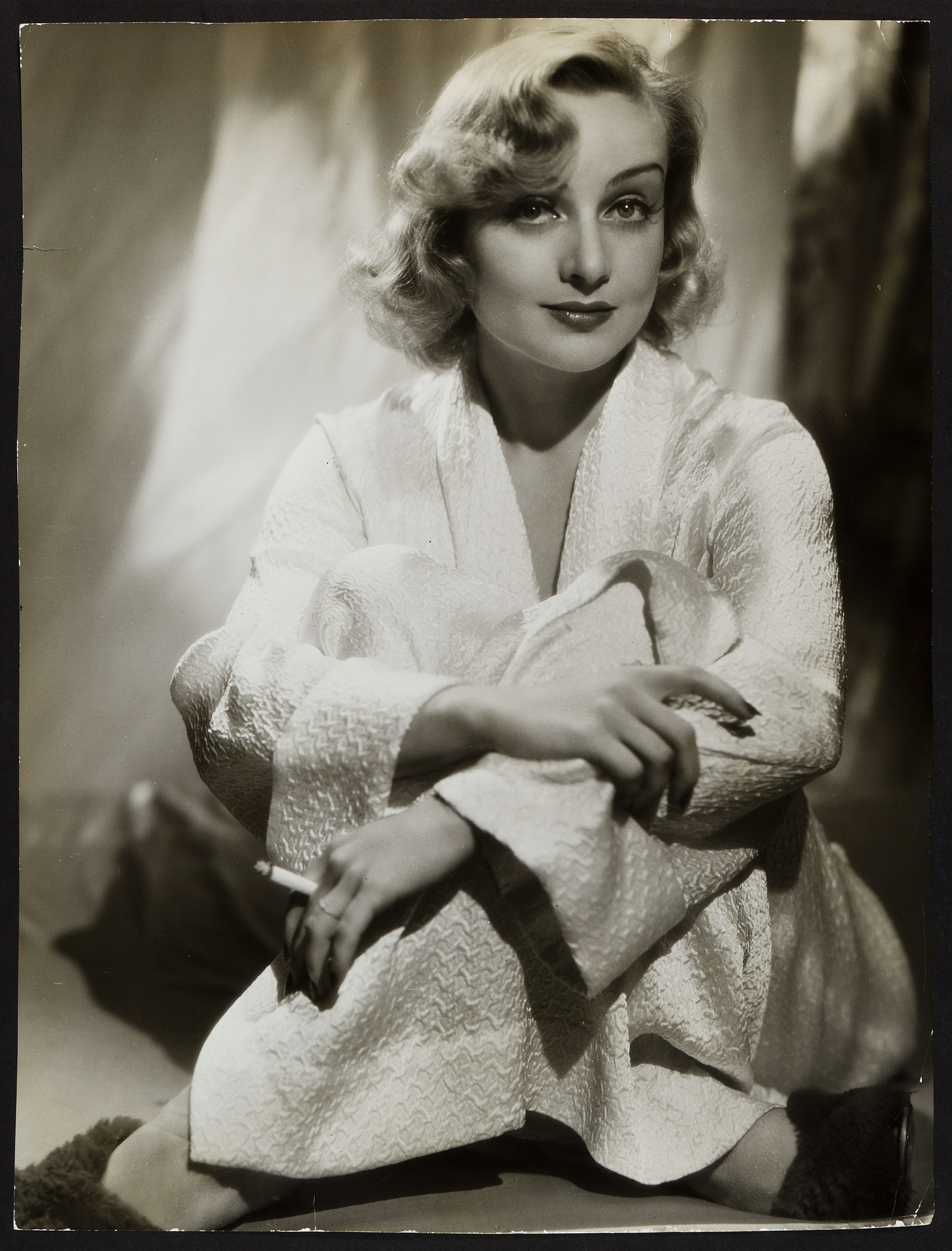
Star of the day, Carole Lombard, as usual, with a cigarette.

Can you believe it—it’s been 84 years since the plane carrying Carole Lombard and 21 others smacked into the cliffs atop Mt. Potosi, Nevada, 35 miles southwest of Las Vegas. I’ve spoken often about the climb I made to the crash site in 2012 over the route taken by first responders (I did it in October; they did it in a foot of January snow), as I’ve related how I heard—as in, actually heard—the people on the plane whispering to me while I was there: “Don’t forget about us.” That experience led me to track down the story of each of the 21 souls aboard TWA Flight 3 along with Lombard.

But today let’s focus on the former Paramount starlet turned free agent performer and American patriot who undertook a perilous trip from warm and secure Los Angeles to snowy Indianapolis via Chicago in deepest winter to sell war bonds. Remember, America had just been sucked into World War II six weeks earlier and she was first among Hollywood stars to hit the road for fundraising. She was a passionate woman in everything she did, which she said herself. In whatever pursuit, according to Carole, “I give it my all and I love it.” That same passion would kill her, ironically enough. She didn’t have the patience to take three days to return to LA by train after the big success of the bond sale, and so she demanded to fly home. Her handler for the trip, MGM publicity man Otto Winkler, secured three tickets to Burbank (Carole’s mother Elizabeth Knight Peters also along) on a TWA cross-country flight that hedge-hopped from LaGuardia west. They picked the plane up in Indianapolis early on January 16 and spent the next 12 hours flying, getting off the plane, stretching legs, and getting back on again. We’re not talking about an Airbus here; the cabin of a DC-3 was about as big as the interior of a mass transit bus, meaning everyone spent the trip uncomfortable and very cold despite cabin heaters. Oh, and deaf thanks to two big radial engines droning away three feet outside the fuselage.
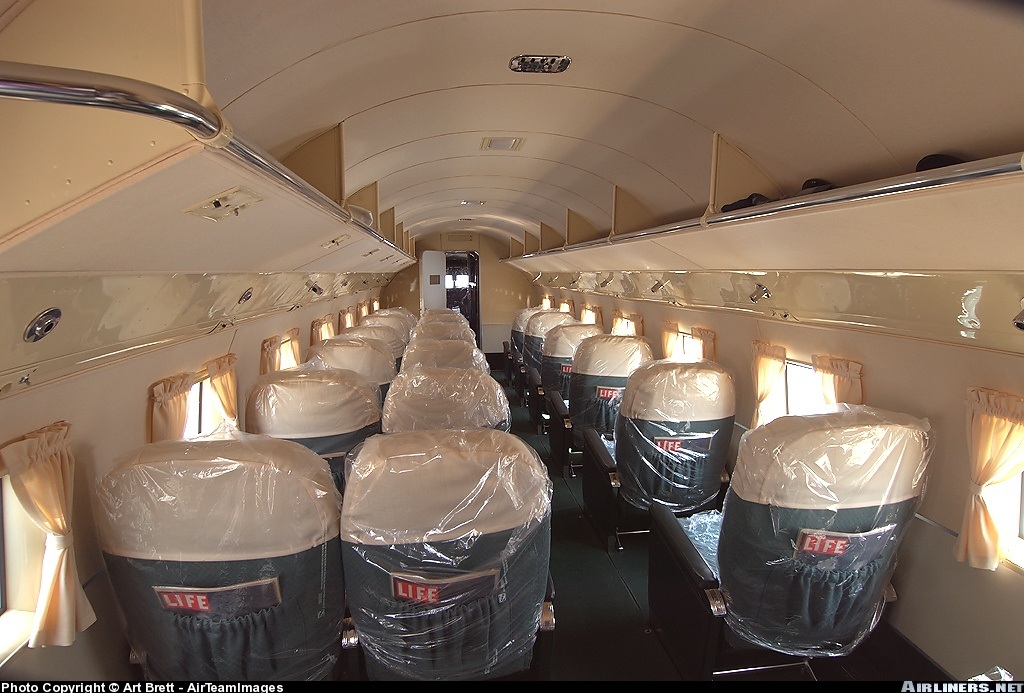
Interior of the restored sister ship to TWA Flight 3, which was only a few months old at the time of the crash. Room for 18 passengers, although I have to say, the seats look pretty nice compared to what we have today. (Photo credit to Art Brett, AirTeamImages and airliners.net.)

As documented in my 2014 book Fireball, the plane hit the mountain at about 7:30 p.m. local time on January 16. Initially rescue teams scrambled up the mountain hoping for survivors, but there weren’t any—although a few of the passengers had been tossed out of the plane into deep snow and may have lived past impact, if briefly. Carole was near the front of the plane and was found at the base of the cliff, under a wing.
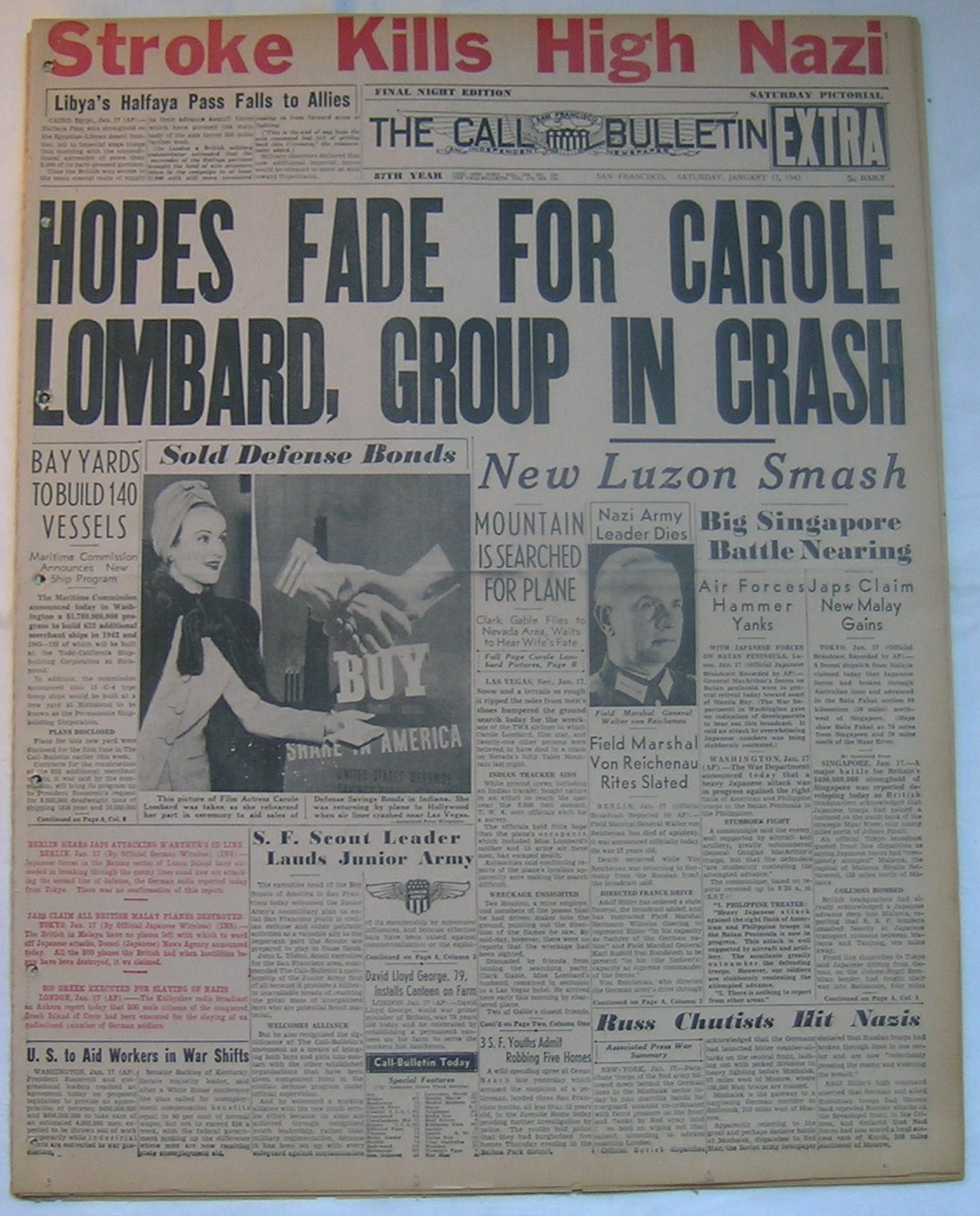
Initially, search teams started up the mountain with hopes of rescue–but rescue soon turned to recovery.

For Carole, time stopped at age 33, and I’ve often pondered what would have come next if she had lived. Her career was on a downswing, although the picture she had just made, To Be or Not to Be, was a brilliant sendup of life in Poland under Hitler. Hard to say if the world was ready to laugh at the evil one in great enough numbers to make the picture a hit, but it stands today as one of her three best films. After that, she was set to make a sequel of sorts to her 1936 screwball comedy, My Man Godfrey. It was to be called “My Girl Godfrey,” with Carole the butler this time. And then, who knows where she would have gone.

Here are my suspicions. I believe she would have been the one to blaze the trail that Lucille Ball established (neither Carole nor Lucy being singer/dancers). Some comedies, some film noir, and then, television with a capital T. Ball always credited Lombard as her mentor; Lucy said that Carole appeared in her dreams offering career-altering advice. I don’t put that past Lombard at all; she didn’t have the opportunity to master the new medium, so she did the next best thing.

Lombard was an OK dramatic actress but excelled at comedy. She was so naturally funny, with great timing, that success on the small screen would have been inevitable for Carole in her middle years given the prevalence of star-driven TV series of the 1950s. Loretta Young, Donna Reed, Gale Storm, etc. etc. Pushing back against that success might have been declining beauty, a la Paulette Goddard and Ann Sheridan, both heavy smokers. Sheridan grew so alarmed at her fading looks by the late 1950s that she resorted to cosmetic surgery and then resurfaced in the 1960s TV series Pistols N Petticoats before dying suddenly of lung cancer. And that was another risk for a heavy smoker, which Carole had been since adolescence.
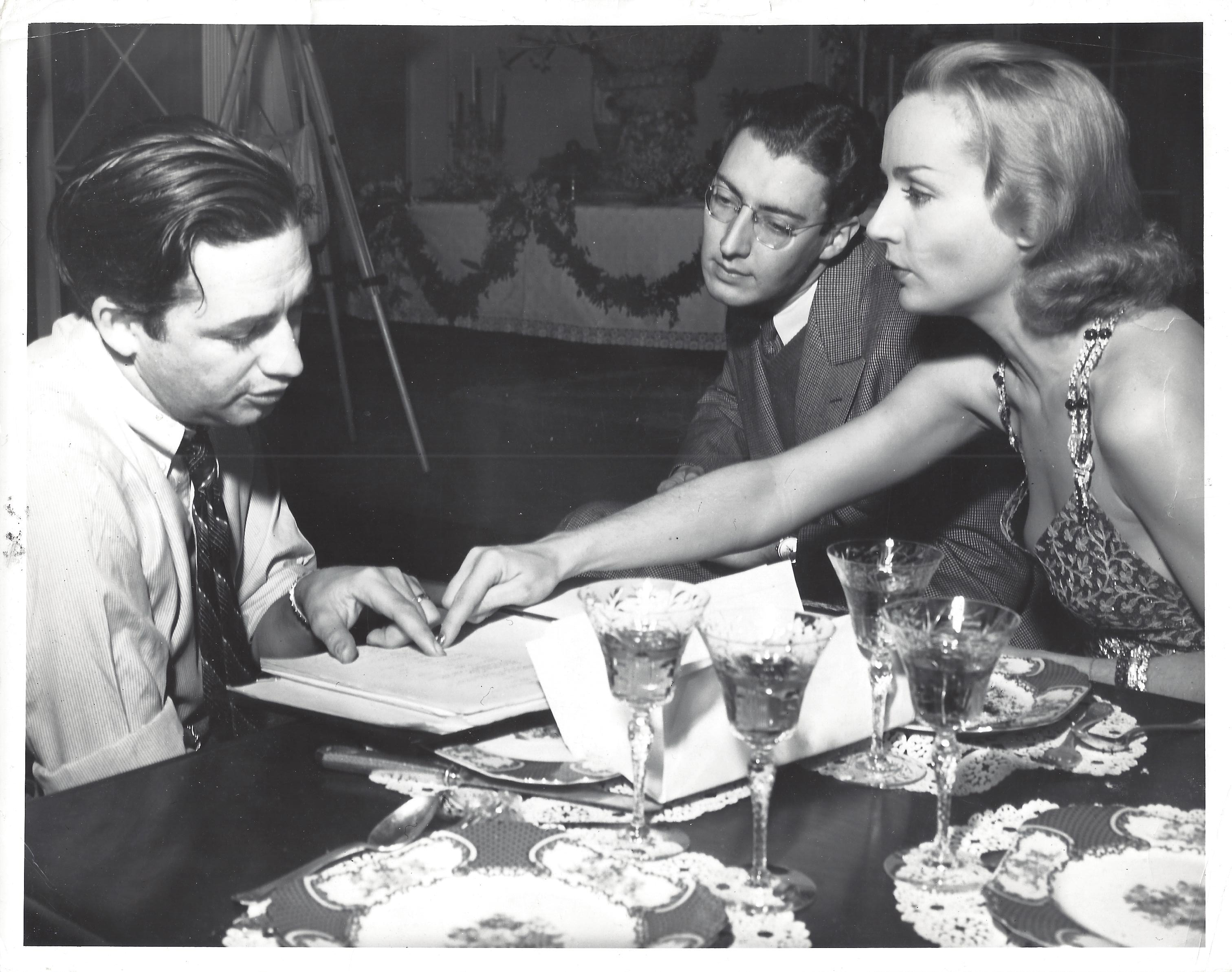
Lombard arguing script with director Mervyn Leroy in 1938. And no wonder, they were making her worst picture (Fools for Scandal) at Hollywood’s unfunniest studio, Warner Bros.

If she truly had gone the debauched way of, say, Talullah Bankhead, she could have slipped behind the camera as did Ida Lupino to direct features or television. She was whip-smart at the business end of Hollywood—witness the fact that in 1937 she was the highest-paid star in town without a resume to back it up.

I like to think, looking back on this anniversary, that Carole Lombard had another 40 years in her at least as a triple threat—actor/director/producer. Unfortunately, she gambled it all on the flip of a coin and lost. No, really, she flipped Winkler for it, heads the plane, tails the train. Let that be a lesson to all of us: There are consequences when you least expect them. If only you had taken that train, Carole, so that we could all have enjoyed six or eight seasons of The Carole Lombard Show, which would still be running today on MeTV.
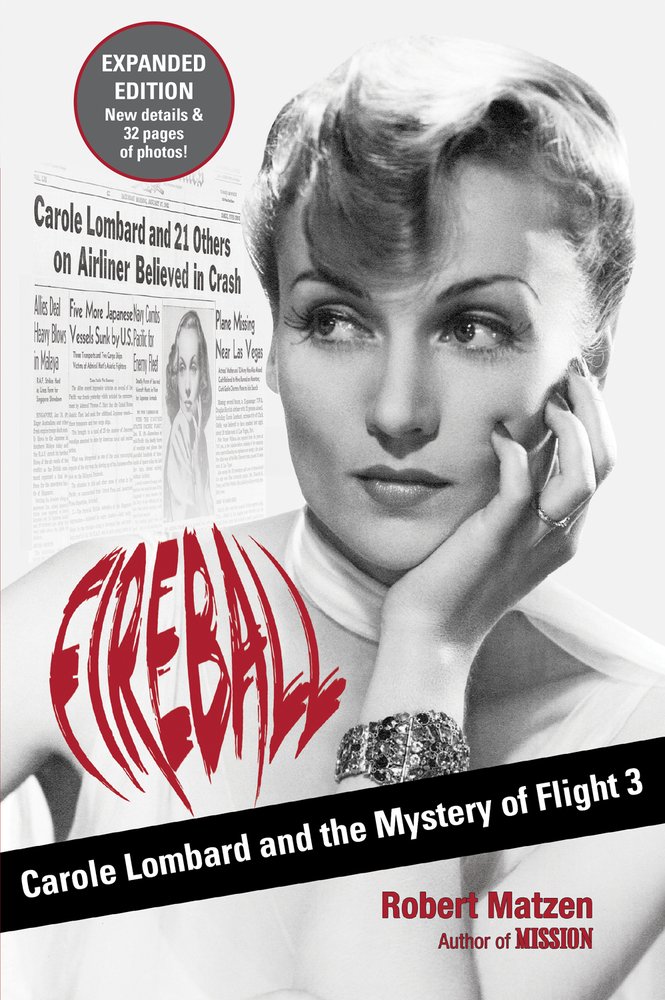
Fireball: Carole Lombard and the Mystery of Flight 3 is available at bookshop.org, barnesandnoble.com, and Amazon.com. The audiobook was read by the incomparable, award-winning Tavia Gilbert.
Legacy

Fireball: Carole Lombard and the Mystery of Flight 3 by Robert Matzen

With the 80th anniversary of the crash of TWA Flight 3 on January 16, 2022, I am reposting this column from five years ago. We who love Golden Age Hollywood would be wise to pause and remember Carole Lombard, a woman far ahead of her time who changed many lives and Hollywood itself.

It’s 75 years plus one day after one of the most important women in America went up in flames. The way she died reflected the life that had preceded it: Charge ahead, accomplish at top speed, damn the consequences. Charging ahead that January 16, a Friday evening, had fatal consequences when her plane struck a mountaintop west of Las Vegas at 185 miles an hour. Up she went with Petey, Otto, and 19 other humans in a fireball seen in the moonless sky for 50 miles.

The latest couple of generations, your average people on the street, don’t even recognize the name Carole Lombard, but in the 1930s and 40s she made dozens of motion pictures and earned a higher salary than any other actress in Hollywood. She was thought to be a glamour-puss but at heart remained a Hoosier from Fort Wayne, Indiana, and a tomboy.

Lombard’s Hoosier generosity drifted gently across hedonistic Hollywood as she launched careers and rescued the occasional soul. Among those she nudged on the path toward greatness were Lucille Ball, future queen of television, and Robert Stack, the future Elliott Ness then just starting out.

The tomboy aspect made Lombard a fearless champion of women’s rights in a town then—as now—ruled by men. She cursed like a dockworker and, when irritated, told many a Hollywood executive to “kiss my ass.” In fact, she had “kiss my ass” etched in brass plates and placed on the doors and walls of her home. She gave interviews where she disclosed how she “lived by a man’s code” and proceeded to do just that. In 1938 she looked a reporter in the eye and stated, “There is nothing I’m afraid of.” She espoused equality of the sexes and the still-yearned-for-today equal pay, and more than held her own on male-dominated soundstages where she knew as much about camera setups and lighting as many of the hard-nosed crew members around her. She was certain she would move behind the camera one day and produce and direct motion pictures, which women weren’t doing at that time. She also knew she would move other talented women into prominent roles alongside her.

As World War II edged closer to the American consciousness, Carole Lombard the New Deal Democrat and fan of FDR began to drape herself in the flag. There was nothing unusual about this action because movie stars routinely told the public what the public wanted to hear. But Lombard put her money where her mouth was, literally. When it was revealed that in 1937 she paid all but $20,000 of her half-million-dollar salary in taxes, she said, “Taxes go to build schools, to maintain the public utilities we all use, so why not? I live accordingly, that’s all.”

There was some sort of cosmic justice involved when this woman who once professed that “Hollywood marriages can’t succeed” fell in love with the fan-voted king of Hollywood, Clark Gable. They became Hollywood’s most beautiful and unconventional couple—unconventional because he was still very much married to another woman for the first two years of the relationship. When Gable finally untangled himself, he and Lombard eloped in the spring of 1939 during production of Gone With the Wind and settled into life on a ranch in the San Fernando Valley dubbed “the house of the two Gables.”

They were the Brangelina of their day, certainly in popularity, but Gable loathed the press and kept as low a profile as a king could keep. Lombard never met a camera she didn’t like, or as close friend Alice Marble put it, “What a ham! What a ham!” The marriage of self-involved Gable and socially conscious, shutter-loving Lombard worked for a while, but by the time the Japanese bombed Pearl Harbor late in 1941, cracks were showing in their marital veneer, in part because of Gable’s alley-cat prowling. The newly formed Hollywood Victory Committee went searching for a star to host the first event to raise funds for national defense against Japan and Germany. Lombard leapt out of her seat to volunteer and plans quickly developed for a wintertime trip to Indianapolis where she would sell war bonds in the capitol building of her home state.

As described in Fireball from GoodKnight Books, the resulting trip played out like a triathlon. Three days by train with whistle stops preceded arrival in Chicago and a day of appearances there. Then a commute to Indianapolis for 12 hours where she faced the crush to deliver two heartfelt speeches broadcast on national radio, and participate in two flag raisings, a tea, a dinner, and two receptions, all of which helped to raise $2 million for the war effort in one long day—four times the amount projected.

At the end of that January 15, she decided she had done her duty and now it was time to take care of Carole Lombard by getting home to her carousing husband by the fastest means possible. That meant air travel, something expressly forbidden because of the fear of accidents in wintry weather or sabotage by Hitler’s spies. To which the response was predictable: Kiss my ass.

At 7:20 local time on January 16, the brightest flame in Hollywood suddenly grew into the brightest flame on Mt. Potosi, Nevada, when TWA Flight 3 failed to clear the 9,000-foot peak and hit near-vertical cliffs. It took the better part of 24 hours to sort it all out and come to grips with the fact that force-of-nature Lombard now ranked as the highest-profile casualty in the new world war. Seventy-five years and one day ago she rode to glory at age 33, leaving behind a legend as Hollywood’s most original movie star along with a legacy of charity to her fellow humans and service to a nation just beginning to understand what sacrifices lay ahead.

One Saturday morning

It’s funny how close you get to the people you write about in a book. Spend every day over a couple-year period with Carole Lombard, and you get to know her pretty well, then you go away and write another book and lose touch with your friend until something yanks you back, like the upcoming 75th anniversaries and release of the expanded trade paperback edition of Fireball: Carole Lombard and the Mystery of Flight 3 , and suddenly you’re going, “Carole! Nice to see you! How you been?”

As I write this, it’s the morning of January 10. This day 75 years ago Carole was at home off Petit Avenue in quiet little Encino, California, packing for her trip east to sell war bonds. And packing and packing, trunks and trunks of carefully mapped-out wardrobe for whistlestop bond-selling opportunities, interviews in Chicago, and then multiple events in Indianapolis and more whistlestops heading west for home.

Fireball: Carole Lombard and the Mystery of Flight 3 by Robert Matzen

She had a lot on her mind this Saturday morning the 10th. She’d had a dust-up with her old man about his closeness with a certain younger woman. Now he was gone east to New York and here she was listening to the ticking clock and remembering all the words they had used to bloody each other. He wasn’t what you’d call an elegant or articulate fighter. He was quiet by nature and went from zero straight to rage, and she could match him and bring a lot more intellect to the battle along with an arsenal of four-letter words he just couldn’t match, and the result was carnage on both sides.

The larger issue: How could she compete with the endless parade of youthful flesh passing before his eyes? She had already maxed out on diet, exercise, and beauty creams. Personally she had no fear of aging and said so to the press and meant it, but aging in the context of holding her man was a different matter. To keep up, she had already met the man’s man on his terms and done the gun-moll bit. She did everything to please him, from hunting and fishing trips into the middle of nowhere to discreetly averting her gaze for his frequent dalliances. Now, to her horror, she could see him growing bored anyway. He had had a tough life and was not a happy guy despite his fame and millions, despite the fact that he was reaping all the many benefits of a beautiful woman offering him unconditional love. Despite everything, absolute power had corrupted him absolutely in just five years of being together, and less than two married.

Because this was such a slow-speed train wreck in the making, she had had time to try to prevent the collision, chief among them to get pregnant and present the king with an heir. But the skin she was so comfortable in had betrayed her and she kept miscarrying. Such heartache that caused. So frustrating for a woman who specialized in willing dreams into reality.

Tripping over the opened suitcases and trunks reminded her of a thousand details, and she got on the phone to her mother, nicknamed Petey, who would be going along on the trip. Petey grew up in the ice station known as Fort Wayne, Indiana, but had spent nearly 30 years thawing out in Southern California, so they kept reminding each other how cold Chicago and Indianapolis were going to be in January. Hats, coats, stoles, gloves, scarves—pack plenty of each. And relatives were suddenly coming out of the woodwork wanting to meet up with the Peters girls for reunions in Chicago or Indianapolis, and could they please stop off in Fort Wayne for a day? No, they couldn’t, because Carole had to be back home for a sneak preview of her new picture Monday, January 19, and she would be enslaved on passenger trains for days and days to her great frustration.

Otto kept calling because the schedule was a living thing even on a Saturday. Otto as in Otto Winkler, hubby’s PR man and best friend who was now hers for the trip. Men had no trouble packing even for a week, and she managed to kid him about that despite her mood. A few suits, a tux, some dress shirts and ties, and he was good to go, while the mess surrounding her looked like the contents of the Lusitania bobbing on the water after torpedoing.

The next nine days were going to be a blur, she knew, and yet it seemed like an eternity until she’d be able to see her man again and really patch things up. Carole being Carole, she had to do what she could to control the situation, and she’d come up with the idea of writing a series of notes that would be doled out to him one a day—intimate little reminders of good times past and future. He was going to be spending considerable time with that younger woman, and the notes might serve as the conscience of the king. She could hope, anyway. So she sat and thought and wrote nine notes and tucked them in envelopes and sealed them up with love.

That was life at 4525 Petit Avenue in Encino 75 years ago this morning.

Marathon

Here we are on Sunday, January 18, 2015. Seventy-three years ago today, Sunday, January 18, 1942, recovery teams were combing the unforgiving mountainside of Mt. Potosi, Nevada at the site of what one Civil Aeronautics Board investigator called “the most completely destroyed airplane I have ever seen.”

This year of 2015, the events covered in the book Fireball occurred on the same days of the week as they did in 1942, which led me (after the germ of the idea was hatched by Carole Sampeck) to launch a Twitter effort to replay key events in Carole Lombard’s last days in real-time, as they happened, beginning at 1:35 P.M. Central on Thursday, the moment Lombard and her party—including her mother Elizabeth Peters (“Petey”) and press man Otto Winkler–were greeted at Union Station, Indianapolis, by the Indy mayor and other officials. I then followed her progress through the day, which included five big events and interactions with at least 20,000 people, and her sudden decision made on Thursday night to fly home instead of take the train.

This past Friday, two days ago, the Twitter reports transitioned to updates from TWA as Flight 3 progressed across the country.

I learned a couple of things through this Twitter campaign. First, I learned how many people still care. The effort drew many new Twitter followers who were eager to participate. Second, I was struck by how fast events transpired for 19.5 hours, from the moment she stepped off the train to the moment Flight 3 struck the mountain. She was in almost constant motion one way or another. For example, from the train station at 1:35 she was driven to the state capitol for a speech and flag raising at 2:00, a bond sale from 2:30 to 3:30, another flag raising at the Claypool Hotel at 3:45, more driving to the governor’s mansion for a tea and reception from 4:15 to 5:30, private dinner with VIPs back at the Claypool at 6:30, a bond rally in a local civic center before 12,000 at 8:30, and a private reception for her friends and family once more at the Claypool at 10:30. Then did she retire for a long sleep? No, of course not. After midnight, Carole, Petey, and Otto packed up for a trip to the airport to wait for a flight that came in late, and you know how easy it is to catch a few winks in an airport terminal. The travelers didn’t board until 5:00 A.M. and then proceeded through a day of hops from city to city on a DC-3 (an uncomfortable plane to fly in) that ranged from the shortest of 1 hour, 11 minutes to the longest of 2 hours, 56 minutes in duration. During the Lombard portions of Flight 3’s intercontinental progress, the plane took off seven times and landed six. Get off the plane, climb on board. Get off the plane, climb on board. For any of us today, one layover is too many and two is torture. But six?

Fireball: Carole Lombard and the Mystery of Flight 3 by Robert Matzen

Detail of one of Myron Davis’s photos for Life, this one taken at the governor’s mansion, shows Carole Lombard with her guard down for a moment and already exhausted–hours before beginning her cross-country trek. Was she capable of rational decisions by the time she ordered Winkler to book plane reservations?

The first landing out of Indianapolis was into a bad weather situation in St. Louis that caused a two-hour delay in a crowded terminal. Living that in real-time was difficult (because I wanted to get on with the story), but I was sitting at my computer after a good night’s sleep. Imagine those two hours when you’re on Coca Colas, snack bar sandwiches, and upright naps all night and through the morning. Another weather delay followed at the next stop in Kansas City and this one made the local papers because of so many delayed flights and stranded passengers. From there the plane dragged its passengers to Wichita, then Amarillo, then Albuquerque where what was left of Carole Lombard was told she must vacate her seat and wait for another flight.

As I tracked events real-time, I realized that any human—even good-hearted, down-to-earth Carole Lombard—would snap. She must have been seeing polka-dotted koala bears by this time when all she wanted to do was get home.

Many have asked the unanswerable questions: Why was she in such a rush? Why did she drag her companions on a plane when both expressly wished to avoid the dangers of air travel? Was it all about her husband Clark Gable cheating on her? Or was there something more than this? It’s been hypothesized that Carole believed, or had it confirmed in Indianapolis, that she was pregnant and wanted to rush home to tell Gable. This explanation would solve the problem of obtaining the buy in of her companions to get home ASAP. But after at least two miscarriages and a procedure at Johns Hopkins to “clean her out” in efforts to get pregnant, would she put her reproductive system through this particular 19.5 hours of hell? We will never know the answers, assuring that this aspect of the mystery of Flight 3 will remain.

I ended my Twitter effort on Friday night with TWA Control cutting off any further public information about Flight 3 when it was clear that the plane had crashed. Several people confirmed for me later what I already knew: Those last moments are chilling to re-live, no matter how often we do it.

Some people heard of the real-time Twitter feed and signed on after events had transpired, so I have been issuing sporadic updates about goings-on at the scene and thinking about the fact that when Carole Lombard’s marathon ended, Clark Gable’s began. With no warning what was coming or how brutal it would all be, Gable never had a chance.