James Stewart persevered through a grueling and ultimately successful career in World War II. All his life he had experienced pressure from his father to serve his country and had to fight his way into the military, battling a 4F designation due to a tall and skeletal frame. He rose to become a crack pilot, one of the best in the Eighth Air Force, and taught hundreds of young aviators how to operate a B-17 bomber. He engaged in his first aerial combat at 35 years of age—10 or more years older than all those flying with him. He was, in fact, three years older than his base commander! And he and his mates battled brutal conditions flying above 20,000 feet in European winter, with air temps consistently 30 and 40 degrees below zero, resulting in frostbite in seconds and ice that clogged air supplies, jammed guns, and had to be beaten off oxygen masks. Finally, all those hours in heavy bombers with their engines roaring in his ears robbed Stewart of most of his hearing, which was a heavy toll for an actor needing to take direction and manage the cues of co-stars.
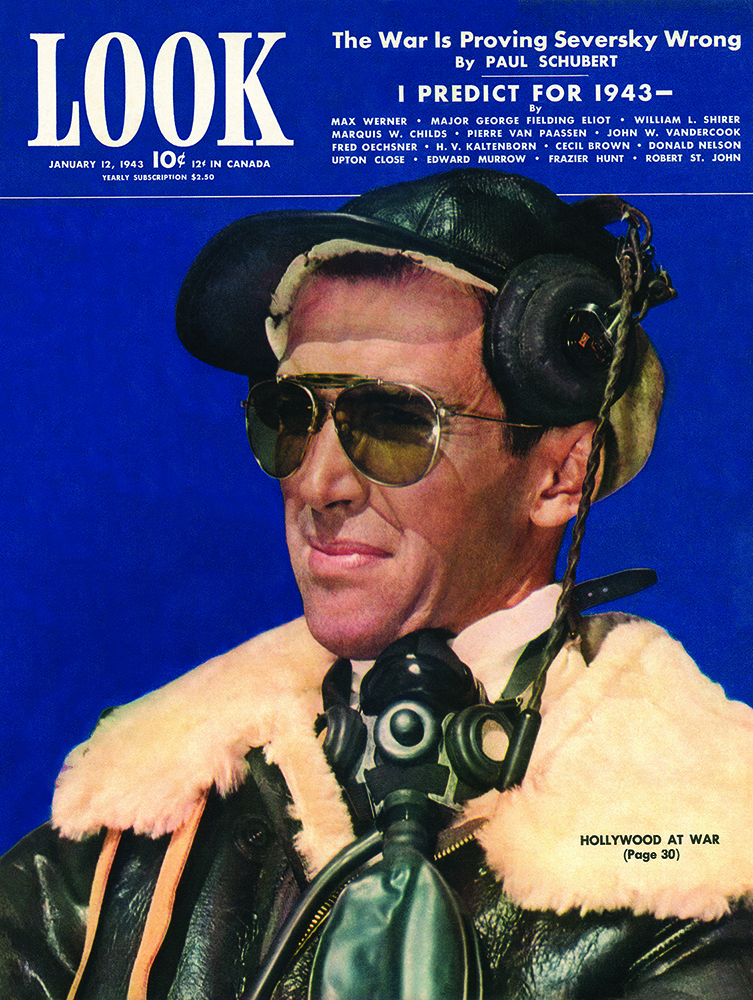
You’d think these conflicts would form the core of a wartime biopic about James Stewart in the U.S. Army Air Forces, and yet none are mentioned. In the newly released Jimmy, all these critical facts are avoided in favor of a superficial, fictionalized, clichéd look at the actor turned hero and what he endured in World War II. As a historian and author of Mission: Jimmy Stewart and the Fight for Europe, I find it a missed opportunity to tell the story of one complicated character.
Jimmy presents Stewart as a slow-witted bumbler who arrives in England as anything but the mature, real-life crack pilot and spit-and-polish officer who had earned respect up and down the line. The screenplay shows him learning on the fly how to command when by the time he got to England ready for combat he had already spent three years sharpening military precision as he rose through the ranks.
Jimmy also indicates Jim doubted he was a “good man,” as if he would waste time on such a question when, as a squadron commander, he had the lives of 15 crews, 10 men each, in his hands—150 men depended on him being not a good man but a disciplined and effective leader making appropriate decisions in the air. As the film wears on, Stewart descends into self-pity, again and again with the good man nonsense, which the historical record disputes. James Stewart was a perfectionist and harder on himself than he was on his men, and the screenwriters have made the mistake of confusing accumulating combat stress with self-pity.
In real life, it was his 12th mission in two months—the one to Gotha, Germany, during Big Week in February 1944— that broke Jim when his plane was crippled and barely made it back to base. This mission sent him to the “flak farm” where shell-shocked fliers decompressed. The episode, and the inner torment of a perfectionist who saw so many of his men shot out of the skies, set off what later would present as PTSD. But in the film Jimmy, the moment that haunted him was when a shot-up plane and crew returned to base and Jim sat with a pilot until he died in the cockpit. In the theater, I wanted to yell, “Medic—tend to this man!” But Stewart just sits unmoving for minutes and watches him expire. I like to imagine the real Jim Stewart spinning in his grave at such a thought.
I was also alarmed by the time spent on a fictitious love affair Stewart begins with a “Lady Julia” who devotes herself to the increasingly sad sack officer. These long sequences rob us of opportunities to look at the real-life existential trials of a man making the fight of his life. But then, two-shots with actors in pretty settings are much more economical than battle scenes.
Three B-24 combat missions are depicted in the picture. They come up suddenly and without much setup, rendering them merely confusing. They’re also nowhere near the CG quality standards set recently by Masters of the Air. As depicted, the three missions shown are brief composites of how his combat missions played out. After about 30 minutes of no aerial combat, we’re told he has flown 20 missions. Interestingly, his real-life results as an air commander diminished as each mission ticked by, with age and stress catching up with him. None of this elemental conflict is depicted in the film.
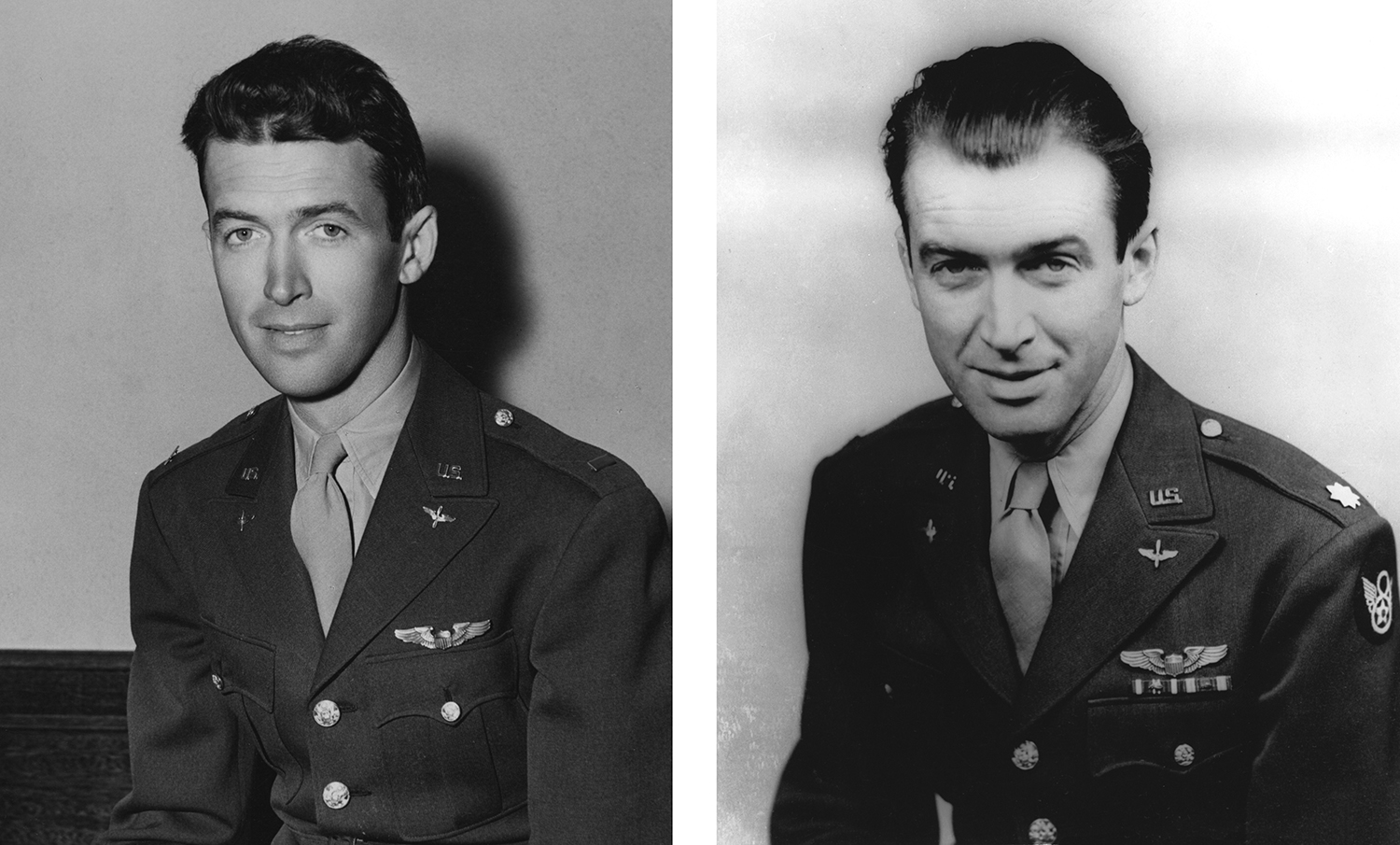
Another interesting fact is that the physical toll on Stewart became visible in his gaunt, drawn face, gray hair, and receding hairline from the stresses of combat and the losses of men. None of this makes it into the picture. As shown in Jimmy, he returns to Hollywood unchanged physically, if sullen and distracted. Here again an opportunity is missed to show the inner conflict of a famous actor who looks in the mirror and sees himself wrecked by combat. He said many times he didn’t think anyone would ever hire him again as a leading man because he had aged so in the service. Which in turn led him to the only part offered, as George Bailey in It’s a Wonderful Life—a picture he resisted making because of its dark undertones and the issue of suicide. “I just want to make a comedy, if anyone will have me,” he said to reporters.
The look at the making of Wonderful Life covers the last quarter of Jimmy and becomes an anti-climax as he sorts out his PTSD issues on the set, including an interesting visit by the ghosts of his dead crew at the pivotal moment before he shoots the famous “I’m not a praying man” scene on the Martini’s bar set. Interesting as in, I can’t believe you pulled out this tired cliché in a picture made in 2026!
I just need to say a few words about the myriad inaccuracies in this picture. Young officers mouthing off to their superiors, officers fraternizing with enlisted men, a Frank Capra character who was nothing like Frank Capra, and a depiction of Stewart’s father that swerved wildly from reality. Oh, and Elizabeth was not the queen of England in 1944.
The post-script of Jimmy claims that Stewart considered It’s a Wonderful Life his favorite picture. In fact, he disliked any picture he made that wasn’t a hit on release. Stewart relied on box office returns to determine if he liked his pictures. It’s a Wonderful Life wasn’t initially a “bomb” as claimed. It did well but only broke even because of high production costs, and that’s what Jim remembered, that It’s a Wonderful Life was a misfire he had made at a low moment. His displeasure with the film is revealed by the fact that he made sure that Donna Reed was not used a couple of years later in his baseball picture, The Stratton Story—he thought she was bad luck. She made sure to put that on the record later on. It was only after it became a hit on television that Jim embraced It’s a Wonderful Life.
Ironically and as depicted in Jimmy, James Stewart came home from the war and received an offer from MGM to portray himself in a movie about his combat career. He said no; he didn’t dare profit from the sacrifices of so many men in his command who had lost their lives, and he refused to relive so many dark moments. Now, 80 years later, the picture was made anyway, and I’m certain he would despise it as cheap Hollywood exploitation—the very thing he didn’t want any part of at war’s end. As one of his fliers barked at me when I tried to write a scene depicting his bailout from a burning B-24, “That’s not history, that’s Hollywood!” I rewrote the passage three or four more times until he approved its accuracy.
Boy did we get a load of Hollywood in Jimmy.

