I mentioned that I’m working on a new book, right? Well, it’s done. I can’t tell you what it’s called. I can’t tell you much about it. What I can say is that these things always start with a question in my own mind that sets me onto a quest. What was Jimmy Stewart’s combat experience in World War 2? (The result was Mission: Jimmy Stewart and the Fight for Europe.) How did living under Nazi occupation affect Audrey Hepburn? (The result was Dutch Girl: Audrey Hepburn and World War II.) How did Casablanca get to be a perfect film? (The result was Season of the Gods.)
This time my question didn’t have a Hollywood angle. I had learned the Allies fooled the Germans into thinking D-Day was going to happen at one place along the French coast (Calais), and it really happened at another place (Normandy). Why did it matter? Because the Germans fortified and reinforced Calais, which left Normandy lightly defended at just the critical moment. Then the questions became, how did the Allies do it and why did the Germans fall for it?
Nobody had really told this story the way I wanted it to be told, so off I went. My research involved visits to the Old War Office and Churchill’s War Rooms in London and to Bletchley Park, the remote spot northwest of the city where British Intelligence cracked the unbreakable German communication system called Enigma. Those who worked at Bletchley had signed Britain’s Official Secrets Act, which swore them to secrecy for their lifetime upon pain of death, and so what went on at Bletchley remained unknown for decades.

It would therefore take a very long time for Hollywood to tackle this juicy subject, and that’s our topic of discussion today.
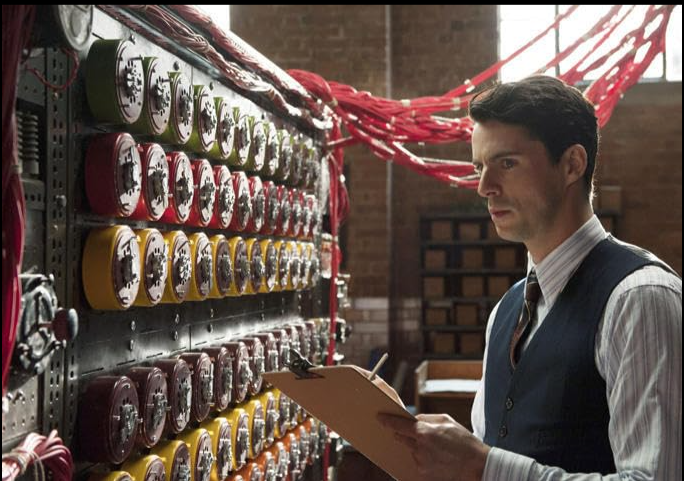
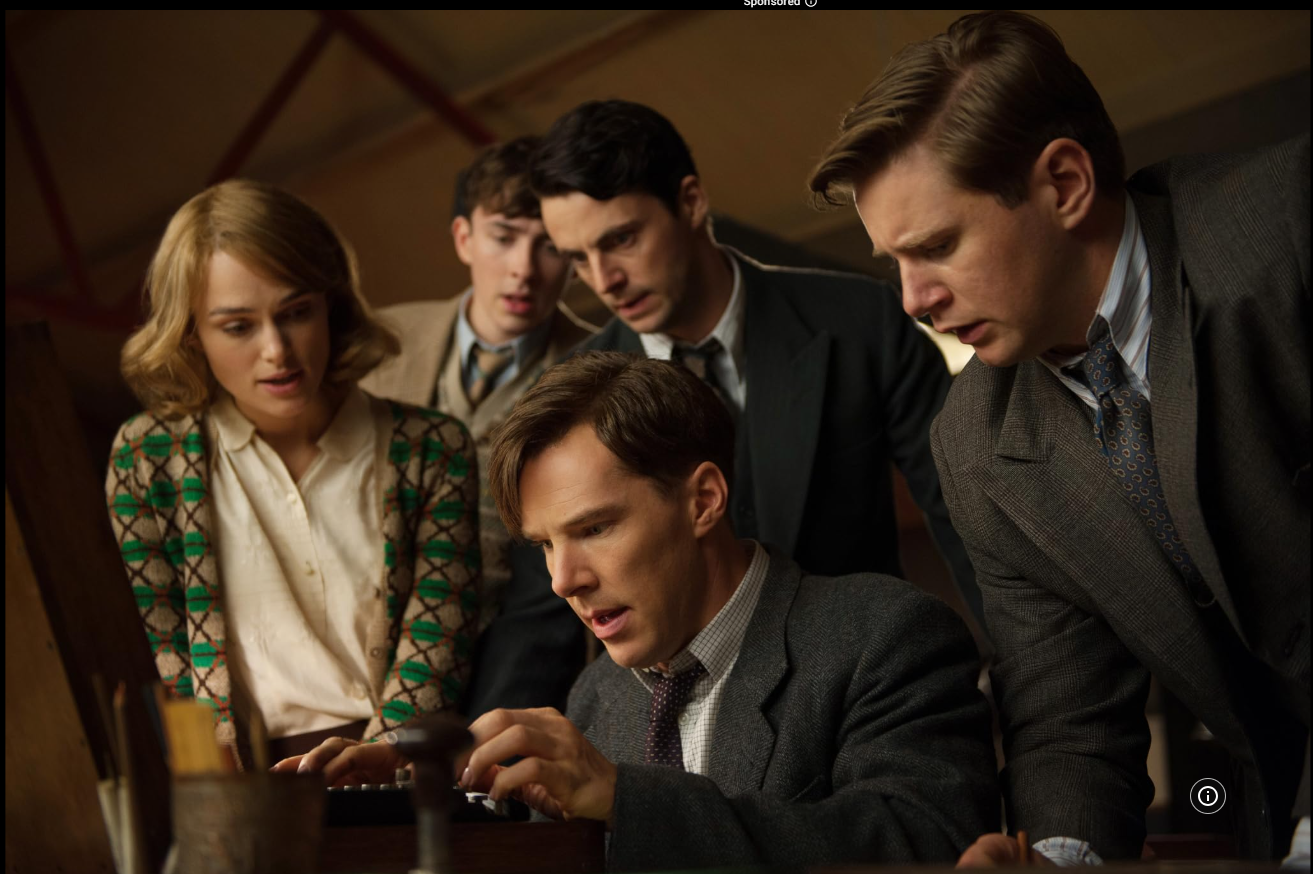
The better known of two movies about Bletchley Park is The Imitation Game, made in 2014 as a biopic of British mathematics wizard Alan Turing, who conspired with another genius (Gordon Welchman) to build the world’s first computing machine to decode Enigma. Benedict Cumberbatch portrays Turing as a troubled man somewhere on the autism spectrum who knows he’s smarter than everyone around him—which causes trouble because everyone around him on Bletchley’s codebreaking team is also a genius who has been recruited to do the impossible and break Enigma.
I have two gripes about The Imitation Game, which is a sober and serious, adult attempt to explain Turing and his accomplishment, which one could argue won the war. My first gripe is that the screenplay puts its foot on the scale and weights the breaking of Enigma to Turing alone, with all the other geniuses on the team as, basically, eye rollers who don’t get him or become outright antagonists. This especially hurts a really good actor, Matthew Goode, who doesn’t get to do much as a co-genius other than sneer at Turing and then support him by tinkering with the decoding computer, known as the Bombe.
Meanwhile, Alastair Denniston, the Royal Navy boss at Bletchley, is painted as a horrible despot who believes his personal grudge against Turing supersedes cracking the code and defeating Hitler. That’s historical heresy in my view—rephrasing facts to suit your dramatic premise. We need a bad guy, so let’s pick……………him! The guy who runs the operation.
My other gripe about The Imitation Game is, God is it depressing. Turing was gay, a crime in Britain at the time, and since his work winning the war was a state secret, he was seen as an eccentric failure of a human being and persecuted for “unnatural acts” to the extent he committed suicide in the 1950s. This becomes the point of the entire cinematic enterprise: isn’t it awful what society did to the gay man who won the war? Without too much jiggering, the story could have focused on the triumph of what Turing accomplished and the fact that yes, he and his confederates did the impossible and without them, we’d likely be heiling Hitler to this very day.
The other movie about Bletchley Park is its polar opposite. Enigmatically entitled Enigma and made in 2001 (predating The Imitation Game by 13 years), it tells the story of a fictionalized Turing, this time called Tom Jericho, who is heterosexual and haunted by the bad ending to a fast and furious relationship with a mysterious blonde who also worked at Bletchley—until she vanished without a trace. The story takes place a year after Enigma has been broken. Jericho is back at Bletchley after a visit to the funny farm and now he and his team must work on a new problem: the Germans have added a fourth rotor to the Enigma machine, making it several billion times more impossible to break.
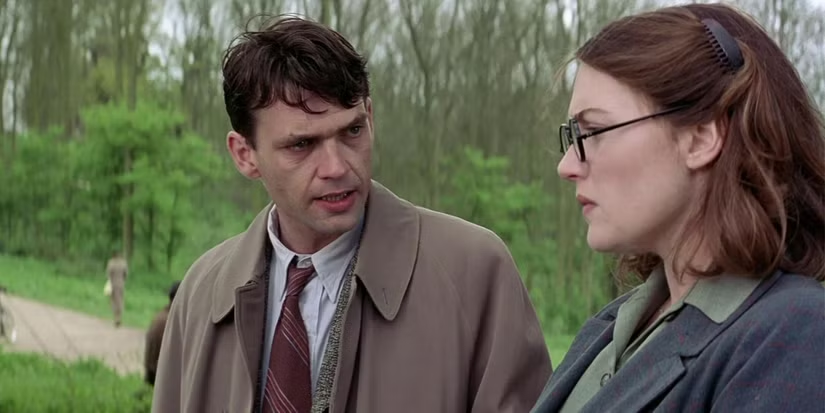
Enigma is a whole lot more fun than The Imitation Game but just as problematic in terms of “Hollywood versus history.” It’s based on a 1995 Robert Harris novel of the same name, with Bletchley as the setting for mystery and intrigue. Scottish actor Dougray Scott is “Turing light,” a brooding genius at the start of the picture who gradually lightens up into a likable, two-fisted hero who (spoiler alert) stops a German spy from getting away with Bletchley’s secrets. Through the run time, we get a more balanced portrayal of what happened at Bletchley Park in terms of thousands of dedicated Brits working their tails off in secret to win the war and a more favorable impression of one of the men who created the complex Bombe machine that cracked the code.
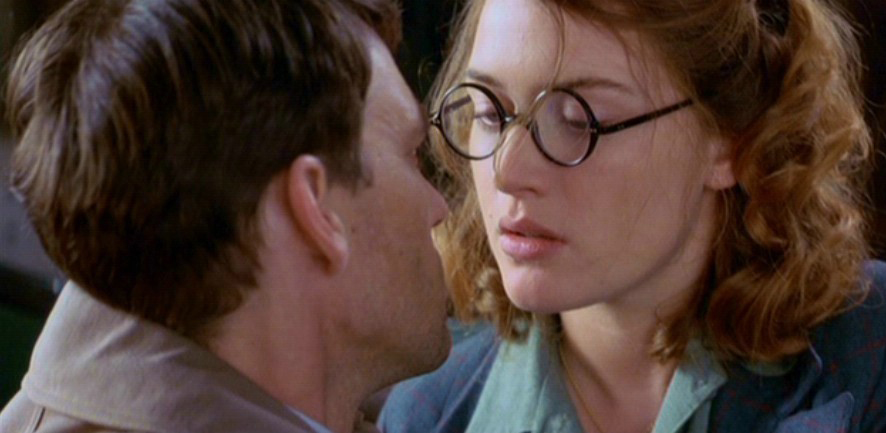
Kate Winslet plays Jericho’s dowdy colleague at Bletchley who goes from (spoiler alert) friend to lover as the plot deepens. What they’re able to get away with in multiple top-secret facilities as they solve the mystery that drives the plot is really cute. I mean seriously cute. In no way could our heroes manage to sneak around looking at secret files or stealing an Enigma machine, but if you’re able to suspend your disbelief as if you’re watching Nancy Drew or the Hardy Boys (which this resembles at times), you’d be right at home with Enigma. Truth is, the two lead actors, Scott and Winslet, lug the picture on their backs and make it what it needs to be.
I guess what I’m trying to say is, the code hasn’t been broken on a motion picture that portrays what really happened at Bletchley Park. When you visit this site, you can feel them there, the thousands who toiled in perfect secrecy to win the intellectual war versus fascism. But given the limitations of these two pictures, you can’t go wrong using both Enigma and The Imitation Game as primers if you want to learn more. Good luck finding Enigma, by the way. You’d think a movie with Winslet above the title would be close at hand, but somehow, despite her titanic success, this one has all but vanished—which is a shame because it’s a lot of fun.
Oh, and no, my new book isn’t about Bletchley Park per se, although Bletchley figures into the historically true story of how the Allies managed to deceive a very good German intelligence operation and enable the invasion of Europe. All that can be said at this point is, I’ve had another child, and I’m already very proud of him. Her.
**Fun fact: Production of the 2001 feature Enigma would not have been possible without the support of one of its producers, Mick Jagger, who was so fascinated with the Bletchley Park story that he purchased a vintage German Enigma machine.

