Month: December 2016

A Jagged Edge

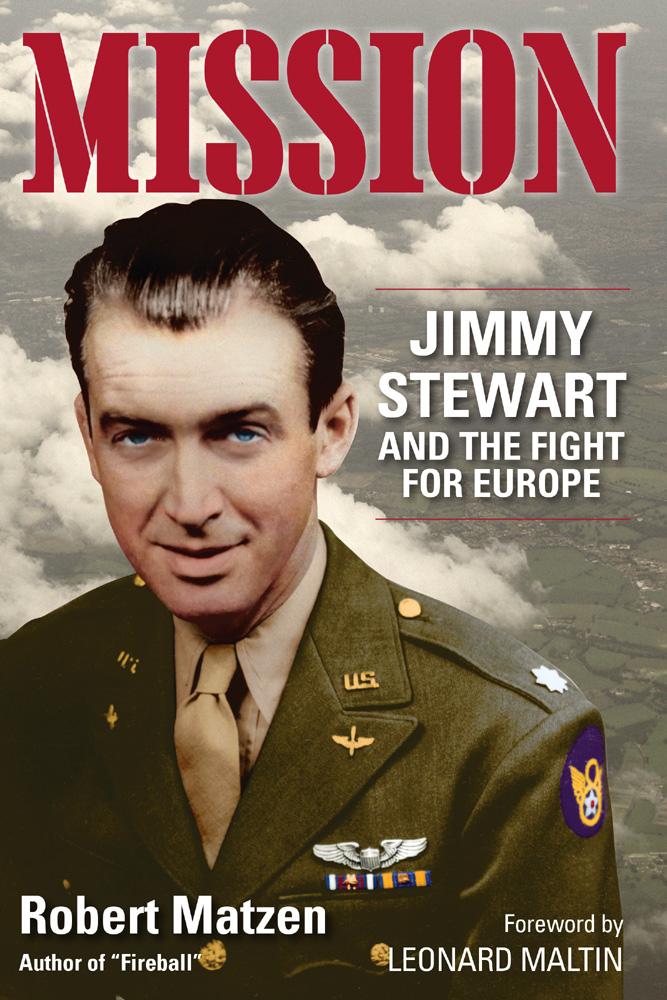
Mission: Jimmy Stewart and the Fight for Europe by Robert Matzen

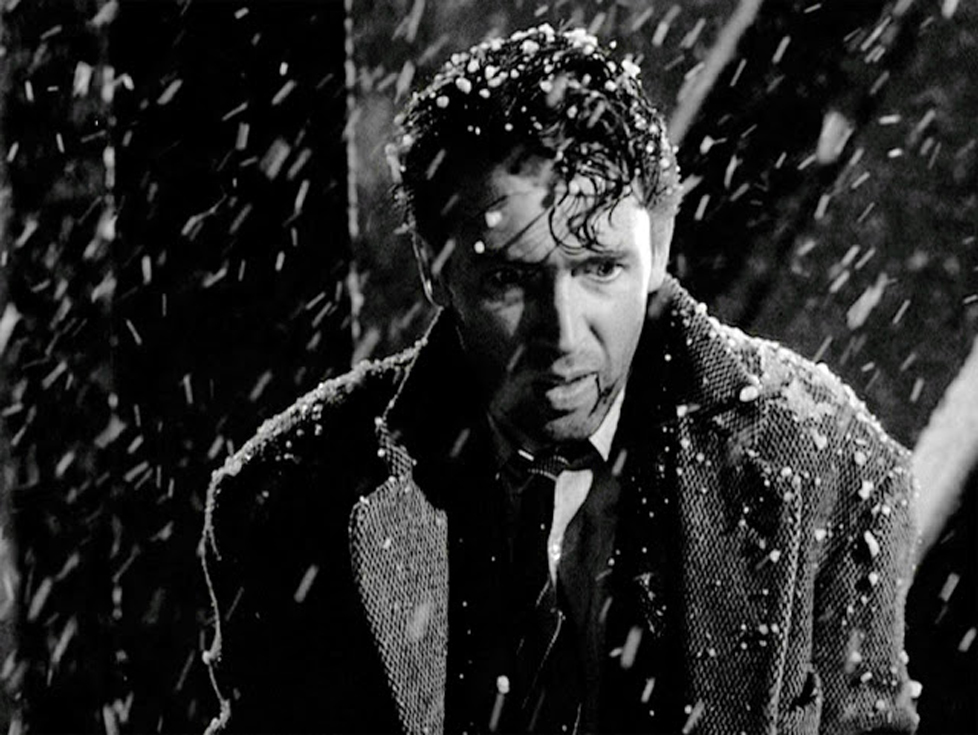
Jim Stewart as George Bailey Standing on the edge of suicide in It’s a Wonderful Life.

I’ve heard more than once on the book tour that some people are uncomfortable with It’s a Wonderful Life as a motion picture. A couple weeks ago I watched it on the big screen and sat there with this specific point of view in mind. I have to say, I understand where these people are coming from. This is a dark tale, so dark and so unusual that it’s no wonder Jim Stewart balked initially when Capra pitched it to him in autumn 1945.

A man driven to suicide? No, no, no, Jim countered, if I can find work–if any studio will have me-I just want to make a comedy.

An angel needs to earn his wings? What? Forget it, Frank, I’m out.

When you’re sitting in a balcony looking at a silver screen 30 feet high, the view is much clearer than your television system at home, even if you’ve got a 65-inch setup. As viewed this picture the way God intended, in a theatrical setting, It’s a Wonderful Life unspooled as a long picture, and grim, with a carefully crafted screenplay that drives our hero to despair in a relentless effort. Take for example the “Buffalo Gal” sequence after the dance and the terrific exchange between Stewart and Donna Reed walking along the street. It’s a dynamic sequence that builds and builds and suddenly she’s (presumably) naked in the hydrangea bush. Jim says what the audience is thinking, “This is a very interesting situation!”

Boom! The air is let out of characters and audience alike by news that George’s father has suffered a stroke. I don’t think it’s just me who reacts badly to this. We are meant as an audience to be uncomfortable with this moment because the theme of the picture is oppression, gloom, and the erosion of a person’s will by the tide of life. If not for the relentlessness of the setup, the payoff wouldn’t offer such release from the emotional bondage Capra has spent two hours creating.

Mission: Jimmy Stewart and the Fight for Europe by Robert Matzen

George at the end of his rope, praying for guidance. Jim only had one take in him, and told Capra he had nailed it and couldn’t do another.

With my newfound perspective on Jim Stewart the man and actor, knowing more than anyone in the world other than Jim himself what he had gone through in the war, I watched him onscreen as, frame by frame, It’s a Wonderful Life unspooled in the dark. In his first scene buying the suitcase he’s playing 22 when in the real world he’s 38 going on 50. He’s got a hairpiece in front, hair coloring left and right on his gray, heavy makeup, and careful lighting to help him carry an impression of youth. He bubbles over with energy in that first scene. He’s a thoroughbred just out of the gate at Churchill Downs in this moment, a stallion away for five years and now once again feeling the bit between his teeth. And man does he run. What comes across is youthful enthusiasm but make no mistake, this is a man who appreciates the opportunity he’s been given, a man who is going to work this day and not getting shot at by a deadly foe.

There is brutal hate in George Bailey, and Stewart—a desperate man at this point in his life—finds that vibe easily, as when he goes to Mary’s house and berates her for showing romantic interest in him and accuses her of trying to tie him down. What did Mary ever do but love this man, and he all but wipes his shoes on her. Jim Stewart’s George Bailey is a guy with an edge, wild-eyed in some scenes, rage-filled in others, as when he wrecks his living room and terrorizes his wife and children who see not husband and father but a monster unmasked. The America of 1946 was filled with monsters, men back from the hell of World War II and now strangers in their own homes, in some cases ticking time bombs, full of self-loathing at what they had seen and done and unleashing fury on family members, just like George did with Mary and the kids.

Indeed, the picture is populated by people riding the line of good and evil, like Nick the bartender, good in the Bailey world, evil without Bailey’s influence. Or George’s mother, a bitter soul without George around. And Gower the druggist, who so easily beats youngster George to a pulp and bloodies his ear. Capra paints this corner of America as a brutal place but for the intervention of someone extraordinary like George, a man of principle who influences impressionable, self-involved masses.
Mission: Jimmy Stewart and the Fight for Europe by Robert Matzen

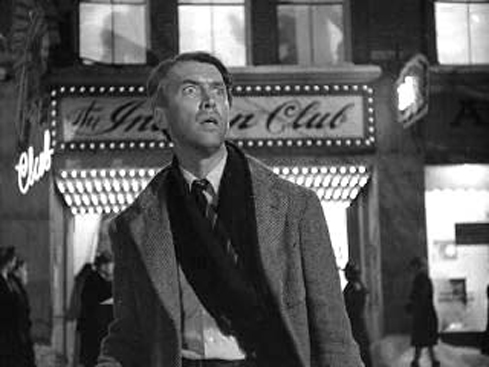
Jim wild-eyed and letting the world see something from deep inside.

There is a myth that It’s a Wonderful Life bombed at the box office on release 70 years ago this month at Christmas 1946, but that’s not accurate. This was a prestige picture and it performed like one and nearly made back its cost, but that cost had been extravagant, from construction of the main streets of Bedford Falls at the RKO Ranch in Encino to the snowstorm created in 90-degree Mojave Desert to all those expensive bridge and river shots that took weeks to complete on RKO soundstages.

What isn’t myth is that this was a picture ahead of its time, too long and dark for war-weary audiences to process in 1946. In another 10 years television would intervene and peacetime Eisenhower-era viewers would drink up and savor It’s a Wonderful Life for its themes of principles, friendship, the value of human lives lived well.

When you finish reading Mission you will understand what Stewart brought to this production and what it meant to him. You will sit there in the dark not just with Jim but with fine young army fliers like Albert Poor and Earle Metcalf who died under Jim’s command but lived on through all their skipper’s accomplishments. Jim carried with him all those boys he had lost, which is one of the reasons he wouldn’t talk about the war—it hurt too much. He didn’t talk about it but he remembered those men and their times each and every day on a journey into the second half of his career that began with It’s a Wonderful Life.
Mission: Jimmy Stewart and the Fight for Europe by Robert Matzen

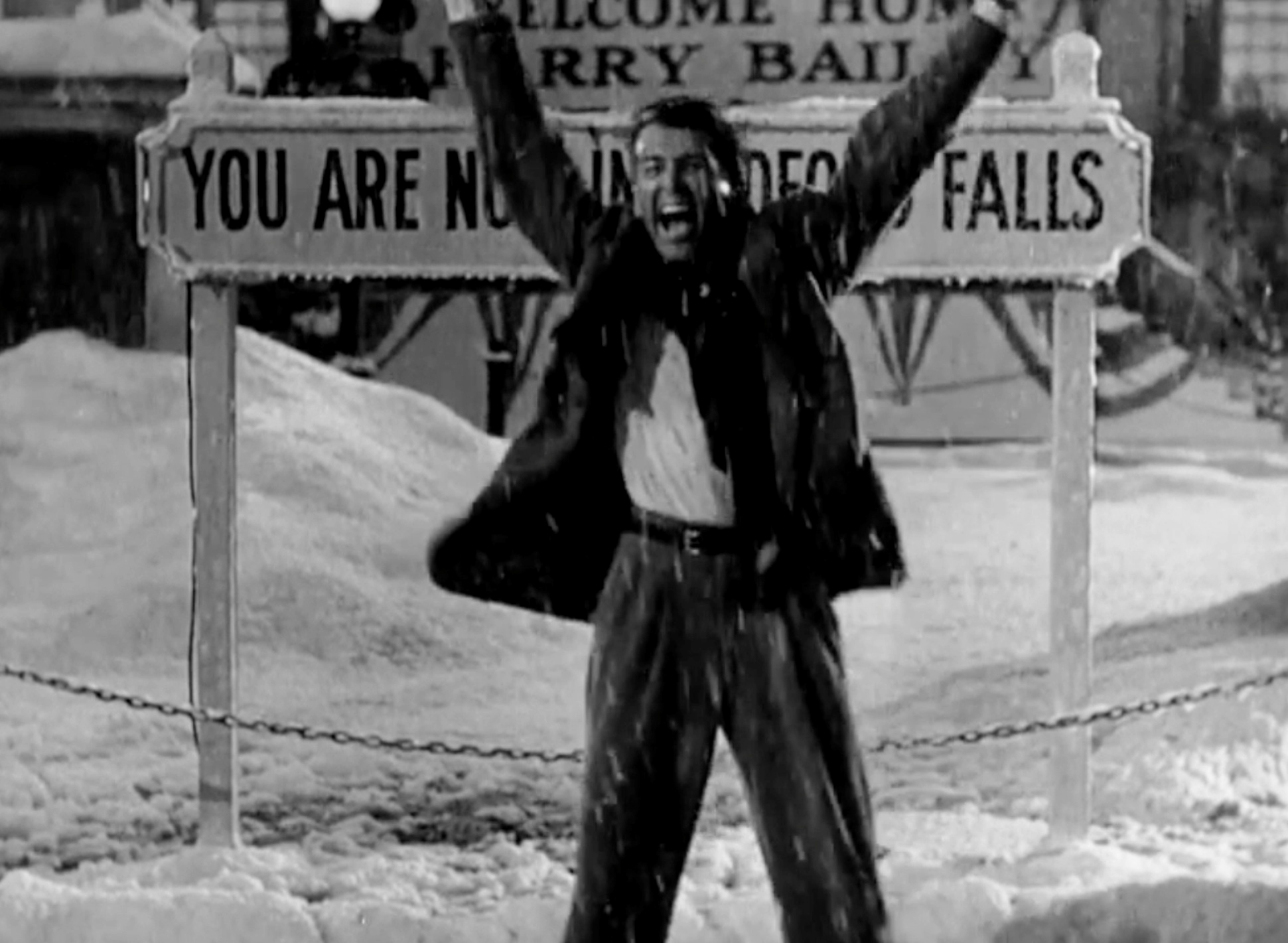
Heartfelt salutations from both Jim and George in the last reel of It’s a Wonderful Life.
FLASH: AMERICA IS AT WAR.

It’s difficult to imagine a moment like that, when those words are heard. Wait, no it isn’t, not if you lived through 9/11 and the chaos, fires, and heartbreak of that day and the days that followed. But December 1941 was a more innocent time. We got our news from daily papers and radio, without benefit of TV or the internet. By 2001 we had been desensitized by all sorts of horrors over the decades brought into our homes mostly courtesy of television, but in the run-up to the holidays 1941, no one could conceive of a sneak attack by another nation on an American naval base where young men and women were stumbling out of their bunks in the utter quiet of a Hawaiian Sunday morning and wiping the sleep out of their eyes, guard down.

Pearl Harbor? Where the heck is that? We have a naval base way out there? There was so much we didn’t know that day and struggled to find out. It all unfolded so painfully slowly. First a bulletin after 2 in the afternoon on the East Coast, and phones ringing off the hook in D.C. Families told families until the news had rippled across the nation. All gathered around living room radio sets and stayed there through the evening to pick up shards of information that came through not in today’s explosion of information and misinformation but as facts crawling in one at a time, in single file.

We know now, from the hindsight of 75 years, what happened 75 years ago this morning. Hours of hell on earth. Bombs, exploding ships, blood in the water, death. We know how and why the Japanese attacked, the damage they inflicted, and the gross miscalculation of picking a fight with a “sleeping giant” and filling it with a “terrible resolve.” But on the evening of December 7, 1941, nobody in the United States enjoyed any sort of historical context. Instead, all wondered what would happen next because the Japanese hadn’t just attacked Pearl; they had swept across the South Pacific in a multi-pronged invasion that most believed would bring landing craft to Washington or Oregon or California. Air raids were feared and blackouts went into effect at once.

As ships burned at Pearl Harbor, America entered a new reality, just as we did on September 11, 2001, when buildings burned. Everyone knew nothing would be the same again and they were right. The world was plunging into a blackness that would claim tens of millions of lives. Parents would no longer sleep at night because they worried their children would be sent off to fight. Austerity became a way of life as everything of value was rationed for the common goal of defending liberty.

I’m not a big fan of war because it so rarely settles anything and only causes other problems. But 75 years ago today the United States entered a just war against terrible foes. After tremendous sacrifice over nearly four years, good defeated evil. I’m pausing this morning to think about the thousands of innocent kids who woke up at peace on the ships of Pearl Harbor on December 7, 1941, and ended the day as battle-tested warriors. And I’m especially remembering the 2,300 who fell in that attack, many of them entombed on the U.S.S. Arizona. Theirs are the first names on the honor rolls of World War II and I say to each one: Thank you. We will never forget.

Mission: Jimmy Stewart and the Fight for Europe by Robert Matzen

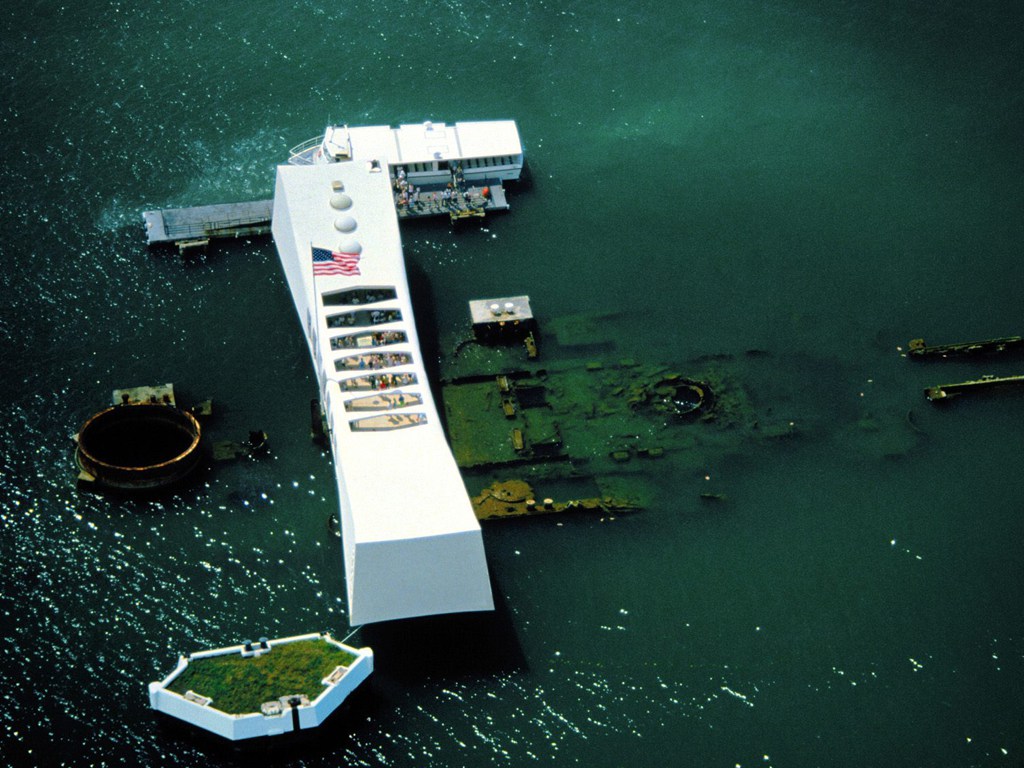
In 1962, a memorial was built over the sunken U.S.S. Arizona, where hundreds of American sailors and Marines remain entombed. Arizona crewmen who survived the battle of Pearl Harbor are given the option by the National Park Service of being interred there after death.

Long Live the King

Sometimes there’s nothing you can do but laugh. In the past two months I’ve been interviewed dozens of times about the themes of Mission: Jimmy Stewart and the Fight for Europe, my GoodKnight Books release. It’s a story with so many angles that the media practically has a smorgasbord. But my experience of a couple days ago was one I didn’t see coming and an angle I wasn’t comfortable talking about at all.

A certain talk show host at a radio station in a major Midwestern city asked me for a 7- to 10-minute interview. It was on the schedule for 10 days. Sometimes the station calls me and sometimes I call the station. Usually, I speak first with a producer during a commercial break who patches me in so I hear the intro, and then go live. Well, this time it was me doing the calling, and there wasn’t any conversation with a producer. I automatically went into a queue where I heard the commercial break and then the talk show host, a woman, started her segment with a folksy chat about the holidays, and I thought she was segueing nicely into a mention of It’s a Wonderful Life and then here I’d come after she completed a standard welcome of Jimmy Stewart biographer Robert Matzen.

She was going on about the baking of holiday cookies, and I wondered how she was going to bring it back to Mission, but OK I’m sitting there listening waiting for the plane to circle around to my direction. Then she started talking about the “Cookie King,” Robert Merten who has written a book about holiday cookies and in a split second I realized: Wait a minute. Robert Matzen, Robert Merten. World War II book, cookie book.

Mission: Jimmy Stewart and the Fight for Europe by Robert Matzen

A book not about cookies.

It’s a horrible thing when you realize, This plane isn’t landing. This plane is about to crash. She launched into an adoring, full-fledged introduction to Cookie King Robert Merten and the deeper she got into it, and the closer I got to going live, the faster my brain operated as I tried to think of what to do. I imagined the conversation that was about to take place, the one where I hesitated and stumbled my way through an explanation of how, yeah, I like cookies just fine but I’m not the king of them and in fact my blood isn’t blue but rather, it’s as red as the next guy’s, and I’ve written this book called Mission about death in the heavens over Germany. It would be a conversation blinded on both sides by egg on faces, and there would be earwitnesses all over a major Midwestern city.

The flop-sweat started to flow as she brought the intro into what she imagined was a smooth landing with a warm, “Joining me today in a rare radio appearance is the Cookie King himself, Robert Mert—

*CLICK*

Yes, people, I strapped on my ’chute and jumped before the plane crashed in flames. I left the host to die in the cockpit and I besmirched Robert Merten’s reputation but at that moment the Cookie King was on his own and I was out of the doomed ship in one piece. I lived to fight another day.

The post-mortem with Sarah my top-notch publicist left us both baffled (and her furious on my behalf), and I don’t feel too bad because somebody at that station wasn’t paying very close attention: How do you confuse an author who’s written a book about cookies with an author who’s written a book about World War II? I mean, I can sort of imagine how this crash happened, but only sort of, and the startling lack of preparation on their end mitigates any guilt I felt about bailing out with bare seconds until impact.

For the record, the Cookie King’s book is entitled, logically enough, The Cookie King, and sports a royal crest on its cover. The subtitle is, “Delicious, sweet and savory cookies from a lifetime journey of cookie baking” and my sweet tooth thinks it must be a steal at $34.95.

So there you have it, just another day in the life of an author who is soldiering on in a major publicity campaign. And Robert Merten, the next time you realize that somebody has booked you to talk about Jimmy Stewart as a combat pilot in World War II, please bail at the last moment and leave the host to crash in flames. At that point we’ll be even.