Month: December 2020

A Wonderful time for IAWL

World War II magazine, on newsstands now.

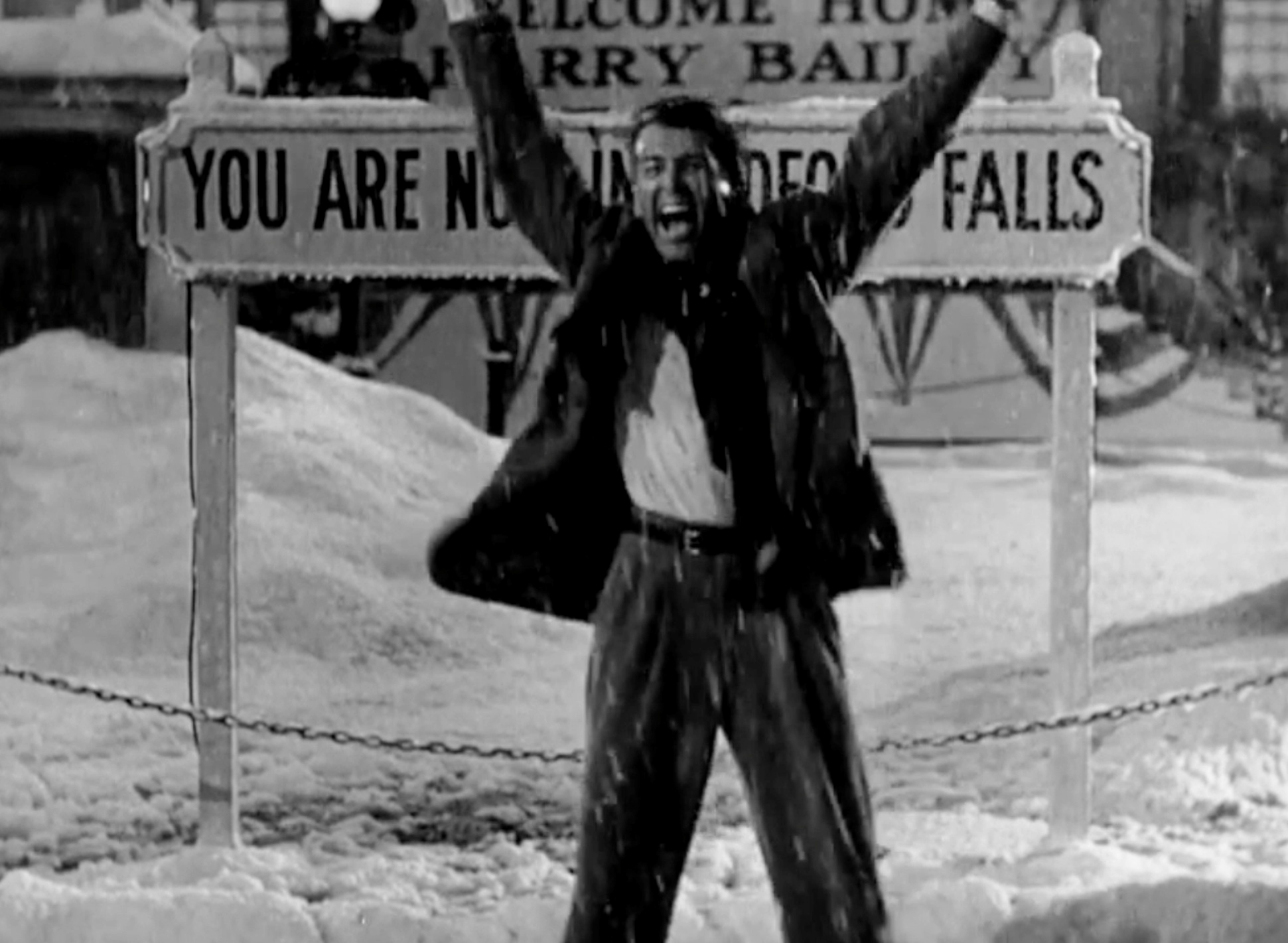
I first noticed the trend with a Google Alert December 2 for a Closer magazine article about Kelly Stewart Harcourt’s Christmas memories; holidays in the Stewart household included an annual viewing of her father’s most memorable picture, It’s a Wonderful Life.

On December 6, another ping from Google Alerts pointed me to a Looper piece on Jim’s crying scene in IAWL and its motivation. And four days after that, two pings, the first another story about Kelly Harcourt and Christmas in the Stewart house, and the second a Showbiz Cheat Sheet look at the make-or-break nature of IAWL for Jim and the fact this could have been his last picture.

What interested me most (of course) was that my 2016 book Mission: Jimmy Stewart and the Fight for Europe turned up in every piece as journalists investigated the magic of IAWL and the stark and ravaged nature of the Stewart performance. Then journalist Rachael Scott of CNN.com interviewed me for what turned out to be an excellent look at Jim’s experiences in war and its impact on his performance in IAWL.

Then The Federalist took a look at Jim the war hero and his return to make IAWL and again, there was Mission. And World War II magazine released a solid piece of work by David Kindy, who has interviewed me a few times over the years. That feature is The Dark Place and explains how Jim’s mind-altering 20 combat missions influenced the second half of his acting career.

At this point a producer from MSNBC’s Morning Joe contacted me to come on-air along with my favorite historical biographer, Doris Kearns Goodwin, to discuss Jim’s military career and return for IAWL. Hosts Joe Scarborough, Mika Brzezinski, and Willie Guest asked insightful questions, and the resulting 10 minutes of television blew up Amazon’s orderly inventory system and Mission went out of stock. (Twitter blew up as well with often-hilarious criticism of the room in which my Skype interview took place, but that’s another story.)

Doris offered wonderful insight on Morning Joe about why IAWL resonates with such power this year—George Bailey considered himself to be “stuck” in Bedford Falls just as all of us have been “stuck” at home through the pandemic. George’s life is such a dark place and the walls press in on him until he’s nearly crushed, and who among us hasn’t felt that way in 2020? When I described Jim’s combat career and its inevitable impact on his brain and his acting style, wasn’t I also describing the impact of Covid on the psyche of people worldwide as the germ wages war on all of us? Jim experienced combat fatigue; we are getting a taste of Covid fatigue. The Germans aren’t shooting at us at 20,000 feet, but the strain is real and ongoing.

As per the plot of IAWL, just in time for Christmas, George Bailey experiences redemption and realizes he’s living, after all is said and done, a wonderful life. It’s the kind of miracle comeback we all want to experience after such a bleak time in the history of our still-pretty-new century.

I can only wonder if playing George Bailey made Jimmy Stewart see himself as one lucky guy. The former playboy settled down after the war, married a mature divorcee with two sons, saw the addition of twin girls, and lived on. He survived the war when so many of his “boys” hadn’t. He lost many fliers from his squadron and bomb group in combat and took personal responsibility for this fact—it was one of the wartime memories he kept locked inside, and one of the reasons he would sit in quiet solitude at times and just stare at nothing, as Kelly Harcourt described to me.

Stewart’s beloved classic, It’s a Wonderful Life, was already a crazy-complicated picture, so warm and bright at times, so dark and unsettling at others. This year you may find watching it to be a deeper and more rewarding experience, and if true, we must give a nod to director Frank Capra, who sought, against conventional wisdom, to bring this story to the screen. In 1946 Capra was considered too sentimental and old school for a cynical post-war Hollywood. Now, I admire his vision as never before. It’s as if he foresaw our 2020 reality and brewed up what vaccine he could, and that’s why this year in particular the world is riveted by It’s a Wonderful Life as never before.
Mission: Jimmy Stewart and the Fight for Europe by Robert Matzen
Heartfelt salutations from both Jim and George.

P.S. After this column went live, MSN’s The Wrap published a trivia slideshow with Mission content.

In the Time of the Germ

A number of new subscribers have come aboard, which I very much appreciate. Thank you all! This fact reminds me how derelict I’ve been in posting new content of late. So, here’s where I’ve been and what I’ve been up to instead of writing columns for this blog.

The Rathbones in 1938. Great actor and fine gentleman, but I had to pass.

FLASH BACK to autumn 2019, before Covid—if you can remember life before Covid. Dutch Girl had been a success in the U.S. and abroad, and I started to think about what I’d write next since it’s always a struggle finding something book-worthy. After Mission and before Dutch Girl I almost took on the task of attempting a biography of actor Basil Rathbone, but his relationship with narcissist wife Ouida was too f’ed up and although Rathbone wove his way into the fabric of Hollywood history, I refused to be locked in a room with an overt narcissist and her co-dependent husband through the course of 90,000 words. Because her toxicity poisoned too much of his career, I felt I had to throw that one back into the cosmic stream, which was OK because then Audrey came along.

After Dutch Girl I was poking around again and received a hot tip out of the blue about unexplored content in a university archive related to Dorothy Parker. You know, Algonquin Roundtable short story writer and renowned wit Dorothy Parker who ended up in Hollywood with her husband writing and fixing screenplays in the Golden Age. Well, she and I had a booze-soaked little fling and I read a lot of her stuff and it was an interesting life with lots of Hollywood ties and I thought, yeah, maybe Dorothy Parker. But then at 3 a.m. one morning—I wake up at 3 a.m. sometimes and start to process things and can’t stop—my eyes snapped open at the realization that if I thought Basil and Ouida Rathbone were unappealing as a subject, they’re child’s play compared to a mean drunk who drove not one but both husbands to kill themselves. I decided right then to not become a filler item for the newspaper, as in, “DID YOU KNOW that Dorothy Parker drove not only two husbands but also her biographer to commit suicide?” Dottie and I broke up the next morning.

Dorothy Parker and second husband Alan Campbell in Hollywood in 1936. After due consideration, I refused to become a statistic.

I was back at square one when a friend heard me talking about my problem of not knowing what to do next and joked, “Why don’t you do a book on Audrey Hepburn?” I laughed along because I had addressed the only area of Audrey’s life that hadn’t already been squeezed dry like an orange at the Sunkist factory. Some days later I said on the phone in a ha-ha way to Luca, Audrey’s son, “Hey, wanna hear a good one? Somebody said I do another book about Audrey—isn’t that crazy?” And there was a pause, and Luca said, in effect, I was thinking the same thing!

It’s now more than a year later and here I sit with a completed manuscript in my lap titled, Warrior: Audrey Hepburn and the Fight for Children. It’s the other shoe to drop, the mate to Dutch Girl that completes the story and answers the question, “What did Audrey Hepburn do with the horrific wartime memories she kept locked inside?” If you think you know the answer to that question, I’ll bet you really don’t. I discovered in talking to her closest surviving friends and the many UNICEF field workers who accompanied her on Third World missions that the history of what she did and how she did it was about to be lost. And what this is as she charged into war zones and took on world leaders. I had no idea until Luca pointed me in the right direction just what a treasure chest waited to be opened. As it happened, with the world in lockdown for most of the time I spent researching and writing, no matter whom I called or where in the world they were located, guess what? They wanted to talk!

Granted only a few people have seen the resulting manuscript and maybe it sucks. Some of my favorite creative projects have inspired reactions like, “What were you thinking?” But the experience for me has been pure magic. I mean, really, I just spent another year locked in a room with Audrey Hepburn. That, my friends, is not a bad way to endure a pandemic. It certainly beats being sentenced to prison with Dorothy Parker or Basil and Ouida Rathbone.

Depending on a number of factors led by Covid and my publisher’s reaction, you may be seeing Warrior in about a year. Between now and then, I hope to turn my attention to this blog on a regular basis.

Audrey greets Pakistani peacekeepers, warrior to warrior, at Mogadishu Airport, Somalia in September 1992. She sensed this mission would kill her, but undertook it anyway.