General Hollywood History

In the Shadow of Beasts

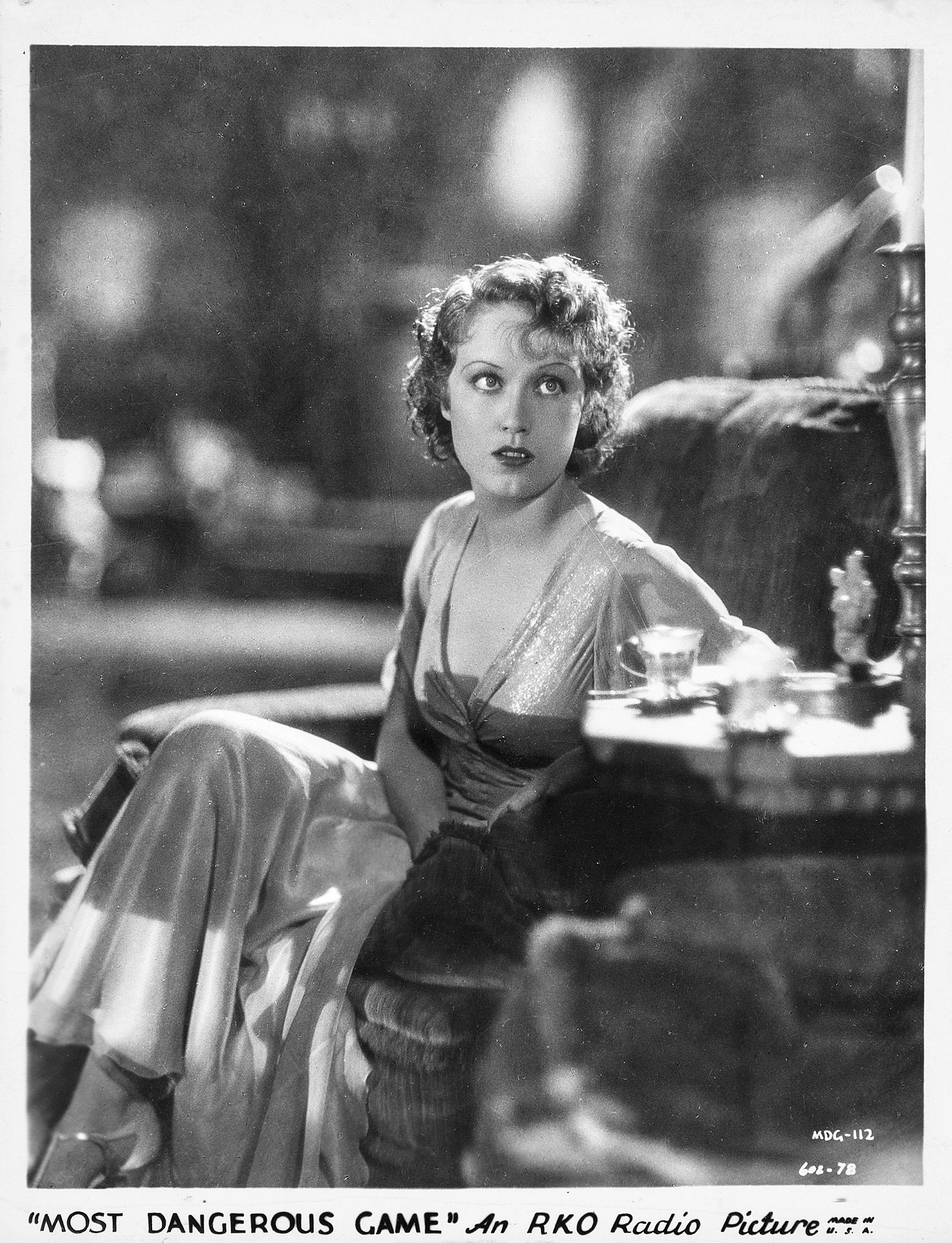
I've always been a sucker for a woman in a beret. This time it's Fay Wray in a 1930s pose.

I’ve always been a sucker for a woman in a beret. This time it’s Fay Wray in a 1930s pose.

The always-interesting Marina Gray pointed me to the link to a 1998 article that appeared in Scarlet Street magazine. The article detailed an encounter by filmmaker and writer Rick McKay with Hollywood leading lady Fay Wray in New York City in 1997. I was bowled over by the nature of the piece, which included an extensive interview with Wray, who was almost 90 at the time and very much a real-life Norma Desmond in manner, as actresses can be.

You know how sometimes you read about a person now gone and get the feeling you would love to have met him or her? Well that’s the feeling that hit me reading about the evening spent by the author with Fay Wray. Here was a woman who started out in silents and remained so full of life that James Cameron had recently, as of the time the article was written, offered Wray the role of “Old Rose” in his epic in the making, Titanic. Wray had declined the offer because one of the plays she had authored was opening in New England and she didn’t want to miss it. Wray’s contemporary, Gloria Stuart, then landed the role and earned an Oscar she had coveted for 70 years.

Rick McKay asked all the right questions during his evening with Fay Wray, a date that included a Broadway show and dinner and drinks. Man: dinner with Fay Wray. Does it get better than that?
Fireball: Carole Lombard and the Mystery of Flight 3 by Robert Matzen

Fay in one of her best pictures.

In the lengthy interview, McKay returned time and again to Kong, Kong, and more Kong. The making of the film, reaction to the film, and Wray’s opinion of the film. After a while it became apparent that Fay Wray was a brilliant person who was (naturally enough) sick to death of King Kong but too gracious to say it in so many words. She was an early—perhaps the first—casualty of that one career-crippling iconic Hollywood role. A chosen few know what it’s like; Basil Rathbone with Sherlock Holmes, Leonard Nimoy with Mr. Spock, and so on. But mixed in with Kong Q&A, Fay offered the kind of insight into Old Hollywood that can only be learned on the inside.

Her first big picture was Von Stroheim’s The Wedding March, and she describes a sexual Svengali/Trilby sort of vibe between them. She starred in a number of pictures in the early era of sound, including three with Gary Cooper. She also made an early masterpiece with horror undertones, Most Dangerous Game, and two early Technicolor features at Warner Bros., The Mystery of the Wax Museum and Doctor X., both directed by the Hungarian maestro, Michael Curtiz. Like most others who toiled under the Curtiz whip, Wray’s memories of the experience were not fond: “I didn’t appreciate him at all as a director. I thought he was more like a part of the camera. He didn’t have any warmth whatsoever.”

Of course it didn’t help that conditions were brutal on Warner soundstages. Wray provides thought-provoking testimony regarding the experience of working in early Technicolor on sets that had to bathed in light—drenched in light—to suit the Technicolor cameras. Today we’re used to mega-chip HD cameras and cool LED lighting, but in 1932 the lights were incandescents that give off 10 percent of their energy as light and 90 percent as heat, which was “Awful! Awful! … They left the lights on, because a lot of scenes were so sustained that you needed quite a bit of time. But, it was an unhealthy kind of feeling that we all had to go through … it was just a miserable experience.”

Fireball: Carole Lombard and the Mystery of Flight 3 by Robert Matzen

Toiling under hot lights and showing some leg in The Mystery of the Wax Museum with co-star Glenda Farrell.

Both Wax Museum and Doctor X and a third scream feature, The Vampire Bat, paired Way with one of Hollywood’s more unusual actors, Lionel Atwill, whom she described as “a profile” and explained that “He knew just how to position his head to get the right angles! He was very conscious of his contour.”

Here was a thoughtful, serious young actress now in her mid-20s making what she considered mindless horror pictures for brutes like Curtiz. And then came Kong. She remembered working in the giant mechanical Kong hand, which was manually manipulated by stage hands, and her fear wasn’t being crushed by the hand of Kong but rather falling out of it because the grip was loose at best. Of the origin of her Kong screams: “I went into the sound room and made an aria of horror sounds.” They were screams directed by … Fay Wray.

Wray discussed the decline of her career and relationships with a succession of talented, high-profile screenwriters, first John Monk Saunders, then Clifford Odets and finally Carole Lombard’s ex-boyfriend, Robert Riskin. Her marriage to Riskin endured through his severe stroke and subsequent death in 1955. During his illness she went back to work in television and movies to pay the medical bills, most of the roles forgettable or downright embarrassing. Her biggest pictures of the time were The Cobweb with Widmark and Bacall and Queen Bee with Joan Crawford. And what a terrific take Wray had on the star: “Joan was not a happy person and she liked showing that. She worked on her fan mail all day long. I just didn’t understand that, but she did. She washed her hands a lot. She washed her arms all the way up past her elbows … She was so worried about herself, I felt. She was a good soul, a good soul. She wanted to be nice to everybody and kind, certainly kind to her fans. She thought about them a lot.”

Fireball: Carole Lombard and the Mystery of Flight 3 by Robert Matzen

Wray in a straight role with Gary Cooper in 1933. Coop was stamping out pictures at this time and made three with Fay; two with Carole Lombard.

Like so many actors of her day that disdained the kind of pictures they were in—for example, Olivia de Havilland would not condescend to watch The Adventures of Robin Hood for 20 years after its release—Fay never went to see completed versions of Mystery of the Wax Museum or Doctor X, pictures that are today considered horror classics. She was a year older than Carole Lombard and started in pictures about the same time Lombard did, around 1925, and both made their move in Paramount Pictures in the early 1930s. Both were good-looking women with earthy sexuality, but Wray had none of the Screwball Queen’s savvy for crafting a career, and if it weren’t for the horror pictures, Fay Wray’s name would barely be remembered at all. Instead, she remains a Hollywood icon.

Later in life she became a writer, and I want to read her books and drink in more wisdom like this: “I love films, I love the camera—I love the thought that when you’re in front of the camera, whatever you do can go around the world. Isn’t that a marvelous feeling to have? That’s a beautiful feeling.”

Rick McKay’s full article can be accessed here.

Fireball: Carole Lombard and the Mystery of Flight 3 by Robert Matzen

Putting it all in perspective: one small woman and the big ape who immortalized her.


Lure of the Forbidden

Fireball: Carole Lombard and the Mystery of Flight 3 by Robert Matzen

Almost 40 years before Ana met Christian, there was The Story of O, as sold in this vintage Italian movie poster.

I’m not sure how the 50 Shades of Grey phenomenon happened. It’s a mystery to me how this exercise in juvenile erotica found its way into supermarkets and other retailers across America. In my long and checkered literary career, I have been an erotica-for-hire writer, and out of curiosity read 50 Shades. I was appalled, not because of the salacious subject matter, or because the depiction of women might set their cause back a couple generations, or even because the writing lacked sophistication. I started flinging 50 Shades around the room because of the presentation of Christian Grey as a dominant. Kids out there trying this writing thing at home: your characters have to be consistent, and no dominant male acts like Christian Grey acts in this story—it is a cloistered adolescent female’s imagining of what a dominant male would be like as he is “tamed” by a girl who in real life would bore the guy stupid in a couple of dates.

The writer in me applauds E.L. James for capturing lightning in a bottle and selling a gajillion copies of her B&D trilogy. Somewhere there’s another book waiting to be written called “Revenge of a Wallflower” where we learn about E.L.’s upbringing and long-ago snubbing by a bad boy who dumped her after a couple of dates and thus the 50 Shades phenomenon was born.

However, I’m not really here to talk about 50 Shades of Grey. We’ve heard enough about it all month. As I sit here and write in the pre-dawn murk of a frozen Friday the Thirteenth, this picture is about to shatter box-office records in these United States, riding a wave of hype that goes far beyond merely trailers on TV. There are 50 Shades tie ins across the straight-laced retail world; 50 Shades of nail polish, 50 Shades hairstyles; 50 Shades shoes. It’s being pitched on QVC and via email, and I get the feeling that somewhere, one-time movie flakmeisters like Russell Birdwell and A-Mike Vogel are beaming. Today’s blockbuster is the latest in a long line of pseudo-kink that promises the forbidden, lures you inside, and then laughs all the way to the bank as you stumble out of the theater wondering how you had been hoodwinked.

In my misspent youth, the X on a movie poster always enticed me. Of course, I’m far too young to have seen in first-run the films I’m going to mention. But…

Midnight Cowboy, starring my “twin brother” Jon Voight, proved to be an interesting picture but not the Dante’s Inferno of naked flesh that I envisioned.

Emanuelle was my first exposure to simulated sex, but today has a sanitary sweetness about it.

The Story of O offered a more realistic dominant-submissive story than what you will see this evening. In fact, save yourself 40 bucks and rent The Story of O. If Ana had a worldly grandmother, it would be the girl code-named O.

Last Tango in Paris was utterly boring and seeing dissipated Marlon Brando naked upset my stomach.

I won’t waste your time relating my frustration at Crown International sexploitation pictures that swindled me, like The Teacher and The Stepmother. Only A Clockwork Orange felt like an X to me even as a kid, and that wasn’t because of the sex but rather the ultra-violence.

There’s a sucker born every minute, and I was it. Finally I gave up on pictures that were sold as smut but never fit the bill and saved my money by avoiding Nine 1/2 Weeks until I could rent it on VHS for a buck. All I remember about it now is that it unspooled so slowly that I knew where the name came from. It was also relatively tame and I couldn’t understand much of Mickey Rourke’s dialogue because he’s a mumbler. (I spared myself entirely the experience of yet Another Nine 1/2 Weeks.)

Fireball: Carole Lombard and the Mystery of Flight 3 by Robert Matzen

From Showmen, Sell It Hot: Baiting the lure with “It” way back in 1932.

Greenbriar blogger John McElwee wrote a fantastic coffee-table book about showmanship in Hollywood’s Golden Era in which he examines the production of classic pictures and the ways they were sold to the masses by people like A-Mike Vogel. In Showmen, Sell It Hot! there’s a chapter called Titillated to Distraction detailing the lure of the forbidden in Hollywood’s naughty pre-Code years of the early 1930s. I’m reminded looking at McElwee’s work that in terms of attitudes about sex, America hasn’t come very far in 80 years. We were spawned of Puritans after all, making forbidden sex practices repugnant and therefore all the more irresistible.

As documented in Showmen, the 1932 feature Bird of Paradise “promised island beauty Dolores Del Rio au natural and indeed delivered via nude swim scenes.” Other examples by the author: “’Give me a job—at any price,’ says Loretta Young to Warren William in a teaser ad for Employees’ Entrance, and by February 1933 customers knew Warner Bros. wouldn’t let them down. Hold Your Man bade audiences to ‘Learn how to do it in one easy lesson,’ with Clark Gable and Jean Harlow more than capable instructors.”

Fireball: Carole Lombard and the Mystery of Flight 3 by Robert Matzen

This still from Virtue showing Carole Lombard and Mayo Methot appeared in the risqué movie magazine, Film Fun. As per usual, the picture itself didn’t sizzle.

The Carole Lombard of Fireball fame posed with Mayo Methot for a lingerie shot that remains today pretty suggestive as they were hyping the 1933 Columbia picture Virtue. It didn’t matter that Virtue was bland stuff; by the time a healthy American male found this out, the theater already had his money.

An ad for the Barbara Stanwyck picture Baby Face depicted Missy Stanwyck in a provocative pose beside an ad line that read, “She used everything she had … to get everything men had … She stopped at nothing and made ‘It’ pay.” And audiences knew what ‘It’ was, even in 1932. In all caps below the credits was a sobering warning: PLEASE DO NOT BRING YOUR CHILDREN.

I don’t know how many of you will queue up to see 50 Shades of Grey today or over the weekend, but if and when you do, be aware that you are carrying on a proud tradition that goes back as far as the motion picture itself. You have been summoned into the dark to see forbidden things. Enjoy whatever salacious moments you can wring out of this picture, because odds are you will return to the open air a little worldly wiser … by feeling hoodwinked yet again.

Fireball: Carole Lombard and the Mystery of Flight 3 by Robert Matzen

One more from Showmen, Sell It Hot: Joan Blondell was a nice girl selling naughty, pre-Code style. I can’t figure out, is she leaving a little or a lot to the imagination? Or is her expression merely saying, “Look out, people! Your wallets are being lightened!”

Mocked by the Mockingbird

Fireball: Carole Lombard and the Mystery of Flight 3 by Robert Matzen

Clifford Irving, the cat who thought he ate the canary. It turned out to be the other way around.

Clifford Irving is alive and well and writing books more than 40 years after being caught peddling a fake autobiography of Howard Hughes. It’s a great story that was made into the movie The Hoax with Richard Gere. By 1970 Howard Hughes was a recluse seen by no one, and Clifford Irving figured that nothing could drag Hughes out into the sunlight, even the publication of a fake autobiography of Howard Hughes.

As was accurately depicted in the picture The Aviator with Leonardo DiCaprio, anybody messing with Howard Hughes was going to come out bloody as long as that man’s heart continued to beat. Hughes didn’t exactly step into the sunlight to fight Irving, but he held a press conference by telephone that I remember very well and blasted Irving for the fake book. Clifford Irving gambled and lost and spent a year and a half in prison as a result.

Call me a skeptic, but I can’t help but wonder if history is repeating itself, this time in foolproof fashion. It’s a sad world we live in when the surprise headline about publication of Harper Lee’s second book causes me anything but glee. Her simple story of Atticus Finch and Scout and Jem bowled over the literary world and has continued to sell a million books a year for decades. To Kill a Mockingbird won the 1960 Pulitzer Prize and then transitioned seamlessly into a great motion picture, which doesn’t always happen. The film version earned five Oscar nominations and three wins, including Best Actor for Gregory Peck as Atticus. I can’t imagine that any of you haven’t seen the movie—it’s a humdinger.

To Kill a Mockingbird is the great American novel, and its author has frustrated us ever since the book’s publication because this was all she wrote. She saw the avalanche of publicity that resulted and fled. Case closed. Harper Lee, one-hit wonder of the ages.

But wait! I read the New York Times article yesterday about another manuscript by Harper Lee being discovered and thought: This is too good to be true! But my immediate second thought, knowing the circumstances, was: Wait, this is too good to be true.

Fireball: Carole Lombard and the Mystery of Flight 3 by Robert Matzen

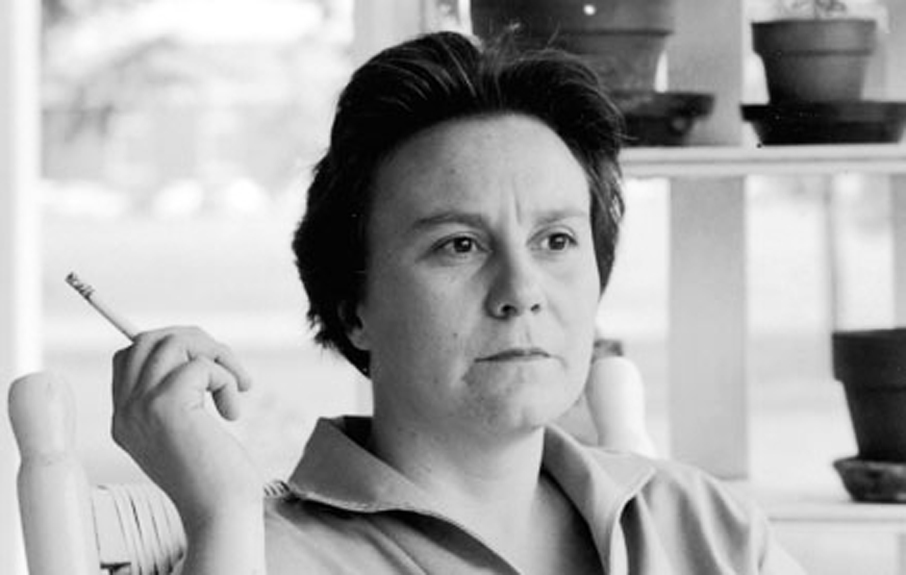
The real Harper Lee, back in the day.

Supposedly, the manuscript for Go Set a Watchman, a novel that picks up the story of Atticus and Scout 20 years after events in Mockingbird, was discovered attached to a copy of the original Mockingbird manuscript. Watchman is described as a sequel written prior to Mockingbird.

Here’s the thing. At age 81, Harper Lee suffered a stroke in 2007, apparently a big one. Her sister Alice, an attorney who had been Harper’s caregiver and companion, died in 2014. Alice’s death not only devastated Harper; it left her without protection in making decisions like using her name and that of her famous book to hawk another book. Based on lifelong behavior, this is the very last thing one would expect from Harper Lee, yet the very thing that happened yesterday when news rattled the publishing industry to its bones about another Lee novel. Press releases quote the incapacitated woman, who according to witnesses at her sister’s funeral may no longer be all there, as saying of Go Set a Watchman, “[I am] pleased to hear that they considered it worthy of publication. I am humbled and amazed that this will now be published after all these years.”

As of this writing, Go Set a Watchman, almost half a year from release, has shot to #1 on the Amazon bestseller list and To Kill a Mockingbird is #2. Oprah is gushing with excitement. That’s fine, but I have been dealing with New York publishers for 30 years, and I’m here to tell you that today they are soulless corporate monoliths in survival mode. Oprah may be gushing, but I’m sitting here thinking about this 88-year-old, wheelchair-bound sweet soul who’s imprisoned in a withered body and no longer capable of rational thought. Given her situation and the timing of her protector’s death, I can’t help but smell a rat. A big one.

Caveat emptor, my friends. Caveat emptor.

Hail to the King

Happy Birthday, Clark Gable. Today, had you taken better care of yourself, you would be 114. Let that be a lesson to you.

Come to think of it, Mr. Gable, I guess no matter how many cigarettes you had eschewed, no matter how many bottles of Chivas Regal you hadn’t consumed, you wouldn’t be around at 114. That’s a lot of years, and how they do fly by.

Some places reflect the years better than others. This past week I found myself in a city that feels very old: San Francisco. I was there on business, business so intense that I had barely a moment to see the sights, but a friend and I scaled Telegraph Hill from Chinatown to Pioneer Park and Coit Tower and looked out at Alcatraz, my first-ever glimpse of The Rock. Hard not to think about Al Capone or Clint Eastwood’s Escape from Alcatraz. Or his Dirty Harry, for that matter. It’s going on 70 years since Capone died; almost 40 since Escape was made; more than 40 for Dirty Harry. Hell, it’s already been 52 since The Rock closed as a prison. Years, years, years, speeding by.

Fireball: Carole Lombard and the Mystery of Flight 3 by Robert Matzen

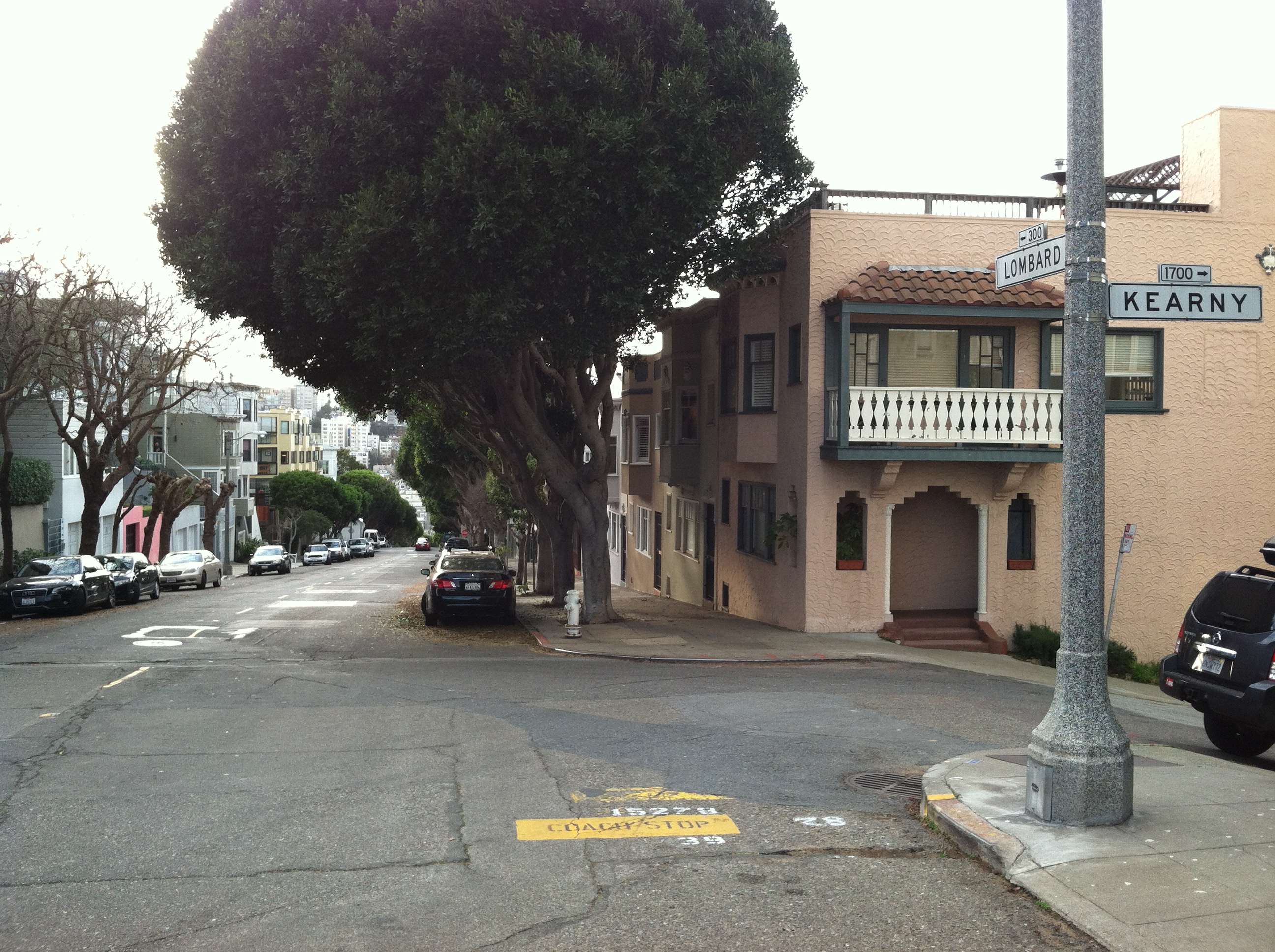
My discovery: the top of Lombard Street. Pioneer Park is above.

Fireball: Carole Lombard and the Mystery of Flight 3 by Robert Matzen

It’s a long way down Lombard Street from here, all the way down Telegraph Hill to Columbus Avenue in the Italian part of town.

Exploring the streets that radiate out from Pioneer Park, I stumbled on Lombard Street, and it was one of those moments when my mind went boinggg! I had read someplace decades ago that Jane Peters took the name Lombard because of Lombard Street; it was here in San Francisco that mother Elizabeth Peters had first lighted with the kids in 1914 after leaving Fred in frosty Fort Wayne. Now, here I was at the head of Lombard Street all these years later, in another century, feeling some magic about the name and exploring on down the long hill to Corso Cristoforo Colombo—yes, Lombard intersects with Colombo. (Another intersection of the two would take place in 1933. Sort of.) Up yonder hill to the west Lombard Street turns serpentine in a crazy little section that’s a kick to drive down as I found out later in the evening.

I asked Carole Lombard authority Vincent Paterno, proprietor of bold and sassy Carole & Co., if he had ever heard this story about the origin of Lombard’s name, and he said he thought she took Lombard from family friend Harry Lombard. I had heard this too, but part of me wonders if she would have appropriated the name of a friend, which could have made an awkward moment or two had he said no. But I could see her using the name of the wildest street in San Francisco, Lombard Street.

Fireball: Carole Lombard and the Mystery of Flight 3 by Robert Matzen

Original poster art from San Francisco, selling the bad boy and the warbler with the gams.

Birthday boy Clark Gable made a picture about San Francisco called San Francisco while banging his new girlfriend, Carole Lombard, in the spring of 1936. The picture San Francisco featured a different kind of banging as it details the earthquake of 1906 that leveled parts of the city. Does anyone know if the picture premiered in San Francisco? I like to think it did, back in the day when studios took their stars and the press on junkets amid much ballyhoo to launch the A-pictures.

This was a landmark film for its recreation of the Big One and shows off Gable at his finest as yet another black-hearted rogue, the kind of role that established him as a man’s man and bad boy who made the ladies swoon. Women didn’t want to own Clark Gable because they knew he couldn’t be owned—but they spent a great deal of time imagining what it would be like to get roughed up a little by Clark Gable, who was 35 at the time of San Francisco and in his absolute prime. It became a great part of the legend between them: Lombard in her prime, the year she made My Man Godfrey, landed Gable in his prime, causing a great stir among the gods. It was quite a year on Olympus.

Fireball: Carole Lombard and the Mystery of Flight 3 by Robert Matzen

Clark and Carole early in their relationship. Customary Coca-Cola in hand, she wears a look that admits she just ate a canary.

Carole was always very big on birthdays, so somewhere, maybe up there on Olympus, she is calling Benny Massi to make sure the catering from Brown Derby is perfect for Pa’s surprise party to celebrate this, his 114th birthday.

Flyboy

Fireball: Carole Lombard and the Mystery of Flight 3 by Robert Matzen

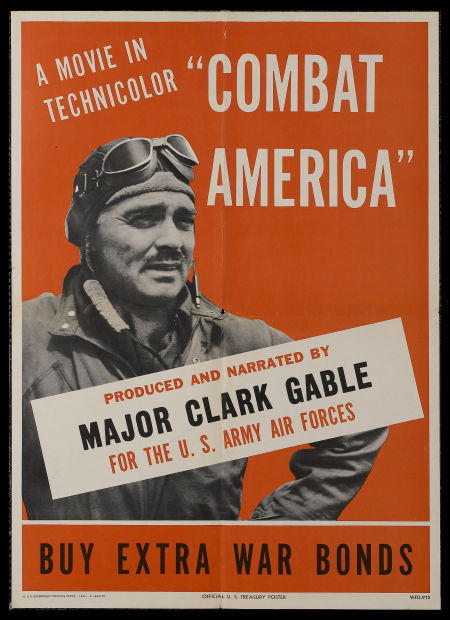
A 1944 Government Printing Office poster for Gable’s wartime feature. Notice he was Major Clark Gable by the time of the picture’s release in the second half of 1944.

I don’t know why it didn’t occur to me sooner to check out Clark Gable’s 1944 propaganda picture, Combat America, as background research for my new book project. But it took prompting from my pal Tom before I went ahead and sought out Combat America.

For those not in the know, Gable enlisted in the Army Air Corps in August of 1942, seven months after the death of wife Carole Lombard aboard TWA Flight 3. At this time Gable was making no secret of the fact that he didn’t care whether he lived or died. In fact, he preferred the latter over the former, and if he were to cash in, he would like to go the way Ma did.

Meanwhile, at MGM of Culver City, Louis B. Mayer and his lieutenants had spent many of their waking hours worrying about their multi-million-dollar investment, Clark Gable, king of the movies, getting mixed up in the war. Whenever the subject would come up they would hammer into Gable’s ear: You’re too old to go. For God’s sake you’re 41. Stay stateside where you can do the most good for the greatest number of people.

Gable was the hardest-headed man in Hollywood. Lombard had learned this sideways and in their six years together developed ways to penetrate that cement noggin—but mostly she just surrendered and did thing’s Pa’s way.

After Ma’s passing, Pa Gable was a sleepwalker, at first numb and somewhat pliable, and then after some months his old cement-head self. When it became inevitable to MGM that Gable was going to enlist, the powers that be dealt with ways to keep their man in one piece. He told them flat-out that he would not be a paper soldier who stayed stateside and wore a uniform for show and appeared on camera reading scripts about how hard the war was. He was going over. He was going up.

Of all the studios, MGM was tightest with Official Washington, so it was no great feat in summer 1942 for Mayer’s brain trust to arrange for Gable to be inducted into the Army Air Corps with the mission of making a motion picture about the importance of aerial gunners on heavy bombers that would soon be flying dangerous missions over the wartime industrial heart of Nazi Germany.

Gable went in in August 1942, fulfilled 13 weeks of officer’s training in Florida with men half his age, and emerged an officer for assignment in the Polebrook-based 351st Bomb Group in the Eighth Air Force. Gable was thus a member of the Mighty Eighth and in the middle of the great air war in Europe at its most devastating point. Daily, he saw bomb crews go over and not come back. He saw B-17s come limping home to base shot to pieces. He was there to record all of it on 16mm color film with an MGM camera crew.

Fireball: Carole Lombard and the Mystery of Flight 3 by Robert Matzen

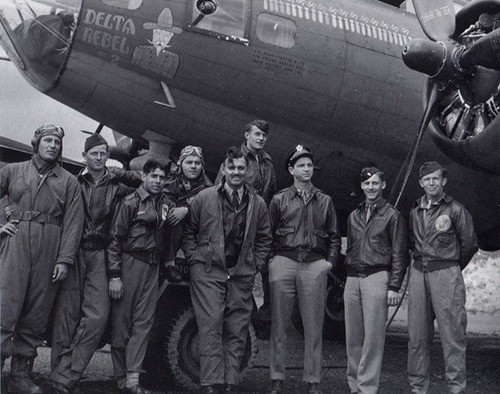
Gable poses for a photo with the crew of the B-17 Delta Rebel after a flight with them in 1943.

For Gable personally, there were problems and they were significant. MGM couldn’t let him serve as an enlisted man—how would that look for a king to be a private or noncom? So he served as a captain with a specialty in aerial gunnery…but gunners on B-17s were at most noncoms, not officers. The officers on a B-17 were the pilots, navigator, and bombardier. Plus, Gable hadn’t been assigned to a crew from the beginning and hadn’t trained with that crew for grueling months and years in preparation for service with the Eighth. He flew from May to September 1943 on five missions, mostly “milk runs,” which were shorter hops from eastern England over the Channel to targets in German-occupied countries. Practically speaking, Gable had to go on shorter runs because he was an extra man on the plane, taking up space and adding weight. You can see a recap of the Gable missions here. On his only mission to Germany as a gunner/observer, one man in the crew was killed and two others wounded, and this was the mission during which a piece of ordinance nicked Gable’s boot in his gunner’s position in the waist of the plane.

Gable’s bigger problem in the service was being Clark Gable and a center of attention. If ever an organization did not thrive with a celebrity in its midst it was the United States Army fighting the most brutal war imaginable in 1943, and there was Gable distracting air crews just by being around base. It wasn’t going to work; it couldn’t work. So when Gable “ran out of film” after exposing 50,000 feet of 16mm footage, he was sent home to MGM to cut together a feature that would become Combat America.

Gable’s biggest problem was how fast the air war had changed. Since his enlistment in August of 1942, the Eighth Air Force had converged on Great Britain like so many swarms of bees and set up massive operations in and around Norwich. They started sending concentrated bombing missions into Germany right away and got shot out of the skies with sickening frequency. By the time Gable got over there and into the war and made his film and came home, there was no need to make a movie explaining to the civilian population what it was like to be a machine gunner on a bomber—the whole thing was daily news and men were enlisting by the thousands to be glamorous flyboys.

That’s a lot more backstory than you needed about Gable’s feature documentary, Combat America, which meanders through 62 minutes to remind us how little direction Gable had making his picture and how frustrated he must have been with the entire enterprise. He wanted to go and fight and die in the air. Instead he went, fought a little, spent too much time on the sidelines filming and drinking, and lived. Lived to sit in the dark back at MGM looking at real fighting men on a moviola.

The title itself sucks. Combat America: what the hell is that? Audiences had no chance to feel a sense of mystery, a sense of, “I have to go see Gable’s new war picture.” On the other hand the title didn’t matter because the picture got negligible distribution. In the end, Gable had gone overseas on what might have been the greatest snipe hunt in recorded history.

Most of the footage shot in England was MOS (picture with no sync sound). A few times cameras rolled with audio to show Gable interacting with the brass or with other soldiers—non-actors all, men who were terribly self-conscious in the presence of the king. Gable narrates throughout and he’s sincere in the effort. He takes us on tours of ancient British sites, he takes us to character studies of the men of the 351st, he takes us inside pre-flight briefings and through missions all the way to landings back in England. It’s a bittersweet experience watching Combat America because we know where Clark Gable was at this point in his life. A widower who had been launched into mid-life crisis; a man who wanted to serve but ended up (in his own mind) a buffoon among those fighting and dying; a filmmaking professional denied a real goal and the support to do what he did best: make movies, and convey to the people back home what he had seen, heard, and done in the war. It soothed Gable not at all that he earned the Air Medal and a Distinguished Flying Cross, or that Adolf Hitler put a bounty on the king’s head.

Combat America is available complete on YouTube, although the print looks like Lake Erie stands between it and you; one only wonders how it could benefit from Blu-Ray restoration, if the original elements even exist in the MGM vaults.

The Many Stops of the Gables


Growing up in Pennsylvania, I would often see signs on old buildings that read, “George Washington slept here.” GW was so famous it mattered where he slept. Similarly, there are places all over the Southwest that claim Clark Gable and Carole Lombard slept there, even though there seems to be no documentation that they ever did.

Owners of the Oatman Hotel in Oatman, Arizona, claim that the Gables spent their honeymoon at the hotel following their March 29, 1939, elopement to nearby Kingman, Arizona. Further, it is claimed that the ghosts of the Gables haunt the hotel, even though evidence shows that Carole and Clark (on a rare day off from Gone With the Wind) were driven to Arizona, got married, and headed straight back to Hollywood in time for a next-morning press conference announcing their union at Carole’s St. Cloud Road home in Bel Air.

Big Barbee Lake in Indiana is another supposed honeymoon location for the movie star duo. Now there was a commute for a Rhett Butler on 24-hours’ leave.

Fireball: Carole Lombard and the Mystery of Flight 3 by Robert Matzen

Indeed, welcome to the many honeymoon spots of Gable and Lombard.

The Ingleside Inn in Palm Springs, California, has also put in a claim as the spot where the lovebirds honeymooned, even though this interlude would have required a desert detour of 240 miles in the wrong direction on a tight timeframe since Clark was using his day off to hitch his bride. I’m not saying that the Gables never stayed at the Ingleside Inn—in fact, I’d be interested to see their names on the register to confirm the stay. It would be great to add this fact to existing scholarship on the pair.

Palm Springs seems to have been quite popular with Mr. and Mrs. G for honeymooning as they are reported to have spent their wedding night at The Willows, an historic Palm Springs inn that was frequented by their close pal, Marion Davies. This one at least has Davies as a legitimate connection to the couple, and Davies was renowned for entertaining early and often. Maybe Carole and Clark went to see her at some point, although I’m not sold it was on their wedding night.

Then there’s the Palm Springs estate that Ma and Pa were supposed to have owned in the Old Las Palmas section that was recently offered for sale at more than $2M. Mind you, this is penny-pinching Clark and Encino ranch-owning Carole that supposedly motored on over to Palm Springs to this posh estate and lived there. Here’s why I’m not buying this one at all:

  • They already had a home and loved its seclusion. They didn’t need to buy an estate in Palm Springs—they already had one in Encino.
  • When they wanted to get away from it all, the Gs went as far away from civilization as possible into wilds so remote that there was no running water and no electricity. To Carole and Clark, the wilderness was escape. Palm Springs wasn’t escape.
  • No one that I’m aware of in their inner circle ever mentioned Palm Springs as being a destination for the Gables. Much later Clark and his last wife Kay would build down the road from Palm Springs in Bermuda Dunes, CA—a vacation home he would enjoy for less than a year before his death.
Fireball: Carole Lombard and the Mystery of Flight 3 by Robert Matzen

Here is the Pioneer Saloon back in the day. Judging by the auto and attire, this shot was taken in the era of Gable’s supposed visit.

I’m reminded of the Pioneer Saloon in Goodsprings, Nevada, where Clark Gable waited out the hours as search parties hunted for his wife’s downed plane. There are cigar burns on the top of the bar that go all the way back to Gable’s dark days at the Pioneer. Hour upon hour of waiting, of not knowing. Clark even fed coffee to rescuers and bought an old prospector false teeth.

There’s only one problem: No evidence supports the legend. None at all. Common sense doesn’t support it either. Gable flew to Las Vegas by Western Air charter in the dead of night and was sequestered by his MGM handlers at the El Rancho Las Vegas Motor Hotel a half hour from Goodsprings. The last place MGM would allow Gable to be was the Pioneer Saloon because that’s where the reporters hung out waiting for definitive word on the fate of Carole Lombard and the 21 others aboard TWA Flight 3. Gable was in shock and unable to interact with anyone, let alone reporters. Yes, Gable was near the Pioneer Saloon because he had to pass by on his way up 99 Mine Road to the base camp; he demanded to be taken to base camp and he was, so he did pass by the Pioneer Saloon, but he didn’t hole up there as much as your imagination tells you that he did. Hell, even I fell for the legend of the Pioneer Saloon when I stopped by. Even I could imagine Gable in here pacing the wood floor. The Pioneer reeks of history and one of its walls is covered with newspaper accounts of the crash and search. I haven’t come out against the Pioneer’s claims up to now for the simple reason that even though this legend isn’t true, it should be true. It’s an utterly tragic, heartbreaking moment in time, even if it never happened.

Fireball: Carole Lombard and the Mystery of Flight 3 by Robert Matzen

The Pioneer Saloon in dusty and historic Goodsprings, Nevada. Right before taking this shot, I raked my leg on a cactus and the next day, climbed Mt. Potosi.

There’s a bottom line here based in fact: After all these decades, the names Clark Gable and Carole Lombard still have drawing power. These two were what Loretta Young called “juicy people” and son of a gun, they’re still juicy today. Somebody on Facebook said this morning, this morning mind you, “They were more in love than any couple I know.” Well, if you can see that from a distance of 70 years, then OK. As the man once said, “When the legend becomes fact, print the legend.” Long ago they printed the legend at the Ingleside Inn, the Willows, the estate in Old Las Palmas, the Oatman Hotel, and the Pioneer Saloon. When I buy a hotel or B&B, the first thing I’m going to do is print the legend again. I don’t know yet which room Carole and Clark stayed in; I’m sure one will seem like them when the time comes.


Thanks to Marina Gray for info on the Palm Springs Gable-Lombard connections and for the lowdown on Big Barbee Lake. Thanks to Larry Selkow for information on the Ingleside Inn, which got me to thinking about the very busy honeymooners.

Mystery Woman

You remember how I posted a picture of James Stewart and Errol Flynn and jokingly said one of the women with them was Marge Eddington just to see if you were paying attention? Well some of you were and stated that this is NOT Marge Eddington, mother of Nora Eddington Flynn Haymes Black, who in turn was the mother of Rory Flynn, who co-hosted an evening of Errol Flynn pictures this past Tuesday evening on Turner Classic Movies. Rory was one of those saying this pic did not show the elusive Marge—David De Witt did a posting featuring the photo on his excellent Errol Flynn blog.

Actually, I could have sworn it was Marge. There’s a facial resemblance to Nora and her daughters. But to me the takeaway is that people are reading this column and it’s moving them to thought and action. I’m happy to review comments by new participants like Betsy, who commented on recent Carole Lombard columns.

Errol Flynn Slept Here by Robert Matzen

Uncomfortable James Stewart, the mystery woman, burr-under-his-saddle Errol, and his wife Nora. We still don’t know the context for this meeting. Also note that Flynn at six-foot-two is still looking up at the towering Stewart–something else to make Errol uneasy.

At any rate, below is a photo of Marge from Nora’s landmark 1960 tell-all, Errol & Me, which paints Errol none too kindly as a date-rapist and drug addict. By the time I knew Nora 20-some years later she was anything but an iconoclast. She had come to terms with all the facets of her ex-husband’s character, the good and the bad, and was feeling quite protective of his memory.

Errol Flynn Slept Here by Robert Matzen

Marge and Errol captured in a photo from Errol & Me. This photo would have been taken several years after the Stewart-Flynn photo op. So you are SURE that if you take the cat’s-eye cheaters off this woman, she’s not the one in the poodle perm seen in the photo above?

The funny thing is that the identify of the woman is a topic of discussion, yet no one has commented on the event that brought James Stewart and Errol Flynn face to face, and no one has noted the discomfiture of both the males in this photo. Stewart has forced a smile and stands there stiffly, hands in pockets (we do that when we’re on guard), as if counting the seconds until he can exit stage whatever; Errol is wearing his most smug, unfocused expression of disdain. Yet here are these two women who appear to be genuinely thrilled to be in Stewart’s presence at a time in his career when he wasn’t anywhere near the cult symbol that he would become with the re-emergence of public domain It’s a Wonderful Life. He was just another leading man in trouble at the advent of television. If this is 1948, which Tom Hodgins believes, Stewart was in the process of reinventing himself with pictures like Call Northside 777 and Rope. In retrospect it turned out to be a good Stewart year, although I’m not sure it seemed so to him at the time.

If this is late 1949 or 1950, then it’s after Nora and Errol split up. One critic claims it’s impossible that the photo was taken in 1950 for this very reason: Errol and Nora were divorced in 1949. However, Mr. Critic, Marge continued to work at Mulholland Farm, and according to Nora herself, Errol grew more civil after they split. Plus the fact that Errol continued to participate in the upbringing of his children. For the unorthodox Flynn, squiring your ex to a formal affair is well within the sphere of credibility.

Whatever the truth of this photo may be, Tom Hodgins has surfaced quite the Kodak moment.

The Machine

Fireball: Carole Lombard and the Mystery of Flight 3 by Robert Matzen

The stars of Deliverance, Burt Reynolds and Jon Voight (as much as you would like to believe it’s not Jon Voight but really Robert Matzen).

I haven’t thought much about Burt Reynolds for a long time. Way back when, I remember thinking he was pretty cool. Burt got his start in TV as brooding half-breed Quint on Gunsmoke and moved to his own detective TV show before hitting it big in Deliverance and then The Longest Yard. I remember liking him in this romantic western he made called The Man Who Loved Cat Dancing when I was a kid, but right after The Longest Yard, I lost interest in Burt Reynolds. I dismissed him as a one-trick pony who could only play Burt Reynolds. Granted, in Deliverance he was good, and he would call Deliverance “the best film I ever did,” a film that “gave me credibility as an actor.” What an unsettling picture. It was made by John Boorman in 1972 when movies had taken a hard left into nastytown, and thankfully Boorman wasn’t in an artsy mood when he exposed his film in the wilds. Here’s the Deliverance trailer to give you a three-minute primer on one startling weekend on the rapids. Deliverance also features Jon Voight, who people used to mistake me for (and often) 25 years ago. These people weren’t deterred by the fact that Voight had many years and four inches on me and there was this one time in a Sizzler in L.A. that was downright embarrassing when a woman exclaimed, “Oh my God!” and attracted a lot of attention because she thought I was Jon Voight. I would like to think that Jon Voight wouldn’t be caught dead in a Sizzler. All the attention might have been flattering if I happened to like Jon Voight’s looks, which I never did. But I digress.

Fireball: Carole Lombard and the Mystery of Flight 3 by Robert Matzen

Long before Katniss there was … Burt.

Right around the time of Deliverance, Burt Reynolds appeared as the gatefold in Cosmopolitan, which was beyond a big deal at the time. You can go ahead and Google “Burt Reynolds Cosmo” and the image will come right up. Reynolds may not have invented the beefcake photograph, but he sure did give the concept a boost at the height of the Sexual Revolution. He spent the 1970s as the definition of virility and put the cherry on his own sundae by directing and starring in the gritty cop picture Sharky’s Machine in 1981.

The real machine was Reynolds himself, who starred in a picture I will always have a soft spot for, The Man Who Loved Women as a man who, well, loved women, as he was transitioning into Phase II of his career as panderer to the lowest common denominator of audiences in several car pictures, Smoky and the Bandit, Cannonball Run, Stroker Ace, et al ad nauseam. Some of these co-starred two-time Oscar-winning actress Sally Field, with whom Burt fell “in like” (his term) for a while. But wait. Wasn’t it about 15 minutes ago that Burt was young stud to cougar Dinah Shore and they carried on admirably for quite some time? I mean, these two were hot stuff there for a while despite a 20-year age difference; hot stuff to the extent that when you saw them together, you just knew that the headboard had been rockin’ and would soon be rockin’ again. I will double-check Webster’s, but I am pretty sure that the definition of “chemical attraction” still reads, “See Burt Reynolds and Dinah Shore.” [Note to whippersnappers: Tennessee-born Dinah Shore started out as singer around the beginning of World War II and went on to greater fame as a TV personality in the 1960s and 70s–the Oprah of her day. She was soft-spoken and demure, except with Burt. Dinah passed on in 1994 at the age of 77.]

Fireball: Carole Lombard and the Mystery of Flight 3 by Robert Matzen

Dinah’s daughter pleads with Mom to steer clear of Bad Boy Burt. But there was no fighting the attraction.

I missed the entire 1990s Reynoldsance—Phase III of his career—when Burt (apparently, as I’m just reading this) appeared in two big pictures I never saw, Striptease, which I didn’t watch because I feared becoming impotent at seeing Demi Moore strip, and Boogie Nights, which was a concept that had no appeal for me at all.

That’s my background for an unsettling-going-on-sad experience just now as I thumbed through 674 Burt Reynolds-owned items that are being auctioned off December 11 and 12. These are hard times for Burt, apparently, and this scenario is all too common these days for people living beyond their capacity to produce income. Burt’s awards are on the block, everything from high school sports trophies to many Top Box Office Star awards (proving the vast appeal of the Reynolds machine), several People’s Choice Awards, and an Emmy. Burt’s gun collection, real and prop weapons, are going. Burt’s cars, going. Dozens and dozens of photos and books inscribed to Burt by presidents, athletes, and fellow actors will be sold off. Clothing, pieces of his art collections—both paintings and statuary—will scatter to the winds.

Why would somebody want a Top Box Office Star statuette that was given to somebody else? If you didn’t earn it yourself, why put it on your mantel? But mine is a minority opinion: Almost everything has bids, mostly multiple bids, so I figure that Burt will do all right out of this endeavor. He claims he is only getting rid of stuff he’s tired of having around, and I’m gratified to see that there are only four Dinah Shore items being offered, three of them canvases she painted. It would be nice if there were many Dinah items in Burt’s possession; items he was determined to hold tight. (Yes, I have a special fondness for this couple and their time together.)

Fireball: Carole Lombard and the Mystery of Flight 3 by Robert Matzen

Reynolds has always been a larger-than-life character, as was Dinah. Together the chemistry was off the charts.

I hope I make it to death before my estate hits the auction block. I like my stuff too much to see it go prematurely. Actually, I was sort of hoping to build a great pyramid and take it all with me to the afterlife, and I’m feeling a little down that Burt didn’t think of this as well. After spending some time looking back at Burt Reynolds, I appreciate him a lot more. Is it sacrilege to label Burt Reynolds as Clark Gable in the same place but at at a different time and without the backing of the biggest studio in Hollywood? I’ll let you ponder that one as I admire Burt’s life of accomplishment. Believe me, I’ve just skimmed the surface here of a career spanning more than 50 years. Reynolds has hobnobbed with the elite. He has done good work that he’s proud of, and he has entertained millions. Now I hope he can go on and live a comfortable life post-auction and enjoy a grand Reynoldsance IV.

Fireball: Carole Lombard and the Mystery of Flight 3 by Robert Matzen

One more for the road. They were in popularity something akin to the Gable and Lombard of the 1970s.


Hammer Time

Just call me Robert Matzen, influencer. A person of influence. One of the influential.

It’s like this: the TCM Hollywood auction conducted by Bonhams New York on Monday included several Fireball-related items of Carole Lombard, Clark Gable, and others in the storyline. These came from two sources: some were given by Clark Gable’s widow, Kay, to a World War II collector who consigned them to the auction. Others were consigned by the family of Otto Winkler and became available after the passing of Jill Winkler’s niece, Nazoma Ball, with whom I worked closely to understand and develop the characters of Otto and Jill. This group of material included a portrait of Clark Gable inscribed to Jill, several notes written by Carole Lombard to Jill or the Winklers, a handwritten postcard from Clark to Jill, and some personal candid photographs of Clark and Otto taken at the MGM studios.


Fireball: Carole Lombard and the Mystery of Flight 3 by Robert Matzen

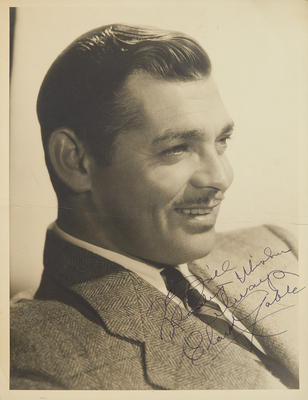
The portrait that Clark Gable inscribed to Jill Winkler.

As readers of Fireball know, Otto Winkler was Clark Gable’s personal publicist at MGM. Gable entrusted Wink with the well-being of Carole Lombard, Clark’s wife, during the bond tour to Chicago and Indianapolis. Gable wasn’t close to many people and realized after the crash of Flight 3 and the passing of Lombard and Winkler that Otto had been his best friend in spirit and deed.

It was Otto who drove Clark and Carole to Arizona for their elopement at the end of March 1939 while Jill stayed back in Hollywood and pretended to be Carole for a day, driving Carole’s car and running Carole’s errands. After that the couples became pals, and along with Wink, Jill lived a storybook life with King of the Movies Clark Gable and his queen, Carole Lombard Gable. These were characters that had been all but lost to antiquity; few knew Otto Winkler from Adam or Jill from Eve. In fact, if I hadn’t been able to spend so much time with Jill’s niece, a woman who at age 93 also remembered Otto in life, I wouldn’t have been able to access these characters from the inside. The narrative of Fireball brought them to life once again and made their story so human and so important.

I was a phone bidder for the Bonhams auction on Monday and placed bids on five lots: the Gable-Winkler candids; the Lombard correspondences to the Winklers, the Clark-to-Jill candid, and the handwritten postcard. I also took a flyer and managed to place one bid on the worn 14k wedding band that—according to documentation from Kay Gable—was given to Clark by Carole. But bidding got out of hand mighty fast and hammered at an astonishing $40,000.

Fireball: Carole Lombard and the Mystery of Flight 3 by Robert Matzen

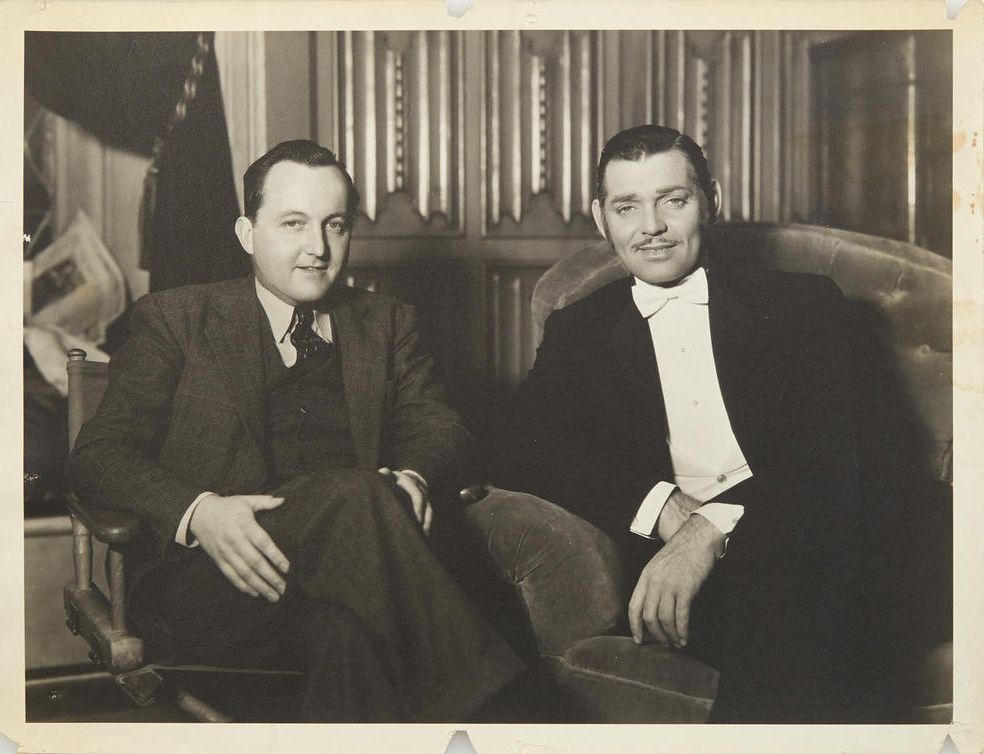
A candid photo once owned by Otto Winkler shows Otto and Clark Gable at MGM in 1937.

Afterward, I sat there with new awareness of the impact of Fireball, because I had lost out in a furious wave of bidding on all the lots except the postcard from Clark to Jill, which was the most significant item and one that will factor into the revised edition of Fireball. The other items all went at prices that were, to me, beyond practical. I felt then, as the dust was settling after my involvement in the Bonhams auction, that Fireball had affected the value of the Winkler-related items. And that was a good feeling.

The auction was, for the most part, about what I expected. It is a rare bird who wants a costume worn by Lisa Gaye in 10 Thousand Bedrooms. But the items from Casablanca that I mentioned in my last column blew the roof off of Bonhams, as reported in the New York Times. The playscript Everybody Comes to Ricks, which was the basis for the Casablanca story and which I pooh-poohed for its pre-auction estimate of $40,000-80,000, hammered at $85,000 (take that, Mr. Influencer). The battered front doors to Rick’s Café Americain, rescued at some point from the Warner Bros. prop department, fetched $92,000 ($115,000 with buyer’s premium); the prop-department-created letters of transit hammered at $95,000 ($118,750). And Sam’s piano hammered at a smart $2.9 million—or $3,413,000 with add-ons. Also of note, Aragorn’s sword from Lord of the Rings: The Return of the King (2003), hammered at $360,000, and the elaborate Cowardly Lion costume worn by Bert Lahr in The Wizard of Oz (1939) hammered at $2.6 million, topping $3M with buyer’s premium. Watch out I don’t write a book about these pictures, or the values will go up still further. After all, I am an influencer.

Everybody Comes to Ricks–Even Today

Show of hands—who here hasn’t seen Casablanca? If you’re a regular who’s been drawn to my columns by the explorations of old Hollywood, I know you have seen it, but if you stumbled upon Fireball and were surprised by the story and content and haven’t lived and breathed Hollywood’s Golden Era, then maybe you have not seen Casablanca and all I can say in that case is, invest 110 minutes. You won’t be sorry. In a nutshell, a multi-national cast of characters with competing interests meet up on the neutral soil of Casablanca, French Morocco, in the middle of World War II, at Rick’s Café Americain. Many of these people are seeking to flee North Africa for freedom from Nazi oppression and they wait, and wait. Letters of transit have been stolen from a murdered Nazi and these are carte blanche documents guaranteeing free passage out of Casablanca for any bearer.

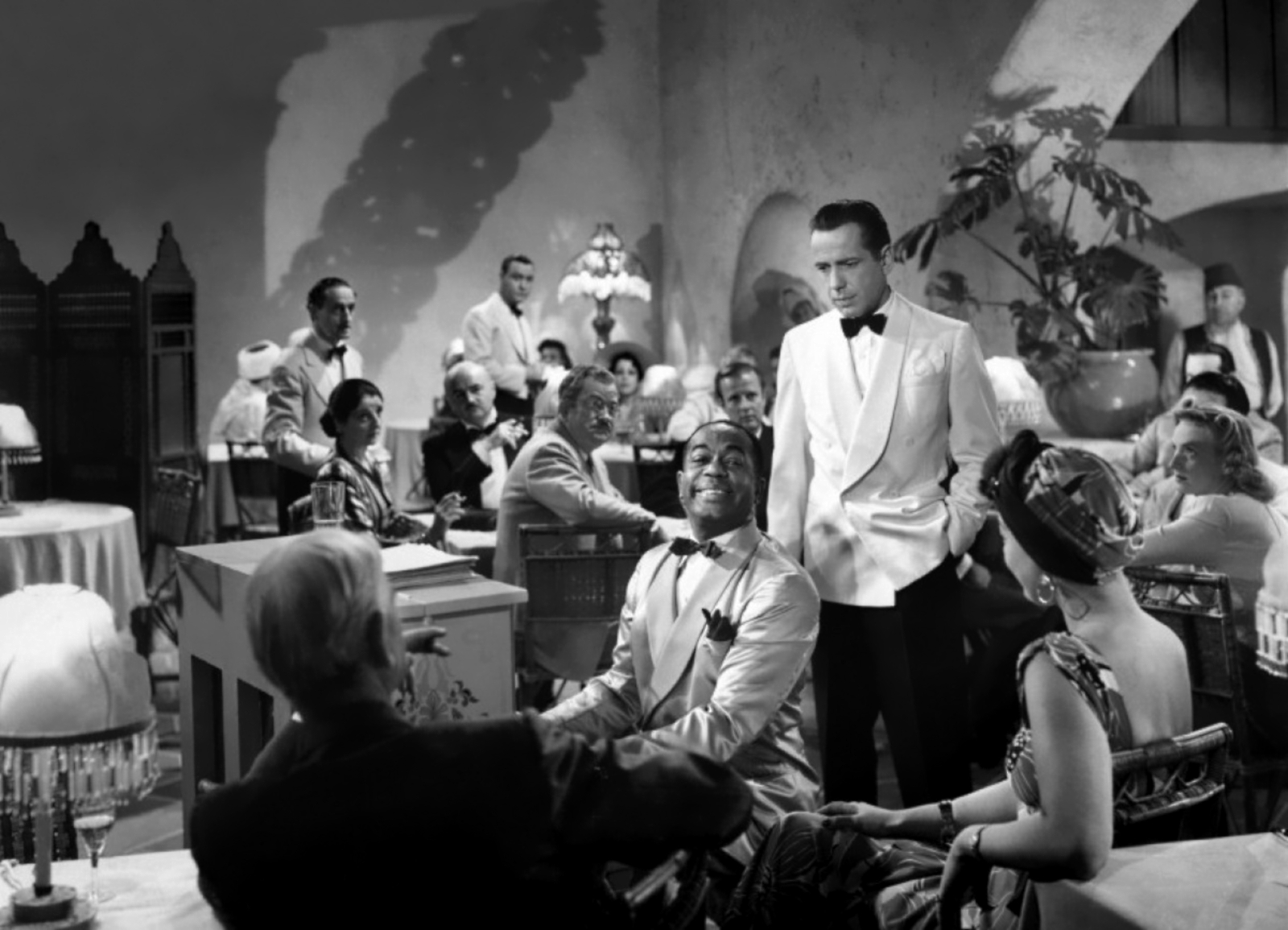
On Monday November 24 Bonhams New York is auctioning off a collection of items related to Hollywood’s Golden Era. Included are a number with ties to Casablanca, most notably Sam’s piano, the one actor Dooley Wilson played when he performed As Time Goes By and other numbers in the film. The letters of transit were hidden in that piano, you know. For, oh, what, a million—three million?—you can buy Sam’s piano and hide stuff of your own inside it. Sam’s piano would be a pretty cool thing to possess, and I know just where I’d put it, in the great room by the fireplace. I’d invite my piano-playing friends over to try it out. But I’m not buying big stuff these days so I plan to stay out of Monday’s fray at Bonhams.

Fireball: Carole Lombard and the Mystery of Flight 3 by Robert Matzen

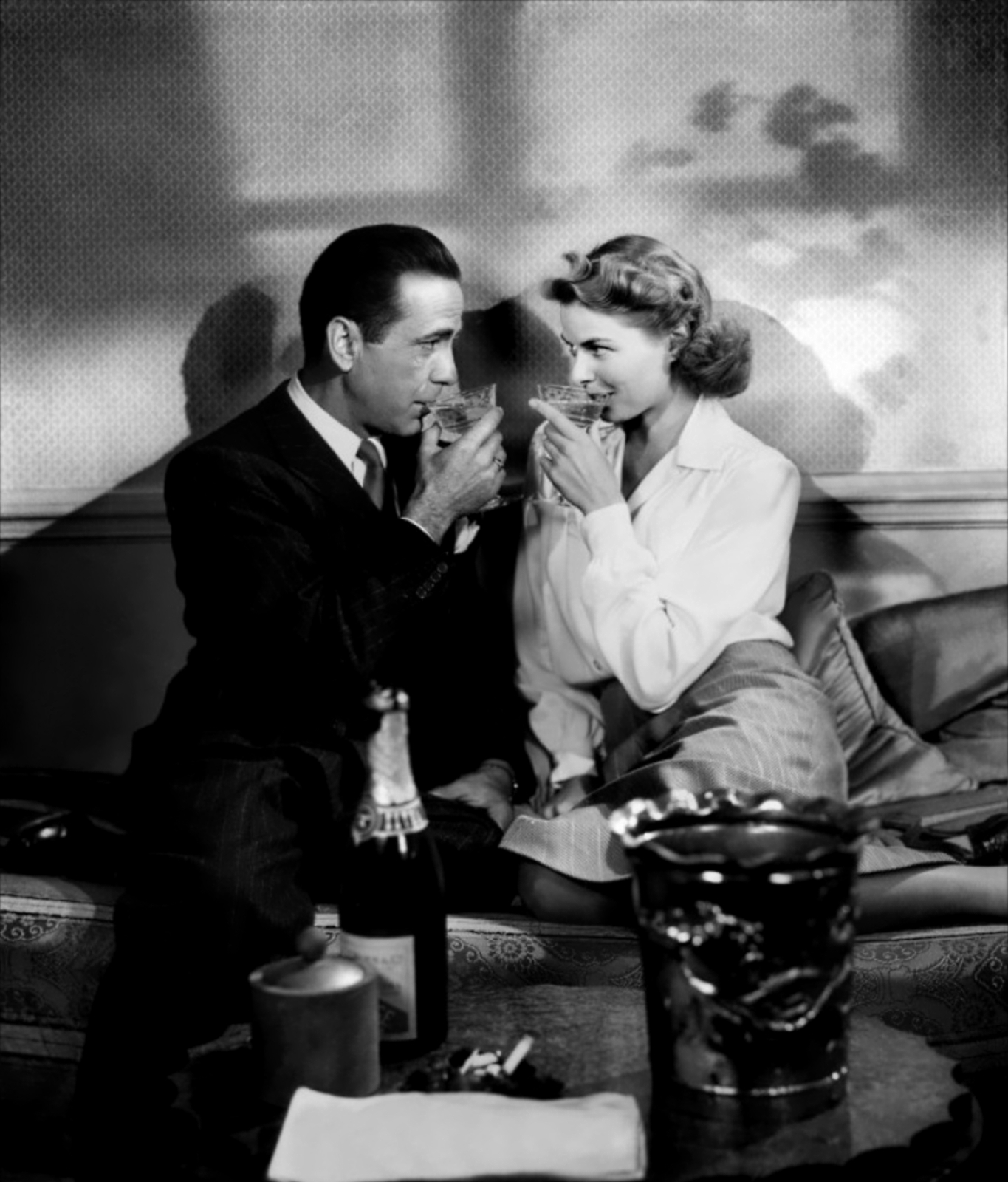
Rick and Ilsa during their mad fling in Paris; the only time he was ever truly happy?

I think it’s possible the auction-house experts are crazy given the values placed on some of the Casablanca-related items to be offered on Monday. There’s the first script that reached Warner Bros. called “Everybody Comes to Rick’s” along with the studio reader’s comments. That’s a unique item, all right, but would you pay $40,000–60,000 to own it? If the low-end estimate is $40K, does that mean bidding opens at $20K? I’ve been around Hollywood collectibles since high school, and scripts have never been that highly prized. Even when director or star notes from classic pictures are written in the margins, scripts haven’t gone as high as $40K that I’m aware of. I’ll be curious to see if this one meets reserve, especially since Warner Bros. bought the concept and then tinkered and rewrote, resulting in an endless stream of blue pages (last-minute revisions were always done on blue paper so all would be alerted to the new material—particularly the actors who had just memorized the old material).

Fireball: Carole Lombard and the Mystery of Flight 3 by Robert Matzen

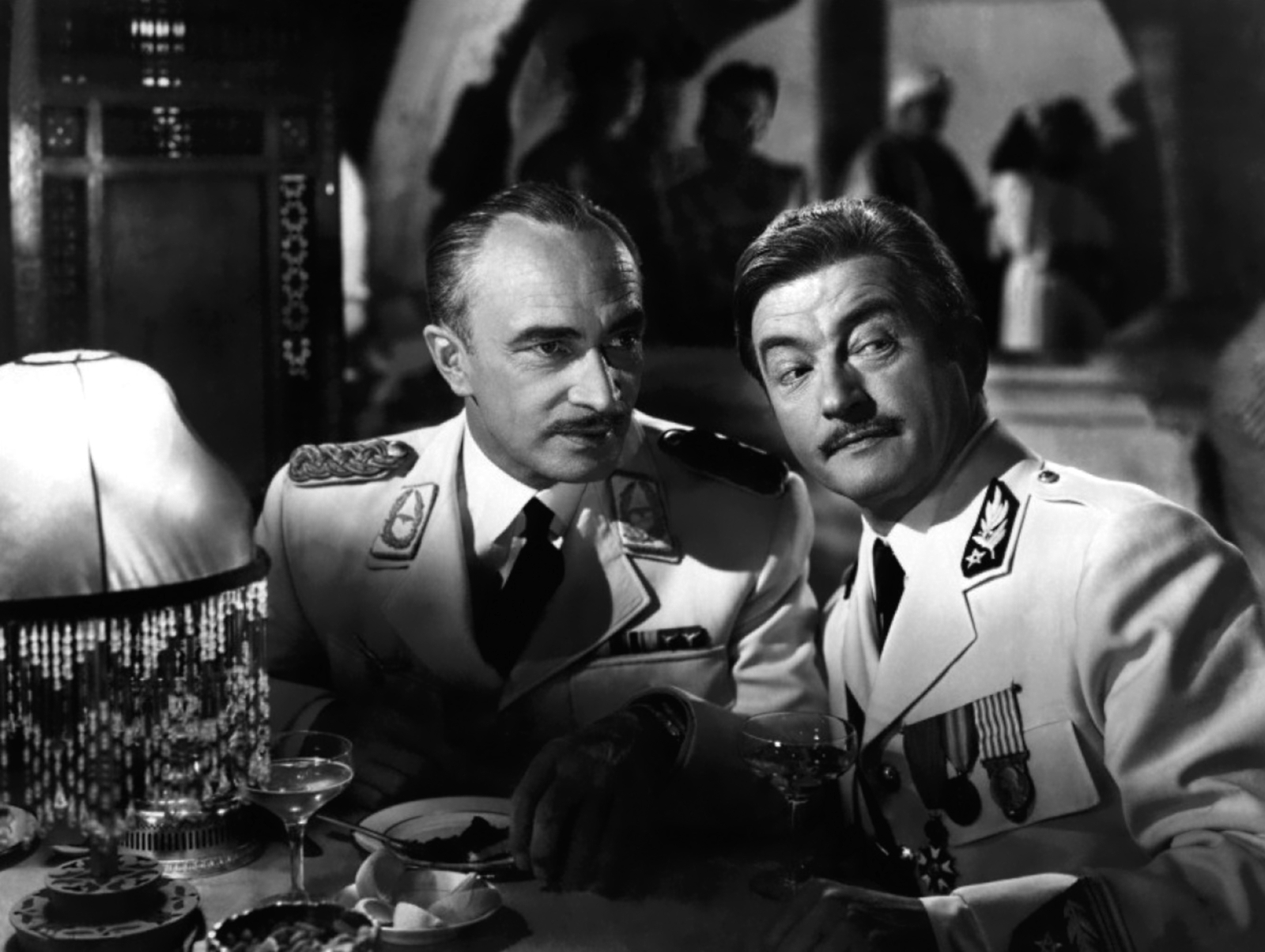
Rick looks at Ilsa, who has just walked into his gin joint, as Capt. Renault and Victor Laszlo observe.

How can the preliminary script command $40K and producer Henry Blanke’s production file only rate an estimate of $12–18K? I don’t get that one at all since the file includes Lenore Coffee’s suggestions for darkening the storyline by having Rick betray Victor and Ilsa. As noted in Errol & Olivia, Coffee was a brilliant script doctor employed by the various studios; she was doing a lot of work at Warner Bros. in the early 1940s. Censor Joe Breen’s Production Code criticisms are contained in the Blanke files too, and I’ve always wondered about two aspects of the final picture that survived the censor: 1) all the references to Capt. Renault’s trade of sex with young girls for police favors; and 2) 18-year-old bride Annina’s willingness, even eagerness, to make the sex trade with Renault and, by implication, with Rick. Perhaps the answers can be found in these documents; it seems to me that the salacious aspects of Casablanca must have really perked up first-run audiences at a time when other studios were offering up virginal product with the likes of Betty Grable, Alice Faye, and Deanna Durbin.

Fireball: Carole Lombard and the Mystery of Flight 3 by Robert Matzen

Barely legal, but not what Rick is after. Just-18 Annina will pay any price to get out of Casablanca.

I wrote a column a few years ago on my late, lamented Errol & Olivia blog opining that Ilsa had never loved Rick and was using him and knew all along she’d stay with Victor. Recent viewings have made me second guess myself; the ambiguity of the characters and their motives is one of many qualities of Casablanca that keeps people coming back for more. Consider them for a moment…

  • Rick Blaine, the cynic with a past who allowed himself to fall in love once, just once, with the mysterious Ilsa. Rick invested himself in the relationship and knew happiness—perhaps never was Rick truly happy except with Ilsa. But she dumped him. Dumped him cold. Dumped him in the rain. And forced him to go on with only memories of happiness and a determination never to stick his neck out again.
  • Ilsa Lund, the icy closed book of a woman who gives herself to Rick when she believes her husband is dead. But he’s not dead, and this news is what causes her to dump Rick cold. In the rain.
  • Victor Laszlo, husband of Ilsa and world-renowned devil to the German empire. He sports a dashing scar and an air of high competence. He knows his wife has had a fling with Rick, but Victor has got his sights set far higher than any affair of the flesh.
  • Louis Renault, corrupt prefect of police but a man of great charm and, above all, utter pragmatism. We feel like we can trust Louis because he makes no bones about the fact that he is corrupt. He’s impossible not to like.
Fireball: Carole Lombard and the Mystery of Flight 3 by Robert Matzen

Major Strasser and Capt. Renault observe the goings-on at Rick’s Café American, primarily the effect of newcomer Ilsa on previously impervious Rick.

The sets are overrun with character actors, each with a few lines here and there. But all these actors are memorable; they all get a moment of great dialogue and they all become real. The wretched city of Casablanca is a character too, recreated modestly on the Warner backlot but teeming with “scum and villainy” (George Lucas would use Casablanca as the inspiration for his Mos Eisley spaceport 35 years later).

Fireball: Carole Lombard and the Mystery of Flight 3 by Robert Matzen

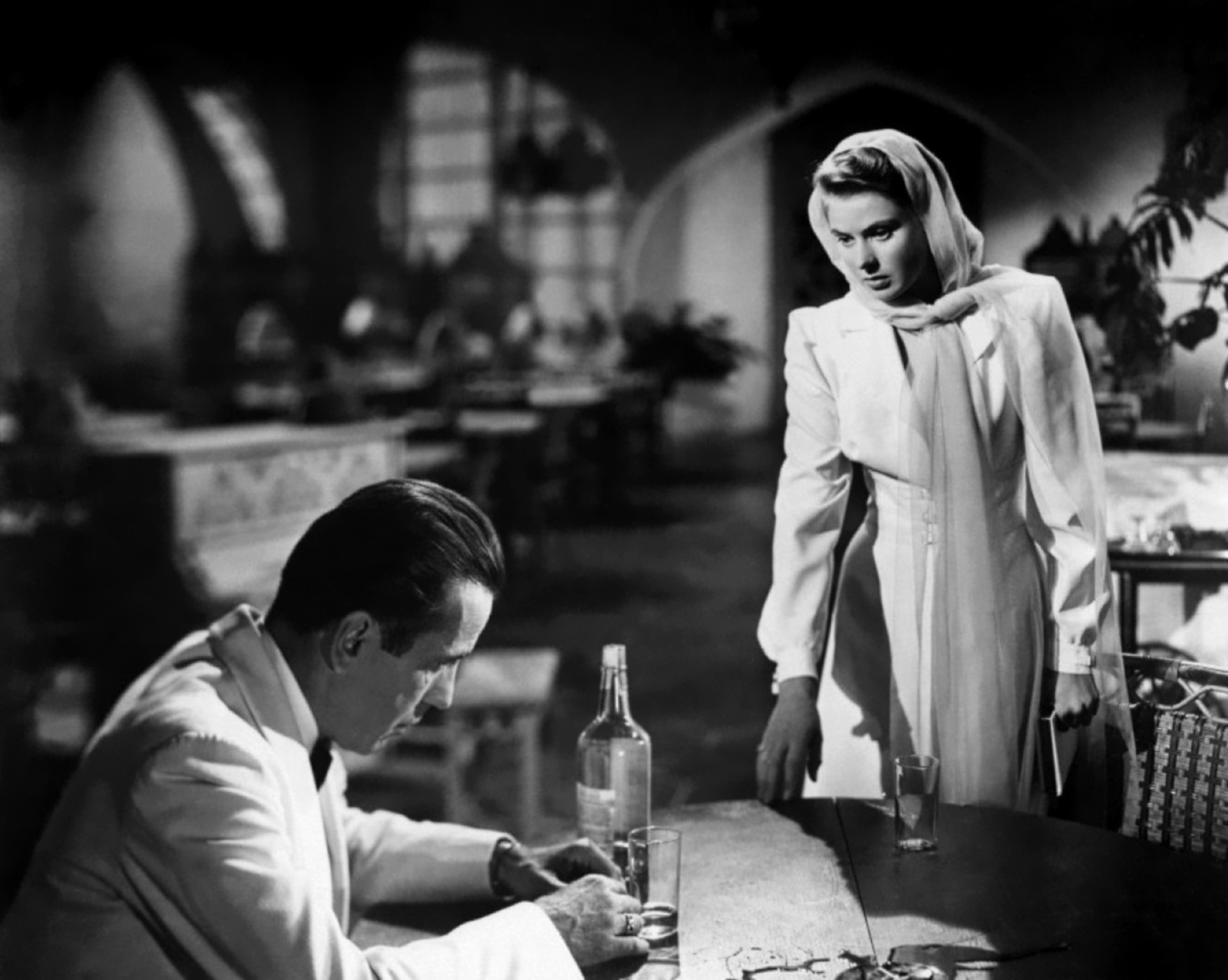
You bitch! Look what you’ve done to poor Rick.

I’ve directed a picture or two in my life, and the introduction of the city of Casablanca as the setting for this morality play is jaw-dropping. Director Michael Curtiz establishes a pesthole packed with desperate humans in just a moment. It’s a hot, uncomfortable place overrun with predators and prey. Inside Rick’s the camera dollies in, dollies out, and the shots are static when they need to be, or close, or distant, each one perfect from a director who was always good and here, never better.

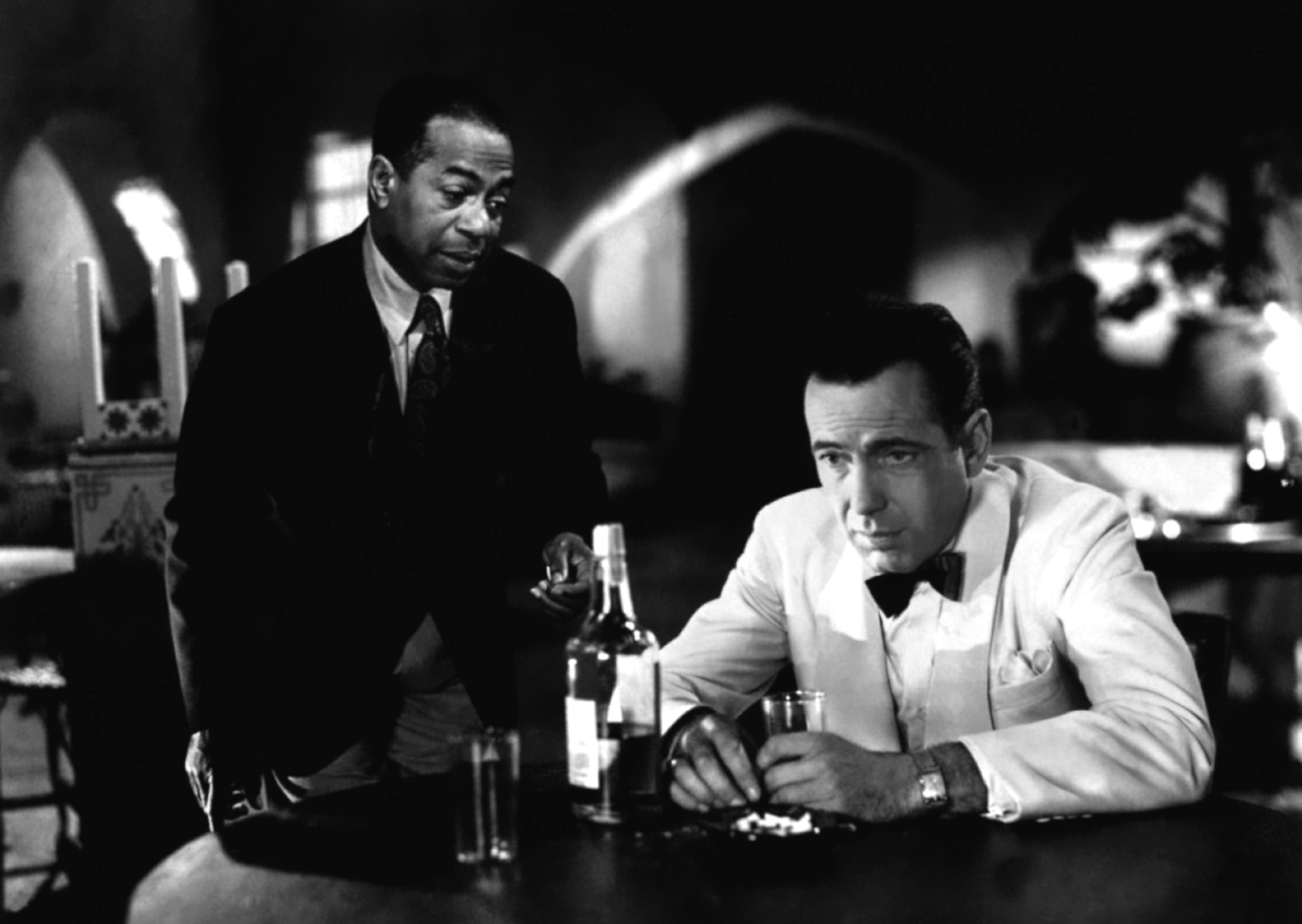
Oh, the dialogue. Ilsa comes back into Rick’s life after dumping him and she’s on the arm of a larger-than-life hero. What does Rick do? Late at night we find him inside his closed bar, drinking, alone, in the dark. Ilsa has walked back into his world and ripped the scab, a scab still fresh, right off of his soul. Sam comes in and finds Rick and knows what his boss is going through. Sam knows all about Rick and Ilsa—he was with Rick in the rain for the dumping. It’s clear that Sam is scared and worried.

“Boss, ain’t you going to bed?” he asks.

“Not right now,” grumbles Rick into his glass.

“Ain’t you planning on going to bed in the near future?”

“No.”

“You ever planning on going to bed?”

“No!”

“Good,” says Sam. “I ain’t sleepy either.”

Fireball: Carole Lombard and the Mystery of Flight 3 by Robert Matzen

“You ever plannin’ on going to bed?” asks Sam to Rick. “No!” he snaps.

African Americans at this time were, as a rule, used for comic relief, but Sam is a friend, an equal, and a character deeply drawn. But they all are in this picture. Well, except for Major Strasser, the hard-core Nazi and the guy we love to hate.

I wish Bonham’s and the consignors well in Monday’s auction. We will see soon enough if bidders are willing to shell out tens and hundreds of thousands of dollars for this hodgepodge of props, costumes, scripts, documents, and movie posters connected with classic film. I wonder if the letters of transit have expired—they might come in handy someday and one of them is for sale in this auction, at an estimated $100–150K. One thing seems clear—Casablanca has stood the test of time as well as any picture from the Golden Era, and shows no signs of slowing down. Because it is still so popular, I wouldn’t be surprised to find Sam’s piano on display at a Vegas casino sometime soon.

Fireball: Carole Lombard and the Mystery of Flight 3 by Robert Matzen

Sam plays the famous piano as a moribund Rick looks on.