fireball carole lombard

Immortality Lost/Immortality Found

I had a shock a few moments ago. I was browsing through my Facebook news feed and came upon a story entitled, “Actress Betty White, 92, Dyes Peacefully in Her Los Angeles Home.” The thoughts that went through my mind, Baby Boomer-like, were of having lived with Betty White all my life in one incarnation or other, all the way back to Password and Alan Ludden, and I thought to myself how sad for her cast mates from the current show, Hot in Cleveland.

Then I thought, Oh my God, we’re all mortal. If Betty can go, then, holy shit, I can go too! My bid for immortality, my aging portrait in the attic—poof! Gone in a puff of smoke. Nothing was sacred at that moment because Betty is our bid for immortality, the one that may yet get out alive, working past 90, funny as the Catskills, extra sharp like cheese, and if she can keep going, I can too. We had an unspoken pact, Betty and me, and I’m sure Betty and a few million other Boomers: if you’re all in, I’m all in. We go through life together, and we’ve got each other’s backs. And now she’s gone? Peacefully in her Los Angeles home?

Then I started to read the obit and realized I’d been had. That wasn’t a typo in the headline (and who among us hasn’t cringed at the magnitude and frequency of typos in news headlines and leads these says). She dyes her hair peacefully at home. I was looking at the most clever PR gag in recent memory timed to push new episodes of Hot in Cleveland.

Fireball: Carole Lombard and the Mystery of Flight 3 by Robert Matzen

Betty White: Quotes George Washington that the news of her death has been greatly exaggerated.

The obit is written like a press release, dead pan, and discusses the fact that “she rarely likes to discuss the fact, at least in public, that she is actually a brunette.” It goes on in this vein, and the piece works specifically because we’ve seen so many of these stories of late: James Garner, Richard Kiel, and this morning Denny Miller. We expect bad news—we just didn’t expect it of Betty because of, you know, the pact.

Leave it to Betty to sanction a stunt like this one, because the woman knows funny, even when it strays off the radar grid into the offbeat and to some, off-putting.

But you know what the result will be. Too many people scan these things with one eye, or with one lobe tied behind the backs, and there is going to be one hell of a rumor that Betty White is dead. It’s going to boomerang around the world and come sailing back and land at the feet of Betty White’s still-vertical body that she’s no longer with us. She’ll have that twinkle in her eye and smile that dimpled smile at the thought that she pulled a fast one, or that some hack somewhere wrote a piece about her that circumnavigated the earth.

Personally, the instant I knew this was a PR stunt, I felt like the governor had just sent over a reprieve on my walk to the gallows. Betty White lives! Which means I live! On and on, with the vigor of youth, and funny as cheddar. Just like Betty.

Climbing Every Mountain

I met an author the other year who had written a successful book about a famous battle in U.S. history. In the course of talking about the book, he mentioned that he had never visited the ground, and I was surprised. No, I was shocked, and it changed the way I approach my own writing because, as I thought then and continue to think, how can a writer recount a true story without intimate knowledge of the setting?

Fireball: Carole Lombard and the Mystery of Flight 3 by Robert Matzen

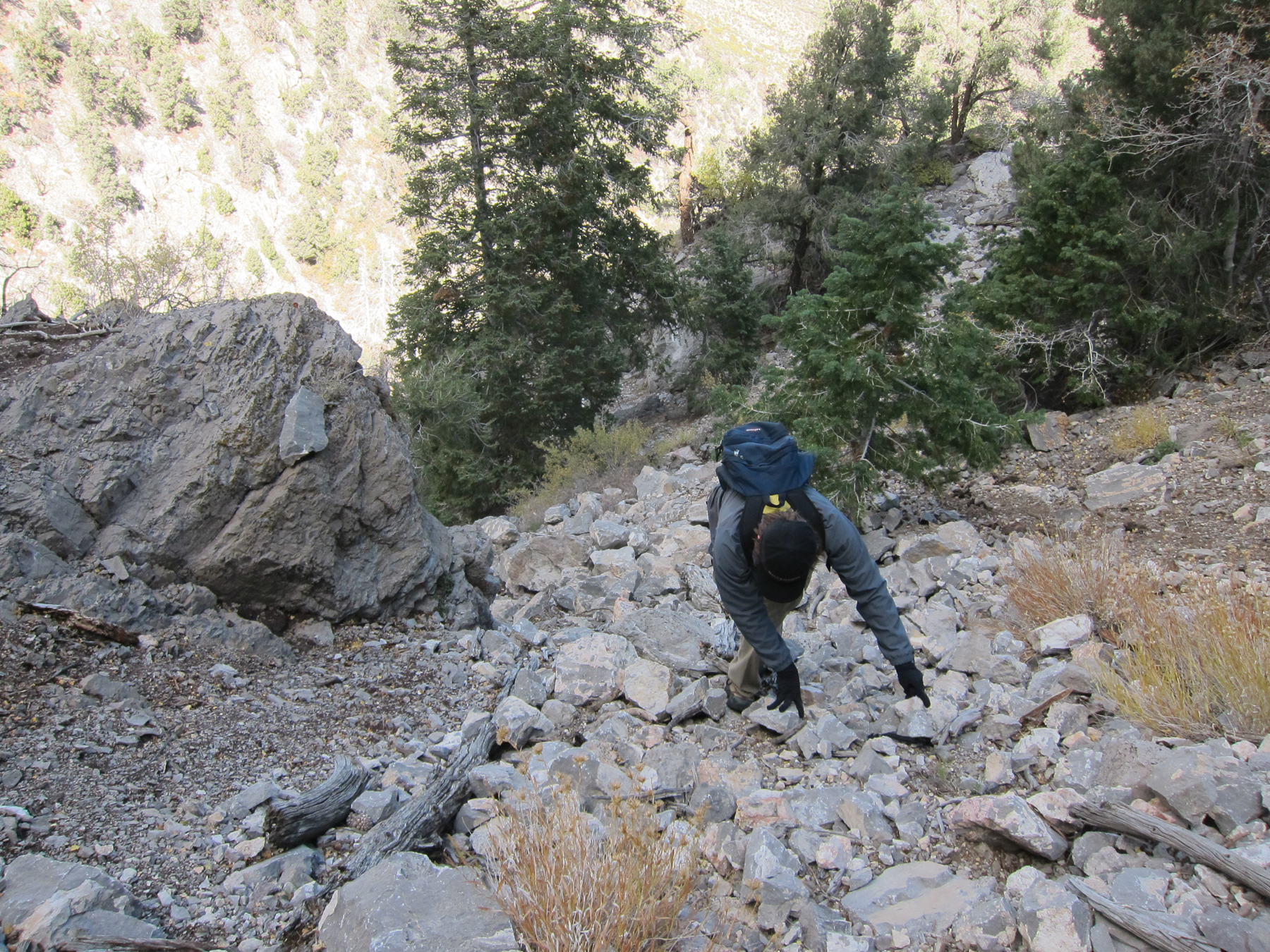
Potosi was unlike any mountain I had encountered in the past. Only through the climb could I get to know it as a character in Fireball.

I climbed Mt. Potosi in part because of this guy and our chat. I knew Potosi was going to be more than terrain on which my cast struggled; Potosi was in itself a character in Fireball and in opposition—Man against Nature—with my heroes. In the past I’ve climbed in mountains, but they were lush eastern mountains, and I’d had no experience with desert mountains with cactus and Joshua trees. So, if I had never climbed Potosi, my inclination would have been to write eastern mountains and not desert mountains. And because I climbed to the site of the crash of Flight 3 over the first-responder route, I could speak of that particular experience up the dry wash and scrambling between the cliffs, then over rises and into hollows and then up into the final ravine. I could speak of every lethal danger because I saw and experienced them.

Fireball: Carole Lombard and the Mystery of Flight 3 by Robert Matzen

You’d think judging by this 1930s photo of the Café Trocadero on the Sunset Strip that these were flat lands. But the Troc was built into a hillside, with a sheer drop behind it–something you would only know from being there.

How can you write a book about Hollywood and its stars without visiting the place and learning that “Hollywood” doesn’t mean a city with defined boundaries? Hollywood is a chunk of Los Angeles, and Beverly Hills, and Century City, and extends toward Culver City and the ocean. Hollywood is ultra-green, overwatered lawns in a desert. It’s volcanic mountains jutting up out of nowhere and houses built into the mountains accessed by goat paths that no one ought to drive over. Hollywood pulses to the beat of its major arteries, Hollywood Boulevard, Sunset Boulevard, Santa Monica Boulevard, which take you, block by block, from silent-era art deco to billion-dollar office buildings in gleaming gold, and from crumbling adobe apartments full of struggling actors to sprawling mansions of those lucky enough and talented enough to score big in show business. How could you write about the Sunset Strip of the 1930s without walking along that little piece of real estate with Ciro’s on one side of the street and Mocambo and Trocadero on the other? How could you even imagine how quaint it is? How confined and built on ledges? How packed in the stars were when they hit the town? Everybody had to know everybody just because of the terrain of the land they call Hollywood.

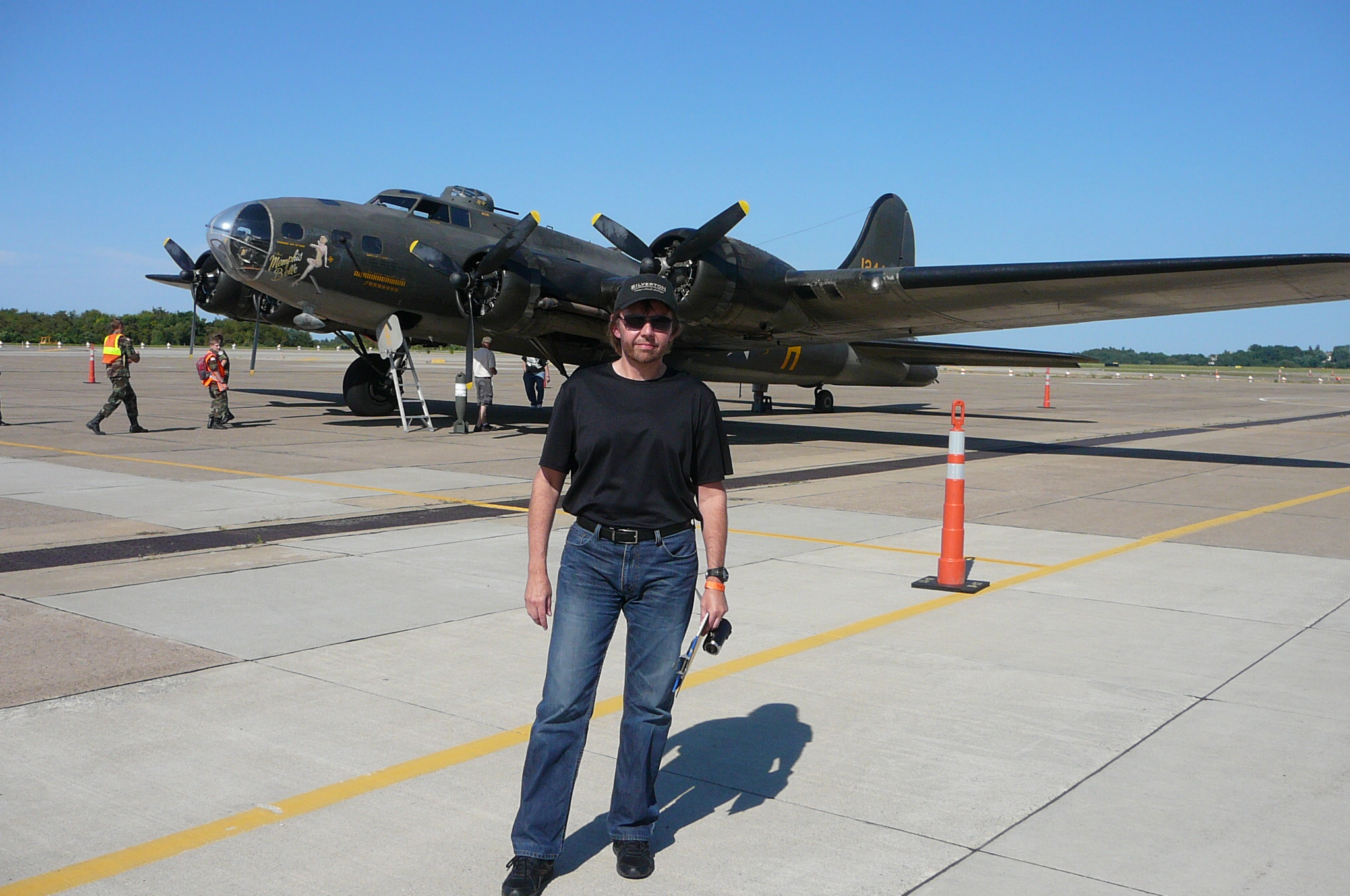
Now I’m heading into my next book about the Eighth Air Force in World War II, and my first inclination was to fly in the big bombers that conquered Germany in 1944 and 1945, so I booked myself into the cockpit of one of 10 remaining airworthy B-17s and went up. Up a grand total of 1,500 feet, but up nonetheless, and experienced something of what the boys of the Greatest Generation did in the airship known as the Flying Fortress. Now, I have a sense of the roar of four big Pratt & Whitney engines, of the confines of the cockpit, of the catwalk over the bomb bay, of the treacherous footing skittering around the lower turret, of the size of the bombs, and of feel of the waist machine guns. I know what it feels like to crawl into the nose of the plane in flight and where the bomb sight was and where the bombardier and navigator sat and what they could see out the observatory-style nose. Up those 1,500 feet I could begin to experience the terror of being a target for guns on the ground, knowing that a strike on the wing or the tail section meant sure death or bailing out at 10 or 20 times my 1,500 feet. I realized for the first time just how unpressurized the cabin was, and it hit me how vulnerable were the airmen, on oxygen at 30,000 feet with the temperature 30 below and anti-aircraft guns booming from the ground, and German fighters buzzing around rattling the ship with machine gun fire. Do you have any idea how big and heavy a .50 caliber machine gun shell is? I do, now, after holding one in my hand. It looks more like a small bomb than a bullet, and the machine gunners fired them in belts nine yards long. Hence the term, “the whole nine yards.” What’s the physics of firing shells that size out of both sides of a plane flying at 300 miles per hour, and out the tail and above and below? I couldn’t tell you, but after being aboard a B-17, now at least I know enough to ask.

There’s always another mountain to climb. I’ve got to find a B-24 and fly in it. I’ve got to go to where the bombers departed in England. I might have to go see where the bombs fell in Germany—who knows? It’s all part of telling authentic stories where the characters aren’t just people. Sometimes, they’re mountains, or airplanes.

Fireball: Carole Lombard and the Mystery of Flight 3 by Robert Matzen

Flying in a B-17 is research just like digging through federal records. This B-17 was built in 1945 and used in filming of the 1990 feature, Memphis Belle.

Irresistible

Who’s up for another live-event hurrah for Fireball: Carole Lombard and the Mystery of Flight 3? How about coming to hear me speak at the Fort Wayne History Center in Fort Wayne, Indiana, on Sunday, October 5, 2014, at 2 p.m? I’m an introvert and a cranky pain in the ass, and yet I’m told I’m a good speaker when I get going on the topics contained in Fireball. I make no bones about this: Audience members have been known to pull out wallets and shower me with cash after a lecture. I guess it’s possible they are using money to shut me up, but I choose to believe that they’re moved to purchase based on the many compelling themes in Fireball. As a result, I think it would be worth your while to book plane reservations or get in your car and commute to Fort Wayne and incur all the expenses such a weekend would entail just to step in the middle of this incredible story and visit the place of Carole Lombard’s birth.

Before and after my lecture, tours will be conducted of the Peters family home on Rockhill Street where Jane Peters (who would become Carole Lombard) was born on October 6, 1908 and lived to age six. Her father continued to live there after his wife and three children had split for California. Two special guests are already confirmed for the October 5 lecture and house tours: my very good friend Carole Sampeck, director of the Carole Lombard Archive Foundation and Hollywood historian who was quoted at several points in the Fireball narrative, and Marina Gray, Lombard expert and one of my two Jedi Ninja researchers on Fireball. Carole is flying in from Dallas and Marina from Seattle, so you begin to understand what a special weekend this will be.

Fireball: Carole Lombard and the Mystery of Flight 3 by Robert Matzen

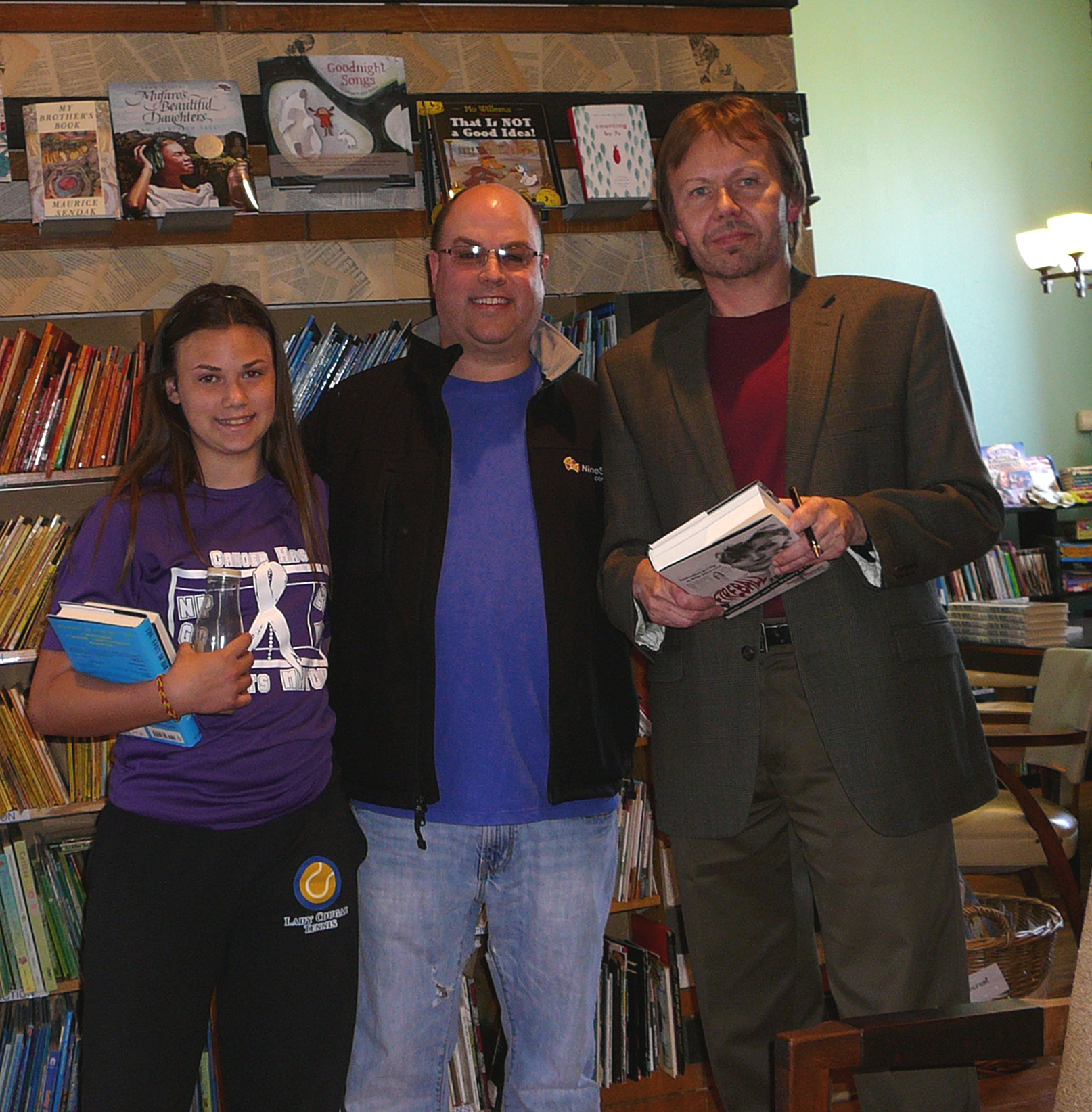
My Indianapolis triumph: turning around a disgruntled teen. I never did get their names, but it was a positive experience for the three of us.

I’ve talked previously about the many lectures and signings that comprised the tour, starting in Santa Monica and Hollywood, California, and moving on to locations in Ohio and Pennsylvania, and culminating in Indianapolis, where Lombard spent what was the most intense, satisfying day of her life, and Las Vegas, Nevada, where that life ended 24 hours later. I especially like focusing on the skeptics in the audience—people dragged to the event, like the teenaged girl in Indianapolis who had been brought to a Sunday afternoon lecture by her enthusiastic dad. How sullen she started out; I felt bad for her. But by the end, I had her in the palm of my hand. Poor kid didn’t know what hit her as she took in this story of love, romance, betrayal, sacrifice, patriotism, tragedy, and grisly post mortems. This story is irresistible.

The most recent lecture was to 75-or-so people at a film convention in Columbus, Ohio, and here I found both aviation buffs and Hollywood authorities and that’s the best part for me—the Q&A. The people who raise their hands for questions test my knowledge and challenge my assertions. They bring new information to the table, like the woman who tipped me off to a significant and forgotten incident in Indianapolis, or the woman in Las Vegas who possessed deeply buried information about Carole Lombard’s faith. This is all new information worthy of the revised trade paperback second edition of Fireball due out next spring.

Oh, yeah, by the way, the first printing is nearing sellout and demand is still strong. A second printing of Fireball is in order, so why not add in some more facts where possible?

The new book project is starting to suck me in, but there’s work to be done on Fireball first. I owe it to the 22 souls aboard Flight 3, people I bonded with on the mountain and people who haven’t left me since. I could feel them about me that first night in Santa Monica, and they’ve been nearby many times since. I’ll be curious to see if I feel anything special when I’m standing in the room in which Carole Lombard was born in Fort Wayne, Indiana. It’ll be a special weekend and I invite you to join me there, so save the date: Sunday, October 5, 2014.

Hedge Hopping

Fireball: Carole Lombard and the Mystery of Flight 3 by Robert Matzen

This postcard, circa 1940, shows TWA airships at the gate of the Allegheny County Airport. On its last voyage, TWA Flight 3 taxied into position here; 18 hours later it crashed in Nevada.

Understanding the nature of commercial aviation as it existed in January 1942 proved to be, for me, one of the eye openers of the Fireball narrative. In Q&A following my lectures, people often assume that the plane on which Carole Lombard died along with her mother Elizabeth Peters and MGM press rep Otto Winkler was a charter, and they’re surprised to learn it was a regular commercial flight, and a transcontinental flight at that.

We think of transcontinental air travel today as five tedious hours spent motionless in a first-class or coach seat, headphones on, dozing the time away, or working on laptops or reading. New York to L.A. in upwards of six hours, depending on headwinds. L.A. to New York in about five. In 1942 the term “transcontinental” was a lot different. Instead of a nonstop or perhaps a stop for a connector, it took 10 or 12 stops to reach one coast from the other. Up and down, up and down endlessly, landing one or two times per state as the plane progressed cross-country with stops to refuel and/or pick up and drop off passengers and all-important airmail.

Fireball: Carole Lombard and the Mystery of Flight 3 by Robert Matzen

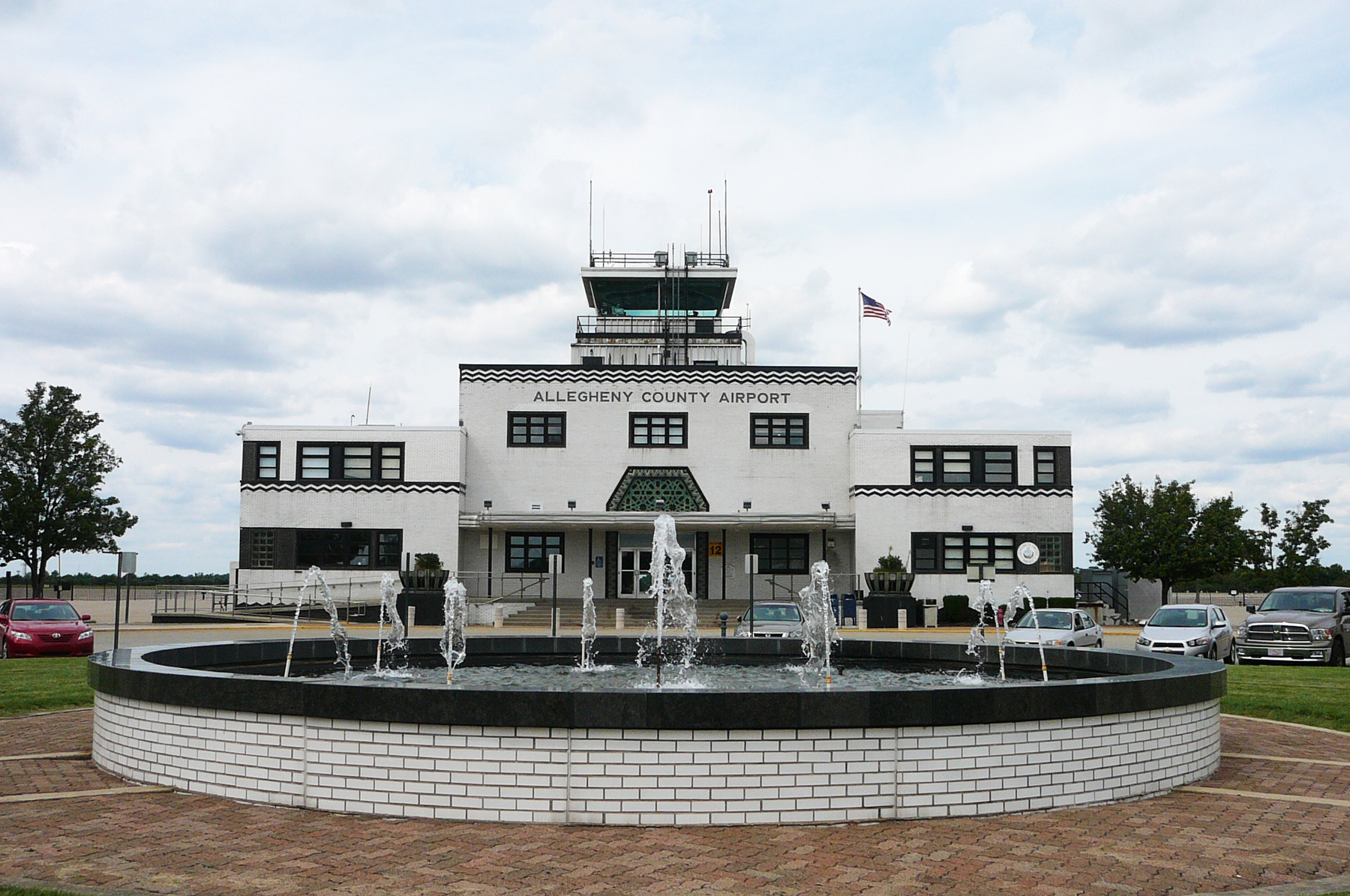
The Allegheny County Airport, unchanged in outward appearance from its 1936 expansion.

The DC-3 itself was a fabulous plane and so dependable that a few still fly today, almost 80 years since they first rolled off the assembly line. Passenger versions seated up to 22 comfortably, with the word “comfortable” being entirely subjective. In an unpressurized cabin, which the DC-3 featured, you were at the mercy of a) the ambient air temperature—except for a cabin heater controlled from the cockpit and b) the roar of two very loud engines just three feet on either side of the fuselage. The glamour and luxury of transcontinental travel in Carole Lombard’s day, in fact, hurt. It hurt your flesh; it hurt your back; it hurt your ears. Cruising altitude would be 9,000 feet above terrain if they could get away with it or 12,000 in mountains. Think of the ear popping in that unpressurized cabin. Think of the climate as you would routinely be subjected to temperatures 30 or 40 degrees colder at altitude than on the ground.

After a couple of hours in the air, you were begging for relief, and you knew it was coming; it was always coming with all the takeoffs and landings. And that’s our story for today, boys and girls, the state-of-the-art airport terminal of 1942. I am lucky enough to live about 20 minutes from just such a building, the one that used to service Pittsburgh until being replaced by a much larger facility in 1952. Because the new Greater Pittsburgh Airport was placed 15 miles west of the city, there was no need to tear down the old terminal located closer to the heart of Pittsburgh. Instead, it became a secondary hub of aviation activity and continues to serve Southwestern Pennsylvania today.

Fireball: Carole Lombard and the Mystery of Flight 3 by Robert Matzen

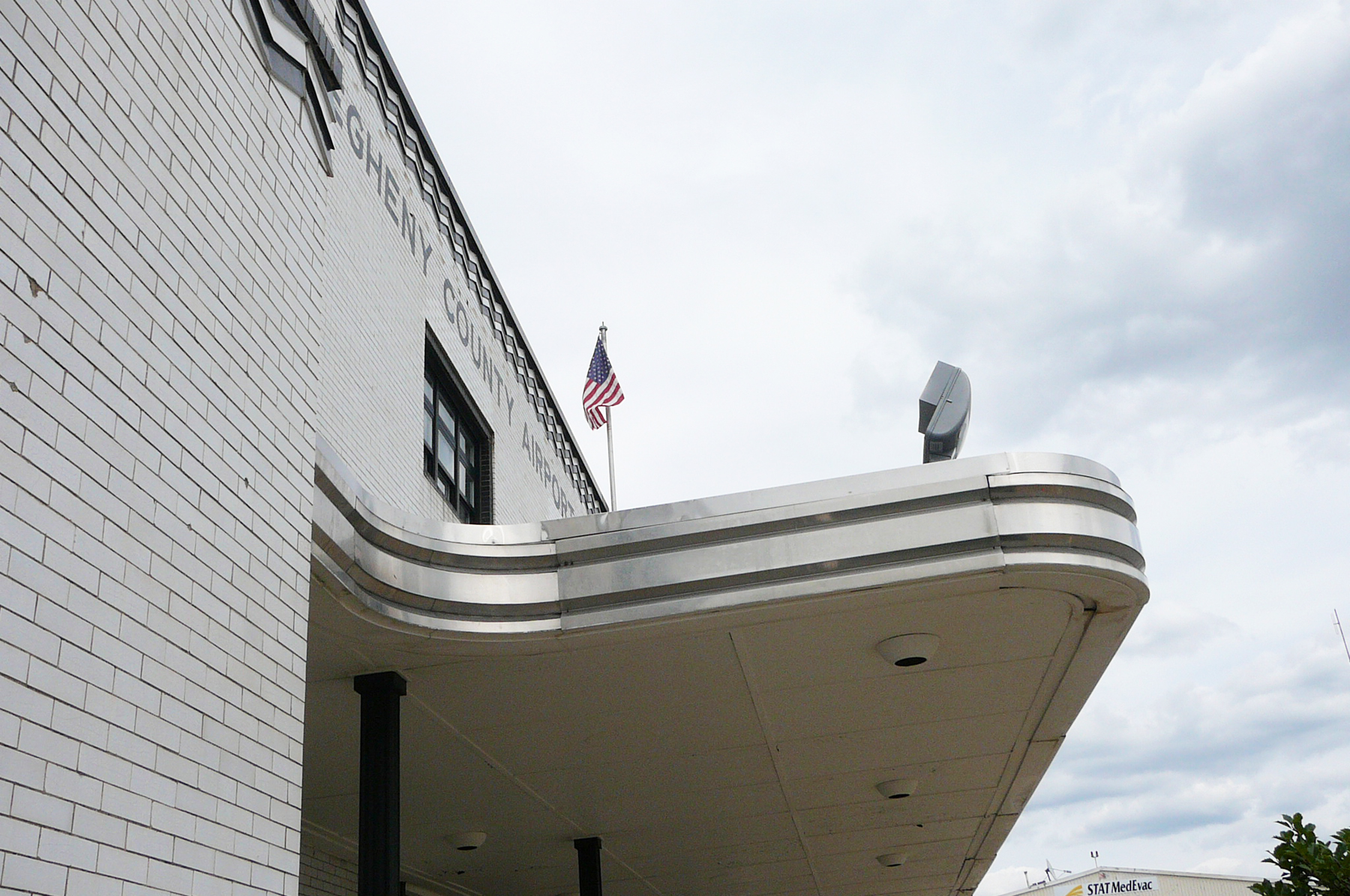
Vintage 1930s touches like stainless steel trim remain in place.

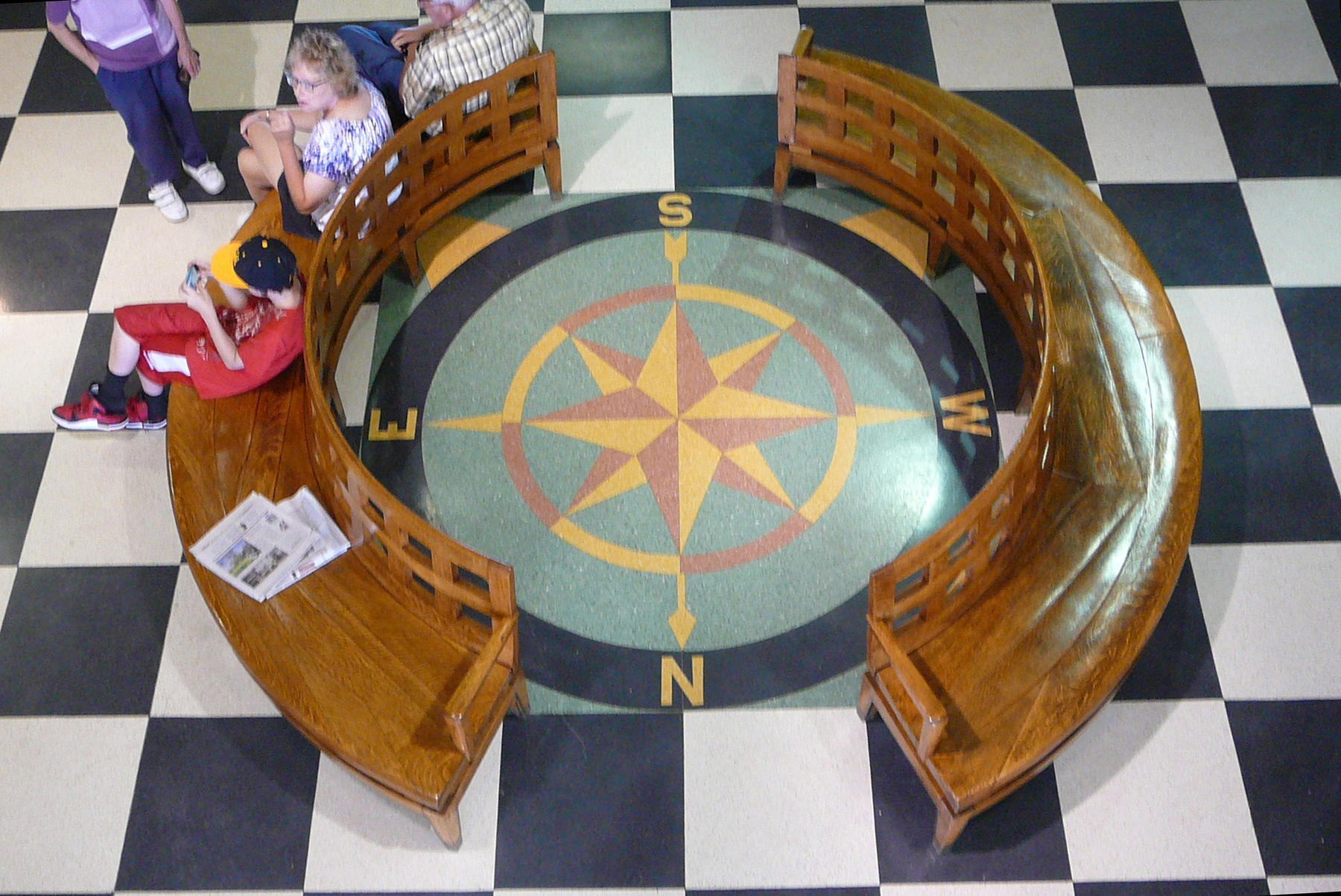
I’m no architect, but to me, the Allegheny County Airport terminal is an Art Deco masterpiece, built in 1931 with wings added in 1936. Many original design features remain intact, from intricate tile work to stainless steel accents and art deco lettering for the Waiting Room and Office. The original wooden benches are still in place along with the original compass set into the floor. Can’t you see men in suits and women in furs sitting there waiting to board the next flight out? I wish I could find vintage interior views to glimpse the restaurant, ticket desk, and souvenir stand as they existed in 1942, but I haven’t been able to locate any.

Readers of Fireball may remember that this airport was a stop for Flight 3 on its last voyage. The plane had taken off from LaGuardia and stopped at Newark before landing here and taxiing to the gate. From Pittsburgh the TWA airship headed west to Columbus, Ohio, and after that Indianapolis, where Lombard’s party boarded. At each stop stood a facility just like this one, offering temporary sanctuary from the rigors of air travel.

Upon completion in 1931, Pittsburgh’s airport was the most modern in the world and boasted by far the most paved runway area. Presidents and movie stars roamed this floor and the place buzzed with activity in World War II. Literally. All dignitaries and celebrity traveling from the American heartland to and from New York City stopped and stretched their legs here. It’s a building that’s drawn my eye from earliest memory—every time my parents would drive by, and then every time I would as well. I certainly hope the building is haunted. Then again, how could it not be given all the history it holds?

Fireball: Carole Lombard and the Mystery of Flight 3 by Robert Matzen

Original lettering for the Waiting Room and Office evoke a bygone era.

Fireball: Carole Lombard and the Mystery of Flight 3 by Robert Matzen

A single room served passengers for several major airlines. In an alcove to the right was the small restaurant. Original 1930s wooden benches remain in place, including one that looks out on the tarmac.

Fireball: Carole Lombard and the Mystery of Flight 3 by Robert Matzen

Passengers always knew which was way up–as well as north, south, east, and west, at the Pittsburgh air terminal.

Fireball: Carole Lombard and the Mystery of Flight 3 by Robert Matzen

Even the planters flanking the building’s entrance tie into the aviation theme. The green tile work matches inlaid tile accents on the building exterior.

Love Match

Carole Lombard was a tennis bum. She hung out on tennis courts from 1934 on, used tennis to stay in shape, played for hours at a stretch, took pride in her skill, and through a twist of fate changed the history of tennis with an impact felt to this very day.

Lombard came to mind this past week as Mary and I made our annual pilgrimage to the Western & Southern Masters 1000 tennis tournament in southern Ohio. It’s a tournament that’s considered a “mini-major” and right below the four grand slams. It’s Mary’s chance to hobnob with her favorite player, Roger Federer, and since I started playing tennis at age 12, I’m right there with her getting sun-baked watching match after match.

Fireball: Carole Lombard and the Mystery of Flight 3 by Robert Matzen

Carole Lombard, Alice Marble, and Clark Gable courtside in 1938.

If anyone would appreciate the way tennis has evolved, it would be Carole Lombard. Readers of Fireball know the love she had for the game, as personified in her sponsorship of down-and-out young American player Alice Marble. Carole did all but drag Alice out of her sick bed in a Monrovia, California, tuberculosis sanitarium and will her back onto the court. At the start, Marble was 45 pounds overweight and lacked the strength to walk a flight of stairs, let alone play three sets of tennis. Within a couple of years Marble was winning Wimbledon and the U.S. Open after treatment by doctors that Carole recommended. Alice played her matches in clothes bought by Lombard, with Carole courtside at every opportunity. Carole got Marble nightclub gigs as a singer and tried to land her in the picture business.

Fireball: Carole Lombard and the Mystery of Flight 3 by Robert Matzen

Carole Lombard works on her net game in 1939.

In researching Fireball I had wondered if Carole and the girl she nicknamed “Allie” were really close, or if Lombard had merely stepped in, spent some time with the girl, and moved on as was the case when she launched the career of Margaret Tallichet. In truth, Lombard and Marble were very close indeed. Lyn Tornabene’s interview with Marble—housed in the Academy of Motion Picture Arts and Sciences Herrick Library—runs more than an hour and as Marble sips cocktails and smokes up a storm, she recounts her years as one of Lombard’s best friends and a member of the Peters inner circle. Tornabene was a strong interviewer and their conversation reveals Alice’s life with Carole, Petey, tennis coach Teach Tennant, tennis cronies Don Budge and Bobby Riggs, and of course Clark Gable—happy times that ended with the crash of Flight 3.

After Lombard’s death, Marble continued as a tennis pro and turned to teaching, with pupils that included the woman who changed the modern game, Billie Jean (Moffet) King. It was King who legitimized the women’s game, advocated for prize money comparable to the men, and inspired Chris Evert, Martina Navratilova, and succeeding generations. Ironically, it was also Billie Jean, Marble’s disciple, who defeated Carole’s old pal Bobby Riggs in the 1973 “Battle of the Sexes” in the Houston Astrodome. The heavily publicized, highly rated primetime match introduced legions to the sport, making it no stretch at all for me to walk around amongst the players and matches in progress and think of Carole Lombard and her influence on everything in sight. By saving the career (and perhaps the life) of forlorn Alice Marble, Carole did a whole lot of good for millions of tennis players and fans around the world, including Mary and me.

Fireball: Carole Lombard and the Mystery of Flight 3 by Robert Matzen

The modern game so influenced by Carole Lombard and Alice Marble–Ana Ivanovic of Serbia and Christina McHale of the United States play this past Wednesday near Cincinnati.

Party Girl

My friend the High NASA Official is reading Fireball at present. She said the other day, “I think I would have liked drinking with Carole Lombard.” Yes, Diane, I think you would have, because Lombard liked the sauce (scotch and soda) and Lombard was a very sociable, outgoing person with a genuine interest in other people.

There were many questions to answer in writing Fireball. One of them involved her party period that began in 1934 at the house on Hollywood Boulevard. For much of her time here, Lombard was planning and staging wacky parties for friends that ran the gamut from filmland’s elite to gaffers, carpenters, and production assistants on her pictures. She wasn’t big on entertaining during her marriage to William Powell, which ended in 1933, and certainly not during her years with Clark Gable, but during her run on Hollywood Boulevard, Lombard was known for her spectacular social events. It became imprinted upon the legend: Carole Lombard, thrower of crazy parties.

I think it was John Barrymore’s widow who told a story of how Carole, in formal attire at a formal gathering, suddenly jumped in somebody’s pool because she was “that kind of girl.” This documentary was made when so few of Lombard’s contemporaries remained alive that John Barrymore’s last wife became relevant, but her statement shows a lack of understanding of the subject. I’m here to tell you that if there was one thing Lombard was not, it was impetuous, or capricious, or anything of the kind. Everything Carole did, she did for a damn good reason.

Fireball: Carole Lombard and the Mystery of Flight 3 by Robert Matzen

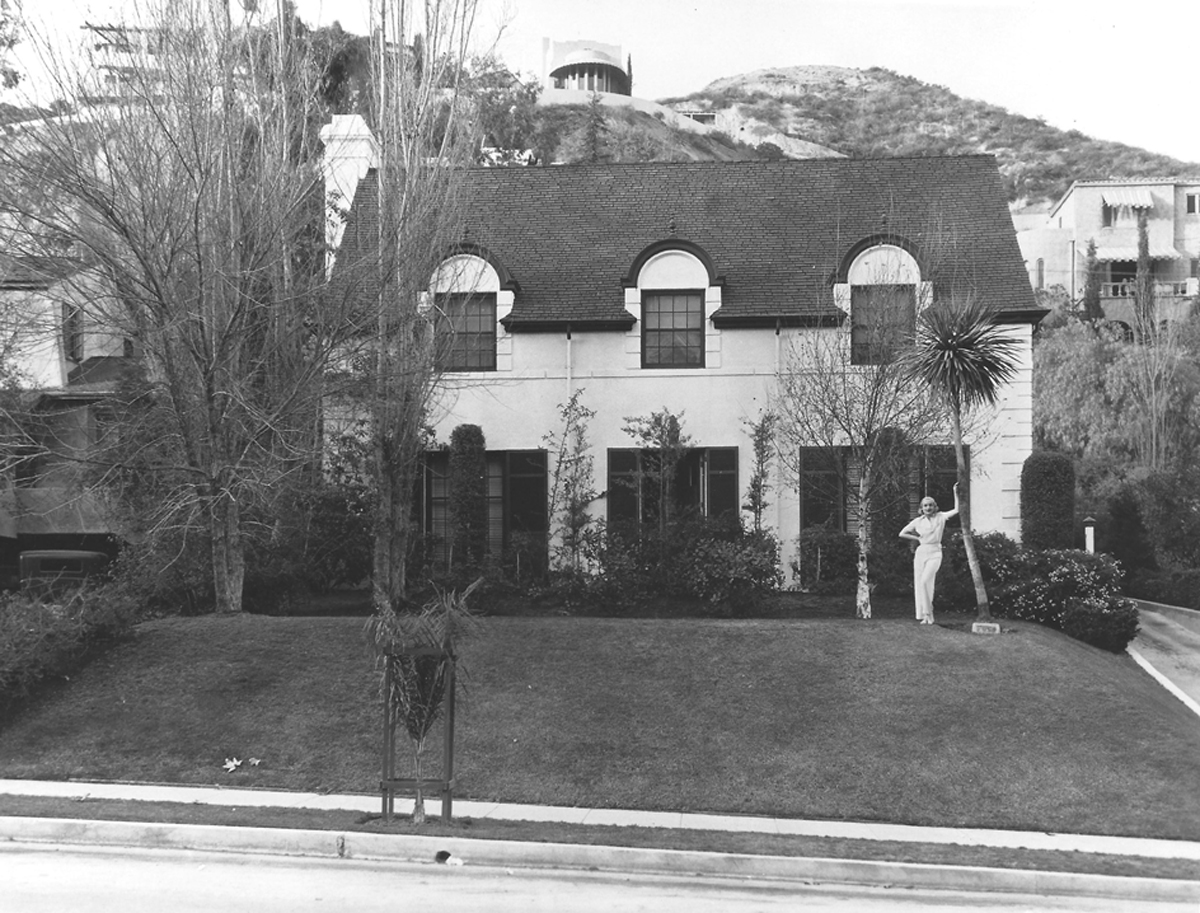
In this official Paramount Pictures publicity photo taken in 1934, Carole stands in front of her rented Hollywood Boulevard home.

Which brings us to the parties. Carole rented the 3,000-square-foot, French provincial home at 7953 Hollywood Boulevard late in 1933 at a time when her career at Paramount was on the upswing. The house sits way down in the residential section of Hollywood Boulevard near Laurel Canyon and it’s tucked back off the thoroughfare and you wouldn’t give it a second thought and certainly wouldn’t imagine it to be connected with bigger-than-life Carole Lombard.

I’ve never been inside this place but I’ve stood outside and I’ve talked to neighbors. Looking at it, you wonder how she had room for the kind of ambitious entertaining that marked her years here. But this terrific video with its then-and-now views puts things in perspective. The Hollywood Boulevard house had land behind it, including an apartment on the terrace above where Madalynne Fields (dubbed “Fieldsie”), Carole’s best friend and secretary, resided. Carole’s guests could spread out inside and out for the parties of legend.

Anyone who knows me will tell you: I hate parties. I’ll do all I can to avoid one, so you won’t see me having the willies when I describe Lombard’s parties but just know—I’m having the willies.

Fireball: Carole Lombard and the Mystery of Flight 3 by Robert Matzen

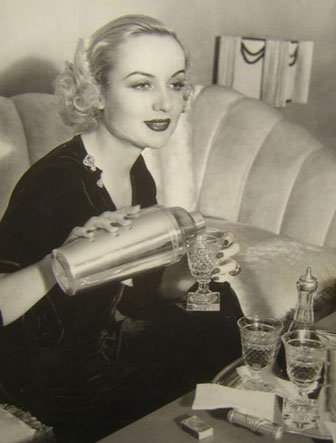
Mixology, Lombard-style, in the Hollywood Boulevard house.

She threw a “Roman party” and invited guests to come in togas. She threw a “hillbilly party” complete with barnyard animals (think cows and roosters) and wait staff in coveralls. Look close in the video because there may still be hay and feathers stuck in the baseboards from that one. She threw the miscalculated “hospital party,” where guests were asked to change into hospital gowns at the door or at the very least cover their attire with hospital gowns. Wait staff appeared as nurses and orderlies; food was brought in on gurneys and served hospital-style on trays. All that happened in the house shown in the video.

It all seems “madcap” and “gay” in the old sense of the word, but in Fireball I refer to it as Calculated Mayhem. In the wake of her performances in Twentieth Century and Lady by Choice, and the popularity of the new style of picture catching fire, the “screwball comedy,” Carole set out to claim that territory in Hollywood’s landscape. The parties were a means to an end to position Carole Lombard as the type of personality just right for screwball. It was what they call today a brand strategy concocted by Carole and her two very shrewd advisors, Fieldsie and talent agent Myron Selznick.

The strategy worked. By 1935 Paramount was putting Lombard in Hands Across the Table and The Princess Comes Across; Universal was asking for her for her most famous screwball picture of all, My Man Godfrey, and David Selznick (Myron’s brother) could imagine only Lombard appearing in his screwball entry, Nothing Sacred. Lombard’s screwball run lasted a solid three years, but these pictures with their bizarre elements could easily misfire, and that’s what ended her hot streak—the truly wretched True Confession in 1937 and Fools for Scandal in 1938. She made four straight dramas in 1939 and 1940 and only appeared in a couple more comedies before she died, but after the crash of Flight 3, the snapshot description of Carole Lombard was the “queen of screwball.” It’s how I describe her in interviews, and how she’s remembered.

In 1936 she started seeing Gable, and the house on Hollywood Boulevard became a little too high profile for the lovers, so she ditched it for digs in far-flung Bel Air. But her glory years on the social scene as bachelorette and hostess were all spent here, in this unassuming little house at the edge of Tinseltown.

Fireball: Carole Lombard and the Mystery of Flight 3 by Robert Matzen

This was my first view of the Lombard party house as it looked in 1987 with vegetation run amok. Back then it looked haunted, and some say it is.


Pretty Damn Cool

What’s going to happen when I pass on to that great movie theater in the sky? (Or find myself cast into the fiery pits of hell?) Will you look back fondly on Robert Matzen as a writer who once entertained you with Fireball—and other great books I have yet to write? As a friend or acquaintance? A co-worker? I wonder if you’ll read my obituary and find something that makes you say, “That’s pretty damn cool.”

It’s ironic that the only time we stop to take stock of a life is when it’s over. There are exceptions of course, in the case of a “lifetime achievement award” or a snapshot-in-time memoir or biography, but usually, we honor people, pay attention, appreciate as they pass out of our world.

Fireball: Carole Lombard and the Mystery of Flight 3 by Robert Matzen

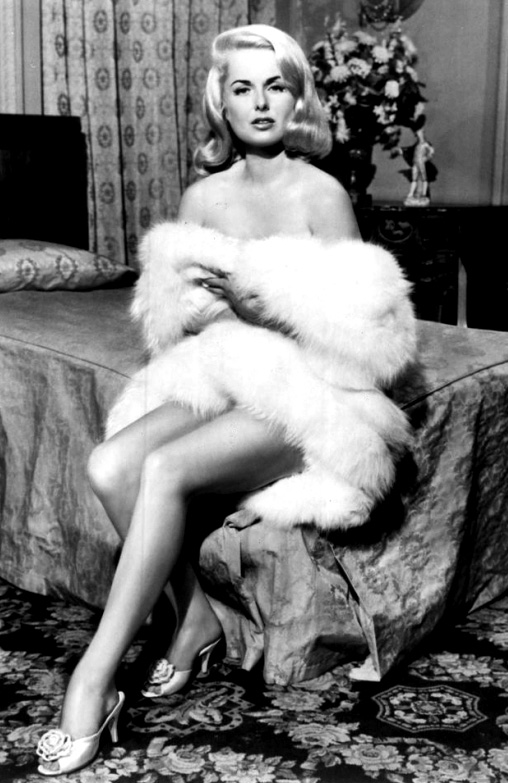
Martha Hyer at her sexiest in The Carpetbaggers.

While reading Martha Hyer’s obituary the other week I exclaimed, “That’s pretty damn cool!” Martha Hyer was a dependable-enough actress of the 1950s and 60s who worked with big stars in some A and B pictures, but overall her career was a near miss. I hadn’t a clue that Martha Hyer was an art collector who lived on an obscure stretch of Hollywood Boulevard. I thought Hollywood Boulevard ended at Laurel Canyon but son of a gun, it doesn’t. It snakes impossibly on through the hills—if you haven’t been there and driven in them, you can’t imagine those hills.

I had no idea that Martha Hyer epitomized Hollywood class in the early 1960s, with her posh home and its spectacular view of the L.A. basin and her stylish clothes and expensive art collection until I read about it in an article linked to her obituary. She was one of those stars I took for granted; a competent actress who succeeded mostly on her curvy blonde looks. Then I paid attention to Martha Hyer in an airing of The Carpetbaggers in a supporting part as a starlet-hopeful and was reminded how good-looking she was, and how winning she was, and now I knew about her swanky lifestyle as a bachelorette prior to her marriage to producer Hal Wallis. I thought to myself, what an interesting person! I should have contacted her and asked for an interview, but I didn’t know what I didn’t know, and now she’s gone.

The depth of the national reaction to the passing of James Garner surprised me. He’s another one who was roaming the earth when I was born and so I’ve never known life without James Garner as part of the popular landscape. I knew of Maverick, although Maverick was before my time. I knew that James Garner was groomed for stardom by Warner Bros. and shot to prominence during their heyday producing TV westerns. Then Jack Warner leveraged Garner’s popularity by lending him to the features unit to make Darby’s Rangers and other pictures. He was a very big star in 1960 and managed to remain relevant for the next 54 years so that when he left us, we had just seen him in something, somewhere.

I bought James Garner’s autobiography, The Garner Files, upon its release to get his take on Jack Warner. The straight shooter took aim at J.L. and plugged him right between the eyes: “Jack Warner treated everybody the same: lousy. He didn’t spare his wife, his son, or his mistress. He hated writers, he hated actors, and he was cruel to his employees.” Garner went on, “Warner was rude and crude—the most vulgar man I’ve ever met. He had terrible taste in most things and a filthy mouth. The first time Lois and I went to the Oscars, we sat at his table and listened to him tell one dirty joke after another. He actually thought they were funny. We got up and moved to another table. I told Bill Orr [WB exec and J.L.’s son in law]: ‘Don’t you ever . . . don’t you ever get me invited anywhere where he’s going to be.’”

Fireball: Carole Lombard and the Mystery of Flight 3 by Robert Matzen

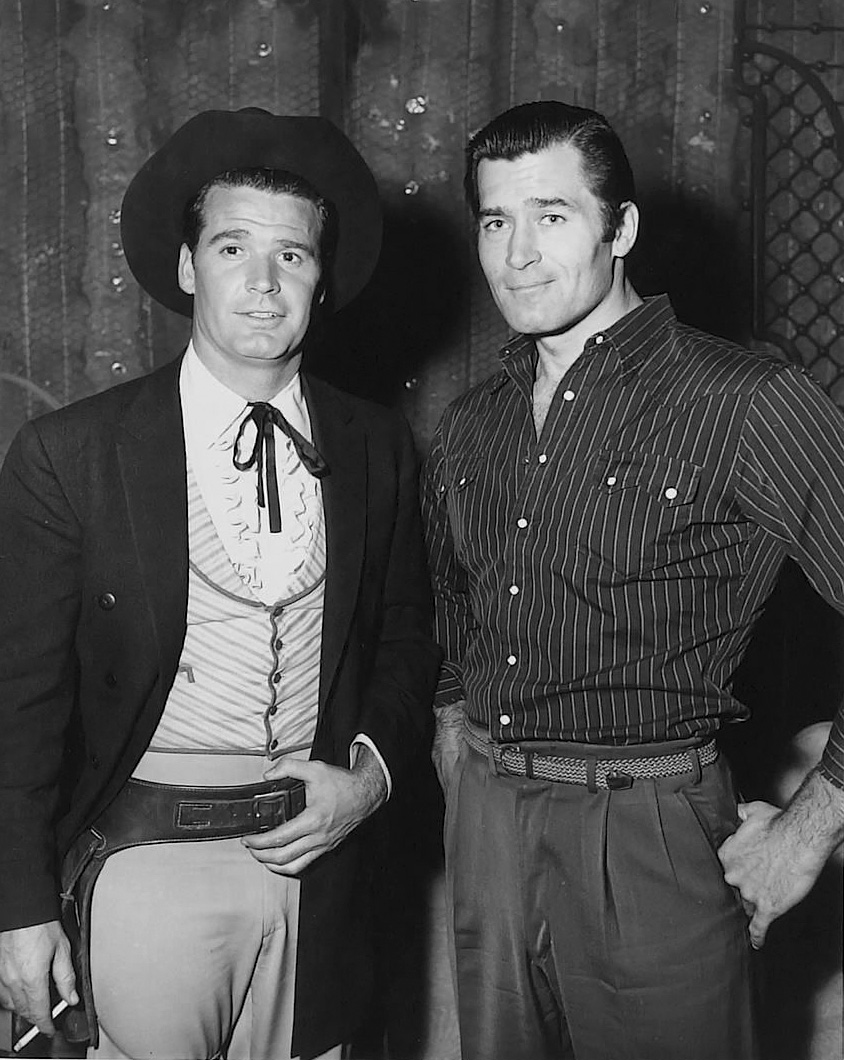
Clint Walker (right) visits James Garner on the set of Maverick. Walker was just back on the Warner Bros. lot to star in his series Cheyenne after a long-running feud with J.L.

James Garner shot from the hip about others in The Garner Files as well, like Steve McQueen: “Like Brando, he could be a pain in the ass on the set. Unlike Brando, he wasn’t an actor. He was a movie star, a poser who cultivated the image of a macho man. Steve wasn’t a bad guy; I think he was just insecure.” And of another co-star in The Great Escape, Garner said, “Charlie Bronson was a pain in the ass, too. He used and abused people, and I didn’t like it.”

To me, James Garner’s insights on these actors, people we think we know, are precious. Actors didn’t always like one another, and it’s interesting to keep in mind what they were thinking as cameras rolled. We see the end result preserved on celluloid, which in some cases proves the talent of the individuals, overcoming their feelings or channeling those feelings into the character.

With Garner, there were no scandals to look back on. I recall that he had bypass surgery in the 1980s and wondered then if he would survive. But he did. I remembered when he took over 8 Simple Rules for Dating My Teenaged Daughter for John Ritter after that star’s sudden death by aortic aneurysm in 2003 and stabilized the sitcom’s devastated cast and crew. James Garner came in and took charge because that’s what the situation required. I wasn’t a fan of that show but I well recall watching the first Garner episode when his character walked on set and very publicly comforted the characters and the actors playing them. To hurting humans he lent strength; to actors worrying about their next paycheck he conveyed, We’ll get through this. It will be OK. That’s pretty damn cool. And with his help they survived, and James Garner carried 8 Simple Rules on his 75-year-old shoulders, completing the second season and then a third full season.

This scenario sat in my head unprocessed since Ritter’s death. It took the news of James Garner’s passing for me to stop and think about how admirable he had been in that circumstance. I can only hope that when I go, there’s something in my obit to say, “That’s pretty damn cool” about.

Fireball: Carole Lombard and the Mystery of Flight 3 by Robert Matzen

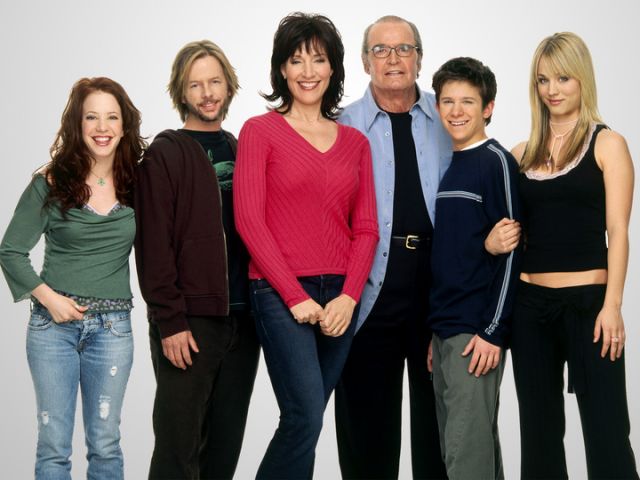
The cast of 8 Simple Rules. Said Garner, “I never used to like working with children. For a long time I thought they were unpredictable and, well, unprofessional. But Amy Davidson [far left], Kaley Cuoco [far right], and Martin Spanjers [second from right] were terrific. Who cares if they steal a scene? If any actor can steal a scene from me, they’re welcome to it.”

Scratch

Almost every day since the book’s release in January, somebody somewhere has commented on the extensive research in Fireball, and I’ve been gratified to learn that my dumpster dive into federal records accomplished its goal, as did long hours spent sifting through existing histories and biographies, newspapers, unpublished manuscripts and interviews, birth and death records, military archives, and conversations with participants and relatives of participants in the story. Oh, and a day spent eating dirt, getting stuck on cactus, and bouncing off boulders on Potosi Mountain. And other days spent walking in the footsteps of people in the narrative. When it was over I understood Carole Lombard and Clark Gable at the molecular level and also had learned about others critical to the story, from the stewardess on Flight 3 to the miner and ex-football star who led the charge up the mountain.

But that was then. It’s a good thing when you are the author of a book that gets positive reviews and that people really like. There’s gratification; there’s also pressure every time somebody says, read Fireball, loved it, big fan, what’s next? Well, thanks! And, uhhh, I dunno.

Fireball: Carole Lombard and the Mystery of Flight 3 by Robert Matzen

Oh, great, another mountain to climb. In case you are wondering, the Flight 3 crash site is along the ridge line, dead center from left to right, a few hundred feet below the crest.

It’s all organic, man. It comes from luck, or inspiration, or usually from a particular friend saying, “You know what would make a great idea for a book?” And that friend did it again two months ago, planting this seed in my brain. At first I think, no, that’s no good. It’s been done, or I can’t get at that story, or something similar, but then the damn seed starts to sprout and before long I’m believing that, yes, he’s right again. This is a story. I’m going to tell this story.

Friends, readers, I’m starting my next book. It’s a new day and a new ballgame. It’s not even the top of the first inning and the umpire isn’t about to shout, “Play ball!” [Reference to American baseball, global readers.] It’s not even time for spring training, really, because first comes determination of the theme of the book, what I’m writing to, what tone to set, how the narrative will sound, and even more basic to that, who are my characters? I’m in that nebulous period where I’m learning about the world I’m going to be inhabiting for a year or two. I’m reading existing works and visiting web sites. Just now I was reading a biography on the couch and Francois, my ten-week-old black kitten, jumped up on me and asked, “Whatcha readin’, Dad?” and before you know it, we were both asleep on the couch. So I can report that this phase is rather pleasant so far.

I’m not ready to announce what the book is going to be about, except to say it’s another World War II story with an aviation theme and part of it is set in Hollywood. (Tom, you’re a bright fellow. If you guess what the story is, please don’t blurt it out.) It’s nonfiction because to me the best stories are true stories where I say to myself as I unearth the facts, “You couldn’t make this stuff up.” Research is going to put me back in D.C. and back in Hollywood, but it’ll also require a trip to England and possibly to France and Germany and this time I’m going to have to be sifting through German records and lots of them. Sprechen sie Deutsch? My high school German teacher, Miss Diamond (who I had a crush on, but, don’t tell), would be the first to report, no, Robert does not speak German. That’s going to be a handicap to my enterprise because one thing I’m certain of is, this story is going to include a civilian’s-eye view of life on the ground in Germany during the latter phases of World War II. It’s one story line in what will no doubt be many story lines.

It’s daunting to be at this point in a book. Way down the road, I know I’m going to be holding three pounds of bouncing baby … hardcover, but in the meantime everything is squishy and Unknown. I have no idea where I’m heading. I don’t know how I’ll get there. I don’t know what I’ll discover along the way. Worst of all, I don’t know what makes my main character tick. I hate not knowing, and there’s so much mythology grown around this character that I already have a healthy dislike. Just like I had with Gable. I tell myself that it’s OK, the Gable thing worked out, and now he and I are friends and I pay my respects at his grave and everything.

Today’s confession is that I hate new people. My lifelong friend and former co-worker, Helene, would tell you that. Oh, Robert hates new people. Anytime somebody new came on staff at the company where we both worked, there was a period where I didn’t like them until I got a handle on them and then it was usually OK, except of course when it wasn’t. So now I’m at the stage where, based on everything I know so far, I don’t like this new person I’m going to write a book about. But when you’re in close quarters with someone for a long period, the ice gets broken somehow, and I’m counting on the fact that it’ll happen here. We even have some things in common, so what the hell am I worried about?

There, I’ve said it: I’m starting a new book. Monkey off my back. That’s on the one hand. On the other hand, this autumn I’m back in the saddle pitching Fireball and so coming and going, it will be an interesting time. Keep your eye peeled for dispatches from the front, which will all be delivered here at this address a couple times a week.

When the Magic Happens

As I’ll do now and again, I turned to the Beatles this morning and was listening to You’re Gonna Lose That Girl, a song from their 1965 film, Help! I sat there and said to myself, here’s a song that’s about 50 years old and yet perfect; perfect music and lyrics from the perfect song-writing duo. It got me to thinking about chemistry, how someone can have a special something with another someone over other people and their combined molecules form a powerful chemical compound. John and Paul wrote music while in their early 20s that I’m convinced will be considered classic in a century, and covered by contemporary performers and heard in commercials, but the magic was between them exclusively and when they broke up, each became “just another musician.” I can hear Ruth Peeples protesting and YES Ruth, they were great musicians as individuals, and Paul McCartney certainly thrives today. But can you argue that the chemistry between them generated the best music of the career of either? They knew they were that good together, but they broke up; the creative chemistry was genius, but the friendship chemistry managed, under the immense pressure of being “Beatles,” not to endure.

Fireball: Carole Lombard and the Mystery of Flight 3 by Robert Matzen

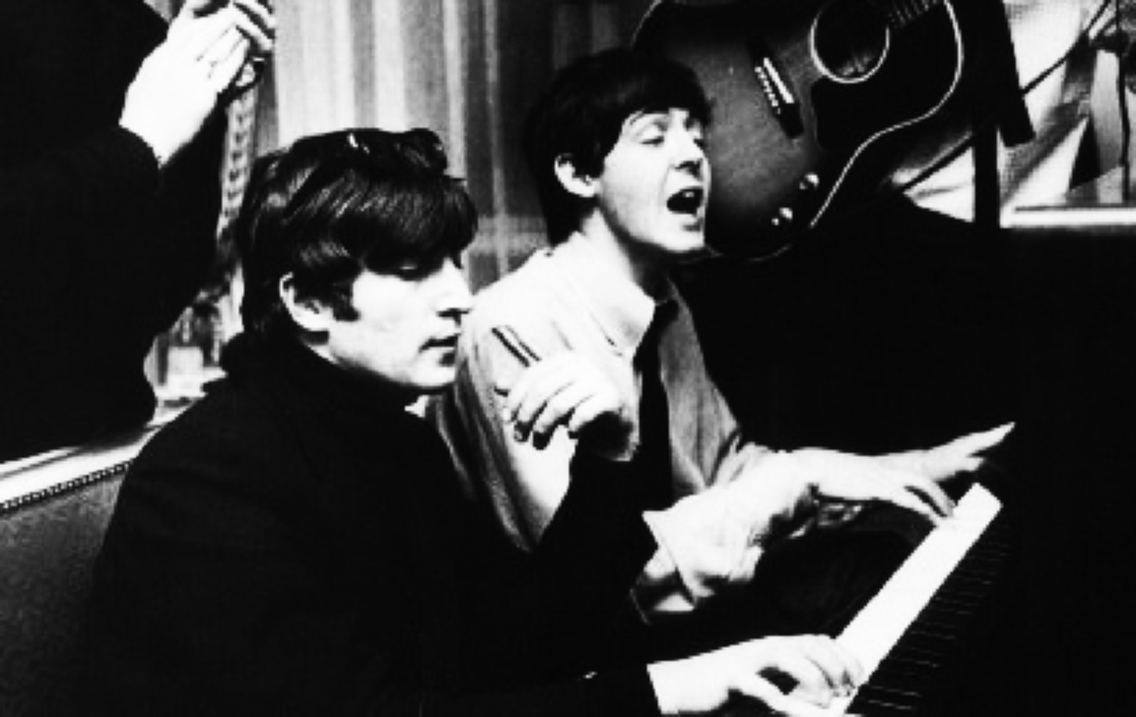
Lennon and McCartney, making music, and history.

I’ve been fortunate enough to experience chemistry of my own, personally and professionally (you know who you are out there), but I imagine there are some who never find a John or Paul, the kind of person who becomes a spouse or fishing buddy or bedmate or collaborator on songs or movies or books or cures for cancer. Chemistry comes in all shapes, sizes, and varieties. As I was listening to You’re Gonna Lose That Girl, one of the things that struck me was Carole Lombard died too young, age 33, to find professional chemistry that would have enhanced her fame and legend for future generations.

Fireball: Carole Lombard and the Mystery of Flight 3 by Robert Matzen

It was said that Ginger Rogers could do everything Fred Astaire could do–only backwards, and in high heels. Ginger wasn’t yet 23 when she met Fred; he was 34.

Think about the great movie teams. While Errol Flynn and Olivia de Havilland started early (26 and 19, respectively), other stars went years before finding the right chemistry, or never found it. Myrna Loy made dozens of pictures—you’d be surprised how many—before she found William Powell and embarked on The Thin Man and its sequels. Jeanette MacDonald was 33 when she first sang with Nelson Eddy. Astaire was 34 when he met Rogers. Abbott was 36 when he teamed up with Costello. Tracy was 42 when he started with Hepburn.

Of course, Lombard had Gable and their personal chemistry was world-beating. As I supposed here a couple weeks ago, had she lived, I doubt that their marriage would have lasted, but I also suspect that Lombard and Gable eventually would have made pictures together to follow up their lone 1932 collaboration, No Man of Her Own. Their names together on the marquee would have spelled box office, especially if she had found success on television, which Gable steadfastly refused to try through the course of the 1950s. I bet Gable thought about what might have been, had she lived—the sophisticated pictures they could have made together, maturing on screen like Tracy and Hepburn.

You could make a case that Lombard found her onscreen chemistry with William Powell in their three pictures together, but the body of evidence just isn’t there, and Powell was already busy with Loy. Lombard did well with Fred McMurray for two years, but that teaming ended when she left Paramount. Lombard and George Raft did OK for two pictures, but their rapport was better in the sack than on the screen. She had terrific chemistry with Jack Benny in To Be or Not to Be, and they liked each other behind the cameras too. I could see a professional partnership of Benny and Lombard, figuring that in their day and age, the male’s name always came first even if the female had the longer screen career. It has a nice ring to it, Benny and Lombard.

Let’s talk chemistry. How has it manifested in your life? What examples of chemistry do you most enjoy in motion pictures or the other arts?

In Carole’s case, we’ll never know what might have been, but listening to You’re Gonna Lose That Girl (Yes, yes, you’re gonna lose that girl) got me to thinking about chemistry as I’ve experienced it and as others have—or haven’t. Sitting there and listening inspired quite a stream of consciousness, or I guess you could say that the work of John and Paul was my catalyst this morning, which isn’t surprising given the chemistry at work between them.

Fireball: Carole Lombard and the Mystery of Flight 3 by Robert Matzen

Benny and Lombard camp it up in a publicity shot for To Be or Not to Be.

Carole Does Paris

Simone and I were on our own for a week while her mother was out of state, and so one evening I pulled out an old VHS copy of Fools for Scandal that I forgot 20 years ago I even owned. Fools for Scandal is the result of Jack Warner luring Carole Lombard to Warner Bros. because of a desire to get his studio up to speed on screwball comedy. Just for a little context, Fools went into release around the same time as The Adventures of Robin Hood.

I said to Simone, “Let’s watch a Lombard movie,” but Simone wasn’t interested. Then I told her that this picture was set in Paris, and that perked up her ears and she agreed to give Fools for Scandal a shot.

Thirty minutes later, Simone had been rendered unconscious and so had I. Although stuporous, I roused myself for the last couple reels and then went back the following morning to confirm for myself that I had indeed been neutron-bombed by this picture.

Fireball: Carole Lombard and the Mystery of Flight 3 by Robert Matzen

Simone at the 30-minute mark of Fools for Scandal.

Simone will tell you, and I agree, that there’s just no accounting for funny. I don’t want to scarze you off from giving Fools for Scandal a try (actually, yes I do), but let me present it this way: In one sequence, the dialogue shared between Carole and her co-star is in rhyme. I mean, for no good reason, they start talking in rhymes. Then he starts singing, shakily, in rhymes and you expect her to sing too but she knows she can’t carry a tune so she talks it while he sings it. I can only imagine that 1938 audiences knew right around now that they were the fools of this particular scandal.

The plot of Fools for Scandal is about as funny as a salvaged cinder block: A French chef becomes enamored of a woman he sees on the street and stalks her. He sends her fleeing to the safety of a taxi, then hops in the taxi and badgers her to see the sites of Paris until finally, exhausted, she relents. She manages to escape him and make her way to London but he follows, all stalker-like, and worms his way onto her domestic staff. Then he refuses to leave. Ask those poor California people in the news whose nanny refuses to be evicted just how funny this scenario is and they’ll tell you—this scenario isn’t funny; it’s horrifying.

Fireball: Carole Lombard and the Mystery of Flight 3 by Robert Matzen

The first scene, when Carole picks up her stalker on the Warner backlot. Shooting of “Paris” exteriors would take weeks–a bad sign for any picture.

Carole here portrays Kay Winters, an American movie star off to Paris in disguise for some R&R. Instead, she picks up a stalker and spends roughly 90 minutes of her life and ours shrieking for liberation and running for her life. At one point she even says to her stalker-who-refuses-to-leave, “My life was so nice and peaceful until you came along.” At the very end of the last reel, the Stockholm Syndrome dooms poor Kay Winters.

How did Miss Lombard find herself in this wretched predicament? FLASH BACK to just a year earlier when her contract at Paramount Pictures expired and super agent Myron Selznick convinced her that the grass was greener at other studios. She made the Technicolor comedy Nothing Sacred for Myron’s brother, David, and that picture scored good reviews and solid box-office returns. But there must have been a dearth of good screwball scripts out there at the second half of 1937 because the offer she decided to accept came from Warner Bros. of Burbank, a studio known for gangsters and swashbucklers and not comedy. The script was adapted from a stage play called Food for Scandal, the double meaning being that the boy in this boy-meets-girl tale is a chef who shacks up with the girl in London, causing a scandal. When the boy breaks into shaky song, what he’s singing is “Food for Scandal.”

Fireball: Carole Lombard and the Mystery of Flight 3 by Robert Matzen

Rene (Fernand Gravet), invades Kay Winters’ cab and refuses to leave. The decision that dooms her: she didn’t call the gendarmes and demand a PFA.

I guess Carole thought this thing had a chance because the Warners brought in Mervyn LeRoy to direct, and the talented Warner stock company would back her up, and the studio invited her to bring along her hand-picked cameraman, clothing designer, and hair stylist. As a result she looks like a million bucks in Fools for Scandal only to be defeated by a 10-cent script and total lack of directorial support.

If this isn’t a Hollywood axiom, it should be: It’s always dicey adapting stage plays for the screen.

If this isn’t a Hollywood axiom, it should be: It’s always dicey importing foreign movie stars to appear in American pictures.

So here is Carole set to star in a stage-play-turned movie with a French leading man of some experience, Fernand Gravet (pronounced Graw-VAY), who is new to Hollywood. If you’re thinking Charles Boyer when you hear Fernand Graw-VAY, forget it. The former had that voice and a certain debonair manner to offset average looks. The latter also sported average looks and a nearly impenetrable accent hung like bad wallpaper on a tenor voice and about as much charm as you’d expect from your average, garden-variety psycho. And speaking of psychos, Ralph Bellamy portrays Kay Winters’ boyfriend and manages to be unlikeable even in a situation where you want to root for him because his life and relationship have been invaded by a maniac. Instead, Bellamy plays cuckold in strange eye makeup that renders him a beady-eyed muppet.
Fireball: Carole Lombard and the Mystery of Flight 3 by Robert Matzen

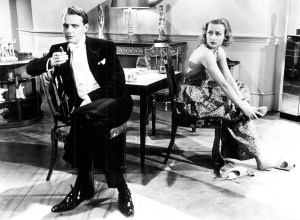
Kay turns to her boyfriend, Phillip (Ralph Bellamy), for help with the stalker, but finds Phillip ineffective, not to mention irritating. You would think an American movie star could do better.

In researching Fireball, I went through the Warner Bros. production files on Fools for Scandal and relived anguish that began with the title Food for Scandal. How can we even fathom now that censors found it too suggestive—a man living in a woman’s house without a wedding ring in sight? Fools for Scandal better suited the negative implications of such a situation, so they changed it, even though Fernand breaks into “Food for Scandal” about 30 minutes in.

The other thing that the production files reveal is pain. Pain from all involved. Pain from Hal Wallis the executive producer, pain from the unit manager, pain from the stars. Your run-of-the-mill A picture wrapped in seven or eight weeks, but this production dragged on for three months, with endless retakes on the Warner backlot, day after day, week after week. Stalingrad went better for the Germans than Fools went for Carole.

Lombard was always at her best when she underplayed the comedy, and we can see in this picture that she knew she was in trouble because she starts playing it frantic about two minutes in and doesn’t stop until The End. Carole desperately needed the firm hand of a director here and Mervyn LeRoy wasn’t it. LeRoy made some decent pictures in his career but never excelled at comedy. You could point to another converted stage play that worked under his direction, Mister Roberts, but I’d argue that he had three men in that cast—James Cagney, William Powell, and Jack Lemmon—with impeccable comic timing and a vehicle that had been proven effective.

Seventeen years earlier, he had Lombard and a cinder block, and what happens when you attach one to the other? It’s inevitable, and that’s exactly what happened here. I don’t think Simone will ever trust me again.

Fireball: Carole Lombard and the Mystery of Flight 3 by Robert Matzen

The Warner marketing department had trouble figuring out how to sell this particular pile of rubble, given that its plot is more psychological thriller than comedy.