A Facebook Fourth

A couple months ago I mentioned that I was writing a film treatment of Fireball. It wasn’t my idea to create a movie version—it was suggested by my accountant, who’s a good man to keep happy. As I noted in my column about the idea of a Fireball film, the subject keeps coming up and I’ve been writing to satisfy what you might call popular demand.

Since mid-May I’ve had some conversations with Hollywood insiders and they’ve convinced me that I’m better off developing not just a treatment, which is the equivalent of an outline of the story of a film, but a complete screenplay. I got started working on the screenplay as time allows, basically when I’m not writing Mission: James Stewart and World War II. But a couple of Facebook conversations on the Carole Lombard page [login required for FB link] put spurs to my efforts and I’ve been working hours a day to get the screenplay done and out there.

On July 2, a member of the Carole Lombard group, Brian Lee Anderson, posted on the CL page, “I got asked today what actors I hope portray Carole and Clark in the film version of Fireball … Who would you like to see?” That question prompted 88 replies, many with photos of prospective Lombards and Gables. Vincent Paterno then picked up the conversation and moved it to his Carole & Co. website.

The next day, I mentioned on Facebook that I’m working on a screenplay of the story, which generated 79 replies on its own. I hesitated to post anything because, as I feared, a by-product of doing so is that now there are people out there counting the days until Fireball is released to screens nationwide.

It’s not quite that simple. Granted, a Hollywood management type and a Hollywood producer are interested in seeing the script when it’s done. Granted, I have a couple of other irons in the fire as to how to circulate the script, but make no mistake, this is a spec script. It’s not a work for hire at this point. There’s no guarantee Fireball will ever become a major motion picture, or a feisty indie for that matter. That said, I have never seen such a groundswell of interest, energy, and positive push for an idea before. It’s practically risen to the level of a grass-roots campaign to get this thing made.

To play along with Brian Lee Anderson’s July 2 question, a problem well beyond who’s going to option the Fireball screenplay and get a production in gear is who would play Carole Lombard? Who would play Clark Gable? They were true originals and we’re familiar with their faces, voices, and mannerisms because their movies are available today on DVD, TCM, Netflix, and any number of cable channels. Leo DiCaprio made a good Howard Hughes in The Aviator specifically because the audience didn’t know Howard Hughes that well. What did the shy, reclusive Howard look and sound like? Who the hell knows? Like Leo DiCaprio, I guess. But Gable and Lombard? We know them to a T and good luck with casting.

Fireball: Carole Lombard and the Mystery of Flight 3 by Robert Matzen

When you look at Henry Cavill, do you see Clark Gable?

At the same time, my brother-in-law Michael Rothhaar and nephew Will Rothhaar are Hollywood actors, really accomplished actors, and I’ve seen them do remarkable things with the characters they’re playing. I’ve directed actors giving performances that made my jaw drop—How do they do what they do? How do they become other people and recite pages of dialogue memorized the night before as that other person? There are enormously talented actors out there, and I can’t rule out the fact that the perfect Lombard and Gable exist—actors capable of playing these two from the inside out.

Casting today’s stars as Hollywood legends is the stuff of endless debate. For the sake of argument, here are the results of the Facebook threads of last week:

Lombards mentioned include Kate Hudson (most votes), Jennifer Lawrence, Carey Mulligan, Jennifer Garner, Cameron Diaz, Reese Witherspoon, Maggie Lawson, Amy Poehler, Kelly Rutherford, Amy Adams, Michelle Williams, Amber Velletta, Dakota Fanning, Melissa Joan Hart, Blake Lively, Kate Winslet, Melanie Laurent (who’s French), Kristin Chenoweth, Charlize Theron, and Naomi Watts.

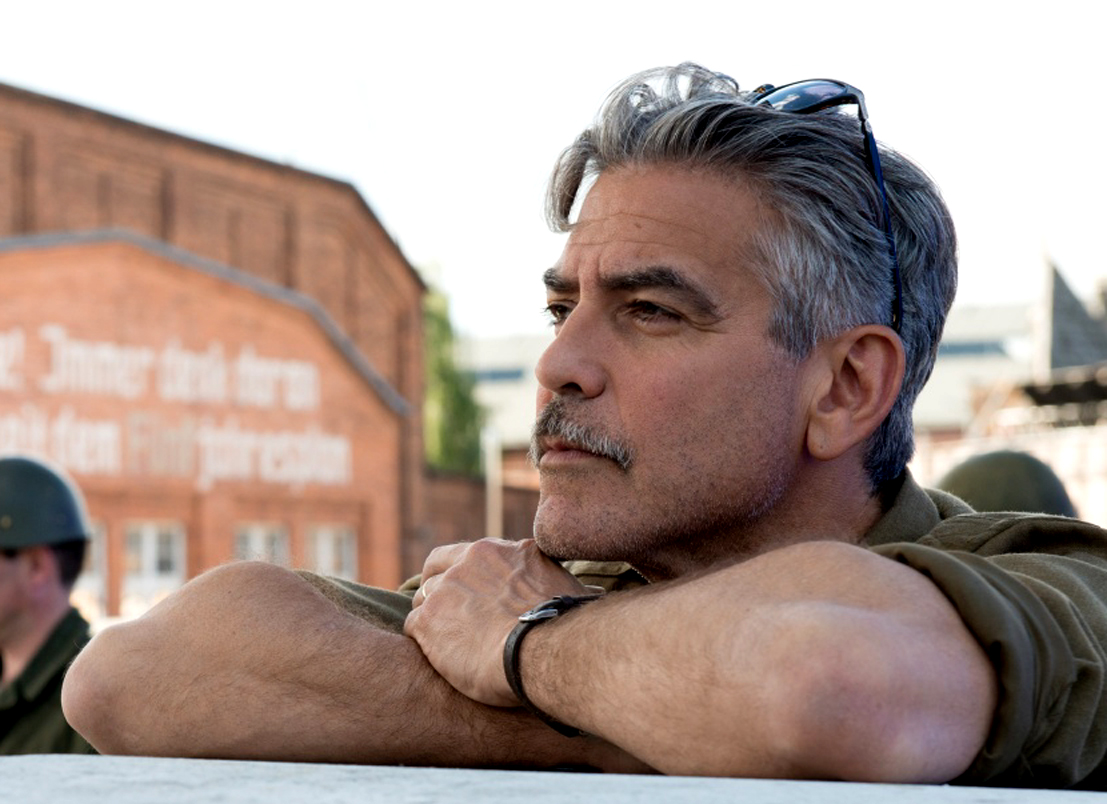
For Gable, George Clooney ran away with the voting, and then came Henry Cavill (multiple votes); Leo DiCaprio (“Yes definitely!” and “Not in a million years!” votes), Robert Downey Jr., Colin Farrell, Anson Mount, Jeffrey Dean, Chris Pratt, Hugh Jackman, and Brad Pitt.

Fireball: Carole Lombard and the Mystery of Flight 3 by Robert Matzen

George Clooney during production of The Monuments Men. Pass the hair dye and let’s get this thing going.

I don’t like to wade into such frays, but I can’t resist. Personally I always thought Gable was George Clooney’s part to give away. He’s got the movie-star presence of a king of Hollywood, and as affected as Gable always played Gable, well, Clooney would be all over that. A growing problem is Clooney’s age, given that Gable was 41 at the time of the crash, and Clooney’s past that now. Still, I think he could do it if only because it was difficult to pin Gable’s age down back in the day and he was always playing younger and older. Blacken his hair and he’s 30; gray his temples and he’s 50.

I’m always looking at actresses to see if they’re Lombard candidates. Whoever it is better be funny by nature. Charming as hell. Jill Clayburgh (God rest her soul) was neither, and a lack of connection to who she was playing helped sink her rendition in Gable & Lombard, made way back in 1976. I could see Zooey Deschanel, Kate Hudson, or Anna Faris in the part and my dark horse—my literal dark horse because she’s part Brazilian with raven hair and dark eyes—is Jordana Brewster of D.E.B.S. and four of the Fast & Furious pictures. She’s capable of charming your pants off and she’s got the Lombard square jaw that could evoke CL to those in the know.

Fireball: Carole Lombard and the Mystery of Flight 3 by Robert Matzen

Jordana Brewster. Coloring’s wrong but personality’s right.

Most intriguing of all the casting opinions:

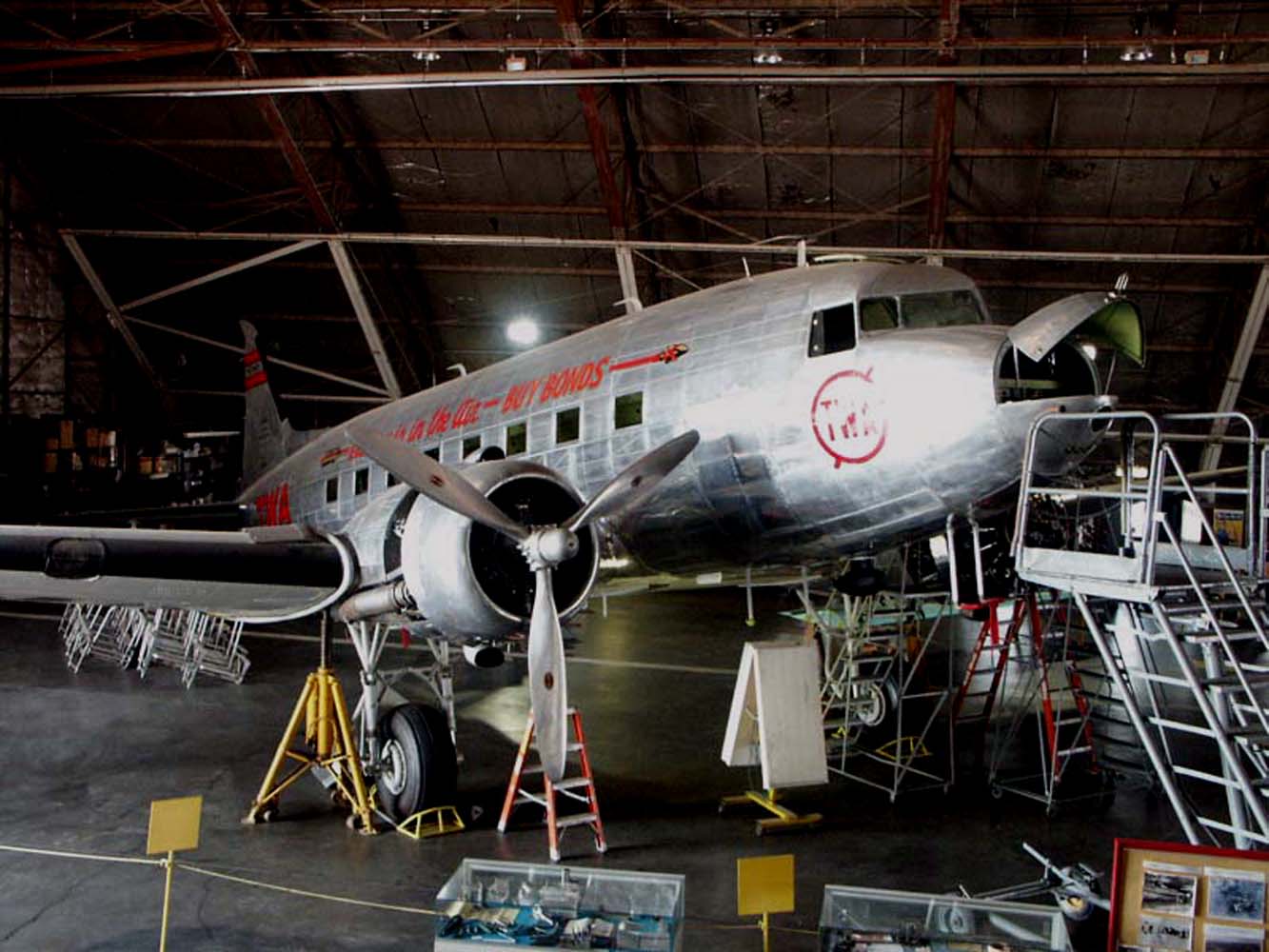
  • NC 1945 the restored TWA DC-3 in Kansas City to portray its sister ship, the doomed NC 1946, better known as Flight 3. They were on the assembly line at the Douglas plant in Santa Monica at the very same time in February 1941. Thank you, Michael McComb, for that idea.
  • Kate Hudson as Carole and Goldie Hawn as Carole’s mother Petey, as pitched by Brian Lee Anderson. Yes, Brian, that would be cool as hell.
Fireball: Carole Lombard and the Mystery of Flight 3 by Robert Matzen

Goldie and Kate as Petey and Carole?

So that’s how I spent my Fourth, writing like mad while keeping an entertained eye on Facebook.

Fireball: Carole Lombard and the Mystery of Flight 3 by Robert Matzen

The sister ship of the doomed Flight 3, now being refurbished in Kansas City and awaiting its big break in Hollywood.

More than Marian

In the category of, “You never know,” Olivia de Havilland turns 99 today. Happy Birthday, Livvie! I say you never know because the woman spent her first 40 years sickly. There’s no other way to put it. She was a delicate flower, driven to bed many times by various maladies and at least once by a nervous breakdown. She was also a smoker at various points, and we know what that does for a person’s longevity (right Errol? Clark? Joan? Bogie? Coop?).

Errol & Olivia by Robert Matzen

Olivia de Havilland’s first book, published in 1962. Her second has been eagerly awaited for going on 40 years.

Livvie has resided since the 1950s in Paris after marrying a Frenchman and for a long time commuted to Hollywood occasionally to work in pictures and television. She wrote a terrific book about life in Paris called Every Frenchman Has One, published in 1962. She charmed the pants off me with that book, making me wish she had written a lot more besides, like the memoir she promised her publisher in 1979. I clipped an article out of the paper back then (I could only use safety scissors because I was in my playpen); in this page-6-or-whatever story, OdeH regretted that there would be a delay in completing her manuscript beyond the first of the year. As in, beyond the beginning of 1980.

As the crow flies, it’s now 35.5 years later and the publisher continues to wait. The woman has lived a fascinating life from her birth in the Far East as a member of the British Empire to her eventual migration to Hollywood in 1934. As noted in Errol & Olivia, OdeH had a toxic relationship with her stepfather that included sexual abuse. She was driven from her home in Saratoga, California, upon graduation from high school and joined the theater, ending up in Max Reinhardt’s production of A Midsummer Night’s Dream. There, Warner Bros. spotted her and the rest is, well, you know. Legal victories (this little bulldog of five-three went toe-to-toe with the Hollywood moguls and beat them); Academy Award nominations and statuettes; national honors from the presidents of the United States and France.

Errol & Olivia by Robert Matzen

Olivia de Havilland, just turned 18, sits on a prop cart at Warner Bros. with Errol Flynn in the summer of 1935.

You’d never know it to look at her because today she is a Grand Dame who has carefully crafted an image of Grand Dameitude, but Livvie in youth was a handful. She took a lot of anger with her from that tudor-inspired frame house at the end of that quiet dead-end street in Saratoga. Toxic relationships will do that to you. She grew up a loner with loads of self-discipline and has stayed that way all her life. When she moved to Hollywood after signing her Warner Bros. contract in 1934, her mother went with her and kept a watchful eye on young Livvie until 1938 when Mom moved back north and daughter, now age 21, stayed behind to sow some wild oats. That’s when things began to get interesting with Flynn, and with Jimmy Stewart, and with John Huston. There was nothing Grand Dameish about that last one when the movie star and the brash young writer-director embarked on a wild sexual adventure. All that self-discipline went flying out the window when she fell as hard for Huston as a girl could fall. Then he dumped her, and she carried a torch that I am sure still burns on Rue Benouville today.

OdeH could have written several books in the last 35 years. One about her day job, another about Huston, a third about Flynn, and, of course, a whole Harvard Five-Foot Bookshelf about her own sister, Joan Fontaine, the little girl born less than 18 months after Olivia. It’s no fluke that I chose the title Twisted Sisters for my section about the battling de Havillands in Errol & Olivia. These two went at it with only short respites for 96 years, until Joanie gave in and left us in 2013. Today, Olivia lives a life of quiet seclusion in her Paris townhouse. Last I heard she had hired someone to help her finish that memoir so long in the making, and on occasion she receives visitors, like Errol Flynn’s daughter Rory.

Errol & Olivia by Robert Matzen

Livvie in recent times.

Let’s take a moment and raise our glasses to this great award-winning star of Hollywood’s Golden Era. Way back when she toiled in make-believe Sherwood Forest in northern California portraying Maid Marian, Olivia strived to be much more than Errol Flynn’s girl and she got her wish through hard work, attention to her craft, and when necessary, legal action. In her 40s she embraced exercise and healthy eating and brother has it paid off. Maybe we should convince her to take five from the memoir and write Olivia de Havilland’s Secrets to a Long, Successful Life.

Errol & Olivia by Robert Matzen

The OdeH abode in the embassy section of Paris.

A Gallant Blade

How can we go on without Christopher Lee? I mean, seriously, HOW?? What a comforting, menacing, horrific presence in our lives, our entire lives, no matter when, dear reader, you were born. Sir Christopher Lee was here before you, towering taller, employing that baritone, tasting the blood of virgins, and wielding a sword deemed inferior only by unkind scriptwriters.

His Frankenstein was a grotesque rethinking of what had been done by Karloff.

His Mummy was precursor to the modern version seen in Brendan Fraser’s pictures.

His Dracula was a ruthless killer minus the charisma of other title vampires. If you were a damsel, you’d succumb, but there was never any indication you’d enjoy it one tiny little bit.

Fireball: Carole Lombard and the Mystery of Flight 3 by Robert Matzen

Here’s a Dracula not for the faint of heart.

Dabblers in classic cinema might remember Lee going all the way back to Captain Horatio Hornblower in 1952, when he played a Spanish ship’s captain out-dueled by Gregory Peck’s title character. He did lots of television in the 1950s, including four stints on The Errol Flynn Theatre. In one of these episodes, Lee fought a screen duel with Flynn and complained later the host was so careless with the blade that he nearly severed Lee’s little finger. “I have the scar to prove it,” Lee grumbled.

Fireball: Carole Lombard and the Mystery of Flight 3 by Robert Matzen

His Mummy woke up really horny (and tall for an Egyptian), but with complexion problems.

I take umbrage at obit writers who last week said Lee was an unknown when he landed Curse of Frankenstein in 1957. The hell he was! He was already an accomplished workingman’s actor; his Frankie was a soulful victim stitched together by a madman. Hammer would use Lee in an astonishing variety of vehicles for the next 20 years, not only as Count Dracula but also as as Kharis, a linebacker-style Mummy; as Rasputin the maddest of Russian monks; as fiendish harem-building Fu Manchu; and as an assortment of cops, professors, pirates, and mayhem-makers.

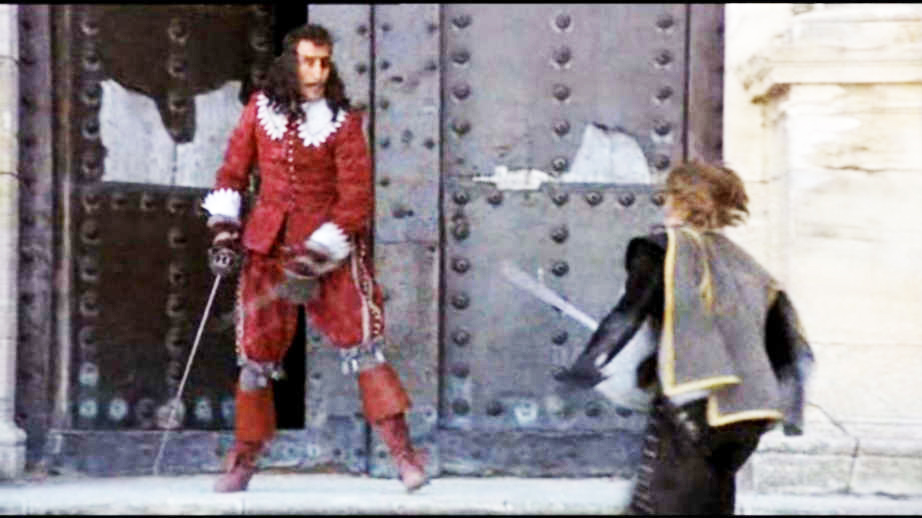
For me, Sir Christopher will always be Count Rochefort, the one-eyed nemesis of D’Artagnan in the 1973 version of The Three Musketeers and its sequels, The Four Musketeers and Return of the Musketeers. You’re not supposed to root for the bad guy but I couldn’t help it. At one point all-powerful Cardinal Richelieu says, “Do you fear me, Rochefort?” To which our anti-hero says, “I … fear you, Eminence.” And can’t resist adding, “I also hate you.” And the Cardinal respected him for saying it!

Fireball: Carole Lombard and the Mystery of Flight 3 by Robert Matzen

As Rochefort, he could match a musketeer’s blade while also serving as implied lover to Milady de Winter.

Lee was already 50+ when he enacted Rochefort but still superbly athletic well beyond what one would expect of a gangly man of six-foot-four. His whole adult life he had been a classic fencer and, like Basil Rathbone, more accomplished at it than the heroes who would defeat him onscreen. For both men this source of intense frustration would be a common theme: I was a better pure athlete and fencer than Errol Flynn/Gregory Peck/ Michael York but the damn script had me losing every time!

Lee never wanted for work. He eased from Hammer B’s to three-nippled Scaramanga in the James Bond picture The Man with the Golden Gun when that franchise was still huge. Then he returned to dozens of B-level film, TV, and audio roles for the next 30 years until his rebirth in not one but two of the greatest blockbuster cinema series of all time, Lord of the Rings and Star Wars. I loved seeing Lee literally mop the floor with goody-two-shoes Gandalf just as I delighted in his slicing and dicing of Jedi Knights in two Star Wars pictures. It’s just a shame his role as Count Dooku was so half-baked, but then wasn’t half-baking the norm with Star Wars from day one? And isn’t that why poor Alec Guinness recoiled in horror every day on a set cluttered with dog people, robots, and swords with no blades? Gentlemen, we did not do it this way making Lawrence of Arabia!

Fireball: Carole Lombard and the Mystery of Flight 3 by Robert Matzen

So here he is, 50+ dueling in the heat of Spain with one eye tied behind his back. If you never thought of it, that messes with your depth perception big-time, like when, oh, swords come ear-high.

In bidding adieu to this magnificent performer, I remind you of a sense of humor that moved him to title his memoir Tall, Dark and Gruesome, and one that very late in life inspired participation in such head-bangin’ songs as The Bloody Verdict of Verden and re-envisioned standards like Silent Night with searing riffs as presented in Christopher Lee: A Heavy Metal Christmas. His final blaze of glory was a different sort of yuletide greeting, Jingle Hell, which he confessed was “naughty,” and did so with a sheepish smile. You will be the one smiling even as you reach for earplugs because this guy knew how to have fun while retaining every ounce of formidable British dignity.

Fireball: Carole Lombard and the Mystery of Flight 3 by Robert Matzen

To heck with sabers, light or otherwise. I’ll just fry you up like bacon.

The loss of Christopher Lee is really all about me and my problem with the very natural state-of-being called death. I explored its mysteries at length in Fireball trying to figure things out, but I can’t say I’ve gotten anywhere yet. All I know at this point is that Christopher Lee is gone from this world, and I don’t know what to do without him.

Time Machine

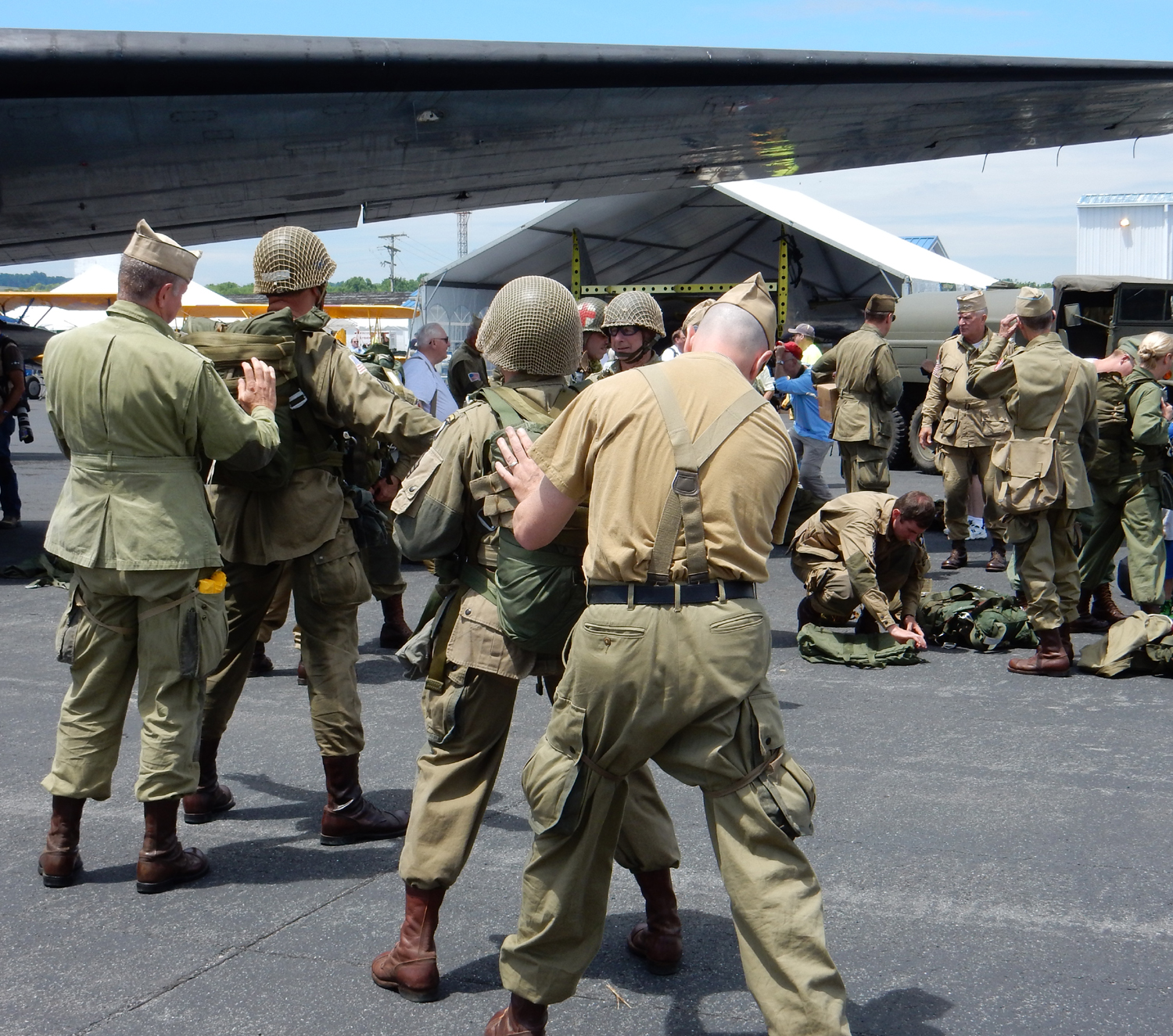
I imagine that time travel would be a pretty cool thing to experience. This past weekend I flirted a little with time travel at “World War II Weekend,” staged at the Reading Regional Airport in eastern Pennsylvania, not far from Philadelphia. There, several hundred living historians (a.k.a. “reenactors”) got together to represent American G.I.s, German infantry, French resistance, and many other groups for the benefit of the history minded of this millennium. The authenticity was astonishing to the extent that the very sight of the “Krauts” in person and up close produced in me a chill—broken only when these 1940s apparitions, precise in every detail, tall, square shouldered, in gray-green uniforms and helmets, would sneak a peek at a smartphone.

Fireball: Carole Lombard and the Mystery of Flight 3 by Robert Matzen

U.S. paratroopers check an all-important equipment check before their jump.

What makes a guy enact a paratrooper jumping out of a plane at 1,500 feet to provide an audience of thousands a sense of what it was like to see a flock of C-47s overhead if you were in France in 1944? The sense I got from it was, these guys of the Airborne Demonstration Team love the history that much. I also realized that the 1944 fellas were up in the air for several minutes over enemy territory as they floated to earth and impersonated clay pigeons for marksmen on the ground. There’s bravery, and then there’s paratroopers.

You learn things by experiencing history up close that you wouldn’t or couldn’t from reading about it in a book or watching a movie. You know me: I don’t feel I can write about a physical location without being there; this time the physical location was inside a Consolidated B-24 Liberator, a 74-year-old heavy bomber of the type that pulverized Germany from 1943 to 1945. James Stewart and other characters in my new book flew in these growling monsters so I had to too. Thank God I’m not writing about those paratroopers.

Fireball: Carole Lombard and the Mystery of Flight 3 by Robert Matzen

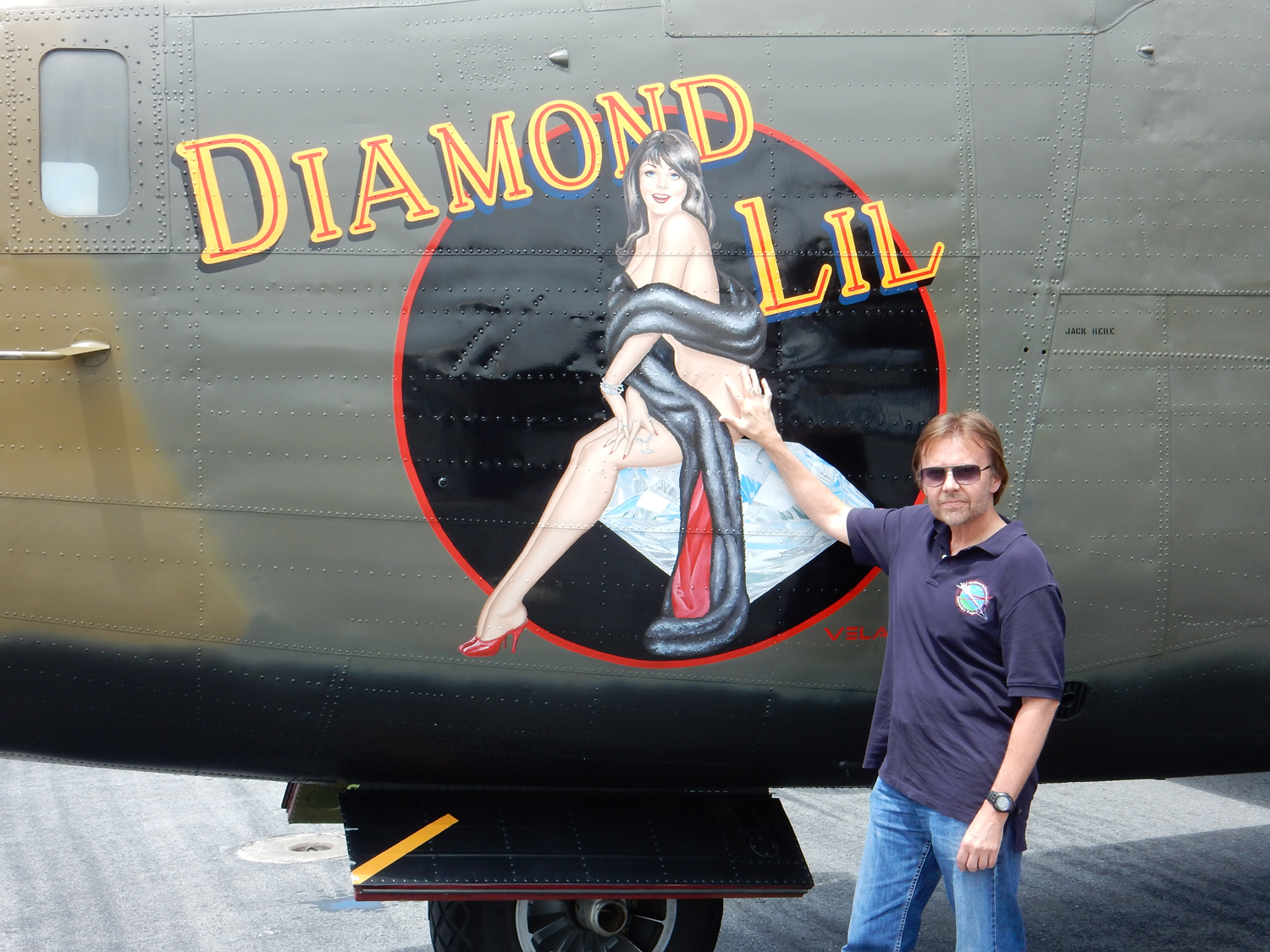
The last flying B-24 Liberator, Diamond Lil, and crew wait on the tarmac.

It’s always sobering to fill out a form that asks for “next of kin” before one of these adventures, but the truth is these planes crashed when they were new, and Diamond Lil is the last of her kind, the final flying Liberator in America. I love to fly in vintage bombers. The cabins are unpressurized because of the gun ports, and the engines are louder than you can possibly imagine. It rides like a 20-ton bucket of bolts, just as it did through the war. It is magnificent!

Fireball: Carole Lombard and the Mystery of Flight 3 by Robert Matzen

For luck.

Which brings me to the topic for today, which is not Diamond Lil but another gal. It’s about a chance encounter, the kind where you glimpse someone and feel a primal rush and think to yourself, I’ve been waiting for you my whole life. Well, it happened right there on the runway during my pre-flight briefing as I stood by the wing of the B-24. I turned around and saw her and thought to myself, “Oh, my God, I can’t believe I’m committed to Diamond Lil, because there she is.” Across the runway, a vintage gleaming silver DC-3 had just landed and taxied to a stop. Right. Over. There.

The conflict raged inside me as the captain of Diamond Lil went on with his safety briefing. Yah, yah, sure, skipper. Whatever you say. I was too busy replaying in my head a DC-3 landing in Las Vegas, weary passengers, a final takeoff and ascent. Eyewitnesses seeing and hearing a plane on an unusual heading…

Fireball: Carole Lombard and the Mystery of Flight 3 by Robert Matzen

Helloooo, beautiful! First glimpse of the Douglas DC-3 that had landed right behind me.

You’d be proud of me, people: I got my head together and wrung every minute out of my flight inside Diamond Lil, from engine run-up through an airborne exploration of the ship, from flight deck to tail gun and then a landing that felt like the worst pothole you ever hit in your car.

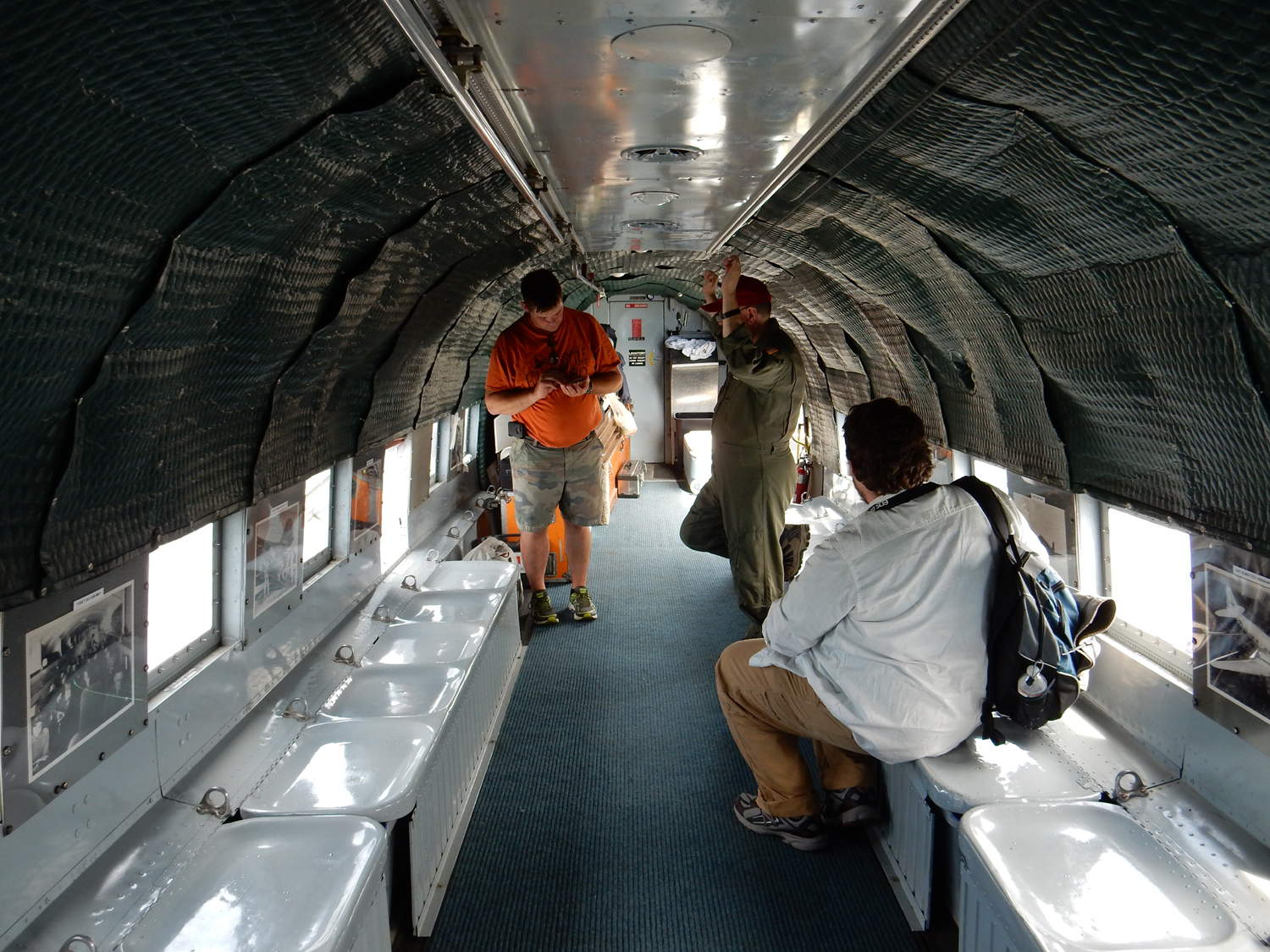
An hour later I was inside that DC-3, which was configured as a C-47—the design most used in helping to win World War II. But whether used for passengers or cargo, they were all stamped out the same and so stepping inside this 1945 model was exactly like stepping inside TWA Flight 3.

Fireball: Carole Lombard and the Mystery of Flight 3 by Robert Matzen

Looking forward from the tail of the Douglas DC-3/C-47.

Passengers had to be made of sterner stuff back then. Today, I grouse if an infant is on my flight on a 737 or Airbus—and I’m talking if an infant is anywhere inside the roomy cabin so its screaming little voice will bounce off the fuselage and disturb my experience. Well, not a problem in 1942. You’d never hear the little bastard with two 1200-horsepower engines five feet from you, one pressing in from the left, and one pressing in from the right. You wouldn’t hear anything in the unpressurized cabin but an urgent, purposeful growl at somewhere around 110 decibels. It’s not like Carole Lombard could chat with her afraid-to-fly mother during the trip west to offer consolation. Even screams from mouth to ear wouldn’t convey a message, so you sat there in a cabin smaller than your average trolley car, stuffed Kleenex in your ears, and took it.

Fireball: Carole Lombard and the Mystery of Flight 3 by Robert Matzen

Inside the DC-3 (here configured as a C-47 for cargo). For passenger travel there were three seats across, two on the left and one on the right, with an aisle between. Not exactly roomy. Folks, this is the entire cabin.

So, I went inside the DC-3, talked to the people, took some pictures, exited, came back again, took some video, walked all around it… I knew my followers would find the experience interesting so I tried to document to give you the best look you may ever have at the plane that hit the mountain. One of the many benefits of time travel.

Fireball: Carole Lombard and the Mystery of Flight 3 by Robert Matzen

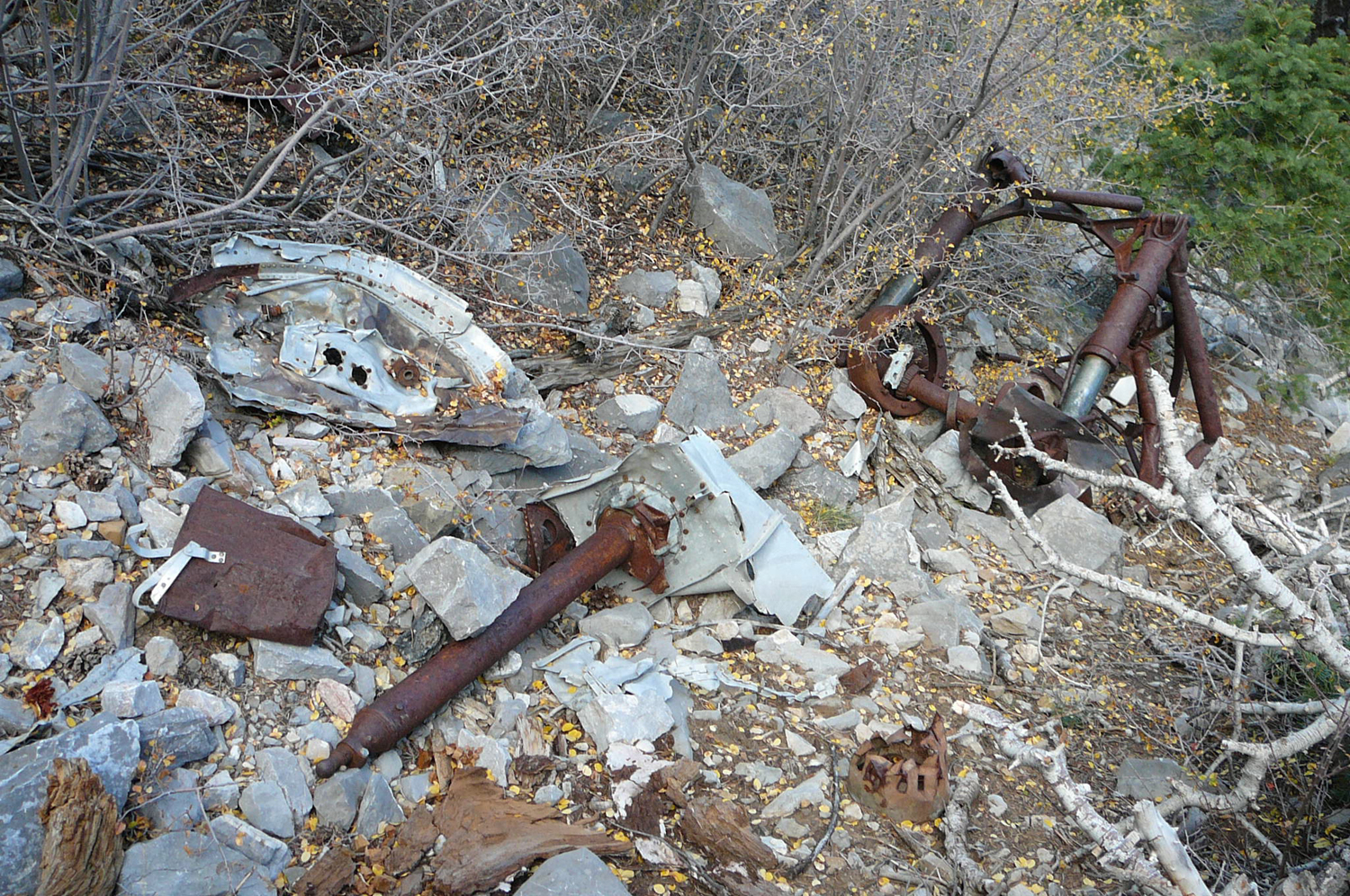
Landing gear as it’s supposed to look.

Fireball: Carole Lombard and the Mystery of Flight 3 by Robert Matzen

Landing gear (right) with other pieces of DC-3 on Mt. Potosi in 2012.

Not in My Kingdom

I have this theory that you don’t need computer-generated explosions and cities crumbling in mega-earthquakes to make a good movie. Somehow, and call me crazy, I think the ability to do anything and create any scenario by computer works against the filmmakers of this generation rather than for them.

Case in point. I caught something called The King’s Speech the other week. It’s a modest picture, as pictures go in this Millennium, made in 2010 about Queen Elizabeth’s parents (King George VI and Queen Elizabeth—the Royal Mum to us) on the eve of World War II. The thing that makes the story go isn’t a villain who looks like the devil with his finger on the button of global destruction. The thing that makes the story go is a speech impediment that is bigger than the King of England and thus threatens the kingdom.

Imagine that. A whole movie, and a very interesting one that made me cry, concerns a speech impediment and its effect on a man and a nation. The King’s Speech is a title with a double meaning: it’s the way he delivers his words, the king’s speech, and the words he delivers at the dawn of World War II—the king’s speech. Get it?

In the IMAX, 3-D, super-woofer theatrical world we live in, bigger and louder is equivalent to better. There used to be something called the shark that it was possible to jump, but somebody CG-destroyed that poor discerning shark so, today, it doesn’t matter how improbable the action is. Fifteen years ago I enjoyed the simple quest of a Fellowship seeking a ring not because of how big that movie could get but because of how simple it was. It was a little story of a little Hobbit and his motley friends against really bad bad-guys. The next thing you know, computers got in there and … jeesh. Giant elephants, armies of tens of thousands, earthquakes, volcanoes, and what I initially thought was (I had never read Tolkien) a giant flaming vagina. I was all the way through my first viewing until I learned it was the Eye of Sauron. I stopped at movie number three when the king returned. (It took him forever.) I went on sampling CG movies and tried X-Men, various Spider-Man entries, and Battle: Los Angeles (because my nephew was a star in it). Then I gave up. Stopped going into theaters that were no longer relevant to me because story had been lost in the clamor.

Fireball: Carole Lombard and the Mystery of Flight 3 by Robert Matzen

This is not my rescue party.

I plumb missed The King’s Speech and I’m sure other good movies because of the constant din all around them. It warmed my heart to find a simple story out there that was rooted in history, and World War II history at that, about a human battling a speech impediment. It gave me hope for another simple story, about a band of rescuers trying to find a small airliner on a vast mountain. As noted, writing of a Fireball screenplay continues and I have to say, so far, so good. It’s a very simple story; an elemental story of Man against Nature and Man against Himself. I have to pat myself on the back because to date I haven’t written in even one CG avalanche, and no abominable snowmen or animated wolves have yet attacked the rescue party. There’s no cute snowman, no pet reindeer, and no princess except for the one on the plane.

All part of keeping it simple.

Fireball: Carole Lombard and the Mystery of Flight 3 by Robert Matzen

My rescue party will not see him. At least not as of this writing.

Two for Forty

I just returned from three days at Cinevent, the annual celebration of Golden Age Hollywood in Columbus, Ohio. I got plenty of opportunity to talk about Fireball there, and about my next book, with the likes of author and archivist James V. D’Arc, author and blogger John McElwee, Errol Flynn Slept Here co-author Michael Mazzone, and legendary Warner Bros. archivist Leith Adams, among many others.

While there, John dropped an 8.5×11 sheet of paper in my lap. It was a flyer pertaining to a topic I hold dear, the site of the crash of TWA Flight 3. In a nutshell, a self-dubbed “adventuresome couple” intends to climb to the site and pay for the trip by retrieving crash items and selling them to those who pay $25 in advance for one item; $40 for two.Carole Lombard crash site TWA Flight 3

I’m staring at the flyer now and will scan it for inclusion with this column. I’m not sure how I feel about this. I know I believe in free speech, free choice, free will, and free enterprise. Many aspire to these “free” concepts and today of all days, Memorial Day, they take on special meaning.

I guess I say, more power to you, Adventuresomes! By way of full disclosure, I purchased a piece of crash wreckage somewhere around 1998, back when eBay was new and I was obsessed with the site and anything related to it. In the back of my mind I asked myself, Is this creepy? I asked, but participated in the auction anyway, bidding against others for this item. A week later I held the piece in hand, a rib from the empennage, and yes, I was uneasy having in my possession part of NC 1946, the Douglas DC-3 born in February 1941 in Santa Monica, California, that would live less than a year and end up strewn in a million pieces over the side of Mt. Potosi, Nevada.

A decade later I would finally climb Potosi to visit the site as research for Fireball. Only then did it hit me where I was and what the wreckage represented. Only then, struggling to stand on sheer mountainside at the spot where 22 humans were blown to bits along with that infant of an airplane, did I comprehend the reality that I stood at something akin to a gravesite. I understood because human souls reached out and touched me. The pilot made contact. The co-pilot. The stewardess. Fifteen Army Air Corps guys. I felt them there. My communication with these souls infused life into my writing. Suddenly, the manuscript had a soul of its own.

That’s one of two enduring memories of my day at Potosi: having those people reach out and touch me in a most physical way. The other is the sheer danger, the sheer exhaustion, of the climb up and back. There are two ways into the crash site: One is the way I went, four-wheeling to the embarkation point, then snaking up the mountain, which I felt I had to experience since I would be describing what the first responders faced trying to reach the site. The other way in involves riding the ridges by four-wheeler to a government gate, then hiking a long way and descending from the crest into the crash site—the route used to bring up bodies from the wreck. In the bullet points atop this flyer, the author describes “2.5 miles of hiking up into steep and rocky terrain.” He leaves out words, most appropriate descriptions, like perilous and life threatening. I trust the Adventuresomes are hardbodies who employ a good guide. Thanks to months of training and planning I had both, and it helped and didn’t help. I never would have found the site on my own because it’s a tiny pinpoint on a vast mountain. I had the luxury of following the guide as he used decades of experience in wilderness to lead me up contours of mountainside that could be climbed. But he couldn’t lend me any sure-footedness that day and despite being reasonably coordinated and physically prepared, I tumbled over time and again, smashing on the rocks and bloodying myself as I’ve described to you in the past.

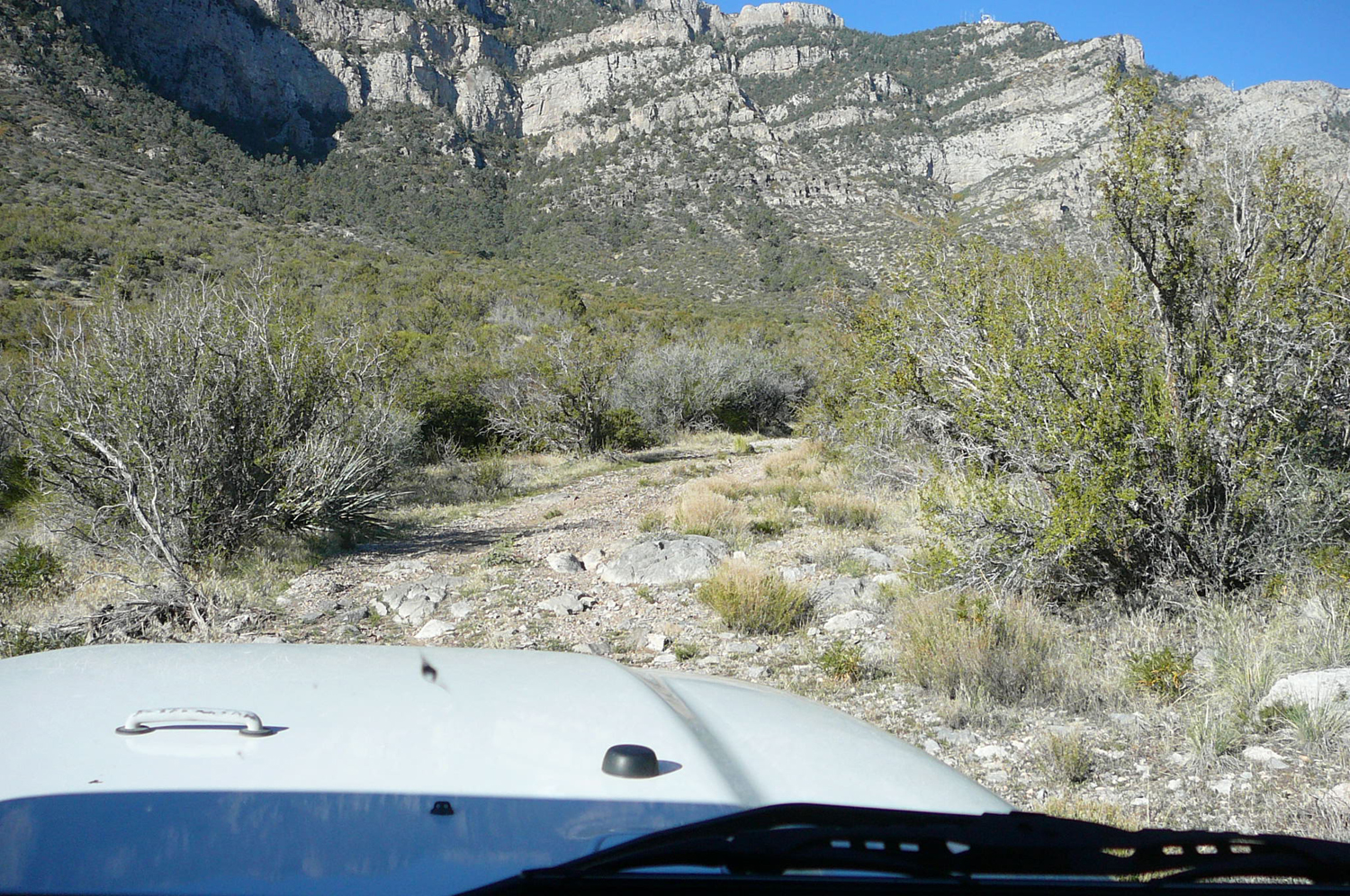
Adventuresomes, and anyone else who takes on Potosi (I met another future climber in Columbus and urged him also), please don’t underestimate this mountain. It’s a killer. I’ve known several people who tried the “easy” way into the site and many didn’t make it for various reasons. Season is a consideration; weather; snakes; equipment; terrain. A normal wilderness hike is great fun, but if you’re struggling for your very life to climb 5,000 vertical feet on 45-degree angles or worse, with footing that gives way unexpectedly, the experience is something else. Even leaving at dawn, we had to hurry to make it back down the mountain before night swallowed us whole, so difficult was the round trip, with less than 90 minutes spent at the site. You can’t move at night on the mountain, believe me. I wouldn’t even underestimate the first and last parts of the journey by four-wheel drive, because the desert path we took, colorfully named Ninety-Nine Mine Road (it passes the old mine entrance), is not for your average driver. I wasn’t behind the wheel the day I went to Potosi—I couldn’t have made it on my own because this is serious off-roading and I don’t have the experience.

Fireball: Carole Lombard and the Mystery of Flight 3 by Robert Matzen

Ninety-Nine Mine Road is much worse in most spots than this photo shows. Here I was able to steady the camera, point, and shoot without being too badly knocked around inside the Jeep.

Fireball: Carole Lombard and the Mystery of Flight 3 by Robert Matzen

Behind this mound of earth lay the entrance to the old Ninety-Nine Mine in the foothills before Mt. Potosi.

If you are trying to lug anything extra back down the mountain, say, crash debris, if you put it on your back it’s going to a) weigh you down, b) add extra bulk, and c) change your center of gravity as you try to navigate the steep terrain.

It just occurs to me now that maybe Fireball inspired the Adventuresomes to attempt the climb. I’m not going to make any value judgments about the wisdom of selling crash wreckage to offset costs for the trip. I’m disqualified from making them anyway because I am a past purchaser. On all counts I simply advise, be cautious, dear couple. I want you in one piece to buy my next book, and if that book with James Stewart as main subject inspires you to visit places like Tibenham, East Anglia, where the 445th Bomb Group was based, or Hamburg or Frankfurt, which the 445th bombed, be advised: these places will welcome you with no dangerous climbing required.

Splitting a Limo

Fireball: Carole Lombard and the Mystery of Flight 3 by Robert Matzen

Nine years ago yesterday: the time they gave me a megaphone. The only time. The reason my clothes are hanging on me is because I was on the low-budget-feature diet, which includes no time for food but the stress-burn of 10,000 calories a day. The guy visible in front of me is my stepson, Rob. Like I say, I called in all markers on May 13, 2006.

The very first reviewer of Fireball, the savvy, revered, and (by a few) despised New York Post film critic Lou Lumenick, praised the book and said, “Fireball would make a great movie.” Since then I’ve heard the refrain often, up to and including this week on Facebook. It happens that I write and direct movies for a living, if one counts videos for NASA and the Department of Energy as “movies.” It’s no coincidence that things I write about present themselves as movies in my head, so it’s natural to describe them that way in books.

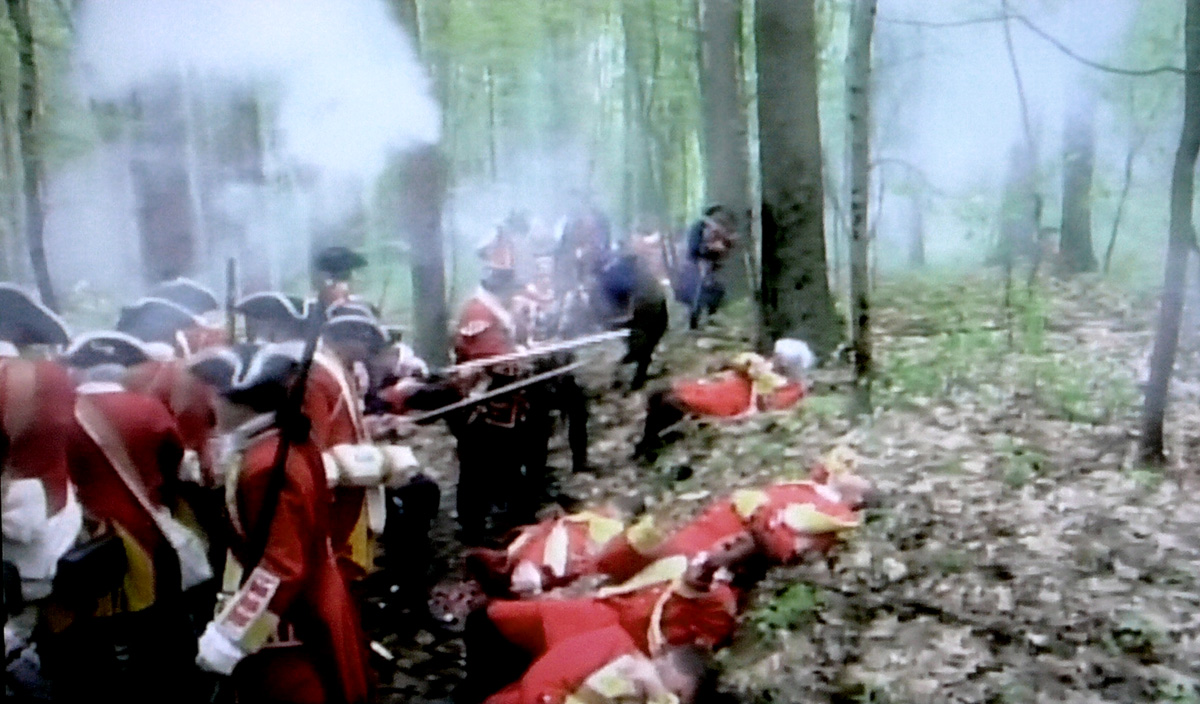
I know enough about making feature pictures to be just a little bit dangerous. Nine years ago yesterday, while making the George Washington documentary Pursuit of Honor, I directed more than 100 actors and extras in a Revolutionary War-era battle scene set in the wilds of Pennsylvania. Amidst cannon and buckets of fake blood, horses, cranes, and five cameras stood yours truly with a megaphone—the only time they ever let me use one while directing. All markers were called in that day, and every living, breathing relative who could work as crew or an extra participated. Even my dentist played a wounded Redcoat—so did his brother. This location shoot covered just three pages of the script in a feature that took us to Colonial Williamsburg, Mount Vernon, Old Town Alexandria, and many other shooting sites. I even fell in the Allegheny River while trying to shoot ice floes in wintry New York. This story doesn’t really have a point; I just looked at the calendar and remembered the date, May 13, 2006.

Fireball: Carole Lombard and the Mystery of Flight 3 by Robert Matzen

The battle as it appeared in the feature.

Believe me when I tell you, making movies ain’t easy. I was reminded of it this morning when a story crossed the wire about Cate Blanchett’s new lesbian picture 10 years in the making. This article resonated with me on many levels given my present undertaking with Fireball, which is, simply, that I’m in the middle of writing a film treatment of the story. In the Blanchett article about the movie called (ironically enough) Carol, the difficulty of writing a romantic picture came up. Said the director of Carol, Todd Haynes, “…I think love stories are hard to pull off, period. They require forces that keep the lovers apart.”

It’s true, as I’m learning. The best love stories feature lovers struggling to be together, or forced to be apart. The need for this dynamic, the eternal struggle of lovers, sunk the 1976 feature motion picture, Gable & Lombard, which sought to find the conflict separating the characters by inventing it: Gable is a wet-behind-the-ears Hollywood newcomer and Lombard is the brassy movie veteran; Gable is incapable of love and Lombard fears being hurt by it; society torments them for their unmarried relationship until they reach the breaking point and then … well, see the picture. Better yet, don’t see the picture, because it bears no real resemblance to the living, breathing people or their situation, not to mention the grisly miscasting of the actors playing said characters.

In my development of Fireball as a cinematic property, I’ve already run afoul of the physics of how to make the relationship of Lombard and Gable corporeal and not cliché. I used to be angry at the ineptitude of Gable & Lombard but now see what the screenwriters were up against in bringing two highly recognizable Hollywood legends to life as real people. I’m not sure anyone short of John Huston or Joe Mankiewicz could have pulled it off. Or maybe it’s just plain impossible to have an actor and actress impersonate Clark and Carole because their body of work lives on so we know exactly who they were and what they were like.

Fireball: Carole Lombard and the Mystery of Flight 3 by Robert Matzen

Impersonate THIS? I have my doubts.

I’ve had a discussion or three in recent weeks with people on the inside about Fireball the movie—the pros and cons and ins and outs of screenplays in the modern era. Should I concentrate on selling the intellectual property? Should I develop a treatment? Should I write a screenplay? Ask five Hollywood people these questions and you’ll get five diverging expert opinions, each one valid. My response is I’m just doing what I always do; I’m writing, spurred on by vivid scenes that have played on a loop inside my head for years. Weary people stepping inside an airplane. A fireball in the night sky. Men climbing through snow. A husband staring at a mountain. So many vivid moments that now haunt many as they once haunted only me.

Right now I’m trying out the story I want to tell in two hours. I’m picking the best scenes and identifying the characters that will populate my picture. I’m pretty sure my approach, arrived at after a meeting in Beverly Hills, is going to surprise lovers of the book. I’m open to ideas for what to include, and if you forward them to me, keep in mind that I’m not going to guarantee you a piece of the action. But I’ll remember you if I use your idea. Who knows, maybe we’ll end up splitting a limo one of these years on our way to the Oscars. At the very least I’ll give you one hell of a shout-out in my acceptance speech. You and Lou Lumenick.

The Good, the Bad, and the (so) Ugly (it’s GREAT)

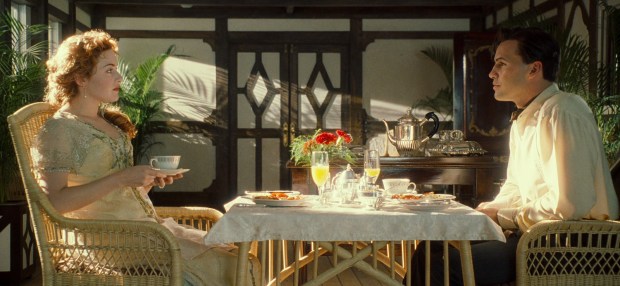
You know those pictures that are so good in places it’s like sex and so bad in places it’s irresistible? The best example I can think of is Titanic. There are moments in Titanic that are so damn good and moments that are so damn bad. Those match dissolves from underwater wreck Titanic to 1912 Titanic and back again are spellbinding. Almost every scene with Gloria Stuart pops because she makes the stereotypical doddering old-woman canny and unpredictable. These things are on the one hand. On the other is Billy Zane, an otherwise fine actor who stumbles through Titanic trying to figure out how to play rich-boy Cal. He’s so bad he’s mesmerizing! David Warner as Cal’s sadistic butler is right up there in awfulness as a walking, talking bad-guy stereotype. The bottom line for me is picture-making on a grand scale and the vision of one driven man—a man who sometimes bites off more than he can chew. But I admire the fact that James Cameron swung for the fences just as hard as Selznick did with Gone With the Wind. And hit a box-office home run, just like Selznick.
Billy Zane Titanic

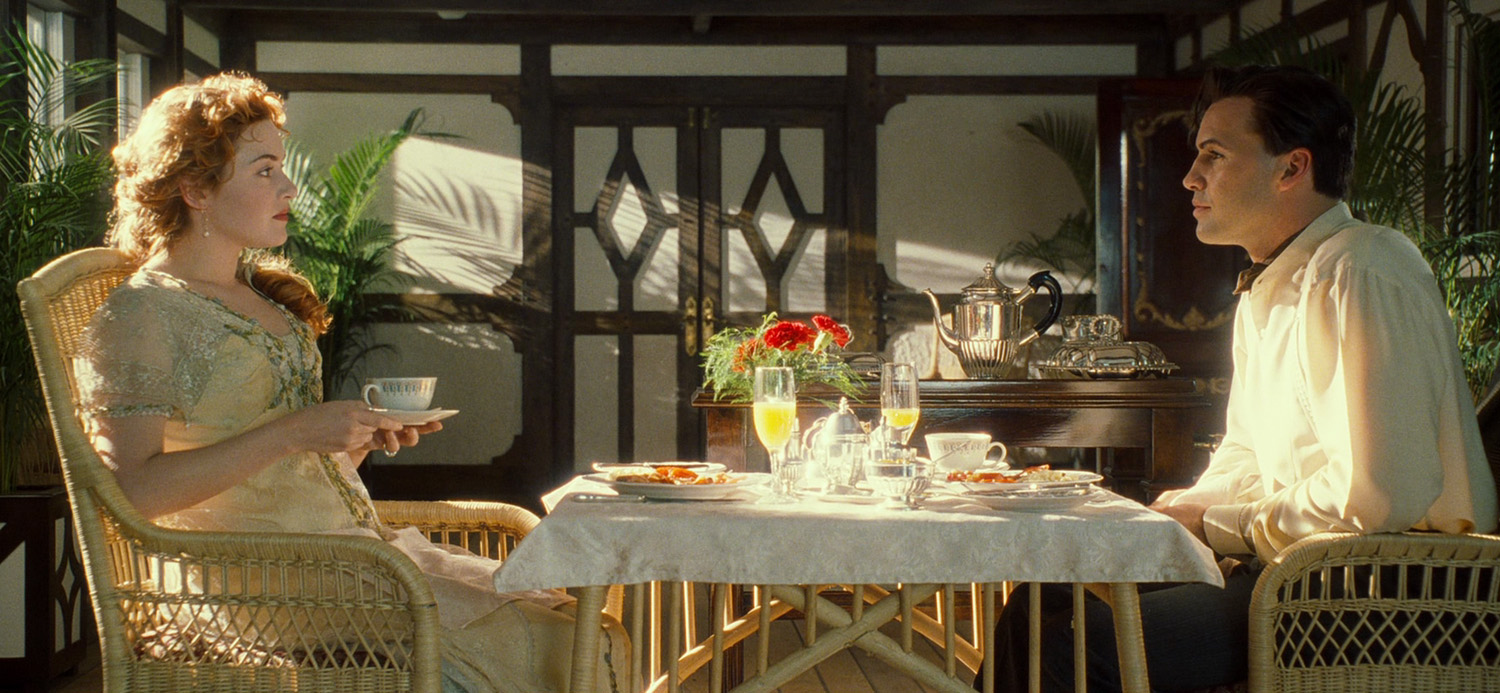
Kate Winslet and Billy Zane in Titanic. In a moment he will grow melodramatic and sweep the table clean, ruining many dishes in an otherwise peaceful moment.

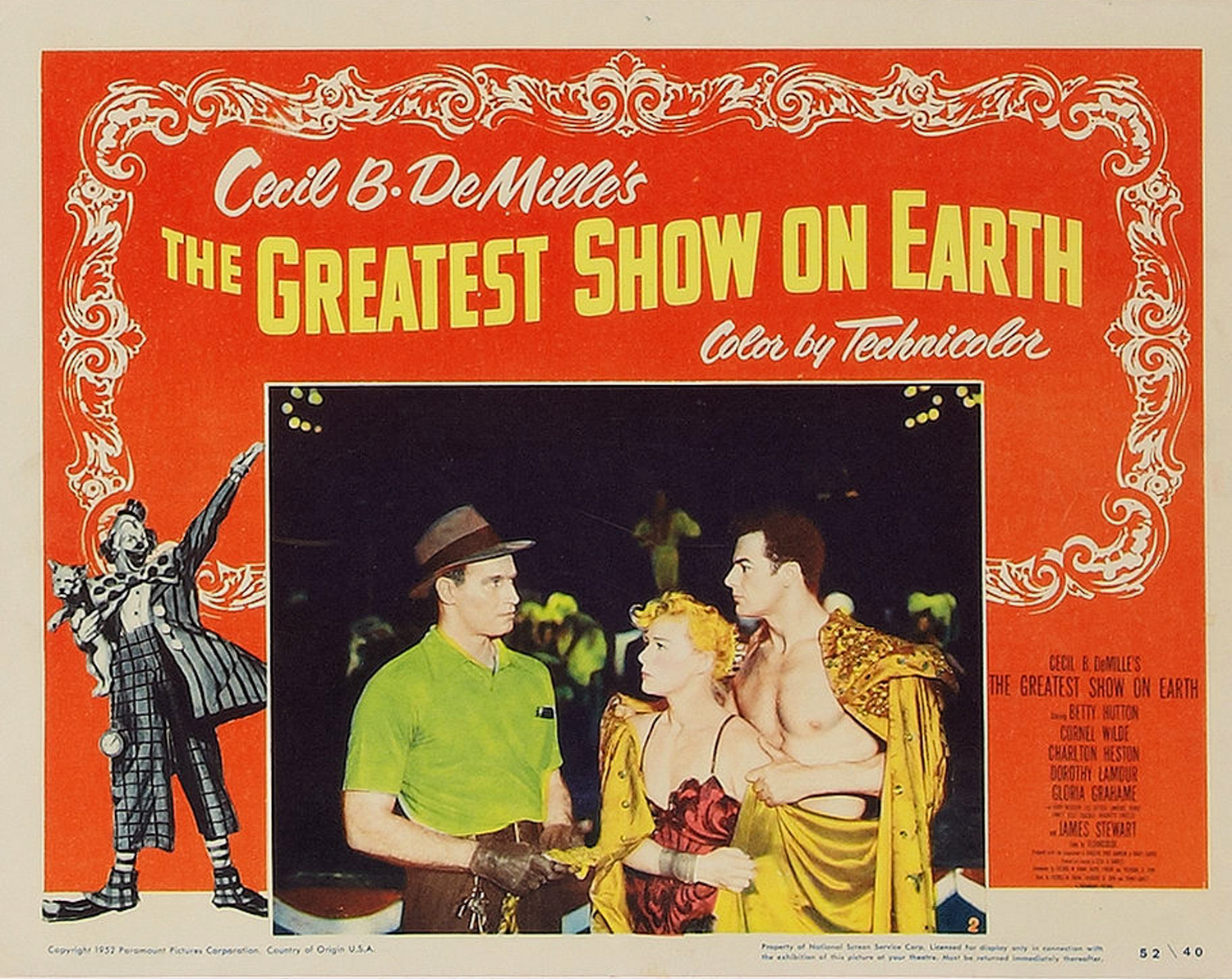
There’s another motion picture like this for me. The Greatest Show on Earth, Cecil B. DeMille’s homage to all things circus. Today, the general consensus is that clowns are creepy—why America didn’t realize this a hundred years earlier, I don’t know. But once upon a time the circus represented an alternative lifestyle and huge entertainment every time it hit town. I never had any interest in the circus. I went one time as a little kid, Cole Brothers I think, with a big top, trapeze artists, clowns, all the rest of it. The only reason I went was they had a contest for coloring the clown and I stayed inside the lines and got a free ticket. Come to think of it, I tried cotton candy for the first time at that circus and haven’t had it since. Even at age seven I knew cotton candy to be too messy for a Virgo.

Anyway, I’m no circus freak, but you can sign me up for DeMille’s bigtop anytime. There’s a terrific documentary on DeMille here—check it out sometime to see the ultimate showman/filmmaker. And here’s the incredible trailer for The Greatest Show on Earth. The hardest thing for me to believe is that C.B. ever died! This larger-than-life powerhouse human and Hollywood mastermind of not one but two versions of The Ten Commandments up and died! Ceased to be! I’m sure he’s as surprised as the rest of us at this revolting man-bites-dog turn of events because people like Cecil B. DeMille should get some sort of exemption from human decline and just go on doing brilliant things. I guess the perception of DeMille as an immortal deity is enhanced by his growling narration on his pictures, Grandfather telling us a five-million-dollar bedtime story, full of surreal spectacle filling the screen long before C.G., along curvaceous, bejeweled women and noble, or hateful, or lustful men. If you watch a DeMille picture, that gravel voice stays with you, or it does me, and suddenly C.B. is narrating my drive to work “as the brawny hills of Pittsburgh shake off their night’s peaceful slumber and a restless giant awakens into the orangish hues of dawn.” DeMille’s brilliance gets in your head, I’m telling you. Come to think of it, he made a picture about early Pittsburgh called Unconquered that, as a colonial historian, made me roll over in my grave, and I’m not even dead yet.
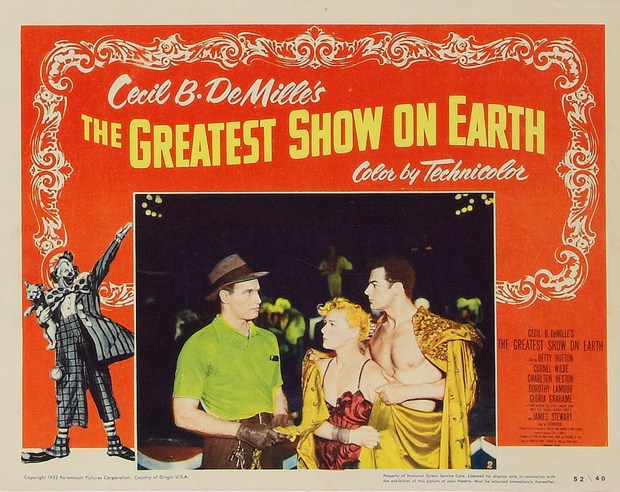
Demille Greatest Show on Earth

Charlton Heston’s Brad Braden may be jealous of the way the Great Sebastian is carrying on with Holly but it’s hard to tell because Heston just comes off as nuts.

So yes, C.B. was brilliant, but with qualifications. Even by 1952 standards The Greatest Show on Earth was nailed as a big-old can of corny nonsense, which audiences ate up, making Greatest Show a box-office smash, winner of the Best Picture Academy Award, and generator of imitations for a decade to come. Greatest Show proved to have legs through re-releases in 1960 and 1967, and Steven Spielberg claims it as the first picture he ever saw, age 4—a picture that changed the history of entertainment. He says as a filmmaker, and with glee, “I lost my cherry to Cecil B. DeMille!”

When I learned Greatest Show was playing on Retro the other night I knew I was a goner, and the moment the music began, a swarm of goosebumps consumed me. I’ve got ‘em again just thinking about it. C.B. had me in his grip and didn’t release me until 2.5 hours later when heroic Holly sang the title tune and survivors of the spectacular train wreck lured townspeople to “come to the circus – the greatest show on earth!” The show must go on after all. Goosebumps.
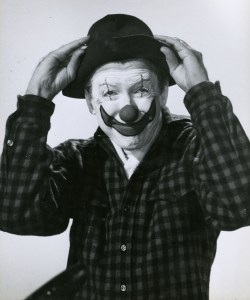
James Jimmy Stewart in The Greatest Show on Earth

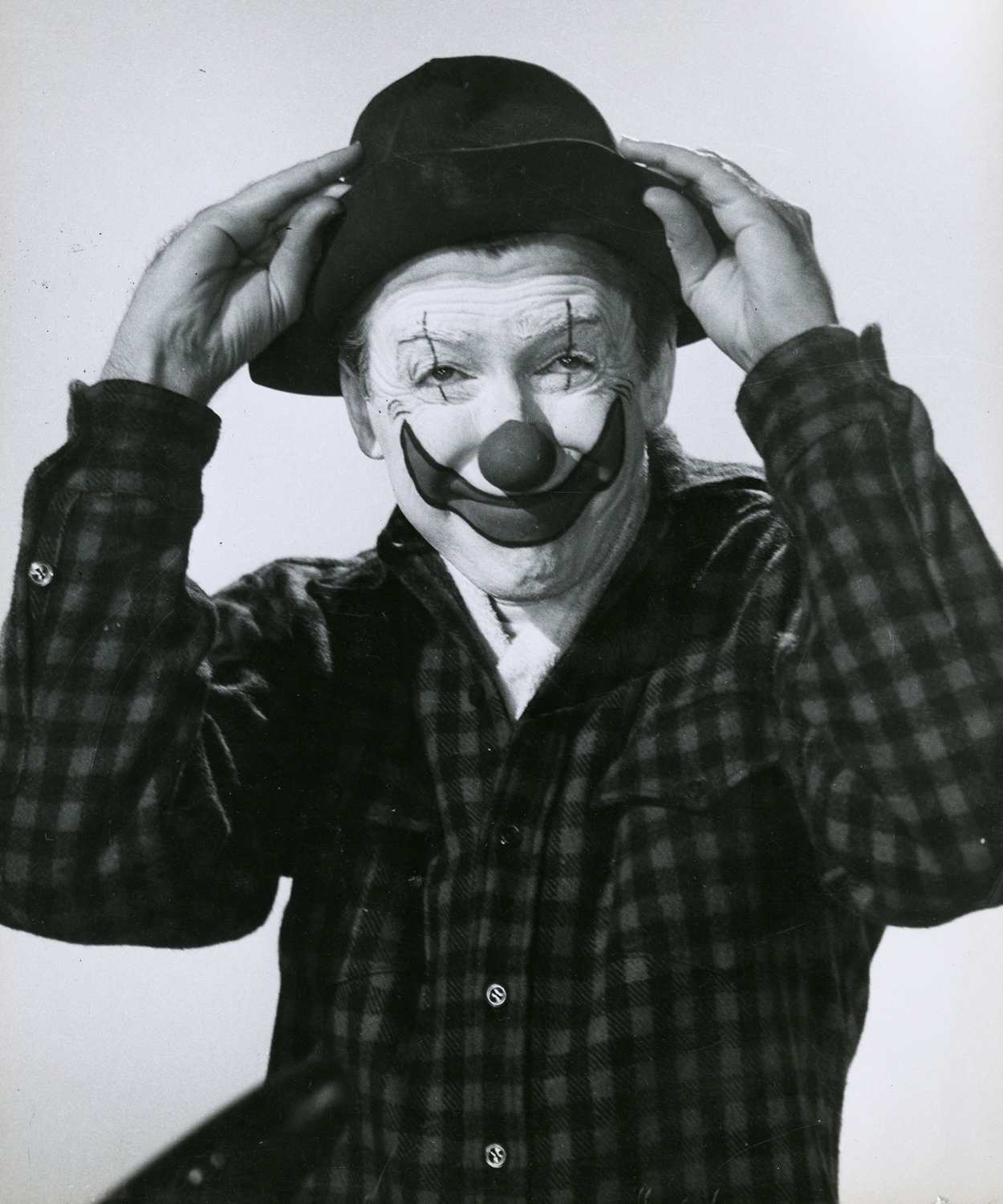
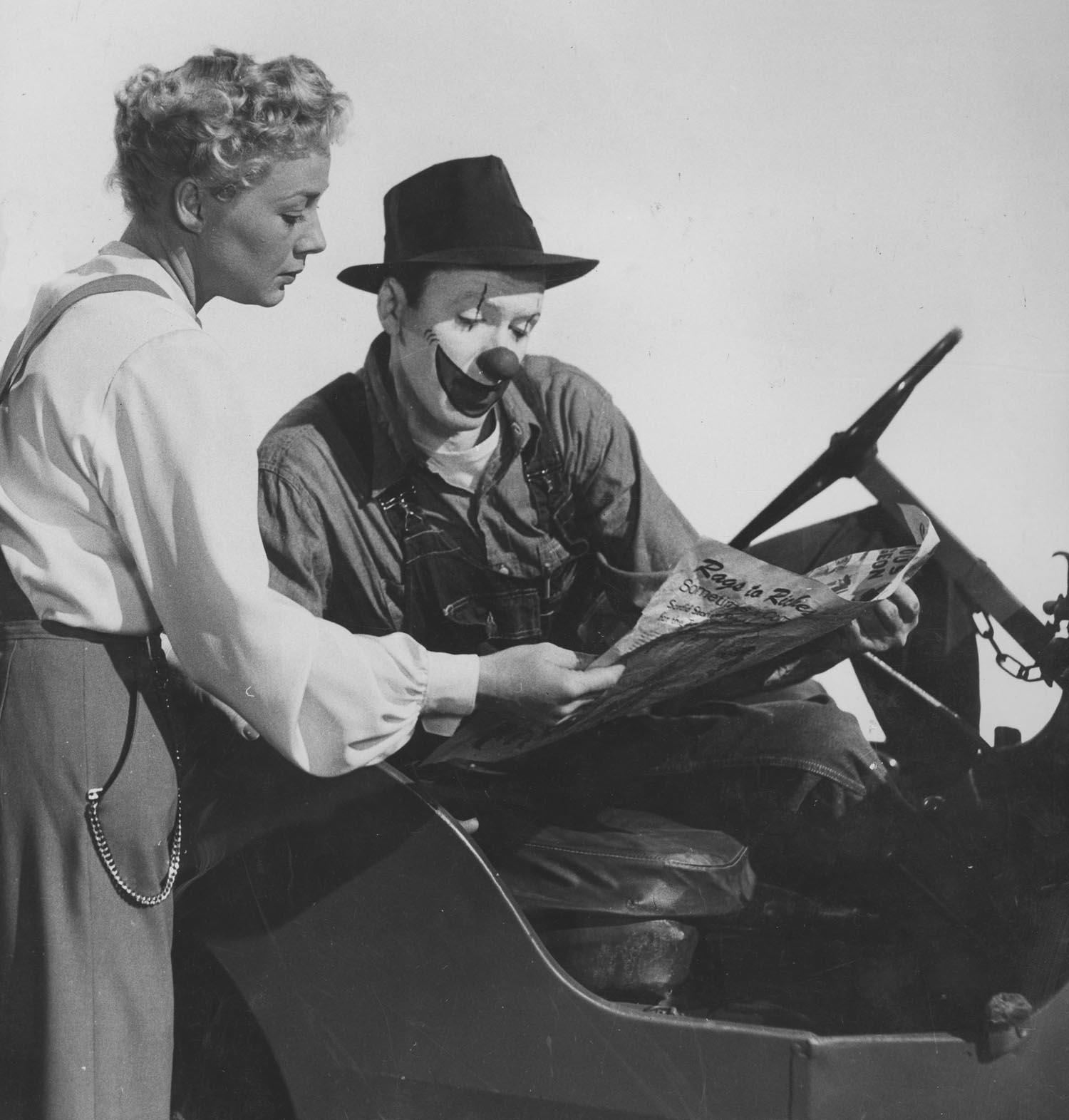
James Stewart as Buttons, the only crown I never thought was a creepy killer who would murder me in my sleep.

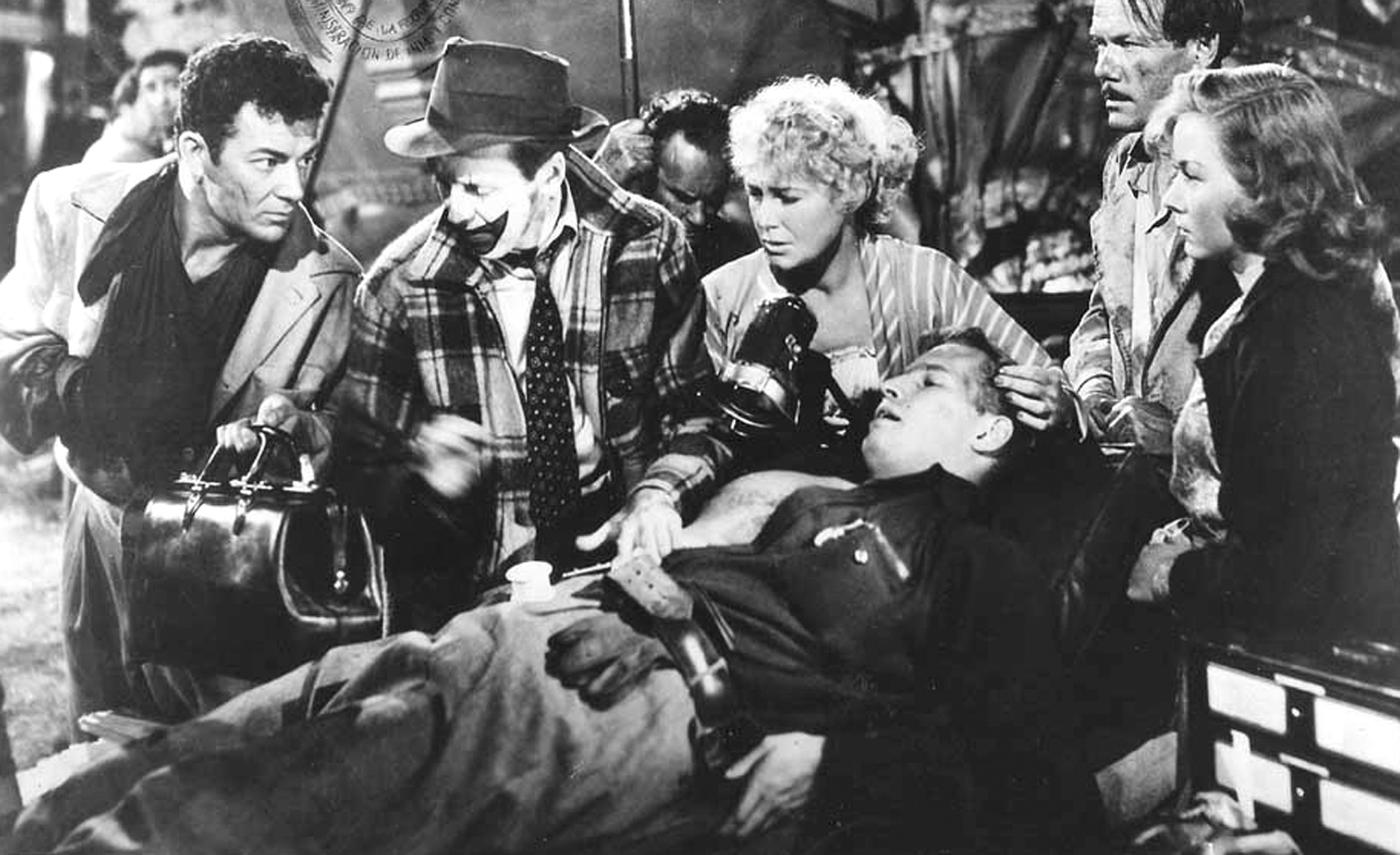
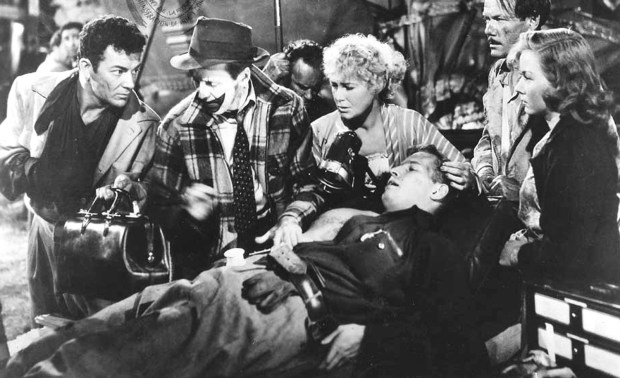
Of particular interest at this point in my life is James Stewart’s role of a mercy-killer on the run hiding in the circus as a clown who never takes off his makeup. It only sounds ridiculous because it is, but watch the picture and tell me it doesn’t work because Stewart brings to the role quiet wisdom, quiet vulnerability that pays off when he saves the circus boss’s life in the last reel.

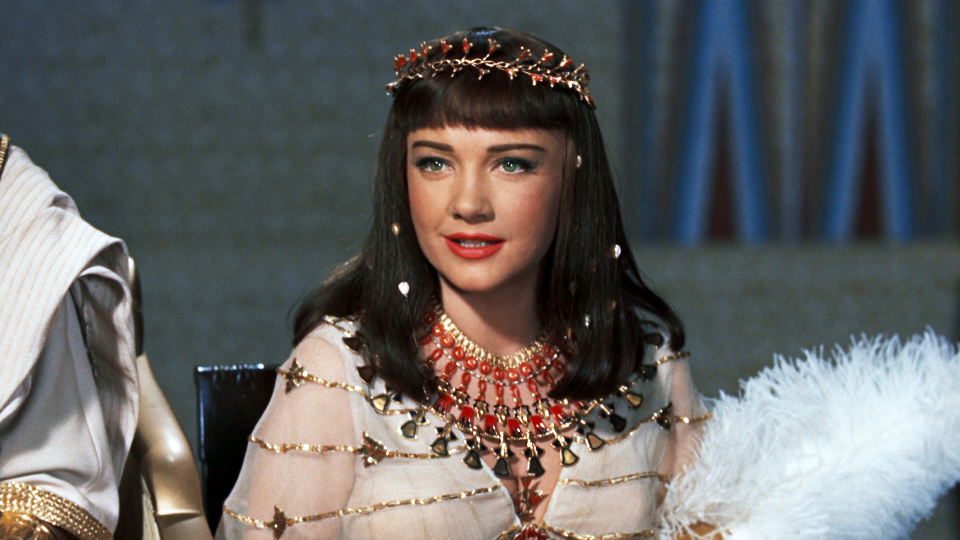
Charlton Heston is that circus boss, Brad Braden, and he’s spectacularly over the top; practically the blueprint for Billy Zane. Throughout the 1950s Heston went from zero to Moses in a second; didn’t matter who he was playing, whether he was fighting ants in the jungle or pharaoh in Egypt or the British at New Orleans. He played it BIG with a capital BIG, bellowing his love scenes with fragile Eleanor Parker as surely as he bellowed fire and brimstone at gold-plated Ramses II.

All the women in the circus are in love with Brad, which says a lot about circus folk. Betty Hutton headlines as aerialist Holly, but Dorothy Lamour gets a lot of screen time as Phyllis the “iron jaw” and so does Gloria Grahame as Angel the elephant girl. They’re all sexy in different ways, and why they want Brad at all is beyond me. I have to wonder if C.B. had some issues because his heroines tend to be, well, a certain type. Usually the Paulette Goddard, Hedy Lamarr, Ann Baxter, Dorothy Lamour type, mostly brunettes and some of them bad girls. Betty Hutton was something of a lightning rod as a personality and most people find her icky, but I’m sorry, in this picture, she’s hot too.
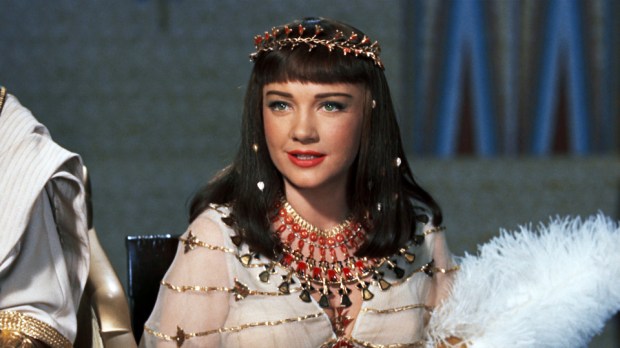
Anne Baxter in The Ten Commandments

Prototypical DeMille girl Anne Baxter in The Ten Commandments. Sign me up.

In fact I’m tempted to say that Betty Hutton steals Greatest Show, but how can I think that when James Stewart’s already stolen it? But wait, no he hasn’t. Cornel Wilde steals the show as the flamboyant French trapeze artist the Great Sebastian, swashbuckling his way through the picture just as he did in his other title that year, Sons of the Musketeers. Wilde owns the screen every minute he’s on it; a performance that’s wild all right. The whole picture is wild—we don’t believe any of it as something that could ever really happen, but who cares? These are irresistible people intensely interested in what they’re doing, both the characters on screen and the people playing them.

Because of the Stewart connection, I spent half a day going through DeMille’s personal Greatest Show production files at BYU (thank you, Jim D’Arc, for making me aware of them). What a giant undertaking C.B.’s circus epic was. DeMille was intimately involved in every detail, every act coming out of the woodwork begging to appear, every old character actor lobbying to play the ringmaster. DeMille’s right-hand man was associate producer Henry Wilcoxon, C.B.’s most dependable actor for decades and one helluva behind-the-scenes presence judging from the letters and memos. Some tidbits from the papers:

Betty Hutton spent weeks learning trapeze work and did many of her own stunts in the picture. It’s a tribute to her athleticism that not once does she look uncoordinated up there. In fact, she goes out of her way to make sure we see her—yes that’s her—over and over so audiences knew it was Hutton and not a stunt woman hanging upside down 40 feet off the ground.

Cornel Wilde was thrilled to play Sebastian and after the run of the picture kept sending C.B. letters thanking him for the opportunity. He signed them not Cornel but Sebastian. Wilde’s biceps and abs are ripped like crazy in this picture but, unlike Betty Hutton, he’s doubled extensively in the aerial sequences and there are zero shots where Wilde hangs upside down way up there so we know, “Look, it’s me and not a stuntman!” He left the dangerous stuff to the professionals.

Lucille Ball was set to play Angel the elephant girl but withdrew. To me this is a lucky break because Gloria Grahame is about as sexy as the 1950s got and perfect to play a girl who calls every guy “sugar.”

Dorothy Lamour was on the career skids by now and signed for only $2,000 a week when peers like Ball were signed for $3,500.

The mysterious, on-the-lam clown played by Stewart was originally named Koko, but there must have been a real Koko the Clown who put up a stink, so they had to rename Koko and what a pre-pro firestorm this produced! About 40 names were pitched, and there’s no documentation on how they arrived at the final name of “Buttons.”
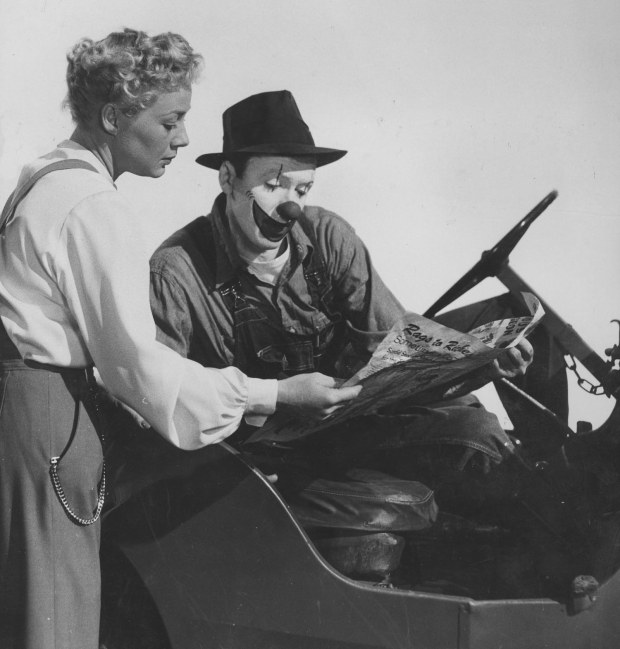
James Jimmy Stewart Betty Hutton in The Greatest Show on Earth

“So Buttons, look at this story about a doctor who mercy-kills the girl he loves. Isn’t it a funny coincidence how you go around all morose talking about killing the thing you love? Why, they even talk about killing the thing you love in this article, by sheer coincidence. And, by the way, how come you never take off your clown makeup?”

Stewart didn’t audition for the role of Buttons. He just cabled DeMille and said if you’re looking for a clown on the run, how about if I play him? And C.B. gave him the part on the spot. It’s another of those offbeat, unresolved-issues characters that Stewart went after in the 1950s in the wake of his experiences in the war. In many of his pictures of this period his character had a streak of unspeakable pain or unspeakable violence in him—even good-guy George Bailey who let loose, ripped his living room and terrorized his family in It’s a Wonderful Life. There’s some evidence that Stewart cracked up on one of his missions in the Eighth Air Force, but that’s a story for a major book and feature motion picture down the line.

Stewart also had a “pregnancy clause” built into his contract because his wife was expecting (twins, as it turned out), and he stated he would not report for work until after the delivery.

I can’t imagine any of you under 40 would ever take the time to sit through The Greatest Show on Earth with all the computer-generated thrill shows out there today, Furious 7 and Avengers and all that, but when you run out of titles on your Netflix list and if you settle on Greatest Show, please, I’m begging you, let me know if it gave you goosebumps like it did, and still does—always does—give them to me.
James Jimmy Stewart in The Greatest Show on Earth

After the circus train crashes in spectacular fashion (move over, The Fugitive), Buttons reveals himself to be the doctor who has killed the thing he loves so he can save Brad so Brad can live happily ever with Holly. In the meantime, being free of Holly allows Sebastian (left) the chance to hook up with Angel (right).

When I Grow Up…

Rudy Behlmer…I want to be Rudy Behlmer. I don’t think it’s going to happen, but I can dream, can’t I? If you’re a fan of classic film, Rudy’s work has likely touched you in some way. If you have seen Ken Murray’s Hollywood Without Makeup, which plays often on Turner Classic Movies, then you’ve watched a program directed by Rudy Behlmer. If you have read Memo from David O. Selznick or Memo from Darryl F. Zanuck, just two of his many books, then you’ve been enriched by Rudy Behlmer’s scholarship. If you have explored the bonus features of DVDs like The Adventures of Robin Hood or King Kong or dozens of others, you’ve been enlightened by Rudy’s crazy knowledge of the production of classic Hollywood pictures. Rudy is the guy who took us Inside Warner Bros. where he sifted through those terrific inter-office memos that circulated during the production of Warner classics and gave us glimpses of the off-camera dramas. And, of course, Rudy was co-author along with Tony Thomas and Clifford McCarty of The Films of Errol Flynn, the 1969 Citadel volume that put Flynn’s career in perspective. Just this week I was enjoying the BYU CD original score of Dodge City—Rudy wrote the liner notes—70 pages worth!

I have asked for Rudy’s help on a number of occasions and at first it wasn’t easy because the man’s a legend and has an imperious quality about him. He has known and worked with the greats. Every time he answered one of my questions (or 10 of my questions) or reviewed a piece of my writing, I felt honored that he thought my work was worthy of his time and expertise.

No, I will never be Rudy Behlmer when I grow up; there’s only one, and I appreciate his love for Golden Hollywood. I respect his desire to protect the memories of those who made the pictures. I revel in his body of works that have benefited those of us who care about the studios and the stars. If there were a Mount Rushmore of film scholarship, he’d be on it.

I’m curious to know what your favorite Rudy Behlmer work is. If you look him up on IMDB you won’t believe how many credits he has in media. He’s one guy that we just haven’t taken time to appreciate and thank for a lifetime of service to classic film.

Lion Tamers

It seemed like a good idea while in L.A. last week to visit the Metro-Goldwyn-Mayer lot in Culver City since my new subject, James Stewart, worked on the lot for the first five years of his career and won an Academy Award while there. I have one of those vivid imaginations you hear about now and again and spent my time rubbing shoulders with Gable, Crawford, Turner, Garland, and Munchkins as a group of us roamed the streets of MGM.

Oh, by the way, if you take the MGM tour, be prepared for a couple of shocks. They begin by taking you in a room and showing you a short film about the history of the lot, but after the first five or six three-second clips, it dawns on you: every shot you’re seeing is from a Columbia picture—you know, It Happened One Night, On the Waterfront, From Here to Eternity—and Columbia pictures weren’t shot here at all but rather on Gower Street in Hollywood, miles and miles away. It’s sort of…sacrilegious to do what they’re doing on that tour, even though Columbia bought out what was left of MGM in 1989 and then the new studio became Sony Pictures, and the tour begins in the big Sony Entertainment building and ends there as well.

So, you’re in the middle of this short film and feeling pretty enraged about the fact that you’re watching a Columbia reel on the MGM lot, and then the picture veers into an oh-by-the-way explanation of the fact you are actually on the MGM lot, which was bought by Columbia, and so the clips show some Gable and some Munchkins for a minute or so, but it’s pretty short shrift for Leo the Lion, Mr. Mayer, Mr. Thalberg, and Company.

Yeah, yeah, so let me out of this damn little room with these grinning tourists—I want to see the lot! I was skeptical of John, our tour guide, as he led 15 or 18 of us across the street and onto real studio property, and I was on him right away wanting to know if we were going to learn about more than production of the TV series, The Goldbergs, which he was already pushing, and he assured that, oh yes, the two-hour tour would also cover the MGM of olden days.

We stopped at a building, a grand art deco building, and I assailed John again with, “Is this the MGM administration building?” and he said patiently, as if I were, you know, dim, “This hasn’t been MGM for a long time.” I redirected: “Is this the MGM administration building of olden days?” and he said we were going to talk about that right then.
Mary said out the side of her mouth at this point, “He knows you’re trouble and you’re going to get kicked out of here,” as if I get the boot from places frequently when it really only happens once in a while, and always because I’m misunderstood.

Fireball: Carole Lombard and the Mystery of Flight 3 by Robert Matzen

The Thalberg Building, which now has the label above the door, Columbia Pictures. Which is a lot like the flag of Spain flying over the U.S. Capitol. L.B. Mayer’s office was on the third floor.

Turns out we were in front of the Irving Thalberg Building, opened in 1938, which of course begged the question, “So, where were the administrative offices before 1938?” and suddenly John realized he had his hands full. He never did whirl around and ask, “Who the hell are you, anyway, and why are you ruining my tour?” Instead, when I apologized for my umpteenth question he said, “No, no, questions are good. Bring ‘em on,” and it turned out he knew a lot about the old studio and where things were, like the star bungalows and the edit suites and where the writers worked and where Judy Garland went to “star school.” I was impressed with John by the end.

Fireball: Carole Lombard and the Mystery of Flight 3 by Robert Matzen

The MGM lion used in trade papers wasn’t the snarling beast in the studio logo but rather a friendly cartoon guy working tirelessly to improve the bottom line.

Of course, you know about the dissolution of MGM in the 1970s, the selling off of all the props and costumes now nearly priceless, like the million-dollar ruby slippers, and the demolition of the entire backlot where everything from Andy Hardy to Mutiny on the Bounty to Singin’ in the Rain were shot. In other words, a lot of MGM is gone with the wind and has been for decades. But some is still there, and as I roamed the streets among the soundstages, I could see in my mind’s eye Clark Gable walk past dressed in his San Francisco tux; I could see Joan Crawford slink by in a glittering gown. Over there, Eleanor Powell showing miles of leg, and yonder, Carole Lombard skulking about, checking up on the set of Honky Tonk and her husband’s new distraction, Lana Turner. They’re all there among the stucco buildings with chrome accents—baby Jean Harlow, boy genius Irving Thalberg, the three Marx Brothers, Nelson Eddy and Jeanette MacDonald, and yes, long-legged, loping James Stewart, the guy who had no great looks but loads of natural talent that Metro didn’t know what to do with. Jim was winning an Oscar for Leo on the one hand while, on the other hand, they saddled him with wooden Indians like Hedy Lamarr and Paulette Goddard in pictures he didn’t want to make. Suddenly, military service seemed like a good idea, and he flew off and left behind in his propwash the lot on which I now stood.

We visited three soundstages on the tour. First was the music scoring stage, which interested me not because of its perfect acoustics or because John Williams directed the Star Wars scores there, but rather because in the mid 1930s it was used for process shots like the San Francisco earthquake. Then, inevitably, we looked in on the set of The Goldbergs, which John was required to plug yet again. Finally, we visited the set of Jeopardy, which was dark that day but interesting nonetheless. We stood outside the mighty titan, Studio 15, where Metro craftsmen built Munchkinland and Dorothy started down the Yellow Brick Road.

Our final minutes were spent at the gift store where you could buy any number of Columbia souvenirs. It was the final offense, but by then it really didn’t matter because I was outside in the warm California sun, distracted by the ghosts of all those great people surrounding me. People I’ve gotten to know over the years, some of whom have become friends. Now, I stood there catching glimpses of each at home in the mightiest studio of all.

Fireball: Carole Lombard and the Mystery of Flight 3 by Robert Matzen

This is main street on the lot, which runs from the Thalberg Building to the soundstages. The buildings are vintage and once housed offices and the commissary, but the facades are of Sony vintage so the lot can also serve as a working backlot for features and TV shows.