2D to 3D

I have nothing profound to say today.

Ooh, I just heard about a hundred clicks as people flew off this page.

The time between book releases is quiet, and a lot happens within the confines of an office surrounded by government documents and original photos and published works like biographies and military histories. At the moment there’s a stack of file folders related to the Eighth Air Force a foot high beside my chair, and another pile half that high next to it.

A funny thing happened about three weeks ago. I was researching a bombing mission by Capt. James Stewart’s squadron over Frankfurt, Germany, and all of a sudden the project went from 2D to 3D. From black and white to color. From mono to six-speaker surround. It happened when a character I didn’t know would be in the book jumped out from the shadows of history and said boo to me. A woman I had never heard of but realized would be a friend by the time this book is finished. Granted she’s been dead 71 years, but we’ll be friends just the same, just like I’m friends with Alice Getz and Wayne Williams. They’re real to me, flesh and blood, thoughts and dreams, cologne and perspiration. Now, I have to learn all about this German woman, track her down in a language I don’t speak (sorry Miss Diamond, but your two years of trying to teach me German in high school were for naught … kaput) in places I haven’t yet seen.

I’ve said more than once that a couple years ago I’d be sitting here writing Fireball all alone for months on end thinking, who the heck is going to care about a movie star dead for 70 years? What if nobody cares? But I don’t have any such concerns rattling around in my head this time. I’ve got an epic story to tell, a story as big as Europe and 30,000 feet tall. But just like in Fireball it all comes down to molecules of human beings; who they were, where they were placed, how they acted and reacted in good times, bad times, and the worst times. If I do it right, then you’re riding along in the airplane with engine number 3 on fire or you’re on the ground under 1,000 bombers screaming to yourself, I can’t stand this! I’m going to die!

It’s strange looking at an outcome like that when it’s still two years away, with so much research dead ahead, trips to libraries and interviews of experts. In between each trip and each interview, I’ll be sitting here in the smoke of battle, writing.

Fireball: Carole Lombard and the Mystery of Flight 3 by Robert Matzen

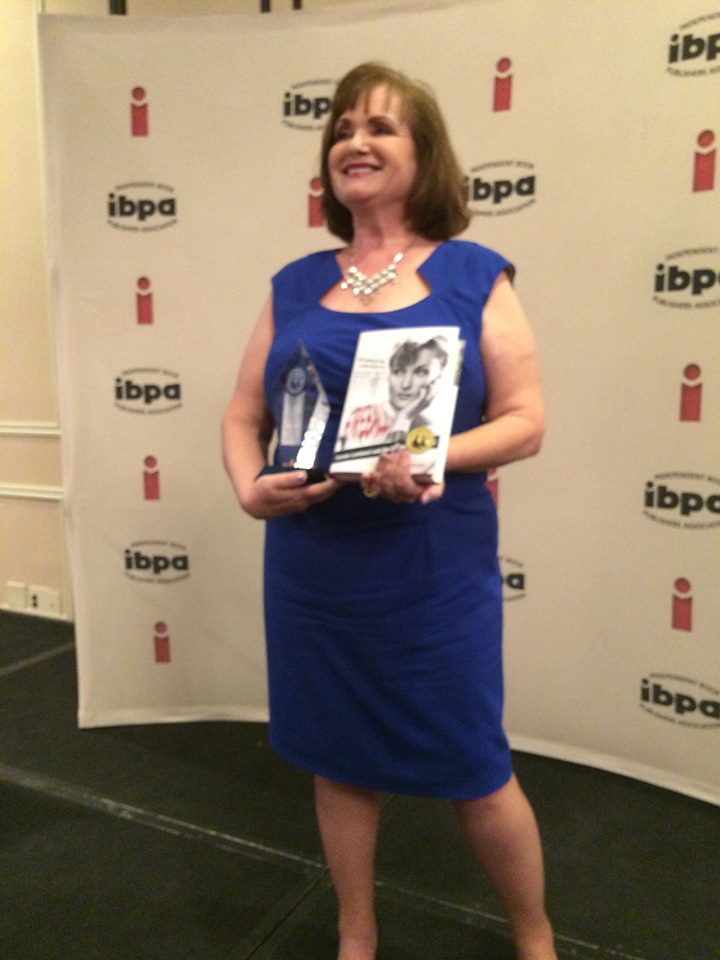
As the final validation that people would care about the movie star dead 70 years, Fireball won the 2015 Benjamin Franklin Gold Award for biography of the year at ceremonies in Austin, Texas, on Friday night. It was agony not being there because of a scheduling conflict, but all was well because my friend of 30 years Carole Sampeck stepped in and represented author and book beautifully, accepted the crystal statuette, expressed my appreciation and my regrets about not being there in person, and stood for photos better than I ever could have. Ms. Sampeck—a leading expert on Carole Lombard and her place in Hollywood history—played a crucial role in the development of Fireball, so it was fitting that she experienced this payoff and heard the heartfelt cheers of those in attendance. I am certain of 22 attendees, my friends from Flight 3 whose stories were told in Fireball. Mary Johnson was there too, the 23rd passenger who left the plane in Albuquerque. They will always be my friends, very close at hand, and I am thrilled to see them get a moment to stand there with Carole Sampeck and enjoy the spotlight of an Austin Friday evening.

Fireball: Carole Lombard and the Mystery of Flight 3 by Robert Matzen

Carole Sampeck after accepting the Benjamin Franklin Award in Austin, Texas last Friday evening, April 10.

Killer

A group of men climbed a mountain on January 17, 1942. Men had been climbing mountains for thousands of years before that, but these men were special. They were in a rush. They didn’t know exactly where they were going, and they were underequipped, underdressed, and underfed for the climb. History forgot these men, but I had a feeling they had a story worth telling. Brother was I right.

Ron Kantowski, a writer for the Las Vegas Tribune-Review, reminded me this week about these men when he climbed Mt. Potosi to the site of the crash of TWA Flight 3, where Carole Lombard and 21 others died on the evening of January 16, 1942. I hadn’t met Ron when I was researching Fireball in the Vegas area or when I stopped there on the book tour last year. I wish I had, because Ron gets Fireball. He took inspiration from Fireball and decided to make the climb himself.

Fireball: Carole Lombard and the Mystery of Flight 3 by Robert Matzen

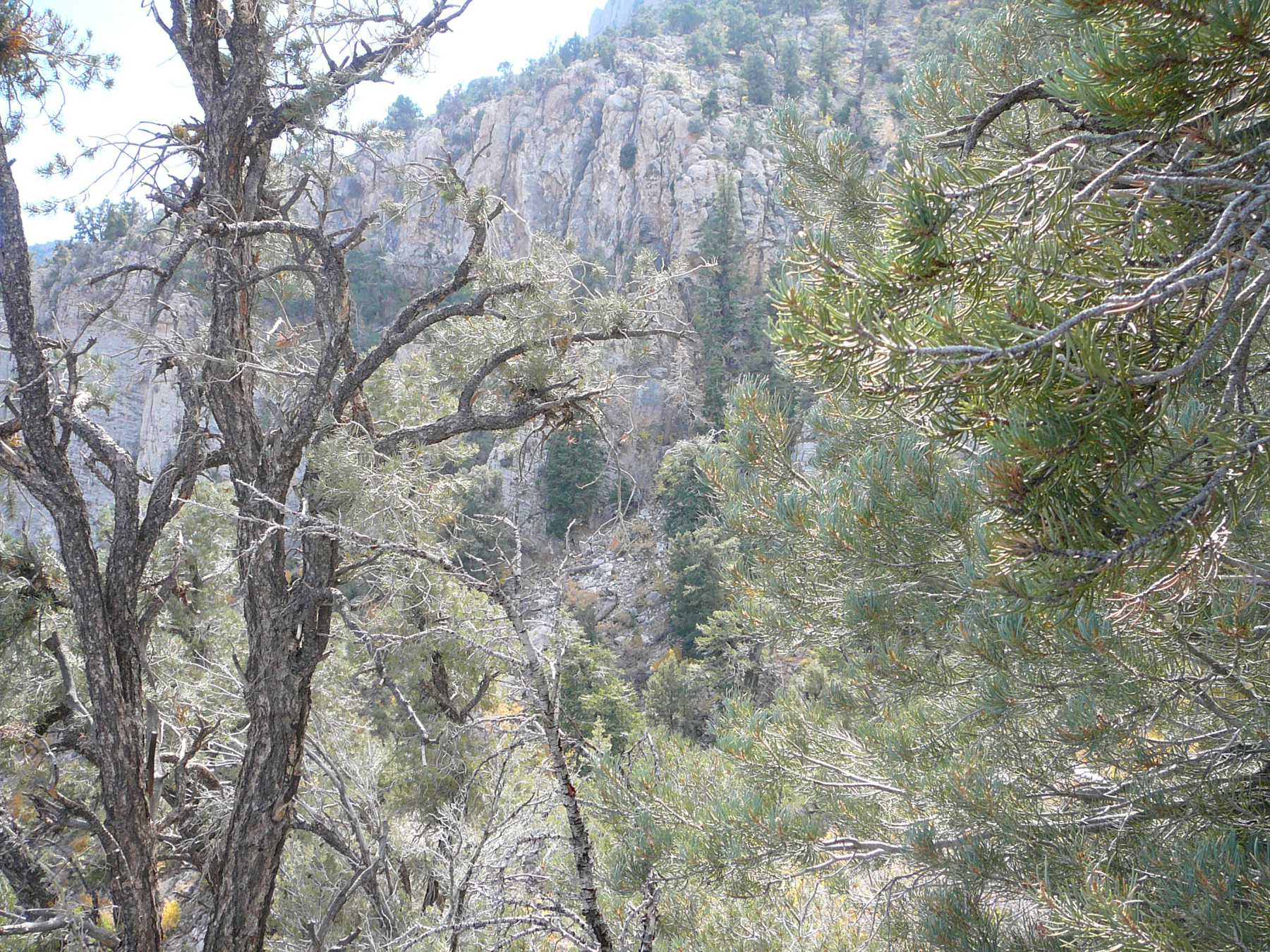
Mt. Potosi as seen from Ninety-Nine Mine Road. The outcropping at center-right is an hour’s hike/climb away up a boulder-strewn dry wash. Then you cut left along the line of green at the right edge of the photo, which is where the loose shale begins. Then you go UP. The outcropping seems to be the peak but no, it’s just a foothill.

Ron documented his climb in a Review-Journal piece that to me was validation. Mt. Potosi kicked my butt the day I climbed it and left me bruised and bleeding after falling and bouncing off rocks onto other rocks, with enough cactus embedded in my arm to make a hairbrush. I could feel cactus needles in my arm for a year after the climb; there will always be cactus needles in my arm. “Something to remember me by,” I can hear Potosi saying.

Guess what? Kantowski’s experience was similar, like reporting cuts and bruises and torn clothes. Like getting mired on all fours in shale, which doesn’t sound like peril but try it on a 45-degree mountainside with a drop of a couple thousand feet behind you. The oddest thing about the Potosi climb was going up facing the mountain, focused on each branch to hold on to, choosing rock ledges carefully because some were solid and some weren’t. Going up occupied my brain so completely that I didn’t think much about getting back down until I started the descent. Then the realization: holy shit, I can see all the way down. Thousands of feet down.

Fireball: Carole Lombard and the Mystery of Flight 3 by Robert Matzen

After 2.5 hours of climbing, you reach a ridge. Across a valley you can make out the destination, visible through trees at lower-center.

There’s a way to access the crash site along the ridge that calls for driving and then hiking, but it’s the long way and first responders to the plane crash followed a more direct route. The leader of this group was a Clark County deputy sheriff named Jack Moore; the group also contained a former high school football star named Lyle Van Gordon who climbed into the morning sky like a rocket that day and reached the crash scene, in two feet of snow, long before the others.

I’ve been told that the most powerful moment in Fireball is when Van Gordon climbs up to where he can first see gleaming silver aluminum from the plane and believes that it has crash landed; that he can smell wood smoke from a campfire built by survivors. Van Gordon was an uncompromising man, not the friendliest in the world, but in this moment having just made that climb his intentions were pure. He represented the best in all men. Because he did smell a campfire, because the aluminum gleamed silver in the morning sun, he believed in a happy ending. It becomes chilling because of what happens next.

Fireball: Carole Lombard and the Mystery of Flight 3 by Robert Matzen

The plane, in a million pieces large and small, ended up in a ravine. This is the lower end of the ravine, where Lyle Van Gordon climbed 73 years ago until he could see gleaming airplane ahead. The first pieces of debris that I saw that day were spotted here, far below the impact point.

Ron alluded to this passage in his column—he and I both understand that moment, having stood where Van Gordon stood in a place that I guess is beautiful for a limitless view toward the north, with Las Vegas spread out 30 miles off like Plasticville. To me Potosi is a harsh place. A savage, unforgiving place. It was harsh prior to the crash, and it was harsh after the crash. It will always be harsh. Brittle, brown desert that goes straight up. Potosi is a killer—that’s the truth of it. Anyone who scales its heights is lucky to come down more or less intact.

The crash site is about to grow a lot less accessible in coming weeks, as the heat takes over, bringing with it all the trappings of a desert summer. Round about October nature will unlock the peaks of Potosi again for the next adventurer. I know I want to go back one of these days to pay my respects to the 22 lost there, and 6 men who scaled a mountain.

Fireball: Carole Lombard and the Mystery of Flight 3 by Robert Matzen

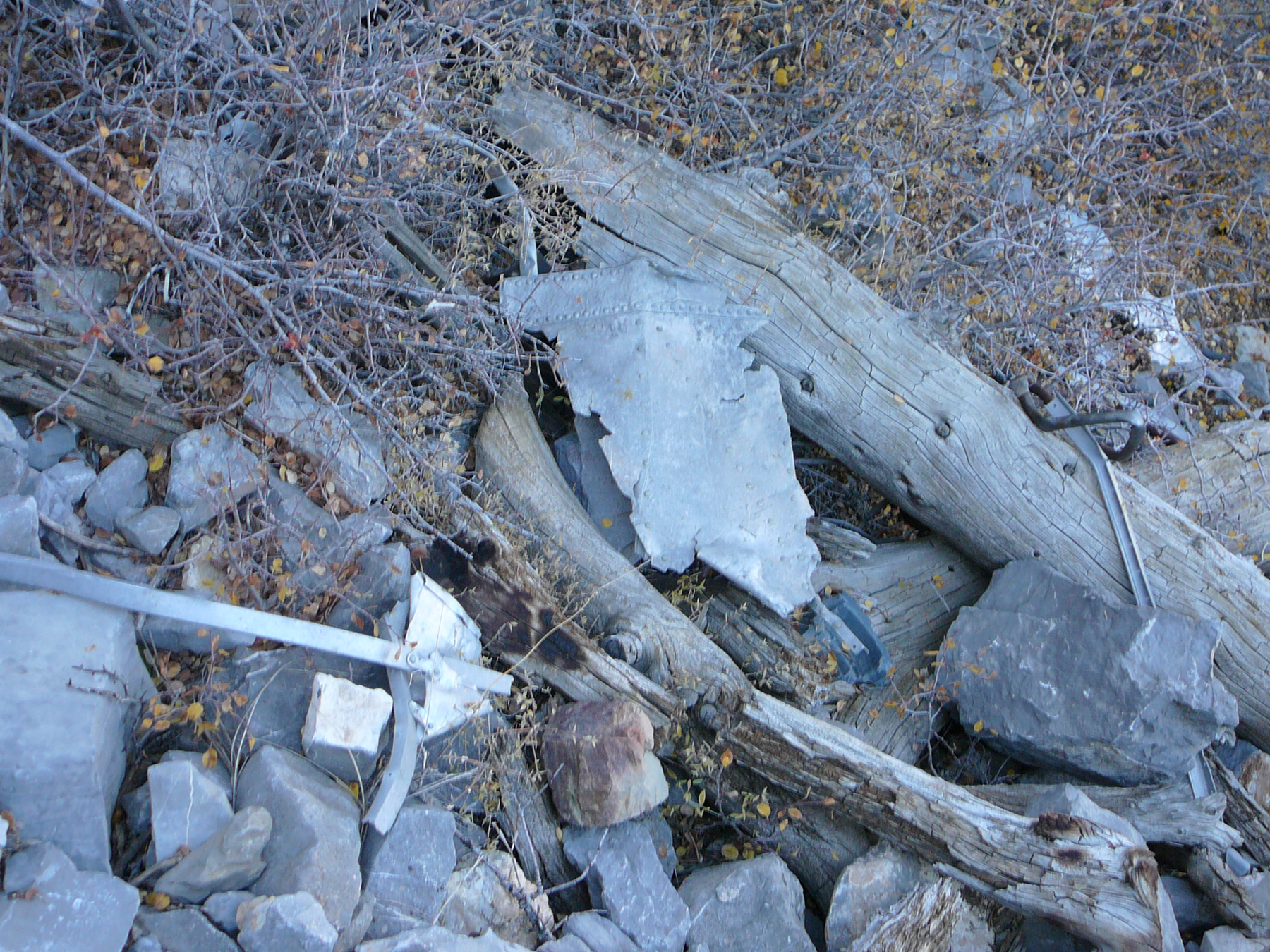
This photo of a random spot of ground at the crash site shows the amount of debris on the mountain. The more you study the photo, the more pieces of airplane you can find.

Royals

Fireball: Carole Lombard and the Mystery of Flight 3 by Robert Matzen

Seventy-six years ago today, March 30, 1939, Carole Lombard and Clark Gable addressed the media at her Bel Air home and announced that they had wed. Newsreel cameras rolled, flashbulbs popped, and a cultural phenomenon was born. Gable then reigned as the hottest thing in Hollywood—the number-one box-office draw in the world and definitive sex symbol of the movies. Lombard was a popular leading lady known as the “screwball queen” for her comedy pictures and madcap Hollywood parties.

Their relationship was more than three years old by this time. Lombard had made herself available on the social scene 16 months after the Labor Day 1934 shooting death of her lover, 26-year-old popular singer Russ Columbo. She emerged from a period of mourning with a vengeance, landing a very married Gable at the end of January 1936 and carrying on a public love affair based from her home right there on Hollywood Boulevard, in full view of the movie colony and the press. But scrutiny proved withering and Lombard left her Hollywood “party house” for a home in secluded, difficult-to-access Bel Air where she continued her activities with Gable.

Fireball: Carole Lombard and the Mystery of Flight 3 by Robert Matzen

Fireball: Carole Lombard and the Mystery of Flight 3 by Robert Matzen

I’m not sure that we can imagine today what a sexual playground Hollywood was in the 1930s. We think of the stars of the day as above it all, but nobody was immune and everybody was doing it with everybody. They were beautiful people dressed by professionals and promoted by powerful ad men. They cavorted with other beautiful people, and sex became a sport of who could bag whom. Many stars came from troubled backgrounds and brought emotional baggage with them to a city without morals. This was Clark Gable, certainly, a narcissist by definition because he was an image created by his acting teacher/wife and projected by MGM. Lombard, on the other hand, had bounced westward as a child after her parents’ separation back in Indiana, but she had enjoyed a solid Los Angeles upbringing thanks to her practical, loving mother. Solid, yes; conventional, no. Lombard had grown up a sexual athlete from her teens on and been made wise beyond her years due to a car crash that chopped up her face just shy of her 18th birthday.

The couple that met the press this day 76 years ago had been galvanized by years of couplehood in the glare of the public spotlight. He had been crowned king of Hollywood and she had made some big pictures and now earned more than any other actress in town. Their out-of-wedlock shenanigans had earned scorn in the Bible belt, and the backlash reached the board room at MGM, where Gable was ordered to divorce his wife and make an honest woman of Lombard. Gable didn’t take kindly to orders from anyone about anything, but he had been beaten down from all sides, and so during a day off from production of Gone With the Wind, he sneaked out of town with his girl and got hitched.

Fireball tells the story of the elopement for the first time thanks to an unpublished account by Jill Winkler, whose husband Otto had driven the disguised couple out of Hollywood and clean to Kingman, Arizona, for the ceremony. They didn’t have a proper wedding night, or any sleep at all for that matter. You can see it in their faces in the thousand-and-one photos snapped at the Bel Air press conference. One has to laugh at Lombard’s acting job, playing it demure for the newsreels complete with shy and loving gazes at King Gable.

The press conference on this date proved to be a brilliant move as it established these two, dressed to the nines and appropriately bashful, as the closest thing America had to a royal couple. They wouldn’t enjoy even three years past this date as husband and wife due to the plane crash that removed Carole Lombard from the living in January 1942. As explored in this column recently, the union was in rough waters and possibly heading for the rocks by the end of their second year as an official couple, but her tragic passing erased any trace of negativity and pressed these two into America’s book of memories as one of the perfect couples of all time.

Fireball: Carole Lombard and the Mystery of Flight 3 by Robert Matzen

Carole’s mother, known as Tots or Petey, stands with the happy couple at the Bel Air press event. Less than three years later she would ride into history with her daughter aboard TWA Flight 3.0

Electronic Eyewitness

We now know that no alarms sounded in the cockpit of Germanwings Flight 4U 9525. The co-pilot locked the cockpit door from the inside and set the autopilot for an altitude of 100 feet. It was an eight-minute controlled descent from 38,000. There were no automatic warnings because that co-pilot was operating the ship within parameters, and passengers didn’t catch on for several minutes.

No civilized human being outside of a psychiatrist or psychologist can comprehend the murder of 149 innocent people, and I certainly can’t make sense of it here. But the parallels with TWA Flight 3 continue. Earlier this week we all wondered, was the Germanwings crash due to mechanical failure? Terrorism? Sabotage? Investigators ran through the same checklist in January 1942 after Flight 3 went down, with the United States fighting a new world war against the Axis Powers of Germany, Italy, and Japan. Was the crash of Flight 3 the result of a premeditated act? Another theory had to be examined after the crash of this “giant” DC-3 airliner with 19 passengers and a crew of 3: Did the pilot, Captain Wayne Clark Williams, commit suicide by intentionally crashing the plane? At least one civilian claimed that he did and expressed the opinion in writing to the FBI. The Civil Aeronautics Board and House Committee investigating the crash in 1942 scrutinized Williams’ behavior and mind-set on the day of the disaster, interviewing eyewitnesses that included the TWA station managers in Albuquerque and Las Vegas, the two stops of Flight 3 prior to its crash. Both TWA men stated that Williams was in good spirits and a positive frame of mind, like always. Williams was a cool character, a former barnstormer who had flown in all weather and faced all adverse conditions with a calm demeanor. Wayne Williams could be counted on to bring his ship in safe. More than 14,000 flying miles confirmed this fact.

The “black box” hadn’t been invented in 1942, and answers were uncovered (if they were uncovered) the old-fashioned way—by investigation and scientific measurement. In March 2015 we can usually figure things out by examining those two critical collectors of data: the cockpit voice recorder and the flight data recorder. Already the cockpit voice recorder has revealed truths we can’t fathom but must accept.

Some reviewers of my book on the TWA crash, Fireball: Carole Lombard and the Mystery of Flight 3, gave the opinion that there really wasn’t a mystery. Air & Space Smithsonian, while praising the book in general, took that approach. I disagreed then and disagree now. Imagine if the Germanwings plane had gone down without data recorders. Maybe it was tracked on radar but we couldn’t know what went on in the cockpit because there were no witnesses, human or electronic, to tell the story. How could we ever know for sure that one of the pilots had deliberately flown the ship into the ground? We couldn’t. In 1942 the answers were never found because of a lack of conclusive evidence. I think I ultimately did find the reasons for the crash through a synthesis of 70 years of evidence and perspectives that investigators didn’t have in the 1940s. Back then they tossed the “official” cause of the crash into a bucket called “pilot error” because, ultimately, the engines and controls were deemed to be working, so the pilot must have been at fault.

But they didn’t know why back then. Yes there was circumstantial evidence like an erroneous flight plan, but an experienced pilot should have spotted trouble and taken evasive action. In that sense the crash of TWA Flight 3 is a mystery and always will be, specifically because no one lived to answer the question, why?

Today the data recorders “lived” and we learned the what of this past Tuesday. Time will tell if we end up getting an answer to the question we want so desperately to be able to ask that co-pilot: Why?

Too Much

Well, it’s happened again. An airliner has crashed into a mountain, this time in the French Alps. Reports indicate that the A320 flying from Barcelona to Dusseldorf descended from 38,000 feet to the impact point at 6,000 over the span of 8 minutes. There may have been a fire on board that incapacitated the pilots. There may have been a failure of one or both engines, with the descent accompanied by automatic warnings chiming in the cockpit and pilots desperate to restart an engine or engines. I’ve sat in various flight simulator cockpits that are used to train airline pilots. It’s chilling when you’re sitting in a simulator on terra firma and warnings begin to sound—it’s a simulator and utterly realistic. Imagine living the experience six miles up. Better yet, don’t imagine it.

My heart goes out to the crew, the passengers, the families. And my heart goes out to the recovery teams because I was once forced to relive the recovery effort at the crash scene of an airliner—TWA Flight 3 that crashed into Mt. Potosi, Nevada, on January 16, 1942. I undertook this exercise while writing Fireball. Among those lost in that crash was Hollywood actress Carole Lombard. It was “only” a 21-seat, twin-engine DC-3 and there were “only” 22 people on board (19 passengers and a crew of 3) and it hit the mountain at “only” 190 miles per hour versus the 180-seat A320 with 150 that hit at 350 yesterday.

Fireball: Carole Lombard and the Mystery of Flight 3 by Robert Matzen

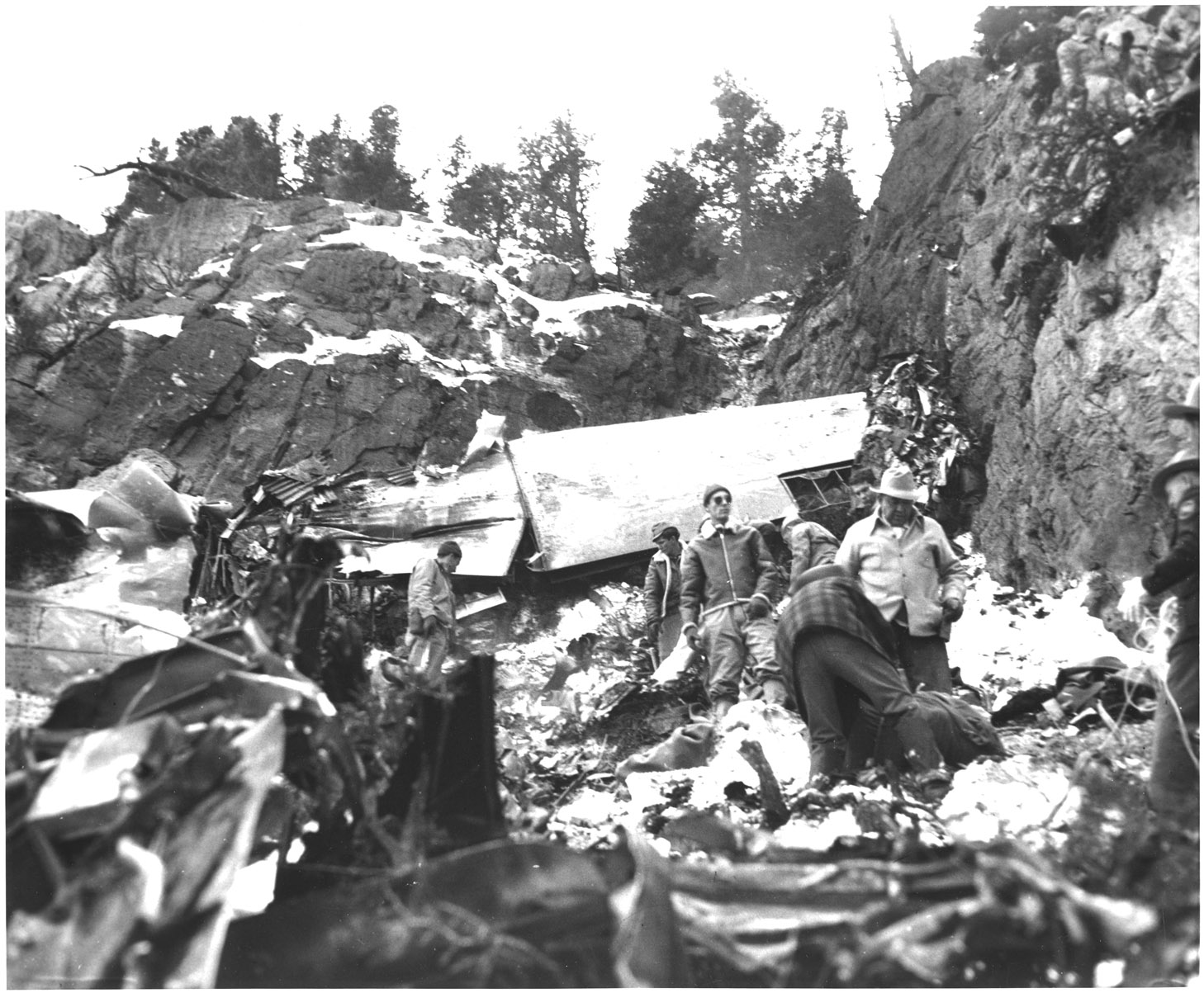
A plane crashes into a mountain, in this case TWA Flight 3 on January 16, 1942.

The fuselage of a state-of-the-art 1942 DC-3 Sky Club was gleaming aluminum, meaning that when the aircraft struck granite, it exploded and deformed, but large pieces remained. In fact, some of those pieces of twisted aluminum can be seen today on Mt. Potosi. Modern airliners are made of composites that disintegrate on impact, resulting in the bizarre scene in the Alpine landscape, which looks like a litterbug went mad. How many pieces of people and debris are up there? Hundreds of thousands? A million? Each will have to be removed from the site with care because some are human remains and the rest are potential clues to what happened to Germanwings Flight 4U 9525. Perhaps the aircraft’s badly damaged voice recorder and flight data recorder will answer all questions, in which case the jigsaw puzzle of wreckage will still need to be collected and removed. All this will be done by people who are now witnessing sights that are meeting and then far exceeding the human capacity to rationalize and cope.

Previously unpublished and in some cases undiscovered accounts of the recovery effort of TWA Flight 3 were blunt by 1942 standards. A few of the bodies of crash victims were thrown clear of the impact point when the ship blew apart and these remained intact. The rest were put through a literal meat grinder—and then set afire. Imagine being ordered up the mountain on a U.S. Army recovery team or volunteering for the recovery job. Better yet, don’t imagine it. The team of about 30 painstakingly picked up what there was to pick up in the way of human remains for four solid days. In the book I referred to it as a “pudding” composed of flesh, bone, melted snow, and pieces of plane as small as splinters. There were 22 victims, remember. Then the recovery team declared the job finished and departed the scene. An hour later, a TWA man still onsite discovered more human remains and stuffed them into all he had with him—a mail sack. Seventy years later when I visited the site, a human bone turned up. That’s the way it is at such sites.

Fireball: Carole Lombard and the Mystery of Flight 3 by Robert Matzen

The recovery team reaches the scene 36 hours after the crash.

Take that scene times six and you’ve got something akin to what’s facing recovery teams in the Alps as we speak. There isn’t any snow, but there is a vast mountainside and a ravine covered in objects foreign to serene Alpine landscapes. As for people living the recovery, let me put it in perspective this way: One of the Flight 3 civilian volunteers was interviewed more than 40 years later as a wheelchair-bound old man and said in something akin to bewilderment, “I still see it in my dreams sometimes.”

More than 300 police officers and a like number of firefighters are up there at present, all of them heroes for doing what they’re doing. Many will get past the task they’re accomplishing right now, but none will forget it. They’ll keep seeing it in their dreams.

Mystery Within the Mystery

News of the death of my friend Kenneth Keene has hit me hard. I mean, come on, I’m not telling tales out of school when I say the man drank liquor a quart a day and knew the word exercise only as a theoretical experience. But he was one of the most extraordinary humans I have ever met, and his passing has left a hole in my heart.

As you will recall from a post dated last October, Ken Keene owned Tuckaway, an Indianapolis National Landmark and a home tied to the death of Carole Lombard. Ken Keene insisted, Ken Keene swore to me, that Carole Lombard stood at the front door of Tuckaway the day before her death and was warned by scientific palmist Nellie Simmons Meier “not to take the plane.” Ken learned this from the lips of Nellie’s niece Ruth, making it more than legend. It was oral history. But the fact of the matter is, I have not been able to find evidence that Lombard managed to sneak off to Tuckaway, located on the north side of Indianapolis, on the hectic day of the bond sale on January 15, 1942. If you followed my Twitter campaign of January 15 and 16 of this year, when I recounted Lombard’s day selling war bonds minute by minute, you know how frantic was her time in Indianapolis.

I would say to Ken that I needed evidence of her Tuckaway visit, and he would respond, “You don’t believe me!” I assured him that yes, I did believe him, but I needed verification to put it in print. But Ken had heard it from Ruth, and Ruth had heard it from Nellie, so it was incomprehensible to Ken that I needed more than that.

Fireball: Carole Lombard and the Mystery of Flight 3 by Robert Matzen

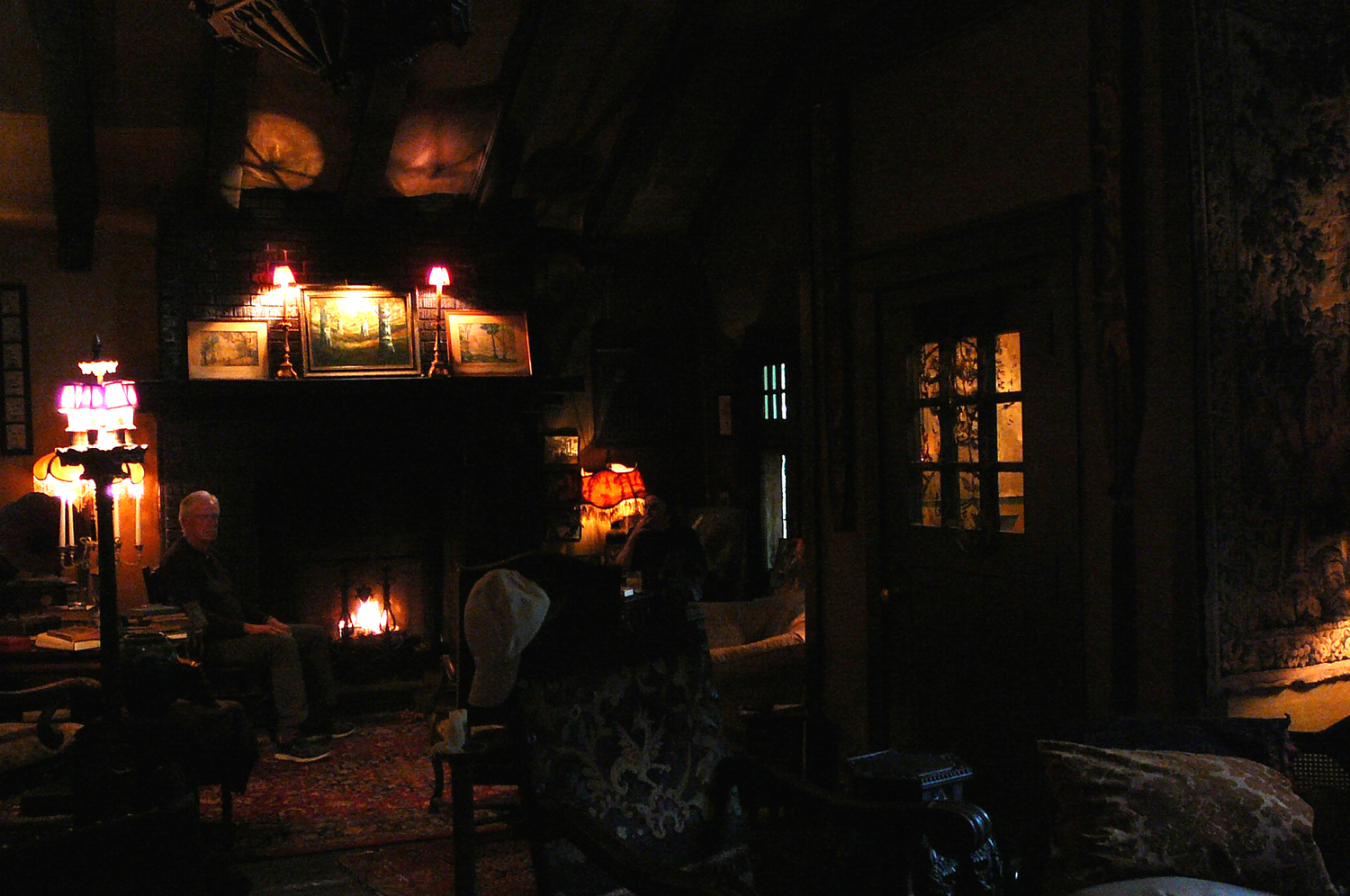
The dark and mysterious interior of Tuckaway. Ken is barely visible at center of photo, beside the lamp.

Now, about Ken. He was a dark-haired man with a puppy-dog-sad face. According to the feature obit in the Indianapolis Star, he was 69 or 70. He mentioned that he was the son of Army Air Corps Brigadier General Ken Keene, although the subject only came up because he asked me what I was working on and I told him a book about James Stewart in World War II. He said, “Oh, my father knew him and used to tell stories about the two of them in the war.” It was then he showed me a picture of Gen. Keene and his wife Gigi, the stunning woman who was Ken’s mother. But knowing the unorthodox Ken, I sensed that there was a lot of discontent among parents and child, because he was the last guy to be thought of as a chip off the ol’ block of Gen. Keene. Another sign of problems was the fact that Ken had no interest in recounting his father’s experiences with James Stewart.

Ken was often bombed from all the scotch, but a brilliant conversationalist at all times. He tracked every word that anyone said and had an immediate response, even after a full tumbler of scotch. I mean a big glass of scotch and ice. He might slur a word or two, but the man had his faculties and his brain processed like a NASA supercomputer.

Fireball: Carole Lombard and the Mystery of Flight 3 by Robert Matzen

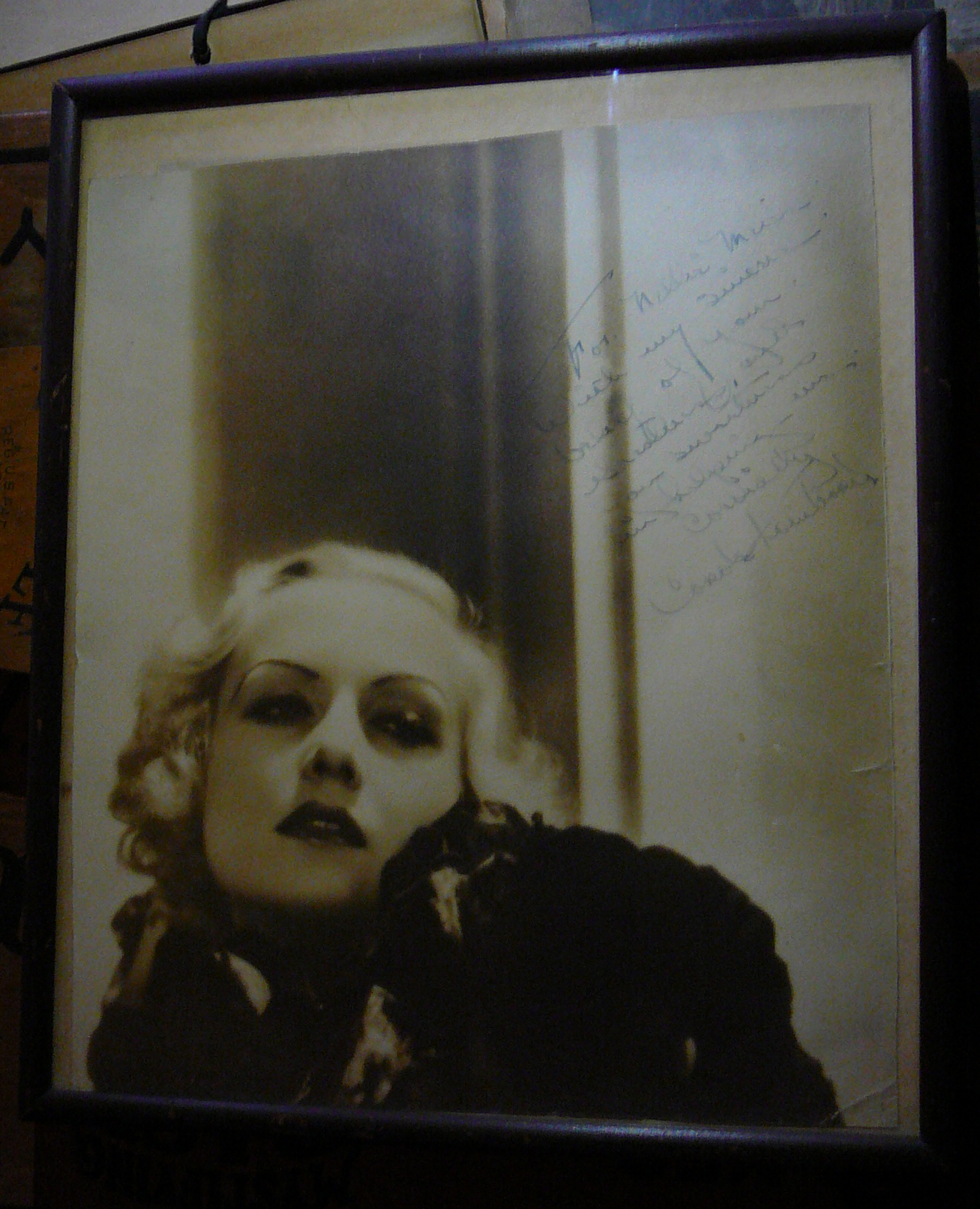
The “other” Lombard autographed portrait that I found on Ken’s wall.

Ken’s passion was Tuckaway, and Carole Lombard was among his favorite Tuckaway topics. He would point out the autographed portrait of her hanging at the bottom of the stairs, which had become famous over the years through newspaper coverage. As Mary and I wandered through the house, I found another Lombard inscribed and framed portrait hanging in the library, which didn’t really look so much like her so it was no wonder it had been overlooked. It was taken off the wall and handed to Ken, who fixed his hazy eyes on it and said, “Oh yes, I had forgotten about this one.”

It turns out that I spoke to Ken by phone within a week of his death on February 18. He had asked me when I would be out for a visit—he always asked that—and I promised to get there in the spring. I was thinking about planning that visit the day I learned about his passing, just hours after thinking about him, this past Tuesday.

I interviewed Ken extensively about his connection to the story in Fireball, this incredible missing piece of the Fireball timeline, so it’s not as if his death has affected the historical record. But I so admired this guy for being gracious, and brilliant, and determined to show visitors to Tuckaway the time of their lives. I admired him for his warmth at all times, whenever I’d call. Above all he was a brilliant individualist who lived life on his own terms and never compromised. He never skimped on the liquor bill and never condescended to see a doctor even when it was obvious he should. What good does it do now to scold the guy? I’d rather celebrate this life brilliantly lived, and pursue the clues he left me about what is potentially a chilling moment in the last days of Carole Lombard’s life when she was warned what was ahead and for some reason ignored the warning and hurried to her doom.

Crazy Town

I have learned the hard way to rely on primary sources. Taking for granted the accuracy of secondary sources or information that has passed hand to hand over the course of time leads to mistakes. If you have never noticed, humans like to take information and spin it for their own purposes.

I’m not breaking new ground when I report that, this week, we heard about the 18-month-old girl who was rescued from a riverbed in Utah when her mother’s vehicle went off the road at night and landed upside down under a bridge, blocked from view of the road above. The story made national news: infant rescued after being suspended upside down in her car seat for 14 hours, inches from icy rushing waters with mother dead in driver’s seat. It’s some story; this was a miracle rescue. The cops and paramedics who removed the girl from the vehicle and rushed her to the hospital are heroes.

Then the story takes a turn toward crazy town, as reported by the four cops who arrived on the scene after a fisherman spotted the vehicle. Those cops, all of them eyewitnesses who had not sought the limelight, none with a vested interest to write a book and cash in on the rescue, all of them professionals going about their job, stated right after the event that they heard a woman’s voice calling for help from inside the car. They said the voice was “there but not there.” It was audible enough that one of the cops reports that another answered by calling into the vehicle, “We’re trying. We’re trying our best to get in there.”

“I was thinkin’ I was hearing things,” said Spanish Fork (Utah) Officer Tyler Beddoes to ABC News, “and when I talked to the other officers, we all heard the same thing. You know, a voice saying, ‘Help us,’ ‘help me.’”

The four of them managed to push the vehicle onto its side (all were later treated for hypothermia) and then discovered that the woman who seemed to be calling for help had been deceased for many hours—but her daughter was alive.

I’ve experienced some strange things in my own life that I generally don’t like to talk about because straying away from the tangible can earn a historian the label of kook. There was one during the writing of Fireball–very strange indeed. But sometimes the facts themselves tell the story, like the time I was working on Errol Flynn Slept Here with Mike Mazzone and intended to do a “ha-ha” sidebar about Errol Flynn’s Mulholland Farm supposedly being haunted. I had experienced an odd moment at Mulholland Farm that I attributed to an overactive imagination. Then, in the course of interviewing people who had lived in or visited the home, more than two dozen from different generations, different walks of life, and vastly divergent spiritual/religious perspectives were willing to go on the record documenting eyewitness encounters with something in the house over a 27-year period. Suddenly, my overactive imagination wasn’t so overactive after all. In the end, the facetious sidebar became a serious chapter in the book.

You can tell me you know for sure that when we die, we will go to heaven or hell. You can tell me you know for sure that when we die, there’s nothing at all. But in truth, nobody knows, and we’ll all get to find out the same way. In the meantime, there are things out there that we, the living, can’t explain. It’s possible that the rushing water of that river sounded like a woman crying for help. Or the metal roof of the overturned vehicle scraping against rock and producing a sound similar to a woman’s voice. Or is it possible there was an additional hero in this rescue? The first responders were tremendous as can be seen in unedited video shot at the scene. Was the most heroic of all Lynn Jennifer Groesbeck, a 25-year-old woman who reached out past all hope, past her own lifespan, to save the life of her child in peril?

Revisionism

Fireball: Carole Lombard and the Mystery of Flight 3 by Robert Matzen

Glamour pusses Gable and Lombard share an ‘up’ moment exiting Ciro’s on the Strip in August 1941.

Why do we need there to be a happily ever after? When I was interviewed during the Fireball book tour, I would often hear things like, “Gable and Lombard had the kind of love that would have endured.” There would be such conviction in the voice of the interviewer, and at moments like that I found myself in an awkward place because the interviewer believed what was being said and, in fact, it was and was not true.

During the years that Carole Lombard and Clark Gable were together, she was in love with him in a mature way and he was in love with her in his own way. She was an older soul and possessed a strong altruistic streak. He was a perpetual adolescent and quite selfish the way males can be. Up to the time they became an item, he had relied only on himself, number one, and there was no number two. But suddenly she became number two and worked like hell to maintain that position, which must have been, for her, something like barbequing in a snowstorm. As the premiere sex symbol in the world and therefore a male of unquestionable power, Gable cut a swath through the female population of Hollywood. He slept around and continued to sleep around until the day Lombard died. She approached this fact as practically as she could: This is the price I’m paying to be Mrs. Clark Gable. He can get his rocks off wherever he likes because I know he comes home to me.

But that doesn’t mean she found rationalizing easy, and even a self-confident soul and sexual libertine like Carole Lombard had her limits.

Every indication is that if she had lived, he’d have gone right on as a brigand for as long as the marriage could endure. There were rumors at the time of her death that their union had already hit the rocks. A particular photo that appears in Fireball bears this out. They are sitting together in a restaurant, and she is smiling politely but looking like hell and he looks as miserable as you’ll ever see Clark Gable looking. It’s not the kind of grouchy-miserable that you see when Clark Gable is acting. This is vulnerable-miserable, pained-miserable, as if they are arguing and he’s wrong and he knows he’s wrong.

Fireball: Carole Lombard and the Mystery of Flight 3 by Robert Matzen

Three months later, here they are, her smile painted on, his nonexistent. She rests her hand on top of his hand, but she’s not holding his hand and he’s not playing along.

When the host of a Fireball interview would turn the statement into a question, “Gable and Lombard had the kind of love that would have endured, didn’t they?” there was my opening and I would answer with the truth: They loved each other, yes, but there were problems with the marriage that I think would have ended it before too much longer. Probably by 1945 or 1946, had she lived, she would have given up and left Clark Gable. Sometimes, loving someone and giving it your all isn’t enough. Sometimes, unconditional love causes the self to endure too much, give away too much; in this case she would have given away the prime of her life. I could easily see her reaching age 36 or 38 and no longer being willing to serve as consort to a hard-drinking, womanizing sovereign. Or I could see Gable waking up one morning and beholding a Lombard whose looks were beginning to wane from smoking, drinking, stress, and the natural process of aging. You can see the beginnings of it in the photo discussed earlier. At that point Gable might decide to trade his wife in for a newer model, say the sleek, 10-years-younger Lana Turner.

Whether Carole would have ended it or Clark would have, I don’t think this relationship was headed for happily ever after, and it was the shattering event of her death at age 33, after only two-and-a-half years of marriage, that bronzed the timeless, forever love of Gable-Lombard legend, the kind of love this twosome sometimes captured but was beginning to find elusive.

Looking even further down the line, I could see the Gables divorcing and remaining friends like she was friends with her ex William Powell and somewhere around 1955 getting together again for a Gable-Lombard picture or two. Precedent: Lombard made My Man Godfrey with Powell three years after their divorce. Gable made Key to the City with Loretta Young 16 years after she bore their love child—a child he would never acknowledge. Stars set personal feelings aside for the sake of box office. Astaire and Rogers weren’t exactly fond of one another; Abbott and Costello grew so far apart they didn’t speak except in front of the camera.

That’s life is how I look at it. Happy endings don’t come about very often and “for keeps” usually isn’t for keeps, especially in Hollywood. But that doesn’t detract from the story of Lombard and Gable. They were real people, “juicy people,” Loretta Young called them, and they deserve to be remembered for who they really were, not who we wish they would have been.

At the Oscars

One time I got into a feud with my sister Dorothy that lasted six months. When you’re in your twenties you get all full of yourself and feuding seems like a good idea. She said she didn’t think I would ever make money writing—because up to that point I’d made precious little—and I took umbrage and off we went, giving each other the silent treatment. Dorothy died of breast cancer last year, and I’m glad that I indulged in the luxury of a feud only once, only that time; otherwise we managed to spend the rest of our lives thick as thieves.

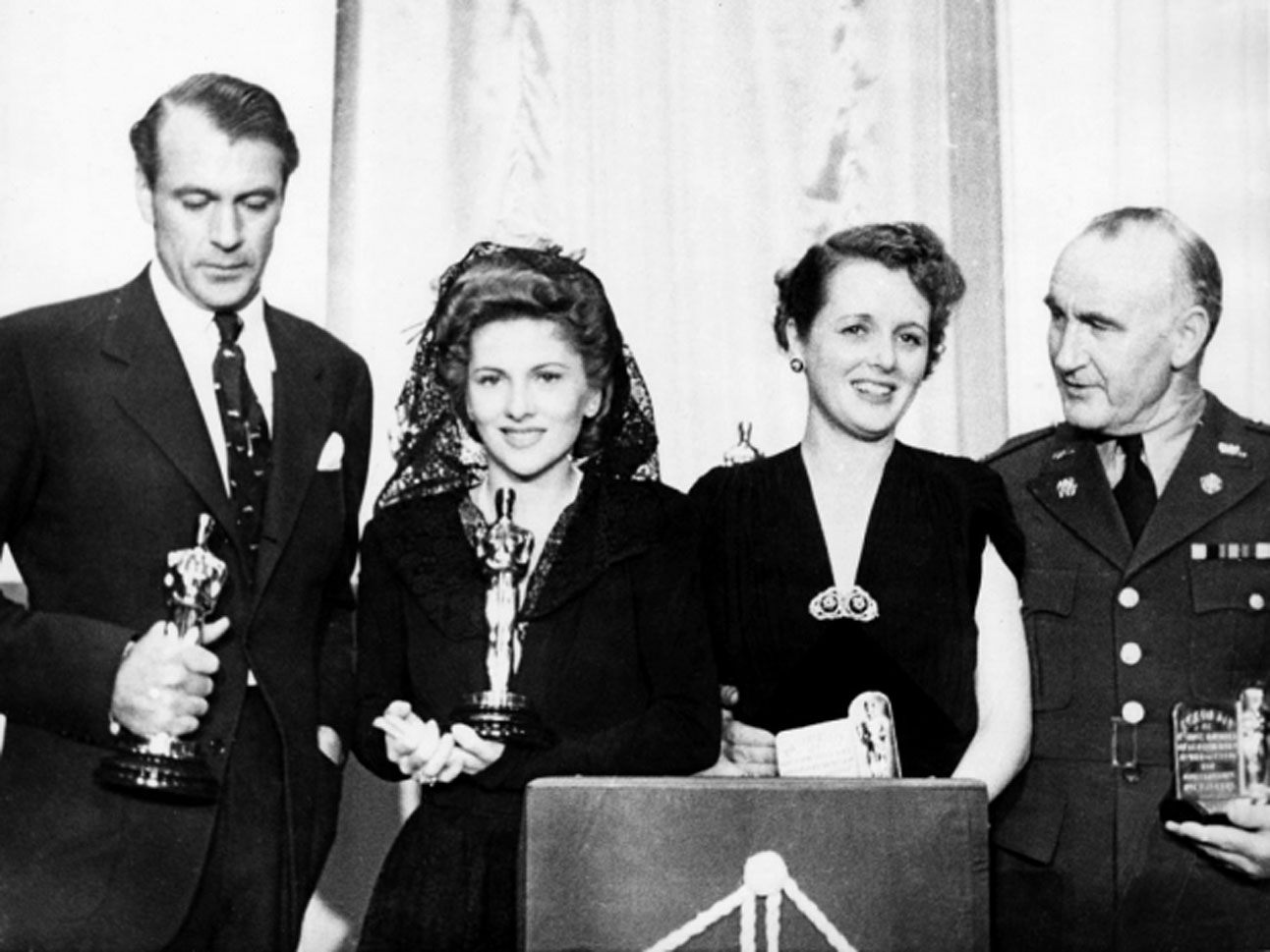
This story comes to mind as I look back to the Academy Awards of 73 years ago this Thursday, February 26, 1942, at the Biltmore Bowl in the Biltmore Hotel in downtown Los Angeles. What a night. The United States was 2.5 months past Pearl Harbor, and the assemblage of actors, directors, moguls, and technical craftspeople included many men in uniform. Second Lt. James Stewart of the Army Air Corps was one of them; Jim had come back—as was custom—to present the Best Actor Oscar since he was the incumbent. High above the giant room and deafening roar of the pre-dinner crowd hung a pall. Clark Gable, king of Hollywood, was not in attendance because 41 days earlier Carole Lombard, his wife, had died in a plane crash. Some at the Biltmore this evening had not gotten past the grief of it; some never would. The absence of mile-a-minute Lombard was deeply felt, because she was in the middle of seemingly everything, every huddle of gossip, every gag, every warm gesture.

Picture this: all the industry bigs pack into the Biltmore Bowl for what is, at this time, a banquet followed by the awards presentation. All the stars but Gable and Lombard are there for the kind of formal dinner we’ve all experienced: too many place settings at tables that are too small. Food in insufficient portions for human sustenance arrives at the table cold. You’re bumping elbows with your neighbors and the waiters are bumping you in turn. You are glad you used Dial and you wish everybody did because it’s hot in there, and between all the body heat and all the nerves, before long the air is overripe.

Among the 10 features up for Best Picture in the auspicious year of 1941 were Citizen Kane, The Maltese Falcon, Sergeant York, and two of special note, Suspicion starring Joan Fontaine and Hold Back the Dawn starring Joan’s sister, Olivia de Havilland. As cited chapter and verse in Errol & Olivia, Livvie was an interesting character, a wounded and closed-off soul who professed to have no close friends and who was now into year four of a bitter feud with her boss, Jack L. Warner of Warner Bros. Early in her career Livvie had portrayed Hermia in A Midsummer Night’s Dream. In the play Hermia is described with, “Though she be but little, she is fierce,” and never was there a more perfect description of Miss de Havilland, all five foot three of her.

Fireball: Carole Lombard and the Mystery of Flight 3 by Robert Matzen

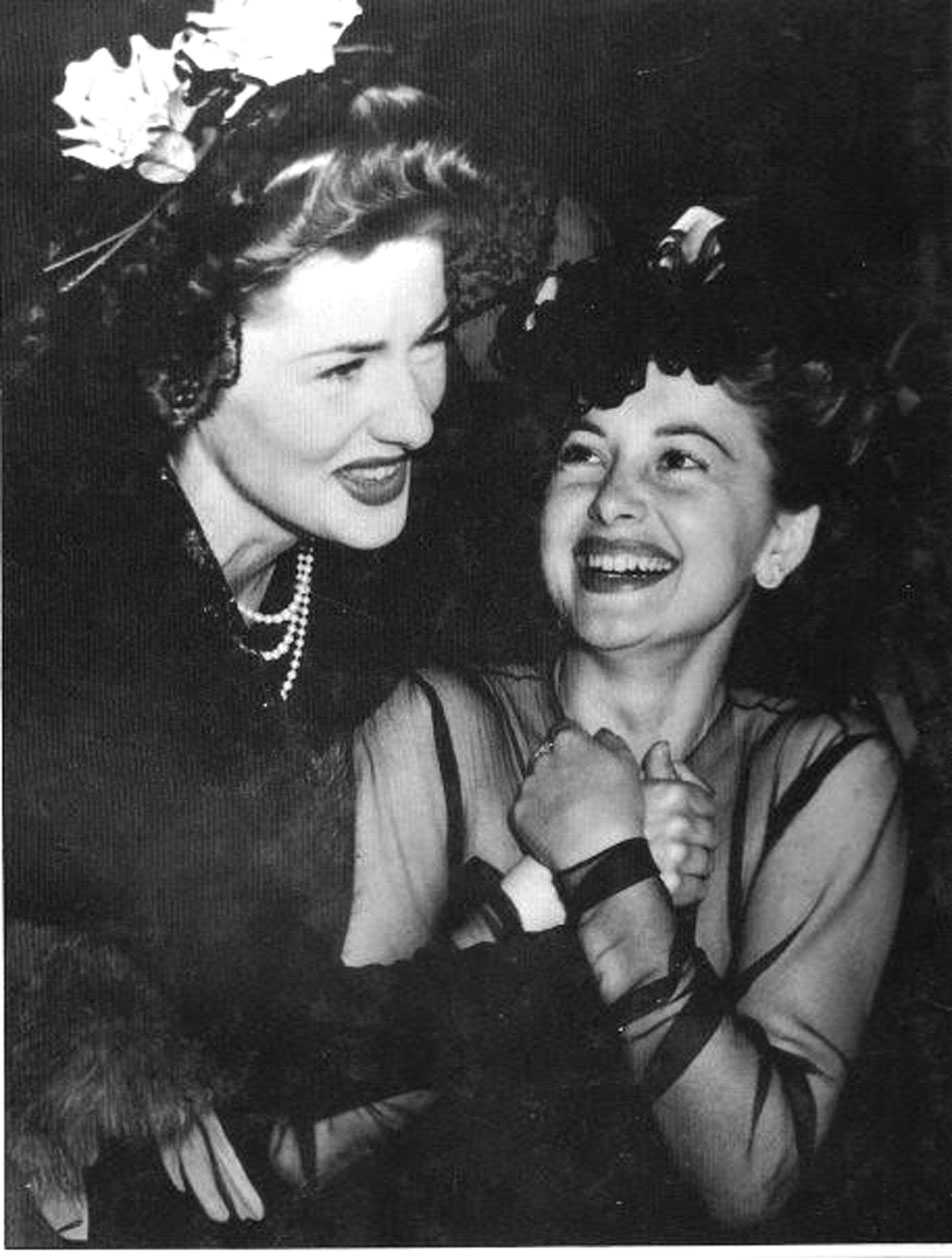
Livvie makes nice with Joanie as Burgess Meredith looks on prior to the presentation of Oscars.

As problematic as everything was with Livvie, her relationship with sister Joan de Havilland, rebranded Joan Fontaine, was equally difficult beginning when they were sprouts in Saratoga, California. If you go to the house where they lived as children, you can still see in the concrete driveway their little handprints and carefully carved names beside them, almost as if they were practicing for Grauman’s Chinese. These two were stamped out of the same mold—independent, headstrong, and not afraid to use sex as a weapon. Livvie came first and blazed the trail and Joanie came after and used her sister’s connections and fame and even her dwellings in Hollywood to build a powerhouse career. Livvie spent a lot of her time seething about the encroachments of Joanie but was often shushed by their mother, who lived with and chaperoned the sisters in Hollywood into 1938.

Fireball: Carole Lombard and the Mystery of Flight 3 by Robert Matzen

Why, they look so happy. Almost like … sisters.

On this night in February 1942, not only are the sisters’ films going head to head, but so are the actresses themselves, both nominated for Best Actress. Livvie figures she has the leg up because she had been nominated for Best Supporting Actress for Gone With the Wind but lost to co-star Hattie McDaniel. As one of GWTW’s also-rans, she would pick up the sentimental vote. But wait—Joanie is an also-ran as well, having lost last year’s Best Actress nomination for Rebecca to last year’s sentimental favorite, Ginger Rogers.

If you’re starting to think that nobody ever seemed to win an Oscar for the right picture, you’re starting to catch on to the politics of Hollywood.

Photos taken prior to the awards ceremony show the sisters cordial because nobody has yet lost anything. Then comes the big moment. And the winner is…………

Joan Fontaine, for Suspicion.

All Livvie’s seven years of hard work in big and little pictures, all her fighting the good fight for better scripts and her quest to be more than “Errol Flynn’s girl,” all of it crumbled like buildings in a California quake as little sister Joanie swept up to receive the Oscar. The situation would come to a head five years later at the Shrine Auditorium when Livvie finally won a Best Actress Oscar of her own. That year, 1946, Livvie was the true sentimental favorite for recently besting Jack Warner in court and winning the freedom of contract players across Hollywood. Livvie wasn’t up against Joanie that evening, and the field was much weaker, and when Joanie approached her sister to offer congratulations, Livvie spun on her heel and snubbed Joan. Said not a word. Stormed off, statuette in hand.

Fireball: Carole Lombard and the Mystery of Flight 3 by Robert Matzen

The winners: Gary Cooper for Sergeant York, Joan Fontaine for Suspicion, Mary Astor for The Great Lie, and Army Reservist Donald Crisp for How Green Was My Valley.

They would apply some plaster to the fracture on and off over the years but split forever in the 1970s when their mother died. Joan refused to talk to me about Olivia when I was writing Errol & Olivia; Olivia refused to talk to me about anything of substance ever. My interactions with both were always pleasant, but the secret dark places in their souls remained locked away.

Finally, at the end of 2013, a little more than a year ago, Joan died at age 96 in California while Olivia, aged 97, remained resolute in Paris. I guess you could say the feud ended with Joan’s passing, but did it? The enmity of these two, which came to a head twice at the Academy Awards ceremony, was something for the ages. Me? I’m glad my own sibling feud was just once, and long ago.

In the Shadow of Beasts

I've always been a sucker for a woman in a beret. This time it's Fay Wray in a 1930s pose.

I’ve always been a sucker for a woman in a beret. This time it’s Fay Wray in a 1930s pose.

The always-interesting Marina Gray pointed me to the link to a 1998 article that appeared in Scarlet Street magazine. The article detailed an encounter by filmmaker and writer Rick McKay with Hollywood leading lady Fay Wray in New York City in 1997. I was bowled over by the nature of the piece, which included an extensive interview with Wray, who was almost 90 at the time and very much a real-life Norma Desmond in manner, as actresses can be.

You know how sometimes you read about a person now gone and get the feeling you would love to have met him or her? Well that’s the feeling that hit me reading about the evening spent by the author with Fay Wray. Here was a woman who started out in silents and remained so full of life that James Cameron had recently, as of the time the article was written, offered Wray the role of “Old Rose” in his epic in the making, Titanic. Wray had declined the offer because one of the plays she had authored was opening in New England and she didn’t want to miss it. Wray’s contemporary, Gloria Stuart, then landed the role and earned an Oscar she had coveted for 70 years.

Rick McKay asked all the right questions during his evening with Fay Wray, a date that included a Broadway show and dinner and drinks. Man: dinner with Fay Wray. Does it get better than that?

Fireball: Carole Lombard and the Mystery of Flight 3 by Robert Matzen

Fay in one of her best pictures.

In the lengthy interview, McKay returned time and again to Kong, Kong, and more Kong. The making of the film, reaction to the film, and Wray’s opinion of the film. After a while it became apparent that Fay Wray was a brilliant person who was (naturally enough) sick to death of King Kong but too gracious to say it in so many words. She was an early—perhaps the first—casualty of that one career-crippling iconic Hollywood role. A chosen few know what it’s like; Basil Rathbone with Sherlock Holmes, Leonard Nimoy with Mr. Spock, and so on. But mixed in with Kong Q&A, Fay offered the kind of insight into Old Hollywood that can only be learned on the inside.

Her first big picture was Von Stroheim’s The Wedding March, and she describes a sexual Svengali/Trilby sort of vibe between them. She starred in a number of pictures in the early era of sound, including three with Gary Cooper. She also made an early masterpiece with horror undertones, Most Dangerous Game, and two early Technicolor features at Warner Bros., The Mystery of the Wax Museum and Doctor X., both directed by the Hungarian maestro, Michael Curtiz. Like most others who toiled under the Curtiz whip, Wray’s memories of the experience were not fond: “I didn’t appreciate him at all as a director. I thought he was more like a part of the camera. He didn’t have any warmth whatsoever.”

Of course it didn’t help that conditions were brutal on Warner soundstages. Wray provides thought-provoking testimony regarding the experience of working in early Technicolor on sets that had to bathed in light—drenched in light—to suit the Technicolor cameras. Today we’re used to mega-chip HD cameras and cool LED lighting, but in 1932 the lights were incandescents that give off 10 percent of their energy as light and 90 percent as heat, which was “Awful! Awful! … They left the lights on, because a lot of scenes were so sustained that you needed quite a bit of time. But, it was an unhealthy kind of feeling that we all had to go through … it was just a miserable experience.”

Fireball: Carole Lombard and the Mystery of Flight 3 by Robert Matzen

Toiling under hot lights and showing some leg in The Mystery of the Wax Museum with co-star Glenda Farrell.

Both Wax Museum and Doctor X and a third scream feature, The Vampire Bat, paired Way with one of Hollywood’s more unusual actors, Lionel Atwill, whom she described as “a profile” and explained that “He knew just how to position his head to get the right angles! He was very conscious of his contour.”

Here was a thoughtful, serious young actress now in her mid-20s making what she considered mindless horror pictures for brutes like Curtiz. And then came Kong. She remembered working in the giant mechanical Kong hand, which was manually manipulated by stage hands, and her fear wasn’t being crushed by the hand of Kong but rather falling out of it because the grip was loose at best. Of the origin of her Kong screams: “I went into the sound room and made an aria of horror sounds.” They were screams directed by … Fay Wray.

Wray discussed the decline of her career and relationships with a succession of talented, high-profile screenwriters, first John Monk Saunders, then Clifford Odets and finally Carole Lombard’s ex-boyfriend, Robert Riskin. Her marriage to Riskin endured through his severe stroke and subsequent death in 1955. During his illness she went back to work in television and movies to pay the medical bills, most of the roles forgettable or downright embarrassing. Her biggest pictures of the time were The Cobweb with Widmark and Bacall and Queen Bee with Joan Crawford. And what a terrific take Wray had on the star: “Joan was not a happy person and she liked showing that. She worked on her fan mail all day long. I just didn’t understand that, but she did. She washed her hands a lot. She washed her arms all the way up past her elbows … She was so worried about herself, I felt. She was a good soul, a good soul. She wanted to be nice to everybody and kind, certainly kind to her fans. She thought about them a lot.”

Fireball: Carole Lombard and the Mystery of Flight 3 by Robert Matzen

Wray in a straight role with Gary Cooper in 1933. Coop was stamping out pictures at this time and made three with Fay; two with Carole Lombard.

Like so many actors of her day that disdained the kind of pictures they were in—for example, Olivia de Havilland would not condescend to watch The Adventures of Robin Hood for 20 years after its release—Fay never went to see completed versions of Mystery of the Wax Museum or Doctor X, pictures that are today considered horror classics. She was a year older than Carole Lombard and started in pictures about the same time Lombard did, around 1925, and both made their move in Paramount Pictures in the early 1930s. Both were good-looking women with earthy sexuality, but Wray had none of the Screwball Queen’s savvy for crafting a career, and if it weren’t for the horror pictures, Fay Wray’s name would barely be remembered at all. Instead, she remains a Hollywood icon.

Later in life she became a writer, and I want to read her books and drink in more wisdom like this: “I love films, I love the camera—I love the thought that when you’re in front of the camera, whatever you do can go around the world. Isn’t that a marvelous feeling to have? That’s a beautiful feeling.”

Rick McKay’s full article can be accessed here.

Fireball: Carole Lombard and the Mystery of Flight 3 by Robert Matzen

Putting it all in perspective: one small woman and the big ape who immortalized her.