General Hollywood History

At Home Wherever

Mission: Jimmy Stewart and the Eighth Air Force by Robert Matzen

With Tyrone Power in The Black Swan. Unleashing the Technicolor redhead.

Maureen O’Hara started out with Charles Laughton in Jamaica Inn in 1938 and Hunchback of Notre Dame a year later, then went on to a long and successful career as a Fox leading lady. She acted with Ty, Errol, and Duke and was in all those John Ford pictures. You never heard a hint of scandal about her and she lived to 95, but now she too is gone like Joan Leslie is gone. Well into her 80s MoH looked like a million bucks and gave me hope of immortality, and she wrote a sassy memoir like we wish more of the great ones had written. Now she’s left us; we keep losing them until there aren’t any left to connect us as humans to a Golden Age that’s now passed into history. We can no longer share memories with those who are living and have them tell us what the old stars were “really like” and walk the lots and describe their dressing rooms and provide anecdotes about directors and what happened on what soundstage; we can only look back and study printed words and recordings of those people. What they said is cast in concrete now; they aren’t saying anything new.

I’m reminded of a visit to the Warner Bros. lot somewhere around 2009. I asked around if anyone knew where Errol Flynn’s dressing room was and guess what: Nobody did. That information had died with Flynn and the other veteran studio employees now long gone. The “old timers,” volunteers at the gift shop, were from well after Flynn’s day, so the studio history of where Flynn’s or Bogart’s dressing rooms were no longer existed because nobody bothered to capture it. As it happens, I was able to piece together the exact location in case anybody wants to know—Jack Warner kept Flynn in the corner dressing room right outside the top man’s second-story window, literally under J.L.’s nose, where Flynn could be kept track of. But I digress.

Mission: Jimmy Stewart and the Eighth Air Force by Robert Matzen

With John Payne and Edmund Gwenn in Miracle on 34th Street for Fox.

I liked Maureen O’Hara well enough without classifying her a personal favorite. In hindsight, I took her for granted and when I stop to think about it, she participated in some of my favorite pictures, including How Green Was My Valley, Miracle on 34th Street, and The Long Gray Line. She was great with the Duke in pictures like Rio Grande and The Quiet Man, and she was tough enough that the abusive John Ford couldn’t reduce her to tears. If somebody gave it to Maureen, Maureen was capable of giving it right back–the very definition of a fiery redhead.

Thinking about it, though, I did find it charming when her natural Irish accent would sneak through her scrupulous American/English. Thought would come out taught. Thank you would be tank you. Mostly, though, you’d never guess she wasn’t from middle America and it must have taken quite a bit of effort to pull that accent off in picture after picture.

O’Hara’s muscular, square shoulders allowed her to credibly use a sword in adventure films like At Sword’s Point, where she played the daughter of a musketeer, and Against All Flags, where she played a Caribbean pirate. She also took pride in doing a lot of her own stunt work in physical pictures like McLintock. Basically, she did whatever kept her working in a run that lasted into the 1970s, with a later highlight being her role of the mother of twins in Disney’s The Parent Trap. The last thing I can remember seeing her in was Big Jake in 1971, looking as good as ever, bringing all that history and backstory with Duke to bear playing his ex-wife in what amounted to a glorified cameo in the first reel. By this time they had such chemistry that even as a kid I could feel the gravitas of their scenes together.

I had hoped to post this piece a week ago, but I got behind. I don’t mind putting it up now because after a flurry of goodbyes in newspapers and blogs, the stars seem to be laid to rest and rarely revisited. So instead of being just another in a clot of retrospectives, here I am more than a week later with my look back at a sassy Irish lass who was a beautiful leading lady and an important Fox contract player from Hollywood’s Golden Age, a versatile talent just as at home in a Welsh mining town as on the Spanish Main, a cavalry outpost, or 34th Street.

Mission: Jimmy Stewart and the Eighth Air Force by Robert Matzen

Leather and lace: O’Hara with Errol Flynn in Against All Flags. Best not to mess with either one.

The Force Awakens (the dead)

Fireball: Carole Lombard and the Mystery of Flight 3 by Robert Matzen

The Star Wars style C one sheet from 1977, back when they were just a bunch of kids putting on a show.

Poor Sir Alec Guinness. I mean, here’s a serious thespian, a Knight Bachelor of the Order of the British Empire, an Oscar winner as Best Actor for Bridge on the River Kwai, nominated for The Lavender Hill Mob, key in Lawrence of Arabia—some of the great pictures in history. And in 1976 here he is on a movie set with one tall man in a dog suit, and another tall man in black armor and a cape, a perilously thin man in a gold ensemble, and a “robot” that looks like a garbage can on wheels. The human actors he’s working with don’t impress him. The blonde kid’s voice cracks; the dark-haired kid mumbles his dialogue; the girl with the bad hair is the best of the bunch, and only because she’s the daughter of Debbie Reynolds so she has at least something of a pedigree. This writer-director masterminding the nonsense, well, he seems to have no idea how to make motion pictures at all.

I have thought about the Guinness-eye view of the making of Star Wars many times over the past 38-odd years. Sir Alec must have thought, I’ll take my paycheck, cash it fast, this thing will bomb, and I’ll move on with my career and never speak of it again.

Then OMG what happened next. We all know what happened next. We are feeling the ripples through the earth, through popular culture, through time itself to this very day, Force Day 2015, yet another round of flak ballyhooing the upcoming next installment of Star Wars. Poor Sir Alec! He wouldn’t flee Star Wars, as he must have imagined. He would be forced onto all fours to be saddled with it. He would be—No, please, it’s an honor I DO NOT DESERVE—nominated for an Academy Award for it. He would be forced to take their money and appear in sequels of it. It will go down as the pinnacle of his career so that when you go to imdb.com and type in Alec Guinness, the thumbnail description reads, “Actor, Star Wars.”

Fireball: Carole Lombard and the Mystery of Flight 3 by Robert Matzen

Vader: “Once I was the pupil. Now I am the master.”
Kenobi: “Only a master of eee-vil, Darth.”
Guinness: (I can’t believe I just said that.)

I’m thinking about all this today because it is Force Day, and my mental exercise is to look at all the highly polished commercial ballyhoo in our stores and on our TVs about The Force Awakens and contrast it to those innocent first weeks of spring 1977 when Star Wars caught the world’s eye for being clean, all-American grade-school fun. It was a charming, loud, mindless two hours at the movies, exceedingly stupid if you thought about it, but why think about it? Just sit back and enjoy. George Lucas set out to make a tribute to Universal serials, to Flash Gordon and Buck Rogers—that’s all he ever intended, and now look what it’s become. It is now a—and I say this with disdain—Disney franchise. To me, the first one was the most enjoyable, although the second one, The Empire Strikes Back, was better in the sense that it was Star Wars Grows Up and in adolescence became a little darker. Not too much; a little. The third one was too stupid to enjoy and that second round where Lucas tried to make a story that hooked up across generations.

Just, ouch.

I can watch the original anytime and recite the dialogue with the characters. I can watch the second one if I’m in the right mood and have two hours to kill. But that’s it as far as the franchise and I are concerned. I have reached a point in life where I find myself going with great relief, “Well, I never have to do that again.” For example, “I never have to go to Kennywood again,” Kennywood being an amusement park here in Pittsburgh. I grew up loving Kennywood and counting the days until I could go with my cousin, but then it stopped being fun, and about 10 years ago after a work picnic there, I decreed I would never do it again. Just like I never have to endure Star Wars sequels again. Age can be empowering.

Or, in Sir Alec Guinness’s case, age can be imprisoning because roles for actors aren’t so easy to come by, and you take what you can get because it’s a living, and for Sir Alec in 1976 that meant signing on the dotted line for this horrible, loud puppet show that made no sense as undertaken by amateurs.

I can only think that the ripples of Star Wars are even felt wherever Sir Alec is now, and he is touching his suddenly headachy temple like he did when the Death Star blew up Alderaan, and saying in that caramel British voice, “Dear God, not again.”

Unconsummated

Mission: James Stewart and World War II by Robert Matzen

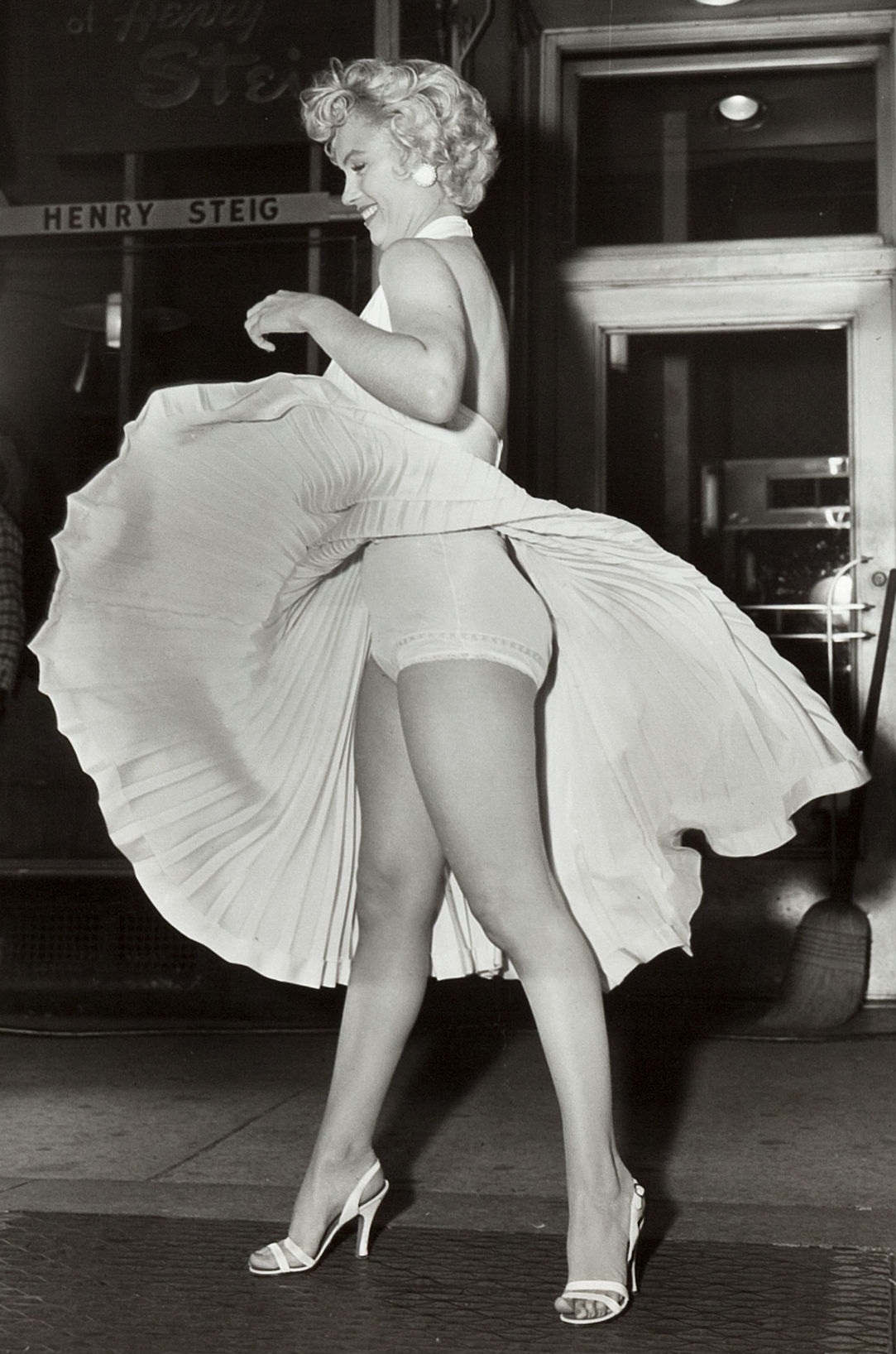
The subway-breeze scene was originally shot in New York City with 5,000 spectators but no way this view was going to pass censors. A tame version was reshot on Fox soundstages. Marilyn headed west without husband Joe DiMaggio, who stormed out of their marriage after this public display of exhibitionism on the streets of New York.

For a while there in the previous decade, the Fox Movie Channel showed The Seven Year Itch often, introduced by then-Fox studio chief Tom Rothman, and for a while there it became a staple in the Matzen household. Rothman’s Fox Legacy series ended some years back and then he left Fox, but The Seven Year Itch remains a favorite picture of mine for the storyline and for Marilyn Monroe’s up-skirt iconography in movie posters and ads.

The Seven Year Itch had been the first Broadway hit of playwright/screenwriter George Axelrod, a native of New York City, and was entirely autobiographical, based on an experience he had had with a young actress in a New York apartment, just as envisioned on stage and screen. The Seven Year itch involved a husband, Richard Sherman, left to his own devices when his wife and son leave town on an extended summer vacation. Sherman is nearing 40 and his health is starting to go, and this sudden summer freedom puts ideas in his head about having an affair. More than ideas, he fantasizes about his secretary at the publishing house where he works and then about the 22-year-old girl who sublets the apartment upstairs. As time goes on, fantasy begins to overlap reality as “the Girl” upstairs grows ever friendlier and his longed-for affair becomes a possibility.

Mission: James Stewart and World War II by Robert Matzen

One look at this still of Ewell playing it straight with Vanessa Brown as the Girl convinces me that Wilder got the screen version wrong.

It would have been interesting to see the original Broadway version, which predated the film by three years, to look at how Tom Ewell interpreted a storyline that wasn’t bound by Hollywood’s censors or by motion picture director Billy Wilder’s desire to play the material broad. And how Vanessa Brown handled the role of the Girl, played by MM onscreen. To cut to the chase, Richard and the Girl consummate their relationship with the wife away, and then he deals with the emotional consequences. It doesn’t sound like comedy but it was, and earned Ewell a Tony Award for what he said was a play that “captured something real.” He’s good in the Fox motion picture reprising his role, but I always found him just a tad too uncomfortably dorky to actually land a Marilyn Monroe even for one night—thanks, maintained Ewell, to Wilder’s direction to play the story as burlesque. “Billy and I didn’t see eye to eye,” Ewell said later. In the picture version, the Girl is ingenuous and non-judgmental and finds herself attracted to Richard Sherman for what she perceives to be a blend of sophistication and sweetness. But it never rings true in any real world that Ewell and Monroe would pair up.

I won’t say that Hollywood censorship “gutted” the feature-version screenplay, because for me the picture is light and entertaining, but as drawn by Axelrod, the original Broadway version is a thought-provoking study of basic human biology and human impulses, the need for closeness, and the emotional price of going beyond fantasy to infidelity in the flesh. The story is a story specifically because Richard and the Girl consummate. He answers burning questions about his own attractiveness at age 40. He satisfies his physical need for a new partner after years of a marriage grown routine. As so often happens in life, the outcome of the affair isn’t what’s expected, and it can’t be forgotten or rationalized away. As a result, the original version of The Seven Year Itch was a stage-bound 2.5 hours that made you think. The movie presents a nerdy middle-aged guy who is so bumbling, so self-conscious, and so guilt-ridden from the start that there’s no way he could consummate. Marilyn’s interpretation of the Girl is completely accessible to Richard; she even pries up the nails sealing off a stairway between their apartments. Figuratively and literally, no barrier exists to completion of his passes except his own ineptitude. I always find this aspect of the picture frustrating in repeat viewings, that the Richard character was so emasculated by Wilder and by censorship via the Production Code that sex between these two could never be broached seriously.

Itch set

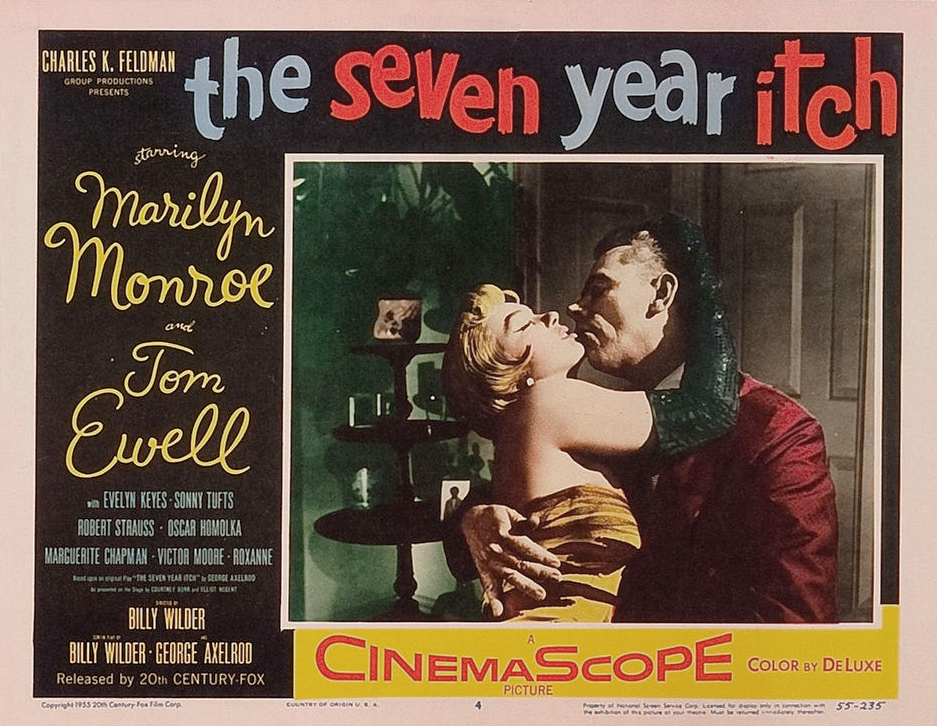
A 1955 lobby card shows one of Richard’s fantasy sequences, playing Rachmaninoff at the piano for the Girl.

In retrospect, what good was that damn code by 1955 anyway? America had grown up in a devastating global war with 400,000 of its young men dead and now lived day by day with fear of nuclear annihilation, yet we weren’t supposed to be aware that adultery existed and we still couldn’t view the inside of a woman’s thigh onscreen? I just don’t get the concept of censorship in a society supposedly “free,” as if shoving adultery out of sight will keep it similarly out of mind. No wonder Europeans mock us.

Mission: James Stewart and World War II by Robert Matzen

Tom Ewell with force of nature Marilyn Monroe.

Some find Marilyn out of touch with the material in this picture, but to me her MM-vibe works OK with the innocence of a character who’s capable of feeling sympathy for the Creature from the Black Lagoon. Part of Marilyn’s charm is that she never seems to be completely bought in to what she’s doing, for whatever reason. She was a natural force like the weather and twice as unpredictable. She remains viable in broad comedy because of this tendency to be all over the board anyway. But I could argue in the simple publicity still from the Broadway version shown above that Vanessa Brown was probably sexier in this part than Monroe specifically because Brown looks like a real girl who a real guy not playing it broad could spend nights with.

What never worked for me in the film is the ending with Richard leaving the Girl and the apartment building to go chase after his wife after not consummating. So much fuss and bother over nothing, it seemed to me. But there’s so much to like about the film version, from the Mad Men milieu (off by only a few years) to Evelyn Keys as the wife and Sonny Tufts as her would-be suitor to Richard Sherman’s rambling and neurotic mutterings to camera as he externalizes his internal thoughts, a device that made Itch work.

I feel sad for America’s deep puritanical roots, in place in 1955 and in place now. Oh sure there’s no Production Code to hold us back. Instead we’re saddled with this thing called Political Correctness, which is just as deadly as any censor. Back in ’55 the director of the film version, Billy Wilder, didn’t like censorship any more than I do and made his picture a test case for pushing the limits of what could be shown in an American movie theater. In hindsight, he didn’t get very far and what we’re left with is a pleasant curio of the 1950s. America run by WWII holdover Eisenhower; America on the cusp of Elvis, Chuck Berry, and Little Richard. An America that wanted to have sex with Marilyn Monroe, but wasn’t allowed to.

Time Bombs

Here’s a thing I’ve known all my life but never really thought about: Hollywood lost five of its greatest, most famous leading men one a year for five successive years. Boom, boom, boom, boom, boom. Five legends gone. All died of “natural causes” but the eldest of the five was just 60. And the thing is, nobody seems to have flinched when Bogie, Ty, Errol, Clark, and Coop passed. It’s just the way things were in the 1950s and 60s, the era of big booze, chain smoking, and meat-and-potatoes diets.

Fireball: Carole Lombard and the Mystery of Flight 3 by Robert Matzen

I’m going to guess it was difficult not to smoke around Humphrey Bogart, who here helps fourth wife Lauren Bacall light up.

Humphrey Bogart was the first to go in 1957 after years battling throat cancer. He had always been an unorthodox fellow with a cantankerous lifestyle that included long pouting sessions aboard his yacht Santana, a brawling third marriage to Mayo Methot, and a cradle-robbing fourth to Lauren Bacall. Bogie drank up a storm and smoked like, well we all know what he smoked like because we see it in many of his pictures, most famously Casablanca. Seeing the way Bogart aged on screen might have made it possible to take his passing in stride in January 1957 when he succumbed at age 57—the only one of our five matinee idols to have been born prior to 1900.

Fireball: Carole Lombard and the Mystery of Flight 3 by Robert Matzen

Tyrone Power becomes ill shooting this scene in Solomon and Sheba and dies within hours.

Tyrone Power died next at just 44 years of age. Ty’s personal life included passionate and highly publicized relationships with a pair of stunning-looking actresses, Annabella and Linda Christian. It’s also said that Ty’s sexuality was ambiguous, and many gay and bisexual actors in Hollywood lived a tortured existence to keep any such knowledge secret for fear of box office poisoning. I never researched Power so I don’t know about his personal demons, but I always liked his onscreen self in pictures like The Mark of Zorro, The Black Swan, Captain from Castille, and The Long Gray Line. Each of these and many others in his career called for strenuous physical work, and it was on a movie set fighting George Sanders in a duel with swords that Ty, who had served as a Marine pilot in the Pacific in WWII, collapsed and died in November 1958.

Then came the demise of Errol Flynn. Everybody who knew Errol expressed surprise when he dropped dead of a heart attack at age 50—surprise that he had managed to last so long! Imagine that your lifestyle included drinking a bottle of vodka, smoking three packs of unfiltered cigarettes, and injecting yourself with cocaine and other opiates every single day. That, my friends, is a tortured soul seeking release. It’s a wonder Flynn had any time at all for the two arts at which he excelled—the art of motion pictures and the art of seduction. I could write a book about Flynn’s unhappy existence. Oh wait, I did write one. No, I wrote two. So there went another leading man in October 1959.

Fireball: Carole Lombard and the Mystery of Flight 3 by Robert Matzen

Errol Flynn parties with 18-year-old Brigitte Bardot in Cannes in 1953.

Unlucky (or would he say lucky?) number four was Clark Gable, one-time King of Hollywood who had managed to keep his reputation as a heartthrob long past the dissipation of his looks from years of smoking, drinking, and grief over the loss of his love, Carole Lombard. Gable had eased from square-shouldered leading man in pictures like The Tall Men in 1955 to paunchy, self-deprecating comedian in Teacher’s Pet in 1958 and But Not for Me in 1959. He had always been so very careful to protect his brand that I find it endearing the way he poked fun at himself in these later pictures. Then came The Misfits in 1960 and location work in the Nevada desert that was tough not just due to heat but mostly because this pro’s pro was forced to endure the shenanigans of royally messed-up Marilyn Monroe. Sitting around patiently waiting for your co-star to show up and then waiting some more so she could get her lines right can be stressful, and it’s no coincidence that Gable went down at his ranch from a heart attack days after completing production. He lasted a number of days in the hospital and then had another attack that ended him in November 1960.

Fireball: Carole Lombard and the Mystery of Flight 3 by Robert Matzen

Four aging Hollywood stars party. From left: Clark Gable, Van Heflin, Gary Cooper, and James Stewart (subject of my next book and sans toupee). Clark would be gone in less than a year, and Coop soon after.

Last was tall and quiet Gary Cooper, by all accounts one of the nicest, most down-to-earth people in all Hollywood. Coop hadn’t looked young since the early 1930s but somehow he managed to play young in pictures like Pride of the Yankees when he was already past 40. He followed his contemporaries into westerns and hit pay dirt with High Noon, his last iconic role, but continued to work actively in pictures he knew were average and tried to hang on via cosmetic surgery toward the end. He had been so active as a sportsman that he’d suffered multiple hernias and thought that explained the pain he was experiencing, but it turned out to be prostate cancer and it had spread through his body. Cancer claimed him in May 1961 at the age of 60, the only one of the five to make it to the big six-oh.

These Hollywood greats would have stared blankly as you preached the evils of beef, bacon, transfats, and gluten. Theirs was a time when you went about your business, enjoying the high life and consuming what you wanted right up until the day you dropped. Three went fast and two lingered, but I can’t imagine another reality where these guys endured into their seventies or eighties. They were all men of their age, and that age was passing. In their cases, passing fast.

If Only

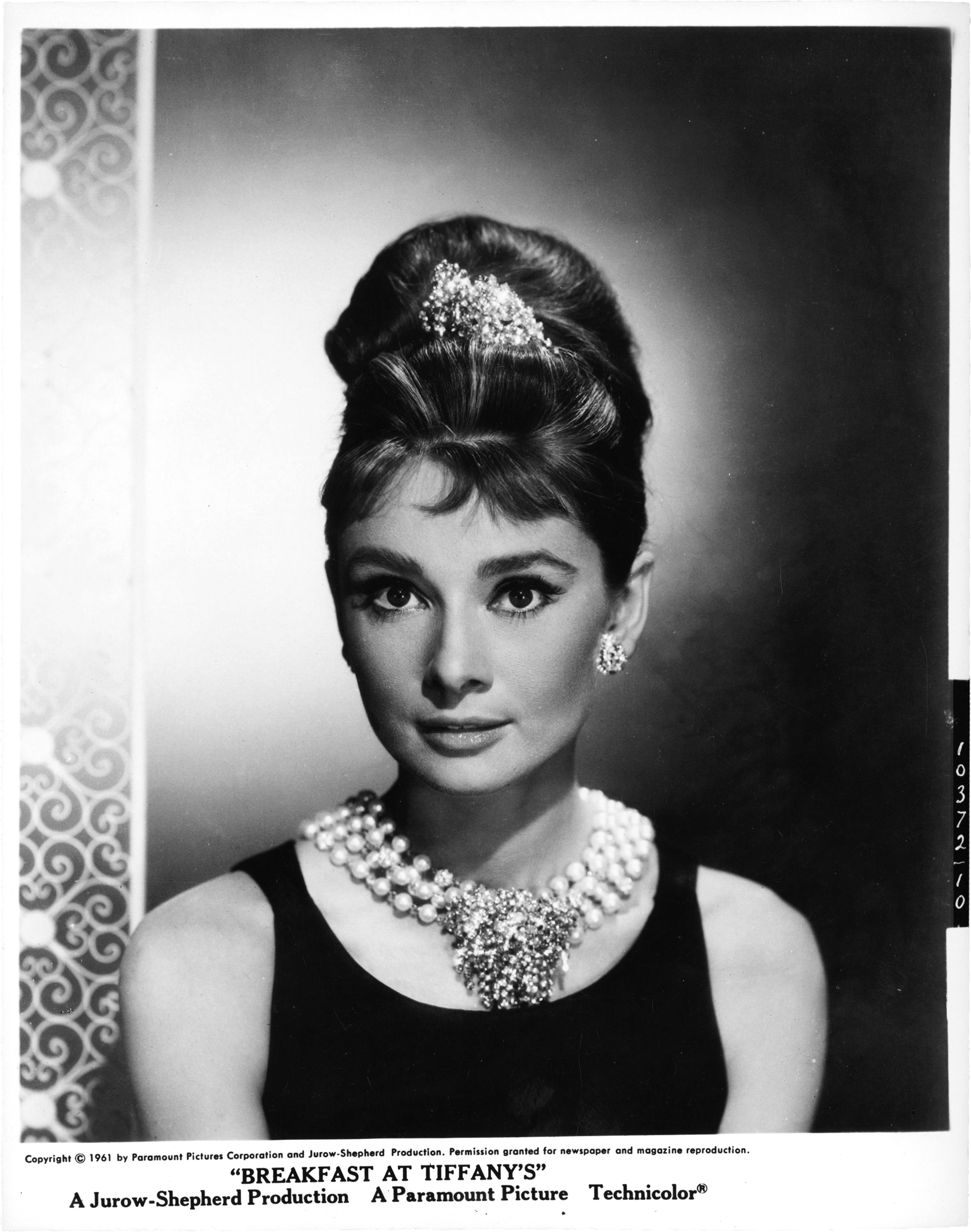
Fireball: Carole Lombard and the Mystery of Flight 3 by Robert MatzenThere should be a law that Hollywood stars who are going to die young should only make first-rate pictures. Take Audrey Hepburn, for example. There was only so much Audrey to go around. She reached her zenith in looks and glamour around the time of Breakfast at Tiffany’s, then did Charade and My Fair Lady, and before and after there were some stinkers. I’ll grant you Roman Holiday’s a fine, original picture, Funny Face has its moments, and The Nun’s Story is, well, awesome, but War and Peace, Green Mansions, Paris When It Sizzles, How to Steal a Million—I wish to heck since Audrey had a limited shelf life and moved on to humanitarian work that she had made better career choices.

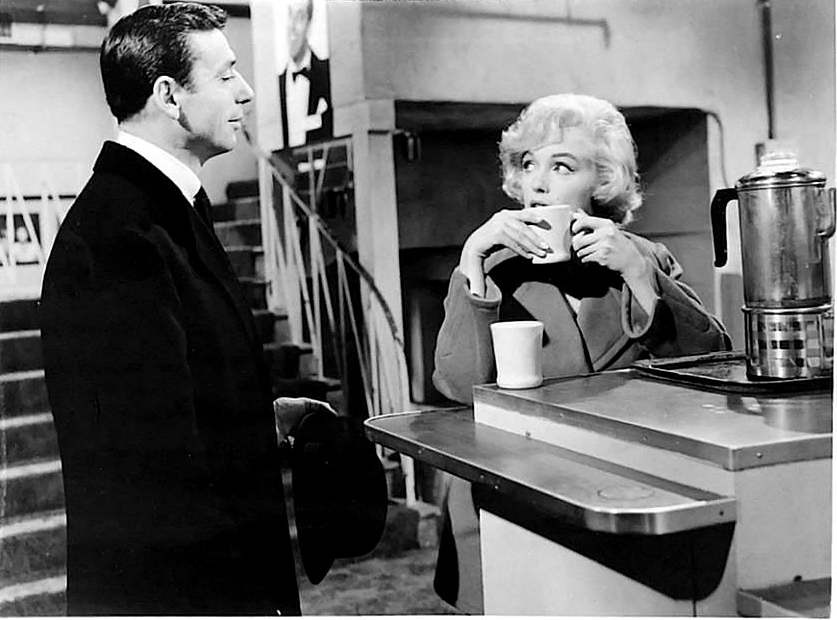
Marilyn Monroe’s another one. I want more of the Marilyn of Niagara, How to Marry a Millionaire, and The Seven Year Itch—I’m not as big a fan of Some Like It Hot as others are—but boy she completed her trajectory fast. I don’t care much about seeing MM play a psycho in Don’t Bother to Knock. River of No Return? Eh. Bus Stop—not to my taste. The Misfits depresses me. I think she looks great in The Prince and the Showgirl and it has some moments, but it’s also a test of the kidneys. And the perfect torture for your worst enemy: tie him or her to a chair and force consumption of Let’s Make Love in its lethal entirety. She’s the perfect example of how limits of even tremendous Hollywood stars can be tested by forcing them into pictures that were just plain bad ideas.

I’m not your biggest fan of Jean Harlow (although I have nothing against her), but the other week Saratoga was on and I tried to sit and enjoy it. I decided that even if Harlow had lived to film every scene in the script, Saratoga would still have been a dog, just like Personal Property had been a dog. It makes me wonder if Harlow wouldn’t have followed Joan Crawford into the MGM doghouse with another bad picture or two the likes of Saratoga.

Fireball: Carole Lombard and the Mystery of Flight 3 by Robert Matzen

So let me see if I have this straight, Mr. Montand. I’m Marilyn Monroe, and you’re getting more screen time than me in this picture?

Carole Lombard made some pictures that are hard to watch, particularly earlier in her career, but Fools for Scandal, Vigil in the Night, and They Knew What They Wanted? Ouch.

Do you ever do that? Do you ever sit consuming a bad picture by a big Hollywood star and wish for better? Errol Flynn was the perfect screen swashbuckler but made very few good ones. I watch him forced to go through the paces saddled with that hellacious Against All Flags script and before long I’m ranting at the screen. Earlier today I caught a few moments of his Civil War western Santa Fe Trail and it was a few moments too many. Some time back I went through all the production notes on this one and even as he toiled on it day by day, Flynn knew it stank. He was a cranky man making Santa Fe Trail and for good reason.

It’s the flip side of Golden Age Hollywood: stars needed vehicles, needed to have their faces out there with three, four new pictures a year, many or most of them forgettable and some downright painful because there just weren’t enough good scripts and good directors to go around.

Clark Gable may have been the King of Hollywood back in the day, but take away It Happened One Night and Gone With the Wind, and what do you have? Some decent pictures and many more iffy ones.

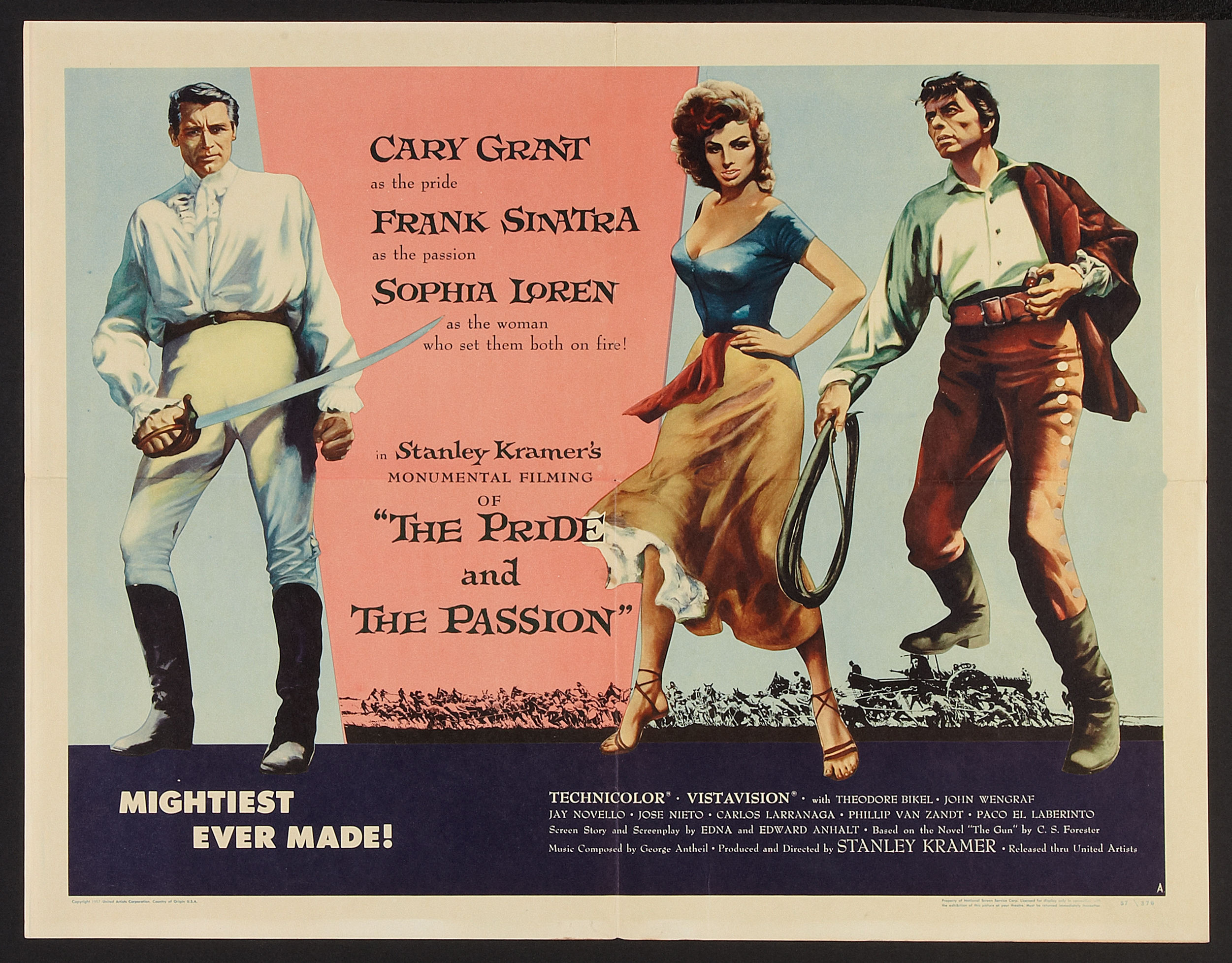
We think of Cary Grant as a hit maker but man did he foul off lots of pitches in the 1950s. For every To Catch a Thief and North by Northwest there was a Crisis, Room for One More, Kiss Them for Me, and The Pride and the Passion. I mean, he’s Cary Grant for crying out loud! Give him better material!

Fireball: Carole Lombard and the Mystery of Flight 3 by Robert Matzen

The movie posters for The Pride and the Passion should have been warning enough.

My beloved Marx Brothers may be the best example of all. After five stout Paramount comedies in as many years, the boys moved to MGM and died a lingering death. Somehow their funny bones never got packed and stayed back in the soundstages on Melrose. What a tragedy! Such great talent wasted as they ran out of motivation in the face of flop after flop and suddenly were too old and didn’t care anymore.

Am I the only one who wishes that all those unique talents living in their unique times had been better taken care of?

A Gallant Blade

How can we go on without Christopher Lee? I mean, seriously, HOW?? What a comforting, menacing, horrific presence in our lives, our entire lives, no matter when, dear reader, you were born. Sir Christopher Lee was here before you, towering taller, employing that baritone, tasting the blood of virgins, and wielding a sword deemed inferior only by unkind scriptwriters.

His Frankenstein was a grotesque rethinking of what had been done by Karloff.

His Mummy was precursor to the modern version seen in Brendan Fraser’s pictures.

His Dracula was a ruthless killer minus the charisma of other title vampires. If you were a damsel, you’d succumb, but there was never any indication you’d enjoy it one tiny little bit.

Fireball: Carole Lombard and the Mystery of Flight 3 by Robert Matzen

Here’s a Dracula not for the faint of heart.

Dabblers in classic cinema might remember Lee going all the way back to Captain Horatio Hornblower in 1952, when he played a Spanish ship’s captain out-dueled by Gregory Peck’s title character. He did lots of television in the 1950s, including four stints on The Errol Flynn Theatre. In one of these episodes, Lee fought a screen duel with Flynn and complained later the host was so careless with the blade that he nearly severed Lee’s little finger. “I have the scar to prove it,” Lee grumbled.

Fireball: Carole Lombard and the Mystery of Flight 3 by Robert Matzen

His Mummy woke up really horny (and tall for an Egyptian), but with complexion problems.

I take umbrage at obit writers who last week said Lee was an unknown when he landed Curse of Frankenstein in 1957. The hell he was! He was already an accomplished workingman’s actor; his Frankie was a soulful victim stitched together by a madman. Hammer would use Lee in an astonishing variety of vehicles for the next 20 years, not only as Count Dracula but also as as Kharis, a linebacker-style Mummy; as Rasputin the maddest of Russian monks; as fiendish harem-building Fu Manchu; and as an assortment of cops, professors, pirates, and mayhem-makers.

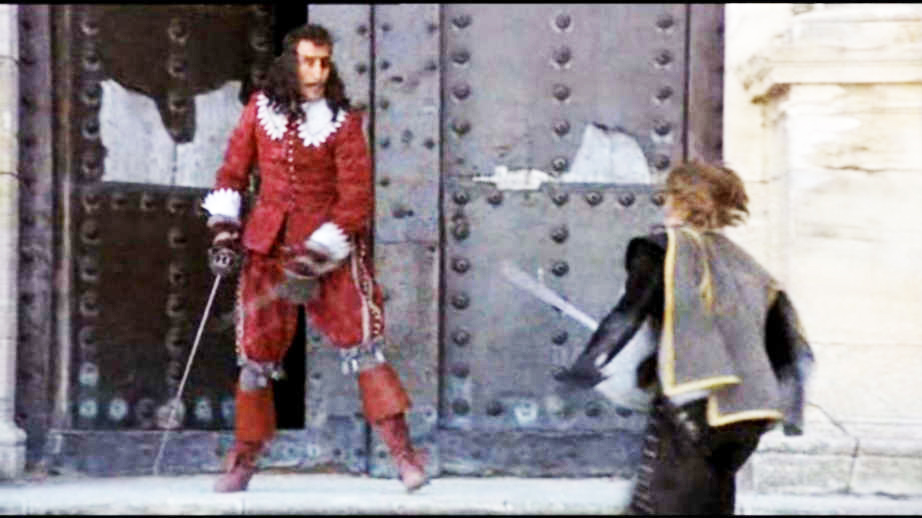
For me, Sir Christopher will always be Count Rochefort, the one-eyed nemesis of D’Artagnan in the 1973 version of The Three Musketeers and its sequels, The Four Musketeers and Return of the Musketeers. You’re not supposed to root for the bad guy but I couldn’t help it. At one point all-powerful Cardinal Richelieu says, “Do you fear me, Rochefort?” To which our anti-hero says, “I … fear you, Eminence.” And can’t resist adding, “I also hate you.” And the Cardinal respected him for saying it!

Fireball: Carole Lombard and the Mystery of Flight 3 by Robert Matzen

As Rochefort, he could match a musketeer’s blade while also serving as implied lover to Milady de Winter.

Lee was already 50+ when he enacted Rochefort but still superbly athletic well beyond what one would expect of a gangly man of six-foot-four. His whole adult life he had been a classic fencer and, like Basil Rathbone, more accomplished at it than the heroes who would defeat him onscreen. For both men this source of intense frustration would be a common theme: I was a better pure athlete and fencer than Errol Flynn/Gregory Peck/ Michael York but the damn script had me losing every time!

Lee never wanted for work. He eased from Hammer B’s to three-nippled Scaramanga in the James Bond picture The Man with the Golden Gun when that franchise was still huge. Then he returned to dozens of B-level film, TV, and audio roles for the next 30 years until his rebirth in not one but two of the greatest blockbuster cinema series of all time, Lord of the Rings and Star Wars. I loved seeing Lee literally mop the floor with goody-two-shoes Gandalf just as I delighted in his slicing and dicing of Jedi Knights in two Star Wars pictures. It’s just a shame his role as Count Dooku was so half-baked, but then wasn’t half-baking the norm with Star Wars from day one? And isn’t that why poor Alec Guinness recoiled in horror every day on a set cluttered with dog people, robots, and swords with no blades? Gentlemen, we did not do it this way making Lawrence of Arabia!

Fireball: Carole Lombard and the Mystery of Flight 3 by Robert Matzen

So here he is, 50+ dueling in the heat of Spain with one eye tied behind his back. If you never thought of it, that messes with your depth perception big-time, like when, oh, swords come ear-high.

In bidding adieu to this magnificent performer, I remind you of a sense of humor that moved him to title his memoir Tall, Dark and Gruesome, and one that very late in life inspired participation in such head-bangin’ songs as The Bloody Verdict of Verden and re-envisioned standards like Silent Night with searing riffs as presented in Christopher Lee: A Heavy Metal Christmas. His final blaze of glory was a different sort of yuletide greeting, Jingle Hell, which he confessed was “naughty,” and did so with a sheepish smile. You will be the one smiling even as you reach for earplugs because this guy knew how to have fun while retaining every ounce of formidable British dignity.

Fireball: Carole Lombard and the Mystery of Flight 3 by Robert Matzen

To heck with sabers, light or otherwise. I’ll just fry you up like bacon.

The loss of Christopher Lee is really all about me and my problem with the very natural state-of-being called death. I explored its mysteries at length in Fireball trying to figure things out, but I can’t say I’ve gotten anywhere yet. All I know at this point is that Christopher Lee is gone from this world, and I don’t know what to do without him.

The Good, the Bad, and the (so) Ugly (it’s GREAT)

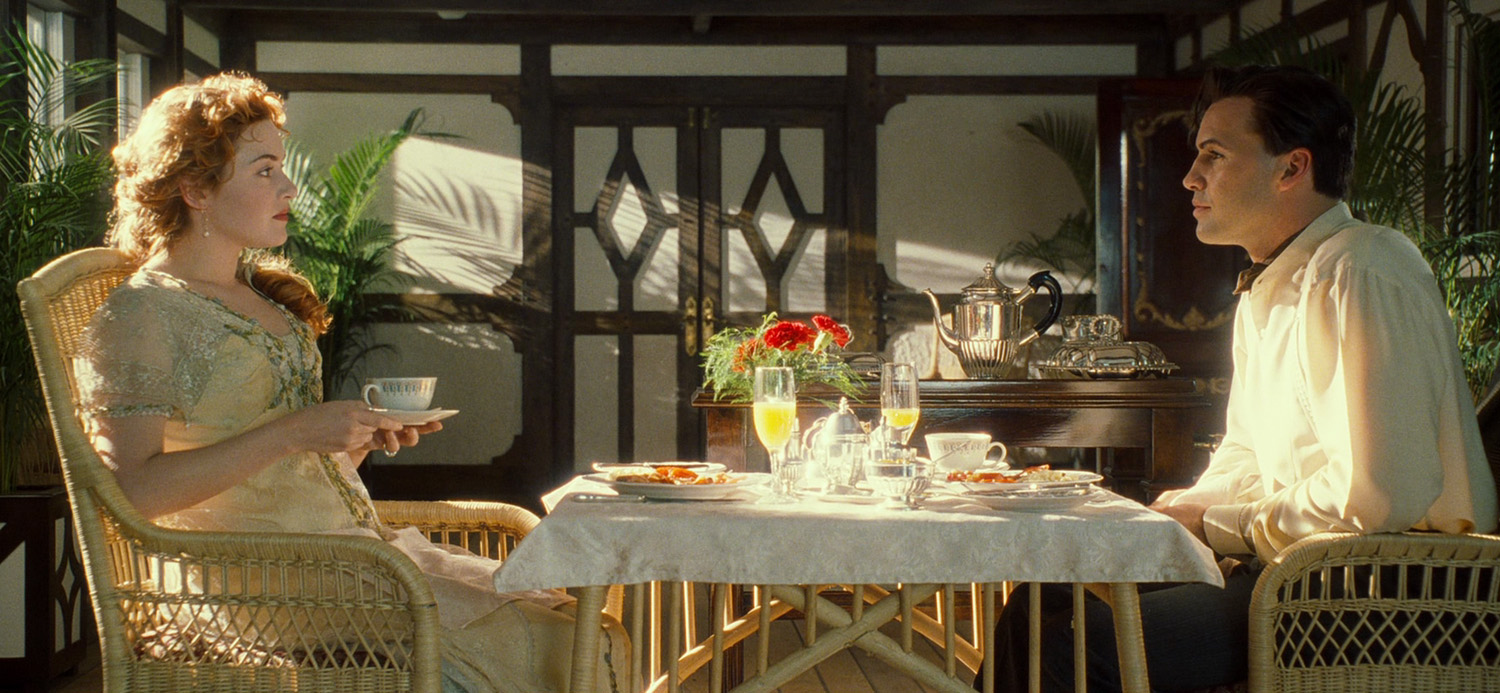
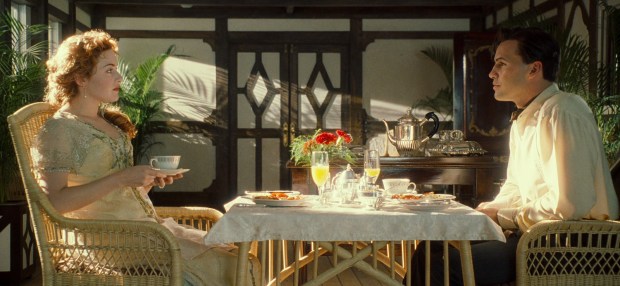
You know those pictures that are so good in places it’s like sex and so bad in places it’s irresistible? The best example I can think of is Titanic. There are moments in Titanic that are so damn good and moments that are so damn bad. Those match dissolves from underwater wreck Titanic to 1912 Titanic and back again are spellbinding. Almost every scene with Gloria Stuart pops because she makes the stereotypical doddering old-woman canny and unpredictable. These things are on the one hand. On the other is Billy Zane, an otherwise fine actor who stumbles through Titanic trying to figure out how to play rich-boy Cal. He’s so bad he’s mesmerizing! David Warner as Cal’s sadistic butler is right up there in awfulness as a walking, talking bad-guy stereotype. The bottom line for me is picture-making on a grand scale and the vision of one driven man—a man who sometimes bites off more than he can chew. But I admire the fact that James Cameron swung for the fences just as hard as Selznick did with Gone With the Wind. And hit a box-office home run, just like Selznick.
Billy Zane Titanic

Kate Winslet and Billy Zane in Titanic. In a moment he will grow melodramatic and sweep the table clean, ruining many dishes in an otherwise peaceful moment.

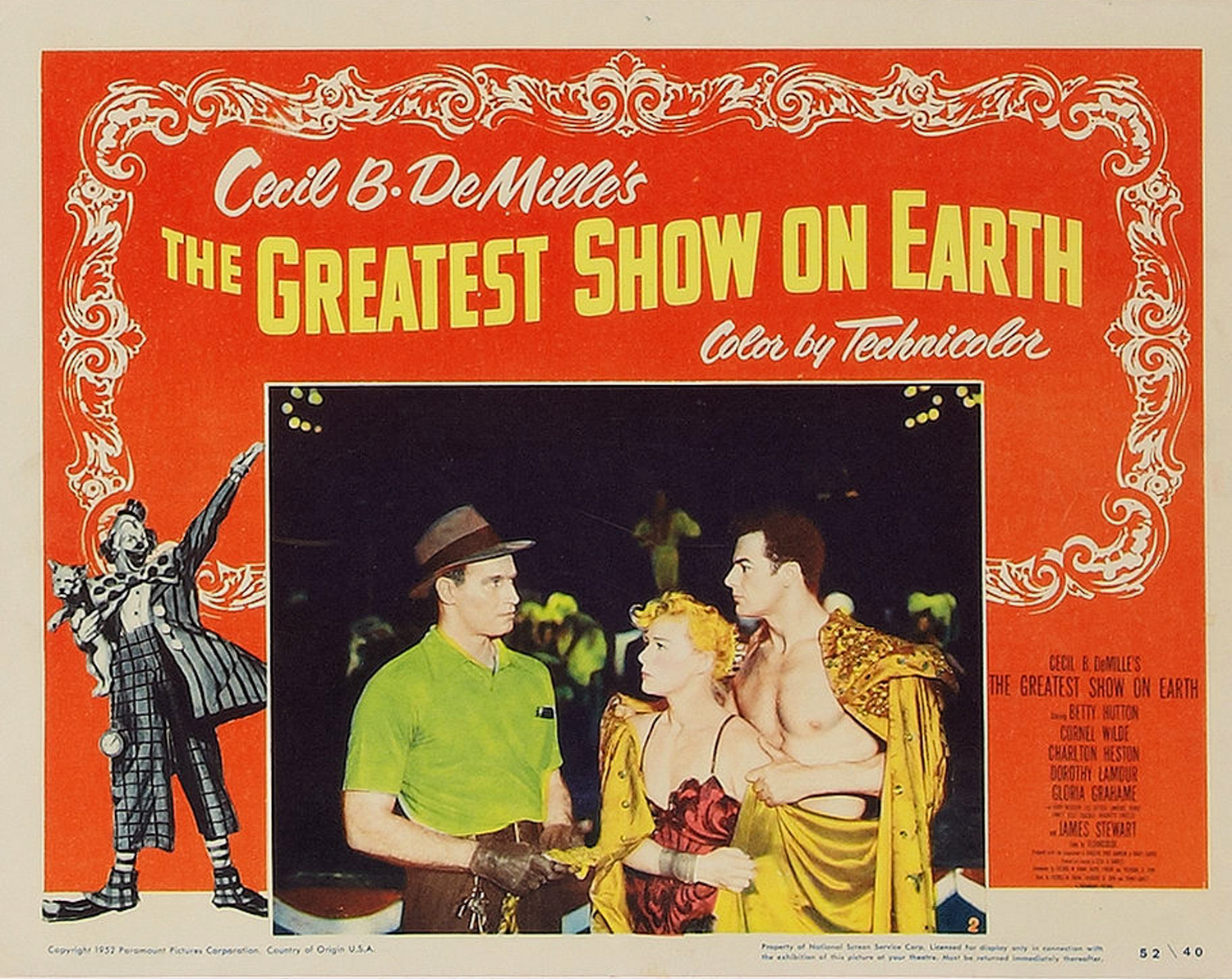
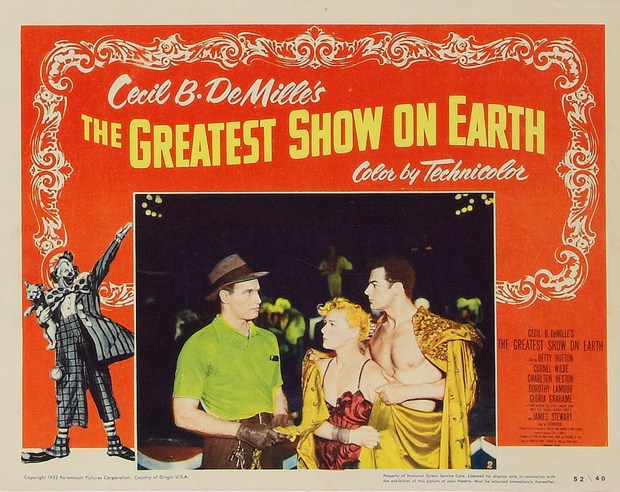
There’s another motion picture like this for me. The Greatest Show on Earth, Cecil B. DeMille’s homage to all things circus. Today, the general consensus is that clowns are creepy—why America didn’t realize this a hundred years earlier, I don’t know. But once upon a time the circus represented an alternative lifestyle and huge entertainment every time it hit town. I never had any interest in the circus. I went one time as a little kid, Cole Brothers I think, with a big top, trapeze artists, clowns, all the rest of it. The only reason I went was they had a contest for coloring the clown and I stayed inside the lines and got a free ticket. Come to think of it, I tried cotton candy for the first time at that circus and haven’t had it since. Even at age seven I knew cotton candy to be too messy for a Virgo.

Anyway, I’m no circus freak, but you can sign me up for DeMille’s bigtop anytime. There’s a terrific documentary on DeMille here—check it out sometime to see the ultimate showman/filmmaker. And here’s the incredible trailer for The Greatest Show on Earth. The hardest thing for me to believe is that C.B. ever died! This larger-than-life powerhouse human and Hollywood mastermind of not one but two versions of The Ten Commandments up and died! Ceased to be! I’m sure he’s as surprised as the rest of us at this revolting man-bites-dog turn of events because people like Cecil B. DeMille should get some sort of exemption from human decline and just go on doing brilliant things. I guess the perception of DeMille as an immortal deity is enhanced by his growling narration on his pictures, Grandfather telling us a five-million-dollar bedtime story, full of surreal spectacle filling the screen long before C.G., along curvaceous, bejeweled women and noble, or hateful, or lustful men. If you watch a DeMille picture, that gravel voice stays with you, or it does me, and suddenly C.B. is narrating my drive to work “as the brawny hills of Pittsburgh shake off their night’s peaceful slumber and a restless giant awakens into the orangish hues of dawn.” DeMille’s brilliance gets in your head, I’m telling you. Come to think of it, he made a picture about early Pittsburgh called Unconquered that, as a colonial historian, made me roll over in my grave, and I’m not even dead yet.
Demille Greatest Show on Earth

Charlton Heston’s Brad Braden may be jealous of the way the Great Sebastian is carrying on with Holly but it’s hard to tell because Heston just comes off as nuts.

So yes, C.B. was brilliant, but with qualifications. Even by 1952 standards The Greatest Show on Earth was nailed as a big-old can of corny nonsense, which audiences ate up, making Greatest Show a box-office smash, winner of the Best Picture Academy Award, and generator of imitations for a decade to come. Greatest Show proved to have legs through re-releases in 1960 and 1967, and Steven Spielberg claims it as the first picture he ever saw, age 4—a picture that changed the history of entertainment. He says as a filmmaker, and with glee, “I lost my cherry to Cecil B. DeMille!”

When I learned Greatest Show was playing on Retro the other night I knew I was a goner, and the moment the music began, a swarm of goosebumps consumed me. I’ve got ‘em again just thinking about it. C.B. had me in his grip and didn’t release me until 2.5 hours later when heroic Holly sang the title tune and survivors of the spectacular train wreck lured townspeople to “come to the circus – the greatest show on earth!” The show must go on after all. Goosebumps.
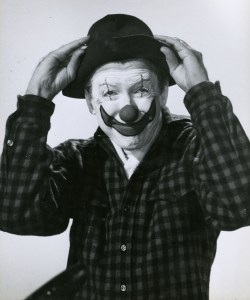
James Jimmy Stewart in The Greatest Show on Earth

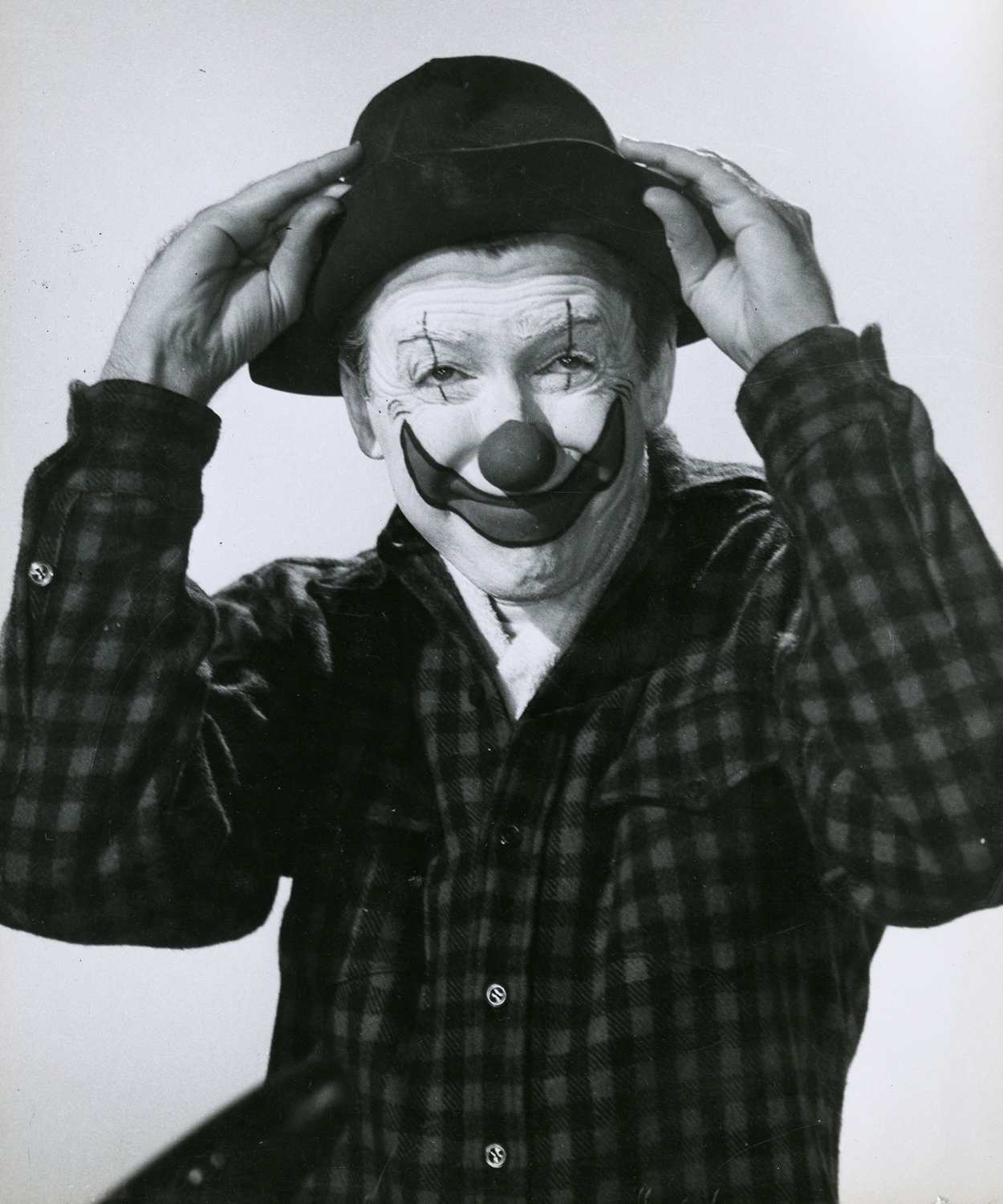
James Stewart as Buttons, the only crown I never thought was a creepy killer who would murder me in my sleep.

Of particular interest at this point in my life is James Stewart’s role of a mercy-killer on the run hiding in the circus as a clown who never takes off his makeup. It only sounds ridiculous because it is, but watch the picture and tell me it doesn’t work because Stewart brings to the role quiet wisdom, quiet vulnerability that pays off when he saves the circus boss’s life in the last reel.

Charlton Heston is that circus boss, Brad Braden, and he’s spectacularly over the top; practically the blueprint for Billy Zane. Throughout the 1950s Heston went from zero to Moses in a second; didn’t matter who he was playing, whether he was fighting ants in the jungle or pharaoh in Egypt or the British at New Orleans. He played it BIG with a capital BIG, bellowing his love scenes with fragile Eleanor Parker as surely as he bellowed fire and brimstone at gold-plated Ramses II.

All the women in the circus are in love with Brad, which says a lot about circus folk. Betty Hutton headlines as aerialist Holly, but Dorothy Lamour gets a lot of screen time as Phyllis the “iron jaw” and so does Gloria Grahame as Angel the elephant girl. They’re all sexy in different ways, and why they want Brad at all is beyond me. I have to wonder if C.B. had some issues because his heroines tend to be, well, a certain type. Usually the Paulette Goddard, Hedy Lamarr, Ann Baxter, Dorothy Lamour type, mostly brunettes and some of them bad girls. Betty Hutton was something of a lightning rod as a personality and most people find her icky, but I’m sorry, in this picture, she’s hot too.
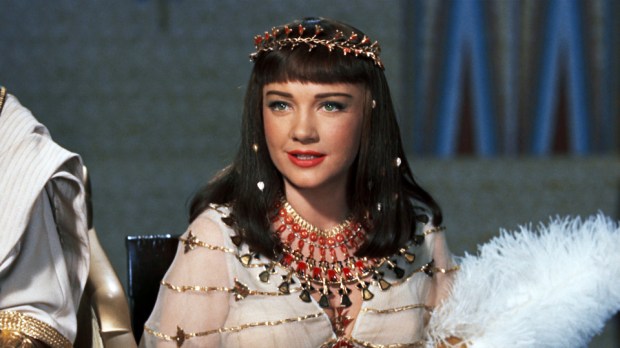
Anne Baxter in The Ten Commandments

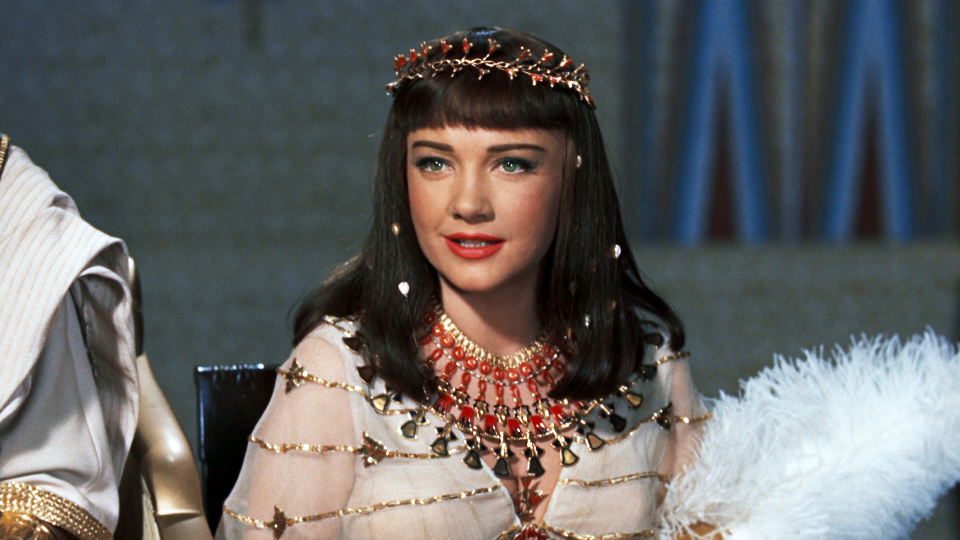
Prototypical DeMille girl Anne Baxter in The Ten Commandments. Sign me up.

In fact I’m tempted to say that Betty Hutton steals Greatest Show, but how can I think that when James Stewart’s already stolen it? But wait, no he hasn’t. Cornel Wilde steals the show as the flamboyant French trapeze artist the Great Sebastian, swashbuckling his way through the picture just as he did in his other title that year, Sons of the Musketeers. Wilde owns the screen every minute he’s on it; a performance that’s wild all right. The whole picture is wild—we don’t believe any of it as something that could ever really happen, but who cares? These are irresistible people intensely interested in what they’re doing, both the characters on screen and the people playing them.

Because of the Stewart connection, I spent half a day going through DeMille’s personal Greatest Show production files at BYU (thank you, Jim D’Arc, for making me aware of them). What a giant undertaking C.B.’s circus epic was. DeMille was intimately involved in every detail, every act coming out of the woodwork begging to appear, every old character actor lobbying to play the ringmaster. DeMille’s right-hand man was associate producer Henry Wilcoxon, C.B.’s most dependable actor for decades and one helluva behind-the-scenes presence judging from the letters and memos. Some tidbits from the papers:

Betty Hutton spent weeks learning trapeze work and did many of her own stunts in the picture. It’s a tribute to her athleticism that not once does she look uncoordinated up there. In fact, she goes out of her way to make sure we see her—yes that’s her—over and over so audiences knew it was Hutton and not a stunt woman hanging upside down 40 feet off the ground.

Cornel Wilde was thrilled to play Sebastian and after the run of the picture kept sending C.B. letters thanking him for the opportunity. He signed them not Cornel but Sebastian. Wilde’s biceps and abs are ripped like crazy in this picture but, unlike Betty Hutton, he’s doubled extensively in the aerial sequences and there are zero shots where Wilde hangs upside down way up there so we know, “Look, it’s me and not a stuntman!” He left the dangerous stuff to the professionals.

Lucille Ball was set to play Angel the elephant girl but withdrew. To me this is a lucky break because Gloria Grahame is about as sexy as the 1950s got and perfect to play a girl who calls every guy “sugar.”

Dorothy Lamour was on the career skids by now and signed for only $2,000 a week when peers like Ball were signed for $3,500.

The mysterious, on-the-lam clown played by Stewart was originally named Koko, but there must have been a real Koko the Clown who put up a stink, so they had to rename Koko and what a pre-pro firestorm this produced! About 40 names were pitched, and there’s no documentation on how they arrived at the final name of “Buttons.”
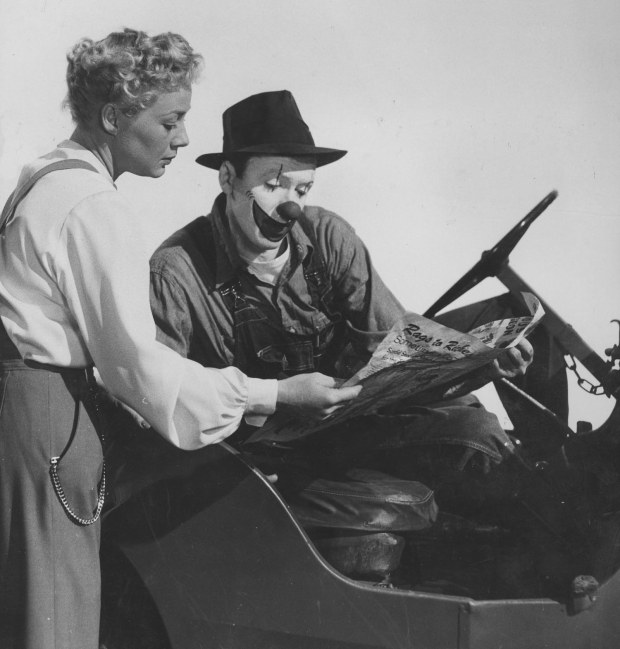
James Jimmy Stewart Betty Hutton in The Greatest Show on Earth

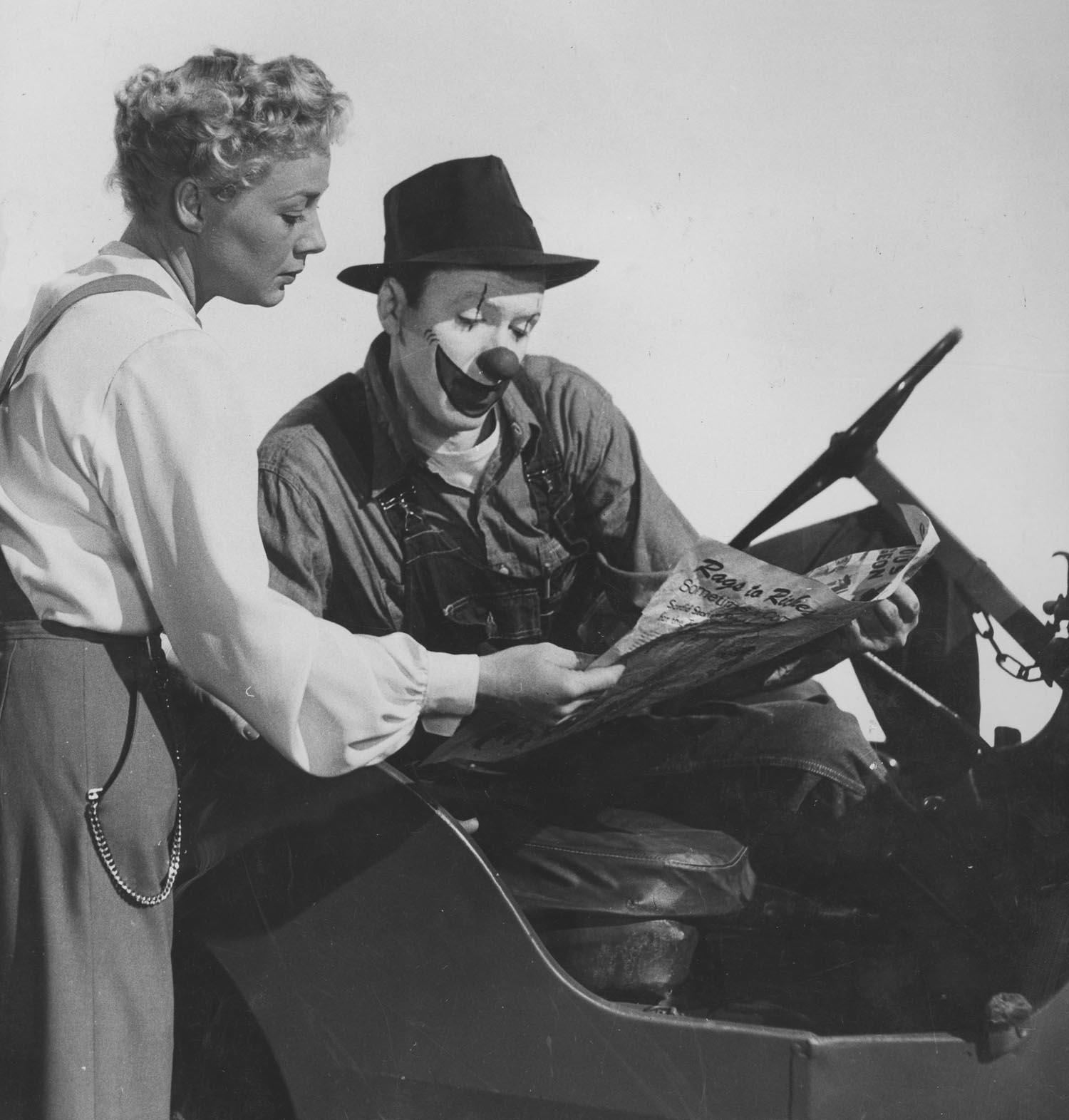
“So Buttons, look at this story about a doctor who mercy-kills the girl he loves. Isn’t it a funny coincidence how you go around all morose talking about killing the thing you love? Why, they even talk about killing the thing you love in this article, by sheer coincidence. And, by the way, how come you never take off your clown makeup?”

Stewart didn’t audition for the role of Buttons. He just cabled DeMille and said if you’re looking for a clown on the run, how about if I play him? And C.B. gave him the part on the spot. It’s another of those offbeat, unresolved-issues characters that Stewart went after in the 1950s in the wake of his experiences in the war. In many of his pictures of this period his character had a streak of unspeakable pain or unspeakable violence in him—even good-guy George Bailey who let loose, ripped his living room and terrorized his family in It’s a Wonderful Life. There’s some evidence that Stewart cracked up on one of his missions in the Eighth Air Force, but that’s a story for a major book and feature motion picture down the line.

Stewart also had a “pregnancy clause” built into his contract because his wife was expecting (twins, as it turned out), and he stated he would not report for work until after the delivery.

I can’t imagine any of you under 40 would ever take the time to sit through The Greatest Show on Earth with all the computer-generated thrill shows out there today, Furious 7 and Avengers and all that, but when you run out of titles on your Netflix list and if you settle on Greatest Show, please, I’m begging you, let me know if it gave you goosebumps like it did, and still does—always does—give them to me.
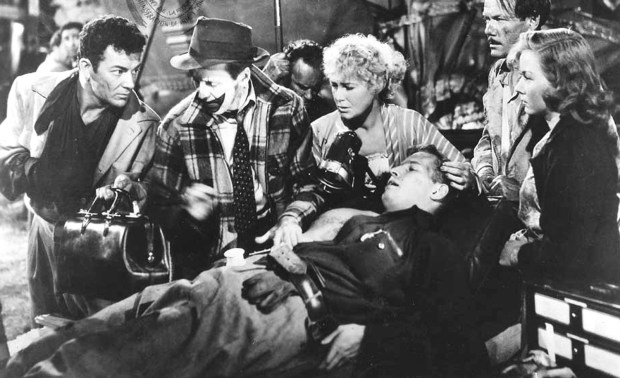
James Jimmy Stewart in The Greatest Show on Earth

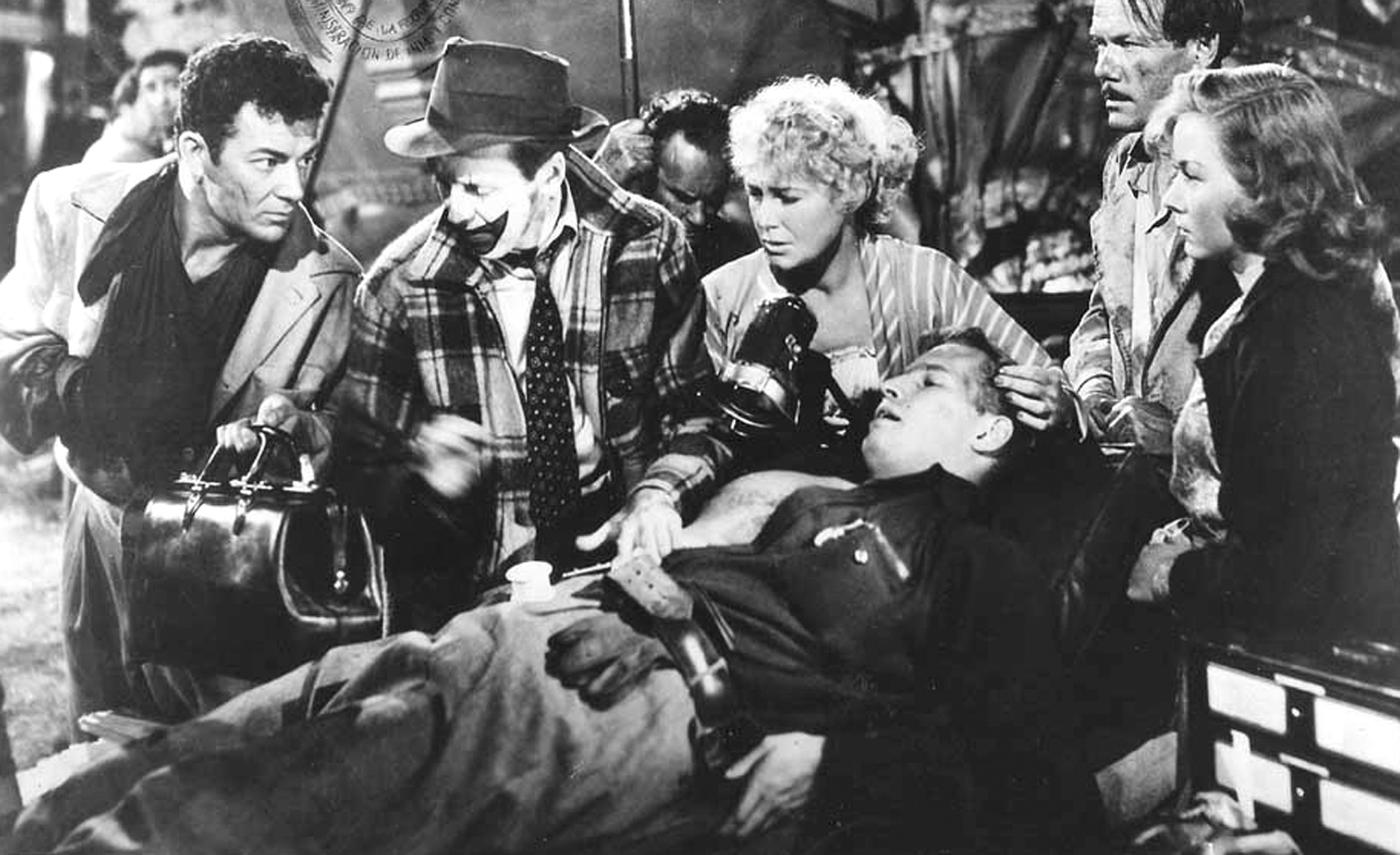
After the circus train crashes in spectacular fashion (move over, The Fugitive), Buttons reveals himself to be the doctor who has killed the thing he loves so he can save Brad so Brad can live happily ever with Holly. In the meantime, being free of Holly allows Sebastian (left) the chance to hook up with Angel (right).

When I Grow Up…

Rudy Behlmer…I want to be Rudy Behlmer. I don’t think it’s going to happen, but I can dream, can’t I? If you’re a fan of classic film, Rudy’s work has likely touched you in some way. If you have seen Ken Murray’s Hollywood Without Makeup, which plays often on Turner Classic Movies, then you’ve watched a program directed by Rudy Behlmer. If you have read Memo from David O. Selznick or Memo from Darryl F. Zanuck, just two of his many books, then you’ve been enriched by Rudy Behlmer’s scholarship. If you have explored the bonus features of DVDs like The Adventures of Robin Hood or King Kong or dozens of others, you’ve been enlightened by Rudy’s crazy knowledge of the production of classic Hollywood pictures. Rudy is the guy who took us Inside Warner Bros. where he sifted through those terrific inter-office memos that circulated during the production of Warner classics and gave us glimpses of the off-camera dramas. And, of course, Rudy was co-author along with Tony Thomas and Clifford McCarty of The Films of Errol Flynn, the 1969 Citadel volume that put Flynn’s career in perspective. Just this week I was enjoying the BYU CD original score of Dodge City—Rudy wrote the liner notes—70 pages worth!

I have asked for Rudy’s help on a number of occasions and at first it wasn’t easy because the man’s a legend and has an imperious quality about him. He has known and worked with the greats. Every time he answered one of my questions (or 10 of my questions) or reviewed a piece of my writing, I felt honored that he thought my work was worthy of his time and expertise.

No, I will never be Rudy Behlmer when I grow up; there’s only one, and I appreciate his love for Golden Hollywood. I respect his desire to protect the memories of those who made the pictures. I revel in his body of works that have benefited those of us who care about the studios and the stars. If there were a Mount Rushmore of film scholarship, he’d be on it.

I’m curious to know what your favorite Rudy Behlmer work is. If you look him up on IMDB you won’t believe how many credits he has in media. He’s one guy that we just haven’t taken time to appreciate and thank for a lifetime of service to classic film.

Lion Tamers

It seemed like a good idea while in L.A. last week to visit the Metro-Goldwyn-Mayer lot in Culver City since my new subject, James Stewart, worked on the lot for the first five years of his career and won an Academy Award while there. I have one of those vivid imaginations you hear about now and again and spent my time rubbing shoulders with Gable, Crawford, Turner, Garland, and Munchkins as a group of us roamed the streets of MGM.

Oh, by the way, if you take the MGM tour, be prepared for a couple of shocks. They begin by taking you in a room and showing you a short film about the history of the lot, but after the first five or six three-second clips, it dawns on you: every shot you’re seeing is from a Columbia picture—you know, It Happened One Night, On the Waterfront, From Here to Eternity—and Columbia pictures weren’t shot here at all but rather on Gower Street in Hollywood, miles and miles away. It’s sort of…sacrilegious to do what they’re doing on that tour, even though Columbia bought out what was left of MGM in 1989 and then the new studio became Sony Pictures, and the tour begins in the big Sony Entertainment building and ends there as well.

So, you’re in the middle of this short film and feeling pretty enraged about the fact that you’re watching a Columbia reel on the MGM lot, and then the picture veers into an oh-by-the-way explanation of the fact you are actually on the MGM lot, which was bought by Columbia, and so the clips show some Gable and some Munchkins for a minute or so, but it’s pretty short shrift for Leo the Lion, Mr. Mayer, Mr. Thalberg, and Company.

Yeah, yeah, so let me out of this damn little room with these grinning tourists—I want to see the lot! I was skeptical of John, our tour guide, as he led 15 or 18 of us across the street and onto real studio property, and I was on him right away wanting to know if we were going to learn about more than production of the TV series, The Goldbergs, which he was already pushing, and he assured that, oh yes, the two-hour tour would also cover the MGM of olden days.

We stopped at a building, a grand art deco building, and I assailed John again with, “Is this the MGM administration building?” and he said patiently, as if I were, you know, dim, “This hasn’t been MGM for a long time.” I redirected: “Is this the MGM administration building of olden days?” and he said we were going to talk about that right then.

Mary said out the side of her mouth at this point, “He knows you’re trouble and you’re going to get kicked out of here,” as if I get the boot from places frequently when it really only happens once in a while, and always because I’m misunderstood.

Fireball: Carole Lombard and the Mystery of Flight 3 by Robert Matzen

The Thalberg Building, which now has the label above the door, Columbia Pictures. Which is a lot like the flag of Spain flying over the U.S. Capitol. L.B. Mayer’s office was on the third floor.

Turns out we were in front of the Irving Thalberg Building, opened in 1938, which of course begged the question, “So, where were the administrative offices before 1938?” and suddenly John realized he had his hands full. He never did whirl around and ask, “Who the hell are you, anyway, and why are you ruining my tour?” Instead, when I apologized for my umpteenth question he said, “No, no, questions are good. Bring ‘em on,” and it turned out he knew a lot about the old studio and where things were, like the star bungalows and the edit suites and where the writers worked and where Judy Garland went to “star school.” I was impressed with John by the end.

Fireball: Carole Lombard and the Mystery of Flight 3 by Robert Matzen

The MGM lion used in trade papers wasn’t the snarling beast in the studio logo but rather a friendly cartoon guy working tirelessly to improve the bottom line.

Of course, you know about the dissolution of MGM in the 1970s, the selling off of all the props and costumes now nearly priceless, like the million-dollar ruby slippers, and the demolition of the entire backlot where everything from Andy Hardy to Mutiny on the Bounty to Singin’ in the Rain were shot. In other words, a lot of MGM is gone with the wind and has been for decades. But some is still there, and as I roamed the streets among the soundstages, I could see in my mind’s eye Clark Gable walk past dressed in his San Francisco tux; I could see Joan Crawford slink by in a glittering gown. Over there, Eleanor Powell showing miles of leg, and yonder, Carole Lombard skulking about, checking up on the set of Honky Tonk and her husband’s new distraction, Lana Turner. They’re all there among the stucco buildings with chrome accents—baby Jean Harlow, boy genius Irving Thalberg, the three Marx Brothers, Nelson Eddy and Jeanette MacDonald, and yes, long-legged, loping James Stewart, the guy who had no great looks but loads of natural talent that Metro didn’t know what to do with. Jim was winning an Oscar for Leo on the one hand while, on the other hand, they saddled him with wooden Indians like Hedy Lamarr and Paulette Goddard in pictures he didn’t want to make. Suddenly, military service seemed like a good idea, and he flew off and left behind in his propwash the lot on which I now stood.

We visited three soundstages on the tour. First was the music scoring stage, which interested me not because of its perfect acoustics or because John Williams directed the Star Wars scores there, but rather because in the mid 1930s it was used for process shots like the San Francisco earthquake. Then, inevitably, we looked in on the set of The Goldbergs, which John was required to plug yet again. Finally, we visited the set of Jeopardy, which was dark that day but interesting nonetheless. We stood outside the mighty titan, Studio 15, where Metro craftsmen built Munchkinland and Dorothy started down the Yellow Brick Road.

Our final minutes were spent at the gift store where you could buy any number of Columbia souvenirs. It was the final offense, but by then it really didn’t matter because I was outside in the warm California sun, distracted by the ghosts of all those great people surrounding me. People I’ve gotten to know over the years, some of whom have become friends. Now, I stood there catching glimpses of each at home in the mightiest studio of all.

Fireball: Carole Lombard and the Mystery of Flight 3 by Robert Matzen

This is main street on the lot, which runs from the Thalberg Building to the soundstages. The buildings are vintage and once housed offices and the commissary, but the facades are of Sony vintage so the lot can also serve as a working backlot for features and TV shows.

Too Much

Well, it’s happened again. An airliner has crashed into a mountain, this time in the French Alps. Reports indicate that the A320 flying from Barcelona to Dusseldorf descended from 38,000 feet to the impact point at 6,000 over the span of 8 minutes. There may have been a fire on board that incapacitated the pilots. There may have been a failure of one or both engines, with the descent accompanied by automatic warnings chiming in the cockpit and pilots desperate to restart an engine or engines. I’ve sat in various flight simulator cockpits that are used to train airline pilots. It’s chilling when you’re sitting in a simulator on terra firma and warnings begin to sound—it’s a simulator and utterly realistic. Imagine living the experience six miles up. Better yet, don’t imagine it.

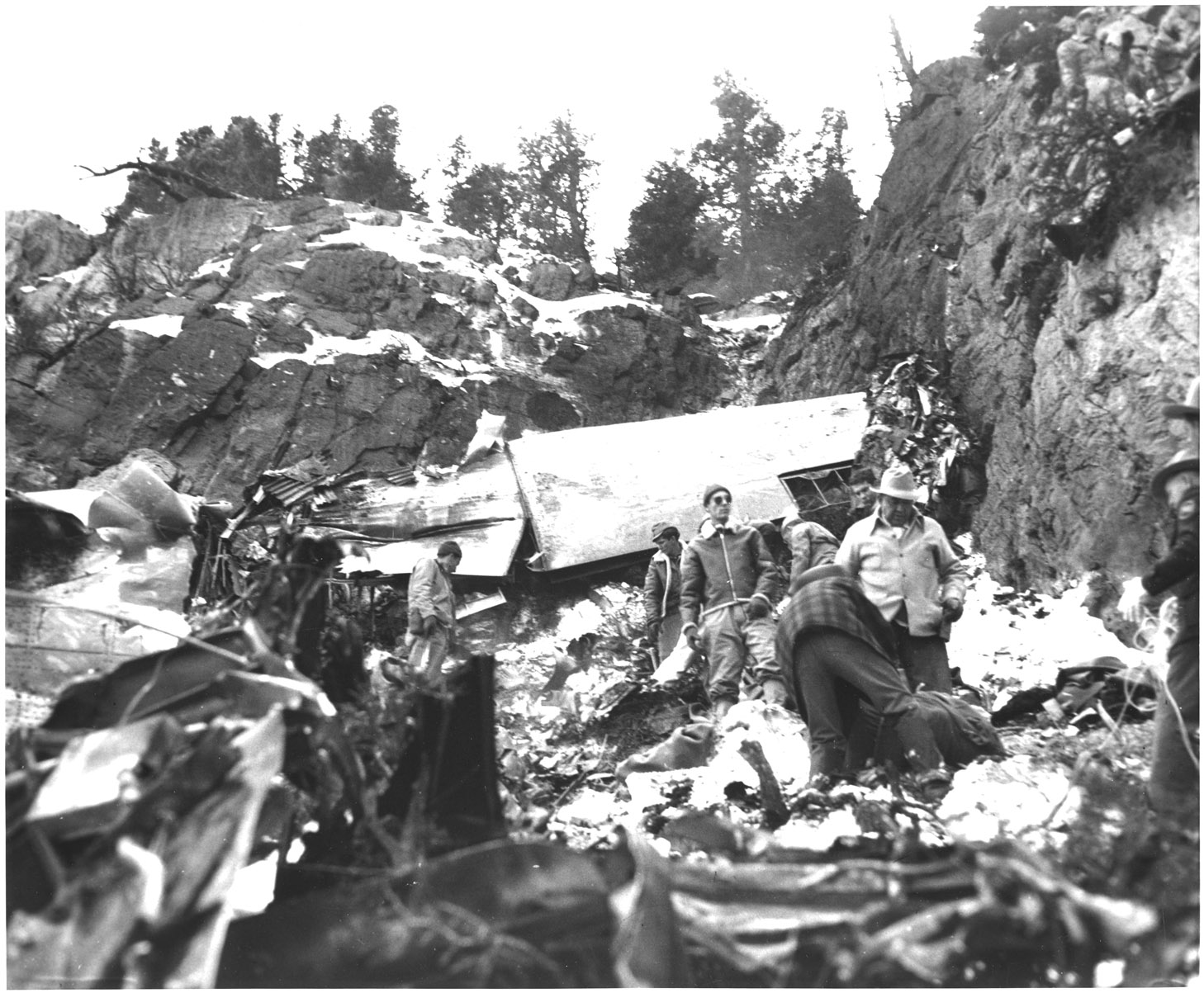
My heart goes out to the crew, the passengers, the families. And my heart goes out to the recovery teams because I was once forced to relive the recovery effort at the crash scene of an airliner—TWA Flight 3 that crashed into Mt. Potosi, Nevada, on January 16, 1942. I undertook this exercise while writing Fireball. Among those lost in that crash was Hollywood actress Carole Lombard. It was “only” a 21-seat, twin-engine DC-3 and there were “only” 22 people on board (19 passengers and a crew of 3) and it hit the mountain at “only” 190 miles per hour versus the 180-seat A320 with 150 that hit at 350 yesterday.

Fireball: Carole Lombard and the Mystery of Flight 3 by Robert Matzen

A plane crashes into a mountain, in this case TWA Flight 3 on January 16, 1942.

The fuselage of a state-of-the-art 1942 DC-3 Sky Club was gleaming aluminum, meaning that when the aircraft struck granite, it exploded and deformed, but large pieces remained. In fact, some of those pieces of twisted aluminum can be seen today on Mt. Potosi. Modern airliners are made of composites that disintegrate on impact, resulting in the bizarre scene in the Alpine landscape, which looks like a litterbug went mad. How many pieces of people and debris are up there? Hundreds of thousands? A million? Each will have to be removed from the site with care because some are human remains and the rest are potential clues to what happened to Germanwings Flight 4U 9525. Perhaps the aircraft’s badly damaged voice recorder and flight data recorder will answer all questions, in which case the jigsaw puzzle of wreckage will still need to be collected and removed. All this will be done by people who are now witnessing sights that are meeting and then far exceeding the human capacity to rationalize and cope.

Previously unpublished and in some cases undiscovered accounts of the recovery effort of TWA Flight 3 were blunt by 1942 standards. A few of the bodies of crash victims were thrown clear of the impact point when the ship blew apart and these remained intact. The rest were put through a literal meat grinder—and then set afire. Imagine being ordered up the mountain on a U.S. Army recovery team or volunteering for the recovery job. Better yet, don’t imagine it. The team of about 30 painstakingly picked up what there was to pick up in the way of human remains for four solid days. In the book I referred to it as a “pudding” composed of flesh, bone, melted snow, and pieces of plane as small as splinters. There were 22 victims, remember. Then the recovery team declared the job finished and departed the scene. An hour later, a TWA man still onsite discovered more human remains and stuffed them into all he had with him—a mail sack. Seventy years later when I visited the site, a human bone turned up. That’s the way it is at such sites.

Fireball: Carole Lombard and the Mystery of Flight 3 by Robert Matzen

The recovery team reaches the scene 36 hours after the crash.

Take that scene times six and you’ve got something akin to what’s facing recovery teams in the Alps as we speak. There isn’t any snow, but there is a vast mountainside and a ravine covered in objects foreign to serene Alpine landscapes. As for people living the recovery, let me put it in perspective this way: One of the Flight 3 civilian volunteers was interviewed more than 40 years later as a wheelchair-bound old man and said in something akin to bewilderment, “I still see it in my dreams sometimes.”

More than 300 police officers and a like number of firefighters are up there at present, all of them heroes for doing what they’re doing. Many will get past the task they’re accomplishing right now, but none will forget it. They’ll keep seeing it in their dreams.