fireball carole lombard

The Year of Fireball

Fireball: Carole Lombard and the Mystery of Flight 3 by Robert Matzen dust jacketI’ve told this story often: When I climbed Mt. Potosi with my guide, Jim Boone, on a cold October day, I stood at the site where TWA Flight 3 struck rock cliffs and exploded, and I felt an electric connection with the people who died on January 16, 1942, all 22 of them. It’s easy to feel a connection with Carole Lombard, the movie star that you see in the movies and in thousands of photos on the internet. But I also experienced a direct link to the pilots and stewardess, to Carole’s mother, to her press representative, to a quiet war bride, and to soldiers whose names I didn’t even know at the time. They were all there on the mountainside—I mean vividly there—and they communicated to me that once they had been alive, and they were important, with stories to tell.

I came back from the mountain and started putting their stories together, sitting in my office all alone writing Fireball week after week, month after month, researching Carole Lombard and these people and thinking to myself, Will anybody care? What if nobody cares?

Fireball has been out almost a year now, and there are at least four people who truly don’t care. If you go to Amazon and look at the reviews you will see all four there, with comments like, “interesting to someone who lived during that era, but the author spent too much time writing about people and their lives who were killed on ill fated flight.” Set against this view are tens of thousands of people who eagerly consumed the book and now know the story of how Carole Lombard lived and died. So many readers have said to me, “I didn’t know anything about Carole Lombard when I started.” If they didn’t know Lombard, they probably didn’t know Gable, and none would have known Carole’s mom or Otto Winkler, or pilots Wayne Williams and Morgan Gillette, or stewardess Alice Getz, or Lois Hamilton the Army wife, or soldiers with names like Barham and Nygren and Varsamine.

I knew up on the mountain that this book would be different and not what a reader of Hollywood biography might expect. It’s a mile-a-minute story, so why would I want to pound it into a standard format? These people lived and breathed and so must their story, and so I told it on two parallel tracks: The story of the crash, and the story of the passengers in life. Mostly it’s Carole Lombard’s story of course; she was as memorable a character as lived in the twentieth century, and people want to know about her. They want to know about Clark Gable as well, and the dynamics between Carole and Clark as lovers and spouses. The trick was to weave all the other characters into the story, the people Carole knew and loved, and also the other passengers, the rescuers, and the crash investigators. So many cool, competent, heroic people for one book, and I got to be the first to tell their story.

Fireball: Carole Lombard and the Mystery of Flight 3 by Robert Matzen

Best broadcast media coverage: six TV and three radio appearances in Las Vegas.

I am sitting here on the last day of 2014 looking back at the year of Fireball, a book now in its second printing, feeling such a sense of satisfaction that people do care about this story and these people. I know because I met them at lectures and book signings. I looked into the eyes of veteran television interviewers who couldn’t learn enough about the story; I heard interest in the voices of radio personalities who had invited me on the air. There are so many angles to pitch—Carole Lombard’s trail-blazing career as a liberated woman in Hollywood; the tempestuous love of Carole and Clark; his infidelities and how they contributed to his wife’s death; Otto Winkler’s premonition that he would die on a plane; the mystery of how TWA’s most experienced pilot could steer a perfectly running airplane into a mountainside on a clear night; the fact that all 19 passengers were traveling on government business related to the war; my own trek up the mountain and what it was like to find the last thing I expected: human remains at the crash site after all these years.

Fireball: Carole Lombard and the Mystery of Flight 3 by Robert Matzen

Biggest crowd: more than 130 in Carole Lombard’s hometown of Fort Wayne, Indiana.

It was a fantastic year for Fireball, from the book launch in Santa Monica, California, in January to all those lectures across the country to the featuring of the Fireball trailer at www.bookreels.com just two days ago. Some dude named Pitbull even wrote a song about Fireball. Personally I can’t hear any mention of Carole Lombard in the lyrics, but I guess he liked the book anyway. I’m pretty sure Carole would have liked his song.

I don’t know what 2015 holds, but I’m excited to find out. Happy New Year everybody; may 2015 be a spectacular year for you—a Fireball kind of year.

Nobody Saw It Coming

New Year’s Eve; the year winding down past the last sunset into the quiet and the dark, to the dim glow of holiday lights and the anticipation of New Year’s celebrations ahead. I’m sitting here reflecting on the year past, and figured I would write a column called “The Year of Fireball,” but my friend and colleague Tom Wilson has reminded me that this is the anniversary of two other plane crashes that affected me deeply when they occurred. Pittsburgh Pirates baseball star Roberto Clemente crashed at sea on a charter flight on his way to Nicaragua on December 31, 1972. The other air disaster involved rock ‘n’ roll singer Rick Nelson, who went to his death along with the other members of his band on December 31, 1985, when their plane crashed in Texas.

Fireball: Carole Lombard and the Mystery of Flight 3 by Robert Matzen

Clemente signed this for my sister the day she introduced me to him.

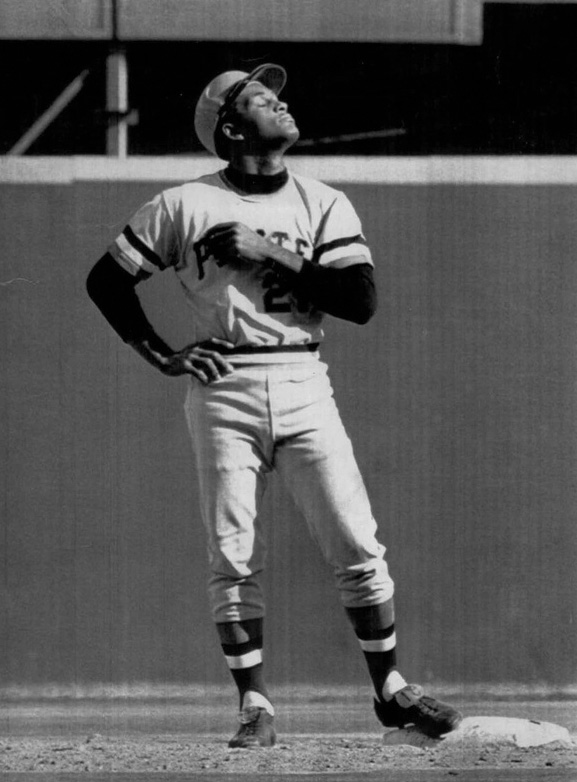
It’s amazing that I hadn’t thought about these anniversaries until Tom mentioned them because I had been such a fan of both of these titans lost on New Year’s Eve. I grew up a bigtime Pirates fan and had met Clemente when I was a kid. He was on a first-name basis with my big sister Janet, and she would take me to Pirates games and we’d sit in the right-field bleachers for day games. It would be deserted out there, just the two of us, and between innings my sister chatted with Clemente. It was that easy to do in the Forbes Field bleachers. As a kid I saw some of those plays that continue to be shown today, plays that carried Clemente into the Baseball Hall of Fame—spectacular catches and rifle throws of a baseball 300 feet to an exact spot. I remember when he got hit number 3,000 right before the 1972 playoffs. For those of you outside our shores or for whom baseball isn’t on the radar, 3,000 is a big round number glorified by baseball fans. If you get that many hits, you are a legend. Well, Clemente was that, plus he had this dignified air about him and went around with his nose held high. He had an ego, no question about it, but he backed it up by being a terrific athlete, a star in two world series, both of which the Pirates won. Most of all he was, to my sister and to me, a quiet, polite guy with a nice sense of humor.

Two days prior to Christmas 1972, Managua, Nicaragua, was devastated by an earthquake. Thirty-eight-year-old Roberto Clemente, a proud Latin American, helped to round up supplies for a relief effort to Nicaragua, and decided to personally supervise the distribution of these supplies to head off pirating by corrupt government officials. Clemente’s plane, a DC-7, took off from Puerto Rico and crashed into the ocean for undetermined reasons—either overloading or mechanical failure or both. His body was never found. I can still remember how it felt to learn of Clemente’s passing on New Year’s Eve—42 years ago tonight. It hit me hard; I still feel it on a personal level.

Fireball: Carole Lombard and the Mystery of Flight 3 by Robert Matzen

Clemente had a perpetually stiff neck and was always stretching it out–the result was a nose usually in the air.

Then there was Rick Nelson, former teenage television star and rock ‘n’ roll singer who for a solid 15 or 20 years reigned as the coolest human on the planet. Listen to his first number-one song, Poor Little Fool, and tell me he wasn’t cool. Check him out in the Howard Hawks picture Rio Bravo and you see a 19 year old who was comfortable in his own skin and loved what he was doing, acting with John Wayne and Dean Martin. Nelson endured the turbulent 1960s and emerged a busy performer who appeared at Madison Square Garden to play his new material but found himself ridiculed by a massive audience expecting teenaged Ricky Nelson. The result was his most famous song, Garden Party. In it, he laments his treatment by that audience but sums up his feelings with, “You can’t please everyone, so ya got to please yourself.”

Fireball: Carole Lombard and the Mystery of Flight 3 by Robert Matzen

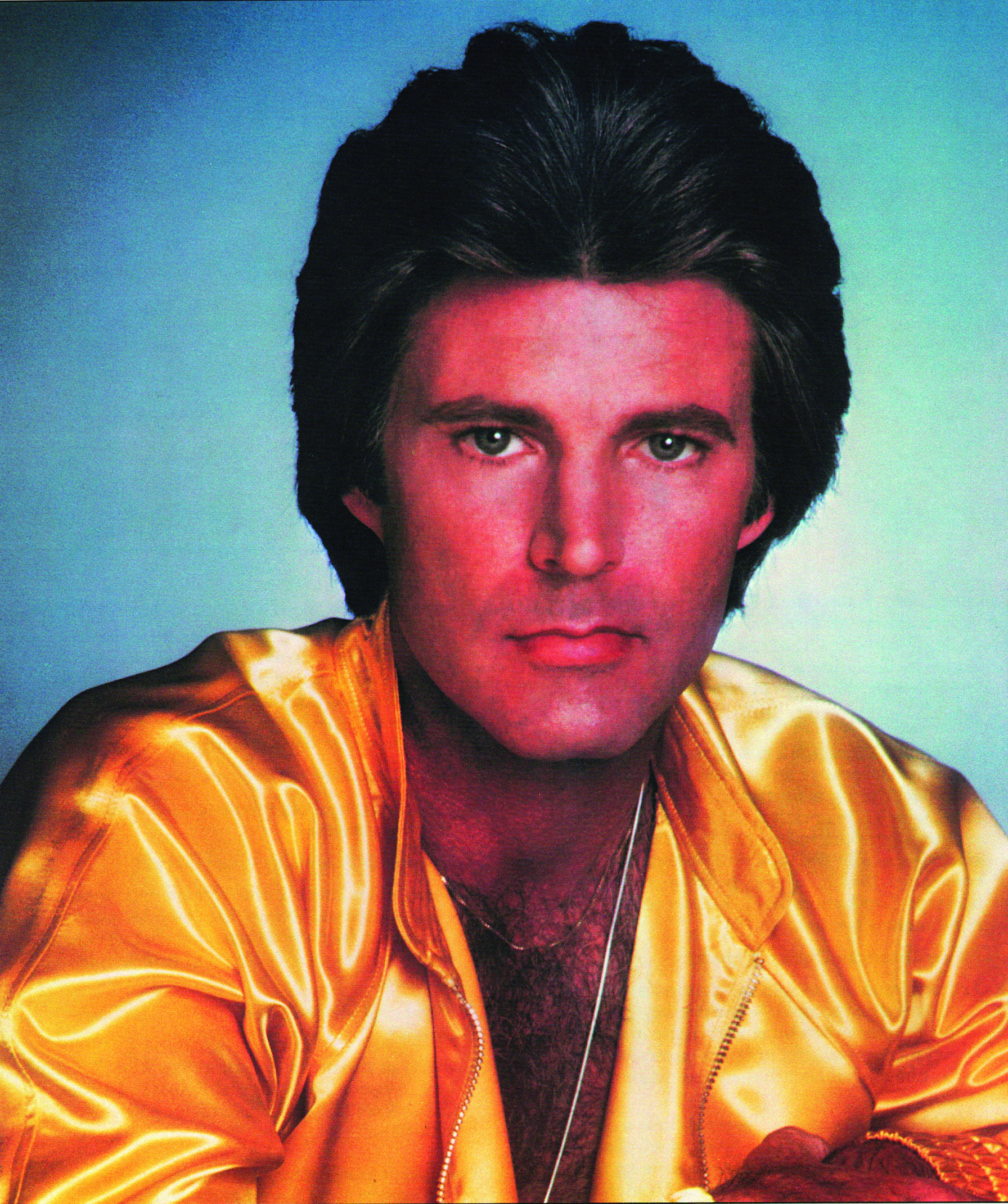
Rick Nelson, still cool at age 40–around the time he purchased Mulholland Farm.

One of the spookier aspects of Rick Nelson was that he moved into Errol Flynn’s aging mountaintop estate, Mulholland Farm. Nelson was a big Flynn fan and expected it to be a blast to live at the Farm, but the place had bad vibes (and possibly a malevolent ghost) and to this day Rick’s children think the place brought their father down. When not touring, Nelson turned recluse at Mulholland. He became obsessed with DC-3s and began building models of them at home. Then he bought one for his band to travel in, and this was the plane that crashed on the last day of December 1985. The DC-3 was unpressurized, just as they were in Carole Lombard’s day, and in winter and at 6,000 feet, the cabin was bone chillingly cold. Nelson and his Stone Canyon Band mates tried to start a portable heater, and a fire erupted. The pilot landed perfectly in a field in De Kalb, Texas, but then hit trees and rough terrain. Rick Nelson, his girlfriend Helen Blair, four other members of the band, and their sound man all died. In 1942 when Carole Lombard and 21 others died on a DC-3, the Douglas plane was gleaming new and utterly reliable. More than 40 years later, the DC-3 had maintained its reputation for reliability, but the one that Nelson bought was at the end of its useful life and little more than a bucket of bolts. His obsession with the plane had contributed to his death at only 45 years of age.

Twenty-nine years ago tonight, Rick Nelson died. I sit here in the quiet and the dark thinking about my brush not with Nelson but with his home, Mulholland Farm. I think about talking to his sons about their dad, and I got to grow close to him that way, hearing the stories from Gunnar and Matthew and others who knew this polite, gentle musical giant. One of those was Leda Carmody, a Rick Nelson fan who met him on many occasions. Leda was instrumental in helping me write the Nelson chapter of Errol Flynn Slept Here, and I can only imagine how she felt 29 years ago tonight. Leda has worked hard to keep Rick Nelson’s memory alive, and she must have done her job well as there are legions of his fans out there to this day.

Tonight, we look ahead to 2015. May it be a prosperous year for all of you out there. But just for a moment I need to pause and take a look back at two great men who left us in their prime, in the same way, on New Year’s Eve when nobody saw it coming.

Fireball: Carole Lombard and the Mystery of Flight 3 by Robert Matzen

First news flash of the death of Rick Nelson crosses the AP wire.

The Many Stops of the Gables


Growing up in Pennsylvania, I would often see signs on old buildings that read, “George Washington slept here.” GW was so famous it mattered where he slept. Similarly, there are places all over the Southwest that claim Clark Gable and Carole Lombard slept there, even though there seems to be no documentation that they ever did.

Owners of the Oatman Hotel in Oatman, Arizona, claim that the Gables spent their honeymoon at the hotel following their March 29, 1939, elopement to nearby Kingman, Arizona. Further, it is claimed that the ghosts of the Gables haunt the hotel, even though evidence shows that Carole and Clark (on a rare day off from Gone With the Wind) were driven to Arizona, got married, and headed straight back to Hollywood in time for a next-morning press conference announcing their union at Carole’s St. Cloud Road home in Bel Air.

Big Barbee Lake in Indiana is another supposed honeymoon location for the movie star duo. Now there was a commute for a Rhett Butler on 24-hours’ leave.

Fireball: Carole Lombard and the Mystery of Flight 3 by Robert Matzen

Indeed, welcome to the many honeymoon spots of Gable and Lombard.

The Ingleside Inn in Palm Springs, California, has also put in a claim as the spot where the lovebirds honeymooned, even though this interlude would have required a desert detour of 240 miles in the wrong direction on a tight timeframe since Clark was using his day off to hitch his bride. I’m not saying that the Gables never stayed at the Ingleside Inn—in fact, I’d be interested to see their names on the register to confirm the stay. It would be great to add this fact to existing scholarship on the pair.

Palm Springs seems to have been quite popular with Mr. and Mrs. G for honeymooning as they are reported to have spent their wedding night at The Willows, an historic Palm Springs inn that was frequented by their close pal, Marion Davies. This one at least has Davies as a legitimate connection to the couple, and Davies was renowned for entertaining early and often. Maybe Carole and Clark went to see her at some point, although I’m not sold it was on their wedding night.

Then there’s the Palm Springs estate that Ma and Pa were supposed to have owned in the Old Las Palmas section that was recently offered for sale at more than $2M. Mind you, this is penny-pinching Clark and Encino ranch-owning Carole that supposedly motored on over to Palm Springs to this posh estate and lived there. Here’s why I’m not buying this one at all:

  • They already had a home and loved its seclusion. They didn’t need to buy an estate in Palm Springs—they already had one in Encino.
  • When they wanted to get away from it all, the Gs went as far away from civilization as possible into wilds so remote that there was no running water and no electricity. To Carole and Clark, the wilderness was escape. Palm Springs wasn’t escape.
  • No one that I’m aware of in their inner circle ever mentioned Palm Springs as being a destination for the Gables. Much later Clark and his last wife Kay would build down the road from Palm Springs in Bermuda Dunes, CA—a vacation home he would enjoy for less than a year before his death.
Fireball: Carole Lombard and the Mystery of Flight 3 by Robert Matzen

Here is the Pioneer Saloon back in the day. Judging by the auto and attire, this shot was taken in the era of Gable’s supposed visit.

I’m reminded of the Pioneer Saloon in Goodsprings, Nevada, where Clark Gable waited out the hours as search parties hunted for his wife’s downed plane. There are cigar burns on the top of the bar that go all the way back to Gable’s dark days at the Pioneer. Hour upon hour of waiting, of not knowing. Clark even fed coffee to rescuers and bought an old prospector false teeth.

There’s only one problem: No evidence supports the legend. None at all. Common sense doesn’t support it either. Gable flew to Las Vegas by Western Air charter in the dead of night and was sequestered by his MGM handlers at the El Rancho Las Vegas Motor Hotel a half hour from Goodsprings. The last place MGM would allow Gable to be was the Pioneer Saloon because that’s where the reporters hung out waiting for definitive word on the fate of Carole Lombard and the 21 others aboard TWA Flight 3. Gable was in shock and unable to interact with anyone, let alone reporters. Yes, Gable was near the Pioneer Saloon because he had to pass by on his way up 99 Mine Road to the base camp; he demanded to be taken to base camp and he was, so he did pass by the Pioneer Saloon, but he didn’t hole up there as much as your imagination tells you that he did. Hell, even I fell for the legend of the Pioneer Saloon when I stopped by. Even I could imagine Gable in here pacing the wood floor. The Pioneer reeks of history and one of its walls is covered with newspaper accounts of the crash and search. I haven’t come out against the Pioneer’s claims up to now for the simple reason that even though this legend isn’t true, it should be true. It’s an utterly tragic, heartbreaking moment in time, even if it never happened.

Fireball: Carole Lombard and the Mystery of Flight 3 by Robert Matzen

The Pioneer Saloon in dusty and historic Goodsprings, Nevada. Right before taking this shot, I raked my leg on a cactus and the next day, climbed Mt. Potosi.

There’s a bottom line here based in fact: After all these decades, the names Clark Gable and Carole Lombard still have drawing power. These two were what Loretta Young called “juicy people” and son of a gun, they’re still juicy today. Somebody on Facebook said this morning, this morning mind you, “They were more in love than any couple I know.” Well, if you can see that from a distance of 70 years, then OK. As the man once said, “When the legend becomes fact, print the legend.” Long ago they printed the legend at the Ingleside Inn, the Willows, the estate in Old Las Palmas, the Oatman Hotel, and the Pioneer Saloon. When I buy a hotel or B&B, the first thing I’m going to do is print the legend again. I don’t know yet which room Carole and Clark stayed in; I’m sure one will seem like them when the time comes.


Thanks to Marina Gray for info on the Palm Springs Gable-Lombard connections and for the lowdown on Big Barbee Lake. Thanks to Larry Selkow for information on the Ingleside Inn, which got me to thinking about the very busy honeymooners.

The Weaver

Fireball: Carole Lombard and the Mystery of Flight 3 by Robert Matzen

Carole Lombard loved the secular side of Christmas, as demonstrated by the number of surviving letters, cards, and notes attached to or referencing various gifts presenting by Carole to friends and acquaintances over the years. Examples can be seen at the fine Carole & Co. web site. Much less is known about her religious beliefs, which was a topic she kept private. A glimpse into Carole’s belief system is found in the poem entitled The Weaver that she wished to have read at her funeral service. I am not a religious person by nature; I would label myself as spiritual, so this column is by no means meant as an endorsement of any religion. The poem, by Grant Colfax Tullar of Bolton, Massachusetts, was abridged in Fireball: Carole Lombard and the Mystery of Flight 3. Many variations exist online and in religious tracts and emblazon many plaques hung on many walls, but this version of The Weaver seems to be the full original. It reads:

My life is but a weaving
Between my Lord and me;
I cannot choose the colors
He worketh steadily.

Oft times He weaveth sorrow
And I, in foolish pride,
Forget He sees the upper,
And I the under side.

Not til the loom is silent
And the shuttles cease to fly,
Shall God unroll the canvas
And explain the reason why.

The dark threads are as needful
In the Weaver’s skillful hand,
As the threads of gold and silver
In the pattern He has planned.

He knows, He loves, He cares,
Nothing this truth can dim.
He gives His very best to those
Who chose to walk with Him.

The mother of a friend of mine, upon reading Fireball last summer, was struck by Tullar’s verse to such an extent that she raved about The Weaver to her husband. When this woman passed on unexpectedly last week, her husband requested the full version of the poem so it could be read at her funeral service. At this sad time, I was struck by the fact that these words chosen by Carole Lombard and read over her casket would now, almost 73 years later, provide comfort to another grieving family.

Carole made no bones about the fact that she was a fatalist. She believed, as she told an interviewer in the 1930s, that, “When your number’s up, your number’s up.” She achieved fame at a time in U.S. history that was dominated by European Protestants—remember, not even a Catholic was elected president of the United States until John Kennedy in 1960. Interviewers of the 1930s expected Carole to deliver quotes reinforcing a Protestant belief in the New Testament, but the profane one would not oblige; she refused to make her religious beliefs public. She would acknowledge a belief in God and then brush aside any further probing. In fact Carole was, like her mother, Elizabeth Peters, of the Baha’i faith, becoming Baha’i in 1938. Confidential Baha’i documentation reveals a spiritual side to the earthy, madcap Lombard that would surprise many, yet her alignment with some of the teachings of Baha’i reflects her nature as a generous person who helped the little guy whether it was a friend down on his or her luck or someone just starting out in the business. She also gained a reputation for promoting freedom of expression as well as a tolerance for a variety of lifestyles—religious and otherwise.

Yes, Christmas was big to Carole Lombard. She took it seriously and spent liberally on presents each year. In the spirit of the fireball herself, I would like to pause on this Christmas Eve and wish every visitor to the site a Happy Holiday season, whatever that may entail for you and your family and friends.
Fireball: Carole Lombard and the Mystery of Flight 3 by Robert Matzen

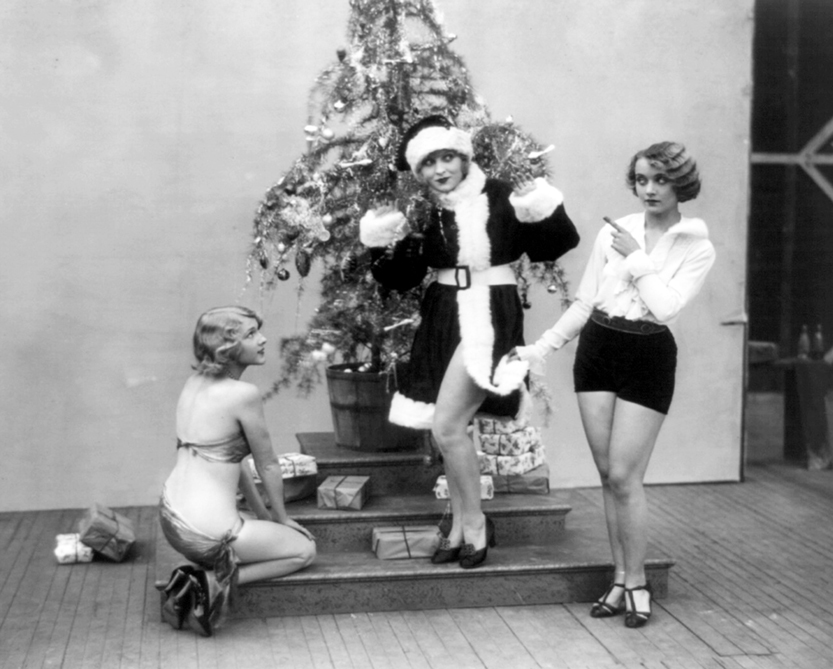
A naughtier Christmas celebration, this one at the Mack Sennett Studio in 1927 with leggy Lombard at right (back in the days when Mack ordered his actresses to have some meat on their bones).

Jubilee!

A couple of anniversaries are worth mentioning amidst this joyous season that has left me bewildered and many around me anything but joyous. Did you know that George Washington died 215 years ago this past Sunday at age 67? Did you know that he died of a sore throat? Everybody has to die of something, but a sore throat is a nasty way to go when you are treated by doctors who have no earthly idea what they are doing.

George Washington was a massive human, six-foot-three and most of it muscle, even at 67. He had been a natural athlete all his life and a splendid horseman. He spent five hours on horseback riding his range the day he got sick, arrived home, went to bed, and the next day was so bad off, apparently from a strep infection, that his doctor “bled” him five pints. You know how when you give blood they take one pint and then tell you to rest and eat well to replenish what you just lost? Well they stole one pint times FIVE from the ill former president, and for good measure they gave him a mercury concoction to make him better. Mercury, as in the stuff that is poison. Among the prexy’s last words were, “I die hard,” which he murmured at the end of 1799 and which may be the understatement of the entire century, uttered just under the wire. So December 14, a couple days ago, marks 215 years since we lost the Greatest American of any generation.

Fireball: Carole Lombard and the Mystery of Flight 3 by Robert Matzen

Among George Washington’s last words in December 1799: “Please tell me Dr. House is on duty this evening.” He wasn’t; the rest is history.

Seventy-five years ago yesterday, the finished version of Gone With the Wind premiered in Atlanta, Georgia. Movie stars imported from Hollywood began arriving two days earlier, on December 13. The picture’s producer arrived on December 14 with cast members Vivien Leigh and Olivia de Havilland via Eastern Airlines DC-3. Later, on an American DC-3 (because he couldn’t stand Selznick), Clark Gable arrived with his bride, Carole Lombard, and the pair of them stole the show from the other VIPs and held the city spellbound for 36 hours.

Fireball: Carole Lombard and the Mystery of Flight 3 by Robert Matzen

The fireball, Carole Lombard, arrives in Atlanta on American Airlines with husband Clark Gable and bandleader Kay Kyser on December 14, 1939.

Many activities took place over three crazy days, which the governor of Georgia declared a state holiday. The teeming throngs of Atlantans that clogged Peachtree Street 300,000 strong have been described in many books. Still, a few pieces of trivia astound me.

Did you know that city schools and public buildings in Atlanta were closed the day of the premiere, a Friday? Imagine any movie commanding such attention in a top-10 U.S. city today.

Did you know that there were still many Confederate Civil War veterans living at the time of the premiere, and when they trooped into the Loew’s Grand Theater from the Old Soldiers’ Home, the crowd erupted in cheers and rebel yells?

Did you know that among the non-cast members attending the Atlanta festivities were World War I fighter ace Eddie Rickenbacker, Wimbledon tennis champ Alice Marble, and Clark Gable’s Oscar-winning It Happened One Night co-star, Claudette Colbert?

Fireball: Carole Lombard and the Mystery of Flight 3 by Robert Matzen

No Gable isn’t falling asleep at the Atlanta premiere of Gone With the Wind. Lombard is whispering something in his ear; probably something snarky.

Did you know that the ticket price in the sold-out, two-thousand-seat theater was $10 but scalpers were getting $200+?

Fireball: Carole Lombard and the Mystery of Flight 3 by Robert Matzen

A charming tike, age 10, who would participate in Gone With the Wind festivities and then change the world.

Did you know that certain cast members were barred from attending the Atlanta festivities at all because of the color of their skin? This group included Hattie McDaniel and Butterfly McQueen, who would not have been permitted to socialize with the white stars in segregated Georgia. (David Selznick fought against this segregation almost to the point of threatening cancellation of the entire Atlanta experience.) McDaniel would become the first African American to win an Academy Award just a couple of months later.

Did you know that among the costumed “slaves” performing at a charity event during premiere activities was Martin Luther King, Jr., age 10, as part of the Ebenezer Baptist boys’ choir?

As noted in this column earlier, the time of Gone With the Wind has largely gone, but in an America recovering from Depression, it was the biggest thing ever, a social phenomenon like nothing seen before or since. If you lump The Graduate with the original Star Wars and pile The Godfather on top and serve Jaws as whipped cream and Titanic as the cherry, and plunk it all on a platter of Lord of the Rings pictures resting on a table of The Hunger Games, you would still not equal the pop culture earthquake that was Gone With the Wind 75 years ago yesterday.

Fireball: Carole Lombard and the Mystery of Flight 3 by Robert Matzen

Gable and Lombard in the motorcade through Atlanta. They shut the city down for the day. Note the stars and bars at upper left. In 1939 it was no big deal; today, not so welcome.

Invaded by Mights

Pardon my grumpiness, but five Errol Flynn pictures played in succession on Turner Classic Movies U.S. on Tuesday evening, hosted by Robert Osborne and guest programmer Rory Flynn, Errol’s daughter. Here are some things I wish they had discussed:

Errol & Olivia by Robert Matzen

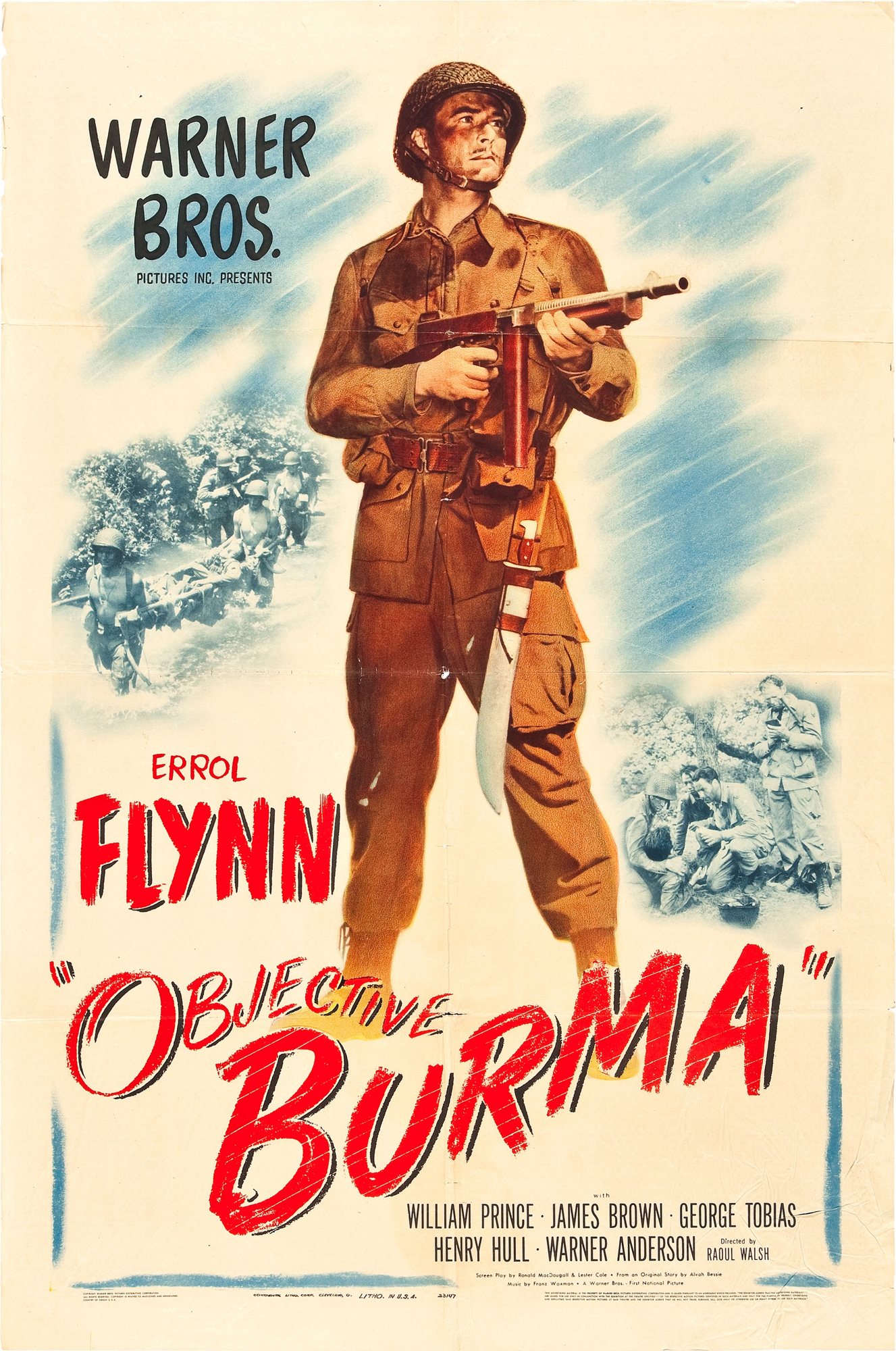
Objective, Burma! should have been one of Flynn’s most popular pictures, but it wasn’t.

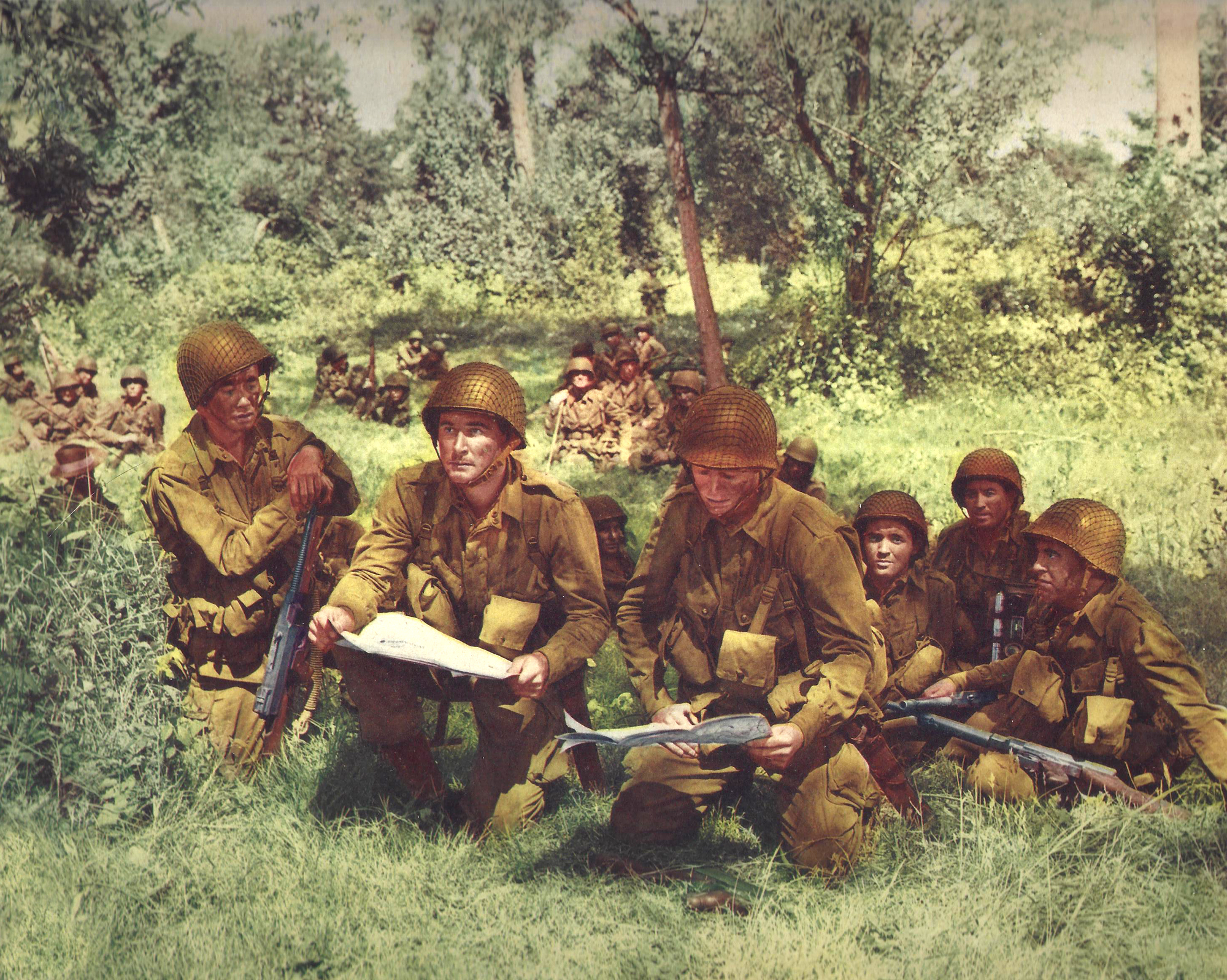
Objective, Burma!, the first picture shown, is an action drama set in the latter stages of World War II in Burma. Grim and realistic, it presents a fictional account of U.S. paratroopers dropped into the Burmese jungle to raid a Japanese radar station. They wipe out the Japs just fine but then everything goes to hell and they are 200 miles from help.

Objective, Burma! is most notable as a disaster of the first order for Errol Flynn the actor. It was by far the most rugged picture he had ever made, shot mostly in exterior locations—deserts, jungles, swamps—and he worked his ass off. His performance is highly regarded for a particular tone of understatement, and he fit well in an ensemble cast. He did every single thing right in making Objective, Burma! And what was his reward?

The British government protested that Objective, Burma! showed an American operation in Burma when it was in fact the British who were fighting there. British big cheese Lord Earl Mountbatten was furious and went out of his way to slam Flynn for make-believe heroics, saying that Errol was in effect grinding his heel into the graves of British war dead. As a result, Objective, Burma! played in first release, was never reissued, and became a poison pill for Errol Flynn the actor. Soon he was boozing it up through a string of features and then fled to exile in Europe. It’s a picture that hastened his decline and early death.

Errol Flynn Slept Here by Robert Matzen and Michael Mazzone

Well, boys, this is going to be a big success. What could possibly go wrong?

Another notable talking point is that the plot of Burma was stolen directly from the story of Rogers’ Rangers and a raid during the French and Indian War that was recounted in the historical novel Northwest Passage and depicted in the 1940 motion picture of the same name starring Spencer Tracy as Rogers. The way the studios sometimes operated, scripts were put into a pile and they’d periodically pull a script off the bottom of the pile and redo it. In this way Warner Bros. took the 1945 property Objective, Burma! and adapted it into a 1951 Gary Cooper pic called Distant Drums. This time it’s a pre-Civil War story as Cooper’s men sneak into Florida and destroy a Seminole Indian village before everything goes to hell. Raoul Walsh directed Objective, Burma! Raoul Walsh directed Distant Drums, and used some of the same camera setups in the latter that he had used in the former.

More recently, the same plot was reused in one of my all-time favorite pictures, Predator (1987) starring Arnold Shwarzeneger. This time mercenary commandos go into South America to rescue hostages and wipe out a guerilla stronghold before everything goes to hell, this time because of one nasty alien. The raid is so similar to Errol Flynn’s 1945 radar station incursion that during Objective, Burma! I was quoting Jesse Ventura’s Blain with perfect timing when he says his incredulous, admiring, “What The Fuck?” as Arnold opens the battle in unorthodox fashion. The classic exchange between Poncho and Blain also fit perfectly into the Flynn action:

Poncho: “You’re bleeding!”

Blain: “I ain’t got time to bleed.”

Poncho: “You got time to duck?”

And Poncho launches mortar rounds that blow bad guys out of their machine gun nest overhead. Predator is an homage to Objective, Burma! and the familiarity of this plot through generations of Hollywood filmmaking—good guys stage a raid and then everything goes to hell—is something the TCM hosts might have mentioned on Tuesday.

Errol Flynn Slept Here by Robert Matzen and Michael Mazzone

“I ain’t got time to bleed!” No, wait, that’s from a different (albeit similar) picture.

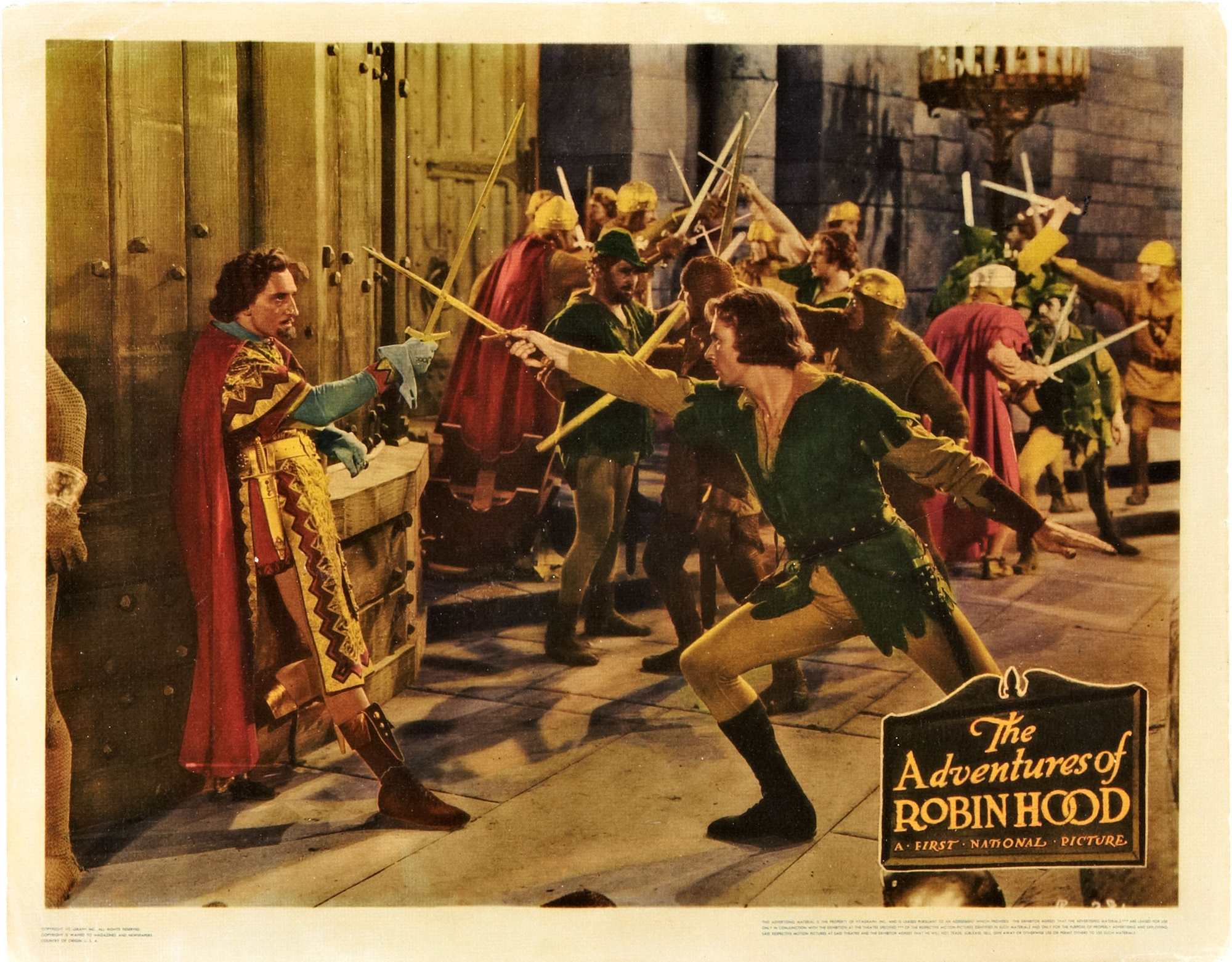
Second up on Tuesday night was The Adventures of Robin Hood, Errol Flynn’s classic of classics, and I cringed when it was asserted during the intro that tension between Errol and RH director Michael Curtiz resulted from the fact that Curtiz had once been married to Errol’s wife, Lili Damita. Yes, this internet rumor was announced as fact on broadcast television. Unless I have missed some important news, a Curtiz-Damita marriage has never been verified and since so many European paper records were destroyed during World War II, it is doubtful this allegation will ever be confirmed.

Errol Flynn Slept Here by Robert Matzen and Michael Mazzone

Flynn’s most physically demanding picture included this scene shot at Lucky Baldwin’s Ranch in Arcadia, CA.

The hosts might have talked about any number of interesting angles to Robin Hood. They could have discussed the high cost of the production—highest yet for Warner Bros. There might have been discussion of Olivia de Havilland’s growing distaste for playing Errol Flynn’s girl in picture after picture, especially a character she found as two-dimensional as Maid Marian. Mention of the location shoot in Chico, California might have been made as an epidemic of influenza swept through cast and crew. Or of the fact that Basil Rathbone, playing Errol’s rival, was 17 years older than Errol but just as athletic in the climatic duel. Or that Rathbone, who was run through and killed in that duel, was actually a more accomplished fencer. Or that this was an Academy Award-winning film (it won three), or that it was re-released several times and always successfully, or that Flynn owned a 16mm print of the film and watched it often, or that de Havilland refused to go to the premiere and didn’t condescend to watch Robin Hood until 1959—21 years after its initial run.

Errol & Olivia by Robert Matzen

After you are dead, Errol, I am going to tell everyone how–even at 17 years your senior–I was the better swordsman and could have kicked your ass in a real duel anytime I wanted to, except the script would never let me.

The audience for these pictures might have been enlightened, but they weren’t, although props go to Robert Osborne for stressing repeatedly that Errol Flynn was an underrated actor, which was borne out in all the pictures screened (the others were Gentleman Jim, Rocky Mountain, and Never Say Goodbye). Hopefully, the evening billed as “Starring Errol Flynn” will lead a new audience to seek out more information about one of the most enigmatic personalities of the Twentieth Century. There is plenty of information out there waiting to be accessed in, oh, I don’t know, maybe [insert shameless holiday plug] two outstanding hardcover books loaded with information and photos, Errol Flynn Slept Here: The Flynns, the Hamblens, Rick Nelson, and the Most Notorious House in Hollywood and Errol & Olivia: Ego & Obsession in Golden Era Hollywood.

Main Event

Tom Hodgins shared this photo with me, and suddenly a past bio subject confronted a future one. It’s Errol Flynn with wife Nora on one arm and her mother Madge on the other, all looking at James Stewart, who seems … tense. My question is, where the hell is this, and when?

Fireball: Carole Lombard and the Mystery of Flight 3 by Robert Matzen

James Stewart, Marge Eddington, Errol Flynn, and Nora Eddington Flynn, except, where, when, and why?

The backstory is that I co-authored Errol Flynn Slept Here with Mike Mazzone in 2009 and then wrote Errol & Olivia in 2010. My next book is tentatively titled Capt. Stewart, and details the exploits of James Stewart in the U.S. Army Air Corps air war in Europe. Jim dated Errol’s girl, Olivia de Havilland, or “Livvie,” in 1940. Errol was an insecure sort and didn’t like the fact that Jim was doing the nasty with Livvie. Didn’t like it one bit. Then Jim enlisted in the Air Corps in 1941 and soon thereafter, following Pearl Harbor (73 years ago today), Errol journeyed to D.C. and tried to enlist but was turned down because at 31 his health was shot with a capital S. All that hard living in hard conditions like the jungles of New Guinea had boiled his innards. Jim became a war hero and flew 19 missions in the air war in Europe, rose from private to lieutenant-colonel, and, as of the time of this photo, was a colonel in the Air Force Reserve. Errol, well, Errol fought World War II on the soundstages of Burbank, California, in pictures like Edge of Darkness and Objective, Burma! and always resented all the men who were able to go off and fight in the war while he was forced to ride the bench at home.

Here we are in 1948 (according to Tom) or 1950 (it seems like to me), and Jim is on the verge of becoming the most successful freelance actor in Hollywood, and Nora is on the arm of Errol while they are about to divorce or already are divorced. Flynn has had a drink or five, and Jim is stone-cold sober. One seems to be bombed and irritated; the other uncomfortable. The women are ecstatic, but why? My impression is that Jim is the center of attention, but again, why? Was Jim receiving some award or was he the guest of honor at some benefit? Why is Stewart in a suit and Errol in a tux?

Other clues: Is that snowflakes behind Stewart, making this holidays 1948? 1949? Knowing both these men as I do, it feels very much that they are unhappy to be in this scenario, but they both understand how to handle themselves before a camera—Stewart better than Flynn because at least Stewart is sober. Errol was 6-foot 2 and Stewart was 6-foot-3+. But both were lean and you’d have to classify them as middleweights. It would have made an interesting bout as these two settled whatever score there was.

The only thing I can figure is that this is the Photoplay Awards at the end of 1949, wherein Jim won for The Stratton Story. But that’s a shot in the dark. If anyone has any clues as to the date and occasion of this most interesting photo I have seen in quite a while, Tom and I would love to know.

**Note: Tom also points out that Rory Flynn is hosting an evening of five pictures starring her father on Tuesday December 9 on TCM/U.S. beginning at 8 P.M. Eastern time.

The Machine

Fireball: Carole Lombard and the Mystery of Flight 3 by Robert Matzen

The stars of Deliverance, Burt Reynolds and Jon Voight (as much as you would like to believe it’s not Jon Voight but really Robert Matzen).

I haven’t thought much about Burt Reynolds for a long time. Way back when, I remember thinking he was pretty cool. Burt got his start in TV as brooding half-breed Quint on Gunsmoke and moved to his own detective TV show before hitting it big in Deliverance and then The Longest Yard. I remember liking him in this romantic western he made called The Man Who Loved Cat Dancing when I was a kid, but right after The Longest Yard, I lost interest in Burt Reynolds. I dismissed him as a one-trick pony who could only play Burt Reynolds. Granted, in Deliverance he was good, and he would call Deliverance “the best film I ever did,” a film that “gave me credibility as an actor.” What an unsettling picture. It was made by John Boorman in 1972 when movies had taken a hard left into nastytown, and thankfully Boorman wasn’t in an artsy mood when he exposed his film in the wilds. Here’s the Deliverance trailer to give you a three-minute primer on one startling weekend on the rapids. Deliverance also features Jon Voight, who people used to mistake me for (and often) 25 years ago. These people weren’t deterred by the fact that Voight had many years and four inches on me and there was this one time in a Sizzler in L.A. that was downright embarrassing when a woman exclaimed, “Oh my God!” and attracted a lot of attention because she thought I was Jon Voight. I would like to think that Jon Voight wouldn’t be caught dead in a Sizzler. All the attention might have been flattering if I happened to like Jon Voight’s looks, which I never did. But I digress.

Fireball: Carole Lombard and the Mystery of Flight 3 by Robert Matzen

Long before Katniss there was … Burt.

Right around the time of Deliverance, Burt Reynolds appeared as the gatefold in Cosmopolitan, which was beyond a big deal at the time. You can go ahead and Google “Burt Reynolds Cosmo” and the image will come right up. Reynolds may not have invented the beefcake photograph, but he sure did give the concept a boost at the height of the Sexual Revolution. He spent the 1970s as the definition of virility and put the cherry on his own sundae by directing and starring in the gritty cop picture Sharky’s Machine in 1981.

The real machine was Reynolds himself, who starred in a picture I will always have a soft spot for, The Man Who Loved Women as a man who, well, loved women, as he was transitioning into Phase II of his career as panderer to the lowest common denominator of audiences in several car pictures, Smoky and the Bandit, Cannonball Run, Stroker Ace, et al ad nauseam. Some of these co-starred two-time Oscar-winning actress Sally Field, with whom Burt fell “in like” (his term) for a while. But wait. Wasn’t it about 15 minutes ago that Burt was young stud to cougar Dinah Shore and they carried on admirably for quite some time? I mean, these two were hot stuff there for a while despite a 20-year age difference; hot stuff to the extent that when you saw them together, you just knew that the headboard had been rockin’ and would soon be rockin’ again. I will double-check Webster’s, but I am pretty sure that the definition of “chemical attraction” still reads, “See Burt Reynolds and Dinah Shore.” [Note to whippersnappers: Tennessee-born Dinah Shore started out as singer around the beginning of World War II and went on to greater fame as a TV personality in the 1960s and 70s–the Oprah of her day. She was soft-spoken and demure, except with Burt. Dinah passed on in 1994 at the age of 77.]

Fireball: Carole Lombard and the Mystery of Flight 3 by Robert Matzen

Dinah’s daughter pleads with Mom to steer clear of Bad Boy Burt. But there was no fighting the attraction.

I missed the entire 1990s Reynoldsance—Phase III of his career—when Burt (apparently, as I’m just reading this) appeared in two big pictures I never saw, Striptease, which I didn’t watch because I feared becoming impotent at seeing Demi Moore strip, and Boogie Nights, which was a concept that had no appeal for me at all.

That’s my background for an unsettling-going-on-sad experience just now as I thumbed through 674 Burt Reynolds-owned items that are being auctioned off December 11 and 12. These are hard times for Burt, apparently, and this scenario is all too common these days for people living beyond their capacity to produce income. Burt’s awards are on the block, everything from high school sports trophies to many Top Box Office Star awards (proving the vast appeal of the Reynolds machine), several People’s Choice Awards, and an Emmy. Burt’s gun collection, real and prop weapons, are going. Burt’s cars, going. Dozens and dozens of photos and books inscribed to Burt by presidents, athletes, and fellow actors will be sold off. Clothing, pieces of his art collections—both paintings and statuary—will scatter to the winds.

Why would somebody want a Top Box Office Star statuette that was given to somebody else? If you didn’t earn it yourself, why put it on your mantel? But mine is a minority opinion: Almost everything has bids, mostly multiple bids, so I figure that Burt will do all right out of this endeavor. He claims he is only getting rid of stuff he’s tired of having around, and I’m gratified to see that there are only four Dinah Shore items being offered, three of them canvases she painted. It would be nice if there were many Dinah items in Burt’s possession; items he was determined to hold tight. (Yes, I have a special fondness for this couple and their time together.)

Fireball: Carole Lombard and the Mystery of Flight 3 by Robert Matzen

Reynolds has always been a larger-than-life character, as was Dinah. Together the chemistry was off the charts.

I hope I make it to death before my estate hits the auction block. I like my stuff too much to see it go prematurely. Actually, I was sort of hoping to build a great pyramid and take it all with me to the afterlife, and I’m feeling a little down that Burt didn’t think of this as well. After spending some time looking back at Burt Reynolds, I appreciate him a lot more. Is it sacrilege to label Burt Reynolds as Clark Gable in the same place but at at a different time and without the backing of the biggest studio in Hollywood? I’ll let you ponder that one as I admire Burt’s life of accomplishment. Believe me, I’ve just skimmed the surface here of a career spanning more than 50 years. Reynolds has hobnobbed with the elite. He has done good work that he’s proud of, and he has entertained millions. Now I hope he can go on and live a comfortable life post-auction and enjoy a grand Reynoldsance IV.

Fireball: Carole Lombard and the Mystery of Flight 3 by Robert Matzen

One more for the road. They were in popularity something akin to the Gable and Lombard of the 1970s.


Hammer Time

Just call me Robert Matzen, influencer. A person of influence. One of the influential.

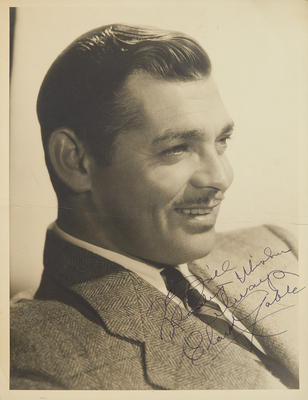
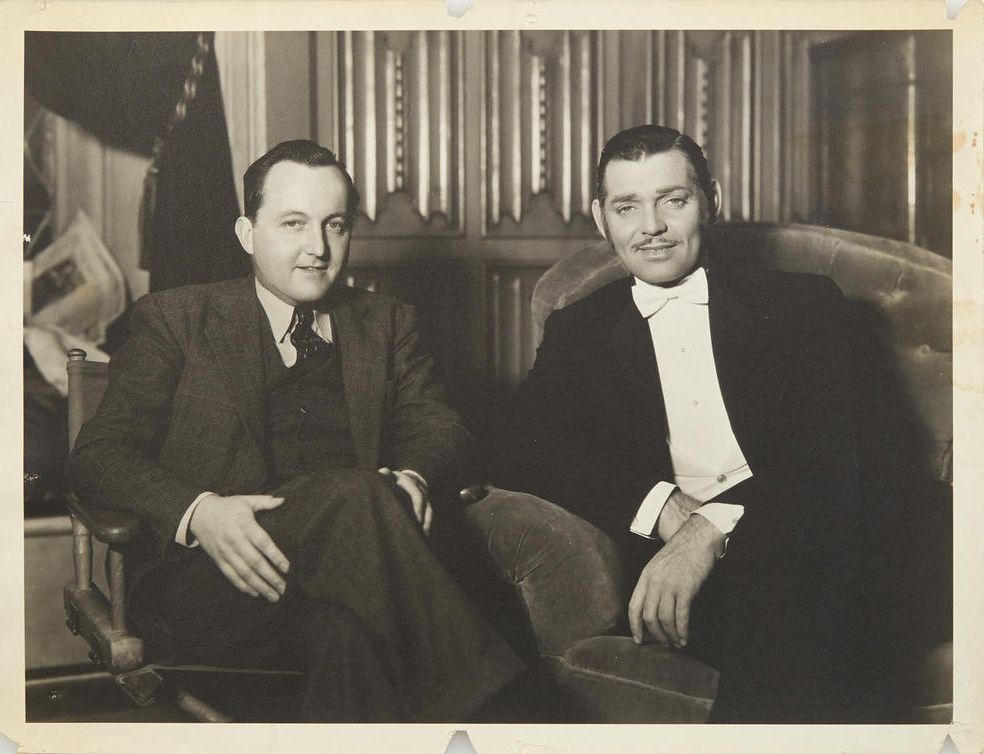
It’s like this: the TCM Hollywood auction conducted by Bonhams New York on Monday included several Fireball-related items of Carole Lombard, Clark Gable, and others in the storyline. These came from two sources: some were given by Clark Gable’s widow, Kay, to a World War II collector who consigned them to the auction. Others were consigned by the family of Otto Winkler and became available after the passing of Jill Winkler’s niece, Nazoma Ball, with whom I worked closely to understand and develop the characters of Otto and Jill. This group of material included a portrait of Clark Gable inscribed to Jill, several notes written by Carole Lombard to Jill or the Winklers, a handwritten postcard from Clark to Jill, and some personal candid photographs of Clark and Otto taken at the MGM studios.


Fireball: Carole Lombard and the Mystery of Flight 3 by Robert Matzen

The portrait that Clark Gable inscribed to Jill Winkler.

As readers of Fireball know, Otto Winkler was Clark Gable’s personal publicist at MGM. Gable entrusted Wink with the well-being of Carole Lombard, Clark’s wife, during the bond tour to Chicago and Indianapolis. Gable wasn’t close to many people and realized after the crash of Flight 3 and the passing of Lombard and Winkler that Otto had been his best friend in spirit and deed.

It was Otto who drove Clark and Carole to Arizona for their elopement at the end of March 1939 while Jill stayed back in Hollywood and pretended to be Carole for a day, driving Carole’s car and running Carole’s errands. After that the couples became pals, and along with Wink, Jill lived a storybook life with King of the Movies Clark Gable and his queen, Carole Lombard Gable. These were characters that had been all but lost to antiquity; few knew Otto Winkler from Adam or Jill from Eve. In fact, if I hadn’t been able to spend so much time with Jill’s niece, a woman who at age 93 also remembered Otto in life, I wouldn’t have been able to access these characters from the inside. The narrative of Fireball brought them to life once again and made their story so human and so important.

I was a phone bidder for the Bonhams auction on Monday and placed bids on five lots: the Gable-Winkler candids; the Lombard correspondences to the Winklers, the Clark-to-Jill candid, and the handwritten postcard. I also took a flyer and managed to place one bid on the worn 14k wedding band that—according to documentation from Kay Gable—was given to Clark by Carole. But bidding got out of hand mighty fast and hammered at an astonishing $40,000.

Fireball: Carole Lombard and the Mystery of Flight 3 by Robert Matzen

A candid photo once owned by Otto Winkler shows Otto and Clark Gable at MGM in 1937.

Afterward, I sat there with new awareness of the impact of Fireball, because I had lost out in a furious wave of bidding on all the lots except the postcard from Clark to Jill, which was the most significant item and one that will factor into the revised edition of Fireball. The other items all went at prices that were, to me, beyond practical. I felt then, as the dust was settling after my involvement in the Bonhams auction, that Fireball had affected the value of the Winkler-related items. And that was a good feeling.

The auction was, for the most part, about what I expected. It is a rare bird who wants a costume worn by Lisa Gaye in 10 Thousand Bedrooms. But the items from Casablanca that I mentioned in my last column blew the roof off of Bonhams, as reported in the New York Times. The playscript Everybody Comes to Ricks, which was the basis for the Casablanca story and which I pooh-poohed for its pre-auction estimate of $40,000-80,000, hammered at $85,000 (take that, Mr. Influencer). The battered front doors to Rick’s Café Americain, rescued at some point from the Warner Bros. prop department, fetched $92,000 ($115,000 with buyer’s premium); the prop-department-created letters of transit hammered at $95,000 ($118,750). And Sam’s piano hammered at a smart $2.9 million—or $3,413,000 with add-ons. Also of note, Aragorn’s sword from Lord of the Rings: The Return of the King (2003), hammered at $360,000, and the elaborate Cowardly Lion costume worn by Bert Lahr in The Wizard of Oz (1939) hammered at $2.6 million, topping $3M with buyer’s premium. Watch out I don’t write a book about these pictures, or the values will go up still further. After all, I am an influencer.

Everybody Comes to Ricks–Even Today

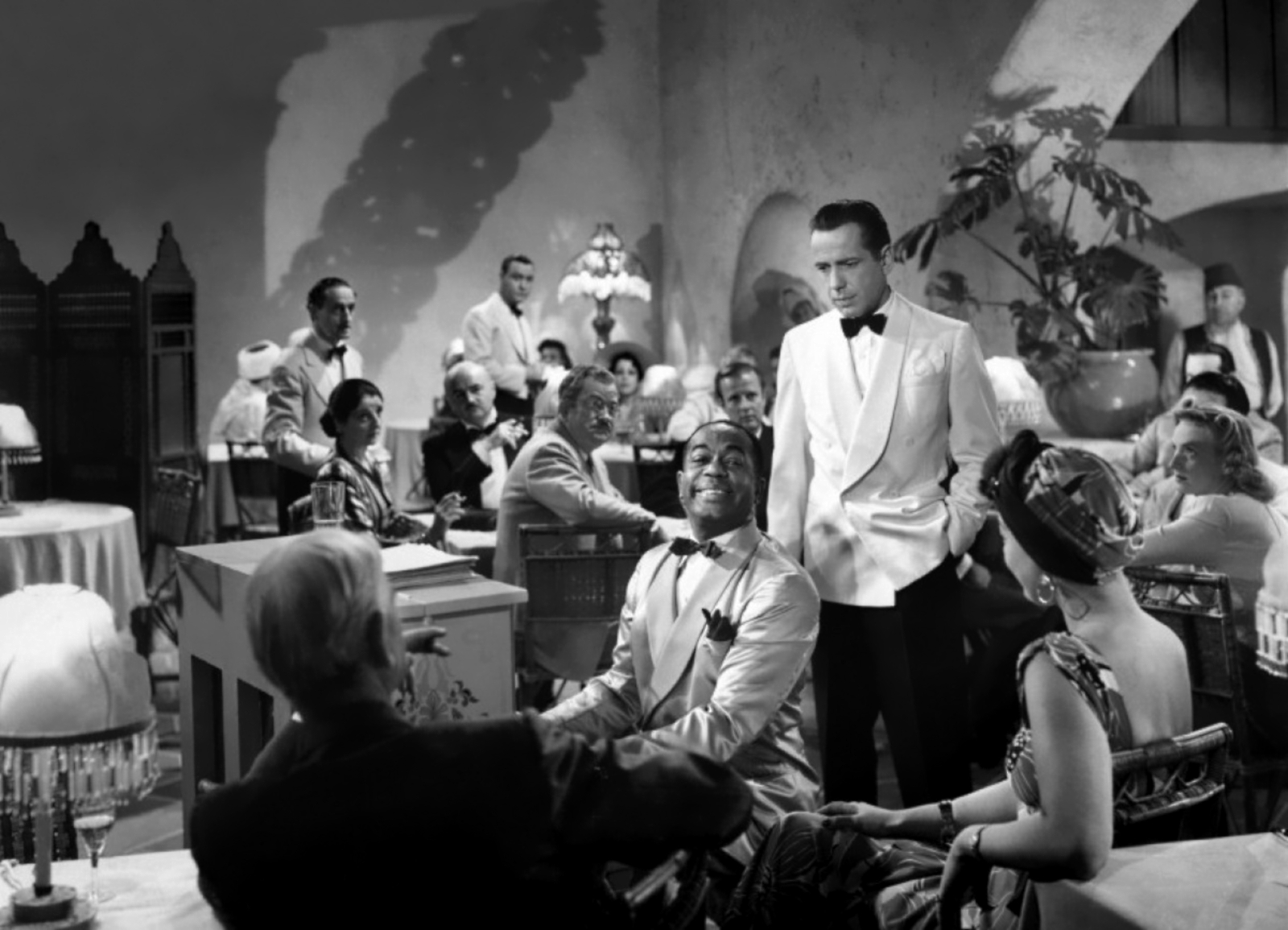
Show of hands—who here hasn’t seen Casablanca? If you’re a regular who’s been drawn to my columns by the explorations of old Hollywood, I know you have seen it, but if you stumbled upon Fireball and were surprised by the story and content and haven’t lived and breathed Hollywood’s Golden Era, then maybe you have not seen Casablanca and all I can say in that case is, invest 110 minutes. You won’t be sorry. In a nutshell, a multi-national cast of characters with competing interests meet up on the neutral soil of Casablanca, French Morocco, in the middle of World War II, at Rick’s Café Americain. Many of these people are seeking to flee North Africa for freedom from Nazi oppression and they wait, and wait. Letters of transit have been stolen from a murdered Nazi and these are carte blanche documents guaranteeing free passage out of Casablanca for any bearer.

On Monday November 24 Bonhams New York is auctioning off a collection of items related to Hollywood’s Golden Era. Included are a number with ties to Casablanca, most notably Sam’s piano, the one actor Dooley Wilson played when he performed As Time Goes By and other numbers in the film. The letters of transit were hidden in that piano, you know. For, oh, what, a million—three million?—you can buy Sam’s piano and hide stuff of your own inside it. Sam’s piano would be a pretty cool thing to possess, and I know just where I’d put it, in the great room by the fireplace. I’d invite my piano-playing friends over to try it out. But I’m not buying big stuff these days so I plan to stay out of Monday’s fray at Bonhams.

Fireball: Carole Lombard and the Mystery of Flight 3 by Robert Matzen

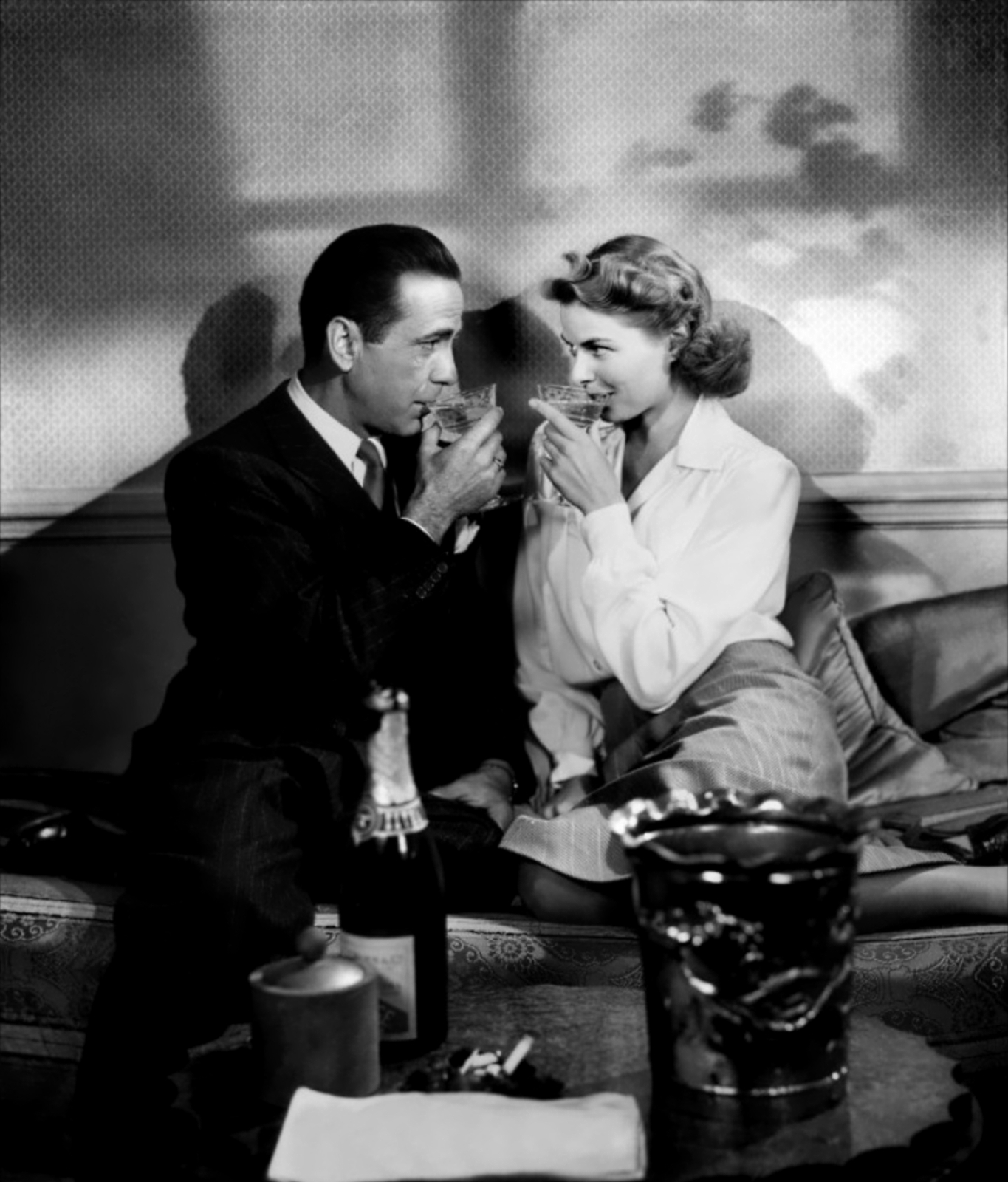
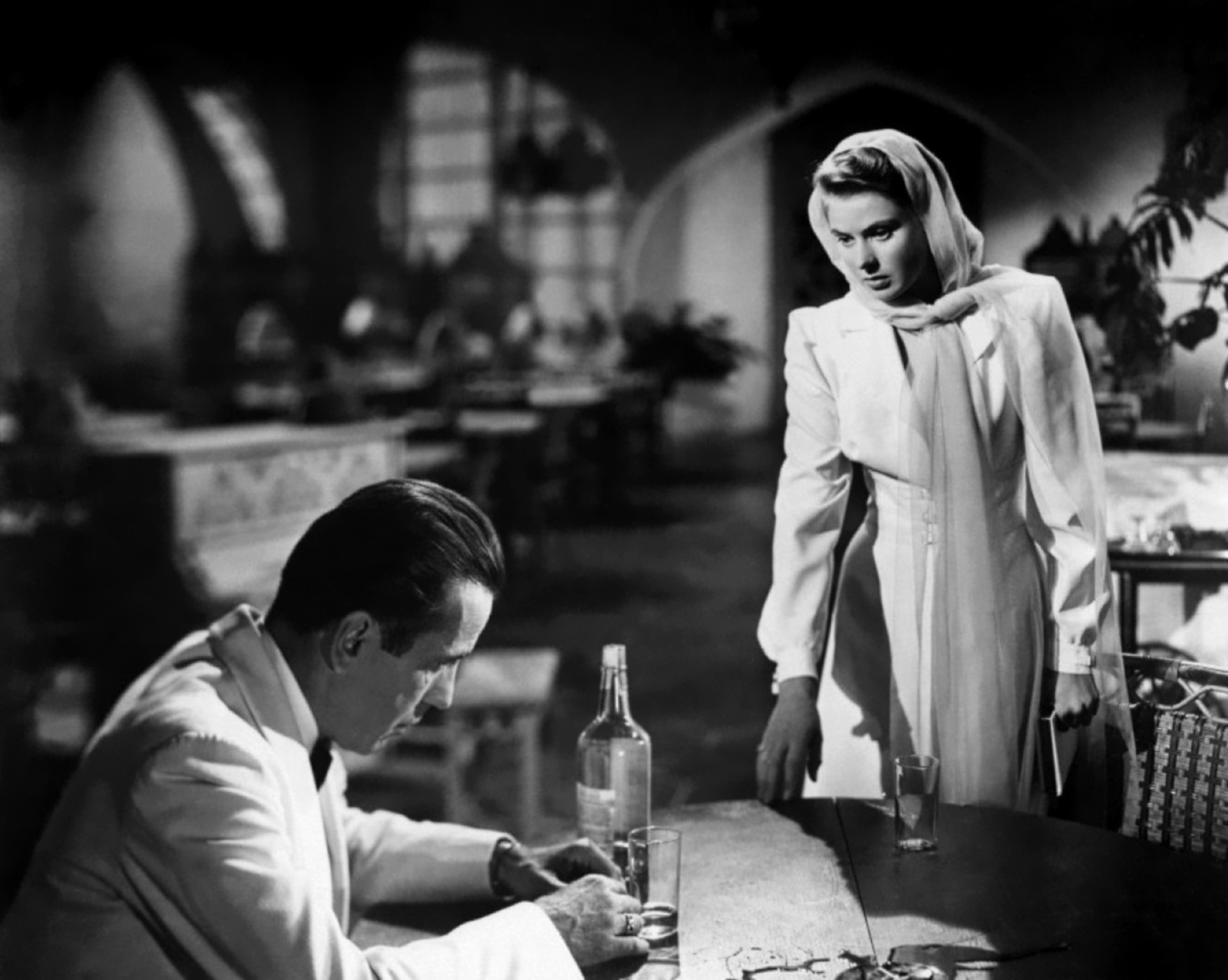
Rick and Ilsa during their mad fling in Paris; the only time he was ever truly happy?

I think it’s possible the auction-house experts are crazy given the values placed on some of the Casablanca-related items to be offered on Monday. There’s the first script that reached Warner Bros. called “Everybody Comes to Rick’s” along with the studio reader’s comments. That’s a unique item, all right, but would you pay $40,000–60,000 to own it? If the low-end estimate is $40K, does that mean bidding opens at $20K? I’ve been around Hollywood collectibles since high school, and scripts have never been that highly prized. Even when director or star notes from classic pictures are written in the margins, scripts haven’t gone as high as $40K that I’m aware of. I’ll be curious to see if this one meets reserve, especially since Warner Bros. bought the concept and then tinkered and rewrote, resulting in an endless stream of blue pages (last-minute revisions were always done on blue paper so all would be alerted to the new material—particularly the actors who had just memorized the old material).

Fireball: Carole Lombard and the Mystery of Flight 3 by Robert Matzen

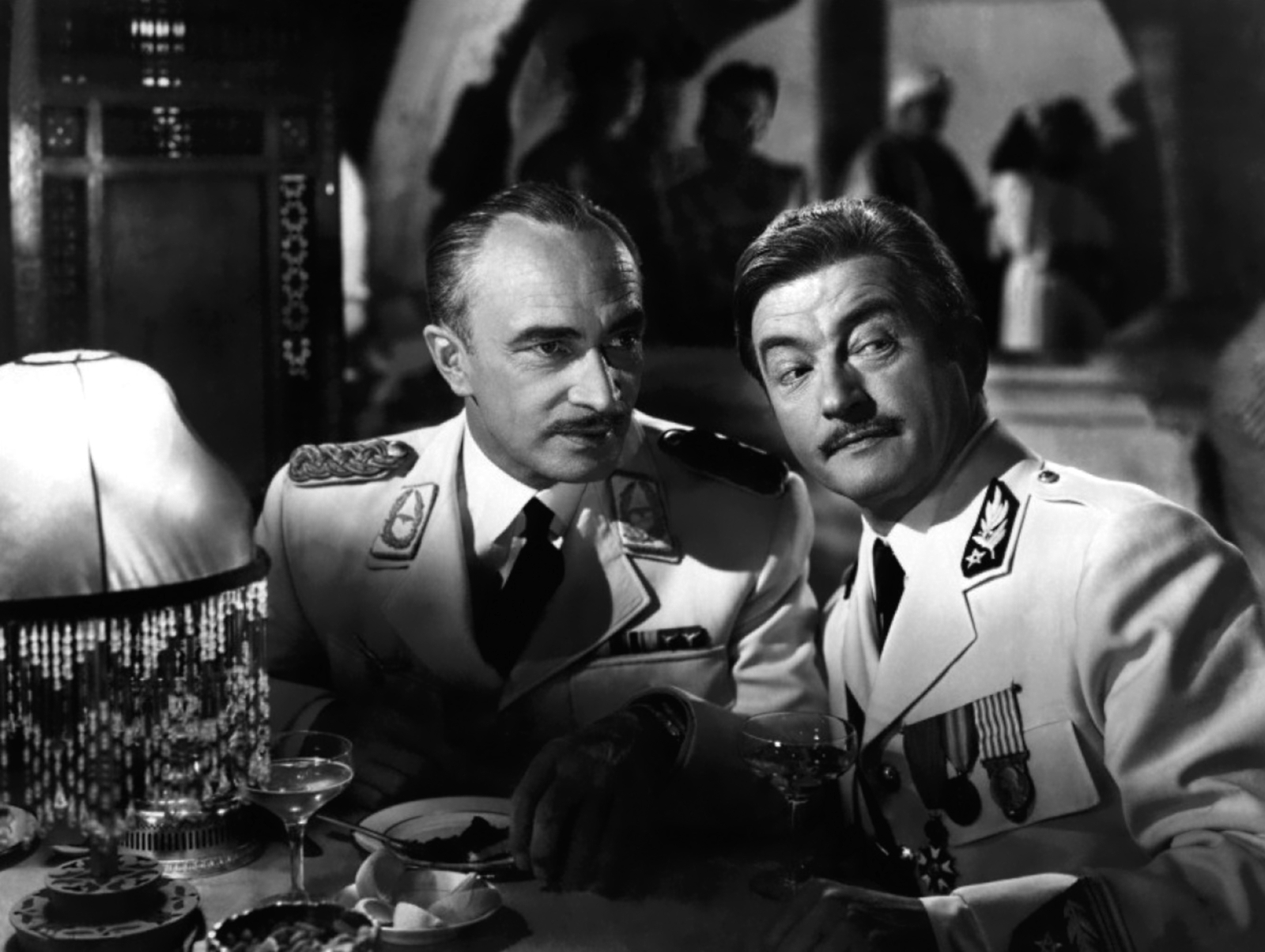
Rick looks at Ilsa, who has just walked into his gin joint, as Capt. Renault and Victor Laszlo observe.

How can the preliminary script command $40K and producer Henry Blanke’s production file only rate an estimate of $12–18K? I don’t get that one at all since the file includes Lenore Coffee’s suggestions for darkening the storyline by having Rick betray Victor and Ilsa. As noted in Errol & Olivia, Coffee was a brilliant script doctor employed by the various studios; she was doing a lot of work at Warner Bros. in the early 1940s. Censor Joe Breen’s Production Code criticisms are contained in the Blanke files too, and I’ve always wondered about two aspects of the final picture that survived the censor: 1) all the references to Capt. Renault’s trade of sex with young girls for police favors; and 2) 18-year-old bride Annina’s willingness, even eagerness, to make the sex trade with Renault and, by implication, with Rick. Perhaps the answers can be found in these documents; it seems to me that the salacious aspects of Casablanca must have really perked up first-run audiences at a time when other studios were offering up virginal product with the likes of Betty Grable, Alice Faye, and Deanna Durbin.

Fireball: Carole Lombard and the Mystery of Flight 3 by Robert Matzen

Barely legal, but not what Rick is after. Just-18 Annina will pay any price to get out of Casablanca.

I wrote a column a few years ago on my late, lamented Errol & Olivia blog opining that Ilsa had never loved Rick and was using him and knew all along she’d stay with Victor. Recent viewings have made me second guess myself; the ambiguity of the characters and their motives is one of many qualities of Casablanca that keeps people coming back for more. Consider them for a moment…

  • Rick Blaine, the cynic with a past who allowed himself to fall in love once, just once, with the mysterious Ilsa. Rick invested himself in the relationship and knew happiness—perhaps never was Rick truly happy except with Ilsa. But she dumped him. Dumped him cold. Dumped him in the rain. And forced him to go on with only memories of happiness and a determination never to stick his neck out again.
  • Ilsa Lund, the icy closed book of a woman who gives herself to Rick when she believes her husband is dead. But he’s not dead, and this news is what causes her to dump Rick cold. In the rain.
  • Victor Laszlo, husband of Ilsa and world-renowned devil to the German empire. He sports a dashing scar and an air of high competence. He knows his wife has had a fling with Rick, but Victor has got his sights set far higher than any affair of the flesh.
  • Louis Renault, corrupt prefect of police but a man of great charm and, above all, utter pragmatism. We feel like we can trust Louis because he makes no bones about the fact that he is corrupt. He’s impossible not to like.
Fireball: Carole Lombard and the Mystery of Flight 3 by Robert Matzen

Major Strasser and Capt. Renault observe the goings-on at Rick’s Café American, primarily the effect of newcomer Ilsa on previously impervious Rick.

The sets are overrun with character actors, each with a few lines here and there. But all these actors are memorable; they all get a moment of great dialogue and they all become real. The wretched city of Casablanca is a character too, recreated modestly on the Warner backlot but teeming with “scum and villainy” (George Lucas would use Casablanca as the inspiration for his Mos Eisley spaceport 35 years later).

Fireball: Carole Lombard and the Mystery of Flight 3 by Robert Matzen

You bitch! Look what you’ve done to poor Rick.

I’ve directed a picture or two in my life, and the introduction of the city of Casablanca as the setting for this morality play is jaw-dropping. Director Michael Curtiz establishes a pesthole packed with desperate humans in just a moment. It’s a hot, uncomfortable place overrun with predators and prey. Inside Rick’s the camera dollies in, dollies out, and the shots are static when they need to be, or close, or distant, each one perfect from a director who was always good and here, never better.

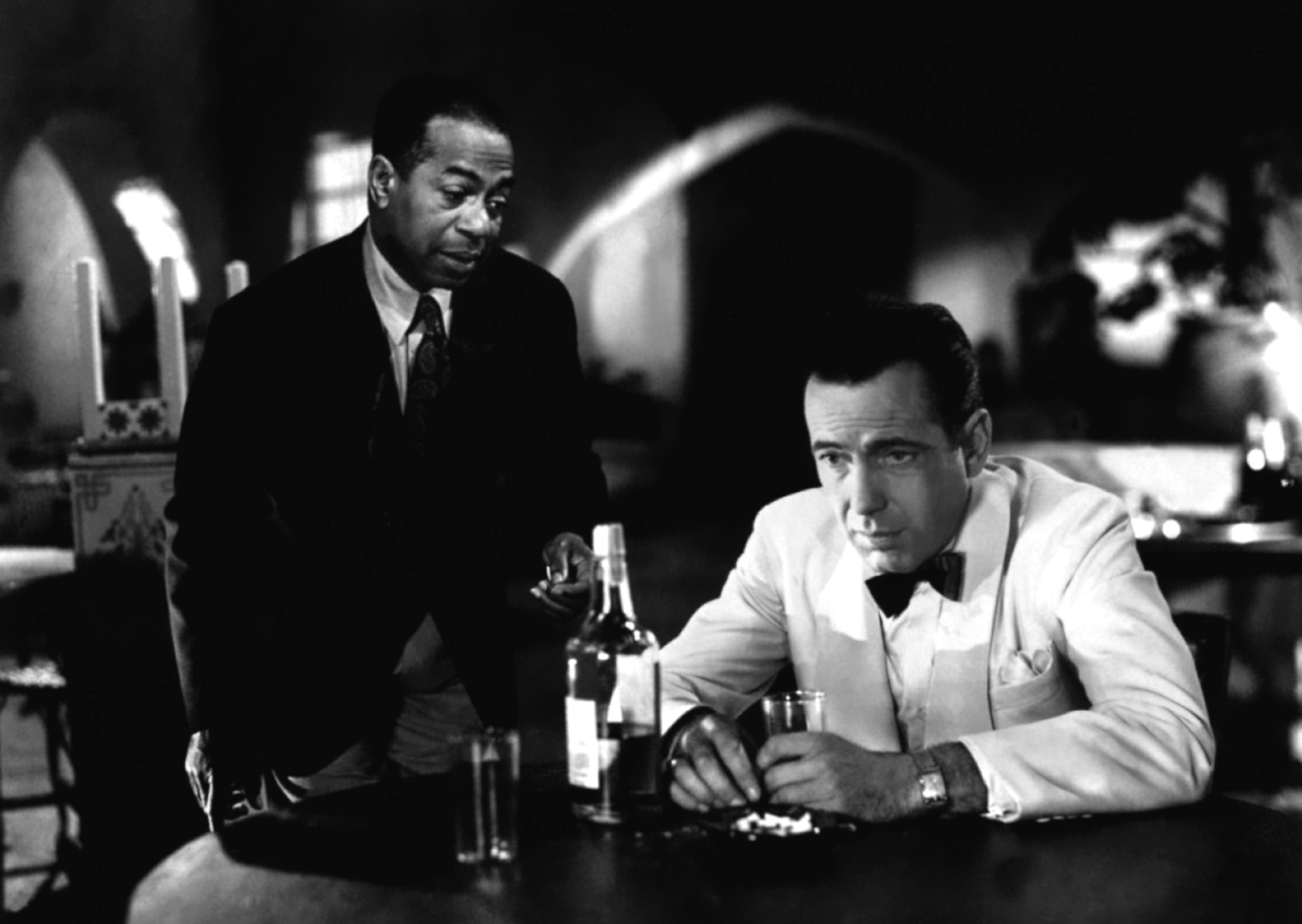
Oh, the dialogue. Ilsa comes back into Rick’s life after dumping him and she’s on the arm of a larger-than-life hero. What does Rick do? Late at night we find him inside his closed bar, drinking, alone, in the dark. Ilsa has walked back into his world and ripped the scab, a scab still fresh, right off of his soul. Sam comes in and finds Rick and knows what his boss is going through. Sam knows all about Rick and Ilsa—he was with Rick in the rain for the dumping. It’s clear that Sam is scared and worried.

“Boss, ain’t you going to bed?” he asks.

“Not right now,” grumbles Rick into his glass.

“Ain’t you planning on going to bed in the near future?”

“No.”

“You ever planning on going to bed?”

“No!”

“Good,” says Sam. “I ain’t sleepy either.”

Fireball: Carole Lombard and the Mystery of Flight 3 by Robert Matzen

“You ever plannin’ on going to bed?” asks Sam to Rick. “No!” he snaps.

African Americans at this time were, as a rule, used for comic relief, but Sam is a friend, an equal, and a character deeply drawn. But they all are in this picture. Well, except for Major Strasser, the hard-core Nazi and the guy we love to hate.

I wish Bonham’s and the consignors well in Monday’s auction. We will see soon enough if bidders are willing to shell out tens and hundreds of thousands of dollars for this hodgepodge of props, costumes, scripts, documents, and movie posters connected with classic film. I wonder if the letters of transit have expired—they might come in handy someday and one of them is for sale in this auction, at an estimated $100–150K. One thing seems clear—Casablanca has stood the test of time as well as any picture from the Golden Era, and shows no signs of slowing down. Because it is still so popular, I wouldn’t be surprised to find Sam’s piano on display at a Vegas casino sometime soon.

Fireball: Carole Lombard and the Mystery of Flight 3 by Robert Matzen

Sam plays the famous piano as a moribund Rick looks on.