fireball robert matzen

Jubilee!

A couple of anniversaries are worth mentioning amidst this joyous season that has left me bewildered and many around me anything but joyous. Did you know that George Washington died 215 years ago this past Sunday at age 67? Did you know that he died of a sore throat? Everybody has to die of something, but a sore throat is a nasty way to go when you are treated by doctors who have no earthly idea what they are doing.

George Washington was a massive human, six-foot-three and most of it muscle, even at 67. He had been a natural athlete all his life and a splendid horseman. He spent five hours on horseback riding his range the day he got sick, arrived home, went to bed, and the next day was so bad off, apparently from a strep infection, that his doctor “bled” him five pints. You know how when you give blood they take one pint and then tell you to rest and eat well to replenish what you just lost? Well they stole one pint times FIVE from the ill former president, and for good measure they gave him a mercury concoction to make him better. Mercury, as in the stuff that is poison. Among the prexy’s last words were, “I die hard,” which he murmured at the end of 1799 and which may be the understatement of the entire century, uttered just under the wire. So December 14, a couple days ago, marks 215 years since we lost the Greatest American of any generation.

Fireball: Carole Lombard and the Mystery of Flight 3 by Robert Matzen

Among George Washington’s last words in December 1799: “Please tell me Dr. House is on duty this evening.” He wasn’t; the rest is history.

Seventy-five years ago yesterday, the finished version of Gone With the Wind premiered in Atlanta, Georgia. Movie stars imported from Hollywood began arriving two days earlier, on December 13. The picture’s producer arrived on December 14 with cast members Vivien Leigh and Olivia de Havilland via Eastern Airlines DC-3. Later, on an American DC-3 (because he couldn’t stand Selznick), Clark Gable arrived with his bride, Carole Lombard, and the pair of them stole the show from the other VIPs and held the city spellbound for 36 hours.

Fireball: Carole Lombard and the Mystery of Flight 3 by Robert Matzen

The fireball, Carole Lombard, arrives in Atlanta on American Airlines with husband Clark Gable and bandleader Kay Kyser on December 14, 1939.

Many activities took place over three crazy days, which the governor of Georgia declared a state holiday. The teeming throngs of Atlantans that clogged Peachtree Street 300,000 strong have been described in many books. Still, a few pieces of trivia astound me.

Did you know that city schools and public buildings in Atlanta were closed the day of the premiere, a Friday? Imagine any movie commanding such attention in a top-10 U.S. city today.

Did you know that there were still many Confederate Civil War veterans living at the time of the premiere, and when they trooped into the Loew’s Grand Theater from the Old Soldiers’ Home, the crowd erupted in cheers and rebel yells?

Did you know that among the non-cast members attending the Atlanta festivities were World War I fighter ace Eddie Rickenbacker, Wimbledon tennis champ Alice Marble, and Clark Gable’s Oscar-winning It Happened One Night co-star, Claudette Colbert?

Fireball: Carole Lombard and the Mystery of Flight 3 by Robert Matzen

No Gable isn’t falling asleep at the Atlanta premiere of Gone With the Wind. Lombard is whispering something in his ear; probably something snarky.

Did you know that the ticket price in the sold-out, two-thousand-seat theater was $10 but scalpers were getting $200+?

Fireball: Carole Lombard and the Mystery of Flight 3 by Robert Matzen

A charming tike, age 10, who would participate in Gone With the Wind festivities and then change the world.

Did you know that certain cast members were barred from attending the Atlanta festivities at all because of the color of their skin? This group included Hattie McDaniel and Butterfly McQueen, who would not have been permitted to socialize with the white stars in segregated Georgia. (David Selznick fought against this segregation almost to the point of threatening cancellation of the entire Atlanta experience.) McDaniel would become the first African American to win an Academy Award just a couple of months later.

Did you know that among the costumed “slaves” performing at a charity event during premiere activities was Martin Luther King, Jr., age 10, as part of the Ebenezer Baptist boys’ choir?

As noted in this column earlier, the time of Gone With the Wind has largely gone, but in an America recovering from Depression, it was the biggest thing ever, a social phenomenon like nothing seen before or since. If you lump The Graduate with the original Star Wars and pile The Godfather on top and serve Jaws as whipped cream and Titanic as the cherry, and plunk it all on a platter of Lord of the Rings pictures resting on a table of The Hunger Games, you would still not equal the pop culture earthquake that was Gone With the Wind 75 years ago yesterday.

Fireball: Carole Lombard and the Mystery of Flight 3 by Robert Matzen

Gable and Lombard in the motorcade through Atlanta. They shut the city down for the day. Note the stars and bars at upper left. In 1939 it was no big deal; today, not so welcome.
Invaded by Mights

Pardon my grumpiness, but five Errol Flynn pictures played in succession on Turner Classic Movies U.S. on Tuesday evening, hosted by Robert Osborne and guest programmer Rory Flynn, Errol’s daughter. Here are some things I wish they had discussed:

Errol & Olivia by Robert Matzen

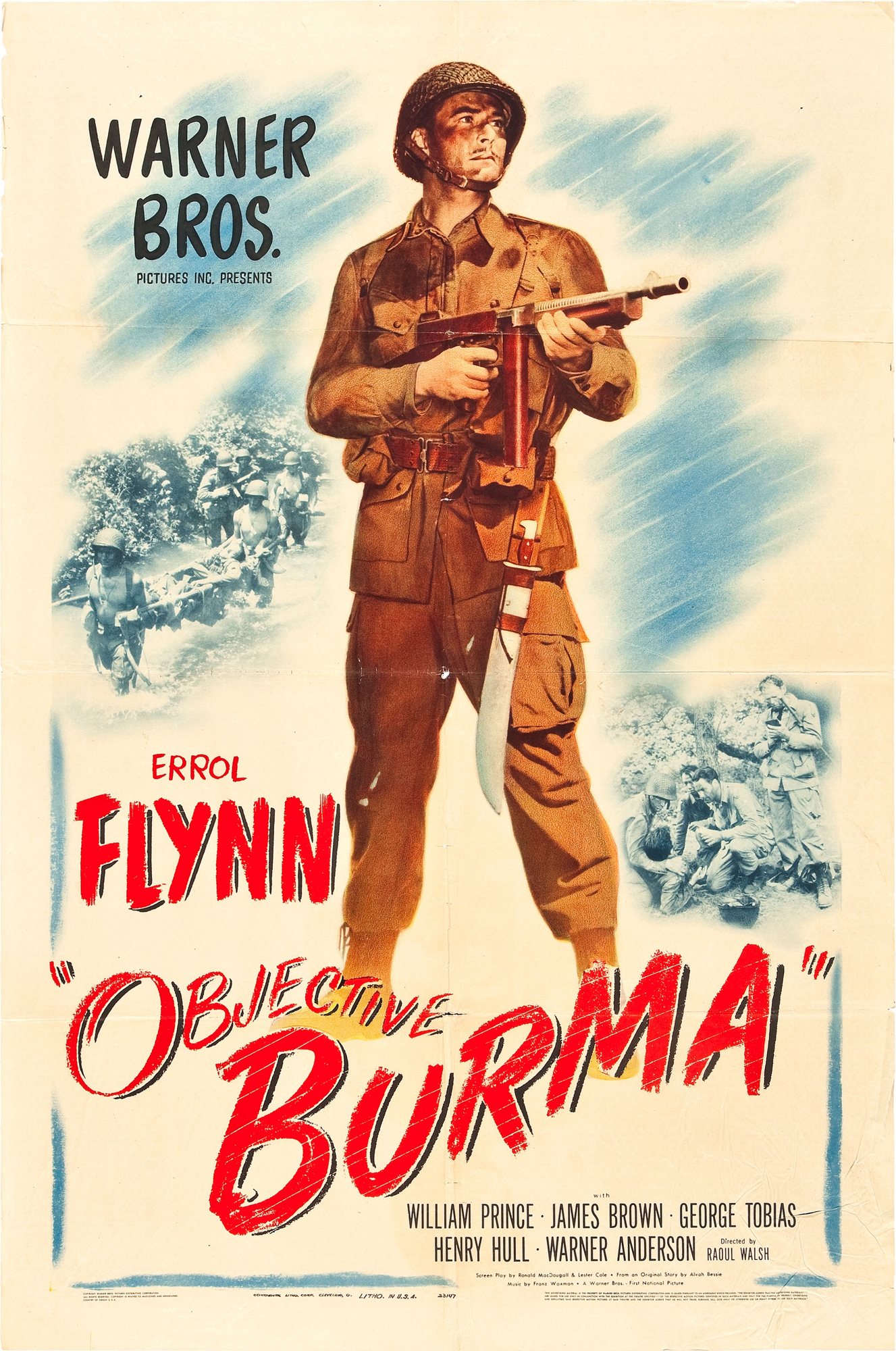
Objective, Burma! should have been one of Flynn’s most popular pictures, but it wasn’t.

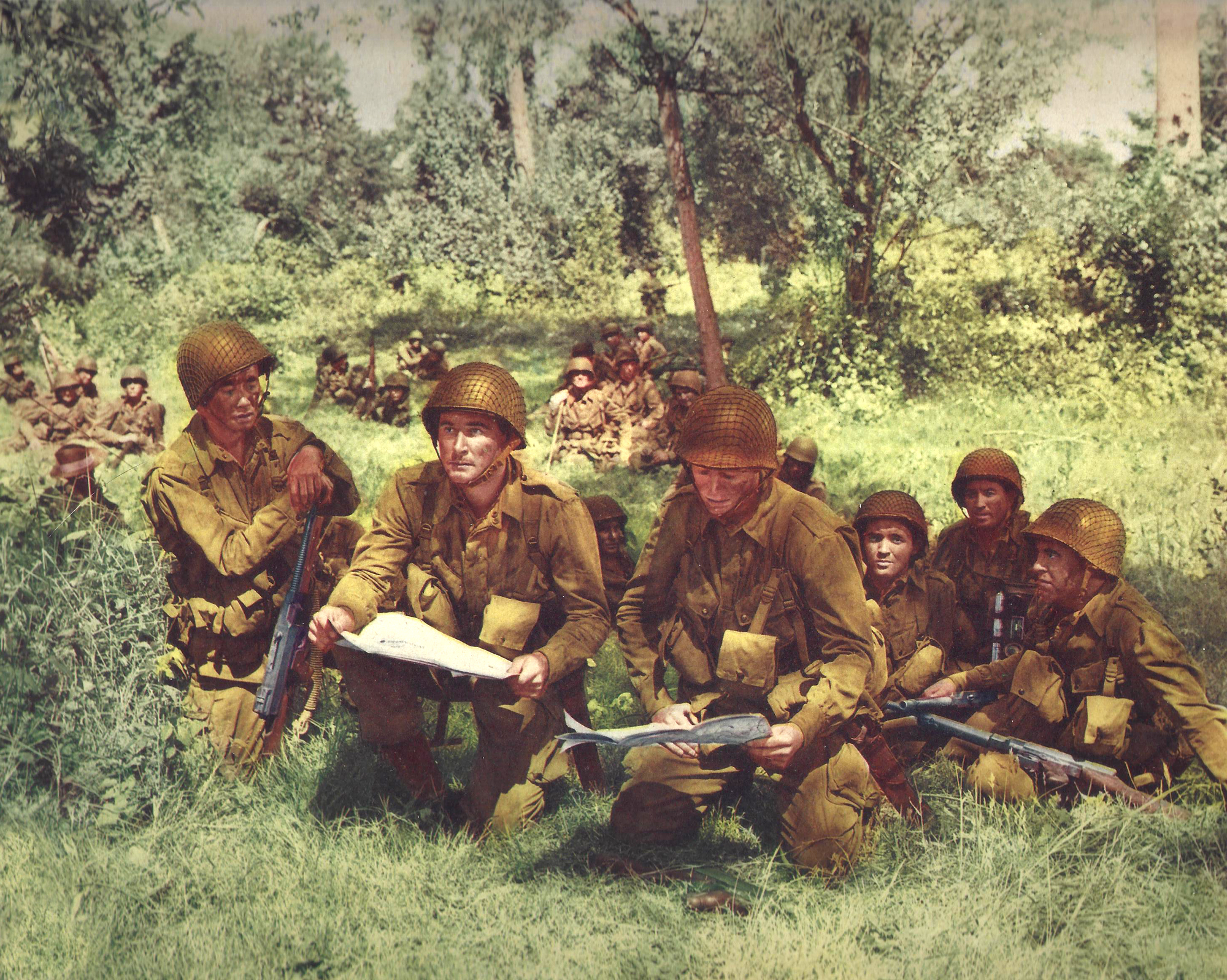
Objective, Burma!, the first picture shown, is an action drama set in the latter stages of World War II in Burma. Grim and realistic, it presents a fictional account of U.S. paratroopers dropped into the Burmese jungle to raid a Japanese radar station. They wipe out the Japs just fine but then everything goes to hell and they are 200 miles from help.

Objective, Burma! is most notable as a disaster of the first order for Errol Flynn the actor. It was by far the most rugged picture he had ever made, shot mostly in exterior locations—deserts, jungles, swamps—and he worked his ass off. His performance is highly regarded for a particular tone of understatement, and he fit well in an ensemble cast. He did every single thing right in making Objective, Burma! And what was his reward?

The British government protested that Objective, Burma! showed an American operation in Burma when it was in fact the British who were fighting there. British big cheese Lord Earl Mountbatten was furious and went out of his way to slam Flynn for make-believe heroics, saying that Errol was in effect grinding his heel into the graves of British war dead. As a result, Objective, Burma! played in first release, was never reissued, and became a poison pill for Errol Flynn the actor. Soon he was boozing it up through a string of features and then fled to exile in Europe. It’s a picture that hastened his decline and early death.

Errol Flynn Slept Here by Robert Matzen and Michael Mazzone

Well, boys, this is going to be a big success. What could possibly go wrong?

Another notable talking point is that the plot of Burma was stolen directly from the story of Rogers’ Rangers and a raid during the French and Indian War that was recounted in the historical novel Northwest Passage and depicted in the 1940 motion picture of the same name starring Spencer Tracy as Rogers. The way the studios sometimes operated, scripts were put into a pile and they’d periodically pull a script off the bottom of the pile and redo it. In this way Warner Bros. took the 1945 property Objective, Burma! and adapted it into a 1951 Gary Cooper pic called Distant Drums. This time it’s a pre-Civil War story as Cooper’s men sneak into Florida and destroy a Seminole Indian village before everything goes to hell. Raoul Walsh directed Objective, Burma! Raoul Walsh directed Distant Drums, and used some of the same camera setups in the latter that he had used in the former.

More recently, the same plot was reused in one of my all-time favorite pictures, Predator (1987) starring Arnold Shwarzeneger. This time mercenary commandos go into South America to rescue hostages and wipe out a guerilla stronghold before everything goes to hell, this time because of one nasty alien. The raid is so similar to Errol Flynn’s 1945 radar station incursion that during Objective, Burma! I was quoting Jesse Ventura’s Blain with perfect timing when he says his incredulous, admiring, “What The Fuck?” as Arnold opens the battle in unorthodox fashion. The classic exchange between Poncho and Blain also fit perfectly into the Flynn action:

Poncho: “You’re bleeding!”

Blain: “I ain’t got time to bleed.”

Poncho: “You got time to duck?”

And Poncho launches mortar rounds that blow bad guys out of their machine gun nest overhead. Predator is an homage to Objective, Burma! and the familiarity of this plot through generations of Hollywood filmmaking—good guys stage a raid and then everything goes to hell—is something the TCM hosts might have mentioned on Tuesday.

Errol Flynn Slept Here by Robert Matzen and Michael Mazzone

“I ain’t got time to bleed!” No, wait, that’s from a different (albeit similar) picture.

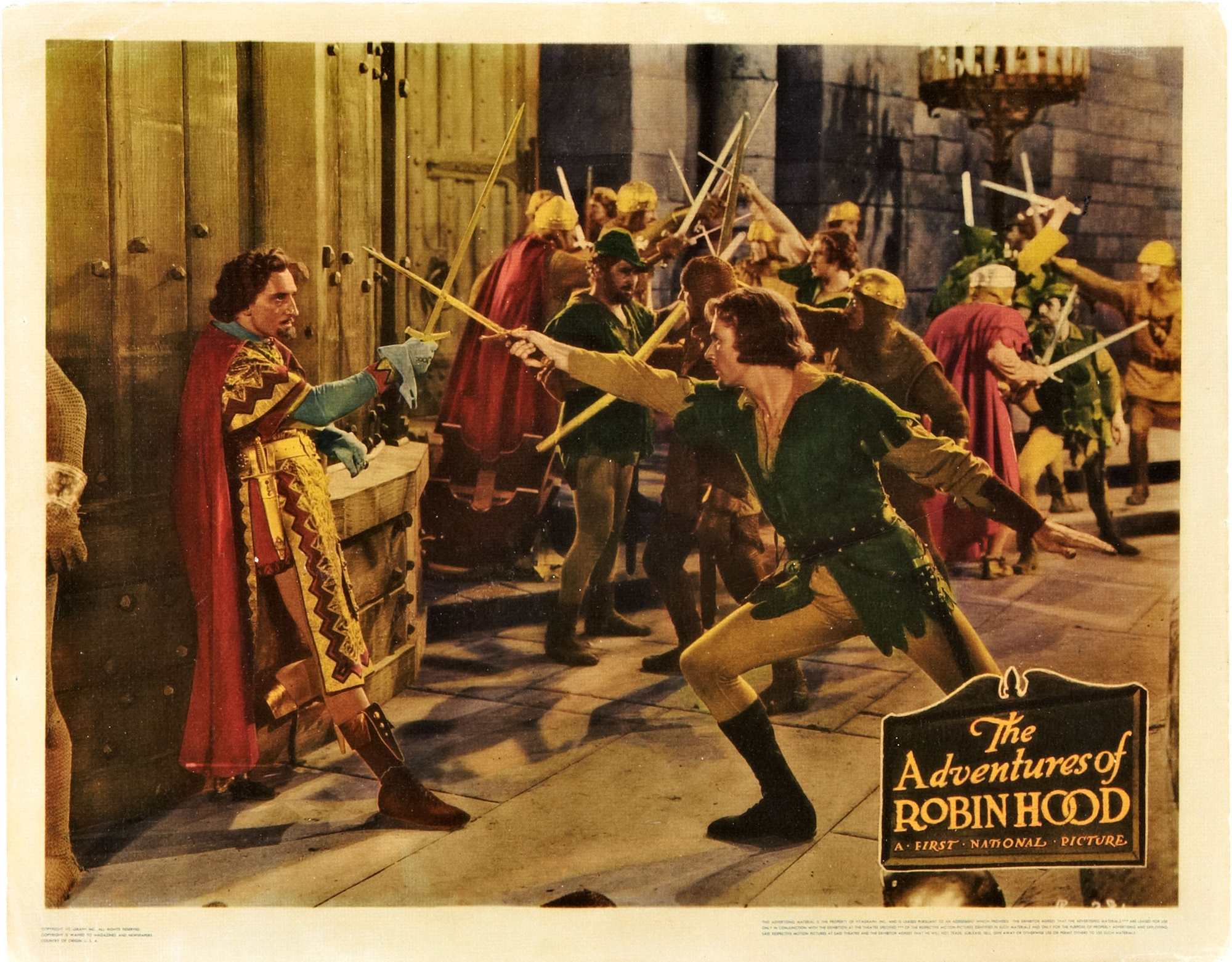
Second up on Tuesday night was The Adventures of Robin Hood, Errol Flynn’s classic of classics, and I cringed when it was asserted during the intro that tension between Errol and RH director Michael Curtiz resulted from the fact that Curtiz had once been married to Errol’s wife, Lili Damita. Yes, this internet rumor was announced as fact on broadcast television. Unless I have missed some important news, a Curtiz-Damita marriage has never been verified and since so many European paper records were destroyed during World War II, it is doubtful this allegation will ever be confirmed.

Errol Flynn Slept Here by Robert Matzen and Michael Mazzone

Flynn’s most physically demanding picture included this scene shot at Lucky Baldwin’s Ranch in Arcadia, CA.

The hosts might have talked about any number of interesting angles to Robin Hood. They could have discussed the high cost of the production—highest yet for Warner Bros. There might have been discussion of Olivia de Havilland’s growing distaste for playing Errol Flynn’s girl in picture after picture, especially a character she found as two-dimensional as Maid Marian. Mention of the location shoot in Chico, California might have been made as an epidemic of influenza swept through cast and crew. Or of the fact that Basil Rathbone, playing Errol’s rival, was 17 years older than Errol but just as athletic in the climatic duel. Or that Rathbone, who was run through and killed in that duel, was actually a more accomplished fencer. Or that this was an Academy Award-winning film (it won three), or that it was re-released several times and always successfully, or that Flynn owned a 16mm print of the film and watched it often, or that de Havilland refused to go to the premiere and didn’t condescend to watch Robin Hood until 1959—21 years after its initial run.

Errol & Olivia by Robert Matzen

After you are dead, Errol, I am going to tell everyone how–even at 17 years your senior–I was the better swordsman and could have kicked your ass in a real duel anytime I wanted to, except the script would never let me.

The audience for these pictures might have been enlightened, but they weren’t, although props go to Robert Osborne for stressing repeatedly that Errol Flynn was an underrated actor, which was borne out in all the pictures screened (the others were Gentleman Jim, Rocky Mountain, and Never Say Goodbye). Hopefully, the evening billed as “Starring Errol Flynn” will lead a new audience to seek out more information about one of the most enigmatic personalities of the Twentieth Century. There is plenty of information out there waiting to be accessed in, oh, I don’t know, maybe [insert shameless holiday plug] two outstanding hardcover books loaded with information and photos, Errol Flynn Slept Here: The Flynns, the Hamblens, Rick Nelson, and the Most Notorious House in Hollywood and Errol & Olivia: Ego & Obsession in Golden Era Hollywood.

Main Event

Tom Hodgins shared this photo with me, and suddenly a past bio subject confronted a future one. It’s Errol Flynn with wife Nora on one arm and her mother Madge on the other, all looking at James Stewart, who seems … tense. My question is, where the hell is this, and when?

Fireball: Carole Lombard and the Mystery of Flight 3 by Robert Matzen

James Stewart, Marge Eddington, Errol Flynn, and Nora Eddington Flynn, except, where, when, and why?

The backstory is that I co-authored Errol Flynn Slept Here with Mike Mazzone in 2009 and then wrote Errol & Olivia in 2010. My next book is tentatively titled Capt. Stewart, and details the exploits of James Stewart in the U.S. Army Air Corps air war in Europe. Jim dated Errol’s girl, Olivia de Havilland, or “Livvie,” in 1940. Errol was an insecure sort and didn’t like the fact that Jim was doing the nasty with Livvie. Didn’t like it one bit. Then Jim enlisted in the Air Corps in 1941 and soon thereafter, following Pearl Harbor (73 years ago today), Errol journeyed to D.C. and tried to enlist but was turned down because at 31 his health was shot with a capital S. All that hard living in hard conditions like the jungles of New Guinea had boiled his innards. Jim became a war hero and flew 19 missions in the air war in Europe, rose from private to lieutenant-colonel, and, as of the time of this photo, was a colonel in the Air Force Reserve. Errol, well, Errol fought World War II on the soundstages of Burbank, California, in pictures like Edge of Darkness and Objective, Burma! and always resented all the men who were able to go off and fight in the war while he was forced to ride the bench at home.

Here we are in 1948 (according to Tom) or 1950 (it seems like to me), and Jim is on the verge of becoming the most successful freelance actor in Hollywood, and Nora is on the arm of Errol while they are about to divorce or already are divorced. Flynn has had a drink or five, and Jim is stone-cold sober. One seems to be bombed and irritated; the other uncomfortable. The women are ecstatic, but why? My impression is that Jim is the center of attention, but again, why? Was Jim receiving some award or was he the guest of honor at some benefit? Why is Stewart in a suit and Errol in a tux?

Other clues: Is that snowflakes behind Stewart, making this holidays 1948? 1949? Knowing both these men as I do, it feels very much that they are unhappy to be in this scenario, but they both understand how to handle themselves before a camera—Stewart better than Flynn because at least Stewart is sober. Errol was 6-foot 2 and Stewart was 6-foot-3+. But both were lean and you’d have to classify them as middleweights. It would have made an interesting bout as these two settled whatever score there was.

The only thing I can figure is that this is the Photoplay Awards at the end of 1949, wherein Jim won for The Stratton Story. But that’s a shot in the dark. If anyone has any clues as to the date and occasion of this most interesting photo I have seen in quite a while, Tom and I would love to know.

**Note: Tom also points out that Rory Flynn is hosting an evening of five pictures starring her father on Tuesday December 9 on TCM/U.S. beginning at 8 P.M. Eastern time.

The Machine

Fireball: Carole Lombard and the Mystery of Flight 3 by Robert Matzen

The stars of Deliverance, Burt Reynolds and Jon Voight (as much as you would like to believe it’s not Jon Voight but really Robert Matzen).

I haven’t thought much about Burt Reynolds for a long time. Way back when, I remember thinking he was pretty cool. Burt got his start in TV as brooding half-breed Quint on Gunsmoke and moved to his own detective TV show before hitting it big in Deliverance and then The Longest Yard. I remember liking him in this romantic western he made called The Man Who Loved Cat Dancing when I was a kid, but right after The Longest Yard, I lost interest in Burt Reynolds. I dismissed him as a one-trick pony who could only play Burt Reynolds. Granted, in Deliverance he was good, and he would call Deliverance “the best film I ever did,” a film that “gave me credibility as an actor.” What an unsettling picture. It was made by John Boorman in 1972 when movies had taken a hard left into nastytown, and thankfully Boorman wasn’t in an artsy mood when he exposed his film in the wilds. Here’s the Deliverance trailer to give you a three-minute primer on one startling weekend on the rapids. Deliverance also features Jon Voight, who people used to mistake me for (and often) 25 years ago. These people weren’t deterred by the fact that Voight had many years and four inches on me and there was this one time in a Sizzler in L.A. that was downright embarrassing when a woman exclaimed, “Oh my God!” and attracted a lot of attention because she thought I was Jon Voight. I would like to think that Jon Voight wouldn’t be caught dead in a Sizzler. All the attention might have been flattering if I happened to like Jon Voight’s looks, which I never did. But I digress.

Fireball: Carole Lombard and the Mystery of Flight 3 by Robert Matzen

Long before Katniss there was … Burt.

Right around the time of Deliverance, Burt Reynolds appeared as the gatefold in Cosmopolitan, which was beyond a big deal at the time. You can go ahead and Google “Burt Reynolds Cosmo” and the image will come right up. Reynolds may not have invented the beefcake photograph, but he sure did give the concept a boost at the height of the Sexual Revolution. He spent the 1970s as the definition of virility and put the cherry on his own sundae by directing and starring in the gritty cop picture Sharky’s Machine in 1981.

The real machine was Reynolds himself, who starred in a picture I will always have a soft spot for, The Man Who Loved Women as a man who, well, loved women, as he was transitioning into Phase II of his career as panderer to the lowest common denominator of audiences in several car pictures, Smoky and the Bandit, Cannonball Run, Stroker Ace, et al ad nauseam. Some of these co-starred two-time Oscar-winning actress Sally Field, with whom Burt fell “in like” (his term) for a while. But wait. Wasn’t it about 15 minutes ago that Burt was young stud to cougar Dinah Shore and they carried on admirably for quite some time? I mean, these two were hot stuff there for a while despite a 20-year age difference; hot stuff to the extent that when you saw them together, you just knew that the headboard had been rockin’ and would soon be rockin’ again. I will double-check Webster’s, but I am pretty sure that the definition of “chemical attraction” still reads, “See Burt Reynolds and Dinah Shore.” [Note to whippersnappers: Tennessee-born Dinah Shore started out as singer around the beginning of World War II and went on to greater fame as a TV personality in the 1960s and 70s–the Oprah of her day. She was soft-spoken and demure, except with Burt. Dinah passed on in 1994 at the age of 77.]

Fireball: Carole Lombard and the Mystery of Flight 3 by Robert Matzen

Dinah’s daughter pleads with Mom to steer clear of Bad Boy Burt. But there was no fighting the attraction.

I missed the entire 1990s Reynoldsance—Phase III of his career—when Burt (apparently, as I’m just reading this) appeared in two big pictures I never saw, Striptease, which I didn’t watch because I feared becoming impotent at seeing Demi Moore strip, and Boogie Nights, which was a concept that had no appeal for me at all.

That’s my background for an unsettling-going-on-sad experience just now as I thumbed through 674 Burt Reynolds-owned items that are being auctioned off December 11 and 12. These are hard times for Burt, apparently, and this scenario is all too common these days for people living beyond their capacity to produce income. Burt’s awards are on the block, everything from high school sports trophies to many Top Box Office Star awards (proving the vast appeal of the Reynolds machine), several People’s Choice Awards, and an Emmy. Burt’s gun collection, real and prop weapons, are going. Burt’s cars, going. Dozens and dozens of photos and books inscribed to Burt by presidents, athletes, and fellow actors will be sold off. Clothing, pieces of his art collections—both paintings and statuary—will scatter to the winds.

Why would somebody want a Top Box Office Star statuette that was given to somebody else? If you didn’t earn it yourself, why put it on your mantel? But mine is a minority opinion: Almost everything has bids, mostly multiple bids, so I figure that Burt will do all right out of this endeavor. He claims he is only getting rid of stuff he’s tired of having around, and I’m gratified to see that there are only four Dinah Shore items being offered, three of them canvases she painted. It would be nice if there were many Dinah items in Burt’s possession; items he was determined to hold tight. (Yes, I have a special fondness for this couple and their time together.)

Fireball: Carole Lombard and the Mystery of Flight 3 by Robert Matzen

Reynolds has always been a larger-than-life character, as was Dinah. Together the chemistry was off the charts.

I hope I make it to death before my estate hits the auction block. I like my stuff too much to see it go prematurely. Actually, I was sort of hoping to build a great pyramid and take it all with me to the afterlife, and I’m feeling a little down that Burt didn’t think of this as well. After spending some time looking back at Burt Reynolds, I appreciate him a lot more. Is it sacrilege to label Burt Reynolds as Clark Gable in the same place but at at a different time and without the backing of the biggest studio in Hollywood? I’ll let you ponder that one as I admire Burt’s life of accomplishment. Believe me, I’ve just skimmed the surface here of a career spanning more than 50 years. Reynolds has hobnobbed with the elite. He has done good work that he’s proud of, and he has entertained millions. Now I hope he can go on and live a comfortable life post-auction and enjoy a grand Reynoldsance IV.

Fireball: Carole Lombard and the Mystery of Flight 3 by Robert Matzen

One more for the road. They were in popularity something akin to the Gable and Lombard of the 1970s.


Hammer Time

Just call me Robert Matzen, influencer. A person of influence. One of the influential.

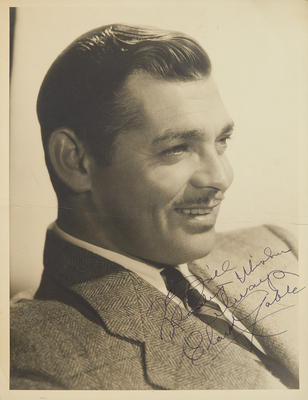
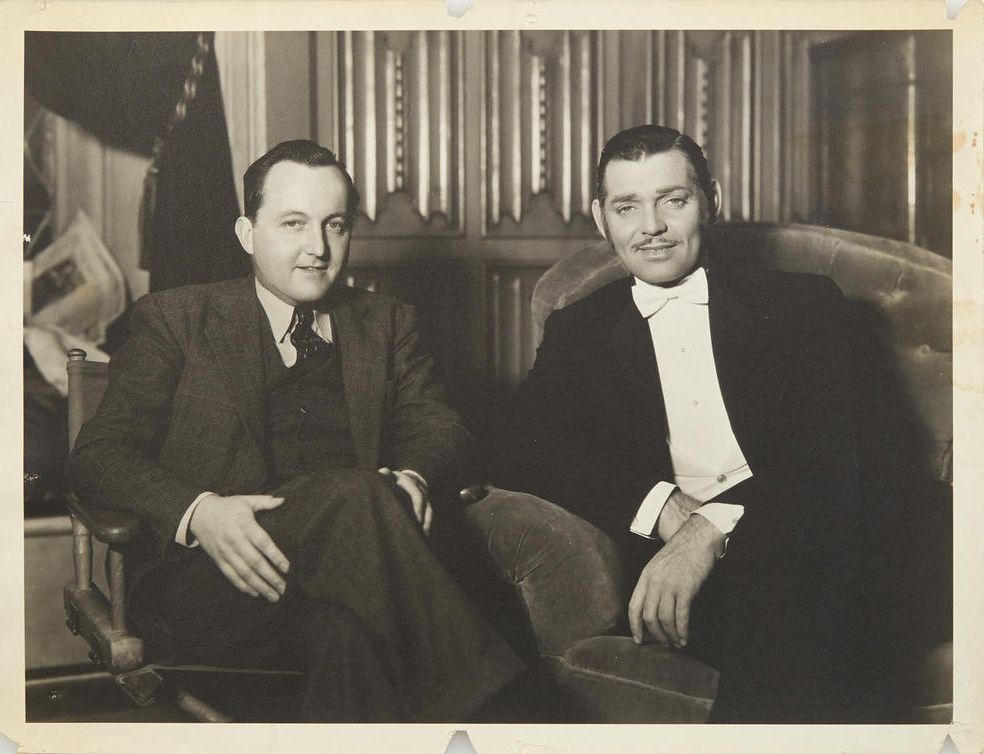
It’s like this: the TCM Hollywood auction conducted by Bonhams New York on Monday included several Fireball-related items of Carole Lombard, Clark Gable, and others in the storyline. These came from two sources: some were given by Clark Gable’s widow, Kay, to a World War II collector who consigned them to the auction. Others were consigned by the family of Otto Winkler and became available after the passing of Jill Winkler’s niece, Nazoma Ball, with whom I worked closely to understand and develop the characters of Otto and Jill. This group of material included a portrait of Clark Gable inscribed to Jill, several notes written by Carole Lombard to Jill or the Winklers, a handwritten postcard from Clark to Jill, and some personal candid photographs of Clark and Otto taken at the MGM studios.


Fireball: Carole Lombard and the Mystery of Flight 3 by Robert Matzen

The portrait that Clark Gable inscribed to Jill Winkler.

As readers of Fireball know, Otto Winkler was Clark Gable’s personal publicist at MGM. Gable entrusted Wink with the well-being of Carole Lombard, Clark’s wife, during the bond tour to Chicago and Indianapolis. Gable wasn’t close to many people and realized after the crash of Flight 3 and the passing of Lombard and Winkler that Otto had been his best friend in spirit and deed.

It was Otto who drove Clark and Carole to Arizona for their elopement at the end of March 1939 while Jill stayed back in Hollywood and pretended to be Carole for a day, driving Carole’s car and running Carole’s errands. After that the couples became pals, and along with Wink, Jill lived a storybook life with King of the Movies Clark Gable and his queen, Carole Lombard Gable. These were characters that had been all but lost to antiquity; few knew Otto Winkler from Adam or Jill from Eve. In fact, if I hadn’t been able to spend so much time with Jill’s niece, a woman who at age 93 also remembered Otto in life, I wouldn’t have been able to access these characters from the inside. The narrative of Fireball brought them to life once again and made their story so human and so important.

I was a phone bidder for the Bonhams auction on Monday and placed bids on five lots: the Gable-Winkler candids; the Lombard correspondences to the Winklers, the Clark-to-Jill candid, and the handwritten postcard. I also took a flyer and managed to place one bid on the worn 14k wedding band that—according to documentation from Kay Gable—was given to Clark by Carole. But bidding got out of hand mighty fast and hammered at an astonishing $40,000.

Fireball: Carole Lombard and the Mystery of Flight 3 by Robert Matzen

A candid photo once owned by Otto Winkler shows Otto and Clark Gable at MGM in 1937.

Afterward, I sat there with new awareness of the impact of Fireball, because I had lost out in a furious wave of bidding on all the lots except the postcard from Clark to Jill, which was the most significant item and one that will factor into the revised edition of Fireball. The other items all went at prices that were, to me, beyond practical. I felt then, as the dust was settling after my involvement in the Bonhams auction, that Fireball had affected the value of the Winkler-related items. And that was a good feeling.

The auction was, for the most part, about what I expected. It is a rare bird who wants a costume worn by Lisa Gaye in 10 Thousand Bedrooms. But the items from Casablanca that I mentioned in my last column blew the roof off of Bonhams, as reported in the New York Times. The playscript Everybody Comes to Ricks, which was the basis for the Casablanca story and which I pooh-poohed for its pre-auction estimate of $40,000-80,000, hammered at $85,000 (take that, Mr. Influencer). The battered front doors to Rick’s Café Americain, rescued at some point from the Warner Bros. prop department, fetched $92,000 ($115,000 with buyer’s premium); the prop-department-created letters of transit hammered at $95,000 ($118,750). And Sam’s piano hammered at a smart $2.9 million—or $3,413,000 with add-ons. Also of note, Aragorn’s sword from Lord of the Rings: The Return of the King (2003), hammered at $360,000, and the elaborate Cowardly Lion costume worn by Bert Lahr in The Wizard of Oz (1939) hammered at $2.6 million, topping $3M with buyer’s premium. Watch out I don’t write a book about these pictures, or the values will go up still further. After all, I am an influencer.

Everybody Comes to Ricks–Even Today

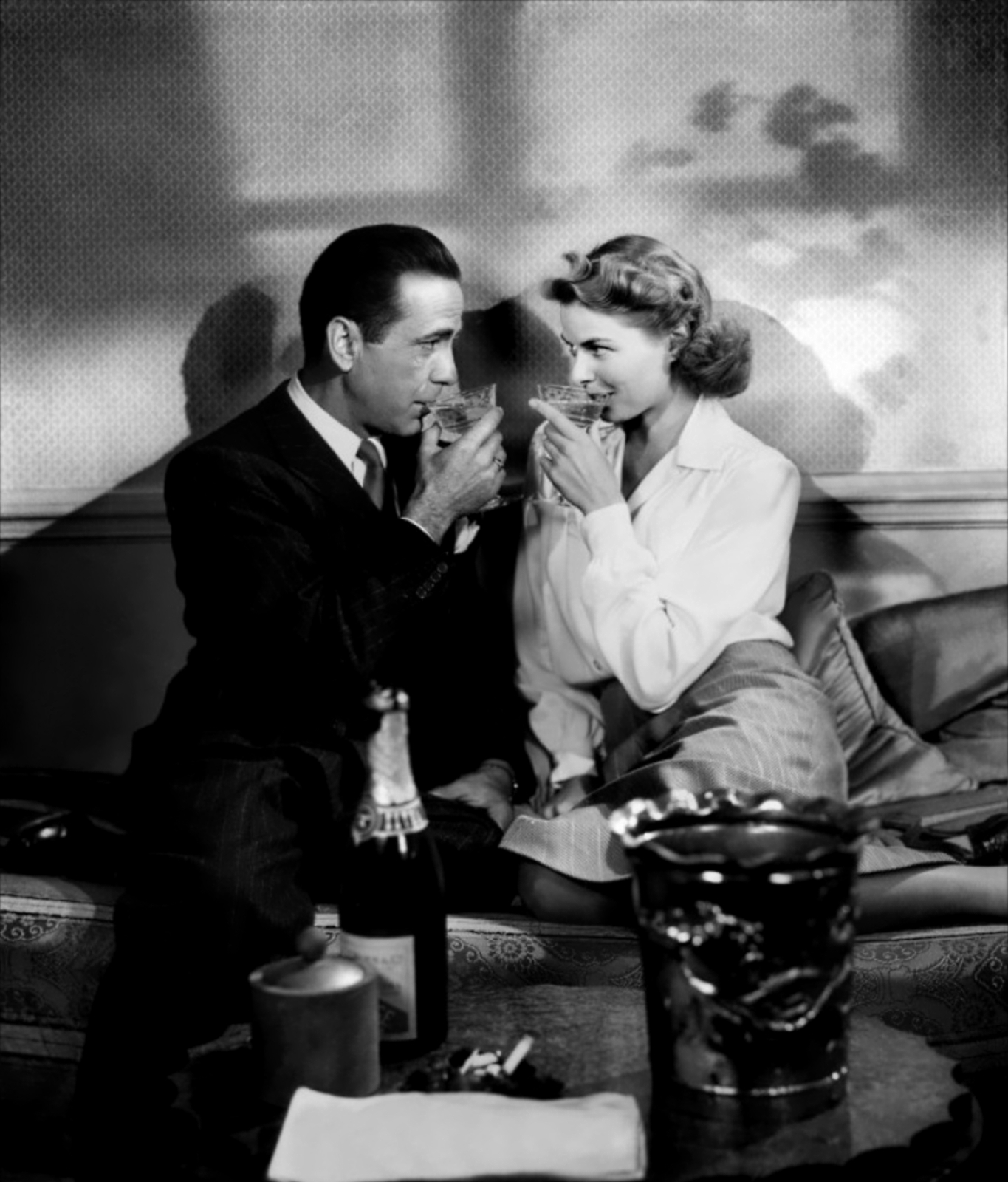
Show of hands—who here hasn’t seen Casablanca? If you’re a regular who’s been drawn to my columns by the explorations of old Hollywood, I know you have seen it, but if you stumbled upon Fireball and were surprised by the story and content and haven’t lived and breathed Hollywood’s Golden Era, then maybe you have not seen Casablanca and all I can say in that case is, invest 110 minutes. You won’t be sorry. In a nutshell, a multi-national cast of characters with competing interests meet up on the neutral soil of Casablanca, French Morocco, in the middle of World War II, at Rick’s Café Americain. Many of these people are seeking to flee North Africa for freedom from Nazi oppression and they wait, and wait. Letters of transit have been stolen from a murdered Nazi and these are carte blanche documents guaranteeing free passage out of Casablanca for any bearer.

On Monday November 24 Bonhams New York is auctioning off a collection of items related to Hollywood’s Golden Era. Included are a number with ties to Casablanca, most notably Sam’s piano, the one actor Dooley Wilson played when he performed As Time Goes By and other numbers in the film. The letters of transit were hidden in that piano, you know. For, oh, what, a million—three million?—you can buy Sam’s piano and hide stuff of your own inside it. Sam’s piano would be a pretty cool thing to possess, and I know just where I’d put it, in the great room by the fireplace. I’d invite my piano-playing friends over to try it out. But I’m not buying big stuff these days so I plan to stay out of Monday’s fray at Bonhams.

Fireball: Carole Lombard and the Mystery of Flight 3 by Robert Matzen

Rick and Ilsa during their mad fling in Paris; the only time he was ever truly happy?

I think it’s possible the auction-house experts are crazy given the values placed on some of the Casablanca-related items to be offered on Monday. There’s the first script that reached Warner Bros. called “Everybody Comes to Rick’s” along with the studio reader’s comments. That’s a unique item, all right, but would you pay $40,000–60,000 to own it? If the low-end estimate is $40K, does that mean bidding opens at $20K? I’ve been around Hollywood collectibles since high school, and scripts have never been that highly prized. Even when director or star notes from classic pictures are written in the margins, scripts haven’t gone as high as $40K that I’m aware of. I’ll be curious to see if this one meets reserve, especially since Warner Bros. bought the concept and then tinkered and rewrote, resulting in an endless stream of blue pages (last-minute revisions were always done on blue paper so all would be alerted to the new material—particularly the actors who had just memorized the old material).

Fireball: Carole Lombard and the Mystery of Flight 3 by Robert Matzen

Rick looks at Ilsa, who has just walked into his gin joint, as Capt. Renault and Victor Laszlo observe.

How can the preliminary script command $40K and producer Henry Blanke’s production file only rate an estimate of $12–18K? I don’t get that one at all since the file includes Lenore Coffee’s suggestions for darkening the storyline by having Rick betray Victor and Ilsa. As noted in Errol & Olivia, Coffee was a brilliant script doctor employed by the various studios; she was doing a lot of work at Warner Bros. in the early 1940s. Censor Joe Breen’s Production Code criticisms are contained in the Blanke files too, and I’ve always wondered about two aspects of the final picture that survived the censor: 1) all the references to Capt. Renault’s trade of sex with young girls for police favors; and 2) 18-year-old bride Annina’s willingness, even eagerness, to make the sex trade with Renault and, by implication, with Rick. Perhaps the answers can be found in these documents; it seems to me that the salacious aspects of Casablanca must have really perked up first-run audiences at a time when other studios were offering up virginal product with the likes of Betty Grable, Alice Faye, and Deanna Durbin.

Fireball: Carole Lombard and the Mystery of Flight 3 by Robert Matzen

Barely legal, but not what Rick is after. Just-18 Annina will pay any price to get out of Casablanca.

I wrote a column a few years ago on my late, lamented Errol & Olivia blog opining that Ilsa had never loved Rick and was using him and knew all along she’d stay with Victor. Recent viewings have made me second guess myself; the ambiguity of the characters and their motives is one of many qualities of Casablanca that keeps people coming back for more. Consider them for a moment…

  • Rick Blaine, the cynic with a past who allowed himself to fall in love once, just once, with the mysterious Ilsa. Rick invested himself in the relationship and knew happiness—perhaps never was Rick truly happy except with Ilsa. But she dumped him. Dumped him cold. Dumped him in the rain. And forced him to go on with only memories of happiness and a determination never to stick his neck out again.
  • Ilsa Lund, the icy closed book of a woman who gives herself to Rick when she believes her husband is dead. But he’s not dead, and this news is what causes her to dump Rick cold. In the rain.
  • Victor Laszlo, husband of Ilsa and world-renowned devil to the German empire. He sports a dashing scar and an air of high competence. He knows his wife has had a fling with Rick, but Victor has got his sights set far higher than any affair of the flesh.
  • Louis Renault, corrupt prefect of police but a man of great charm and, above all, utter pragmatism. We feel like we can trust Louis because he makes no bones about the fact that he is corrupt. He’s impossible not to like.
Fireball: Carole Lombard and the Mystery of Flight 3 by Robert Matzen

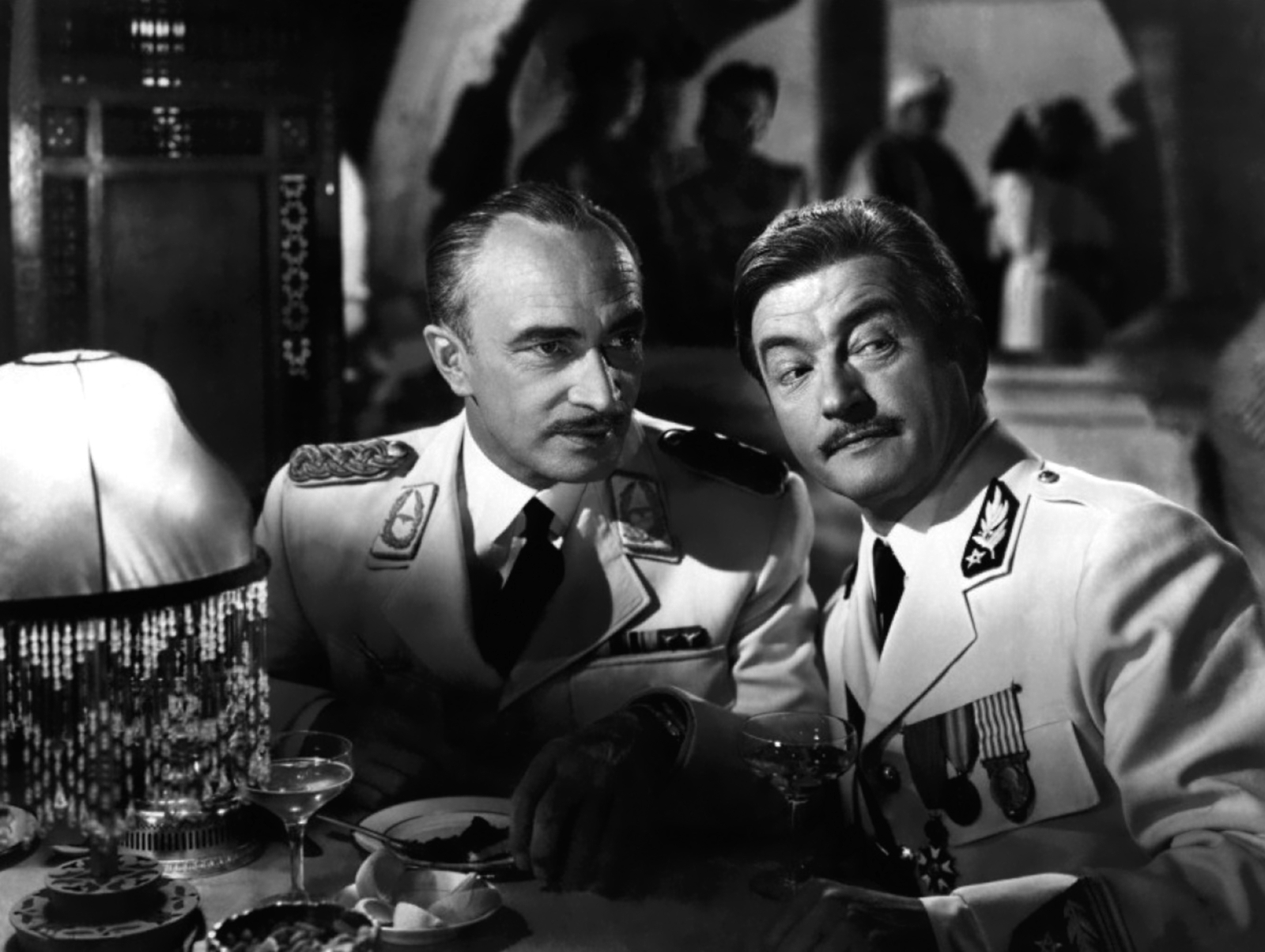
Major Strasser and Capt. Renault observe the goings-on at Rick’s Café American, primarily the effect of newcomer Ilsa on previously impervious Rick.

The sets are overrun with character actors, each with a few lines here and there. But all these actors are memorable; they all get a moment of great dialogue and they all become real. The wretched city of Casablanca is a character too, recreated modestly on the Warner backlot but teeming with “scum and villainy” (George Lucas would use Casablanca as the inspiration for his Mos Eisley spaceport 35 years later).

Fireball: Carole Lombard and the Mystery of Flight 3 by Robert Matzen

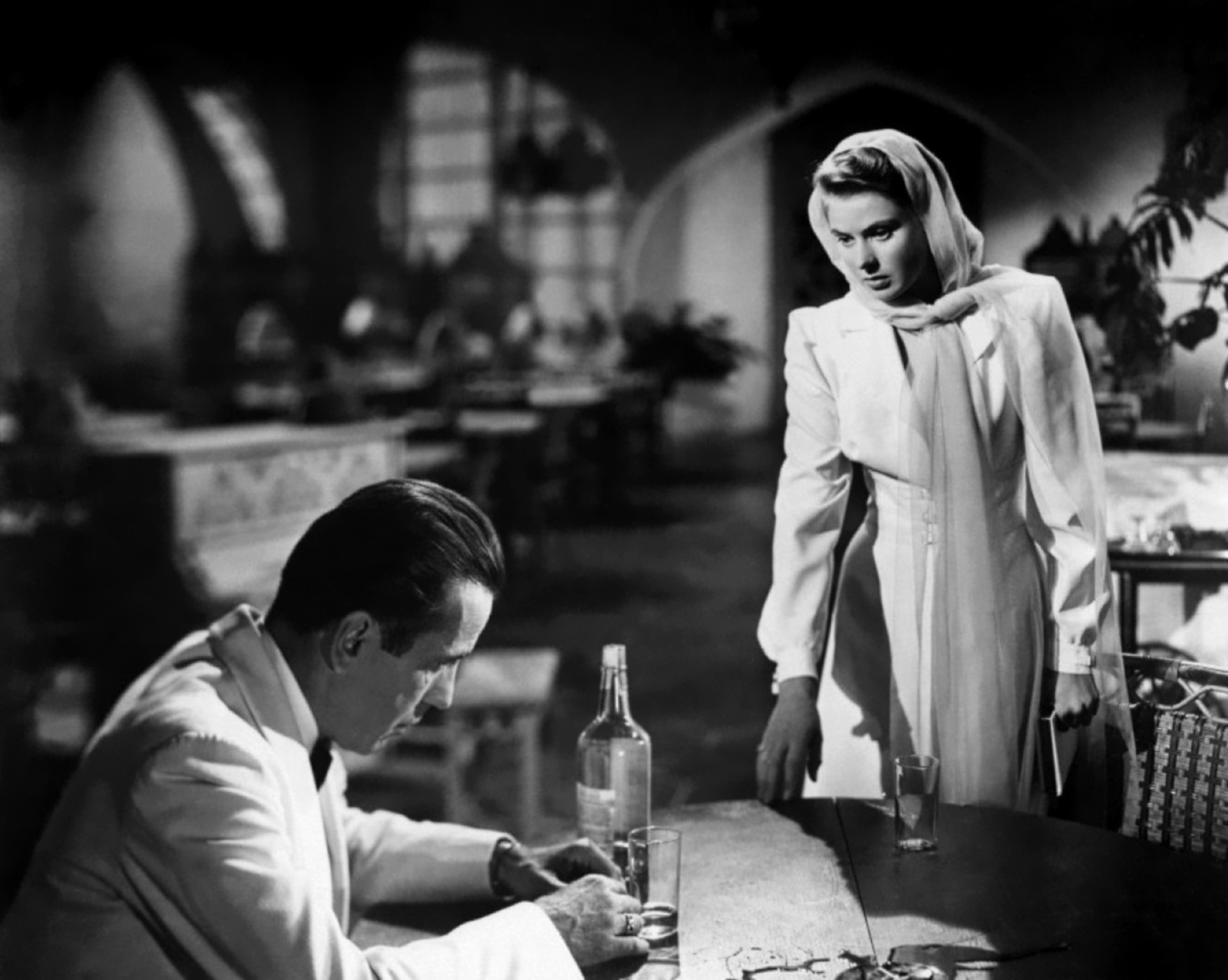
You bitch! Look what you’ve done to poor Rick.

I’ve directed a picture or two in my life, and the introduction of the city of Casablanca as the setting for this morality play is jaw-dropping. Director Michael Curtiz establishes a pesthole packed with desperate humans in just a moment. It’s a hot, uncomfortable place overrun with predators and prey. Inside Rick’s the camera dollies in, dollies out, and the shots are static when they need to be, or close, or distant, each one perfect from a director who was always good and here, never better.

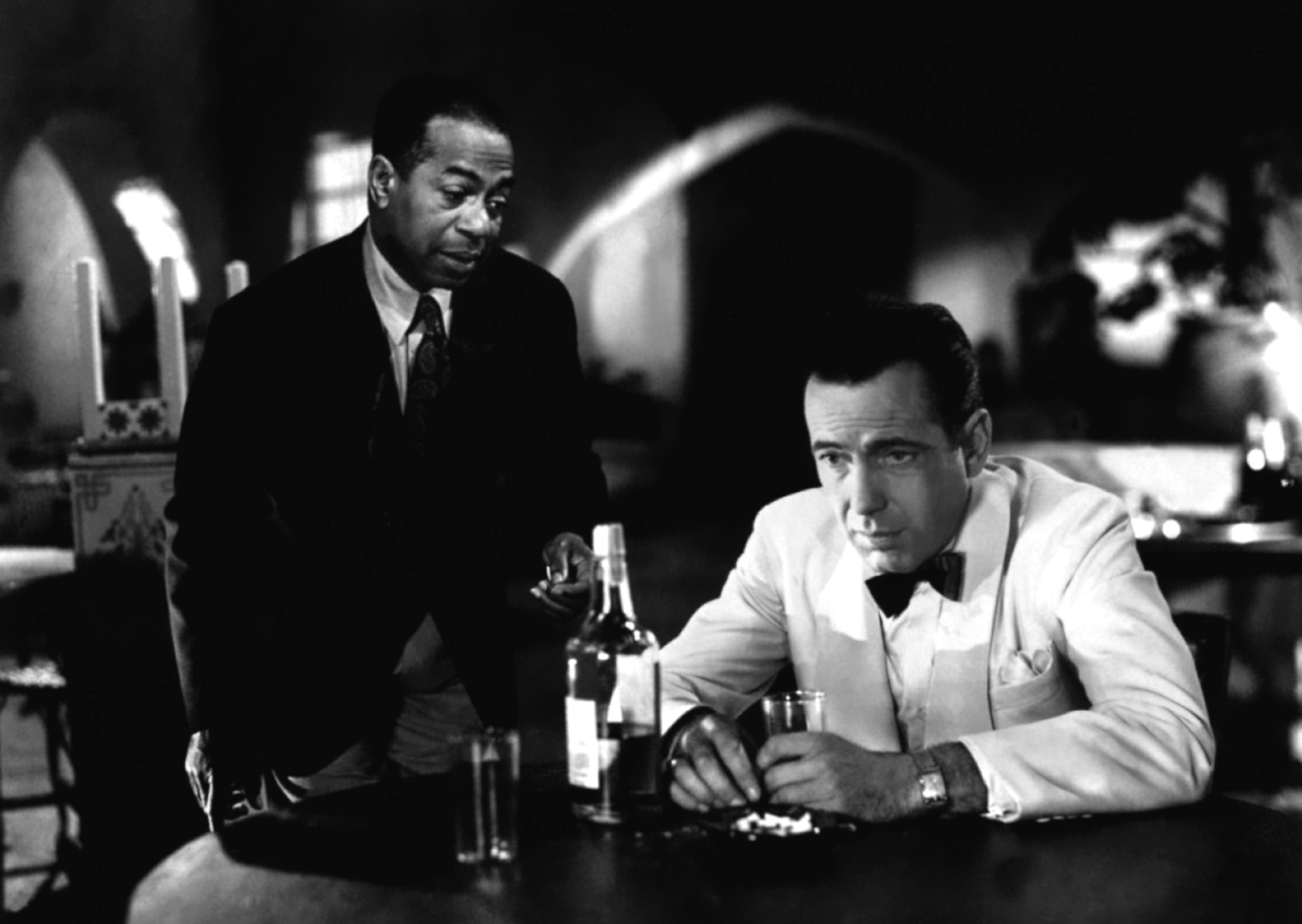
Oh, the dialogue. Ilsa comes back into Rick’s life after dumping him and she’s on the arm of a larger-than-life hero. What does Rick do? Late at night we find him inside his closed bar, drinking, alone, in the dark. Ilsa has walked back into his world and ripped the scab, a scab still fresh, right off of his soul. Sam comes in and finds Rick and knows what his boss is going through. Sam knows all about Rick and Ilsa—he was with Rick in the rain for the dumping. It’s clear that Sam is scared and worried.

“Boss, ain’t you going to bed?” he asks.

“Not right now,” grumbles Rick into his glass.

“Ain’t you planning on going to bed in the near future?”

“No.”

“You ever planning on going to bed?”

“No!”

“Good,” says Sam. “I ain’t sleepy either.”

Fireball: Carole Lombard and the Mystery of Flight 3 by Robert Matzen

“You ever plannin’ on going to bed?” asks Sam to Rick. “No!” he snaps.

African Americans at this time were, as a rule, used for comic relief, but Sam is a friend, an equal, and a character deeply drawn. But they all are in this picture. Well, except for Major Strasser, the hard-core Nazi and the guy we love to hate.

I wish Bonham’s and the consignors well in Monday’s auction. We will see soon enough if bidders are willing to shell out tens and hundreds of thousands of dollars for this hodgepodge of props, costumes, scripts, documents, and movie posters connected with classic film. I wonder if the letters of transit have expired—they might come in handy someday and one of them is for sale in this auction, at an estimated $100–150K. One thing seems clear—Casablanca has stood the test of time as well as any picture from the Golden Era, and shows no signs of slowing down. Because it is still so popular, I wouldn’t be surprised to find Sam’s piano on display at a Vegas casino sometime soon.

Fireball: Carole Lombard and the Mystery of Flight 3 by Robert Matzen

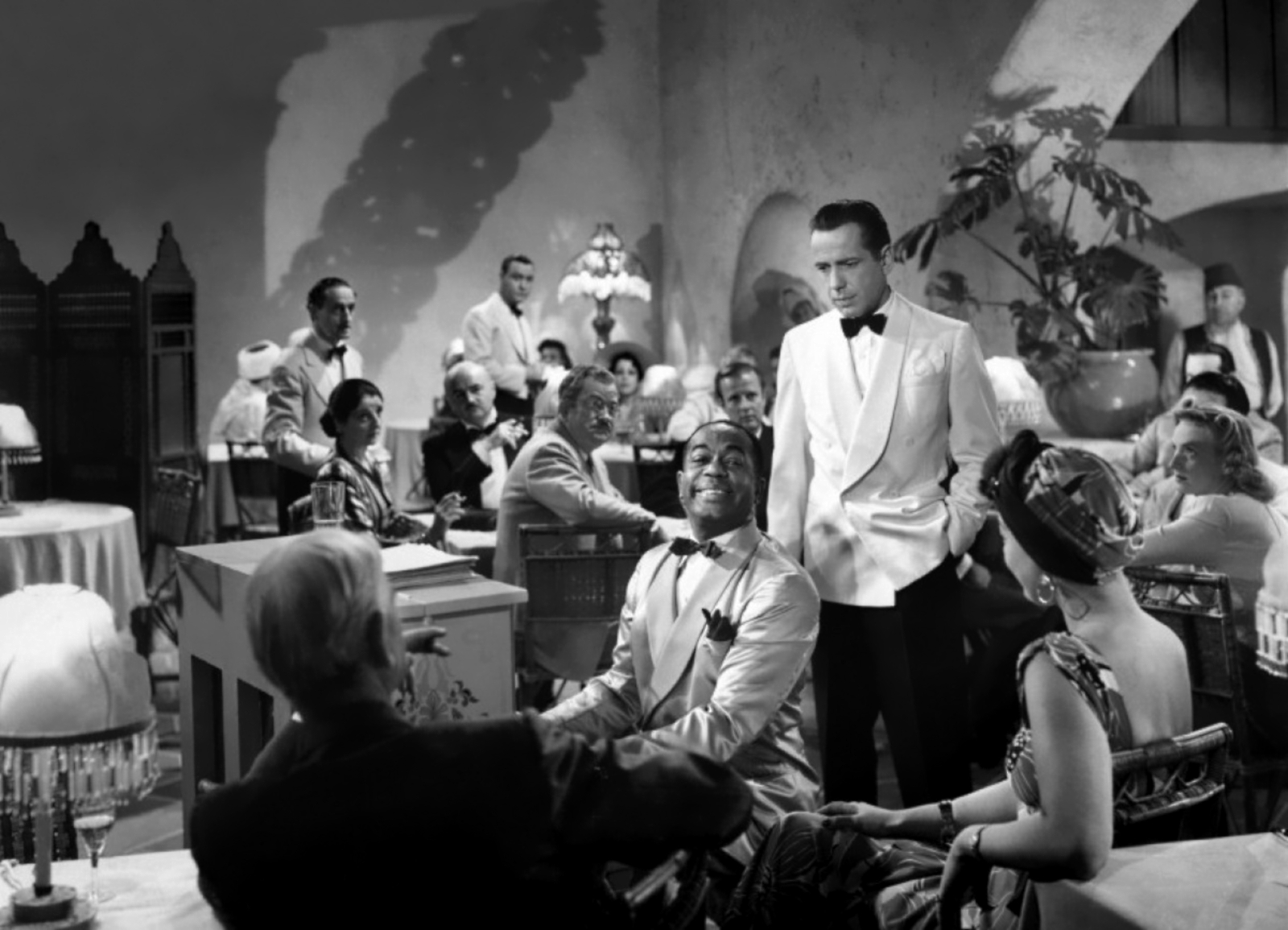
Sam plays the famous piano as a moribund Rick looks on.

Man’s Man

Fifty-four years ago today, Clark Gable died. He had been hospitalized for days after having suffered a heart attack at the ranch in Encino and was thought to be recovering, but succumbed suddenly on November 16, 1960. He passed out of this world as the logo of the Golden Age of the motion picture. His face, toothy grin, and jug ears were IT for Hollywood. He made only two features that stand the test of time, It Happened One Night and Gone With the Wind, but two were enough. Oh, sure, he made other big pictures and many movie buffs will remember Red Dust and Honky Tonk, but by the time Gable’s wife Carole Lombard died on Flight 3 in 1942, Gable’s best work was behind him. He went off to fight in World War II and came back to a huge box office return in 1945 when he made Adventure with Greer Garson, but this was a bad picture and would be followed by many other pictures that were, if not bad, then indifferent.

Fireball: Carole Lombard and the Mystery of Flight 3 by Robert Matzen

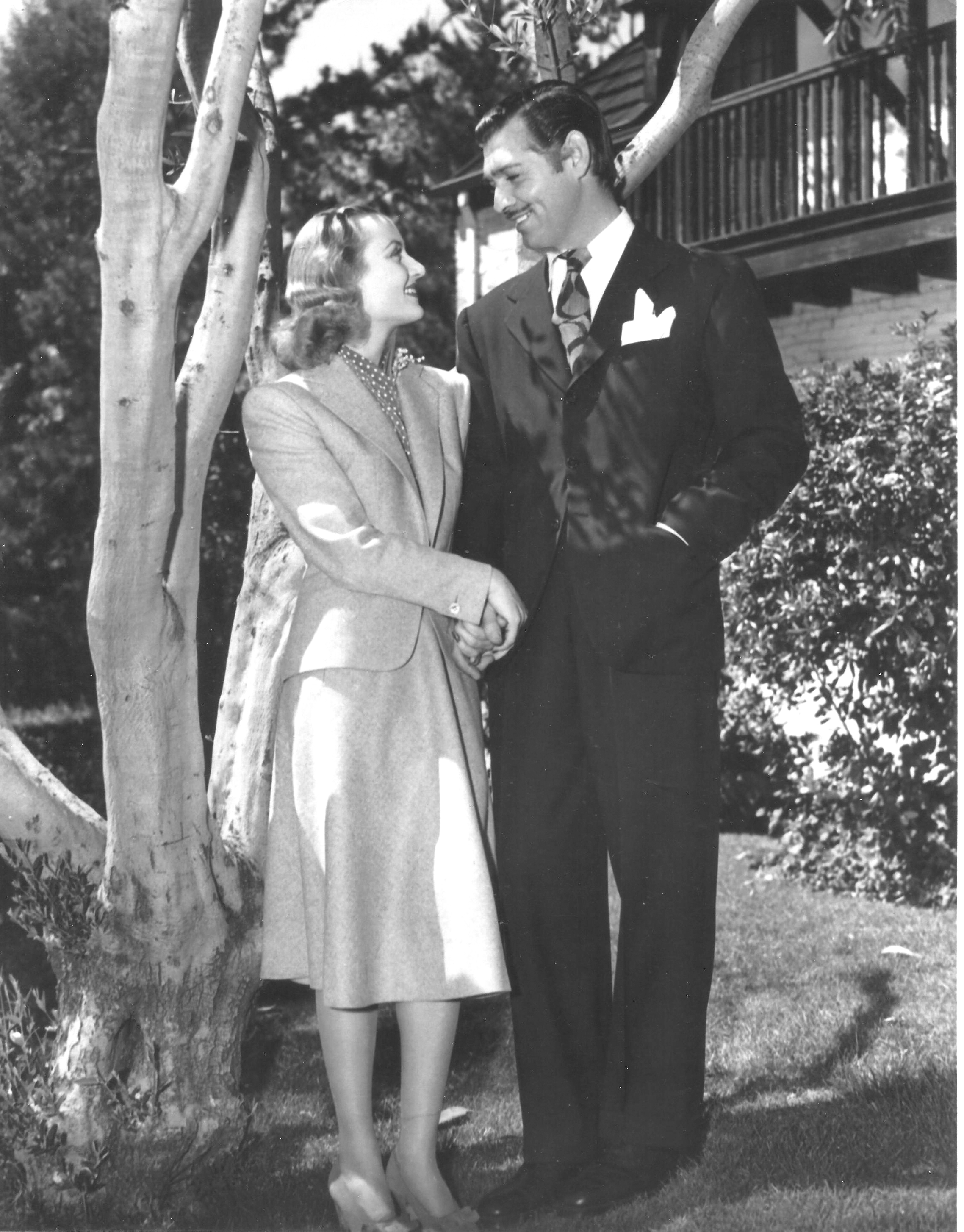
On top of the world, Ma! Or so Clark Gable thought, seen with Carole Lombard here at the announcement of their wedding in March 1939.

Why didn’t the Gable brand endure? Simple. When Carole died, Clark died. He would go on roaming the earth for 18 years as a guy in a Clark Gable suit, but the essence of what made Gable Gable, the swagger, the growl, the I’ll-smack-you-around-and-you’ll-like-it, were gone. Once his character Rhett Butler had thrilled the world by saying, “Frankly my dear, I don’t give a damn,” and then life imitated art and he didn’t give a damn after his wife died on an airplane on a freezing Las Vegas night.

I was chatting in Detroit with my new friends Joe and Marsha the other day about Fireball, and about the Clark Gable that emerged from the Flight 3 disaster. Joe admires what Gable did with the rest of his life, just as I admire it. Clark learned from tragedy; he appreciated what he had lost; he put one foot in front of the other; he kept breathing; he endured. Gable was never the same man, but he was a man—he was called a “man’s man” and proved it. He gave himself a month to grieve; he went back to work; he enlisted in the Army Air Corps, and he went to Europe to fight. He was 41 then, and served with men 20 years younger. He asked for no special favors and ran the obstacle course just like anyone else. He went up in B-17s and secretly wished to go down in flames so he could experience Lombard’s last moments and then lie with her at Forest Lawn.

But, goddammit, he lived. And he kept on living, always haunted by the woman who blew into his life like a tornado, challenged him, adored him, cast her spell…and then was gone. She haunted him every day, her face, her voice, her perfume, the things she said, the way she said them, always there. But not there, because she was gone.

Fireball: Carole Lombard and the Mystery of Flight 3 by Robert Matzen

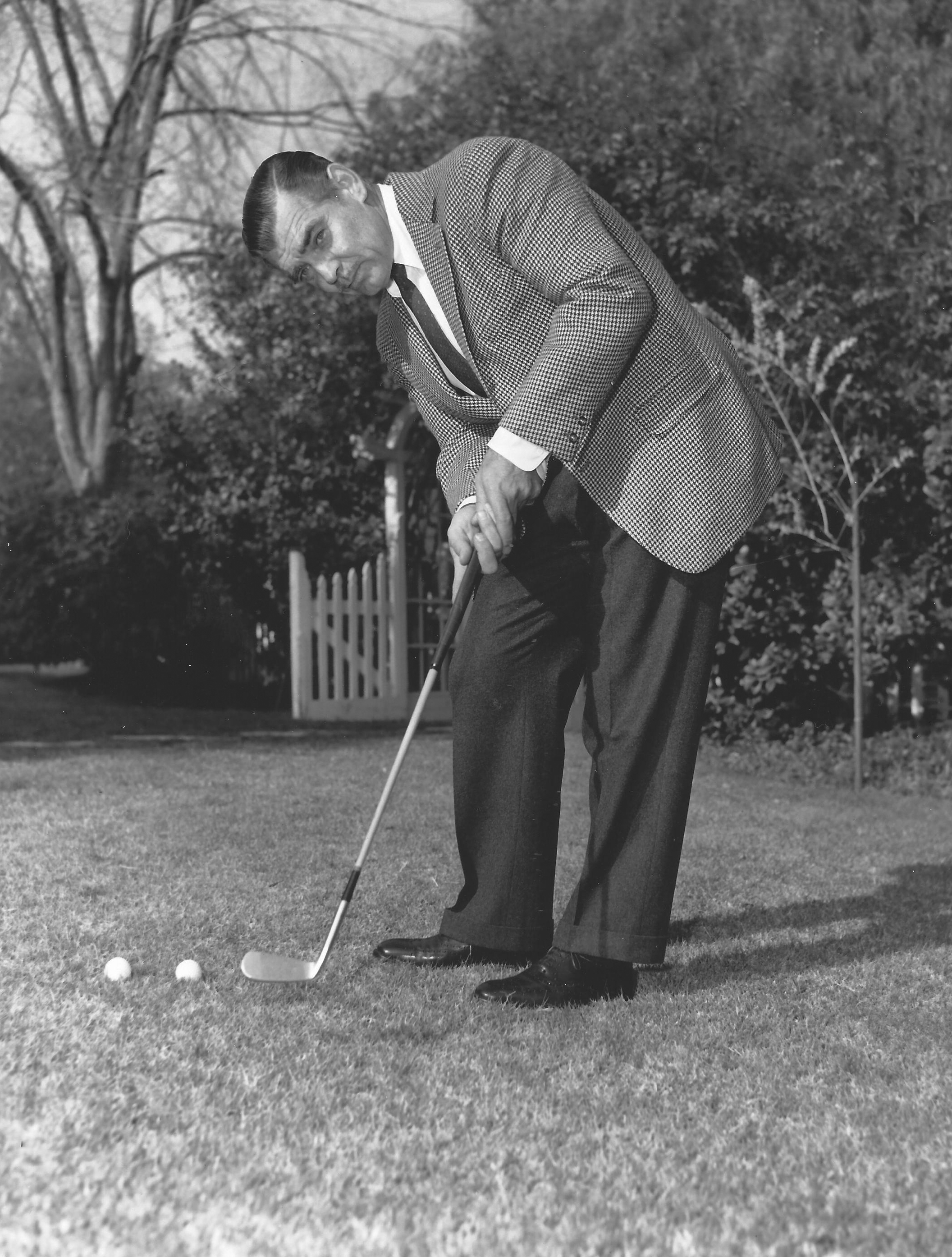
Just killin’ time, waiting for his ticket to be punched in 1951.

The self-righteous among us will condemn Clark Gable and say from the soap box, “If he loved her so much, why wasn’t he faithful? Why did he carry on with Lana Turner and cause Carole to rush to her doom?” I always go all biblical at that point and advise that those out there without sin should cast the first stone.

There’s nothing in this world quite like sitting with Clark, Carole, and Petey in the Great Mausoleum of Forest Lawn. The three of them and me, sitting there, in utter peace and quiet in a sequestered corridor. It brings so much to mind, first and foremost the sadness of it all, the way Carole and Petey died, and the way Clark, in his way, died with them. Three crypts side by side by side, with simple faceplates and dates of birth, dates of death. There’s a story of a million words there in that tiny little 10 feet of corridor. He purchased three crypts in January of 1942, two for his wife and mother-in-law, and one for himself. He married twice more, but his wishes were ironclad: place me next to Ma.

On this date 54 years ago, Clark finally got his wish. After years of smoking too much, years of drinking too much, years of enemy flak, fast cars, fast motorcycles, eating food too rich for him, he finally, finally got his wish. He punched a ticket to see Ma. He returned to the only human companion who ever made sense to him. This day, 54 years ago.

Fireball: Carole Lombard and the Mystery of Flight 3 by Robert Matzen

I wonder if Spencer Tracy (left) is thinking about spending two days with Gable at the El Rancho Vegas awaiting word of Carole’s fate. Here the greats, including Robert Taylor and James Stewart, gather for the King’s funeral at Forest Lawn in November 1960. At this same Church of the Recessional, Gable had endured the funerals of Ma and Petey 18 years earlier. In this shot, Air Force Chaplain Johnson E. West accompanies Kay Williams Gable, widow of the actor, after the service.

The Censor Almost Forbade

Fireball: Carole Lombard and the Mystery of Flight 3 by Robert Matzen

Lombard models a gown she wears early in To Be or Not to Be.

Carole Lombard’s last picture, To Be or Not to Be, aired on the Saturday night prime time edition of The Essentials on Turner Classic Movies the other night. I only learned this the day after. Damn! I missed it, which is a shame because I enjoy the perspectives of Robert Osborne and Drew Barrymore as they dissect the classics.

To Be or Not to Be shares with Saratoga, Rebel Without a Cause, the upcoming Paul Walker picture, Furious 7, and many others, the distinction of being released after the death of a major star. Saratoga was in mid-production when Jean Harlow took sick and passed away, causing a problem for MGM that became a publicity gimmick: spot the scenes featuring a body double for Harlow. As recounted in John McElwee’s fantastic book, Showmen, Sell It Hot! producers and distributors sometimes face this macabre fork in the road, having to complete or market a motion picture featuring a leading player who’s suddenly deceased. McElwee discusses at length the problems facing MGM when another Walker, this one Robert, died during production of My Son John. Following the death of super-hot cult icon James Dean in a car crash, Warner Bros. cashed in with a teenaged population that camped out in theaters to watch their “crossed-over” hero over and over and over again. As described by McElwee, the stellar box office of Rebel led to a fast reissue of Dean’s two other pictures, East of Eden and Giant, as well as production of an odd little documentary, The James Dean Story. Cash registers really do jingle when a big star dies.

I had always read that Carole Lombard’s last picture didn’t do well, which made no sense given the very public, very heroic, way she died. Then I did the research and learned what boffo business To Be or Not to Be did upon its release in February 1942, a discreet one month after Lombard’s passing on TWA Flight 3. To Be was a smash hit for United Artists, which it probably would not have been otherwise due to the three strikes against it.

Fireball: Carole Lombard and the Mystery of Flight 3 by Robert Matzen

Another photo from one of her last portrait sessions.

For those few of you who haven’t seen To Be or Not to Be, do yourselves a favor and rent or buy it at once. The plot concerns a troupe of actors in a Warsaw that experiences Hitler’s invasion of Poland in September 1939. The harmless group of performers is enjoying a run of Hamlet but had also been rehearsing a comedy about Hitler that is now shut down by the invaders—the censor forbids such satire of the Fuhrer.

Who in an America plunged into war was going to buy a comedy about Hitler? That was strike one. The title, a line from Hamlet, itself spelled trouble in rural areas, and UA sought to change it prior to the picture’s release. Strike two. In fact, Carole Lombard spent the first leg of her bond tour in a tizzy because To Be or Not to Be was about to become The Censor Forbids. As covered in Fireball, telegrams shot back and forth between the train and New York, with Carole asserting that a change to this new title “in no way conveys the spirit of the picture and is unbecoming to an organization as important as United Artists.” She found the new title “suggestive” and distasteful, and in general raised such a stink that UA quickly backed down.

Strike three was Lombard herself. She wasn’t scoring at the box office, and her pictures of late had been unsuccessful. Only two of her past seven pictures had done well, and neither was a smash. The two pictures she had lined up after To Be were practically B-level and both at second-tier studios, one at Columbia and the other at Universal.

All these factors conspired with the outbreak of war to make United Artists executives in New York nervous, and the combination of them indicated that the picture was about to premiere to middling business.

No wonder Lombard was in a pissy mood on the train. Well, it didn’t help that she had just brawled with her husband, Clark Gable, about his eyes wandering in the direction of a hot little number at MGM named Lana Turner. Stakes were high for Carole all around on this bond trip, and she was plenty shrewd enough to understand that headlines of big bond sales in Indianapolis would help restore her name at the box office.

Carole and co-star Jack Benny knew they had something special in To Be or Not to Be. They had fun and shooting went fast—two positive signs for the picture that was supposed to be sneak previewed on the evening of Monday, January 19. Theoretically Carole could have completed the bond tour as scheduled by train and still made the preview, but of course she died on January 16 and the preview never happened. She did not live to see her last picture, which most fans call her best.

Fireball: Carole Lombard and the Mystery of Flight 3 by Robert Matzen

Restrained UA artwork announces “Carole Lombard’s last picture.”

I urge you to watch To Be or Not to Be because it’s such a smart picture. The humor is sly throughout, with Lombard portraying a famous Polish actress who contemplates infidelity with a young air force pilot 10 years her junior. Laugh at Nazis? The audience couldn’t help but laugh because the premise worked. This joke really was on Hitler.

Carole Lombard turned 33 as production commenced, and she never looked better. To Be or Not to Be is a swan song that needed no tricks and no ballyhoo, and UA was careful not to say or do anything untoward—anything that could upset a grieving Mr. Gable or his studio, powerful MGM. Metro itself had gone to questionable extremes in pitching Saratoga, like urging theater operators to set up shrines to the dead blonde bombshell, complete with saintly photos, crucifixes, and floral displays. No such showmanship seeped out of UA—To Be or Not to Be sold itself as the masses sought one more date in the dark with the late queen of screwball and American war hero, Carole Lombard.

Don’t Call Him “Jimmy”

Fireball: Carole Lombard and the Mystery of Flight 3 by Robert Matzen

In 1952 James Stewart played a doctor wanted for murder in The Greatest Show on Earth. Through the course of picture, he never appeared without clown makeup.

It’s happening again: I’m on the trail of an elusive subject, trying to figure him out, following clues leading to deconstruction of his personality to the elements, then examining them and reassembling the human. This time, I’m finding the exercise frustrating. Well, as frustrating as usual.

The subject is James Stewart, Hollywood leading man from 1937 to the early 1970s, not to mention war hero, political conservative, and deity to what seems to be an entire demographic of the U.S. population. One of the first things I learned: He didn’t favor the familiarity of “Jimmy.” I interviewed his movie and television co-star Julie Adams recently and picked up on the fact that she called him not “Jimmy” but “Jim.” Said Adams, “I always called him that, and so did everyone else; I don’t think he liked Jimmy.”

Fireball: Carole Lombard and the Mystery of Flight 3 by Robert Matzen

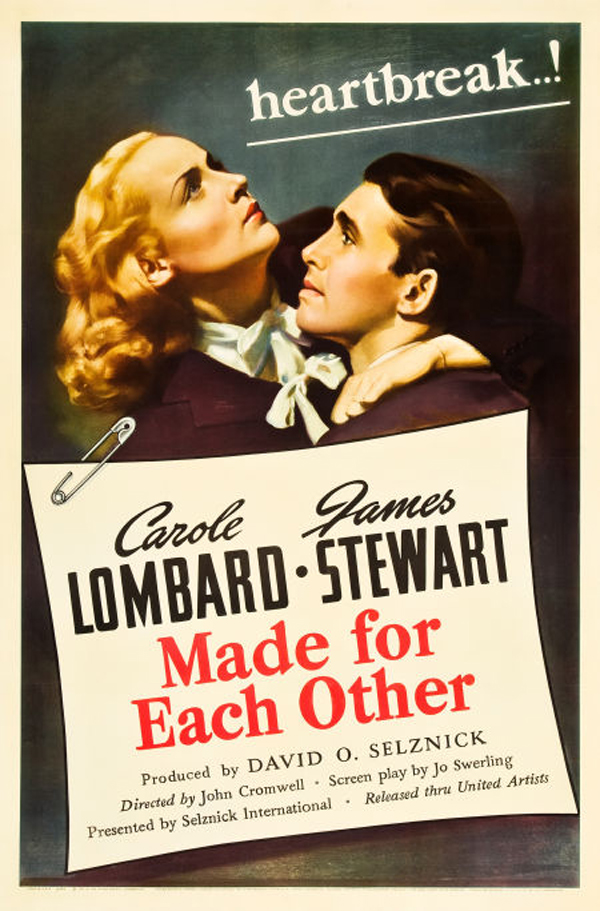
The biggest heartbreak about the only picture Carole Lombard and James Stewart made together was the amount of money this contrived melodrama lost at the box office.

This is a tough nut to crack, this chasing down of a deified figure. There are a thousand stories out there of good deeds done by James Stewart, and I’m finding nothing juicy, nothing to humanize him. It takes me back to trying to decipher the real George Washington—not the capital city, not the university, not the bridge. The man who started it all. Eventually I got at this guy, who was in youth an ambitious, hot-tempered (did you know he was a redhead?), self-educated natural athlete who dearly loved the ladies. A theme of one of my documentaries was that GW pursued the married Sally Fairfax—which earned the video a ban by a major Christian DVD distributor! George Washington loved freedom, all right—the freedom to make an untaxed fortune, and it was self-interest, not altruism, that started him down the revolutionary road. Eventually, he was willing to give up everything for the good of his fellow Americans. Everything. And believe me, he had a lot to lose. The courage of convictions that grew within him, the awareness to know what was required of a leader, and a pre-existing and unshakeable self-discipline, all combined into what became the most admired man in the world. All that said, it was interesting that he had a violent temper; it was interesting that he pursued the wife of his best friend. It was all part of the same package.

In the end, I figured out George Washington, and I admired his human failings because he fought these parts of himself on his way to immortality. So now I have to learn the failings of James Stewart. He’s practically got the Knights Templar guarding his image; to me their protection harms his legacy rather than protects it. Isn’t a subject of biography interesting precisely for what he or she overcame in life? The inner conflicts? The failings? The handicaps? The demons?

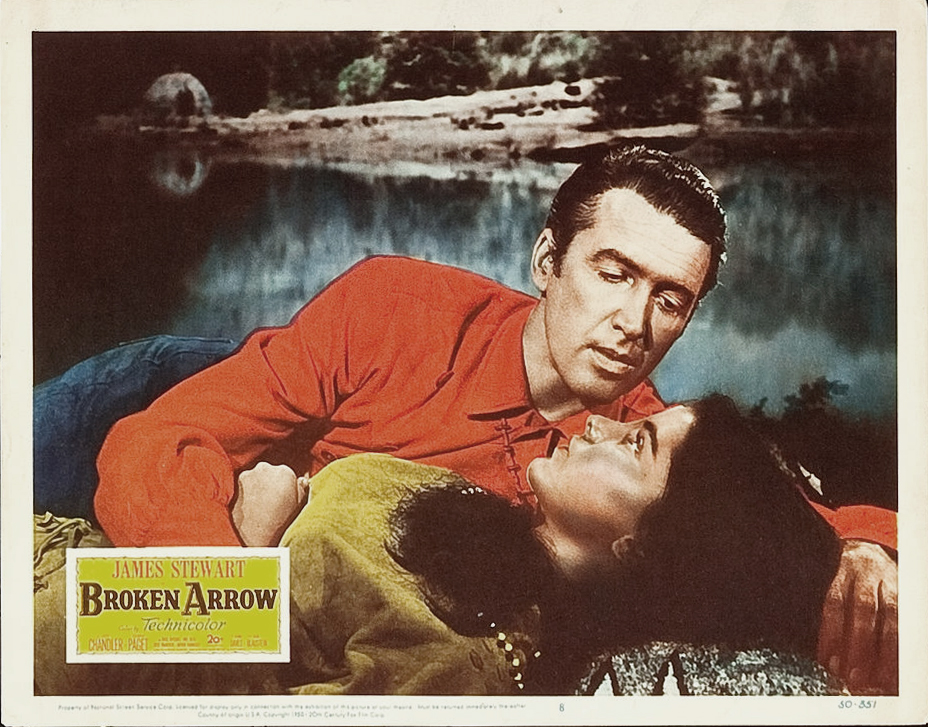
The next book will be about a lot more than James Stewart, but he’s the focal point like Carole Lombard was in Fireball. I’ve been busily watching Stewart pictures of late, most recently Broken Arrow with Jeff Chandler and, as Stewart’s love interest, 16-year-old Debra Paget, nearly unrecognizable sans trademark heavy eye makeup. Yes gang, I said Stewart had a 16-year-old love interest to his 41! Today, they call that statutory rape, and even in the context of a picture made in 1950, I grew a little fidgety looking at their clinches.

Fireball: Carole Lombard and the Mystery of Flight 3 by Robert Matzen

James Stewart with Debra Paget.

I’m blazing a trail of pictures I never gave a hoot about. Another one I caught recently was The Naked Spur co-starring Janet Leigh and Robert Ryan and before that Strategic Air Command with June Allyson. I could always take or leave James Stewart as an actor, which, really, makes me a match as a biographer because I’m starting out neutral. No image to protect. No axe to grind. Oh, sure, he’s perfect in It’s a Wonderful Life and I really liked Harvey—although I never bought him as an alcoholic in that picture. His ingenuousness and his playing against cynical Henry Fonda worked beautifully in The Cheyenne Social Club. His body of work is simply outstanding and the more you think about the variety of his pictures, the more impressive Stewart becomes. He was much more the chameleon as an actor than he appears at first blush. Like when he played a clown in the circus and on the lamb from the cops who stayed in makeup throughout the film. This wasn’t John Wayne or Errol Flynn playing 17 variations of his public persona; Stewart could be a man with a past, a killer, a voyeur, or an obsessive-compulsive. Throughout the 1950s you never knew which James Stewart you’d meet in the dark.

Fireball: Carole Lombard and the Mystery of Flight 3 by Robert Matzen

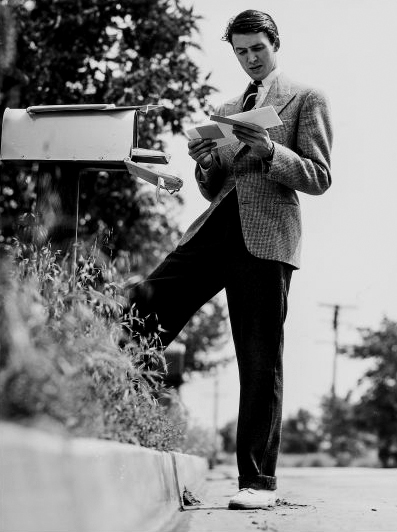
James Stewart picks up his mail at a rented Brentwood home in 1936, soon after arriving in Hollywood.

What the hell made this guy tick? He played the accordion and built model airplanes as a pastime during years most young men his age spent getting laid, or trying to. He enlisted in the Army Air Corps nine months prior to Pearl Harbor at a time when a majority of Americans were staunch isolationists trying to look the other way from an inevitable war. Instead of cashing in on celebrity and spending the war in his crisp uniform stateside, getting laid some more, he itched for combat and finally got an overseas assignment that landed him smack in the middle of hell. He sounds too good to be true, and maybe he was.

I’ve already got some great clues about the real James Stewart and how he got that way. For the record, I’m determined to confine my book to a particular theme and not encroach into the territory of a writer also developing an aspect of Stewart. I don’t feel that my book on Stewart will be competing with anybody else’s because I think one will complement the other and demand for both will be heightened.

I encourage all of you to help me write this book. What do you know about Stewart that can help me grasp his character in the way I ultimately understood others I’ve chronicled? Your opinions, insights, and clues are welcome as we embark on this grand new adventure into the past.


Wishing They’d Go Bump

I want nothing so much as to run into a ghost face to face. Wouldn’t that be fantastic? I just don’t get it when grown men say they saw a ghost and ran away. What’s a ghost going to do to you? Rattle a chain? Go, “BOO”? I don’t have a bucket list, but if I did, I’d put two things on it for sure: I want to see a ghost, and I want to see a bear. I don’t mean like a bear in the zoo, I mean a bear in the wilds. A bear rooting through my trash. A bear on the porch. Or a ghost anyplace at all. I’d turn interviewer at once. I’d want to know all about that ghost. Name, year of birth, occupation, address, year of death, manner of death—the works. With all those questions I’d likely bore that ghost to d… Well, not to death certainly. But far from running away, I’d be interested.

Fireball: Carole Lombard and the Mystery of Flight 3 by Robert Matzen

Here I am sitting on Errol Flynn’s diving board. On my return trip, all alone, I felt the ghost.

I felt Errol Flynn’s ghost, as described in Errol Flynn Slept Here. I stood at his deserted home, Mulholland Farm, and I was all alone, and I felt him watching me to the point the hairs stood up on my arm. I told no one about my brush with the ghost at the time—I thought I was imagining things—and it wasn’t until 15 years later that I started to hear other, much more startling personal encounters with the ghost of Mulholland Farm. Tracy Nelson, for one, saw Flynn’s ghost up close, as did her brother Gunnar.

I felt Jean Harlow while visiting Forest Lawn Glendale a long time ago. I felt her reaching out to me, quite distinctly, and what I sensed was, Write about me. I sensed great loneliness; great sadness. A soul alone. Circumstances prevented me from doing it at the time, but I felt a heavy sense of obligation. I carried it around for years. Finally David Stenn wrote Bombshell and Darrell Rooney and Mark Vieira wrote Harlow in Hollywood and whatever needs the Baby had, these books must have satisfied because they are both fantastic—and very different—approaches to telling her complete story.

Fireball: Carole Lombard and the Mystery of Flight 3 by Robert Matzen

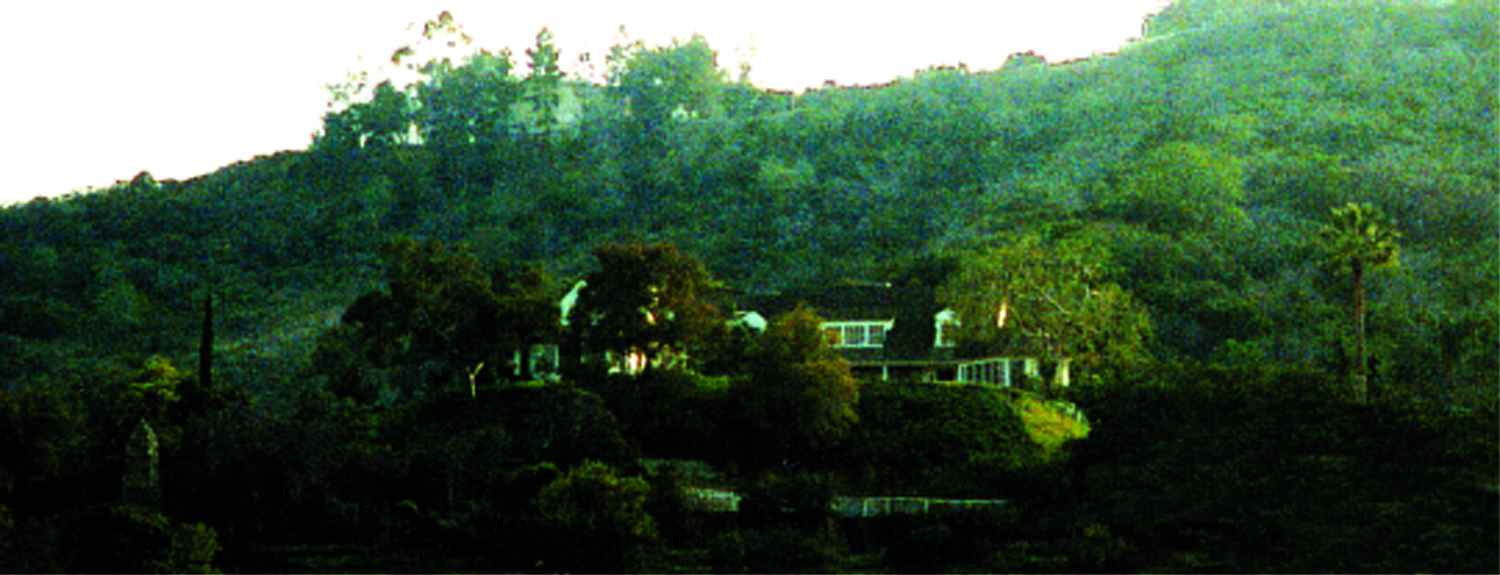
From a distance it even looked haunted–Errol Flynn’s Mulholland Farm.

Another time I was on a ghost hunt in an old house near Pittsburgh and something touched the back of my neck as I walked down a narrow hallway. I saw nothing, but I felt a hand on my neck. Not a cobweb. Not a draft. A hand.

The most frequent question people ask me related to Fireball is, “When you were at the crash site, did you feel anything?” By that they mean, did you feel, did you see, did you experience ghosts? I wondered if I would at this spot where 22 people died in one second. I felt the sadness of the place; I held a human bone in my hand. More than anything, I felt obligation to those souls.

When you explore as much history as I do, you walk well-worn paths and you feel things. I’ve had my fair share of “stranger than science” incidents, but I haven’t seen nearly as much as I want to. One of my best friends lives in a very haunted house that’s full of residual energy. He can lie in bed in the early morning and hear commotion downstairs that’s clearly his family going through their routine from 50 years earlier. Imagine hearing noises of busy family life coming from your kitchen and knowing it’s your mother in there cooking; it’s 10-year-old you and your brothers and sisters sitting down to eat and then scraping back chairs and rushing off to school. That house also has at least one ghost, as proved by dozens of odd little incidents.

Fireball: Carole Lombard and the Mystery of Flight 3 by Robert Matzen

Imagine, if you can, Flight 3 flying into the middle of this scene and crashing against the cliff. Ghosts here? I felt close to the crash victims; I knew I had to tell their story.

A few weeks ago I walked through several homes from the pre-Civil War and Victorian eras and felt the presence of the former inhabitants. I heard others describe ghostly encounters, but I had no encounters of my own. I’m also helping to restore a Victorian home these days and will spend tomorrow there alone. It’s a hundred years old but do you think I’ve heard one thing out of the ordinary? I’m afraid not. Maybe I need to walk in tomorrow and challenge the ghosts to show themselves. I haven’t tried that yet and who knows, maybe it will kick something up.

Do you want to make me jealous? Tell me about an encounter you had with a ghost, or an odd experience that you think may have been ghostly. Something you can’t explain. It’s the perfect time of year for a ghost story, and I want to hear some.