Mission: Jimmy Stewart and the Fight for Europe by Robert Matzen

Spy vs. Spy

Kasteel Zijpendaal tricked out as Nazi headquarters for the film Betrayed in 1954. It had indeed been taken over by German command in 1943 and must have looked pretty much just like this.

Here it is in 2015 on our first visit.

There was a high body count of Germans for the run of Betrayed. Here members of the beret-clad Dutch underground shoot their way out after rescuing Gable and take off.

One more, 2015 again, showing the side of the house scaled by “the Scarf” as he rescued Deventer. In real life, 11-year-old Audrey Hepburn loved to explore these grounds in 1941. She would read here on the lawn and play with the animals, which she preferred to people.


You could have knocked me over with a feather. I had a hankering to watch Betrayed the other night, Clark Gable’s last picture for MGM, made in 1954 and about the Dutch underground in WWII. I never much cared for later Gable pictures—he didn’t seem to care so why should I? But these days everything Dutch is important so there I was, watching Gable as Deventer, code-named “Rembrandt,” a Dutch CIA-type fighting the Nazis in his home country, which had been invaded and occupied by the Germans in May 1940. The first sequence in the picture was shot at Kasteel Zijpendaal—a locally famous Dutch castle built in the 18th century on a little lake at the edge of the city of Arnhem. It was “the ancestral home of the Baron van Heemstra,” Audrey Hepburn’s maternal grandfather who was once Arnhem’s mayor.  As a girl of 10 and 11, shy Audrey communed with nature in the lush grounds surrounding the castle.

So there right in front of me was Kasteel Zijpendaal dressed up as Nazi headquarters, and there was Victor Mature as the notorious Dutch underground leader “the Scarf” rowing across the little lake and climbing in a window and helping Clark Gable to escape right before Deventer was about to be tortured and made to talk. There were fake hand grenade explosions inside, Germans mowed down by the machine guns of the Scarf and his men, and then Mature burst out the front door with Gable on his back, stole a Nazi staff car, and escaped. I was dumbfounded because Mary and I had been to this castle multiple times. The rest of the picture played out almost entirely in the Netherlands with Lana Turner parachuting onto Dutch soil as a spy planted by the Allies. She is in love with Gable but quickly gets mixed up with Mature amidst spy vs. spy shenanigans. And so on and so forth.
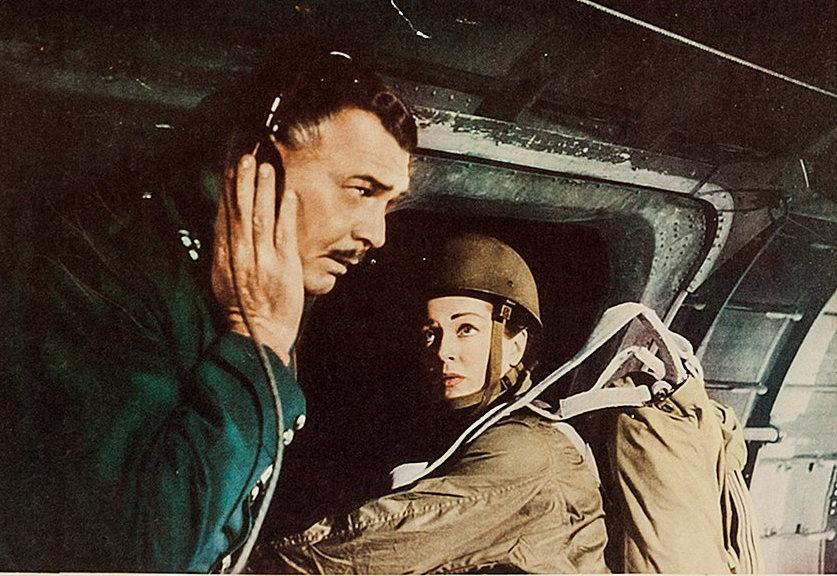
Something you don’t see every day: Lana Turner parachuting into hostile territory. To lessen your concern, I can report that she didn’t break a nail, let alone an ankle.

The depiction of Mature and the Dutch underground is hilarious. They were bumping off Nazis right and left in all these raids that never happened. At one point he and his men barge into a Luftwaffe base and annihilate a great number of Germans having a party. In truth, I love you dearly, Dutch people, but I terms of violence, you were only good at blowing off an occasional hand or foot—usually your own. When you outwitted a German, which you did all the time, it was by making an illegal radio the size of a matchbook or sending your kids out to steal dinner from the soldiers or hiding forbidden leaflets in the fake tummy of a fake pregnant lady. That was the way you won the war. One woman told me that when she was a little girl, a German officer came to their house and while he was in another room, she picked up his hat and spat in it. Classic Dutch mischief.

But they also did deadly serious stuff, like hiding thousands of Jews just before they would have been sent to Auschwitz, along with American and British fliers who fell from the skies after their bombers and fighters were shot down. One of these was Clem Leone, a friend of mine whose incredible story is chronicled in Mission: Jimmy Stewart and the Fight for Europe. Thanks to many courageous Dutch people across the country, Clem evaded capture for four months as he made his way south through the Netherlands–it was a lousy Belgian that turned him over to the Nazis in Antwerp.

I did some reading in Lyn Tornabene’s Long Live the King and Jean Garceau’s Dear Mr. G. after finishing my viewing of Betrayed. Gable spent a month in the Netherlands shooting at various locations and was treated like his royal self everywhere he went. He was mobbed and it made all the Dutch newspapers. The location work was fantastic and everything you’d expect—lots of windmills, and dikes, and water, water everywhere. You just can’t replicate that stuff on a soundstage, and the lushness of the production, in Eastman Color no less, really surprised me given the dire straits of MGM at that time—TV drowning the studio’s books in red ink and most of its stars cut loose as a result. ‘Mr. G.’ went freelance at the end of production and never again walked through the gates of the studio that made him famous over the course of more than 20 years.
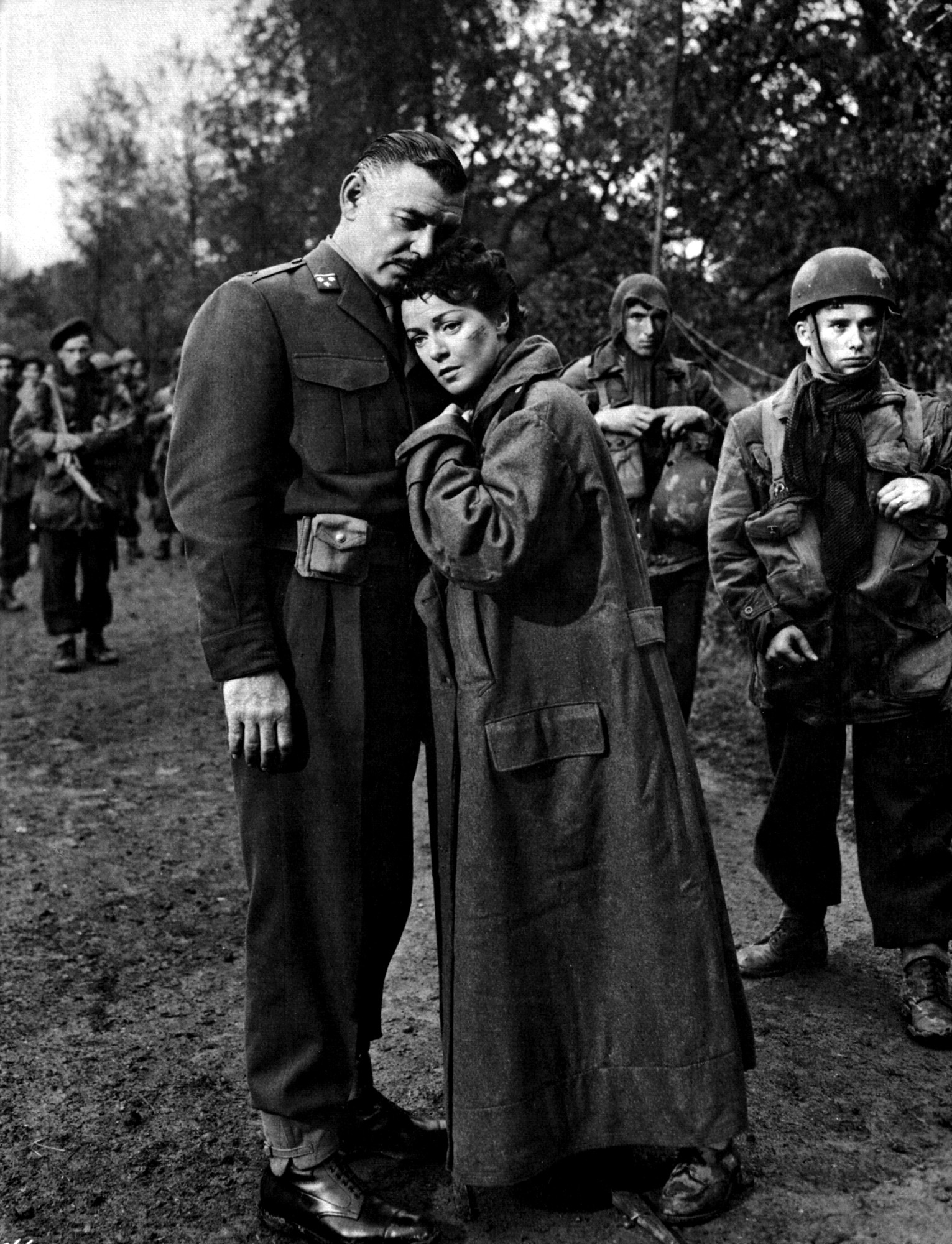
In a very cool finish, survivors of British Airborne shuffle past our beleaguered heroes.

The ingenious payoff to the plot of the picture is that Gable provides information allowing 3,000 besieged British Airborne paratroopers to escape after the September 1944 “Bridge Too Far” battle of Arnhem. The title Betrayed refers to one of the three leads leaking the plans for Operation Market Garden to the Germans, which causes them to roll in two panzer divisions in anticipation of the Allies dropping 10,000 paratroopers behind Nazi lines to capture the Arnhem Road Bridge. The whole thing was a real-life disaster for the British and 7,000 of their boys ended up dead, wounded, or captured. The very last shot in the picture shows the Airborne survivors limping out of the fog after they had crossed the Rhine along an escape route mapped by heroes Gable and Turner.

If you know the history of this battle, the plot of Betrayed is a perfect fictional backstory that fits hand in glove with real-life events. Another surprise is that there’s very little explanation for what’s going on, meaning that Hollywood expected everyone in the 1954 audience to have the facts of Market Garden top of mind. It’s a level of sophistication that would never be anticipated by movie producers today.

I had no idea I was going to get to go back to Holland on a frozen Friday night in Pennsylvania and watch my Dutch friends do a whole bunch of crazy-heroic stuff to a whole bunch of hapless Germans. Oh, the Dutch were heroic in World War II all right. Much more heroic than simply wielding a machine gun. Come to think of it, Clark Gable had Dutch roots and his character in Betrayed is very Dutch indeed. He’s not a gun toter; he uses his brains at every step to outwit the thugs who hijacked the 20th century on their way to a thousand-year Reich. “Not on my watch,” was the response of the crafty, and ultimately liberated, Dutch.
Santa Claus and the Cold Hand of Death

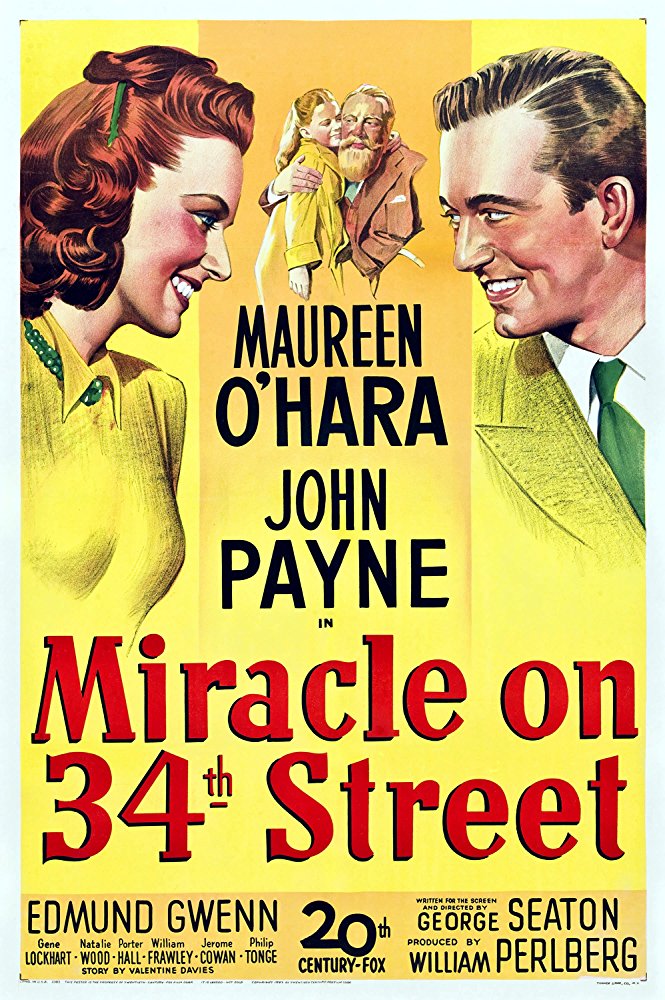
Fox poster art for the June release dismissed the Christmas angle, which was known to be bad box office.

2021 author’s note: In honor of the holidays, I’m re-posting this piece on a picture I just watched yesterday (again). I wrote this about 17 months before the release of Dutch Girl.

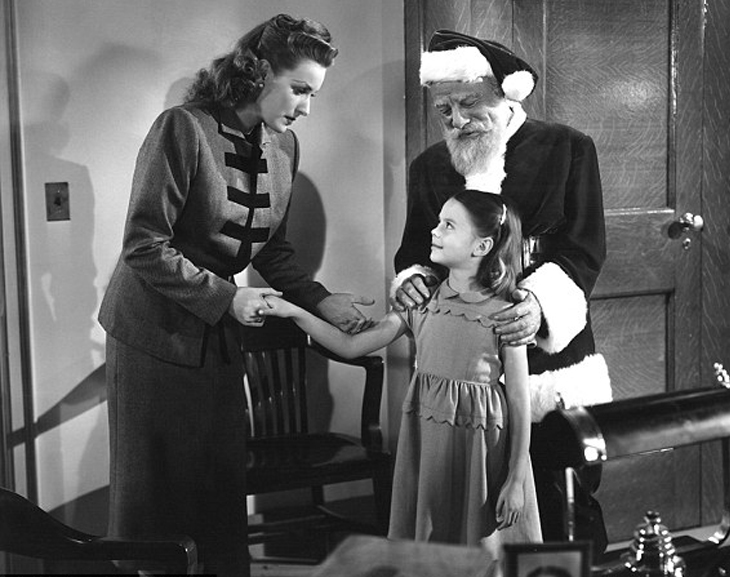
On Thanksgiving morning I was watching a bit of New York City’s Macy’s parade on television, which inspired me to revisit one of my favorite seasonal touchstones, Miracle on 34th Street. I try to watch it every year, but this time what really hit home was the scene when the woman brings the adopted Dutch girl to see Santa. Lately, I’ve been deep-diving into all things Netherlands—the language, the culture, and especially the history of life in Holland during the Nazi occupation of 1940 to 1945.

If you were living in the Netherlands when the Germans marched in on a pleasant May morning, there was a decent chance you would not be living when they were driven out in 1945. If you happened to live in Rotterdam, you could have died in the German bombing of the central city that forced the Dutch surrender four days after invasion. If you were a Jew, you would have been given a one-way ticket to a concentration camp. If you were deemed an enemy of the state, you might have been shot. If you got caught up in the combat of 1944 and 1945 when the Allies came in, well, either side could have gotten you. If you made it as far as the Hunger Winter just before war’s end, you might have starved. And if you happened to be standing under an Eighth Air Force bomber, well, duck, cover, and pray.

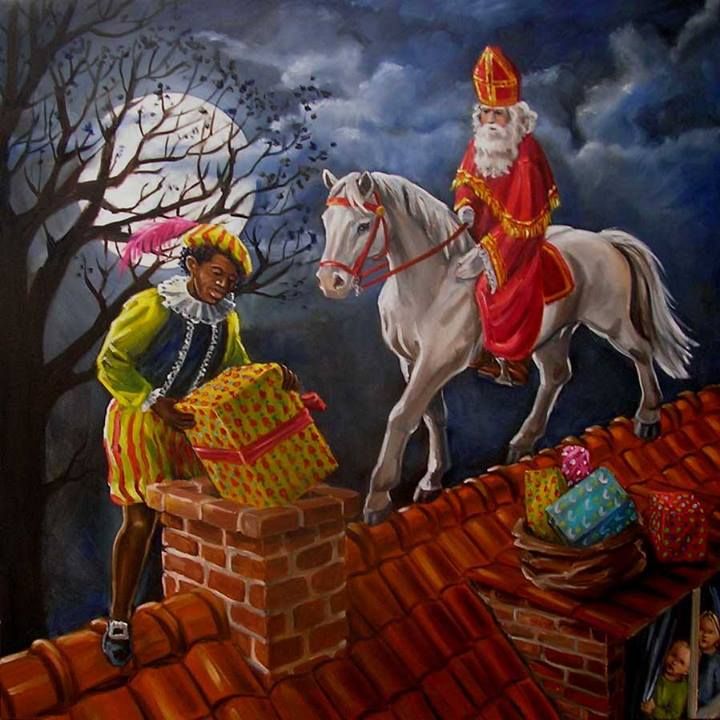
When Miracle on 34th Street was released in June 1947, its audience knew all too well the horrors that Holland had weathered. So, when the Dutch girl’s adoptive mother explains to Santa that the girl comes from an orphanage in Rotterdam, it would have sent chills through many. The girl’s parents clearly had died in the war, and the child is emotionally scarred as a result. She has only one wish, and that’s to connect with Sinterklaas, the Dutch St. Nicholas who each November sails by ship from Spain and lands in some obscure part of the Netherlands with his sidekick, Zwarte Piet the Moor, who lugs a sack full of presents and candy for the good children. After stepping ashore like MacArthur in the Philippines, Sinter sets out on a white steed to make his way through the lowlands while poor Piet goes afoot. In many Dutch households, Sinterklaas knocks at the door and comes in for a December 5 sit-down that amounts to a performance review for the children living there. If you’re good, well, you don’t have to fear the bearded man with the lethal staff, scary mitre, and lurking strong-arm man. You get gifts and candy in your wooden shoes placed neatly under the Christmas tree. If you happened to be a bad kid, however—and this is where it gets a little weird—Zwarte Piet manhandles you into the sack and carries you back to Spain.

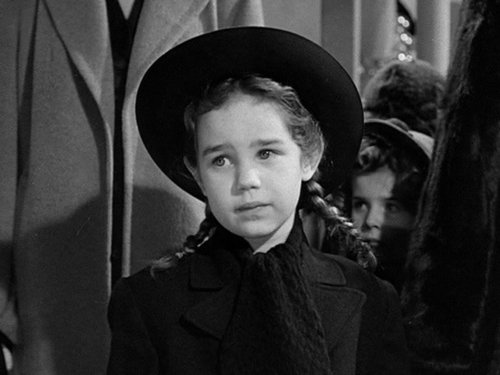
The forlorn look of a refugee from the world’s darkest days.

I always loved the Miracle on 34th Street scene between Santa and the Dutch girl for the elemental conflict presented. Her poor caretaker doesn’t want to expose this little war orphan to a department-store Santa who can’t possibly understand her language or needs. I always understood her culture shock at being in New York, U.S.A. What only became clear on this viewing after my Nederland immersion is the aura of death surrounding the child and what motivated her forlorn look when she first interacts with the Macy’s Santa. The girl, who seems to be about seven years old judging by the missing front teeth, lights up when Santa suddenly begins speaking to her in Dutch and she gets the confirmation she needs: He really is Sinterklaas.

I have to hand it to Edmund Gwenn for doing as well as he does with what is truly a tough language to learn, even if it’s only a few lines. Marlene Lydon does as well with her Dutch impression as any seven-year-old California girl with missing front teeth possibly could. And at plot point one, when Natalie Wood as little Susan watches the interaction between Santa and the orphan and begins to suspect that Santa is more than a department-store stand-in, it’s the best moment of all—her jaw drops and she experiences real magic for the first time in her very sensible life.

In my experience, horses don’t do the roof any good, but there is Sinterklaas on his white steed, while poor Zwarte Piet ends up with the short end of the stick. In modern appearances Piet is usually played by a Caucasian in blackface, and there has been a formidable social backlash in the Netherlands.

There are so many things to love about Miracle on 34th Street (the original–I refuse to accept more recent imposters). I’m not the biggest Maureen O’Hara fan, but as Mrs. Walker she underplays beautifully throughout, like when she tries to tell Susan that Santa isn’t real even though, as Susan points out, he can speak Dutch. “I speak French,” Walker reasons, “but that doesn’t make me Joan of Arc.”

O’Hara, Wood, and Gwenn, part of a perfect cast in a perfect film.

I’m not breaking new ground here when I go on and on about this perfect film, a triple Oscar winner (one for Gwenn and two for the writing). I just wanted to take a moment to call out that scene and the all-new effect it had on me after a lifetime of viewings. And if I don’t get another column up in the next little while, Happy Holidays, one and all, from the Netherlands salt mines where I toil, pretty much night and day.

P.S. Don’t forget to order Mission: Jimmy Stewart and the Fight for Europe, which has proven to be the perfect holiday gift for active-duty service members, veterans, armchair generals, and lovers of everything Hollywood.

The Bear

My best friends in elementary school were John, nicknamed “Skip,” who lived a couple blocks away in one direction, and two brothers, Bobby and Ricky, who lived a couple blocks away in the other. We lived in a college town where my dad taught physics, and Bobby and Ricky’s dad was a big deal in the music department. He was also a wonderful guy and a WWII veteran. That made him into something like a mystical character to me. A lot of the fathers of my friends were in “the war”—my dad wasn’t because he was color blind. Talk about seeing the world as many shades of gray—that was my dad.

Skip’s father was what you might call the opposite of Bobby and Ricky’s. He had also been in the war, and my memories of this man are vivid through the passing decades. He lived in the darkened bedroom and was rarely seen. I heard him many times, snarling at his wife, a very nice lady, and yelling at his son over some misdemeanor. Skip never talked about the abuse that he and his mother were taking, but he didn’t have to. He wore the sadness everywhere, especially in school where he started to have trouble as the years passed.

To me as a kid, Skip’s father was a snarling bear in a cave. Skip and I never went near that part of their little ranch house; the basement door was near that bedroom, and we tiptoed so as not to poke the bear. There’s no one left to ask why he was like this; Skip died of a heart attack in the 1990s at a very young age because, I guess, if you lug that amount of sadness around long enough, it’ll wear you out. He was such a nice guy, probably because he knew how it felt when people weren’t nice. I wonder if Skip had any idea where his dad had seen action. Did he hit the beaches of Anzio or Normandy or Iwo? Was he ground crew for the heavies in England? Was he caught in the slaughter of the Bulge? Whatever had happened to him over there had left a wreck of a human back here, and laid waste to a family unit that deserved better.

I thought about that snarling bear for the first time in a couple generations because I’m involved in a project that’s analyzing 1945-46 in the life of Jimmy Stewart as he returned home from war and contemplated his future. He was one of 11,000 G.I.s who stepped off the Queen Elizabeth on August 31, 1945—maybe Skip’s father and Bobby’s stepped off with Jim, who knows. But all these guys who had just stared into the face of the most horrific war in human history now returned home to something just as terrifying: All had to make their way in a world that was different from the one they left behind. Now they actually had to live with the brides they had married in haste. They had to find jobs because the ones they had left had been filled by younger men or, in some cases, by women. Did you know that one of the greatest shortages of 1946 was the one for dress shirts for job interviews?

Mission: Jimmy Stewart and the Fight for Europe by Robert Matzen

One day after stepping off the Queen Elizabeth, Jimmy Stewart condescended to hold a press conference after keeping the press at bay for the better part of four and a half years. That day he said he just wanted to make a comedy, “if anyone will have me.”

I am amazed at the bravery of these men. In Jim’s case, as detailed in Mission: Jimmy Stewart and the Fight for Europe, he had flown 20 combat missions over France and Germany and survived many close calls. I can’t imagine you’re ever quite the same again after a German fighter has flown straight at you-as-pilot and fired wing-mounted machine guns at the cockpit of your bomber. Or after an anti-aircraft shell has hit your plane over the heart of Germany and blown a hole in the flight deck between your feet. Or after you’ve seen the planes under your command break up in the air or explode in a fireball. That was Jim’s tiny little corner of the war, and most of the 11,000 others on the QE had lived through their own little corner, whether it involved bullets or shells or some psychological evil that was even worse. And there were hundreds of passenger ship dockings, each unloading 11,000 more men. And more and more and more.

Mission: Jimmy Stewart and the Fight for Europe by Robert Matzen

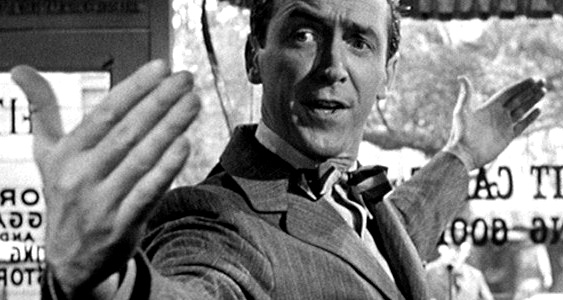
I have always been drawn to this shot as we first see Stewart in It’s a Wonderful Life. He’s playing a young man of about 20 and we suspend our disbelief, but if you look closely, the face that had stared into the face of war is clearly visible under heavy makeup.

It’s easy not to really think about what combat soldiers see in any conflict in any spot in the world. Whatever that is, they can never unsee it, and it becomes part of the veteran’s mind, and in some cases a handicap that inhibits performance at home and on the job.

For the World War II veteran, it had to take tremendous courage to start over in a civilian world where the men you had counted on to have your back, the ones who had been part of what Jim called a “grand thing,” were now your competitors for jobs. You knew another vet by the look in his eye, and you resented the ones who didn’t have it because you knew they had spent the war at home for whatever reason. The veterans had also changed physically. Many had left as wiry 18-year-old boys and come home as square-shouldered men to the surprise of mothers and siblings. In Jim’s case, as noted in Farran Smith Nehme’s excellent Village Voice piece, going into the service at age 32 and serving four-plus hard years had left Jim “so careworn that no studio would cast him.”

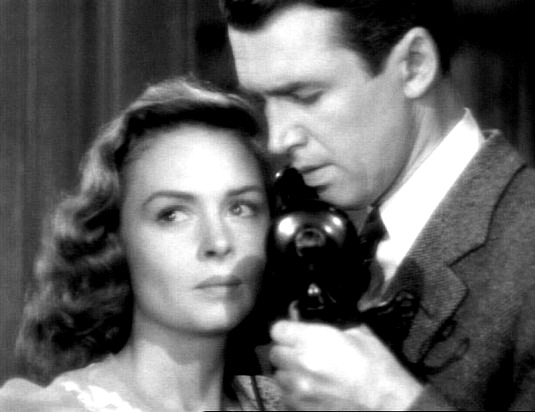
Jim must have lived right because the one call that did come resulted in It’s a Wonderful Life, and that rollercoaster picture with the happy ending contains a tour-de-force Stewart performance that mirrors the crisis in his post-war personal life. He stood at a crossroads like so many million others and displayed courage enough to push his way forward. He survived. He thrived. He lived 50 more mostly wonderful years while consciously tamping down an ongoing loop of black memories. He controlled them; they didn’t control him. For Skip’s father and I’m sure millions of others it didn’t go so well, and I think I could make a case for poor Skip being another casualty of World War II, once removed.

Mission: Jimmy Stewart and the Fight for Europe by Robert Matzen

Director Frank Capra chose to throw Jim in the deep end and shoot this scene first. Jim was suffering PTSD and his confidence was shot, all of which is imprinted in celluloid for posterity. The scene is full of clumsy energy and some very strange kisses between stars who, Jim would claim later, had no chemistry.

Lost and Found

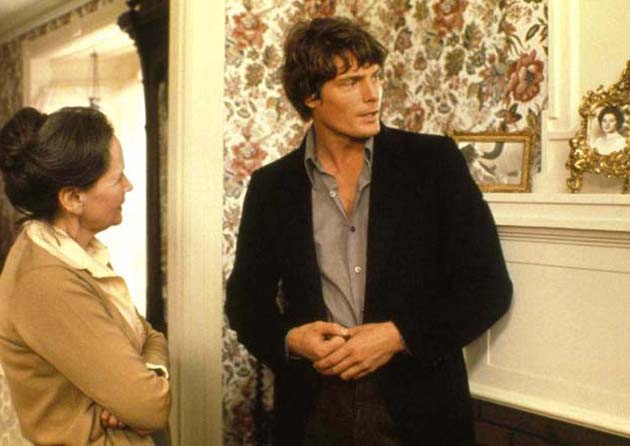
I always understood the cult of Somewhere in Time without ever considering myself to be a part of it. I first saw this picture on its HBO release, probably in 1981, because of course no one saw it in theaters on wide release, where it bombed because Christopher Reeve’s star was already descending, and because an actors’ strike kept the two main players from hitting the road to talk up their new release.

Anyone who has ever loved and lost can relate to Somewhere in Time and the blackness, the despair of going on alone. There’s a desperation for happiness among the characters, a happiness so fragile every minute. I have to pause here and thank Matt of MattsRadShow on Youtube for his video that I stumbled upon stream of consciousness-like the other day, because Somewhere in Time was, right then, somewhere near the last thing in the entire world on my mind. I ‘got’ Matt instantly and wondered if we were twins separated at birth the way he and his wife, Ashley, traveled to Mackinac Island to track down and record key shooting locations—cleverly so!—and produce a video that I’d argue is as haunting as the picture it honors. [My aside to Ashley: I know you’re long-suffering because I have a better half who has similarly endured wild, improbable adventures in support of her man. Well played, my friend.]

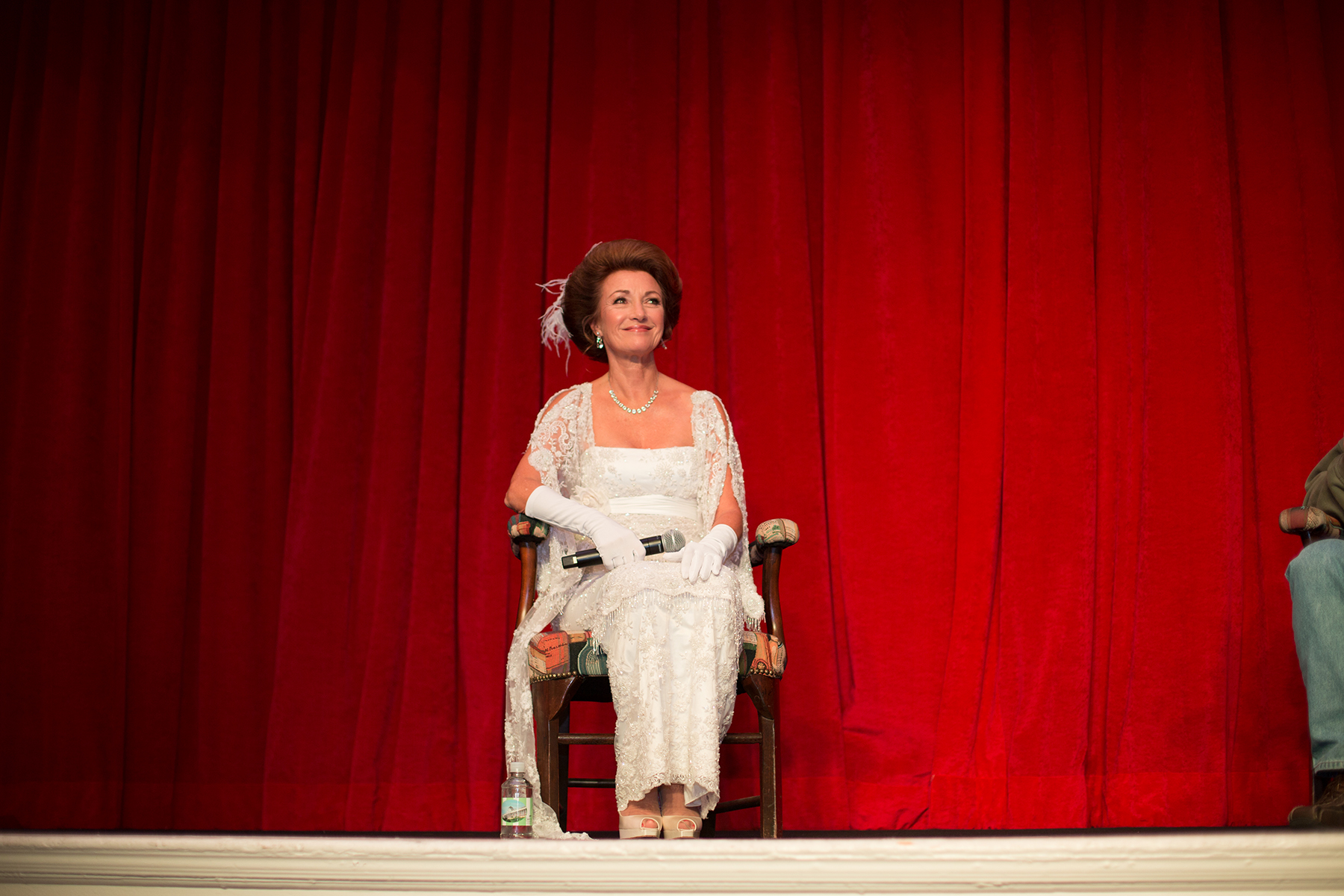
I didn’t mess with superlatives for Jane Seymour in this column, but, boy, she gives the role of Elise depth beyond the words on the pages of the screenplay.

So inspired by Matt’s work was I that I headed for OnDemand on a Saturday night and consumed this picture for the first time in decades. I loved it. Truly savored it. My reservations are still my reservations, but Somewhere in Time has three things going for it that simply overwhelm its drawbacks. The assets are, in no particular order, Jane Seymour, Mackinac Island locations, and John Barry’s score, which went through my head all night and is still there now. In fact, what the hell, let’s play it in the background while I write this.

Nice. Very nice.

Cutting to the chase, speaking just for me, Christopher Reeve almost ruined this picture. I was never a fan. I tried my best to like his Superman and succeeded for a while because the press kept telling me he was good. But OMG is he not good. He thought he was an actor but was simply too quirky, too unaware of how he was coming off, and proved it in picture after picture. Yes, he had his good moments here and there. But too many bad ones. I like to think if he had remained healthy, he would have gotten the right coach and really developed the talent that was inside him.

That said, I still remember exactly where I was when I heard the news he had suffered a catastrophic injury during an equestrian event. It shook me up; I never got over it. I’m still not over it. For a vital, successful young person to endure such a fate… The agony of Chris Reeve adds a layer of pathos to Matt’s video transposing Reeve at Mackinac locations with those locations today. It tears your heart out knowing what happened later on. I have to wonder if Reeve’s spirit doesn’t live on at Mackinac, so effective is Matt’s technique.

Somewhere in Time begins with young drama student Richard Collier being visited by an elderly lady who puts a pocket watch into his hands and pleads with him out of the blue, “Come back to me.” He stands there stunned, having never seen her before, and has no perspective on what’s happened. He goes on with his life and eight years later, as a successful playwright suffering writer’s block, gets out of his native Chicago and heads for a getaway on Mackinac Island, off the coast of Michigan. At plot point 1 he finds, and falls in love with, the portrait of a young actress on the wall at the majestic Grand Hotel. He learns her name, Elise McKenna, and that this photograph of such timeless quality was taken 68 years earlier, in 1912. Library research reveals “the last photograph taken of Elise McKenna” and it’s the old woman who had put the pocket watch into his hands eight years earlier!

Academy Award-winning actress Teresa Wright only has one meaty scene, but it’s a honey as the nurse of elder Elise who helps Richard Collier begin the journey into his future…in the past.

OK, you’ve got me. A perfect first half hour of cinema. Now just don’t blow it. Reeve borders on being pretty good in this first half hour. He’s got all these fidgety, self-conscious mannerisms he thought people needed to see, but he largely keeps them in check during the set-up.

The way he gets back in time is preeeeeeeeeetty iffy. Not Reeve’s fault at all—it’s the device of the novel, Bid Time Return, by Richard Matheson. But eventually he does get back there and his meeting with young Elise on the beach by some trees is one of the sweetest, most effective scenes I’ve ever experienced. That location, that music, that woman, the intrigue of that moment and of his struggle to get to the bottom of the mystery but more importantly to get close to this face he’s fallen in love with. Reeve’s uncharacteristic, unbreathing stillness on the dolly approach helps the scene along as well.

In case you were wondering.

Yadda yadda, they spend time together despite her pill of a manager (there has to be a bad guy) and it’s 45 minutes of standard romance with an obligatory sexual coupling before his iffy time-travel device comes a cropper, and he’s catapulted back into 1980 as she screams his name and witnesses his dematerialization.

I hated the ending 36 years ago and I hated it last night. It’s almost as if, “Welp, we’re outta money, folks, so let’s go home.” Red River comes to mind—90% of a winner of a picture with many touches of brilliance poisoned by an erring final plot twist. But as I murmured while experiencing the last 60 seconds of Somewhere in Time at 11:30 last night, James Cameron must have been one huge fan because he ripped it off down to single genomes for the ending of Titanic. I simply never put 2 and 2 together. Yikes.

Granted my misgivings, I’m urging you to set your disbelief on a shelf and spend 104 minutes on the journey of Elise and Richard. In fact, watch Matt’s rad video first and then consume Somewhere in Time. This world crumbling around us needs more romance, more lush scenery, and more pretty music. Somewhere in Time has all three, and my shout-out goes to Matt: Thanks dude for helping me re-find a lost treasure.

Jane Seymour returns to Mackinac Island for the traditional “Somewhere in Time Weekend” in 2015.

Curves and Straightaways

Mission: Jimmy Stewart and the Fight for Europe by Robert Matzen

I know I’m not the first to make this realization, but while scanning 1950s articles about Hollywood the other day, I stumbled across a piece comparing and contrasting two stars on the rise in 1953, Marilyn Monroe and Audrey Hepburn.

Mission: Jimmy Stewart and the Fight for Europe by Robert Matzen

As the evil Rose in Niagara, Marilyn was dressed in several outfits to show off her feminine curves, and director Henry Hathaway gave her long, lingering walking-away shots to leave the boys in the audience panting.

It had never occurred to me that this dichotomous pair, arguably the two most iconic, recognizable, still-relevant Hollywood stars ever, burst upon the scene within months of each other. Yes, Marilyn had already appeared in many pictures as a supporting player from 1947 through 1952, but it was her role as the would-be husband killer in Niagara (released in February 1953) followed in quick succession by the musical Gentlemen Prefer Blondes (August) and comedy How to Marry a Millionaire (November) that launched her to superstardom.

Hepburn on the other hand had found Hollywood via Broadway, where she’d earned raves for Gigi in 1952. Just to show how stars are born, Marilyn clawed and scraped her way up the ladder, while Audrey lucked into break after break. A couple of bit parts had earned Hepburn a pair of supporting roles in European pictures. While making one of these, the playwright Collette stumbled upon Hepburn in a Monte Carlo hotel lobby and knew instantly that this was the girl to play her title character, Gigi.

Faster than you can say Air France, Hepburn was jetting to Broadway in 1952 and earning press that made Hollywood a logical next step. And who should snap her up but William Wyler at Paramount for Roman Holiday, a picture tailor made for a pretty, young European unknown with a mostly British accent. In other words, it had taken Marilyn six years, many nude modeling assignments, and by my count 20 motion pictures and however many casting couches to get where Audrey Hepburn found herself overnight in September 1953.

Mission: Jimmy Stewart and the Fight for Europe by Robert Matzen

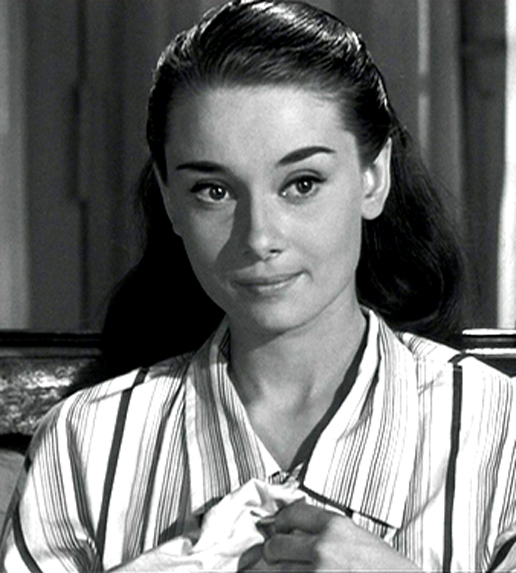
This is a face that had stared into the face of war. Despite no formal training, the life she’d lived gave Audrey tremendous depth as she starred in Roman Holiday at age 24

What struck me about the late-1953 article taking a first look at Monroe and Hepburn was its question posed to the American public: Which do you prefer: curves or straightaways? Marilyn was already well known for bombshell curves the likes of which Hollywood had rarely seen. She was like a crazy-deluxe combination of Mae West and Lana Turner. Then out of nowhere comes this Hepburn girl from Holland by way of London and New York. Hepburn was described out of the gate as “boyish” and “elfin.” Wyler even called her a strange combination of “pretty and ugly.” In retrospect this seems outlandish but in context, Audrey had lived through World War II and spent months emaciated from lack of food. After the war, she grew chubby from overeating. And all the while her face was transitioning from nothing special to drop-dead arresting. When she hit Broadway and then Hollywood, nobody had seen anything quite like her before, and that which has become a modern standard for beauty took consumers in the United States some getting used to.

Mission: Jimmy Stewart and the Fight for Europe by Robert Matzen

Publicity shots at this stage of Marilyn’s career sold sex, sex, and more sex.

It’s amazing to me that IMDB lists 33 film and TV credits for Marilyn Monroe and 34 for Audrey Hepburn. Neither had a long career for vastly different reasons, and both left us wanting much more. As humans, they couldn’t have been any more different. Insecure Monroe became a super-sad super diva, while Hepburn retired from the screen for her two sons and for Unicef. Monroe coveted accolades as an actress and studied under Lee Strasburg; Hepburn spent her later years feeling she was never an actress and kept apologizing for it. Monroe was notorious for missing her call times by hours and half-days and Hepburn never showed up anywhere late even by a single minute. Yet today, given that Marilyn died 55 years ago and Audrey 24, they are the most famous of Hollywood icons, these two who hit the bigtime in 1953, one famous for curves, and the other for straightaways.

Mission: Jimmy Stewart and the Fight for Europe by Robert Matzen

Audrey spent most of her career covered up. She always considered herself a ballet dancer and not an actress, but her lack of curves could be traced back to the war and long stretches of hunger.

The Chain

Fireball: Carole Lombard and the Mystery of Flight 3 by Robert Matzen

The mountain that called to me.

In the course of my career, I’ve been inspired many times to create, almost always by looking at an aspect of history and wondering why. Where it gets interesting is when what I’ve created inspires others in something of a chain reaction.

Knowing that the wreckage of a DC-3 still littered a remote Nevada mountainside, that you can see the site of the crash from every part of Las Vegas, had been pulling me toward that spot for years. Finally I yielded to the siren’s call and got the shock of my life when after a four-hour ascent, 22 dead people whispered in my ear. Suddenly I was inspired to tell many stories instead of just that of Carole Lombard—and I think it was these souls who had been calling to me all along.

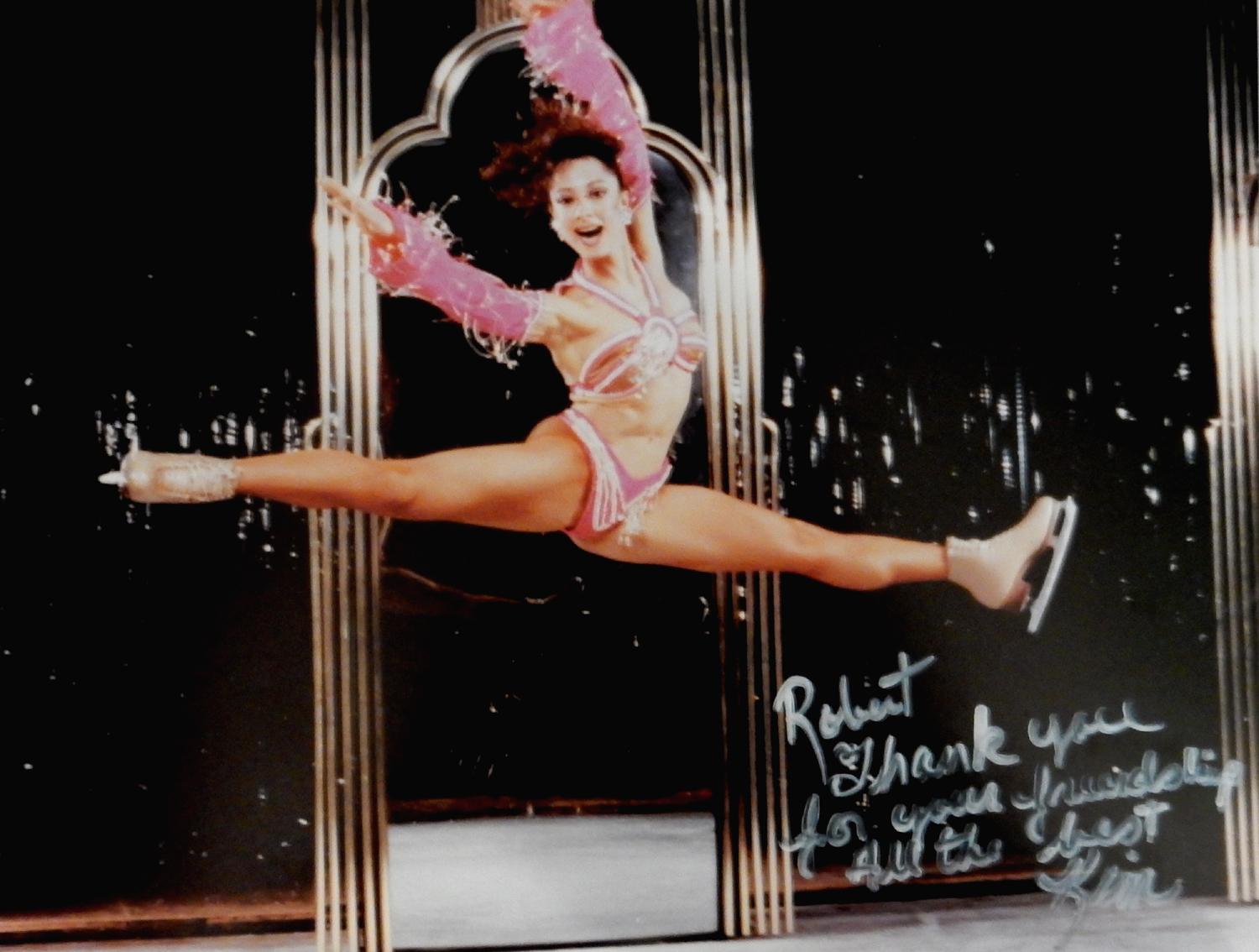
Fireball: Carole Lombard and the Mystery of Flight 3 by Robert MatzenI guess inspiration is a baton that’s passed from person to person. Reading Fireball served as inspiration for Las Vegas-based artist Kim Reale. First, I have to show you an incredible photograph—Kim displaying superpowers during her ice-skating career. The last time I saw her, she surprised me with a piece of giclée art of a most ethereal Carole Lombard that now hangs on my wall. “The book filled me with such empathy and compassion, I created a painting from it,” said Kim. “I felt Carole’s spirit rising from the horrific plane crash ascending to the heavens above with a dreamlike sadness of what might have been.” I’m pretty sure that prints of this painting–the word ‘haunting’ comes to mind–are available through Kim’s website.

Fireball reader Brian Lee Anderson had to learn more about Carole Lombard after finishing the book, and his quest led him to such rare finds as a previously unknown audio recording of her Cadle Tabernacle speech in Indianapolis the evening before she died. Brian also climbed to the crash site with FAA investigator Michael McComb and planted flowers at that desolate spot. I asked Brian to describe the role of Fireball in his life. “Your book jump-started all things Carole for me and my mom,” he responded. “I have always been a fan of Carole but in the fall of 2013 I took my mother on vacation to the beach for a week and we talked a lot and she told me the story of exactly how much her mother, Rosalie, was a fan [of Carole’s] and that she went to Indianapolis to meet her and how Carole’s death affected her. It all triggered my quest for more information. After we got home from the beach, I found your book on Amazon and ordered two copies, and Fireball answered so many of our questions and led to my finding the speech and trekking up Mt Potosi.”

Fireball: Carole Lombard and the Mystery of Flight 3 by Robert Matzen

Brian Anderson in the Nevada desert and about to climb to the crash site in April 2017.

Knowing that Jimmy Stewart took his wartime secrets to the grave inspired the writing of Mission. I saw only the challenge of getting at this long-hidden story, which turned out to be one of courage and dedication, of overcoming fear and fighting the good fight. I’ve done several dozen interviews promoting the book since its release, including a recent one with Daniel McCracken, a podcast journalist for a website called the 10th District. As we chatted before the interview began, Dan revealed that reading Mission had inspired him to pursue his pilot’s license. “Reading Mission was the initial push that drove me to research the training programs offered in Chicago,” said Dan. “I’ve read other aviation books but was never drawn to anything like Jimmy in Mission. His courage and humbleness was so endearing and the timeline you constructed helped me envision myself in his world. My training is going well now and the moments of discouragement are balanced by my new instinct to look back on how difficult being a pilot was during the war and at the dawn of aviation.”

It’s funny; each of these people found a unique means of self-expression from the printed page and a way to take the stories to places I never imagined. Brian not only added to the historical record but brought the beauty of flowers to a scene of grim disaster. Kim captured the sweet soul and transcendent energy of Carole Lombard through paints. And Dan now has the ability to soar above the clouds and experience, as Jim Stewart once said, “more than liberation…the ultimate experience of being in control.”

Mission: Jimmy Stewart and the Fight for Europe by Robert Matzen

In the foreground: pilot Daniel McCracken. In the background: the wild blue yonder.

Who will take the baton next, for instance finding inspiration in a flower-shrouded mountainside, or in Brian’s research finds about Carole Lombard (thanks to his work, the entire speech Carole gave in Indianapolis can be found in the trade paperback edition of Fireball)? Who will stare at Kim’s painting of Carole and write a song or another book? Where will Dan’s career as a pilot take him, and who will he inspire to become a pilot in the future? All I know is, once the energy begins to push in a forward direction, the chain reactions seem to continue, and I can’t wait to find what comes next in the Lombard and Stewart stories.

Fireball: Carole Lombard and the Mystery of Flight 3 by Robert Matzen

Prominent spot for a precious piece of art.

Fireball: Carole Lombard and the Mystery of Flight 3 by Robert Matzen

Zero Hour

Mission: Jimmy Stewart and the Fight for Europe by Robert Matzen

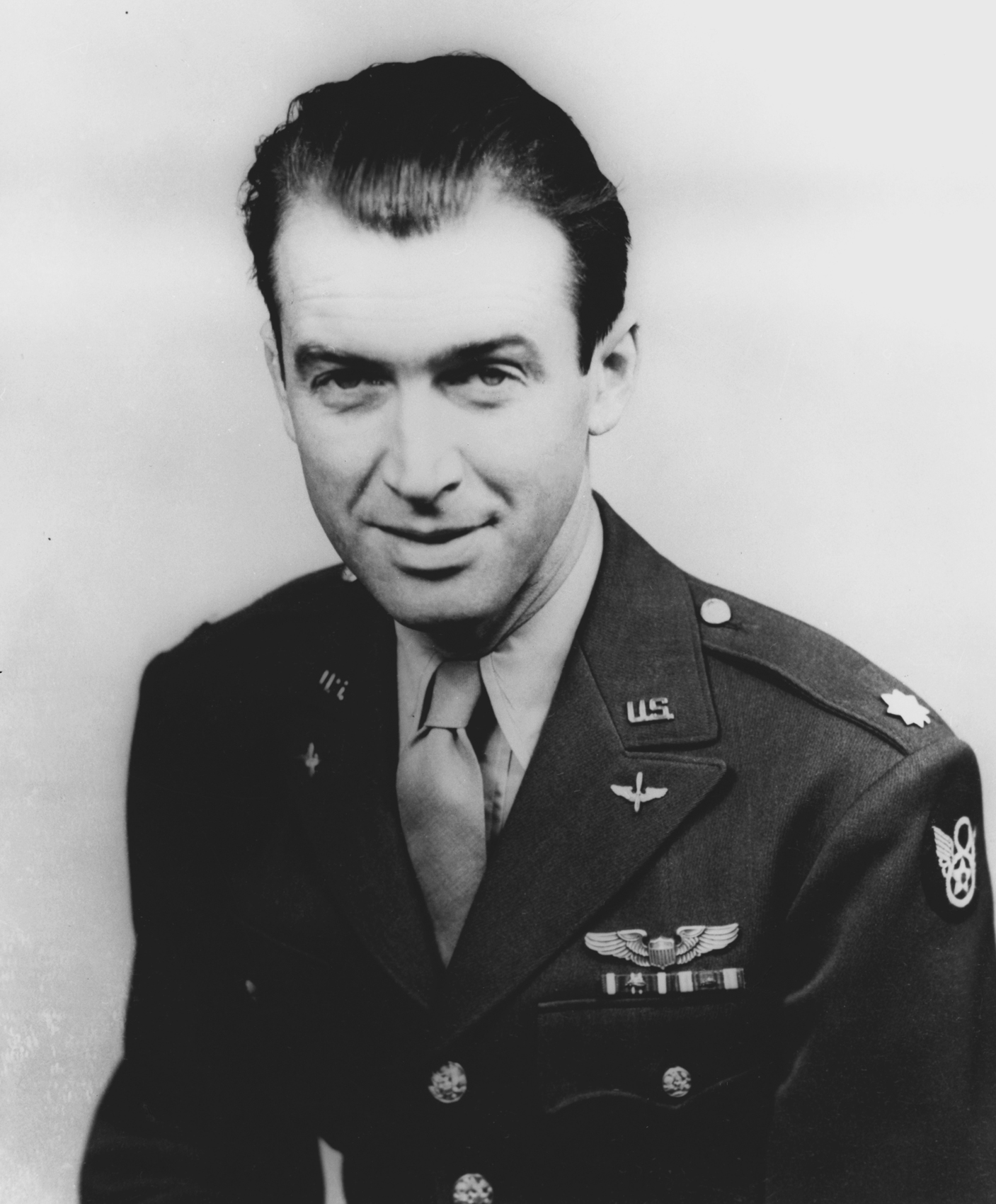
Here is Lt.-Col. Jim Stewart one month after the D-Day landings. I chose this image for the cover of Mission because it reflects the toll of war on a man so recently thought of as youthful. He had by this time flown 14 combat missions, earned two Distinguished Flying Crosses, and supervised his bomb group’s D-Day bombing missions. The photo was found in Jim’s personal collection, which he had donated to Brigham Young University.


One of my favorite chapters in Mission: Jimmy Stewart and the Fight for Europe concerns the run-up to D-Day, which Maj. Jim Stewart had a hand in, as did just about everyone in the Eighth Air Force. I well remember sitting in a Brigham Young University library looking at records from the 453rd Bomb Group at Old Buckenham and feeling chills along my spine as I read a rare history of the 453rd written during the war. It described “invasionitis”—the endless speculation over when and where the attack would take place—as it reached its peak, and then suddenly, after weeks and months of anticipation, the base went on lockdown. No one in or out. All leaves cancelled. No phone calls. All fliers on alert. Imagine how those guys felt—the invasion of Europe was at hand. It was Zero Hour, and they were literally on the front lines.

Now I’m researching my next book and looking at the impending invasion through the eyes of civilians in Nazi-occupied countries. As they felt the iron fist of Hitler’s Germany close around their throats, as Jews were sent away and innocent civilians were executed in reprisal for partisan raids, as young men and women were kidnapped off the streets where they’d lived all their lives and sent to Germany as slave labor or worse, the only hope of entire populations was an Allied invasion. Every day and every day and every day they waited and hoped and prayed, and it kept not happening. On the continent as in England and the U.S., rumors filled the vacuum of information as top-secret preparations continued. Loose lips could do a lot more than sink ships in May 1944—loose lips could result in a repulsed invasion and a prolonging of a war that had already killed tens of millions of human beings.

Mission: Jimmy Stewart and the Fight for Europe by Robert Matzen

The landing craft that the B-24s couldn’t see as D-Day commenced.

Seventy-three years ago right now as I sit here in the New York time zone, B-24s took off from Old Buck to hit targets immediately behind the beach code-named Omaha on the Normandy coast. Jim Stewart briefed his bomber crews that they would be able to look down and see the mightiest fleet ever set to water, but upon return hours later, the pilots and bombardiers complained bitterly to Stewart that they had seen nothing because of heavy cloud cover. Among the things they didn’t see during those early June 6 sorties were their targets (Wehrmacht barracks and gun emplacements), which the bombardiers missed, and badly. Eisenhower had ordered a ‘Go’ to the operation despite continued lousy weather, and so shortly after dawn, tens of thousands of young men hit beaches that were supposed to be neutralized by bombing but hadn’t been softened at all. We know the result: Omaha was a bloodbath.

As the years pass by and the veterans of that day’s assault pass to glory, it becomes increasingly difficult to appreciate the gravity of D-Day, the shock of the headlines, the importance of the news to simply everyone in the world: to soldiers throwing up in landing craft in heavy seas knowing a storm of lead awaited; to parents across the ocean fearing for their sons in harm’s way; to oppressed civilians in France, Belgium, and the Netherlands desperate for liberation; to Jews heading for concentration camps or already there; and, yes, to Germans who could see their empire and dreams of a unified Europe slipping away. They knew that if the Allies got a foothold in France and headed toward Germany on one side with the Russians moving in on the other, the Reich was doomed.

For Baby Boomers (defined broadly as the children of service men who returned from WWII), D-Day is represented by The Longest Day, made by Darryl F. Zanuck’s 20th Century Fox in 1962 over the course of 10 months at more than 30 locations in France. It’s an occasionally brilliant, mostly ham-handed, decidedly G-rated version of a brutal 24 hours in world history. If anything, The Longest Day trivializes what really went on as it lays on globs of irony that’s supposedly clever and amusing and gives us some of the more unusual casting in Hollywood history. Everybody who was anybody got a cameo to the detriment of what this epic picture might have been. Even 18 years after the event when The Longest Day was released, there was no way to convey what D-Day meant to the world. So many decades after that, it’s downright impossible to do justice to this day and these people on all sides, particularly all those men who stormed the beaches code-named Juno, Sword, Gold, Utah, and Omaha. All I can say is, I salute each and every one of them for what they gave the world—a chance for an end to the most catastrophic war in history. And beyond that, a chance for a peace in Western Europe that remains to this day. Stated plainly, the accomplishments of the men of D-Day will always dwarf any and all acts of terror, for it infused the continent with a steely resolve that I’m convinced will endure forever.

Mission: Jimmy Stewart and the Fight for Europe by Robert Matzen

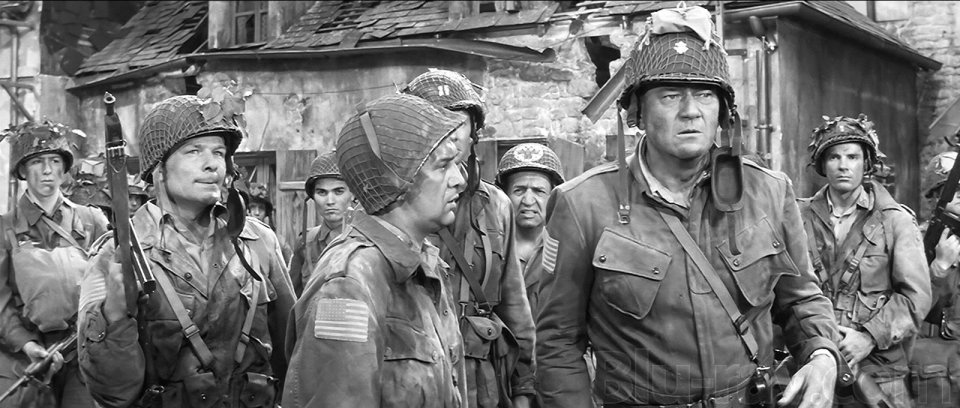
John Wayne and a bunch of guys who looked nothing–NOTHING–like the generation of young Americans who participated in D-Day. Press materials noted “an unusually large and attractive cast.” Um, agree about the large part, at least in the Duke’s case.

Make It Personal

Mission: Jimmy Stewart and the Fight for Europe by Robert Matzen

Months ago I was invited to appear at the National Museum of the Mighty Eighth Air Force in Georgia near Savannah to talk about my book, Mission: Jimmy Stewart and the Fight for Europe. My presentation took place the evening of May 16 before a wonderful and enthusiastic dinner crowd.

This particular museum is all about the experience of the men of the U.S. Eighth Air Force based in England who slugged it out with their German counterparts for three bloody years in the skies over northern Europe. I got uncomfortably close to this story writing Mission, and now understand how horrifying was their job and how scarred they returned in 1945. And make no mistake, Stewart was scarred like the rest of them. As much as any other group, including those who stormed the Normandy beaches, these men won World War II.

I came away from my experience at the museum unsettled. After my presentation there was a lively Q&A and the best set of questions I’ve been asked yet. One of these was, “In your experience, how can we get the 12-year-olds of today interested in this story?” It was a question I hadn’t prepared for and I made a joke at the moment, but then really got to thinking about it because this is the challenge of any facility that wants to remain vital after all the veterans have passed on and their stories have been set in marble. It’s the challenge of any museum anywhere, say a museum about Hollywood history, as learning styles change.

Mission: Jimmy Stewart and the Fight for Europe by Robert Matzen

The Memorial Garden with its statues and tablets dedicated to individuals, air crews, squadrons, and bomb and fighter groups moved me to tears.

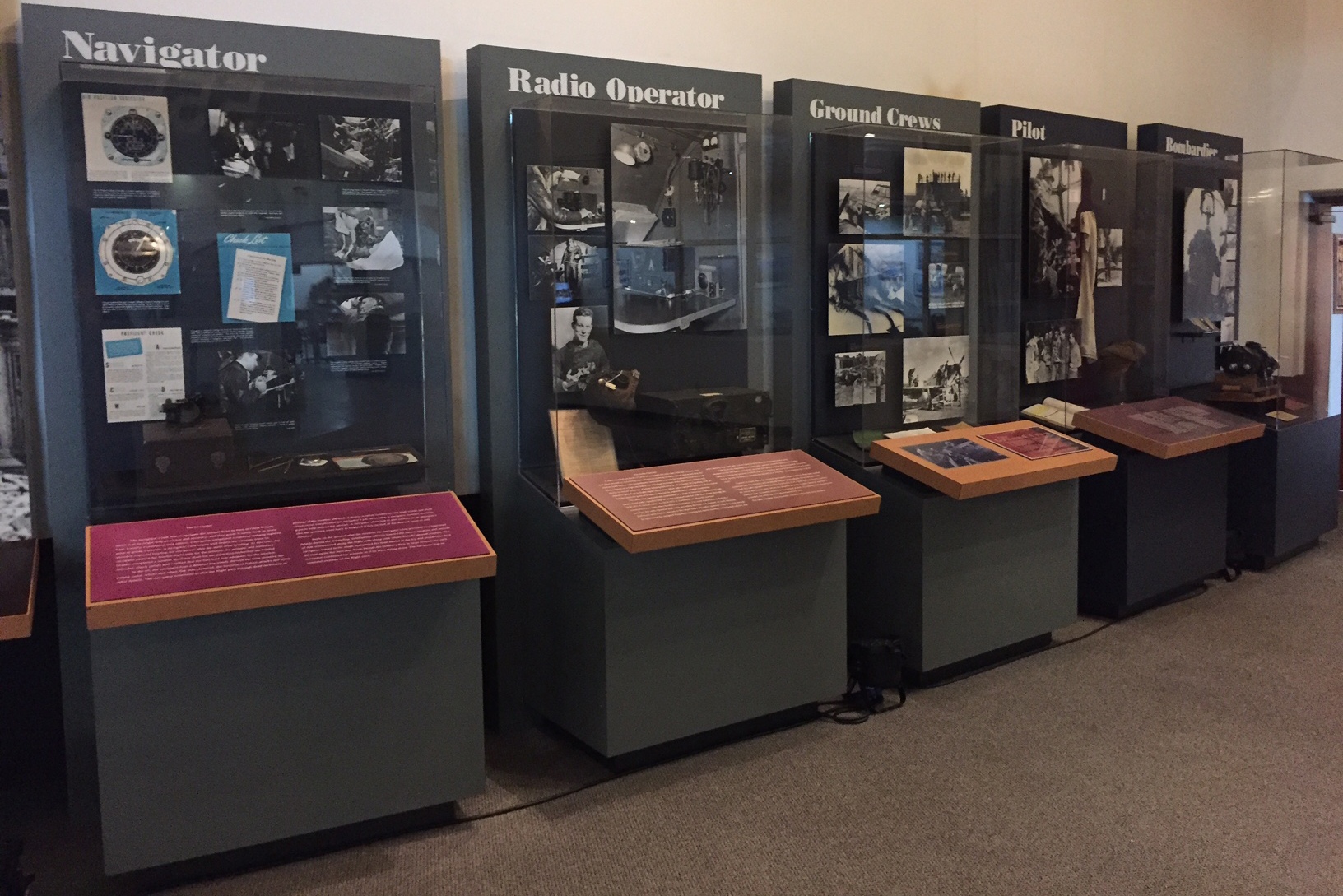
Before my flight back to Pittsburgh the following day, I took an hour to drift through the museum and its haunting Memorial Garden by myself with the attendee’s question firmly in my mind. I find the museum to be very well laid out and full of items that tell the story of the fliers and their planes, down to uniforms, radio sets, control panels, bombsights, machine guns—the whole nine yards. There’s even a room that was built around a complete B-17 Flying Fortress.

Mission: Jimmy Stewart and the Fight for Europe by Robert Matzen

History under glass. For WWII buffs, no problem. For school-age groups? Bring those items out from under the glass or create replicas and let the kids experience up close.

Groups of school children troop through daily—there were two large groups there while I wandered around, and a volunteer was talking to them about the whats and whys of the air war against Germany. The place is staffed by dedicated, articulate people volunteering their time to keep the history alive, and they want so badly to engage young people and let them in on this incredible story.

And I couldn’t help but think as a fly on the wall listening to the volunteer and watching the fidgety kids that the would-be educators are shoveling sand against the tide of time, and now here comes this latest generation for whom Hitler is some weird guy and yeah yeah yeah when can I get back to my texting? I worry that history under glass and docent lectures don’t work anymore, not with this and succeeding generations of ever shorter-attention-spanned generations. Maybe history under glass can be step 2, but heading into a difficult future, step 1 has to be to somehow, some way engage the imaginations of the 12 year olds who walk in the door expecting boredom and worse, torture.

In this particular case, the conclusion I came to in answer to the attendees question was that the kids have to walk a mile in the fliers’ boots. And I mean that literally. Ask for one of the students to come up for a demonstration. Get them to acknowledge that what they’re wearing now is the equivalent of the uniform shirt and pants of an Army flier—the first layer of a flying outfit. OK, now…

Mission: Jimmy Stewart and the Fight for Europe by Robert Matzen

Visitors examine the bust of Jimmy Stewart in the museum rotunda.

Have him or her struggle into a “blue bunny” heated flying suit. Do you know why it’s heated? Because it’s going to be 30 below when you’re at 20,000 feet, which is almost 4 miles up. Think about that…30 degrees below zero, 4 miles above the earth. And oh by the way there are open windows in the plane and the wind really gets to howling inside at 200 miles per hour.

Now strap on your parachute harness. “Wait, what’s this for?” Well when the Germans shoot your plane full of holes and it’s not going to fly anymore, you have to jump out of it. The parachute straps onto this harness.

Now here’s your Mae West. “My what?” If you land in water, you need something to help you float.

Don’t forget your oxygen mask. “What the…” At 4 miles up and 30 below, without oxygen you will pass out in about a minute and die a few minutes after that.

And here’s your sidearm. “Why do I need a gun if I’m in an airplane full of machine guns?” Because if you manage to hit the ground alive after you’ve jumped out of your airplane, there are people who will want to kill you, and you may need to defend yourself.

Mission: Jimmy Stewart and the Fight for Europe by Robert Matzen

The B-17, roped off in the name of preservation. Instead of signs that read, PLEASE DO NOT TOUCH, maybe the approach should be, BY ALL MEANS, TOUCH!

You’ll need your escape kit. “What’s an escape kit?” It’s got a map, coins, medicine, fake travel documents, a translation card, and other things you’ll need while you are running for your life in enemy territory.

Here’s your flak jacket and steel pot helmet. “Jeez, so heavy!” Yes, you need sturdy armor to protect you a little from the flying bullets and shrapnel—but just a little.

And here’s your flying helmet with headset, and goggles. And your sheepskin boots and gauntlets because every inch of skin has to be covered to prevent frostbite. And, oh, let’s strap on your parachute.

And with every question comes an answer that makes this story personal for these kids.

Pretty soon your volunteer is unrecognizable under 40 pounds of stuff and having trouble even standing there. You say, OK, now you’re ready to climb into the airplane!

Mission: Jimmy Stewart and the Fight for Europe by Robert Matzen

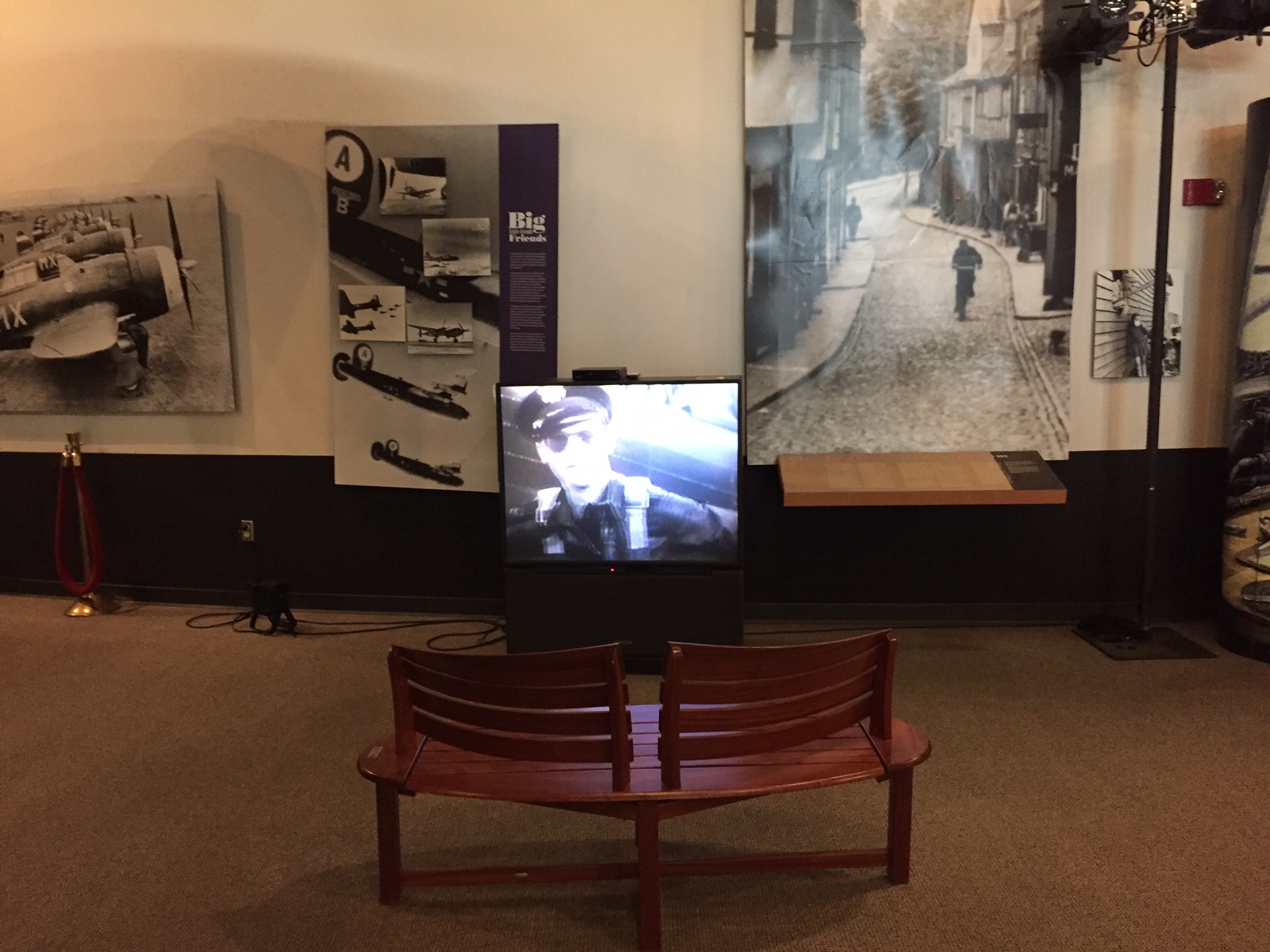
The 1942 Jimmy Stewart short recruiting film Winning Your Wings plays nonstop on a monitor under the wing of the B-17. As related in Mission, Stewart initially refused to participate but then relented to create one of the most important tools for recruiting in the war.

What you’ve done is set the stage for life or death in German airspace. You’ve invested 20 minutes of the tour to make these kids think about the mortal danger of every flier from a personal perspective—fliers that weren’t much older than the school children themselves.

Pass around a .50 machine gun shell, which looks like a bullet on steroids and weighs a pound. Then show them a belt loaded with these shells and imagine a) how heavy and b) how devastating was that gun!

Pull a B-17 or B-24 fuselage out of mothballs or build a new one and outfit it, and let school groups roam around inside, from the nose to the cockpit to the waist and the turrets. Then rev up the noise and shake that fuselage until their teeth are rattling—and tell them this is what they’ll hear and feel for the next six or eight hours, which was the length of a mission. If, that is, they don’t get shot down first.

Create a simulation that lets them look through a bombsight over a target and maybe let them release some sort of bomb to see how they do as a bombardier. Or figure out a way to let them shoot a virtual-reality machine gun.

Maybe some of these ideas are already practice at the museum because I didn’t follow a student group from beginning to end.

Mission: Jimmy Stewart and the Fight for Europe by Robert Matzen

The Chapel of the Fallen Eagles is a replica of the kind of English country church located near all the bomber and fighter bases. Behind it rest some veterans of the Eighth Air Force who chose to be buried at this focal point of their history.

I came away from my experience at the National Museum of the Mighty Eighth with a deepened appreciation of what Jim Stewart and the other flyboys did and with admiration for the mission and staff of this wonderful facility. After spending two years with the young men of the Eighth as I was researching and writing their story for Mission, I needed no context for the museum and its goals. I already know what the boys went through and what they sacrificed. The challenge for any American-based WWII museum is that there’s no battlefield here, so World War II can’t be interpreted in the United States the way the Civil War can be at Gettysburg or Antietam. No, the volunteers show up every day fighting ever-increasing odds to keep the heartbeats going for men who fought in foreign lands more than 70 years ago. I salute this noble effort and strongly urge that these outstanding young fliers were humans and that the human experience will never change. Therefore, find ways to connect the youth of today with the youth of 1943 so that when your school-age visitors walk back out into the light of a Georgia afternoon, they appreciate these brave men so much that maybe they take an extra couple of minutes thinking about it…before they remember to reach for their cell phones.

And maybe, just maybe, a precious few will catch the history bug, and become the volunteers of tomorrow.

Mission: Jimmy Stewart and the Fight for Europe by Robert Matzen

I didn’t expect to see a memorial dedicated to Stewart–he’s in good company in the rotunda with statues of the founding generals of the Eighth Air Force.

More Than Mrs. Robinson

Mission: Jimmy Stewart and the Fight for Europe by Robert Matzen

The best scene in The Graduate: Mrs. Robinson, pressed to talk and not just have sex, reveals the disappointments in her life and lack of respect for her lover and herself.

I can’t say I ever appreciated The Graduate—not until last evening, and I’m trying to figure out what changed to “let me in” to understand the brilliance of this picture. I’m pretty sure it’s because now I view it through the lens of World War II, which is the way I look at everything going on around me anymore, and WWII, the Big One, provided context I’d been lacking.

For the two of you out there who haven’t seen it, not-quite-21-year-old Benjamin Braddock comes home from college contemplating his life; he doesn’t know what he wants to do with it and he’s already drifting. The night of his big coming-home party, one of his parents’ friends, the enigmatic, married Mrs. Robinson, makes a pass at Benjamin and soon they begin a torrid love affair. By the midpoint of the picture Benjamin has grown weary of the assignations and quite by accident falls in love with Mrs. Robinson’s daughter, Elaine, which proves problematic.

Mission: Jimmy Stewart and the Fight for Europe by Robert Matzen

This is the view of the adults in The Graduate: boorish clowns who are far from the romanticized Greatest Generation of Tom Brokaw. Why, they don’t even have the depth to understand the problems of a baby boomer coming of age.

What hit me over the head last night was the depiction of the ruling generation of 1967, the year of release. They’re bizarre, vacuous people, all of them, rich and white and shallow to a man and woman. This surprises me given that Buck Henry was in his mid-30s when he wrote the screenplay for The Graduate, and Mike Nichols was about the same age when he directed it. They were a pair of pre-War babies telling a story from the perspective of the boomers now reaching maturity. Both hold the aging Greatest Generation up for ridicule and condemnation for what they’ve become: smug, self-satisfied, deeply unhappy elites who are drifting through life like Benjamin, but while he does it symbolically in a sun-drenched swimming pool, their drifting takes place down a river of booze.

There’s never a hint of the backstory of, say, Mr. Braddock hitting the beaches of Normandy or Mr. Robinson in the South Pacific. I think back to my own pilots in Mission: Jimmy Stewart and the Fight for Europe, kids of 20 and 22—highly competent hotshots with their lives in front of them and possibilities as endless as the horizon … if only they can survive the war.

But the fathers we see 20 years after the end of WWII are not the hotshots extrapolated 20 years. They’re bloated, self-important, brooding, superficial has-beens. Maybe PTSD accounts for their addle-headed behavior. That’s not even hinted at; they’re just boors.

Dustin Hoffman was already nearly 30 when he played Benjamin Braddock, and the extraordinary opening credits show Hoffman riding a people mover before a white wall through LAX in a crazy-long dolly shot that symbolizes the blank slate of Benjamin’s character as he embarks on the storyline of The Graduate.

The shallow people awaiting him at home, the pre-war people as white as that wall in the airport, see him as a success-in-the-making at whatever he sets out to do. They’re in “the club” and he’s about to join it, and as we see him resent them and struggle to keep his distance, I wondered if young men in 1940 went through similar existential meltdowns. I just don’t know the answer to that, culturally speaking. There were still elites in 1940, the sons of old money, and I guess that at 20 they didn’t know if they wanted to turn into dad or escape to Tahiti to paint sunsets. But mostly they had just come through the Depression and knew they had to work damn hard just to survive. And that’s not Benjamin’s mindset by 1967.

Mission: Jimmy Stewart and the Fight for Europe by Robert Matzen

Here’s to you, Mrs. Robinson

The heart and soul of The Graduate is Mrs. Robinson, the sultry, cynical, unhappy 40-something who latches onto Benjamin so she can infuse her alcoholic life with physical sensation and ego gratification. When they meet for sex, she doesn’t want to talk. Benjamin is there for one purpose. And when he can’t take the endless sex for sex’s sake anymore and demands that they talk, wow, what a sequence for Anne Bancroft, then 35 and playing older. I’m shocked she didn’t win the Oscar for this performance (she was nominated), especially for the moment when Benjamin confesses to Elaine that he’s been sleeping with her mother. It’s an incredible cinematic jolt, and Bancroft plays it silently, her face taut and tortured.

The Graduate was born in an era when the Production Code still meant something and it slid through mostly with innuendo. But its depiction of adultery, rampant in American society then as now because of the mythos and failure or monogamy as the norm, is knowing, sophisticated, and European, and it titillated viewers in first run. The entire picture plays rather gently now, especially considering how ugly things were about to get in the turbulent 1960s. It also plays sexy thanks to Anne Bancroft, who would go through the remainder of her career resentful of the fact that she couldn’t help but stand in the shadow of this one dynamic, brilliantly drawn and acted character.

Mission: Jimmy Stewart and the Fight for Europe by Robert Matzen

This Italian poster hangs in the dining room, because even before I got The Graduate, I got her.

So of course The Graduate is the boomer generation firing a shot across the bow of its elders. I’m not breaking any ground when I tell you that. All I’m saying is that I finally get it (I can be a little slow sometimes). I finally appreciate all that this picture was trying to say, not just the naughty parts, which I always got and appreciated. I now savor the irony of this depiction of the coming of age of the first of the boomers, so young and so disenchanted  and full of themselves back then, and look at the boomers 50 years later in retirement or close to it. Once the rebels and now the establishment. Once the ones hiding in their bedrooms to avoid adults and now the ones yelling out the window for the kids to get off their lawn.

And how about that last shot, when Benjamin and Elaine have fended off the vicious adults and escaped? They sit at the back of a bus silently, breathlessly, and in their faces we see not two triumphant heroes but two kids who suddenly realize they have no idea what to do next. They’ve beaten the adults, but to what end? That’s real life for you, as drawn by two people (director Nichols and writer Henry) in their mid-30s and just beginning to come to grips with the fact that adults don’t really have any answers. They just have an escalating number of questions, and a whole lot of “I don’t know.” In real life, adults, particularly young ones, rarely have any idea what to do next. Benjamin didn’t have a plan at the beginning of the movie, and he doesn’t have a plan at the end. He just has a girl, and I couldn’t help but wonder as credits rolled how long Benjamin and Elaine stayed together. I have a feeling it was far, far less than a lifetime. I give them three years of happiness, 15 of growing isolation, and then a fresh start for each with a new partner. Actually, I think there was a sequel: Kramer vs. Kramer.  Then again, that’s a jaded baby boomer talking.

My Mind’s Eye

Mission: Jimmy Stewart and the Fight for Europe by Robert Matzen

A mile from where I’m sitting: site of the world’s first armored car heist in March 1927.

Early in March 1927, 500 pounds of black powder was stolen from a mining company south of Pittsburgh. A few days later, an armored car proceeding through my community on Brightwood Road, then a dirt path, was blown into the air and flipped over by an IED constructed from that black powder. Although neither guard was killed, rifling of the armored car netted the notorious Flathead Gang $103,834.38 in cash and coin, and off they sped in a blue Sterns Knight.

This event occurred about one mile (as the crow flies) to the northeast of where I’m sitting, and every time I drive over that stretch of roadway I think of the overturned armored car and the ingenious killer Paul Jawarski and his Flathead Gang.

About two miles in the other direction is the site of a plane crash. A TWA DC-2 airliner that had taken off from Newark was on final approach to Allegheny County Airport when apparent ice buildup on the wings forced it down in a patch of land off McMurray Road near Route 19 on March 25, 1937. All 13 on board (10 passengers and a crew of 3) died on impact. Every time I go past that spot I glance down and imagine the wreck as it was first reported—nose buried in the swampy earth and bodies littering the landscape.

Mission: Jimmy Stewart and the Fight for Europe by Robert Matzen

Two miles from where I’m sitting: site of the crash of TWA Flight 15A in March 1937.

In a world of short attentions spans, political upheaval, and of course zombies, I can’t help but live in the past because history is everywhere, all around us, and I am there as much as I can manage. My brain isn’t sapped by reality television or hour dramas and particularly not by what passes today for “sitcoms.” I spend my evenings lost in World War II, learning about the rise and rule of Hitler, or in movies made before I was born. To me the past is endlessly fascinating; it’s the present that exasperates me.

One of my best friends emailed me this week concerned because I haven’t written anything on my blog of late and wondering if I was suffering from post-partum depression following the release of Mission. His message reached my body in Pittsburgh, although my brain has been wandering around 1944 Europe for a few months now as I’ve been conducting research for my next book. I assured him that I haven’t written anything recently not because of depression; rather my one-track mind is consumed by this new project, the third and final installment of my Hollywood in World War II trilogy. As much as I love Mission for its slam-bang excitement and as much as I love Fireball for its stoicism and romance, this next one already has me hooked and I haven’t yet written a word. It’s my tried and true process, learning more and more and more as the story builds and builds in my head until it comes spilling out night after night in marathon writing sessions.

When I go to Holland this June, I will be armed with enough preliminary research that my mind’s eye will see a landscape not as it exists today but rather what stood during the war when Nazis ruled. That spot over there? Well, you can’t see it but a three-story hotel occupies that corner lot. It was the nicest in town until the S.S. took it over as its local headquarters. A P-47 Thunderbolt saw the red S.S. flag on the front of the hotel and blew it up with rockets in April 1945, but in my mind’s eye it’s still standing as handsome as ever. And over there? Well, that was a sturdy cut-stone bank building that the Wehrmacht converted into a jail to imprison subversives—that is, those subversives they didn’t shoot outright. It was razed in 1972 for an office complex, but in my mind there is no modern building, only the old bank.

I do that a lot, and I do it everywhere. I suspect I’m not alone, because you wouldn’t be reading my books or this column if you didn’t love history. If you go that far, then you probably use your imagination to picture things as they once were.

As for the Flathead Gang and what became known as America’s first armored-car robbery, well, unfortunately for them, one of the guards got their license number, and they were rounded up after a manhunt. Gang leader Paul Jawarski led police to $38,000 hidden in milk containers and buried on a nearby farm, but the other $65,800+? Well, Jawarski promptly busted out of jail and remained on the lam for another two years, so maybe he retrieved that loot, or maybe it’s still buried within a mile or two of my house. Who knows, but I’d much rather spend my driving-around time thinking about the romance of the 60-foot hole blown in Brightwood Road, that lost treasure, and those Roaring Twenties bandits than anything labeled news and entertainment in 2017.