Errol & Olivia

Juicy 3: Slivers of Bone

Ray "Boom-Boom" Mancini, Angelo Dundee, and Bert Randolph Sugar critique the climactic fight scene from Gentleman Jim.

Ray “Boom-Boom” Mancini, Angelo Dundee, and Bert Randolph Sugar critique the climactic fight scene from Gentleman Jim.

I want to begin with a digression. I grew up in a white Republican household, and one of many who weren’t in favor in the Matzen house was Mohammed Ali. To my parents he was a draft dodger, a punk, and a loudmouth. So of course I thought so too as a kid, and then over the years I realized my very smart parents were dead wrong and that this was a magnificent human being. Oh, how I mourned when Ali died in early June. “I’m too pritteh,” I can hear him saying, pointing at that magnificent face. Smug, playful Ali was such an evolved being that I am only sorry he went into prizefighting instead of into curing cancer or securing world peace.

So, maybe you saw that TCM recently ran an old spot showing Angelo Dundee, Ali’s trainer for 20 years (died 2010), Bert Randolph Sugar, famed boxing writer (died 2012), and boxer Ray “Boom-Boom” Mancini sitting watching and analyzing James Cagney’s boxing in The Irish in Us, and then Errol Flynn’s boxing in the 1942 Warner Bros. picture Gentleman Jim. I got a big kick out of the way the three of them choked out rebuke of Cagney’s attempt at prizefighting for the screen and practically held their noses watching Jimmy’s silly attempts at the sweet science.

Then they turned their attention to Errol Flynn, and pink hearts practically popped out of the eye sockets of Angelo Dundee watching Flynn in a clip from Gentleman Jim. At one point in the historic climactic boxing match reenacted between heavyweight champion John L. Sullivan (played by Ward Bond) and James J. Corbett (Flynn), Errol threw a particular punch. They froze the film and Dundee exclaimed, “How about that counter left jab he threw!”

The jab in question, as Flynn delivers, snapping back the head of Ward Bond.

The jab in question, as Flynn delivers, snapping back the head of Ward Bond.

“When was the last time you saw a left jab in a movie?” said Sugar with enthusiasm. [Note: A jab is a punch thrown straight from one body to another, as opposed to a hook, which comes out and around.]

“A counter left jab!” said an excited Dundee. “Forget about a regular jab. My God, there’s so much talent there, it’s scary!” The highly decorated boxing great Angelo Dundee concluded by saying, “I would have wanted to manage that guy!” This was the trainer of the greatest prizefighter in history saying he would have liked the opportunity to manage a boxer with Flynn’s talent.

CUT BACK TO A GRAVEL DRIVEWAY — NIGHT — FLYNN AND HUSTON
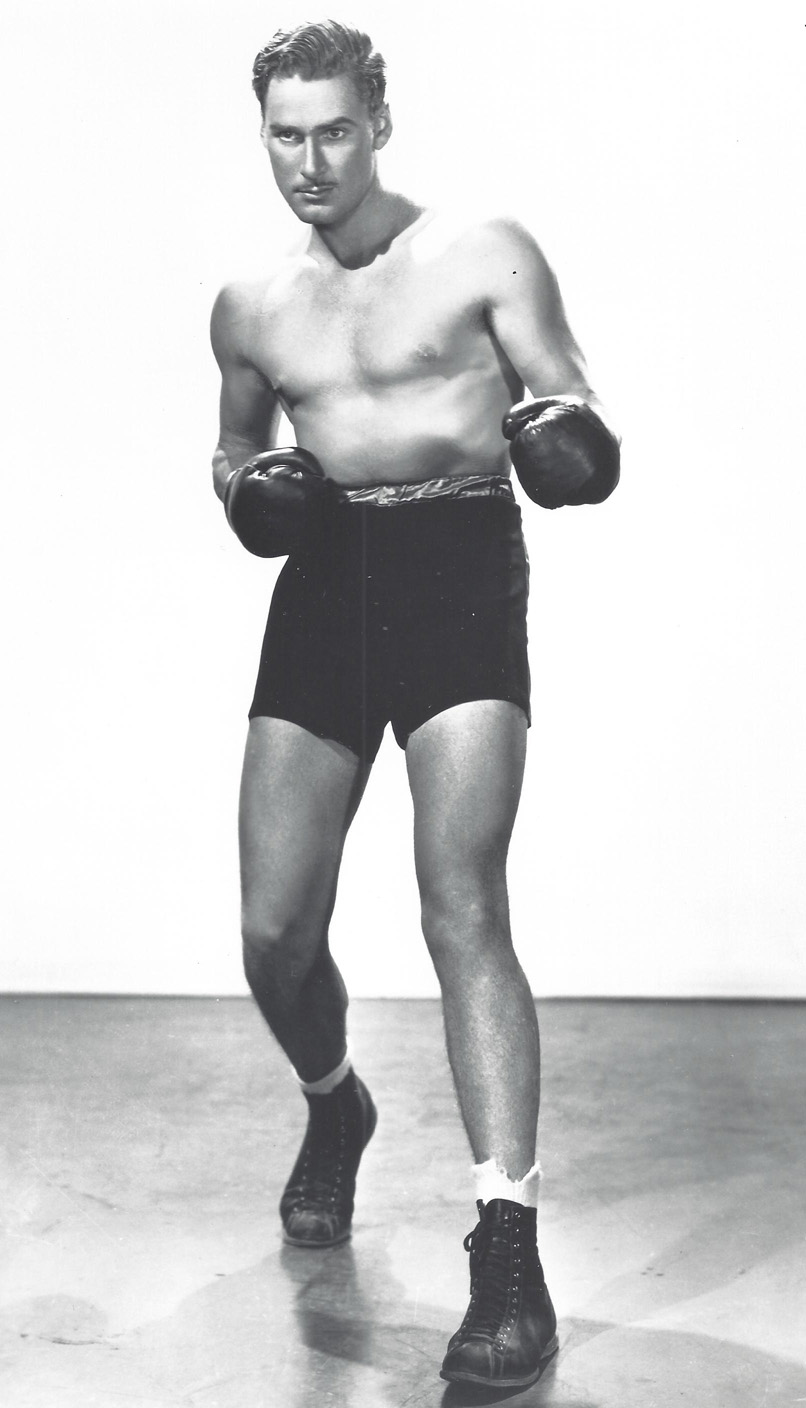
Flynn in the 1937 star vehicle The Perfect Specimen, which included a boxing scene.

Flynn in the 1937 star vehicle The Perfect Specimen, which included a boxing scene.

As you’ll recall from “Juicy 2: A Shot Across the Bow,” a drunken Flynn had made a vile remark about Olivia de Havilland to John Huston at a David O. Selznick party at the DOS mansion on Summit Drive. Huston wouldn’t say what it was except to call it “something wretched,” uttered one womanizer to another. Now, I don’t for a moment believe that Errol just insulted Olivia for no reason. What he said was really about some aspect of the deH-Huston liaison, as in, she was cheating on you, John, with me. Flynn had at this point been jilted three long years ago by Livvie, but Errol was thin-skinned and carefully fed and watered his grudges, so this one was top of mind. Always top of mind. Huston then called Flynn on the remark, called him a “sonofabitch” as a matter of fact, and they took it outside so as not to incur breakage on stately DOS interiors.

Down past Selznick’s famous gardens they trudged in the wilds of the Hollywood Hills off Benedict Canyon to a gravel road. They removed their jackets and squared off, ready for combat, with Huston feeling pretty confident since he had been a prizefighter in his colorful youth. Boom. That left jab of Flynn’s, the one that made Angelo Dundee all giggly, the one that caused Bert Randolph Sugar to gasp in admiration, shot out of nowhere and turned out Huston’s lights. You see, one of Flynn’s cronies was ex-welterweight boxing champion Mushy Callahan, now a Warner Bros. grip, who had spent many an hour sharpening Flynn’s form and footwork for Gentleman Jim. In fact, Errol had been a huge fight fan from his brawling days in the South Seas and loved nothing so much as mixing it up after a few drinks.

Huston landed on his elbows, gained his wits, and jumped up as if to say, no big deal, and Flynn set him right back down again. “Each time I landed on my elbows,” said Huston, who claimed that for years afterward slivers of bone would emerge through the skin of his right elbow courtesy of his bout with Flynn.

John Huston demonstrates boxing technique while directing the 1972 feature film, Fat City.

John Huston demonstrates boxing technique while directing the 1972 feature film, Fat City.

Tale of the tape on these two was that Huston was then 38 and Flynn 35. Flynn was an inch taller and 25 pounds heavier than Huston, all of it lean muscle. Huston had gone 22 and 3 as an amateur boxer and was once California champion. Flynn’s record is unknown because he fought his bouts like this one, outside the ring, although it’s confirmed that ex-wife Lili Damita knocked him out cold with a champagne bottle on their anniversary in 1938, so Flynn was something-something and 1 at the least.

Huston wrote about his fight with Flynn in An Open Book, his autobiography. He figured going in that Flynn would fight dirty, and when Huston had gone down on his elbows those first times, he expected Errol to kick him in the head and end the fight in a hurry. “He didn’t,” said Huston. “He stepped back and waited for me to get up, which I thought rather sporting of him.”

Flynn kept his guard high to protect that pretty face, which was where the money was, so Huston started going for the body and played Flynn’s ribs like a xylophone. John knew he was getting to Errol when Flynn started to lean in and hold onto Huston—the classic sign in boxing that body blows are taking a toll and wearing down a combatant.

Far from a brawl, they boxed, and boxed, and kept at it until headlights from departing party guests illuminated the pair and tipped off Selznick about what was happening practically under his nose. At that point he burst out enraged and broke things up. Said Huston, “David assumed Errol had started the fight, since he had that reputation, and there were recriminations.” Whoa, Nellie, I bet there were! Both Flynn and Huston ended up in the hospital and would find their fight a bonding experience to the point that Flynn ended up calling Huston “Johnny,” and a dozen years later Errol would star in the John Huston African adventure film, The Roots of Heaven.

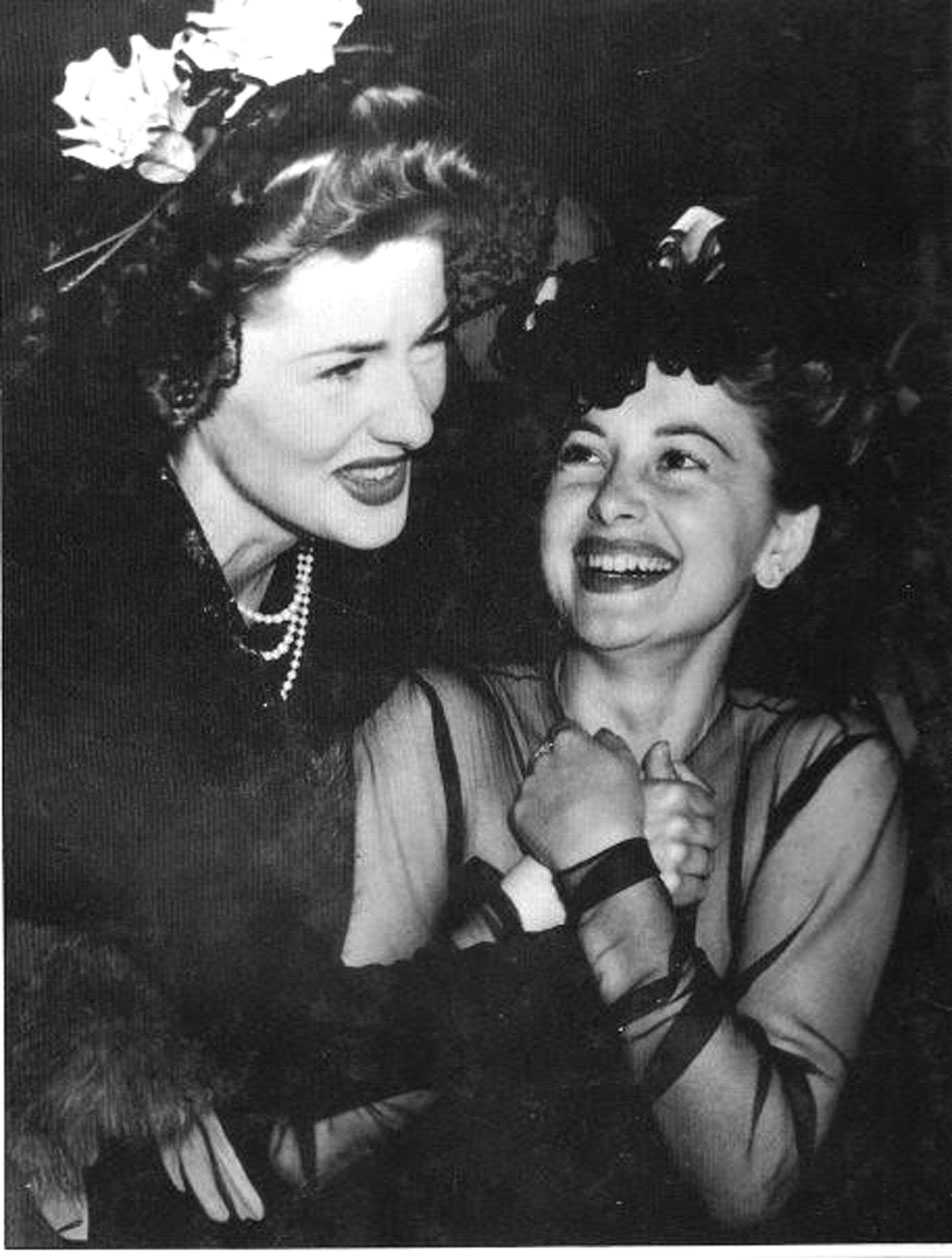
Olivia at about the time of the brawl.

Olivia at about the time of the brawl.

And what of the lady in question, the subject of the remark by Flynn? Olivia de Havilland would remain estranged from both men, although Flynn wrote to Livvie less than two months after the boxing match inviting her to star opposite him in his new comedy, Never Say Goodbye. This was shortly after the “de Havilland Decision” had broken Jack Warner’s power and she was unable to find work because of a Hollywood blacklist organized by Warner against her. She declined Flynn’s offer in a return note, no doubt in part because making this picture would require her to return to Warner Bros. Flynn made it clear Never Say Goodbye was to be made by his own production company so he had the power to get her in, or, as he phrased it, “I could guarantee that not only would the Bros. not get in your hair but on the contrary would lay out a good number in velvet carpets for you.” But it also meant working in close quarters with Errol again, and so even though offers weren’t coming in, she said no. It would be another 13 years before they met up face to face, an occasion described in my book Errol & Olivia (2010) that would wound her deeply and break his spirit.

Flynn, de Havilland, and Huston were three solitary, not-very-happy people living in an age long before email and text messages. Where today a wistful lover can tap out a smartphone message in a nostalgic moment and hit send, in the old days there was a deliberate process that had to be followed: pull out paper, pull out pen, sit there and reminisce and write, then sign your name, fold it up, address an envelope, lick and place a stamp, and (heart pounding) drop in mailbox. It was slow, calculated torture to send handwritten notes to lost loves via snail mail, like those exchanged by Errol and Livvie in 1945, and by Livvie and John in 1967. But in both cases—the love of Errol and Livvie and the love of Livvie and John—the relationships were poisoned and there was no going back.

Mission-box3


Juicy 2: A Shot Across the Bow


Errol & Olivia by Robert Matzen

Olivia may seem to be at rest in this shot taken around the time of the Huston affair, but she never really was.

So where were we? Oh that’s right, in the middle of a love triangle between Errol Flynn, Olivia de Havilland, and John Huston. OdeH began it with Errol Flynn in 1941 after hot-blooded Frenchwoman Lili Damita had finally filed for divorce from in-like-Flynn. Livvie had told Errol point blank when he proposed to her in 1937 (big of him to propose while heavily married) that she wouldn’t do anything with him (think sex) while he was bound to Lili. Then nature took its course with Flynn and Damita over the next four years, leaving both Flynn and de Havilland at liberty during production of They Died with Their Boots On from July through September 1941. As much as Livvie would like you to believe that she and Errol didn’t do the horizontal tango, well, they were adults, beautiful, and known to be dating. She was going through a rough patch with her employer, Jack Warner, and Errol was an iconoclast and particularly supportive of her cause. Oh, and he had just seen completion of his bachelor pad up on Mulholland Drive, a place he had designed with pride as a sexual Mount Olympus. They were young, unattached co-workers who had been attracted to each other for years and now had their evenings free in a hideaway on top of a mountain. You do the math on that one.

Then something happened. Something bad. She found out something or he did something or she did something or she simply got too close and stared in the eye of the Flynn manbeast, but suddenly they were estranged at the beginning of 1942 as she began making her new picture with Bette Davis, In This Our Life. And then, as reported here last week, came the thunderbolt. Just after breaking up with Flynn she fell head over heels for John Huston and he for her. Well, no he didn’t. Huston was one of those bad boys you hear tell of. He loved ’em and left ’em, but by all accounts this guy could charm a gal right out of her panties and he did it all the time, right under the nose of his wife, Lesley. I’m telling you, John Huston, a not very handsome man with a nose that rambled all over his face, scored with the babes at all hours of the day. And who should be vulnerable rebound girl but OdeH when he began directing her in this new picture with Davis. (Note: As reported in Errol & Olivia, Livvie was a sucker for older authority figures, and Huston fit the bill to a T.)

Errol & Olivia by Robert Matzen

John Huston went to war and distinguished himself as a combat journalist, but it was also convenient to get away and let things cool off on the home front.

Scandal ensued because Livvie and John were bangin’ here, there, and everywhere, but Huston being Huston, he began to get a little uncomfortable falling under the scrutiny of a serious, highly intelligent, kinda nuts, powerhouse human like de Havilland, who suddenly had the idea they were soon to be Mr. and Mrs. So what did he do? He joined the army and got as far away as he could think to go, to the Aleutian Islands past Alaska proper, where there were no telephones, to make a documentary about the war being fought up there between the Americans and the Japanese. “I’m sorry, baby, I can’t call for two months. There aren’t any phones.”

Olivia de Havilland was a stand-up woman in 1942, and remains one today, a titan among humans, smart, funny, multi-talented. Did you know she can imitate a dog’s bark so well that she can converse with other dogs? Did you know she can sketch like a pro? She used to entertain cast and crew alike with these sidelights while, oh by the way, making enduring classic motion pictures and earning Academy Award nominations and statues.

As things always went with Mr. Huston, this lover was traded in for the next lover. Livvie and John went their separate ways, and she got a nice tour of the fiery pits of hell pining away for John Huston while she was blackballed from the motion picture industry by Jack L. Warner and then almost died of viral pneumonia while entertaining the troops on Fiji Island in 1944. It was rough for Livvie, while Huston didn’t miss a beat.

Errol & Olivia by Robert Matzen

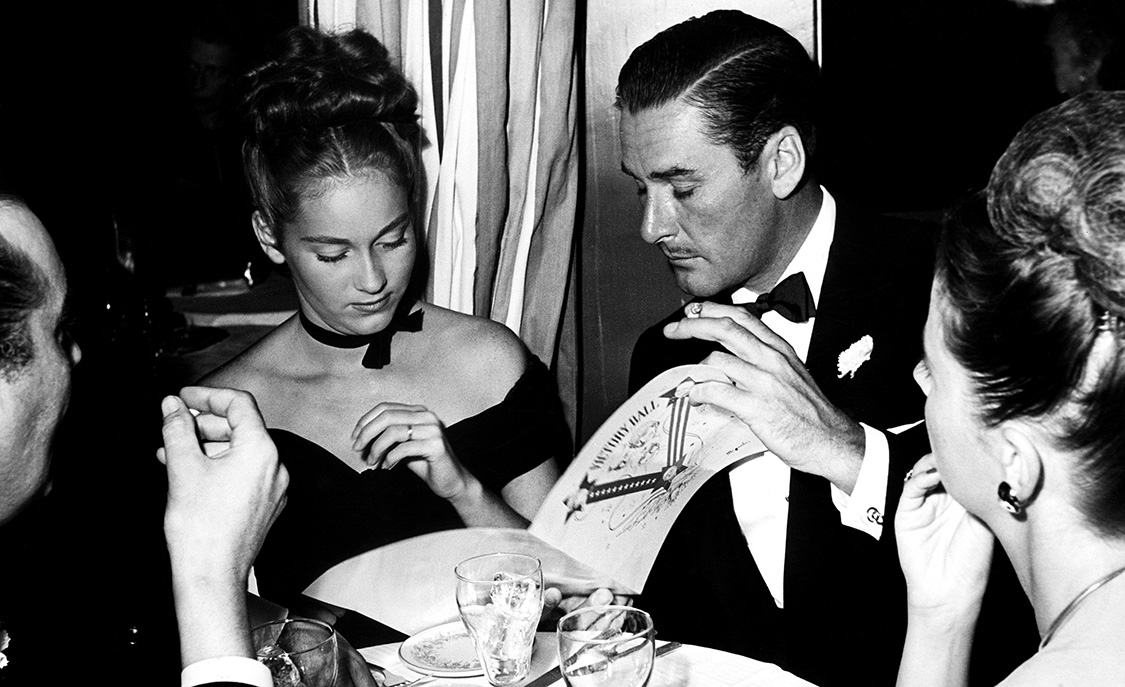
Nora and Errol Flynn participate in the Victory ball not long after the memorable evening with John Huston.

CUT TO APRIL 29, 1945. There’s a party at the home of David and Irene Selznick, and Errol and wife Nora are invited, as is John Huston. Both Errol and John were three-fisted drinkers and half in the bag when they edged within earshot, and Flynn in his wisdom decided to fire a shot across Huston’s bow. Neither would ever dare repeat what he said at that critical moment, but the subject was whom-was-Livvie-with-and-when. I’m pulling my punches here, but Flynn didn’t when he stated it one drunk to another.

As reported in Errol & Olivia, Flynn’s shot-across-the-bow hit Huston right in the crotch, which is where John kept his ego. “That’s a lie,” he spat. “Even if it wasn’t a lie, only a sonofabitch would repeat it.”

I love Errol’s response. It’s so him: “Go fuck yourself.”

Bombed though they were, both knew not to wreck the home of David O. Selznick, so they took it outside to a gravel drive down at the bottom of Selznick’s garden, where two former real-life prizefighters practiced the sweet science on each other’s faces. Huston must have underestimated Flynn’s skill because with one straight left jab, Huston was down to his knees.

And here’s where we’ll leave the story until next time, when our little love triangle will reach its twelve-round conclusion.


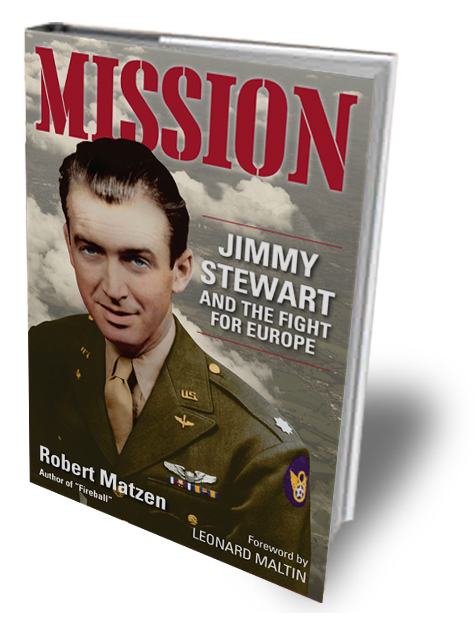
Mission: Jimmy Stewart and the Fight for Europe by Robert Matzen

Coming in October: Mission: Jimmy Stewart and the Fight for Europe, with more tales of real-life Hollywood in the golden age, when truth was stranger than fiction.

Juicy

While researching one of my books at the Academy Library in Beverly Hills, I came across a juicy letter, and I can’t even remember whose papers I was looking at. Logically speaking, it was a John Huston file because the letter was written from Olivia de Havilland to John Huston in January 1967. She opened by saying that she took her kids to the theater to kill time and the picture they walked into was The Bible, and she claims to have been shocked when she heard his voice narrating, and the voice took her back to another time and place, and she went on to describe intimate details about places they spent time together in 1942. I’ll quote the letter a little later, but first, some backstory.

Errol & Olivia by Robert Matzen

Errol Flynn and Olivia de Havilland prepare for a scene on a darkened soundstage during production of They Died with Their Boots On at Warner Bros. In three months they would be estranged.

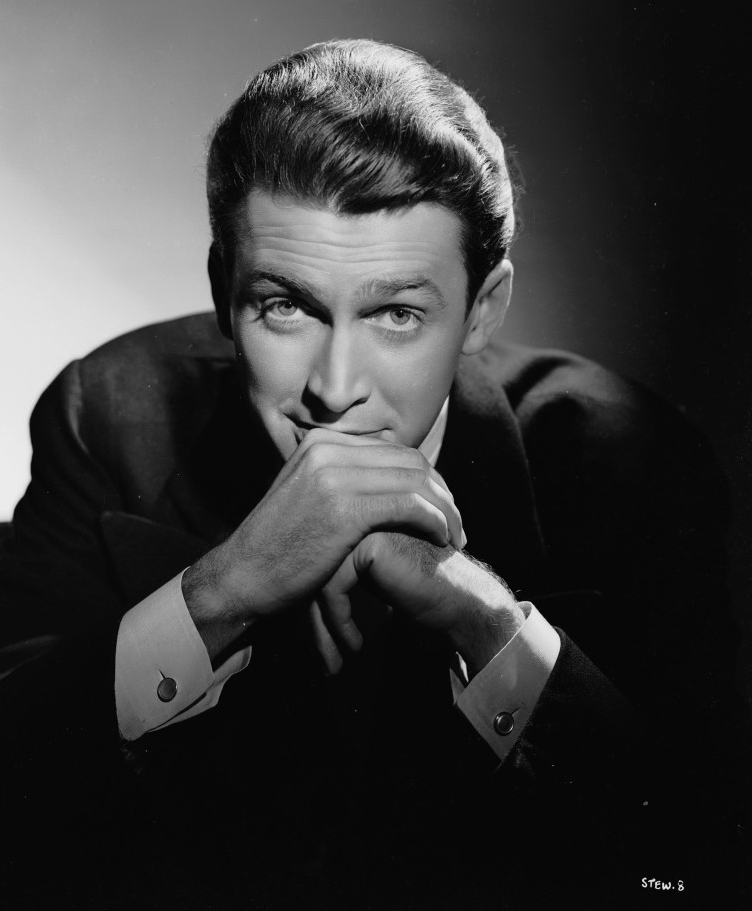
It was the wildest time in the life of a talented, no-nonsense survivor, the time she threw caution away and drove with the top down and no scarf. She was 25 and in a dark place, broken up not long from former boyfriend Jimmy Stewart (see Mission, coming soon), battling Jack Warner over her Warner Bros. contract and on again, off again romantically with long-time costar Errol Flynn. In January 1942 Errol and Olivia were off again because she had gotten too close to him around the time they completed They Died With Their Boots On and finally realized what a troubled soul he possessed. So that January she was a free agent and began production on a drama called In This Our Life with Bette Davis. The first day of work, kaboom, she fell under the spell of the picture’s director, who happened to be the hottest commodity in Hollywood at the time, 35-year-old writer-director (and notorious ladies’ man) John Huston. What Huston didn’t have in the classic looks department he more than made up for in charm, brains, and killer wit. Livvie, known as “Old Iron Pants” around the soundstages at Warners, found herself struck by the big thunderbolt like nothing ever before, not even with Flynn. Livvie was not only in love, she was in total, all-consuming lust, despite the fact that Huston was married at the time. High-profile Huston was involved in making a documentary on the war, Report from the Aleutians, and for a time they carried on from afar, but carry on they did through that year in what became filler for news columns, and a full-fledged scandal among gossip-mongers at Warner Bros.

Errol & Olivia by Robert Matzen

John Huston doesn’t seem to be very happy with Olivia looming over him in this 1942 shot. They were seldom photographed together in what was supposed to be a secret relationship.

There was no way it would end well, and of course it didn’t. Serial-monogamist Huston grew bored pretty fast and moved on to Livvie’s Gone With the Wind co-star, Evelyn Keyes, while Livvie’s dark time went on. She would battle Warner Bros. for two more years, endure blackballing by all the studios, remain estranged from Flynn, battle her sister Joan Fontaine endlessly, and nearly die of illness contracted when she went off to entertain the troops in World War II. The clouds finally broke over Livvie’s head in 1946, and boy-howdy, what a dawn she witnessed. She won an Oscar for her 1946 picture To Each His Own, then topped that performance playing mentally disturbed Virginia in The Snake Pit in 1948, then won another Oscar in 1949 for The Heiress.

The thing to remember about Livvie is she has always been a loner. She has now spent a century as an island, a closed book, a tough cookie. To me, after having corresponded with this woman since 1978 and studying her life for my book, Errol & Olivia, this was the most revealing document I’d ever encountered. It read in part, “…I heard your voice. It was an extraordinary experience, for no one had told me that you had done the soundtrack, and, of course, with the first word I knew it was you speaking. It brought back, with a rush, the year of 1942 and the Aleutians, and the film you made there, that beautiful film, and ‘I’ve Got Sixpence,’ and your voice on the soundtrack for that picture, and, well, many things. I hope all goes well with you—I always have. I always will.”

Livvie is a beautiful writer, and here in a rare instance she bares her soul and engages in some flirting with a one-time lover who had meant the world to her, who had hurt her so deeply, and this was to say it’s all right. I forgive you and remember the good times. Classy move. Classy woman.

Happy 100th Birthday, Miss de Havilland. Speaking of your talent as a writer, I hope everyone goes right out and buys your terrific 1962 book, Every Frenchman Has One, which has just been re-released.

Errol & Olivia by Robert Matzen

Next time we’ll look at one of the most incredible moments in Hollywood history, the time the aforementioned men in Livvie’s life fought over her, almost to the death.

Going All the Way

Mission: Jimmy Stewart and the Fight for Europe by Robert Matzen

An interesting situation arose when I routed the manuscript for Mission for review to key subject matter experts who had helped in its development. Two are Hollywood historians, one is a WWII historian, and two are aviators who flew with Jim Stewart in the war. One of the fliers took umbrage with my depiction of Jim’s sexual exploits in pre-war Hollywood, and most stridently so. No spoilers here, not for a book still four months from release (and the embargo is still in effect), but suffice to say Jim was a far busier boy than you’d expect during his five-plus years in Hollywood prior to joining the military in 1941. The flier said, basically, that in his day you didn’t speak of such things, and he didn’t want Jim to be remembered that way.

I did some soul-searching after receiving this feedback because I greatly admire the man who delivered it, and I wondered if he was right that this type of information has no place in a book about Stewart’s military career. Here are the meanderings of my mind as I thought it through:

Mission: Jimmy Stewart and the Fight for Europe by Robert Matzen

You’d never know it from the characters she played onscreen, but MGM contract star Ann Rutherford was another of the busy ones around town.

Sex wasn’t invented by the counter-culture of the 1960s. Sex was a favorite pastime of Hollywood citizens going back to the first days of hand-cranked cameras in the silent era. All roads in my research for Errol Flynn Slept Here, Errol & Olivia, and Fireball led to, well, sex. Errol Flynn was a big fan of indiscriminate sex. So was Clark Gable. Carole Lombard nurtured a healthy sexual appetite and did what came naturally and so did Jean Harlow. Even—dare I say it—Olivia de Havilland succumbed to pleasures of the flesh in an environment in which many of the world’s most beautiful, suddenly rich and famous people were crammed into a few square miles of exotic Southern California real estate, with no rules or chaperones. It became a matter of sport and ego to see who could bag whom, and Marlene Dietrich might be the prototype for sexual athletics as will be revealed in Mission when she looked at her lovers not as men or women or actors or people but as “conquests.”

If you’re a 30-year-old heterosexual guy and your day-job requires you to kiss Hedy Lamarr or Lana Turner—women whose every move is of interest to an entire movie-going world—what the heck are you going to be inclined to be thinking about but, My God this is a beautiful woman! If you’re a heterosexual woman known as a glamour queen and the script says today you will be romancing Flynn, Gable, or Doug Fairbanks Jr., and you’re looking into their eyes all day long, feeling their beating hearts, are you supposed to turn that off along with the soundstage lighting at 6 in the evening?

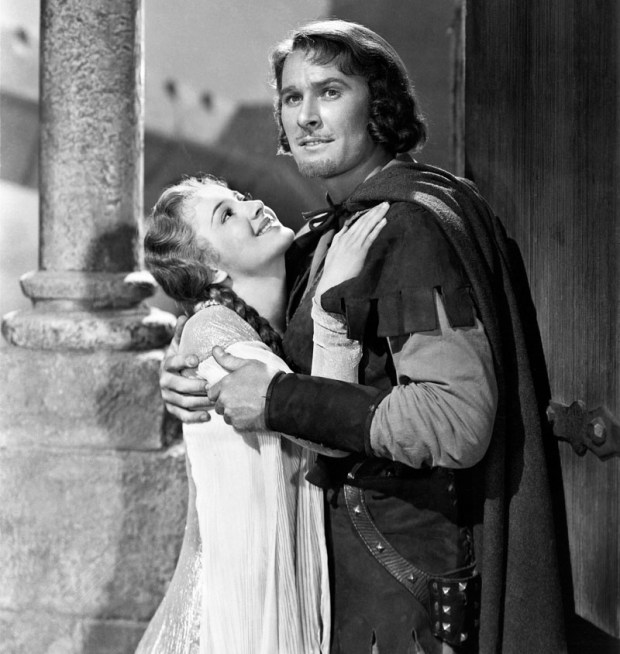
Olivia de Havilland tells a funny story about being in the clinches with Flynn shooting the love scene for Robin Hood over and over and “poor Errol had a problem with his tights.” You betcha. He was 28; she was 21. Nature was taking its course.

Mission: Jimmy Stewart and the Fight for Europe by Robert Matzen

Why, Robin, I do believe you’re happy to see me.

There was a whole lot of nature going on in Hollywood by the 1930s when Jim Stewart reached his prime. Going into the Mission project I had heard that Stewart was known for having a “big stick” and I couldn’t even imagine it from this small-town product with a strong Presbyterian upbringing, but son of a gun, America’s boy next door had a side to him that reveals a lot about who he really was and what his psyche needed. “He had an ego, like all of them,” said a man who knew the older Jimmy Stewart well.

A picture started to emerge for me as I searched for the “real Jimmy Stewart,” not the lovable old guy on Johnny Carson, but the young one roaming Hollywood and then, seemingly inexplicably, running off with a big grin to join the Army nine months before shots were fired by Americans in what became WWII. And part of the story of who Stewart was, a significant part, involved his Hollywood love life, which meant that after all my soul searching, the juicy stuff stayed. I decided to go all the way … just like Jim.

Mission: Jimmy Stewart and the Fight for Europe by Robert Matzen

Stewart once told his perturbed BFF Henry Fonda, “Hank, I don’t steal your dates. They steal me.”


20 Great de Havilland Moments

As we draw closer to July 1, which will mark Olivia de Havilland’s 100th full year on this planet, I started to think back to the most memorable moments of her screen career. She didn’t have the usual run of a Hollywood legend because she went to war with Warner Bros. and stayed off the screen for three years, and then faded from leading lady status in the 1950s, retrenching in Paris, where she has remained for 60 years.

As I detailed in Errol & Olivia, OdeH never rushed into anything in life, and turned down many scripts that became unmemorable pictures. But those she did make, she made well. I thought about doing the top 5, and then the top 10, but they kept coming so I finally decided to stop at 20, realizing that I’m missing many other great moments. I simply haven’t seen pictures like The Great Garrick, The Strawberry Blonde, The Dark Mirror, and My Cousin Rachel in recent times, so I’m depending on all of you to identify the considerable number of great scenes I must be missing. Yes I skew to Flynn-de Havilland just because I’ve seen them most of all.

Here they are, in reverse order, from 20 to down to 1, a list of memorable screen moments courtesy of OdeH—they just happen to include some of the most powerful scenes in motion picture history.

20. Government GirlSmokey slithers across the floor of the crowded hotel lobby looking for a missing wedding ring, and Ed can’t miss her high-heeled legs under the sofa. Livvie wasn’t a comedic actress, but she does well in this crowded-hotel-lobby sequence, and also plays along to sell the sex. This little picture proved to be a surprise hit at the box office for struggling RKO.

19. Dodge City—On the staircase Abbie yells at Wade, “You can’t boss me!” and he stifles her protests with a surprise kiss and she makes a noise in her throat as if to convey, “Oh! This isn’t so bad!”

18. The Private Lives of Elizabeth and Essex—Penelope’s big brown eyes light up as if in neon every time she sees Robert Devereaux. This was her worst screen experience, a thankless role in a prestige picture courtesy of Jack Warner. She stood around a lot, but did what she could with the part.

Errol & Olivia by Robert Matzen

Down yonder, there he is, Robert Devereaux, the Earl of Essex. Penelope rather fancies him.

17. The Adventures of Robin Hood—Sir Guy paws Marian’s jewel case and then rips it open to find the written warning for Robin. Awesome sexual tension between jilted Sir Guy and scheming Marian, revealing just a little of Basil Rathbone’s undisguised lust for Olivia de Havilland.

16. Light in the Piazza—After her daughter’s wedding to Italian innocent Fabrizio, Meg says to herself, “I did the right thing.” Even though the picture never made sense as presented, Livvie still owned those last moments and made them powerful.

Errol & Olivia by Robert Matzen

Meg gushes with pride at the wedding of her daughter at the conclusion of Light in the Piazza.

15. The Snake Pit—Virginia stands in the common room at the sanitarium and her gentle, internal VO likens her surroundings to a snake pit. The camera changes focal length, lifting high above the soundstage until the illusion of all those crazy people is of snakes in a pit. And she remains fixed there, alone and vulnerable and, worst of all for her and for us, returning to sanity so she understands what’s going on.

Errol & Olivia by Robert Matzen

Virginia stands in the middle of snakes in the pit in director Anatole Litvak’s beautiful, chilling shot.

14. They Died with Their Boots On—George scales the trellis to Libby’s balcony and proposes, and she swoons, and then it dawns on her what he just asked, and she scolds, “Oh, lieutenant!” and then a moment later, “Yes, general!”

13. Gone With the Wind—At the door chatting with Scarlett, Melanie spots Ashley coming up the road to Tara after the war.

12. Captain Blood—Snooty young Arabella decides to buy a pirate for personal use and he turns out to be a sassy, wrongly imprisoned English doctor. (Peter to Arabella, with a bow: “Your very humble slave, Miss Bishop.”)

11. Hush…Hush, Sweet Charlotte—Sweet Miriam stops the car and ever so slowly turns to Charlotte, revealing pure evil, and smacks her across the face repeatedly. Then she leans close and hisses, “Damn you. Now will you shut your mouth!” It was Livvie’s darkest moment onscreen in a picture seen as pure camp today, even though it received seven Academy Award nominations in 1965 and won three Oscars. Somewhere deep down it must have been fun to slap around Bette Davis after their long history together that includes contentious moments on the set of In This Our Life.

Errol & Olivia by Robert Matzen

If Charlotte thinks she’s troubled now, just wait another minute.

10. Dodge City—At the newspaper office, Wade comes in to taunt Abbie after she takes a job there because a woman working for a living “Tisn’t dignified!” And during their byplay she hints that the natives object to his face. (Wade: “You should be home, doing needlework!”)

9. The Snake Pit—Virginia realizes she isn’t crazy anymore and doesn’t really love Dr. Kik. Then she connects with Hester in a brilliant crowning moment.

8. The Adventures of Robin Hood—Marian lets her hair down and begins to speak of love with Bess, and then Robin Hood barges in and he and Marian both proceed to let their hair down together.

Errol & Olivia by Robert Matzen

Letting their hair down was a bear to shoot and took three tries with two directors.

7. Gone With the Wind—After Scarlett shoots the Yankee in the face, Melanie drawls, “I’m glad you killed him.” Then she strips off her nightgown to wrap the bloody dead Yankee in.

6. They Died with Their Boots On—Libby strolls onto the West Point green and engages Custer on guard duty, and they get into a big fight right off the bat. It was her first day of work on the picture, and she unleashed pent-up energy that Flynn matched for a terrific sequence.

5. The Heiress—Spinster Catherine finally locks the door on Morris and turns out the lights. She earned Oscar #2 here–she should have won it for The Snake Pit a year earlier.

4. The Adventures of Robin Hood—King Richard commands Robin to claim Marian as his bride; the king asks if she would like that and she beams, “More than anything in the world, sire.” Slam-bang ending to an epic picture. Livvie wasn’t crazy about playing a damsel in distress, but gave it her all anyway.

3. Gone With the Wind—Weakened Melanie forces herself up the long staircase at Tara to tend to Rhett after the death of Bonnie Blue Butler. Did this scene tip the Oscar to Hattie McDaniel? Both were flawless and completed the dramatic stair climb in an unbroken take.

Errol & Olivia by Robert Matzen

A posed still can’t begin to capture the brilliance of de Havilland and McDaniel on that long walk up the staircase.

2. To Each His Own—Through the whole picture, old Miss Norris has been pinch-faced and bitter, but then the Army lieutenant realizes that she’s his mother and asks her to dance. It was the scene that sealed her first Oscar win, and if it doesn’t make you cry, you don’t have a pulse.

Errol & Olivia by Robert Matzen

“I believe this is our dance, Mother.”

1. They Died with Their Boots OnGeorge says goodbye to Libby, both sensing they’ll never see each other again. It was the best moment for both actors, and for director Raoul Walsh, and for the technicians who lit the set. Yikes.

Errol & Olivia by Robert Matzen

If you want to destroy me no matter the mood or time of day, put this scene on. And BTW, however much you’re paying the lighting guy? It ain’t enough.

All right, lay it on me. What are some more great de Havilland moments?

For more on Olivia de Havilland and her upcoming 100th, check out Self-Styled Siren’s blog.

When Swords Flew

Errol & Olivia by Robert Matzen

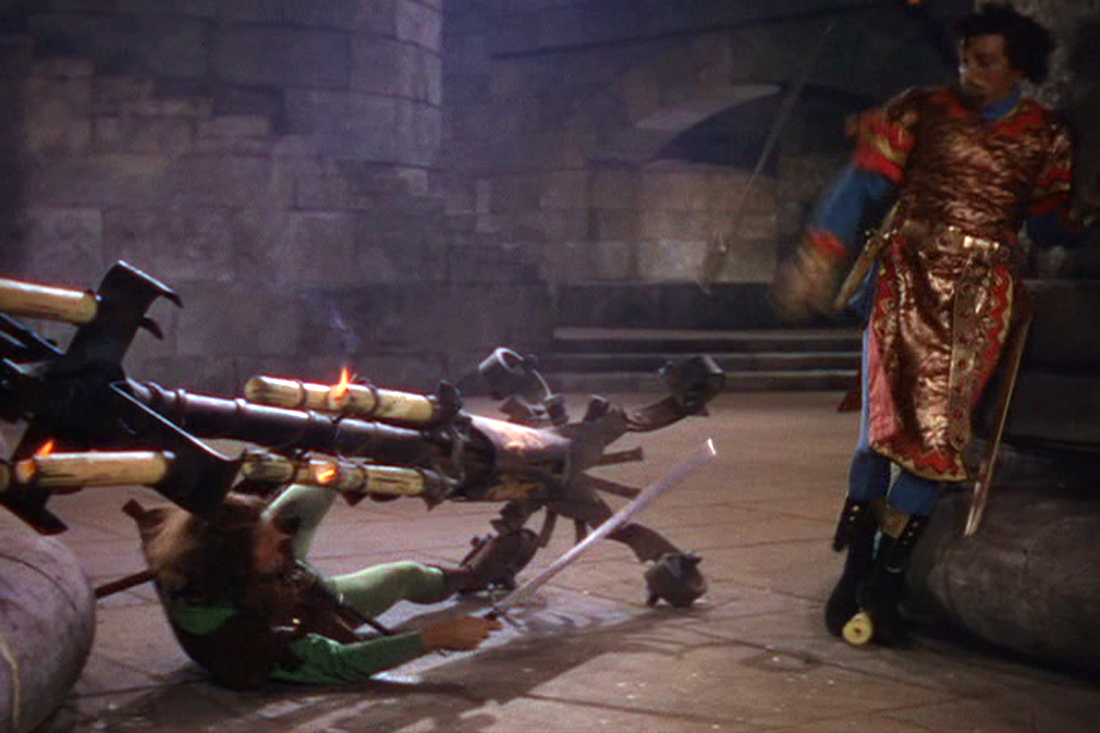
In a key lobby card from the set, Robin Hood stares down Sir Guy of Gisbourne in the middle of a duel for the ages.

I was prompted to think about the duel scene in The Adventures of Robin Hood by an email Tom Hodgins sent just this morning. In it he says:

“…years ago I mentioned on your Errol and Olivia blog that there is a moment in the Robin Hood duel where a sword fumble by Rathbone can still be seen in the film. Ralph Dawson edited it so beautifully that the eye can’t really catch anything, but, by pausing and freeze framing the image you can clearly see it. The only reason I made this discovery is because one day I thought I saw a slight blur on the film at that point, so I stopped my DVD to check it out. Voila—a boner by Basil that’s been on the film since its release without anyone having noticed it. (At least, I’ve never heard of anyone else having written about it). I’m sending you a couple of snapshots of the fumble taken on my computer off the DVD, just in case you never saw it for yourself. Basil, I’m sure, would not be pleased.”

I remember Tom mentioning this but never did think to follow up until the new prompting this morning. With Flynn lying under the candelabra, Rathbone says, “Do you know any prayers, my friend?” and Flynn responds, “I’ll say one for you!” and his next swing with the sword, as he’s lying flat on his back, is so ferocious that it catches Rathbone unaware and knocks the blade from his hand. It’s not supposed to, but that thing goes flying—which I didn’t notice in nine theatrical viewings of the picture and dozens more on the small screen. It’s only a few frames, literally like a quarter of a second, but it’s there with the sword tumbling high in the air end over end.

Errol & Olivia by Robert Matzen

In Tom’s freeze frame, Rathbone’s sword has been knocked from his hand by an over-eager Flynn and is tumbling in the air–something NOT choreographed as part of the action. As can be seen, candles did not fare well in this encounter.

In general it proves how difficult the swordfights were to choreograph and how long it took and how exhausting for the actors, director, DP, and crew. Rudy Behlmer used some of the Rathbone color home movies to lead us through an examination of the filming of this duel scene in the bonus feature, Welcome to Sherwood, included as bonus material in the Robin Hood deluxe DVD package released years back.

We have all seen some fantastic cinematic duels, and for me this one is near the top of the list, with its terrific flow as the duelists fight their way out of frame to hack and slash in shadow and then re-emerge into view, still going at it furiously. They’re not fighting with foils but with heavy swords, their occasional, resonant clanking serving as reminders that these weapons are lethal.

Errol & Olivia by Robert Matzen

As per another lobby card from the original set, the duel begins in the Great Hall.

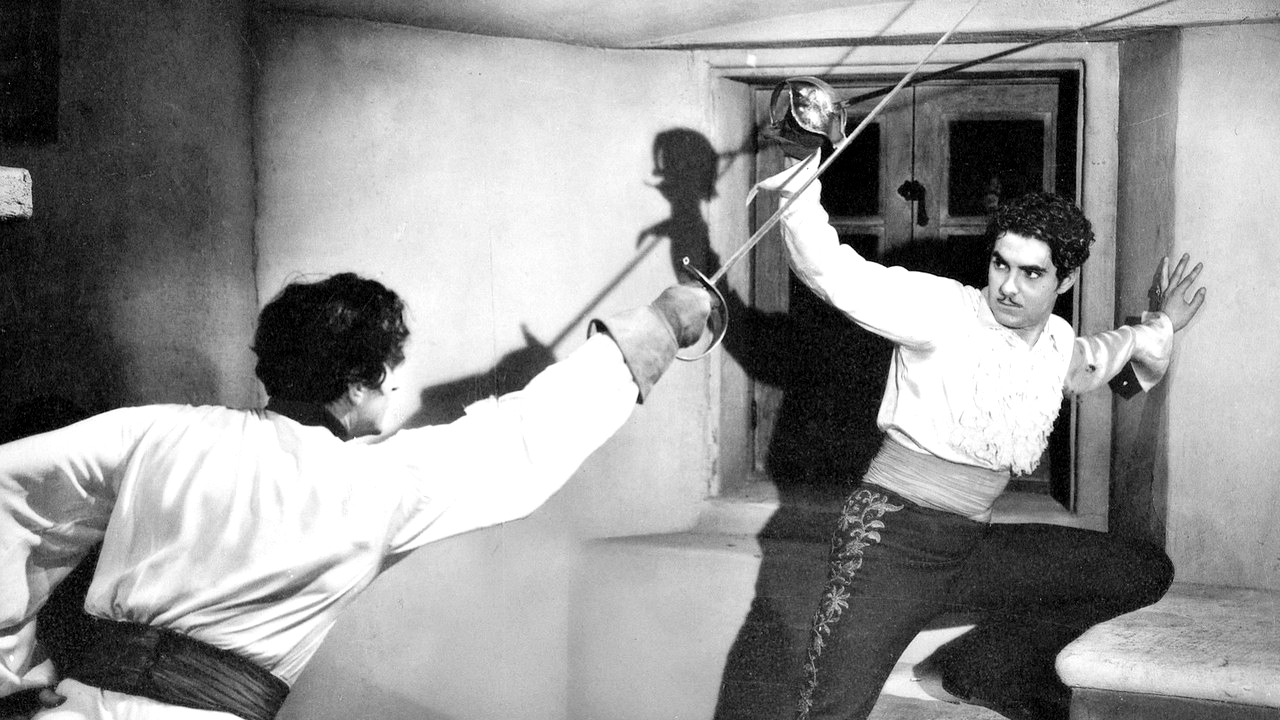
In The Mark of Zorro there’s a fantastic moment when Esteban (Rathbone again) demonstrates his prowess with a blade to Zorro (Ty Power) by deftly slicing off a candle with a flick of his wrist. Then Zorro does the same and seems to miss because the candle is still sitting in place, but then he reaches out and lifts the sliced top off the remaining bottom and smiles innocently. Well, there’s no such gentlemanly foreplay in Robin Hood—when those big candles get hacked by the swinging swords, wax flies in all directions. In general, candles take a lot of abuse in the Robin Hood duel; not only are they hacked up by both combatants, but candelabras are tipped over and a candle is hurled as a missile by Robin at one point.

Wasn’t Basil Rathbone something? When the duel scene was shot, he was 45 years of age (17 years older than Flynn) and a heavy smoker, yet easily up to the rigors of shooting that scene. Two years later at 47 he nearly topped it in The Mark of Zorro. There’s a moment at the end of the Robin Hood duel that makes me frightened in retrospect for the safety of Mr. Rathbone and others in the cast, and that occurs after Sir Guy has been defeated and Robin hurries to the dungeon where he knocks the hand of the jailor holding the keys to Marian’s cell so hard that he bends his blade. He doesn’t bend it a little; he bends it a lot, demonstrating—what are we—78 years later how explosive Flynn was as a physical presence in his action pictures, and how wary stars and bit players alike would have been at the moment the director called, “Action!” and the film started to move in the magazine. That was when the money was spent, and when Errol would have been ready to make it look good, come what may for the other guy—as when he used muscle on the shot that Tom Hodgins pointed out, and Rathbone’s sword went flying. I know I’ve mentioned how Christopher Lee used to boast that Flynn nearly took off a finger shooting a duel scene during production of an episode of The Errol Flynn Theater, “and I have the scar to prove it,” Lee sniffed in an on-camera interview.

Errol & Olivia by Robert Matzen

Basil Rathbone fights Tyrone Power in The Mark of Zorro. This duel was just as furious and just as lethal an encounter, but confined to a much smaller space. In both, Rathbone displayed fine fencing form.

I’m tempted to say that Flynn just didn’t have self-discipline in any regard except maybe for tennis. Archival film footage shows he was an awfully good tennis player and, as any weekend hacker knows, tennis is all about discipline. And when you watch the Robin Hood duel scene and the extra footage as described by Rudy Behlmer, you see that the swordfights were meticulously shot over a course of days and through all those movements with exposed sword tips, Flynn must have had discipline there too or Rathbone and so many others would be dead or blinded for life. But they lived to act on, so Errol must have been doing something right. You can cite for me all the instances where Fred and Al Cavens were doubling for Errol and Basil but there’s still a heck of a lot of Flynn-Rathbone footage visible in the Robin Hood duel, so these two must be given the credit they deserve for making it look lethal from beginning to end.

Errol & Olivia by Robert Matzen

Thanks to the vision of Mike Curtiz, the combatants duel in shadow for a time, only to reemerge in frame still fighting with fury.

The near-impossibility of shooting this duel scene is demonstrated when, in the middle of the duel, Robin moves aside and Sir Guy flies past him and off the winding stone stairway. Sir Guy’s sword flies far off as dictated by physics and lands a good 25 or 30 feet away, but in the next shot, it’s magically laying on the floor under Robin’s feet so he can kick it back to Sir Guy in an admirable display of sportsmanship. So, let’s think about that moment on Stage 1 (or wherever it was) in January 1938 after Curtiz called “Cut” and they assessed what had just been captured on film. There must have been 40 people who saw the sword go to a spot where it would be impossible to retrieve unless Robin spent 15 seconds walking down the stairs, picking up the sword, and returning it to Sir Guy after he had collected himself up off the floor and dusted himself off. Talk about sapping dramatic tension! So what was that moment like, and what led to the decision to cheat through it the way they did? Was the stunt man doubling Rathbone the key player? Did he say, “If I have to do that fall again, it’s going to cost you another $500,” which prompted Mike to decide that yes the sword flew off but print it anyway and we’ll cheat. Was it a safety thing where the stunt man said, if I’m falling this way, then I’m making sure the sword goes that way so I don’t impale myself. Actually, that’s more likely and could explain why there isn’t a memo to or from Hal Wallis about this situation—it was a safety thing and you either X the fall out of the script in red pencil, or you cheat. All of which speaks to the incredible challenge of staging a fight like this.

Errol & Olivia by Robert Matzen

The iconic promotion still. A few seconds after telling Robin Hood, “You’ve come to Nottingham once too often, my friend,” he will lunge and go head-first off the steps. His sword will fly far off camera.

I will never forget standing in front of the edit booths under Jack Warner’s window on the Warner lot, thinking about all that used to go on in those rooms, all the sweat and missed meals and midnight oil burning brightly as deadlines neared. Can you imagine the pressure of cutting film by hand on 1937 equipment when the final still needed to be processed and prints run in whatever, 36 or even 24 hours? I’ve never counted the individual shots in the Robin Hood duel scene but each one had to be spliced into a continuous flow in the work print—down to the right frame. There was no iMovie or Avid or Premiere Pro back then; there were just a lot of men and women working themselves into an early grave slicing film stock on crude machines under the scrutiny of bosses like Hal Wallis and Mike Curtiz. All I can say when I think about those poor people is, yikes. Oh, and, they’re not paying you enough.

So that’s what came to mind this morning when I saw Tom’s two frames from the DVD of The Adventures of Robin Hood. I’m probably not the only one who missed this remnant of a flub and I smile thinking about Ralph Dawson in his little room in the dark in Burbank thinking about how to make the frames work with what came next. In the foreground is Flynn squirming out from under the candelabra, which is critical to show, and in the background the sword is flying when it’s not supposed to be. But Dawson made the right decision, because the classic remains a classic, and it took the eagle eyes of Tom Hodgins and the luxury of frame-by-frame DVD stop motion to spot the goof.

Paradise Missed

Errol & Olivia by Robert Matzen

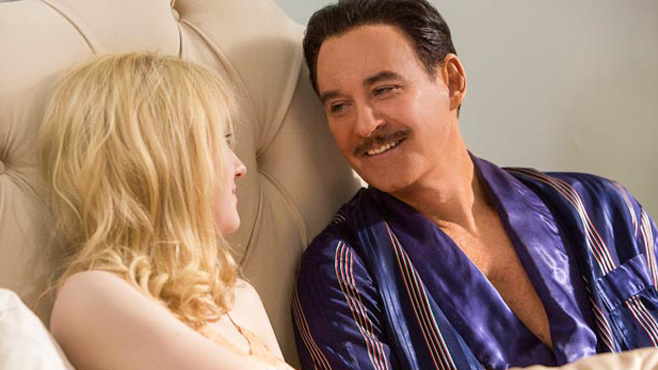
Dakota Fanning as Beverly Aadland and Kevin Kline as Errol Flynn in the fanciful and largely unseen “The Last of Robin Hood.”

I finally got around to watching The Last of Robin Hood, the 2013 curio made by Wash Westmoreland and the late Richard Glatzer and starring a powerhouse threesome of Kevin Kline, Susan Sarandon, and Dakota Fanning. When word of this production got out, fans of the late Errol Flynn asked: If you want to make a picture about Flynn, why focus on the last two miserable years of his life? Why not tell the story of Errol in his heyday? Well, it’s obvious that…

Actually there’s nothing obvious about why this film was made; I sat as it unspooled wondering who invested money in this production, and how the stars were convinced to participate, and who was expected to go see it, and why. It couldn’t get a distribution deal for the longest time and then when it did, release was limited. The very fact that I wrote two books about Flynn yet it took me a couple years beyond release to bother to see it says something about the desirability of the product, well, in this house, anyway.

Errol & Olivia by Robert Matzen

The real Beverly Aadland soon after Errol’s death. She was a natural beauty and by all accounts a sweet soul. And I have to ask: Does she look 17 years old to you? Maybe a tad bit older?

In a nutshell, the plot centers around a Hollywood hopeful named Beverly Aadland toiling away at Warner Bros. in 1957, when she is spotted by Errol Flynn. He’s back on the lot where he was once a contract star, this time playing near-death John Barrymore and way past his prime. Errol arranges to meet Beverly, has sex with her against her will (assuming as he does that she like all other females wants to feel the sword of the master). Then she falls for him and the romance of their lives ensues. But there’s a catch: he’s 48. She’s 15. She swears she’s legal but she isn’t; her stage mother Flo had arranged for a fake birth certificate to back up the fact that this girl looked much older than her years. Really she did. When the real Beverly was 13, she already looked like a full-fledged adult.

There are things to like about The Last of Robin Hood. The production design has a nice 1950s feel, with icily muted color tones. The screenplay has a cheeky vibe for the first 45 minutes. The stars are perfect. These are Academy Award performers letting it all hang out and they nail it—down to Kevin Kline’s rendition of Flynn’s odd Aussie/Tasmanian/English accent. Dakota Fanning is Beverly Aadland—we get that she feels Beverly at a soul-to-soul level. Beverly’s mother, Florence Aadland, could only ever wish she were the babe-version portrayed by Susan Sarandon, a basically good-hearted mom (or is she?) who can’t resist the lure of Hollywood. Flo has no idea how overmatched she is by people like Errol Flynn.

Errol & Olivia by Robert Matzen

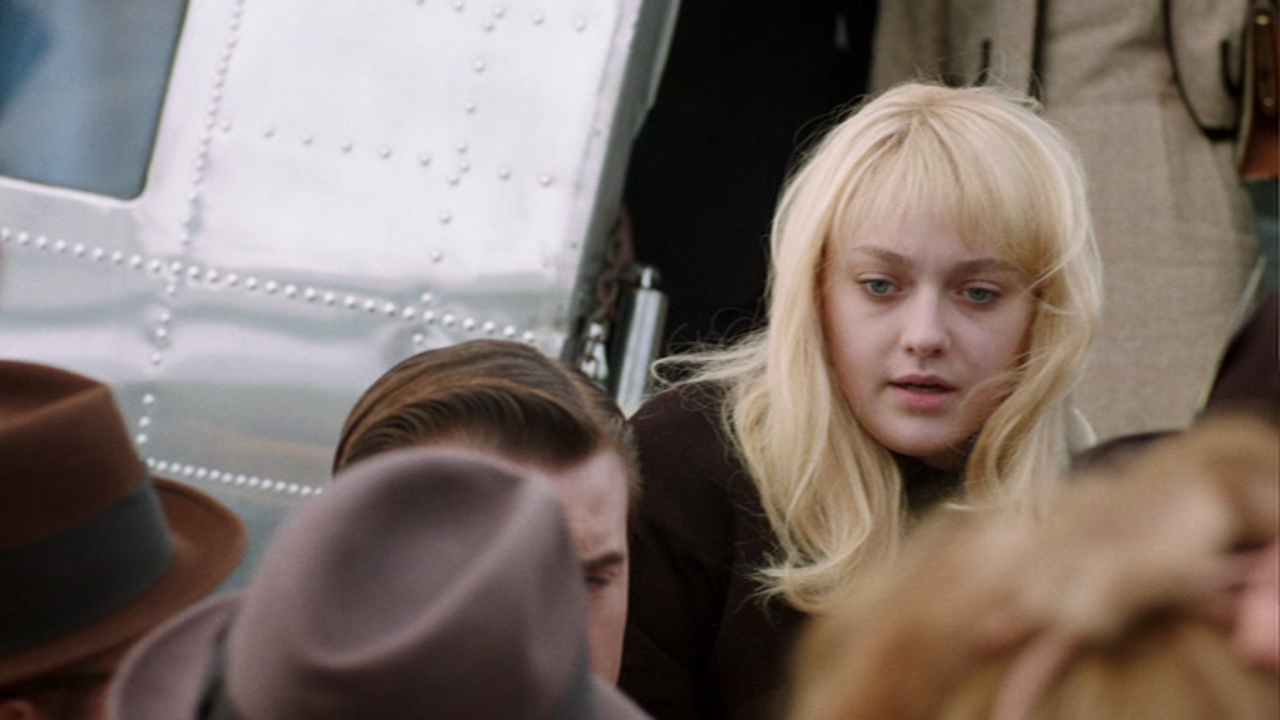
In a scene vividly and accurately capturing reality, Fanning as Aadland is ambushed by reporters in the wake of Flynn’s death by heart attack.

As for Kevin Kline as Flynn, I (and many others) always thought he would make a perfect Errol from the days of The Pirates of Penzance. But the years passed and it kept not happening. He absolutely nails it in Last, as in, he depicts the guy his fans always imagined Errol Flynn should be at age 48, this elegant, dashing, aging-but-dignified movie star back to conquer Hollywood one last time.

At one point early on Beverly sees Flynn’s jaggy question mark stitched into some garment he’s wearing and asks what it means. And he says it means he questions things, but this throwaway moment had the potential to represent a theme in the picture: The jaggy question mark represented his cynicism about those people who were out to get him, people like the reporters who went after Flynn for living with an underage lover. How hard would it have been for the writers/directors to have tied the question mark into the scenes of “poor” Beverly collapsing as the press mobbed her at the airport after Errol’s sudden death from a heart attack?

Oh, sorry. Spoiler alert.

A disclaimer at the beginning of the picture would have helped: Any resemblance between this Errol Flynn and the real one is entirely coincidental. In truth, you didn’t want to spend an evening with the real Flynn by this point in his life. He was so debauched people didn’t recognize him—not even his frequent co-star and past love, Olivia de Havilland. He was by now the sum of thousands of bad decisions in his life, including washing down hard drugs with a fifth of vodka a day to ease the pain of having no money and few prospects. And he was a mean man, as described by Earl Conrad in Errol Flynn: A Memoir. Only an enabler would say that Errol Flynn was screwed over by life; Errol screwed himself over with all those bad decisions, one of them being to chase teenaged girls around.

Errol & Olivia by Robert Matzen

Sorry folks, but this is the real Flynn in 1959. Paunchy, boozy, miserable. Bev looks awesome, though, and check out the caption where it says she’s 22.

Which leads me to the most perplexing thing about The Last of Robin Hood. Why in the world did the filmmakers choose this story about a man nearing 50 but looking older (cue the creepiness factor) having a sexual relationship with a girl who ages from 15 to 17? In our politically correct world, are you kidding?? We can’t feel sympathy for the predatory male, or for the girl who’s date-raped but stays with her attacker, or for the mother who wants her daughter to be a good girl on the one hand but play the Hollywood game on the other. It’s a fact that Flynn and Aadland had a close relationship, and a successful one—proving once again that you fall in love with who you fall in love with, and after a certain point, if the love is grand enough, it’s up to the world to deal with it. Flynn-Aadland was a salacious story when Flo Aadland sold it in The Big Love, a sleazy paperback published shortly after Flynn’s death. In our more enlightened age—actually I don’t think it’s more enlightened at all; I think it’s a more judgmental age and just as morally uptight—the Flynn-Aadland story simply couldn’t have succeeded in feature motion picture form as anything other than somebody’s tax write-off. It’s just a shame the three leads were wasted in this sanitized, superficial little fantasy version of complex, real-life happenings.

Earl Conrad got to know Flynn when Errol came down with writer’s block as he was drafting his memoirs; his publisher, Putnam, called Conrad in to save the day as Flynn’s ghostwriter. It’s interesting that the writing of My Wicked, Wicked Ways wasn’t interwoven into the plot of Last because this ultimate project of Flynn’s life engaged him just as much as Beverly did. In fact there’s your movie—why the hell didn’t they make this one: Flynn, the writer of two previous books and numerous pieces for major magazines, is now incapable of writing his greatest book of all. And as he works with Conrad, whom he despises, Flynn the actor and man comes face to face with a lifetime of demons, until, grudgingly, he begins to accept Conrad’s help, and then genuinely comes to admire and rely on him. I understand this story well because I knew Earl Conrad and we talked about it often, and a compelling drama it was as Flynn found redemption and then, finally, his missing words, with Earl’s guidance. I think a lot of people might have paid money to sit down and watch that one, with Kevin Kline as Flynn, Dakota Fanning as Beverly, and you name the Conrad. Matt Damon, maybe. I’d have been first in line and cried a river.

bev6

Beverly had a difficult time of it after Errol’s death, as this caption attests. Depicted with the coroner and police lieutenant is, wait, not Susan Sarandon, but the real Florence Aadland.

Leslie and the Professor

Little-known fact: Joan Leslie got her start with a bit part in Garbo's Camille in 1936 at age 11.

Little-known fact: Joan Leslie got her start with a bit part in Garbo’s Camille in 1936 at age 11 under her real name, Jane Brodel.

Joan Leslie passed on last week at the age of 90. I met Joan only once for a brief conversation that I wish had been a whole lot less-brief given that her first picture under Warner Bros. contract was with Humphrey Bogart in High Sierra, and within two years she had appeared with Gary Cooper in Sgt. York (he won a Best Actor Oscar for it) and then with James Cagney in Yankee Doodle Dandy (he won a Best Actor Oscar for it as well). If you ask me, Joan Leslie helped these two legends win the big prize because she was that damn good.

How good was she? Well, when she played opposite Cooper she was 16 and he was 40, yet she was entirely credible as Coop’s girl. When she played opposite Cagney she was barely 17 and he was 42, but she was believable as his wife—the episodic storyline called for Joan to age 50 years as Mrs. George M. Cohan. In later scenes she was 17 playing 70, which for those times was kind of crazy. But the Oscars for her leading men in successive years don’t lie–this woman had talent. In fact she was a triple threat who could act, sing, and dance (with no less than Fred Astaire).

With Coop in Sgt. York at age 16 versus his 40. What a charmer as Gracie.

With Coop in Sgt. York at age 16 versus his 40. What a charmer as Gracie.

Errol Flynn Slept Here by Robert Matzen

Next year, with Cagney at age 17.

I get the feeling from the progression of her career and from speaking with her that Joan Leslie was a little too sane for Hollywood. One year after Olivia de Havilland took Jack L. Warner to court and gained freedom from her Warner Bros. contract, Leslie did the same thing. But while Livvie prospered from freedom and snagged two Best Actress Oscars in four years, Joan went to work for impoverished studios PRC and Eagle-Lion and ended up in obscurity. But it really didn’t matter to her so much because she married in 1950 and gave birth to twin girls soon thereafter. She made some minor pictures in the 1950s and did some TV all the way into the 1980s before calling it quits. By then, she had become a powerhouse in the fashion industry with her Joan Leslie line of women’s dresses.

Errol Flynn Slept Here by Robert Matzen

Just Errol’s type.

My meeting with Joan took place in 2008 while I was writing Errol Flynn Slept Here with Mike Mazzone. I asked for her recollections of Errol because they were under Warner contract at the same time in the 1940s. Boy did her eyes light up at the mention of the bad boy’s name. As related in EFSH, Joan wanted to meet Errol in the worst way, but since she was 15 when she signed and didn’t turn 18 until January 1943, the brass at Warner Bros. had to practically put her under guard to keep Flynn away. It was no secret he liked his women young; in fact, he was on trial for statutory rape when Joan finally did meet him. She had managed to give her handlers the slip at a party and felt a tap on her shoulder. She turned and there stood the king of adventure, smiling his dazzling, devilish smile. “Hi, I’m Errol Flynn,” he said and she told me that she sort of melted as she stood there. “Oh, I’ve been wanting to meet you for the longest time, Mr. Flynn!” she gushed. Encouragement was the last thing Flynn needed, but before he could deliver his next line, which presumably would have been something to the effect of, “How about we go someplace quiet where we can talk?” Joan’s bodyguards caught up with her and were, like, “No no no no no no,” and whisked her away to safety. I can imagine they used everything short of crucifixes and holy water to keep Flynn at bay during the rescue.

I asked Joan if they had met up again during their time at the studio, and she gave me a polite, enigmatic no. To this day I’m not sure if no really meant no.

Errol Flynn Slept Here by Robert Matzen

Now a free agent, Joan tried her hand at film noir with Repeat Performance.

A year and a half prior to her meeting with Flynn, Joan had nearly ended up as his co-star in They Died with Their Boots On. She was Hal Wallis’s backup plan for the role of Mrs. George Armstrong Custer if Olivia de Havilland wasn’t available to play the part. Mind you, Joan was all of 16 at the time, but considering her success in Sgt. York and Yankee Doodle, she would have done fine as Libby Custer. Not to mention the off-screen education she was sure to have received in the hands of Professor Errol Flynn.

Wedding

Joan married Dr. William Caldwell in March 1950. The union would last 40 years until his death in 1990.

More than Marian

In the category of, “You never know,” Olivia de Havilland turns 99 today. Happy Birthday, Livvie! I say you never know because the woman spent her first 40 years sickly. There’s no other way to put it. She was a delicate flower, driven to bed many times by various maladies and at least once by a nervous breakdown. She was also a smoker at various points, and we know what that does for a person’s longevity (right Errol? Clark? Joan? Bogie? Coop?).

Errol & Olivia by Robert Matzen

Olivia de Havilland’s first book, published in 1962. Her second has been eagerly awaited for going on 40 years.

Livvie has resided since the 1950s in Paris after marrying a Frenchman and for a long time commuted to Hollywood occasionally to work in pictures and television. She wrote a terrific book about life in Paris called Every Frenchman Has One, published in 1962. She charmed the pants off me with that book, making me wish she had written a lot more besides, like the memoir she promised her publisher in 1979. I clipped an article out of the paper back then (I could only use safety scissors because I was in my playpen); in this page-6-or-whatever story, OdeH regretted that there would be a delay in completing her manuscript beyond the first of the year. As in, beyond the beginning of 1980.

As the crow flies, it’s now 35.5 years later and the publisher continues to wait. The woman has lived a fascinating life from her birth in the Far East as a member of the British Empire to her eventual migration to Hollywood in 1934. As noted in Errol & Olivia, OdeH had a toxic relationship with her stepfather that included sexual abuse. She was driven from her home in Saratoga, California, upon graduation from high school and joined the theater, ending up in Max Reinhardt’s production of A Midsummer Night’s Dream. There, Warner Bros. spotted her and the rest is, well, you know. Legal victories (this little bulldog of five-three went toe-to-toe with the Hollywood moguls and beat them); Academy Award nominations and statuettes; national honors from the presidents of the United States and France.

Errol & Olivia by Robert Matzen

Olivia de Havilland, just turned 18, sits on a prop cart at Warner Bros. with Errol Flynn in the summer of 1935.

You’d never know it to look at her because today she is a Grand Dame who has carefully crafted an image of Grand Dameitude, but Livvie in youth was a handful. She took a lot of anger with her from that tudor-inspired frame house at the end of that quiet dead-end street in Saratoga. Toxic relationships will do that to you. She grew up a loner with loads of self-discipline and has stayed that way all her life. When she moved to Hollywood after signing her Warner Bros. contract in 1934, her mother went with her and kept a watchful eye on young Livvie until 1938 when Mom moved back north and daughter, now age 21, stayed behind to sow some wild oats. That’s when things began to get interesting with Flynn, and with Jimmy Stewart, and with John Huston. There was nothing Grand Dameish about that last one when the movie star and the brash young writer-director embarked on a wild sexual adventure. All that self-discipline went flying out the window when she fell as hard for Huston as a girl could fall. Then he dumped her, and she carried a torch that I am sure still burns on Rue Benouville today.

OdeH could have written several books in the last 35 years. One about her day job, another about Huston, a third about Flynn, and, of course, a whole Harvard Five-Foot Bookshelf about her own sister, Joan Fontaine, the little girl born less than 18 months after Olivia. It’s no fluke that I chose the title Twisted Sisters for my section about the battling de Havillands in Errol & Olivia. These two went at it with only short respites for 96 years, until Joanie gave in and left us in 2013. Today, Olivia lives a life of quiet seclusion in her Paris townhouse. Last I heard she had hired someone to help her finish that memoir so long in the making, and on occasion she receives visitors, like Errol Flynn’s daughter Rory.

Errol & Olivia by Robert Matzen

Livvie in recent times.

Let’s take a moment and raise our glasses to this great award-winning star of Hollywood’s Golden Era. Way back when she toiled in make-believe Sherwood Forest in northern California portraying Maid Marian, Olivia strived to be much more than Errol Flynn’s girl and she got her wish through hard work, attention to her craft, and when necessary, legal action. In her 40s she embraced exercise and healthy eating and brother has it paid off. Maybe we should convince her to take five from the memoir and write Olivia de Havilland’s Secrets to a Long, Successful Life.

Errol & Olivia by Robert Matzen

The OdeH abode in the embassy section of Paris.

At the Oscars

One time I got into a feud with my sister Dorothy that lasted six months. When you’re in your twenties you get all full of yourself and feuding seems like a good idea. She said she didn’t think I would ever make money writing—because up to that point I’d made precious little—and I took umbrage and off we went, giving each other the silent treatment. Dorothy died of breast cancer last year, and I’m glad that I indulged in the luxury of a feud only once, only that time; otherwise we managed to spend the rest of our lives thick as thieves.

This story comes to mind as I look back to the Academy Awards of 73 years ago this Thursday, February 26, 1942, at the Biltmore Bowl in the Biltmore Hotel in downtown Los Angeles. What a night. The United States was 2.5 months past Pearl Harbor, and the assemblage of actors, directors, moguls, and technical craftspeople included many men in uniform. Second Lt. James Stewart of the Army Air Corps was one of them; Jim had come back—as was custom—to present the Best Actor Oscar since he was the incumbent. High above the giant room and deafening roar of the pre-dinner crowd hung a pall. Clark Gable, king of Hollywood, was not in attendance because 41 days earlier Carole Lombard, his wife, had died in a plane crash. Some at the Biltmore this evening had not gotten past the grief of it; some never would. The absence of mile-a-minute Lombard was deeply felt, because she was in the middle of seemingly everything, every huddle of gossip, every gag, every warm gesture.

Picture this: all the industry bigs pack into the Biltmore Bowl for what is, at this time, a banquet followed by the awards presentation. All the stars but Gable and Lombard are there for the kind of formal dinner we’ve all experienced: too many place settings at tables that are too small. Food in insufficient portions for human sustenance arrives at the table cold. You’re bumping elbows with your neighbors and the waiters are bumping you in turn. You are glad you used Dial and you wish everybody did because it’s hot in there, and between all the body heat and all the nerves, before long the air is overripe.

Among the 10 features up for Best Picture in the auspicious year of 1941 were Citizen Kane, The Maltese Falcon, Sergeant York, and two of special note, Suspicion starring Joan Fontaine and Hold Back the Dawn starring Joan’s sister, Olivia de Havilland. As cited chapter and verse in Errol & Olivia, Livvie was an interesting character, a wounded and closed-off soul who professed to have no close friends and who was now into year four of a bitter feud with her boss, Jack L. Warner of Warner Bros. Early in her career Livvie had portrayed Hermia in A Midsummer Night’s Dream. In the play Hermia is described with, “Though she be but little, she is fierce,” and never was there a more perfect description of Miss de Havilland, all five foot three of her.

Fireball: Carole Lombard and the Mystery of Flight 3 by Robert Matzen

Livvie makes nice with Joanie as Burgess Meredith looks on prior to the presentation of Oscars.

As problematic as everything was with Livvie, her relationship with sister Joan de Havilland, rebranded Joan Fontaine, was equally difficult beginning when they were sprouts in Saratoga, California. If you go to the house where they lived as children, you can still see in the concrete driveway their little handprints and carefully carved names beside them, almost as if they were practicing for Grauman’s Chinese. These two were stamped out of the same mold—independent, headstrong, and not afraid to use sex as a weapon. Livvie came first and blazed the trail and Joanie came after and used her sister’s connections and fame and even her dwellings in Hollywood to build a powerhouse career. Livvie spent a lot of her time seething about the encroachments of Joanie but was often shushed by their mother, who lived with and chaperoned the sisters in Hollywood into 1938.

Fireball: Carole Lombard and the Mystery of Flight 3 by Robert Matzen

Why, they look so happy. Almost like … sisters.

On this night in February 1942, not only are the sisters’ films going head to head, but so are the actresses themselves, both nominated for Best Actress. Livvie figures she has the leg up because she had been nominated for Best Supporting Actress for Gone With the Wind but lost to co-star Hattie McDaniel. As one of GWTW’s also-rans, she would pick up the sentimental vote. But wait—Joanie is an also-ran as well, having lost last year’s Best Actress nomination for Rebecca to last year’s sentimental favorite, Ginger Rogers.

If you’re starting to think that nobody ever seemed to win an Oscar for the right picture, you’re starting to catch on to the politics of Hollywood.

Photos taken prior to the awards ceremony show the sisters cordial because nobody has yet lost anything. Then comes the big moment. And the winner is…………

Joan Fontaine, for Suspicion.

All Livvie’s seven years of hard work in big and little pictures, all her fighting the good fight for better scripts and her quest to be more than “Errol Flynn’s girl,” all of it crumbled like buildings in a California quake as little sister Joanie swept up to receive the Oscar. The situation would come to a head five years later at the Shrine Auditorium when Livvie finally won a Best Actress Oscar of her own. That year, 1946, Livvie was the true sentimental favorite for recently besting Jack Warner in court and winning the freedom of contract players across Hollywood. Livvie wasn’t up against Joanie that evening, and the field was much weaker, and when Joanie approached her sister to offer congratulations, Livvie spun on her heel and snubbed Joan. Said not a word. Stormed off, statuette in hand.

Fireball: Carole Lombard and the Mystery of Flight 3 by Robert Matzen

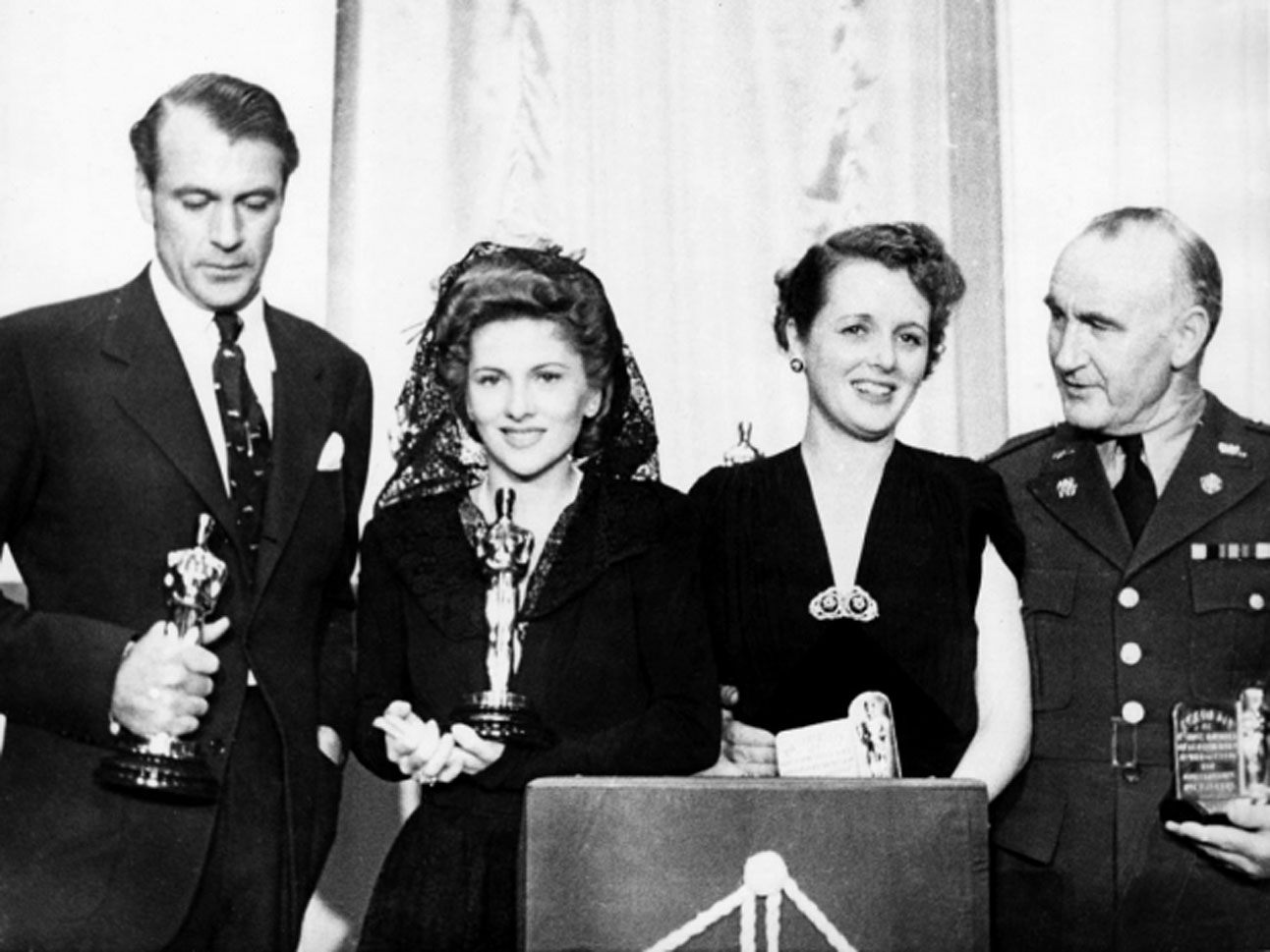
The winners: Gary Cooper for Sergeant York, Joan Fontaine for Suspicion, Mary Astor for The Great Lie, and Army Reservist Donald Crisp for How Green Was My Valley.

They would apply some plaster to the fracture on and off over the years but split forever in the 1970s when their mother died. Joan refused to talk to me about Olivia when I was writing Errol & Olivia; Olivia refused to talk to me about anything of substance ever. My interactions with both were always pleasant, but the secret dark places in their souls remained locked away.

Finally, at the end of 2013, a little more than a year ago, Joan died at age 96 in California while Olivia, aged 97, remained resolute in Paris. I guess you could say the feud ended with Joan’s passing, but did it? The enmity of these two, which came to a head twice at the Academy Awards ceremony, was something for the ages. Me? I’m glad my own sibling feud was just once, and long ago.